New Jersey Warranty Deed to Child Reserving a Life Estate in the Parents
What is this form?
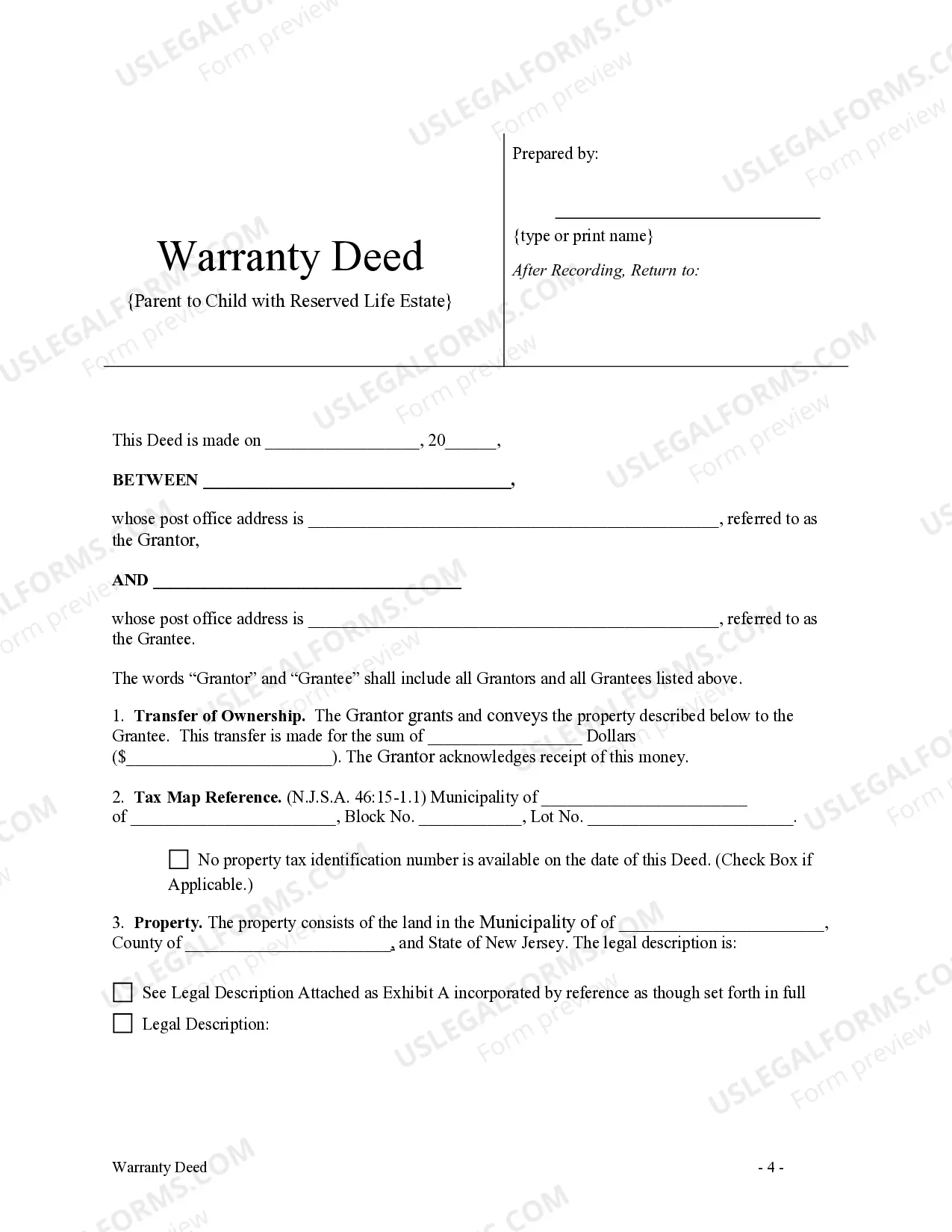
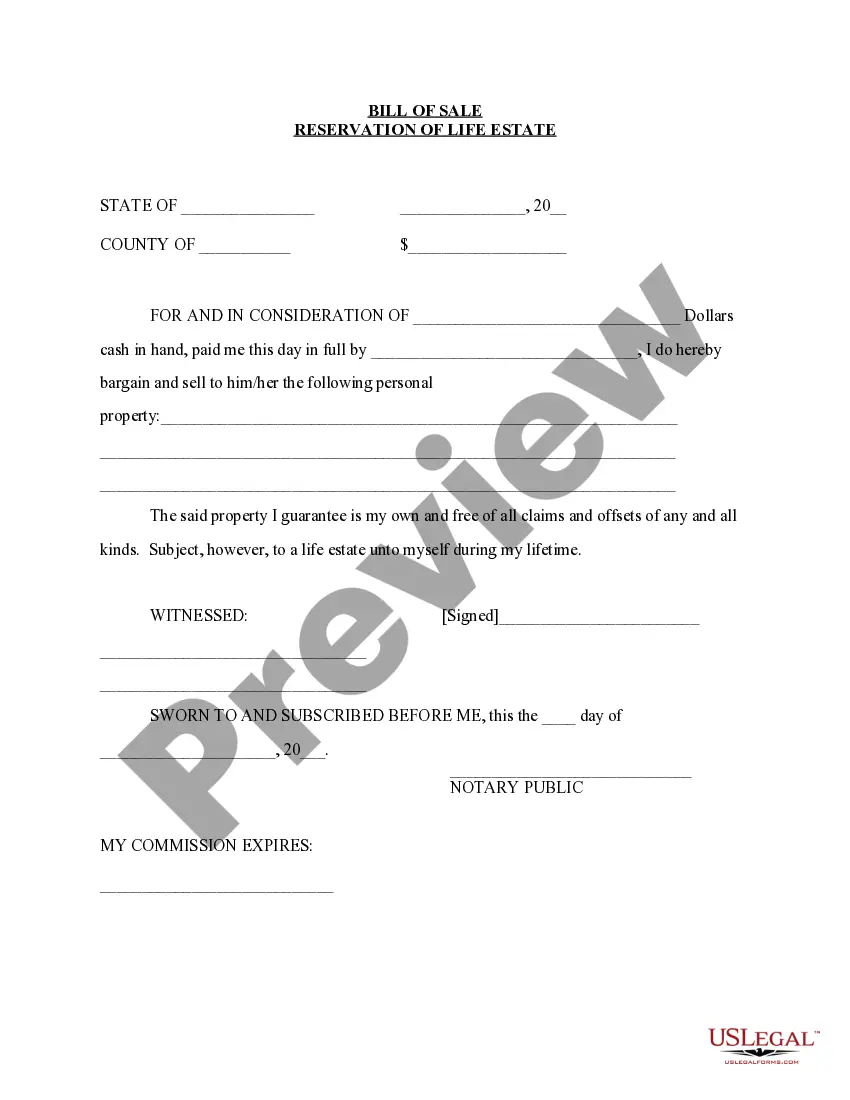
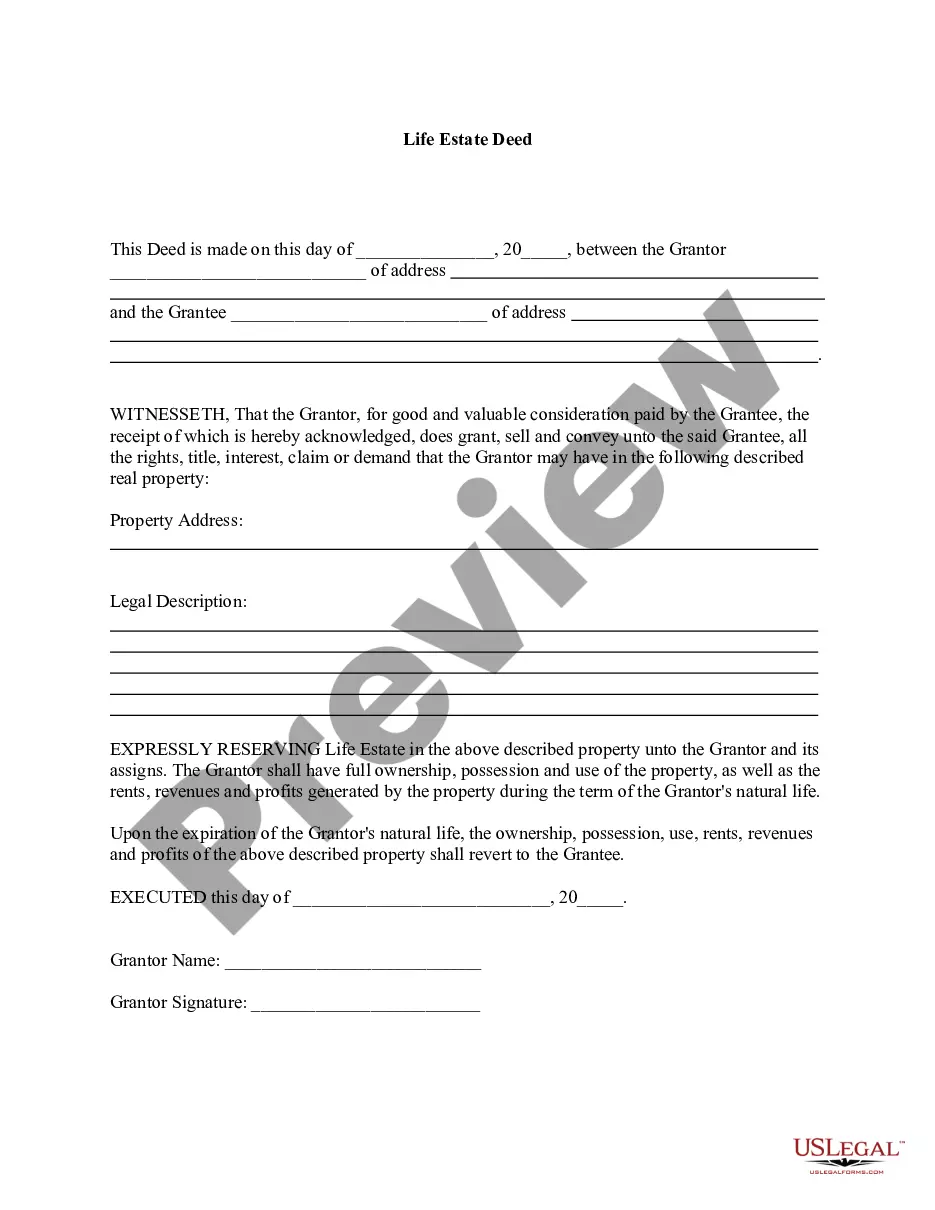
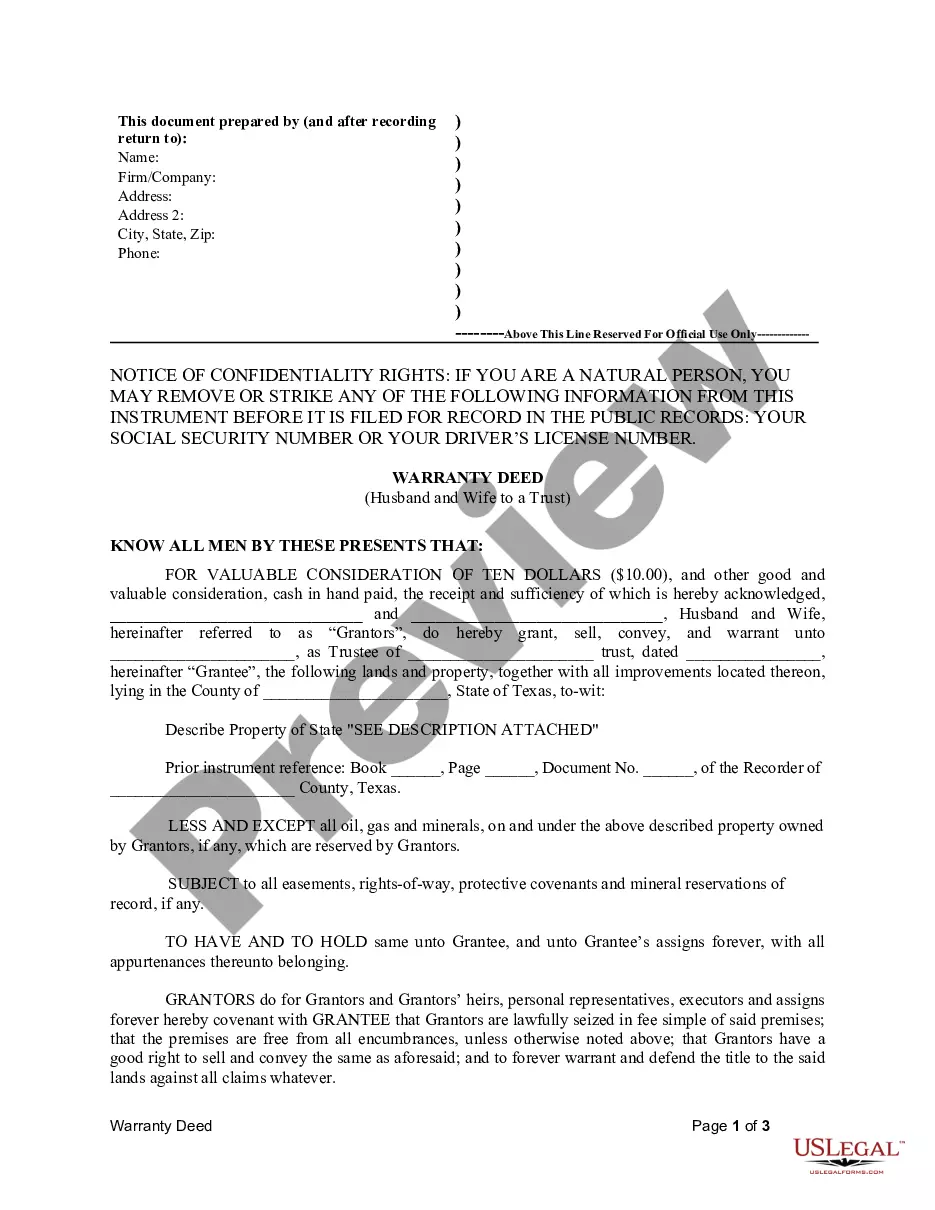
This Warranty Deed to Child Reserving a Life Estate in the Parents is a legal document that enables parents to transfer ownership of property to their child while retaining the right to live on and use the property for the rest of their lives. This form establishes a warranty deed, which provides a guarantee that the property is free from claims or encumbrances, unless explicitly stated otherwise. Unlike a simple transfer or gift, this form allows parents to maintain an interest in the property after its transfer, making it a unique option for estate planning and property management.
What’s included in this form
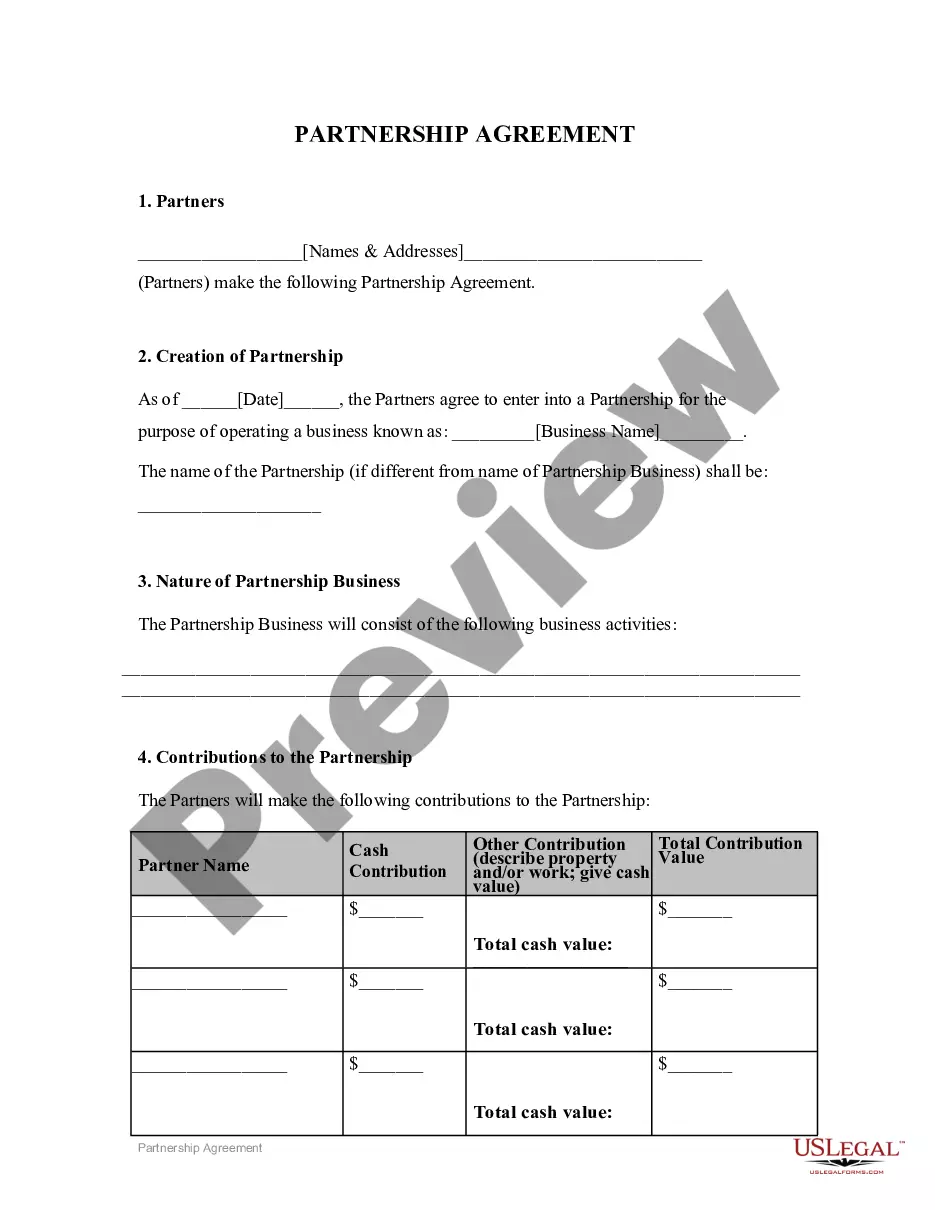
- Identification of the grantor(s) and grantee(s).
- Transfer of ownership clause detailing the value exchanged.
- Property description, including tax map references.
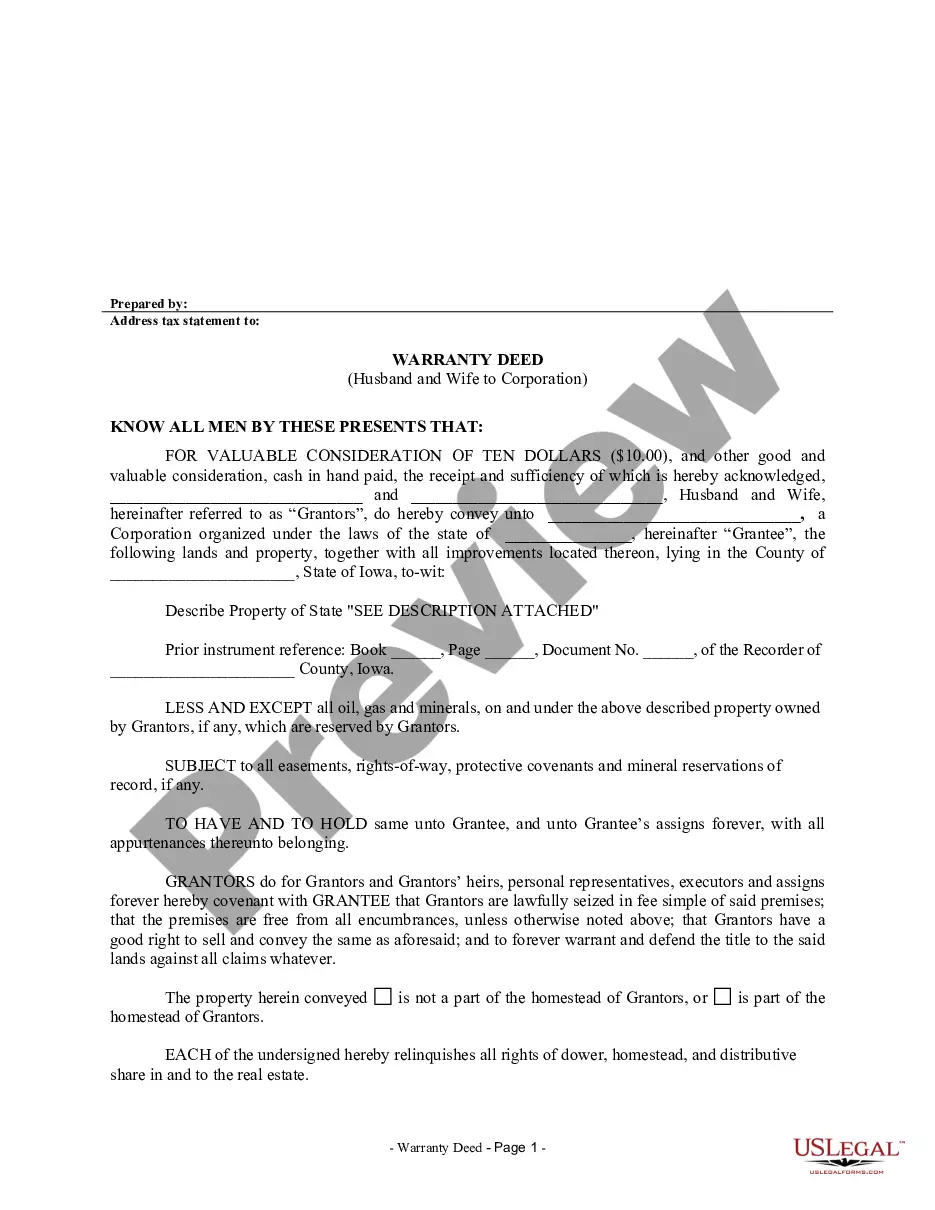
- Statement of warranty ensuring free title without encumbrances.
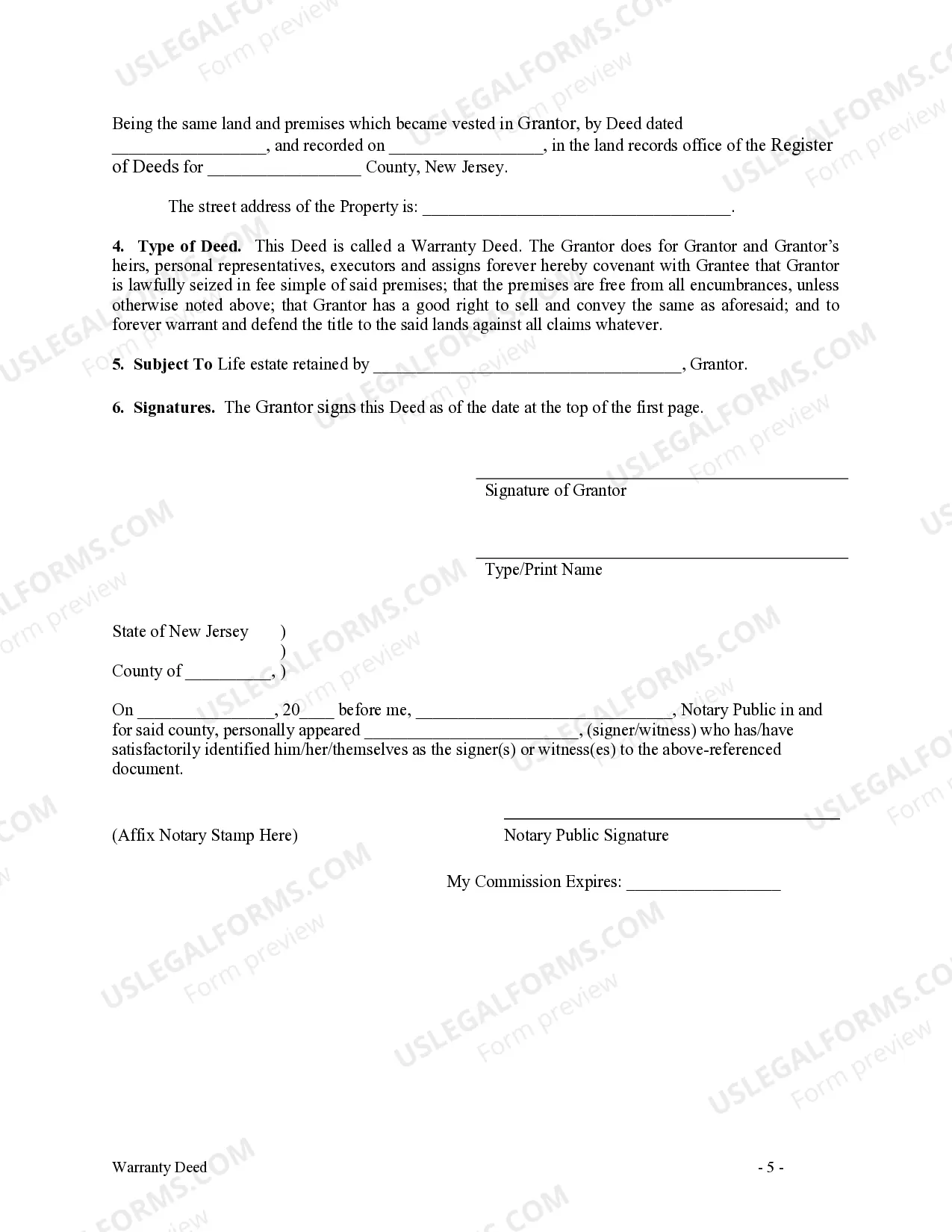
- Reservation of life estate clause specifying the parents' retained interest in the property.
- Signature fields for all parties involved and a space for notarization.


When this form is needed
This form is ideal for parents who wish to transfer ownership of real estate to their child while retaining the right to live in the property until their passing. It is particularly useful in estate planning scenarios where parents want to ensure their property remains in the family while also minimizing potential tax implications or probate complications. Use this form when you are ready to make a formal transfer of property ownership under these specific arrangements.
Intended users of this form
- Parents who want to transfer property to their child while retaining a life estate.
- Individuals planning their estate and seeking an effective way to manage property transfers.
- Homeowners looking to simplify property inheritance for their children.
- Property owners wishing to ensure continued use of their property during their lifetime.
Completing this form step by step
- Identify all parties involved by filling in the names and addresses of the grantor(s) and grantee(s).
- Specify the property being transferred, including the legal description and tax map reference.
- Enter the amount of consideration for the property, confirming what was exchanged.
- Fill in the reservation of life estate clause to indicate the parentsâ rights to the property.
- Sign the document in the designated areas, ensuring compliance with state requirements.
- Consider having the document notarized if required by local law for validity.
Does this form need to be notarized?
This form does not typically require notarization unless specified by local law. However, having it notarized can enhance its validity and ensure that all signatures are verified. Consult local regulations to determine if notarization is necessary for your specific situation.
Get your form ready online
Our built-in tools help you complete, sign, share, and store your documents in one place.
Make edits, fill in missing information, and update formatting in US Legal Forms—just like you would in MS Word.
Download a copy, print it, send it by email, or mail it via USPS—whatever works best for your next step.
Sign and collect signatures with our SignNow integration. Send to multiple recipients, set reminders, and more. Go Premium to unlock E-Sign.
If this form requires notarization, complete it online through a secure video call—no need to meet a notary in person or wait for an appointment.
We protect your documents and personal data by following strict security and privacy standards.

Make edits, fill in missing information, and update formatting in US Legal Forms—just like you would in MS Word.

Download a copy, print it, send it by email, or mail it via USPS—whatever works best for your next step.

Sign and collect signatures with our SignNow integration. Send to multiple recipients, set reminders, and more. Go Premium to unlock E-Sign.

If this form requires notarization, complete it online through a secure video call—no need to meet a notary in person or wait for an appointment.

We protect your documents and personal data by following strict security and privacy standards.
Avoid these common issues
- Failing to accurately describe the property, which can lead to legal disputes later.
- Not including proper signatures or notarization if legally required.
- Incorporating incorrect or outdated information in the deed, such as past ownership details.
- Neglecting to attach the necessary affidavits or forms when the full consideration is not noted in the deed.
Benefits of completing this form online
- Convenient access at any time, allowing you to complete your form on your schedule.
- Editability helps you enter accurate information without confusion.
- Guidance from licensed attorneys ensures the form meets legal requirements.
Summary of main points
- The warranty deed allows parents to transfer property to their child while retaining usage rights.
- Completing the form accurately is essential to avoid legal issues in the future.
- This form is specific to New Jersey and follows state legal requirements.
Looking for another form?





Form popularity
FAQ
A life estate deed permits the property owner to have full use of their property until their death, at which point the ownership of the property is automatically transferred to the beneficiary.
In New Jersey, the deed must be in English, identify the seller/buyer (grantor/grantee), name the person that prepared the deed, state the consideration (amount paid) for the transfer, contain a legal description of the property (a survey), include the signature of the grantor and be signed before a notary.
There does not have to be a deed recorded to convey a life estate, and transferring the property fee simple during life could cause tax issues.
This life estate deed is a document that transfers ownership of real property, while reserving access and use of the property for the duration of the grantor's life. It allows the original owner (grantor) to remain on the premises with full access to and benefits from the property.
This life estate deed is a document that transfers ownership of real property, while reserving access and use of the property for the duration of the grantor's life. It allows the original owner (grantor) to remain on the premises with full access to and benefits from the property.
A warranty deed guarantees that: The grantor is the rightful owner of the property and has the legal right to transfer the title.The title would withstand third-party claims to ownership of the property. The grantor will do anything to ensure the grantee's title to the property.
In New Jersey, the preparation of legal documents such as a deed is considered the practice of law which may only be undertaken by an Attorney at Law of the State of New Jersey. The only exception to that rule is that an individual representing him/herself may prepare his/her own documents.
Reservation of the present interest allows the owner to retain ownership for a period of time measured by the life of one or more individuals, by a term of years, or by a combination of the two.
A person owns property in a life estate only throughout their lifetime. Beneficiaries cannot sell property in a life estate before the beneficiary's death. One benefit of a life estate is that property can pass when the life tenant dies without being part of the tenant's estate.