New Hampshire Last Will and Testament for Divorced and Remarried Person with Mine, Yours and Ours Children
What this document covers
This Last Will and Testament is a legal document specifically designed for individuals who are divorced and remarried, and who may have children from multiple relationships. It allows you to designate how your assets should be distributed upon your death, taking into account the unique family dynamics often present in blended families. This form is especially beneficial for those with "mine," "yours," and "ours" children, ensuring that each child's inheritance is clearly articulated and protected.
Main sections of this form
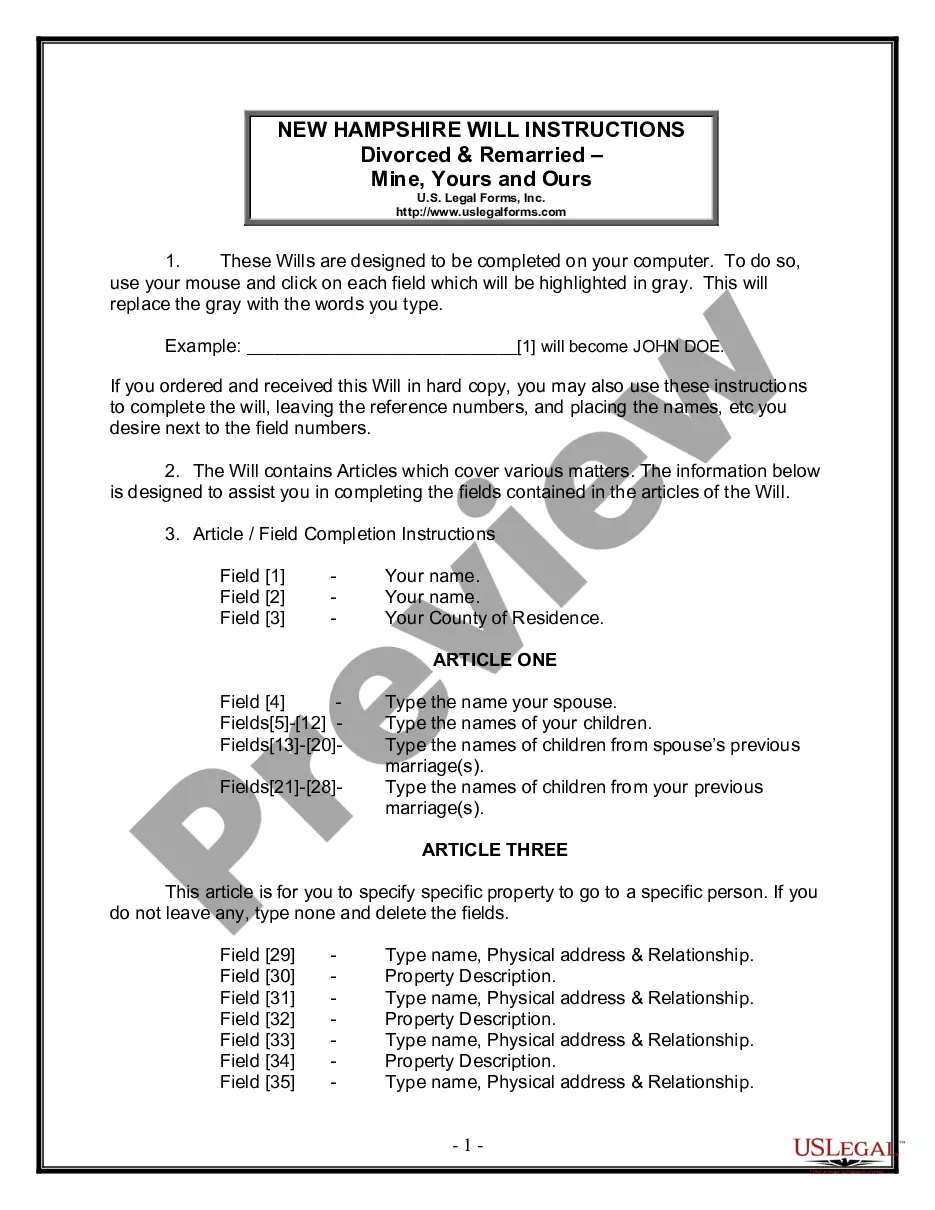
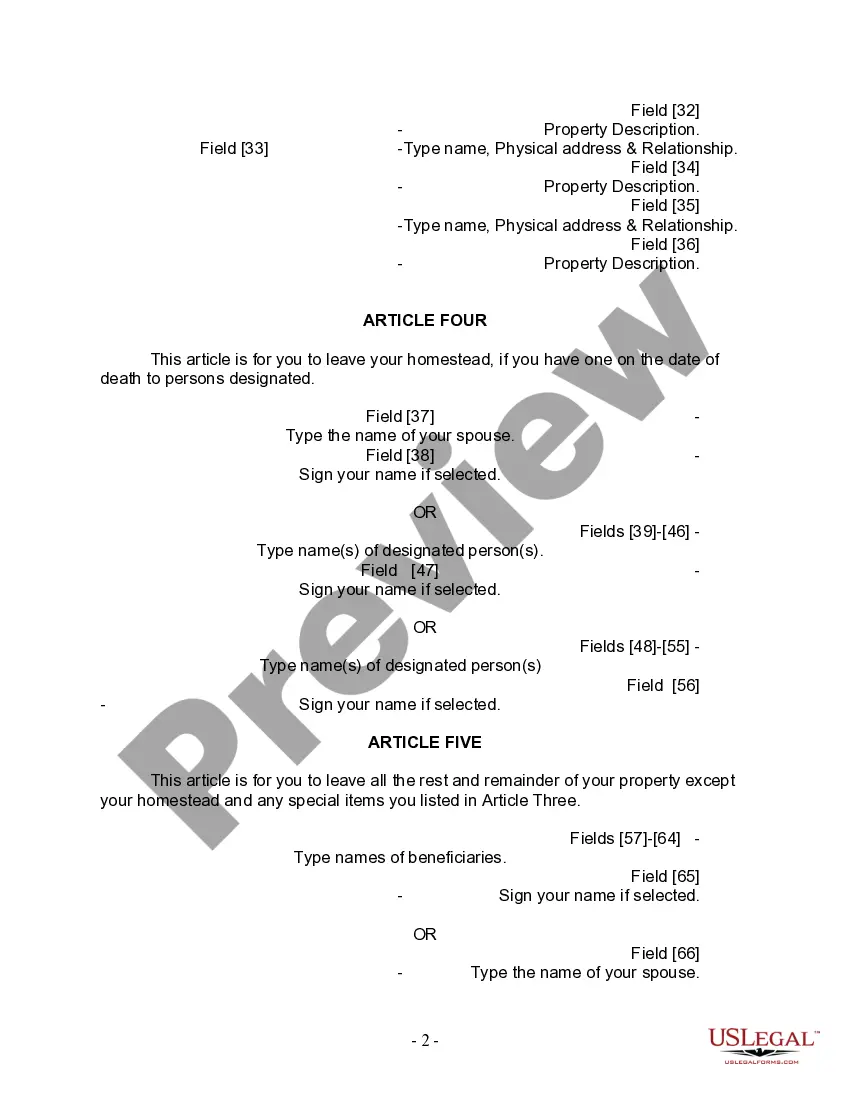
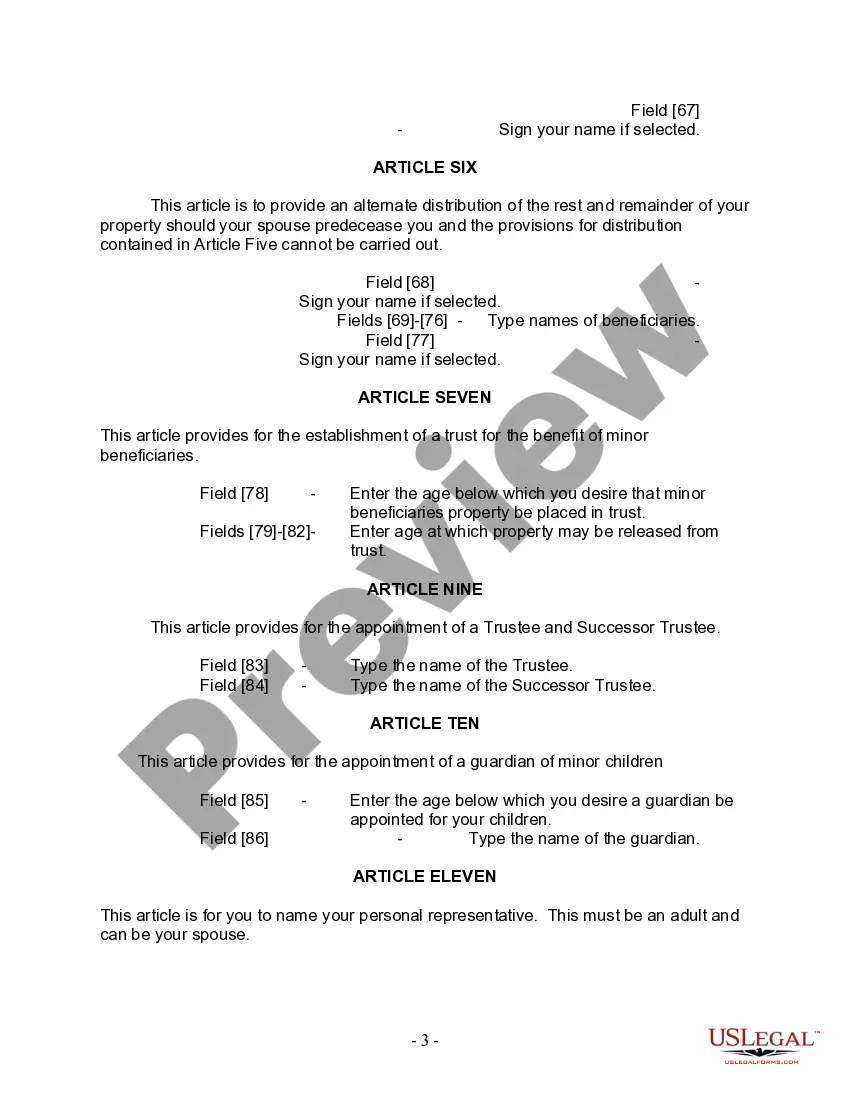
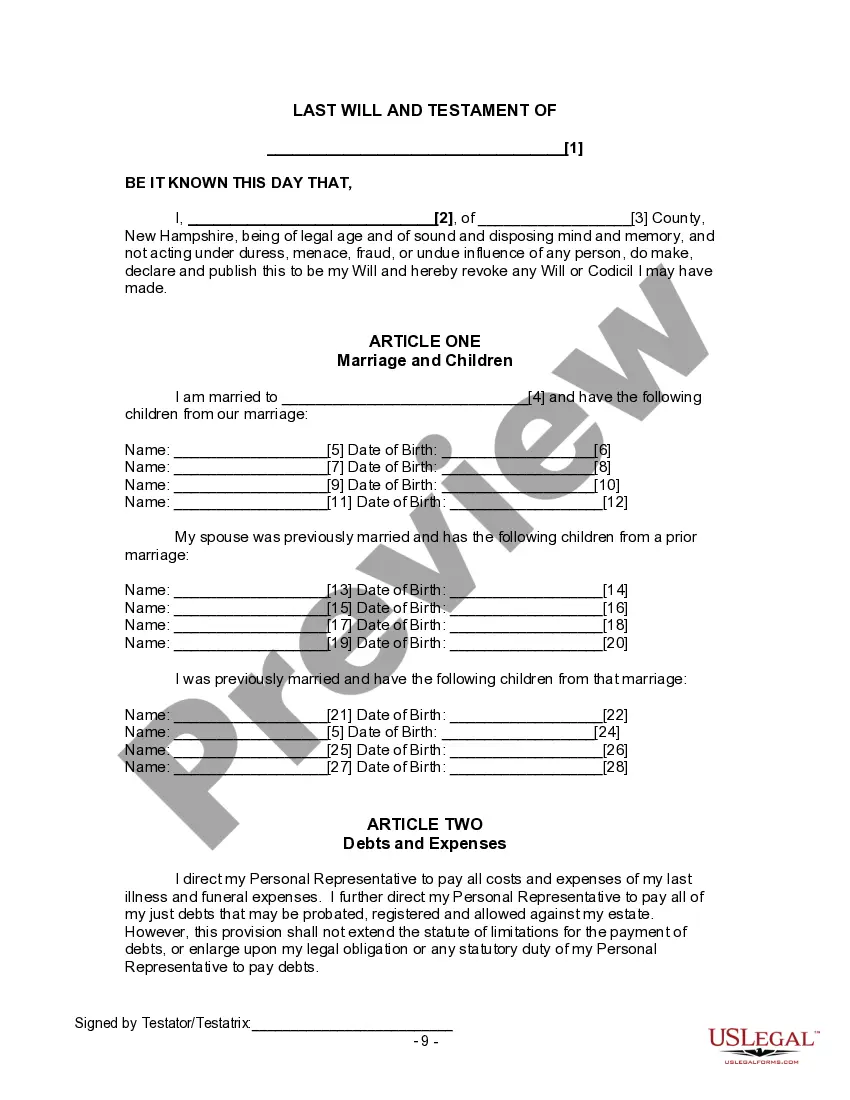
- Personal information: Contains fields for the testator's name, residence, and the revocation of prior wills.
- Marriage and children details: Identifies your current spouse and lists all biological children, including those from previous marriages.
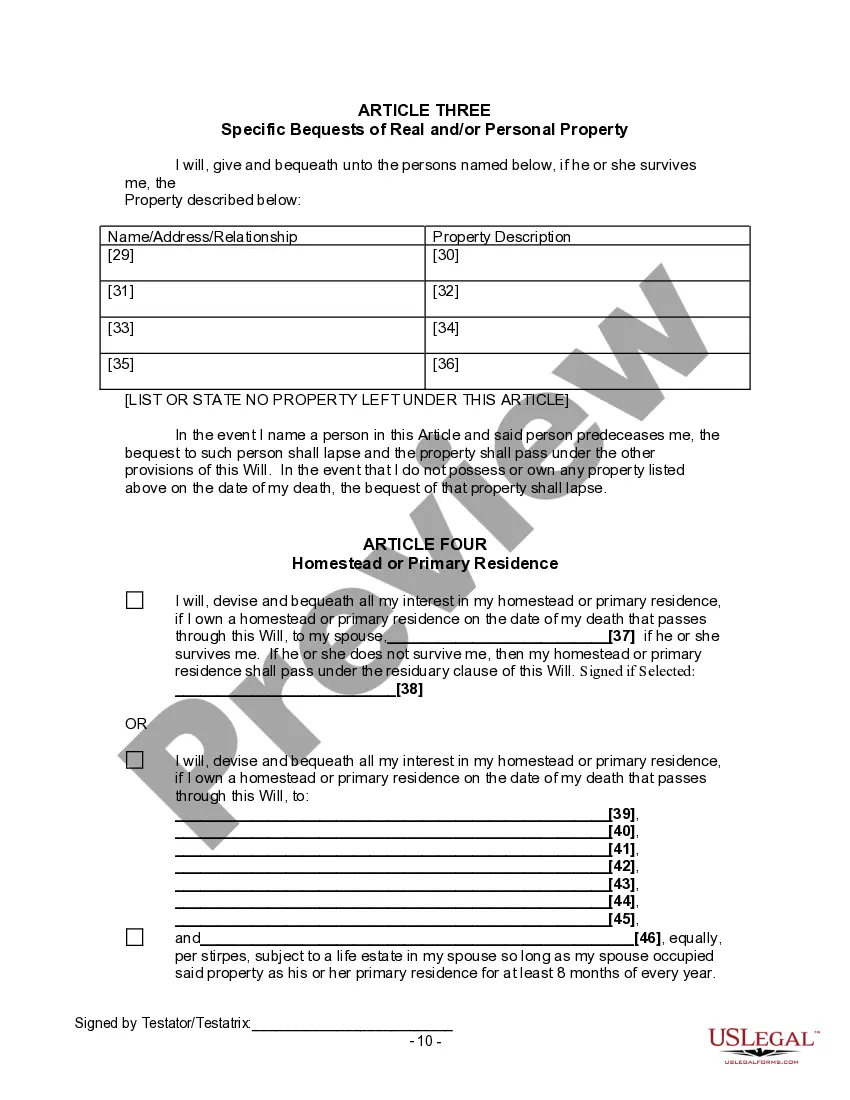
- Specific bequests: Allows you to designate specific properties to certain individuals, if desired.
- Residue clause: Addresses the distribution of remaining assets not specifically bequeathed.
- Trust establishment: Provides for a trust for minor children to manage their inheritance until they reach a specified age.
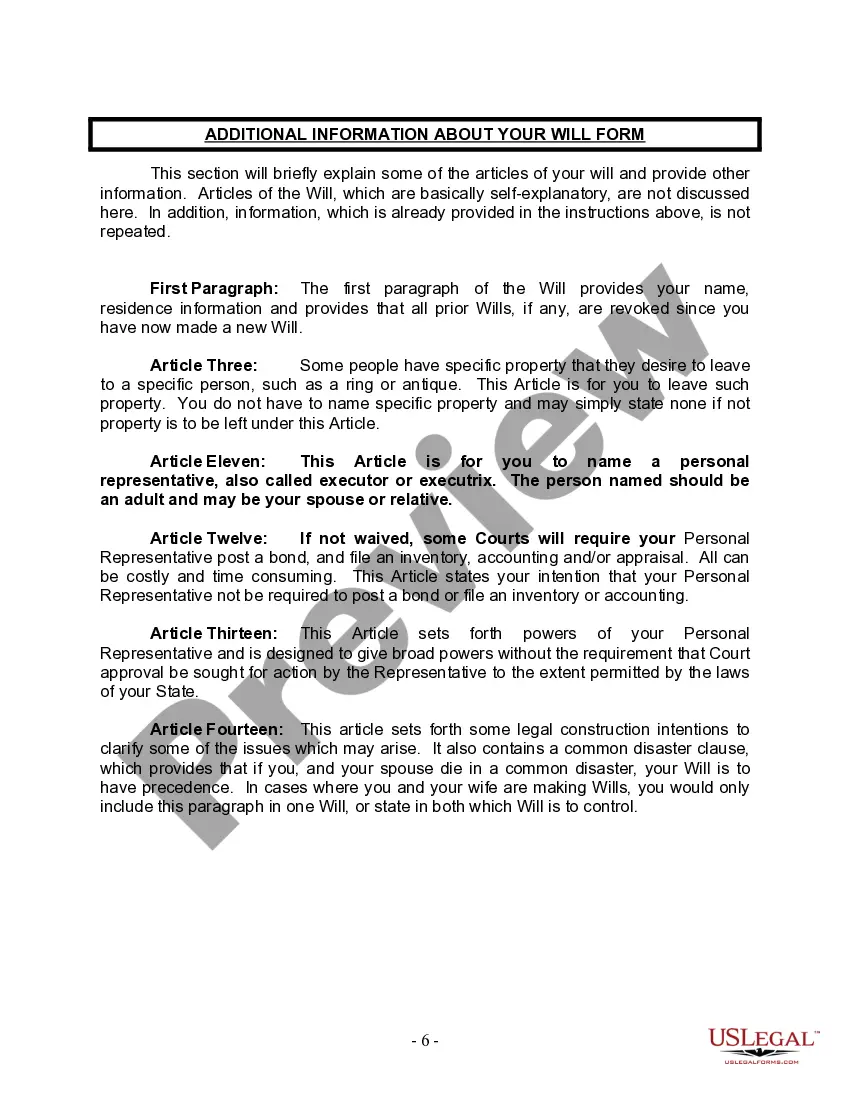
- Guardian designation: Lets you appoint a guardian for minor children if necessary.





Situations where this form applies
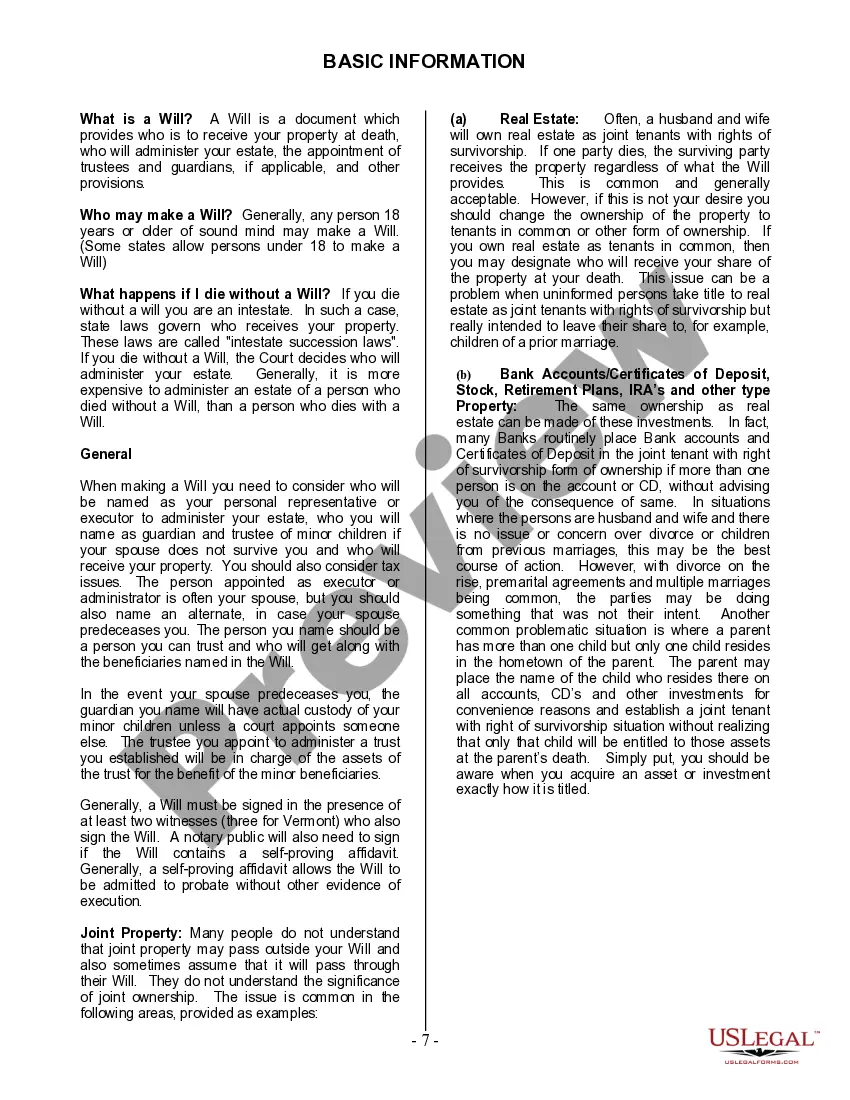
You should use this form if you are a divorced individual who has remarried and want to ensure that your estate is distributed according to your wishes. This is especially critical if you have children from previous marriages and want to clearly define inheritances to avoid potential disputes. This will helps clarify who inherits your assets, and can address custody arrangements for your minor children in the event of your death.
Who needs this form
This will is suitable for:
- Divorced individuals who have remarried.
- Parents with children from both the current and previous marriages.
- Anyone wanting to create a clear and legally enforceable distribution of their assets.
- Individuals looking to appoint a guardian for their minor children in case of an unforeseen circumstance.
Instructions for completing this form
Follow these steps to complete the Last Will and Testament:
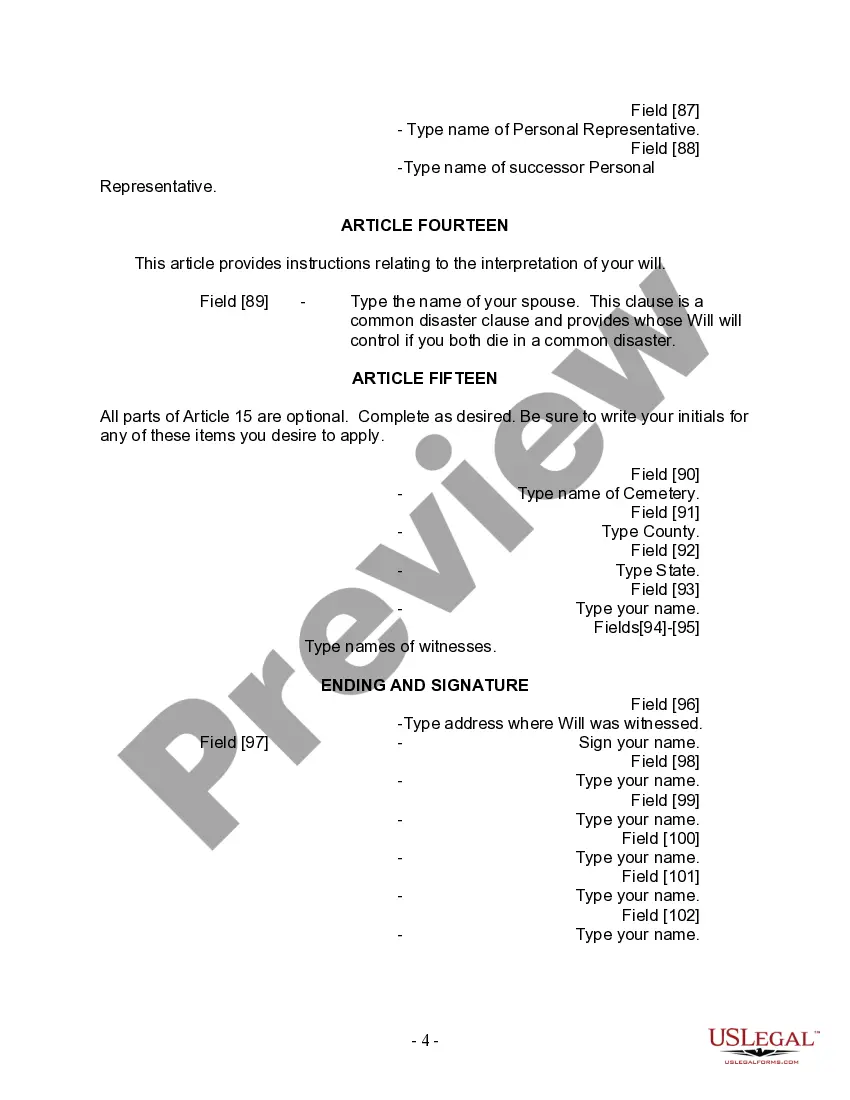
- Identify yourself by entering your full name and county of residence.
- List your current spouseâs name and the names of all children, including those from past marriages.
- Specify any particular properties you wish to bequeath to named individuals.
- Designate a guardian for your minor children if relevant.
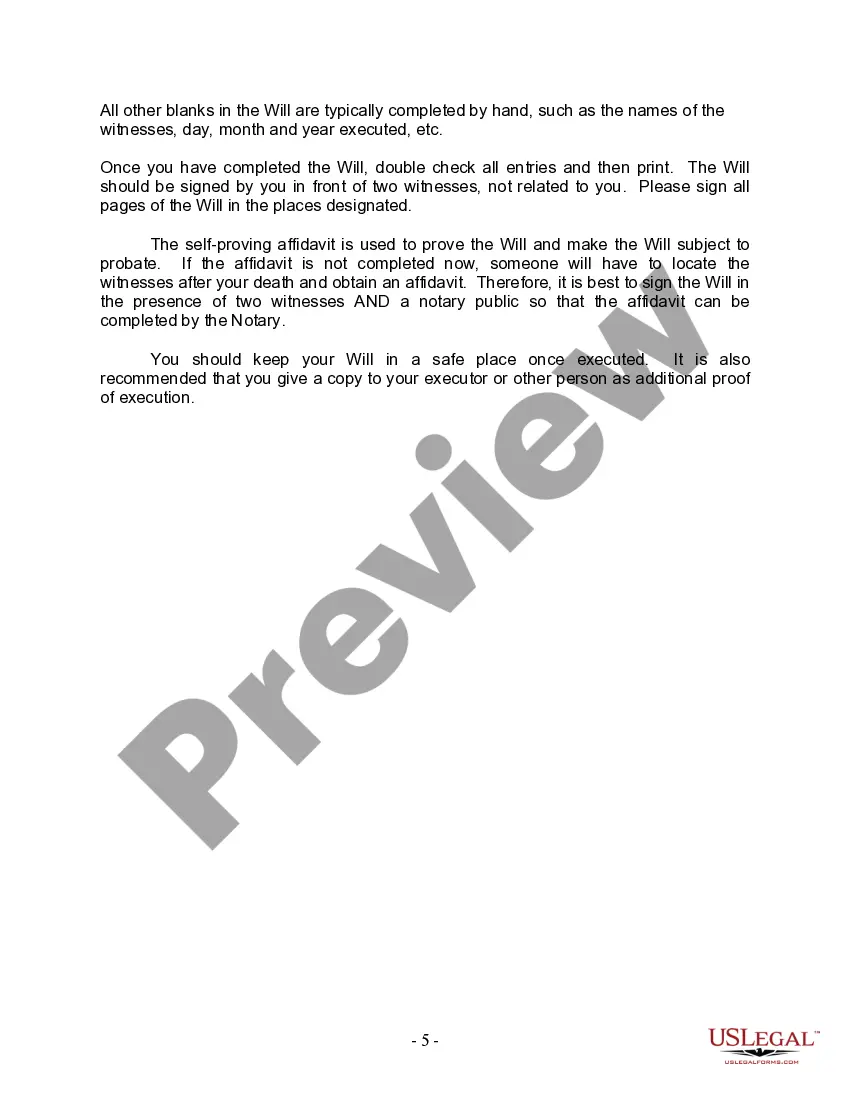
- Complete the necessary signature and witness fields to validate the will.
Is notarization required?
Yes, this form must be notarized to be legally valid. Notarization adds an extra layer of authentication to the will, making it more difficult to challenge in court. US Legal Forms offers a seamless online notarization service, available twenty-four hours a day, ensuring your will is executed securely and efficiently.
Get your form ready online
Our built-in tools help you complete, sign, share, and store your documents in one place.
Make edits, fill in missing information, and update formatting in US Legal Forms—just like you would in MS Word.
Download a copy, print it, send it by email, or mail it via USPS—whatever works best for your next step.
Sign and collect signatures with our SignNow integration. Send to multiple recipients, set reminders, and more. Go Premium to unlock E-Sign.
If this form requires notarization, complete it online through a secure video call—no need to meet a notary in person or wait for an appointment.
We protect your documents and personal data by following strict security and privacy standards.

Make edits, fill in missing information, and update formatting in US Legal Forms—just like you would in MS Word.

Download a copy, print it, send it by email, or mail it via USPS—whatever works best for your next step.

Sign and collect signatures with our SignNow integration. Send to multiple recipients, set reminders, and more. Go Premium to unlock E-Sign.

If this form requires notarization, complete it online through a secure video call—no need to meet a notary in person or wait for an appointment.

We protect your documents and personal data by following strict security and privacy standards.
Common mistakes to avoid
- Failing to name a trustworthy executor who will manage your estate according to your wishes.
- Neglecting to include specific bequests, leading to confusion about who receives particular properties.
- Not revising the will following major life changes, such as marriage or the birth of children.
- Allowing family members to witness your will if they are beneficiaries, which can create potential legal complications.
Why complete this form online
- Convenience of completing the document online at your own pace.
- Editability to ensure all details are accurate before finalizing the document.
- Access to forms drafted by licensed attorneys, ensuring legal compliance.
- Peace of mind from having a clear plan for asset distribution and care of minor children.
Main things to remember
- This Last Will and Testament is specifically designed for divorced and remarried individuals with children from previous marriages.
- It is crucial to correctly complete and notarize the document to ensure legal validity.
- Clear bequests and appointments can significantly reduce family disputes after your passing.
Looking for another form?
Form popularity
FAQ
Fraud or Undue Influence A nonfamily caregiver forcing the testator to leave them an inheritance. A family member getting the testator to sign a will by pretending it is just a general legal document that needs a signature.
Enter the full name of each beneficiary. Provide a Physical Address for each. Beneficiary's relationship to the testator. Provide the last four digits of each beneficiary's Social Security Number. Provide a list of any property being bequeathed to each selected beneficiary.
Yes, people can write their own wills in New Hampshire.For instance, the will must be in writing, signed by the person whose will it is, and signed by two or more credible witnesses who must swear that the person's signature is genuine. The court does not provide standard forms for writing a will.
A simple will costs between $200-$400 and a trust from $2,000 upwards, depending on how complex it is. High-profile family feuds over money are notorious and New Hampshire has been at the center of at least two of them.
Contrary to popular belief, you do not need to have an attorney draft a will for you. Anyone can write this document on their own, and as long as it meets all of the legal requirements of the state, courts will recognize one you wrote yourself.
As long as it was properly signed and witnessed by two adult independent witnesses who are present at the time you sign your will, it should be legally binding.Using the wrong wording could mean that your instructions aren't followed, or even that your will isn't valid.
No, in New Hampshire, you do not need to notarize your will to make it legal.A self-proving will speeds up probate because the court can accept the will without contacting the witnesses who signed it.