New York Federal Estate Tax Affidavit
What this document covers
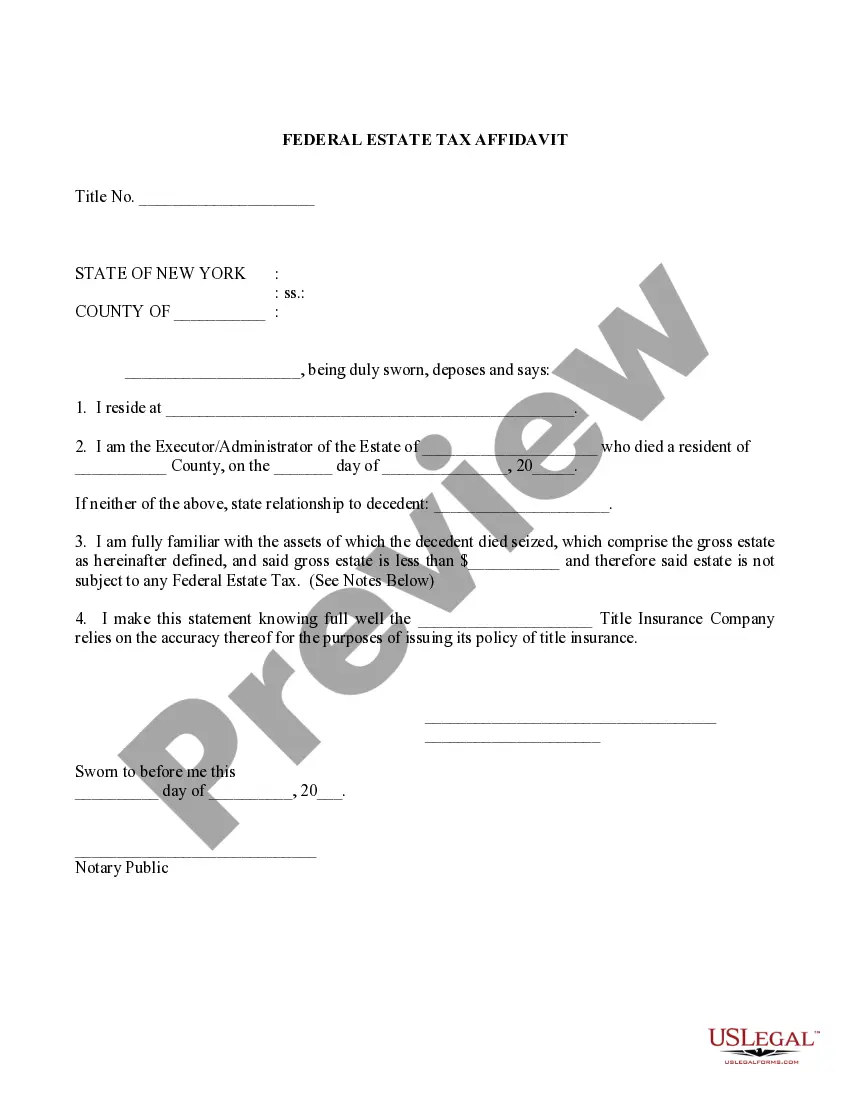
The Federal Estate Tax Affidavit is a legal document used when the gross estate of a deceased person is less than the applicable exclusion amount set for the year of their death. This affidavit serves to confirm that the estate is not subject to any Federal Estate Tax, providing clarity during estate settlement. Unlike other estate forms, it specifically pertains to situations where tax liability does not apply due to the estate's value being below a certain threshold.
Form components explained
- Title Section: Identifies the form and its purpose.
- Executor/Administrator Declaration: The individual responsible for managing the estate must declare their role.
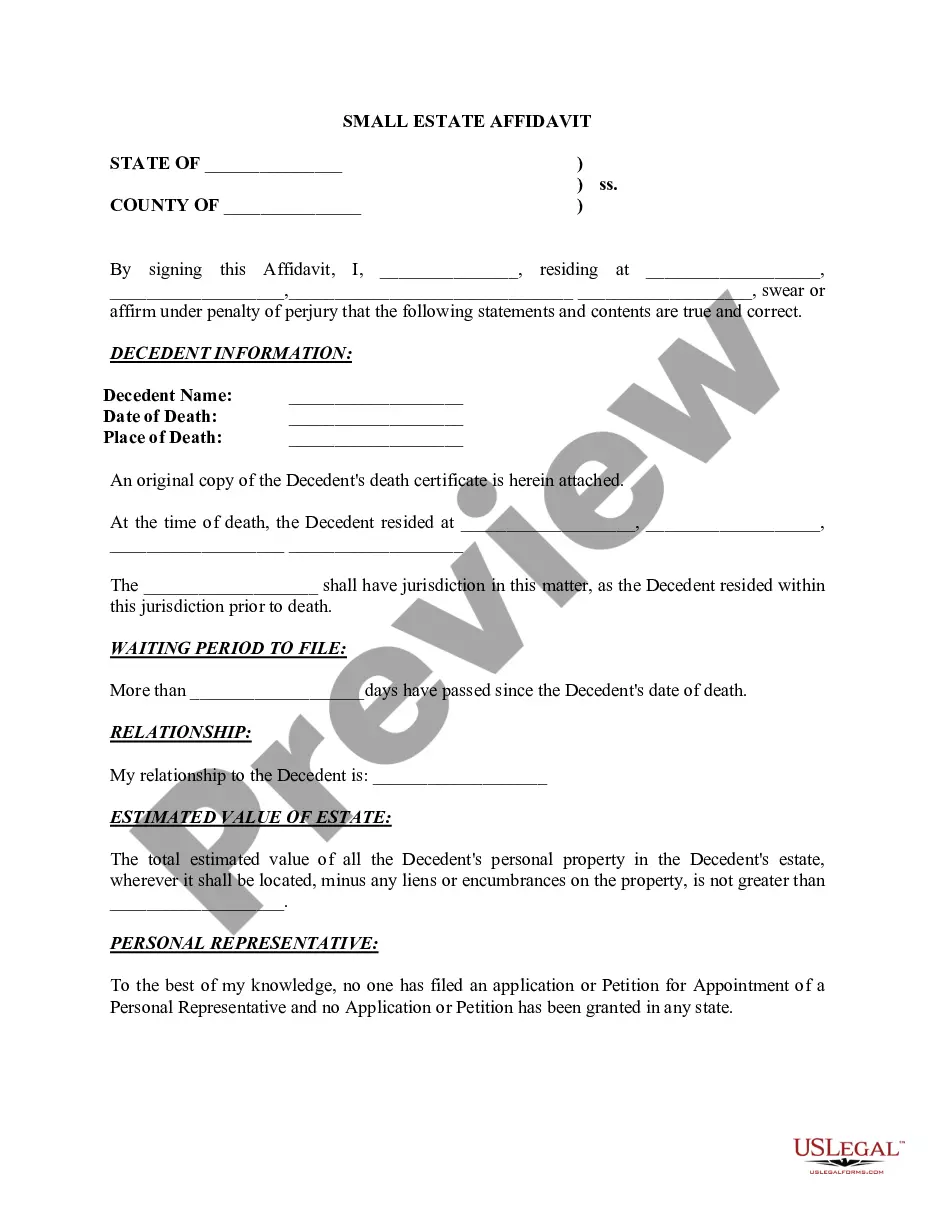
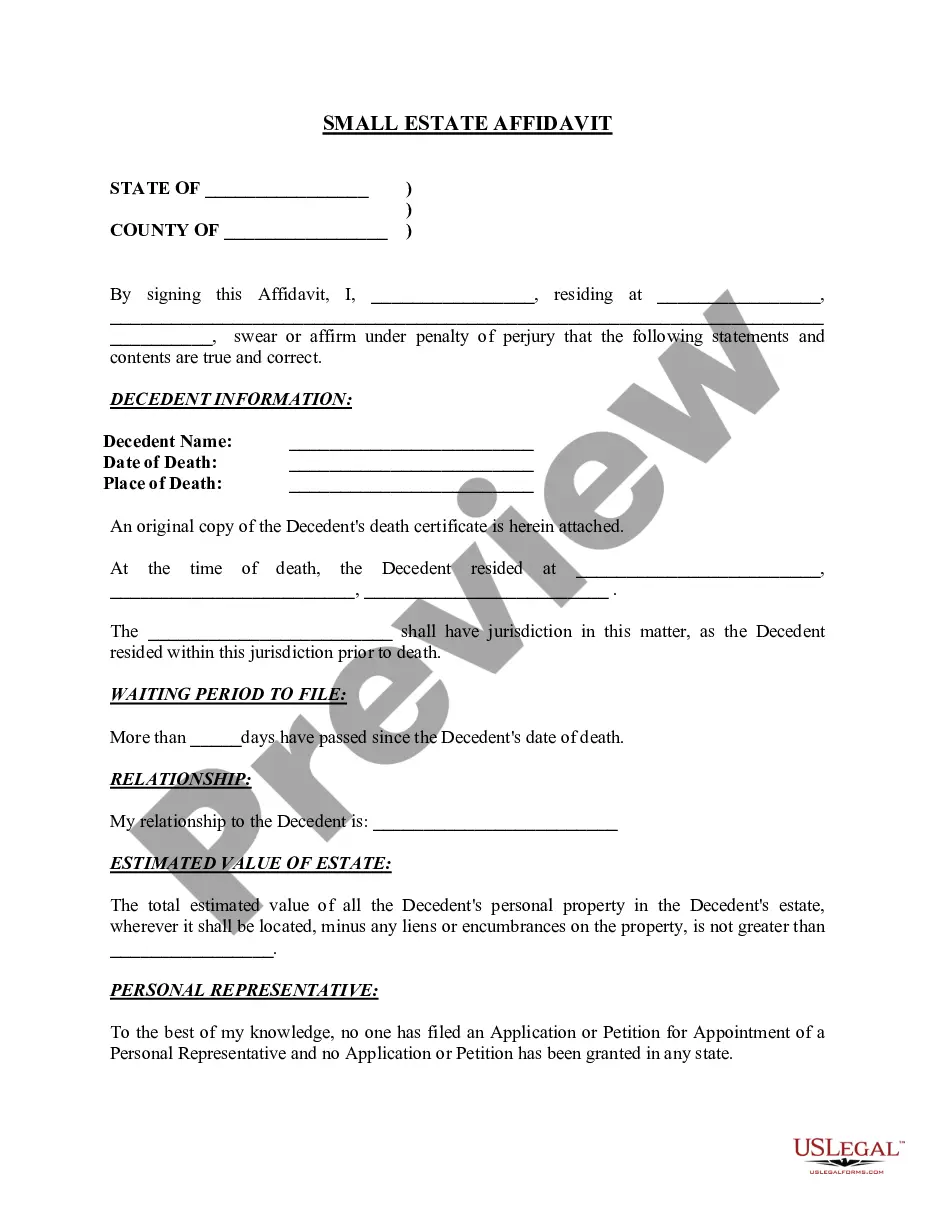
- Decedent Information: Details about the deceased, including name and date of death.
- Estate Value Statement: Affirms the gross estate's value is below the federal threshold for taxation.
- Affiant Sworn Statement: Confirms the accuracy of the submitted information under oath.
- Notary Acknowledgment: Verifies the affidavit has been sworn in front of a notary public.
Common use cases
This affidavit should be utilized in instances where an individual passes away and the total value of their estate is under the federal exclusion amount. Executors or administrators may need this form when filing necessary paperwork for estate settlement, especially to claim that no federal estate tax is owed, and to facilitate the transfer of assets or title transfer to heirs and beneficiaries.
Intended users of this form
- Executors or administrators responsible for managing a decedentâs estate.
- Individuals with knowledge of the decedentâs assets and their value.
- Beneficiaries seeking clarity on the estate's tax obligations.
- Lenders or title insurance companies requiring assurance no federal estate taxes are applicable.
Steps to complete this form
- Identify yourself as the Executor or Administrator of the estate.
- Provide the name of the deceased individual and their county of residence at the time of death.
- State the total value of the gross estate, confirming it is below the exclusion amount.
- Be prepared to affirm accuracy under oath, acknowledging reliance by others on this information.
- Sign the affidavit in the presence of a notary public, obtaining their notarization for legal validity.
Notarization requirements for this form
Yes, this form must be notarized to be legally valid. The affidavit requires the Executor or Administrator to sign in the presence of a notary public, ensuring that the document is authentic and binding. US Legal Forms offers integrated online notarization services available twenty-four hours a day, allowing for secure video calls without the need for travel.
Get your form ready online
Our built-in tools help you complete, sign, share, and store your documents in one place.
Make edits, fill in missing information, and update formatting in US Legal Forms—just like you would in MS Word.
Download a copy, print it, send it by email, or mail it via USPS—whatever works best for your next step.
Sign and collect signatures with our SignNow integration. Send to multiple recipients, set reminders, and more. Go Premium to unlock E-Sign.
If this form requires notarization, complete it online through a secure video call—no need to meet a notary in person or wait for an appointment.
We protect your documents and personal data by following strict security and privacy standards.

Make edits, fill in missing information, and update formatting in US Legal Forms—just like you would in MS Word.

Download a copy, print it, send it by email, or mail it via USPS—whatever works best for your next step.

Sign and collect signatures with our SignNow integration. Send to multiple recipients, set reminders, and more. Go Premium to unlock E-Sign.

If this form requires notarization, complete it online through a secure video call—no need to meet a notary in person or wait for an appointment.

We protect your documents and personal data by following strict security and privacy standards.
Common mistakes
- Failing to accurately declare the total value of the decedent's estate.
- Not providing proper identification as the Executor or Administrator.
- Omitting the date or signature in the affidavit section.
- Overlooking the notarization requirement.
Benefits of completing this form online
- Convenience of instant download for immediate use.
- Editable format to customize according to your specific details.
- Access to templates drafted by licensed attorneys for reliability.
- Ease of compliance with legal standards without the need for extensive legal knowledge.
Looking for another form?
Form popularity
FAQ
The executor of a decedent's estate uses Form 706 to figure the estate tax imposed by Chapter 11 of the Internal Revenue Code. Form 706 is also used to compute the generation-skipping transfer (GST) tax imposed by Chapter 13 on direct skips.
How to avoid New York's Fiscal Cliff There are many ways our estate tax attorneys can help you avoid this cliff and safeguard your wealth.Credit Shelter Trusts. Non-Grantor Trusts. Changing Your Domicile. Strategic Gifting. Charitable Formula Gifts. Discounted Valuation of Closely-Held Businesses.
When authorization is required for the release of personal property, it is usually referred to as an estate tax waiver or a consent to transfer. New York State does not require waivers for estates of anyone who died on or after February 1, 2000. For details, See Publication 603, Estate Tax Waivers.
While New York doesnt charge an inheritance tax, it does include an estate tax in its laws. The state has set a $6.11 million estate tax exemption, meaning if the decedents estate exceeds that amount, the estate is required to file a New York estate tax return.
The estate tax rate in New York ranges from 3.06% to 16%. Estates over $6.11 million are subject to this tax in 2022, going up to $6.58 million in 2023.
Residents: The estate of a New York resident must file a New York State estate tax return if the amount of the resident's federal gross estate, plus the amount of any includible gifts, exceeds the basic exclusion amount applicable at the date of death.
What is the current exemption from New York estate tax again? The current New York estate tax exemption amount is $6,110,000 for 2022. Under current law, this number will remain until January 1, 2023, at which point it will rise again with inflation.
There is no inheritance tax in New York.