New Hampshire Last Will and Testament for Single Person with No Children

What is this form?
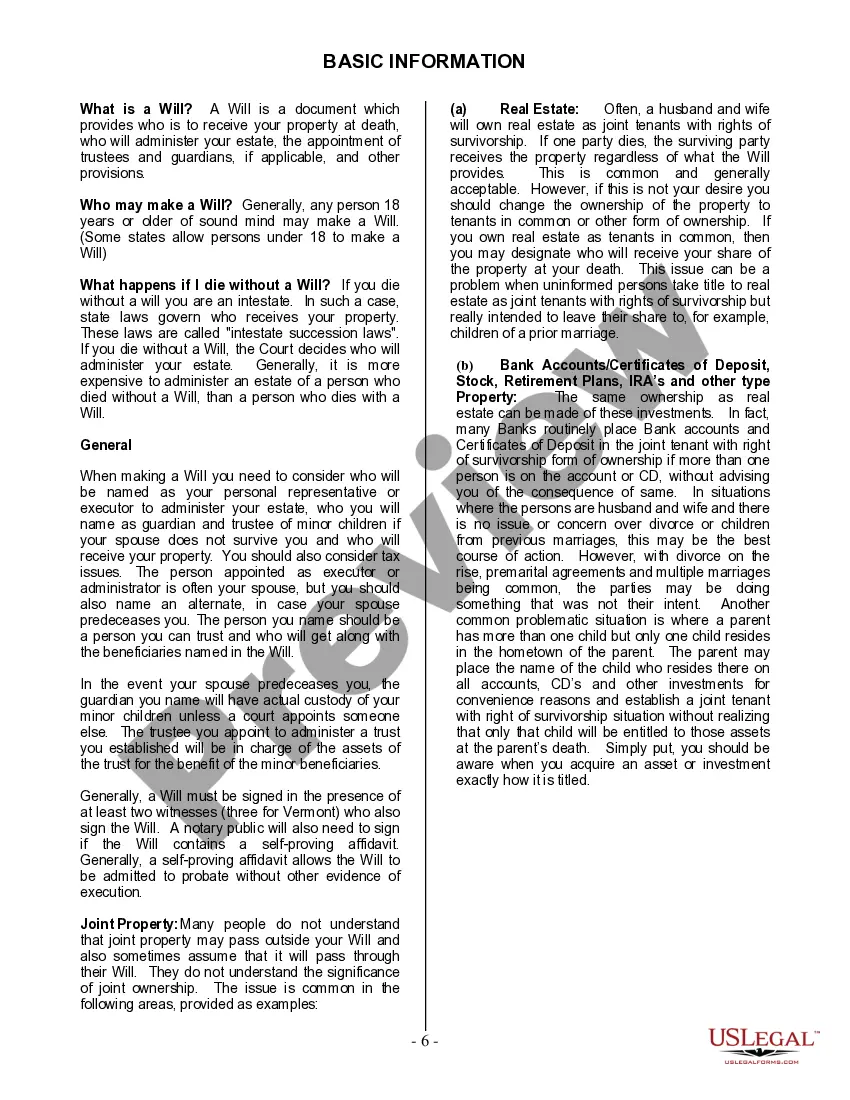
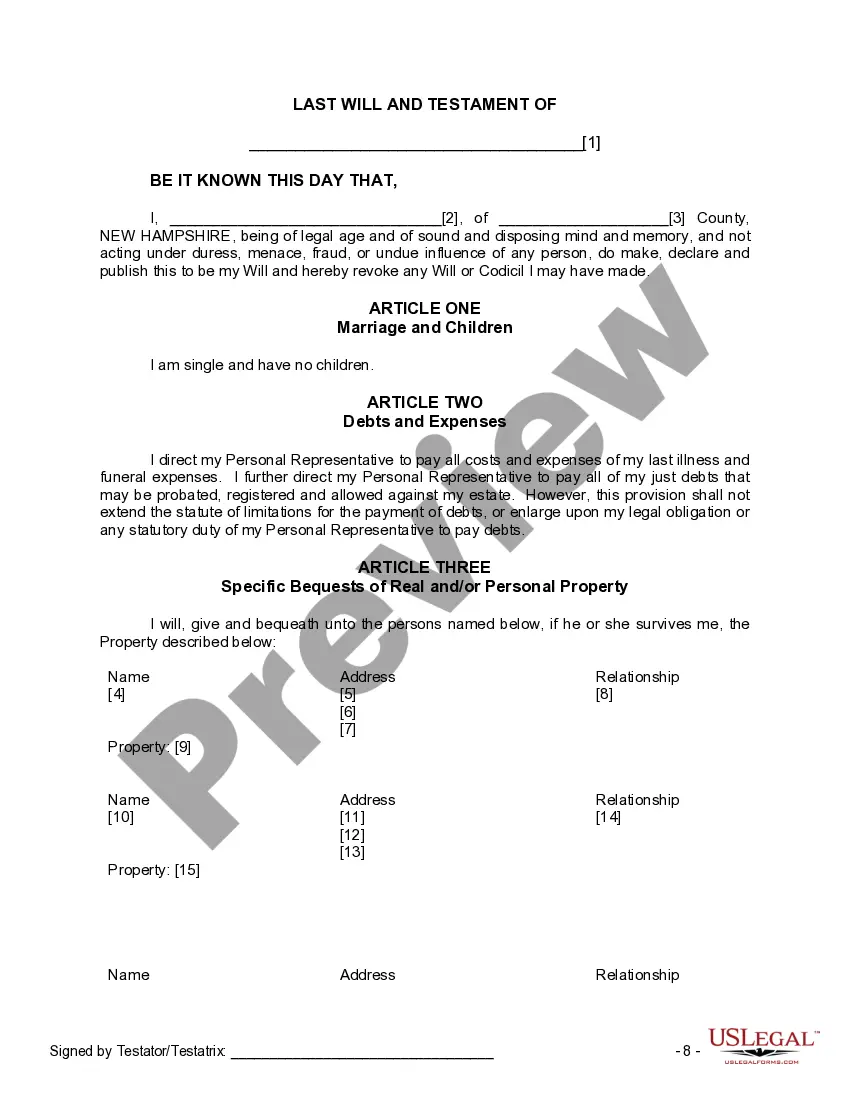
The Last Will and Testament is a legal document that outlines how a single person with no children wishes their assets to be distributed upon their death. This form allows you to specify who will inherit your property and appoint someone to carry out your wishes as an executor. It is particularly tailored for individuals without dependents, distinguishing it from wills designed for those with children or spouses.
Form components explained
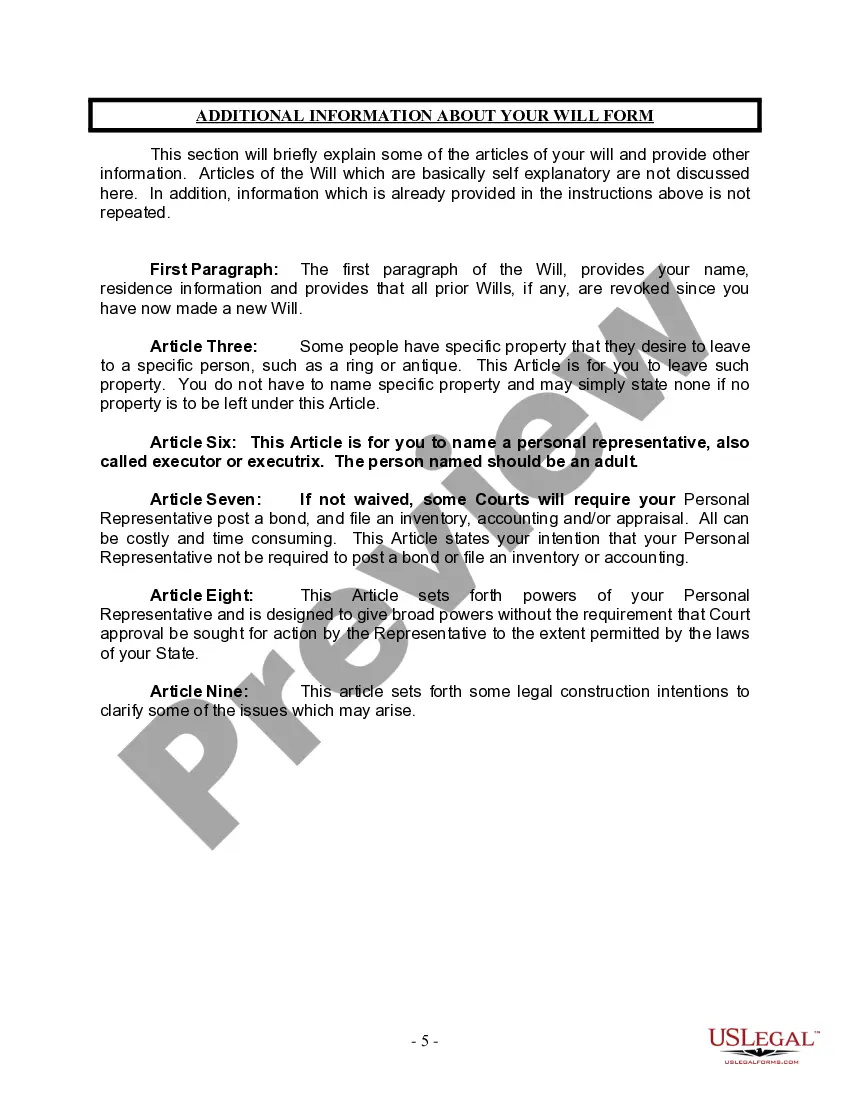
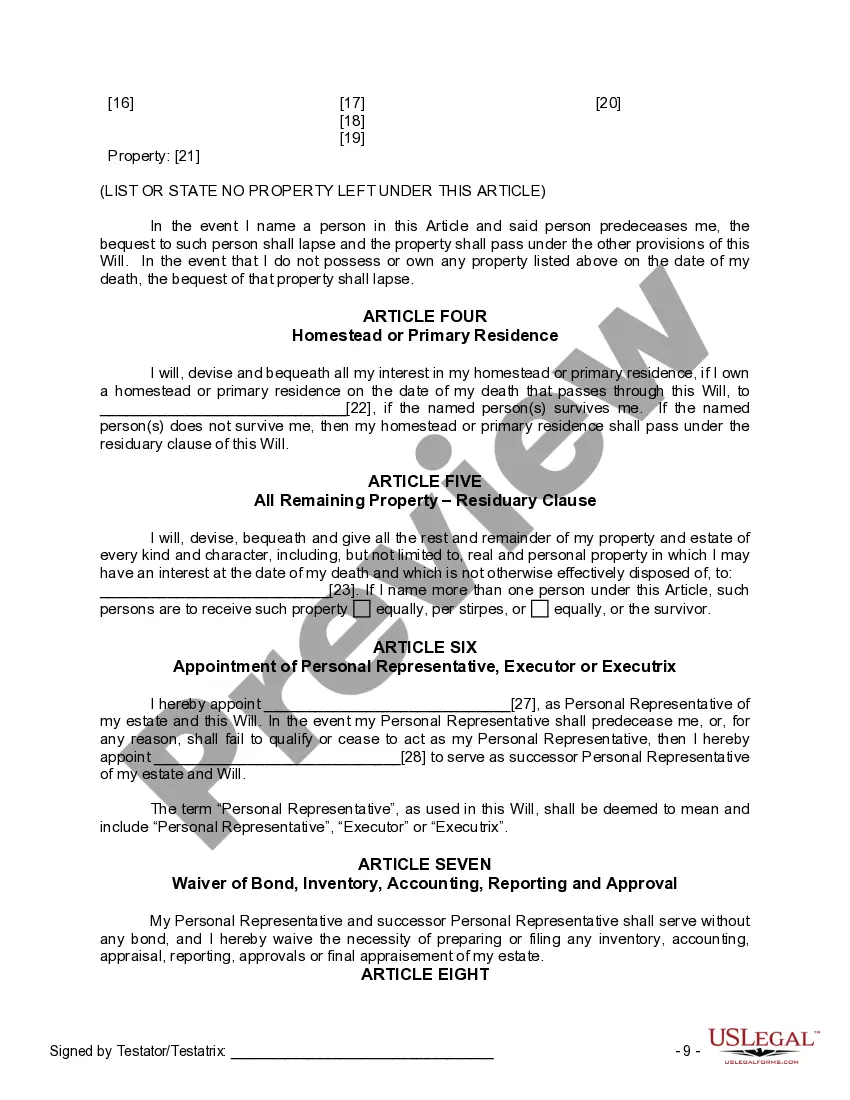
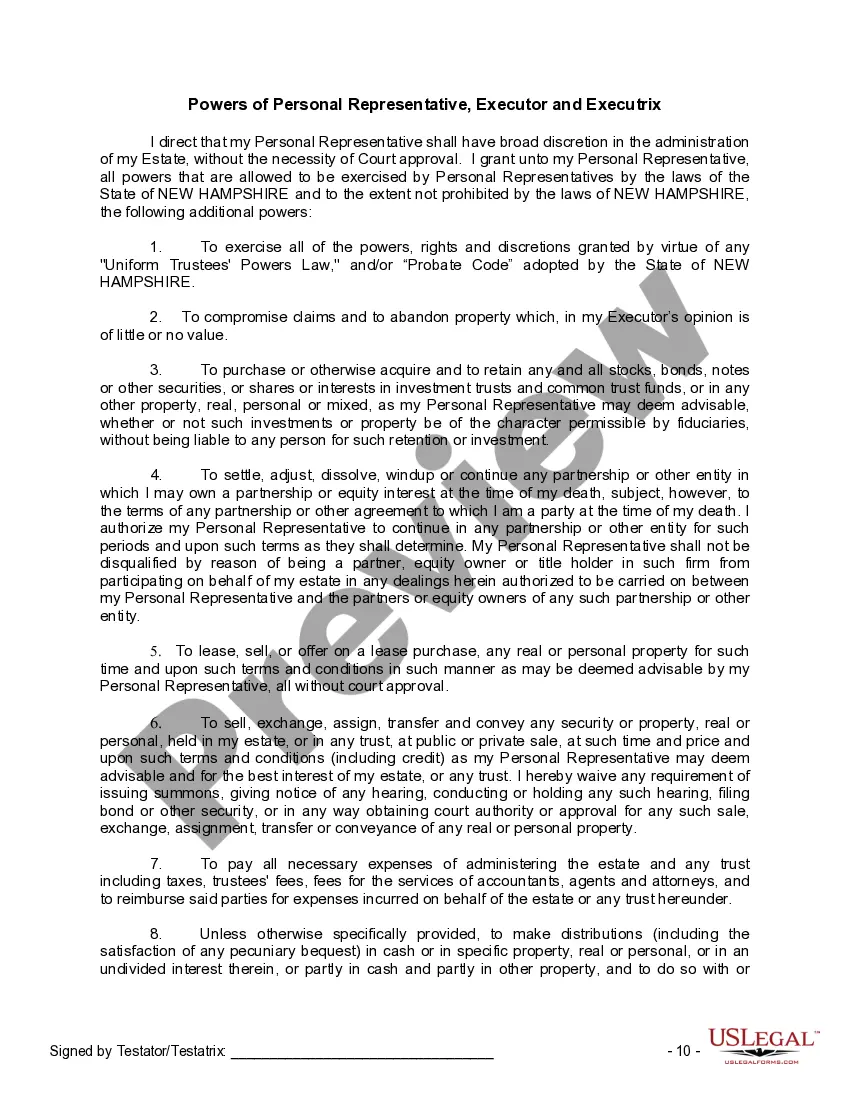
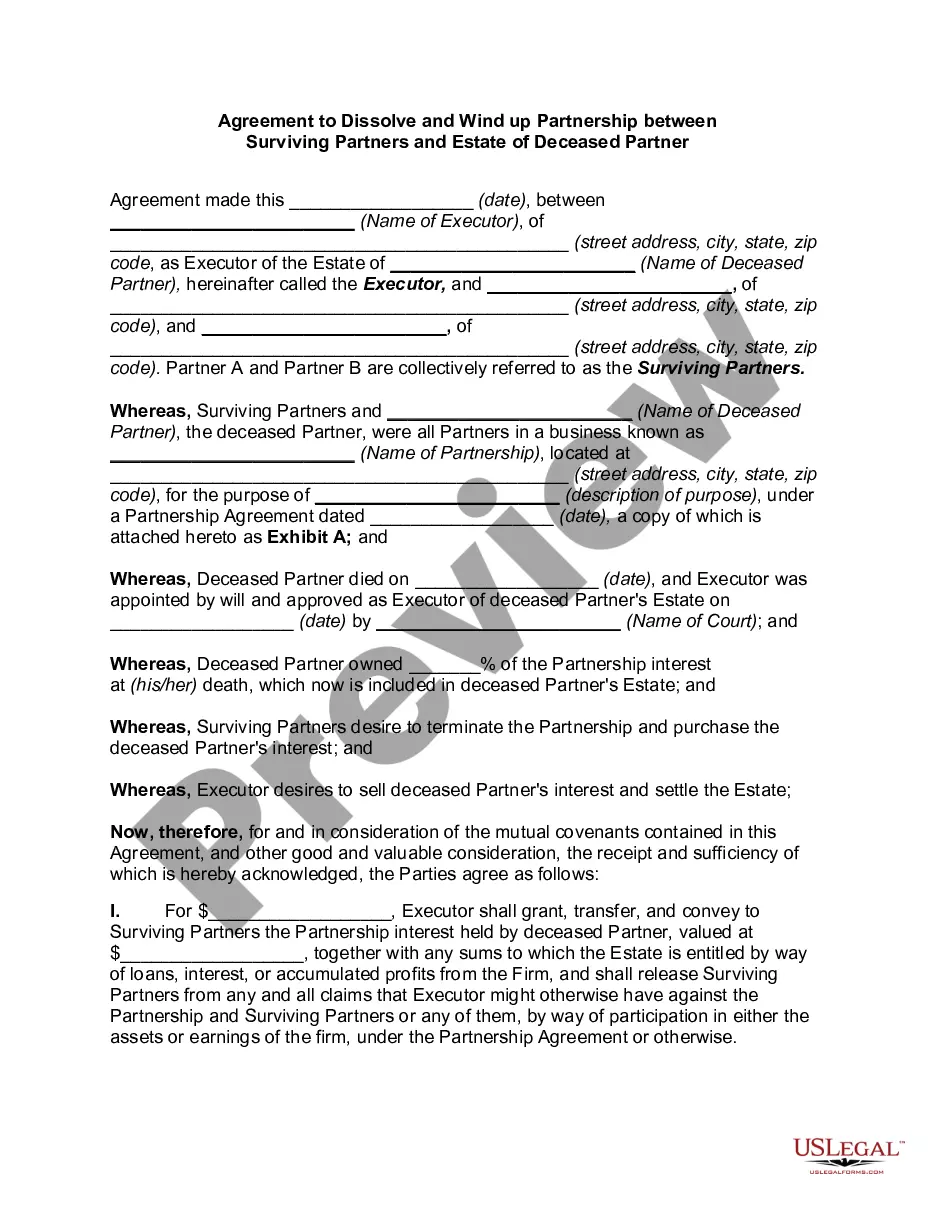
- Appointment of a personal representative or executor to manage your estate.
- Specification of beneficiaries who will inherit your property.
- Provisions for payment of debts and funeral expenses.
- Instructions for handling any homestead or primary residence you may own.
- Optional clauses for various additional directives, such as burial arrangements.



When this form is needed
This form is useful when an individual who is single and has no children wants to ensure their assets are allocated according to their wishes after death. It is also appropriate for those who wish to avoid the complexities of intestate succession, which can occur when someone dies without a will.
Who this form is for
This form is intended for:
- Single individuals with no children or dependents.
- Persons seeking clarity on the distribution of their assets after death.
- Those wanting to appoint a personal representative to oversee their estate.
How to prepare this document
To complete your Last Will and Testament, follow these steps:
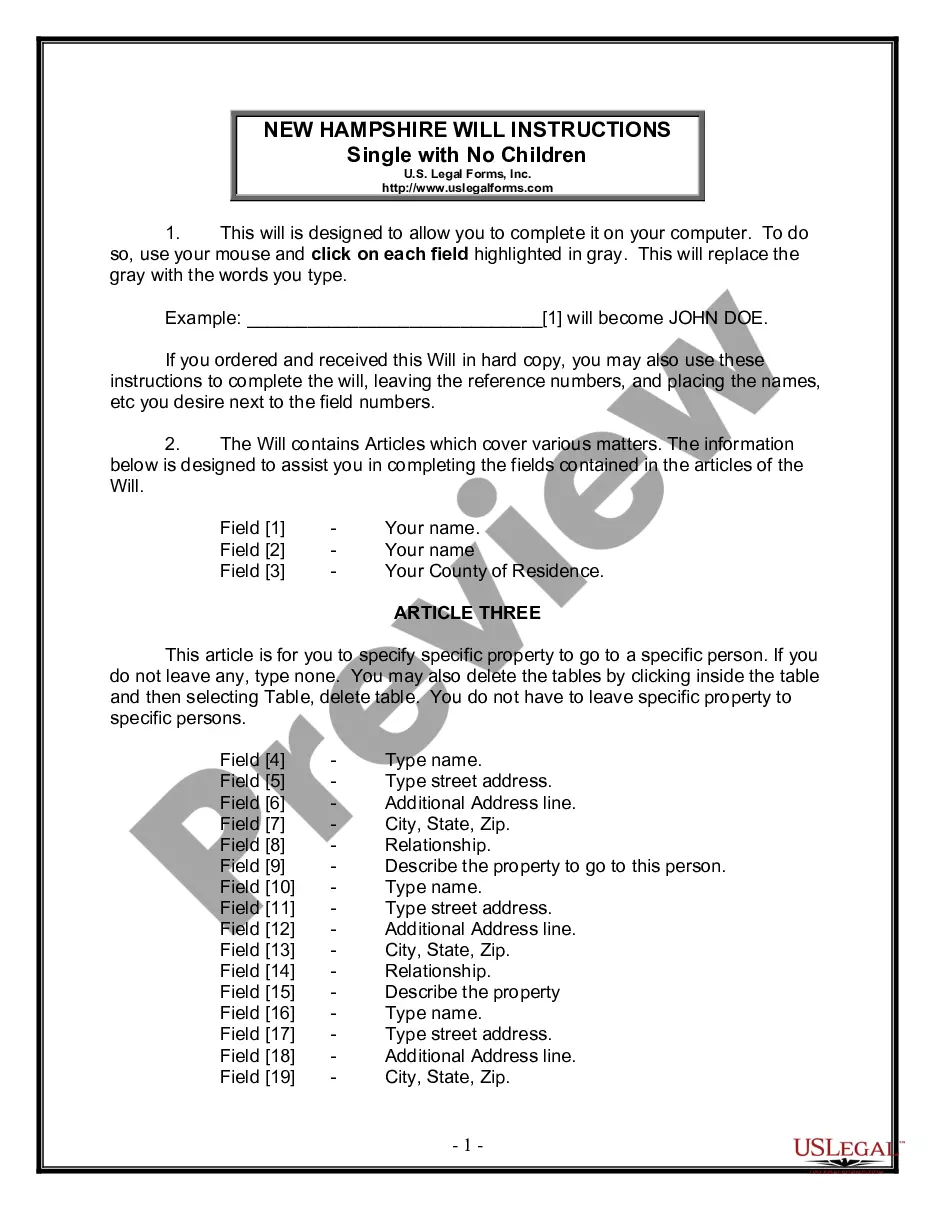
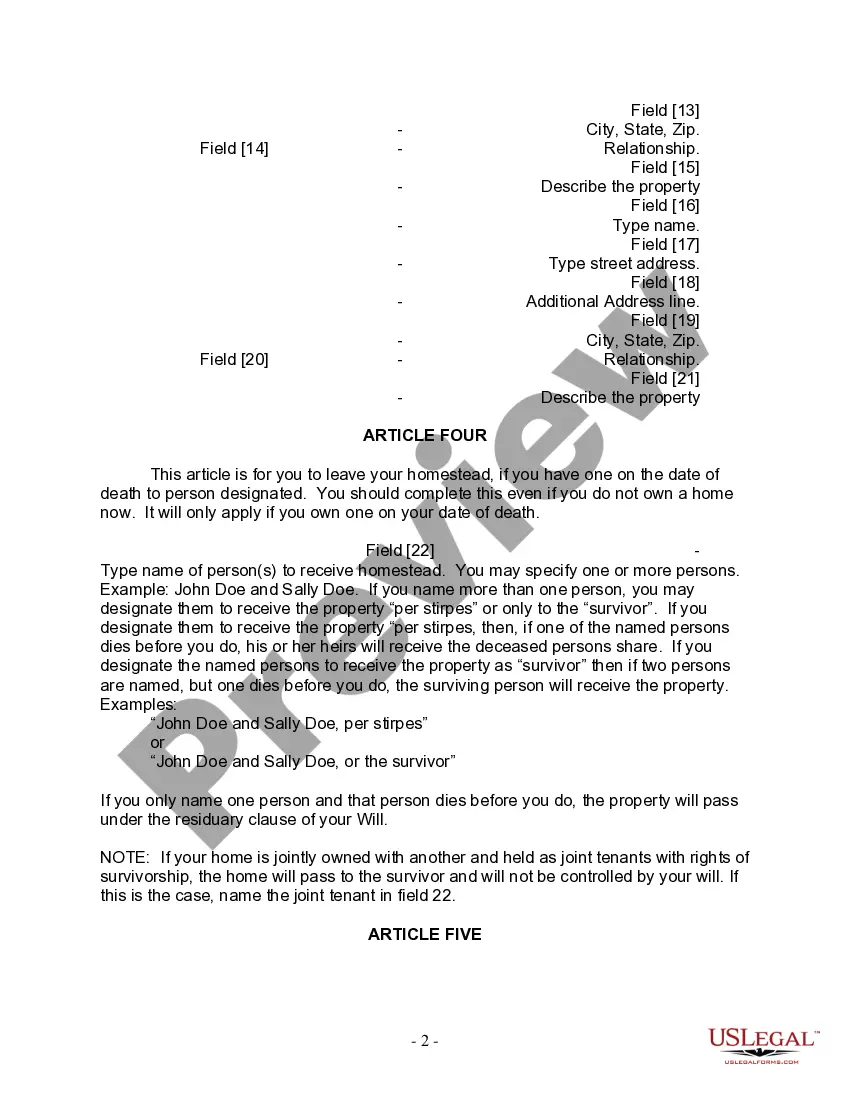
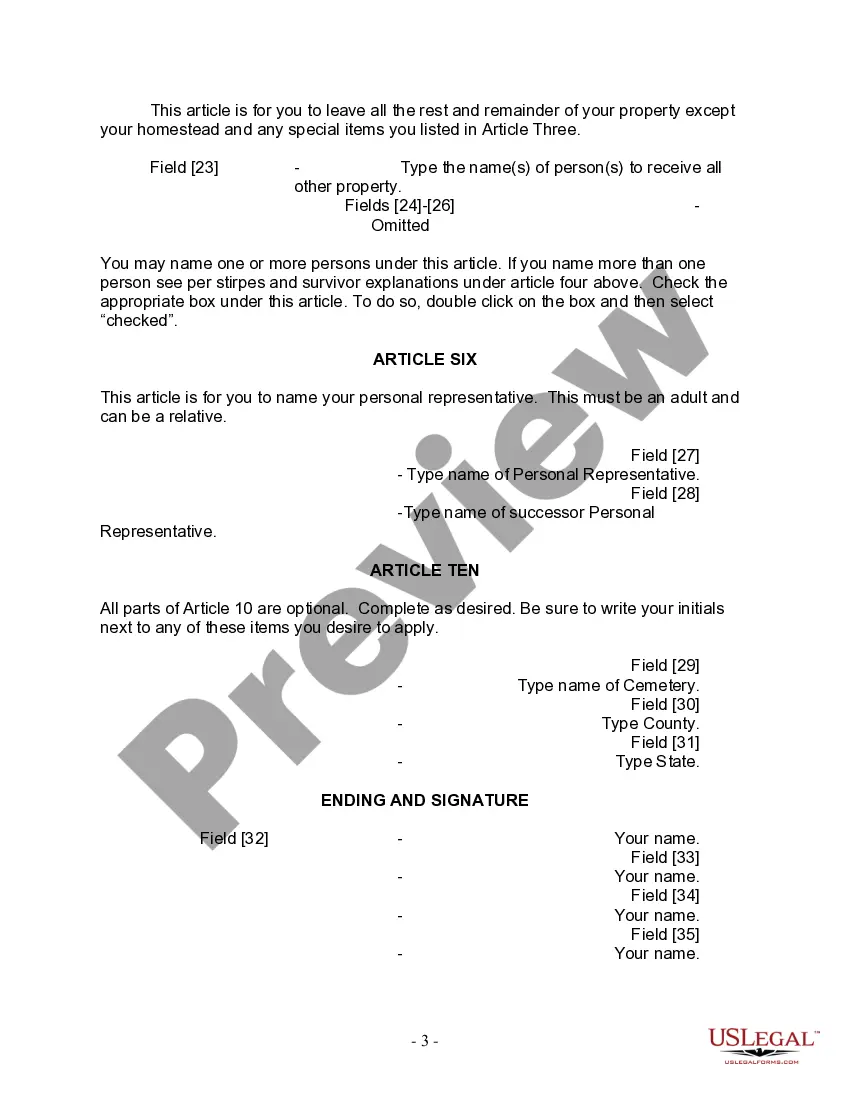
- Enter your personal details, including your name and county of residence.
- Identify the beneficiaries by specifying their names and the property they will receive.
- Designate your personal representative, ensuring they are an adult you trust.
- Provide instructions regarding the handling of your homestead, if applicable.
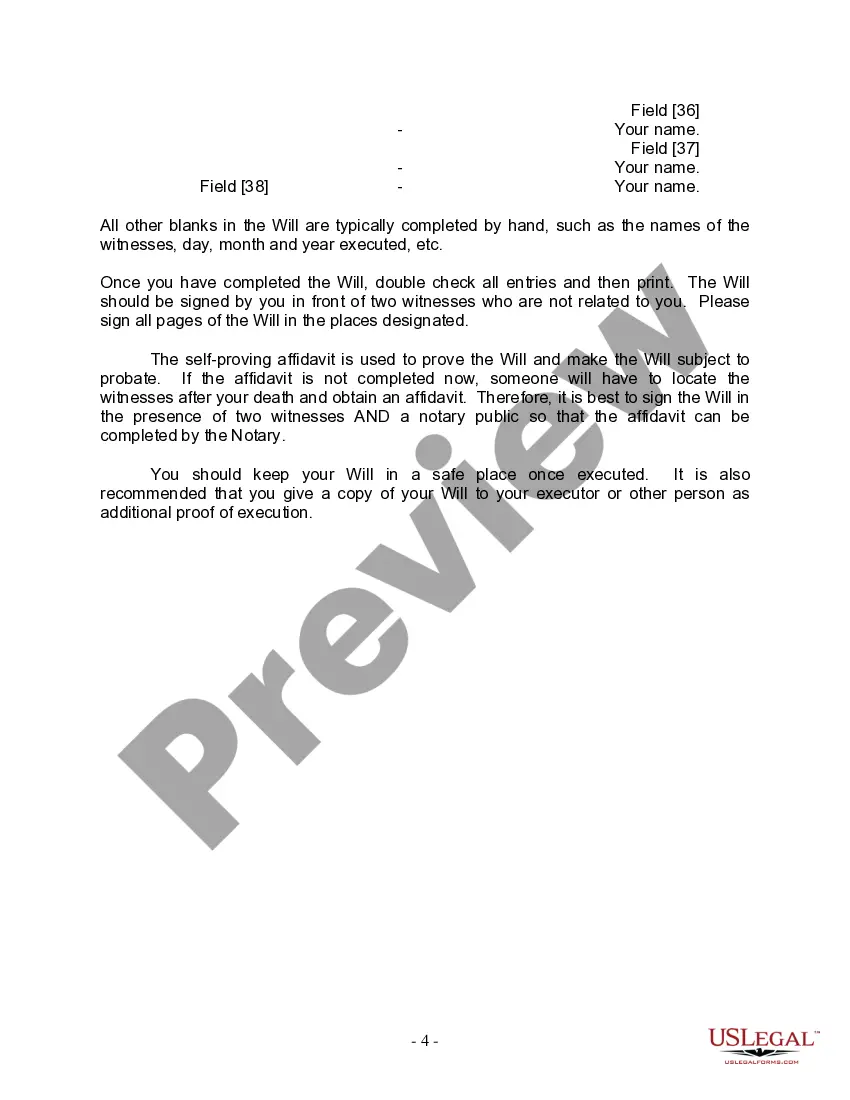
- Sign the document in the presence of two witnesses who are not beneficiaries, and if applicable, have it notarized.
Notarization requirements for this form
Yes, this form must be notarized to be legally valid. When executed correctly, it provides additional assurance that your wishes will be followed without dispute, as the notarization process helps confirm the authenticity of your signature.
Get your form ready online
Our built-in tools help you complete, sign, share, and store your documents in one place.
Make edits, fill in missing information, and update formatting in US Legal Forms—just like you would in MS Word.
Download a copy, print it, send it by email, or mail it via USPS—whatever works best for your next step.
Sign and collect signatures with our SignNow integration. Send to multiple recipients, set reminders, and more. Go Premium to unlock E-Sign.
If this form requires notarization, complete it online through a secure video call—no need to meet a notary in person or wait for an appointment.
We protect your documents and personal data by following strict security and privacy standards.

Make edits, fill in missing information, and update formatting in US Legal Forms—just like you would in MS Word.

Download a copy, print it, send it by email, or mail it via USPS—whatever works best for your next step.

Sign and collect signatures with our SignNow integration. Send to multiple recipients, set reminders, and more. Go Premium to unlock E-Sign.

If this form requires notarization, complete it online through a secure video call—no need to meet a notary in person or wait for an appointment.

We protect your documents and personal data by following strict security and privacy standards.
Mistakes to watch out for
- Failing to have the Will signed by two witnesses, which can invalidate the document.
- Not updating the Will after significant life changes, such as acquiring new assets.
- Assuming that joint property will be distributed according to the Will.
Why complete this form online
- This form can be easily completed online, allowing for quick edits and adjustments.
- Downloadable versions provide flexibility to complete the document at your convenience.
- Using this form ensures that you have a legally comprehensive document crafted with attention to detail.
Legal use & context
- A Last Will and Testament is a legally binding document that outlines how a person's assets are to be distributed after their death.
- Failure to create a will may result in state laws dictating asset distribution, often not aligning with the deceased's wishes.
- A properly executed will reduces complications during the probate process and clarifies the testatorâs intentions.
What to keep in mind
- This legal form is essential for single individuals with no children to specify their wishes for asset distribution.
- Compliance with New Hampshire laws ensures the willâs validity and enforceability.
- Using this form online offers convenience and reliability while ensuring comprehensive estate planning.
Glossary of terms used in this form
- Testator: The person who creates a will.
- Personal representative: The individual appointed to manage the estate of the deceased.
- Bequest: A gift of personal property made in a will.
- Residue: The remainder of an estate after specific gifts have been distributed and debts paid.
Looking for another form?

Form popularity
FAQ
Once a grant of probate has been issued, a will becomes a public document and anyone can apply to have a copy. The Gov.UK website provides information about searching for probate records, either online or by post.
Yes, people can write their own wills in New Hampshire.For instance, the will must be in writing, signed by the person whose will it is, and signed by two or more credible witnesses who must swear that the person's signature is genuine. The court does not provide standard forms for writing a will.
Obtain a Will From Probate Court The best way to view the will is to get the probate court file number. The executor can give you this information. You may also be able to access the file number by phone, online, or in person at the courthouse by providing the deceased's name and date of death.
When probate is granted, the will is kept by the Probate Service and any member of the public can get a copy. If you want to search for the will of a person who died recently, you can apply to the Probate Service for a standing search to be made.
Only the executors appointed in a will are entitled to see the will before probate is granted. If you are not an executor, the solicitors of the person who has died or the person's bank, if it has the will, cannot allow you to see it or send you a copy of it, unless the executors agree.
If you are not family and were never named in a previous will, you have no standing to contest the will. If the testator (the deceased) discussed an inheritance with you previously, write down as much as you can remember. Using this, estimate the dollar value (whether money or possessions).
No, in New Hampshire, you do not need to notarize your will to make it legal.A self-proving will speeds up probate because the court can accept the will without contacting the witnesses who signed it.