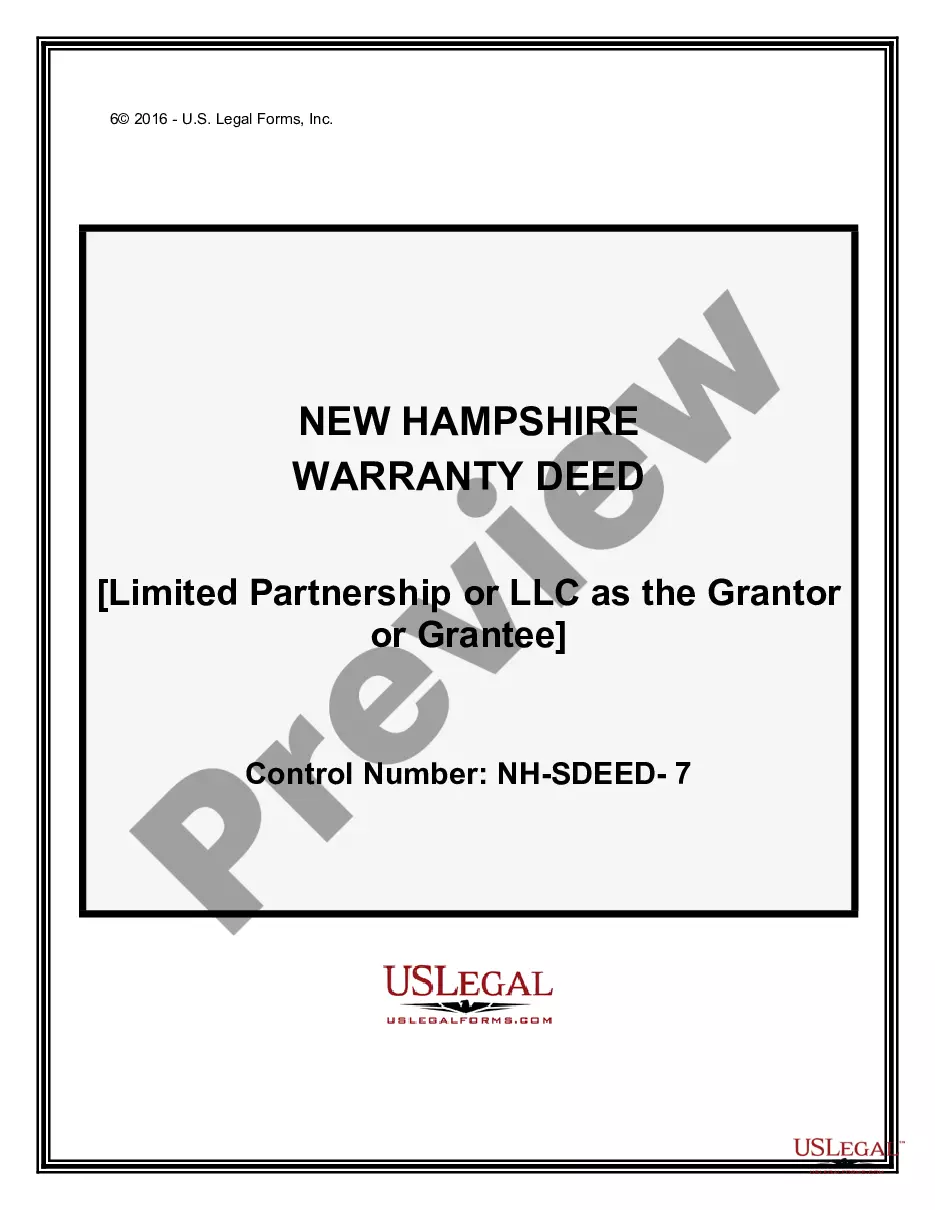
New Hampshire Warranty Deed from Limited Partnership or LLC is the Grantor, or Grantee
What this document covers
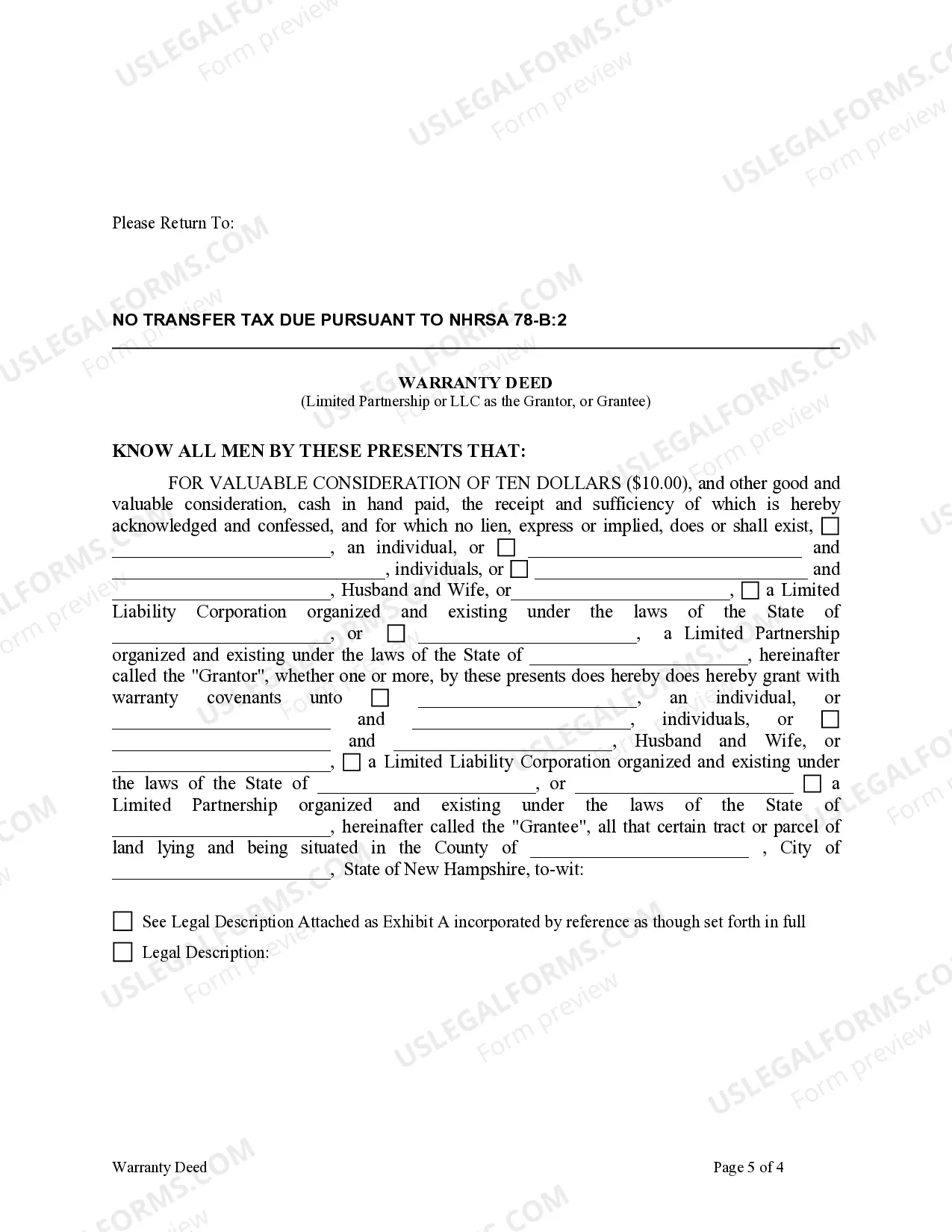
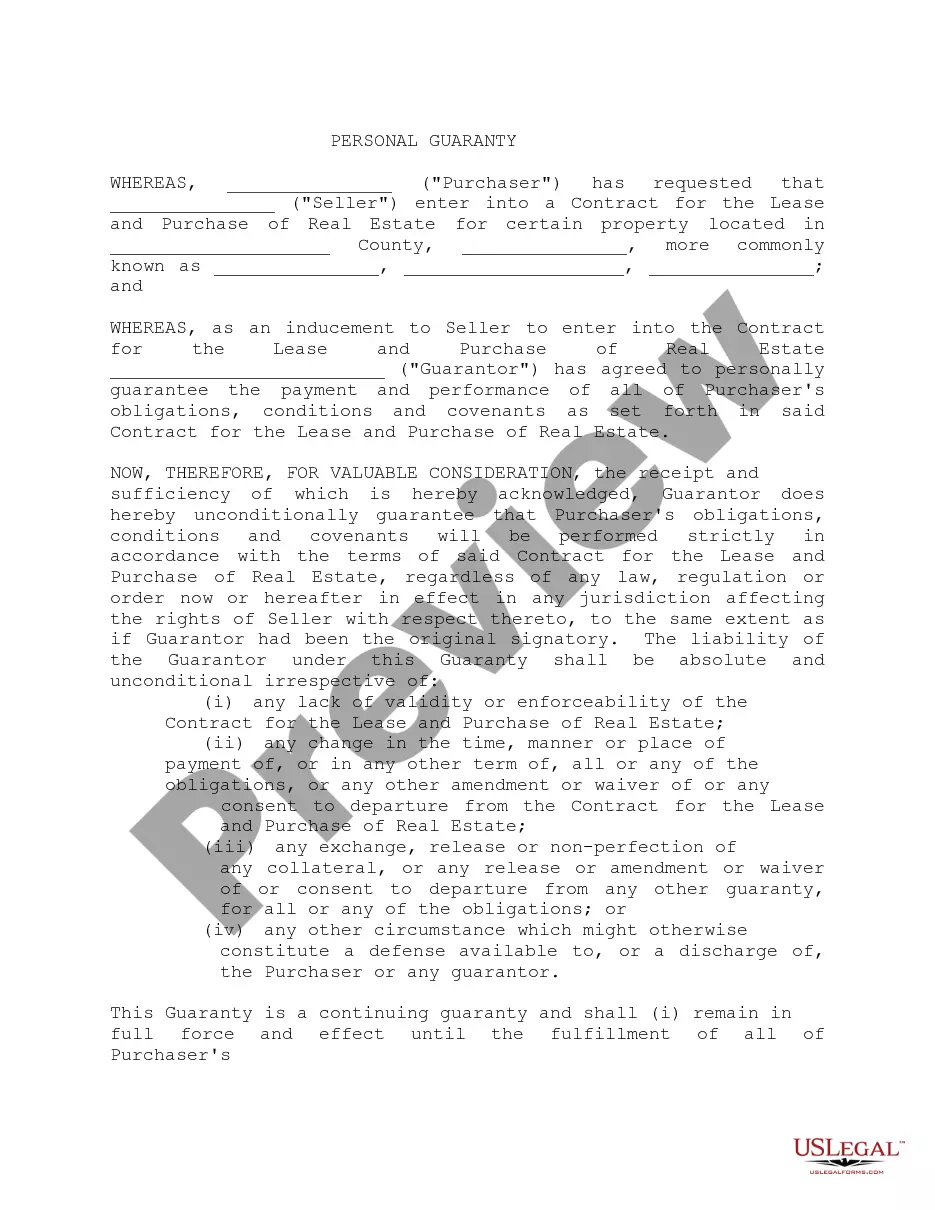
The Warranty Deed from Limited Partnership or LLC is a legal document used to transfer ownership of real estate from a limited partnership or limited liability company (LLC) as either the grantor or grantee. This form legally affirms that the property being transferred is free from any outstanding liens or encumbrances, providing greater protection to the parties involved. Unlike typical warranty deeds where individuals are the parties, this form addresses specific considerations relevant to business entities, ensuring compliance with applicable laws and regulations.
Key parts of this document
- Description of the parties involved, identifying the limited partnership or LLC as the grantor or grantee.
- Legal descriptions of the property being transferred.
- Clarity on the consideration involved in the transaction.
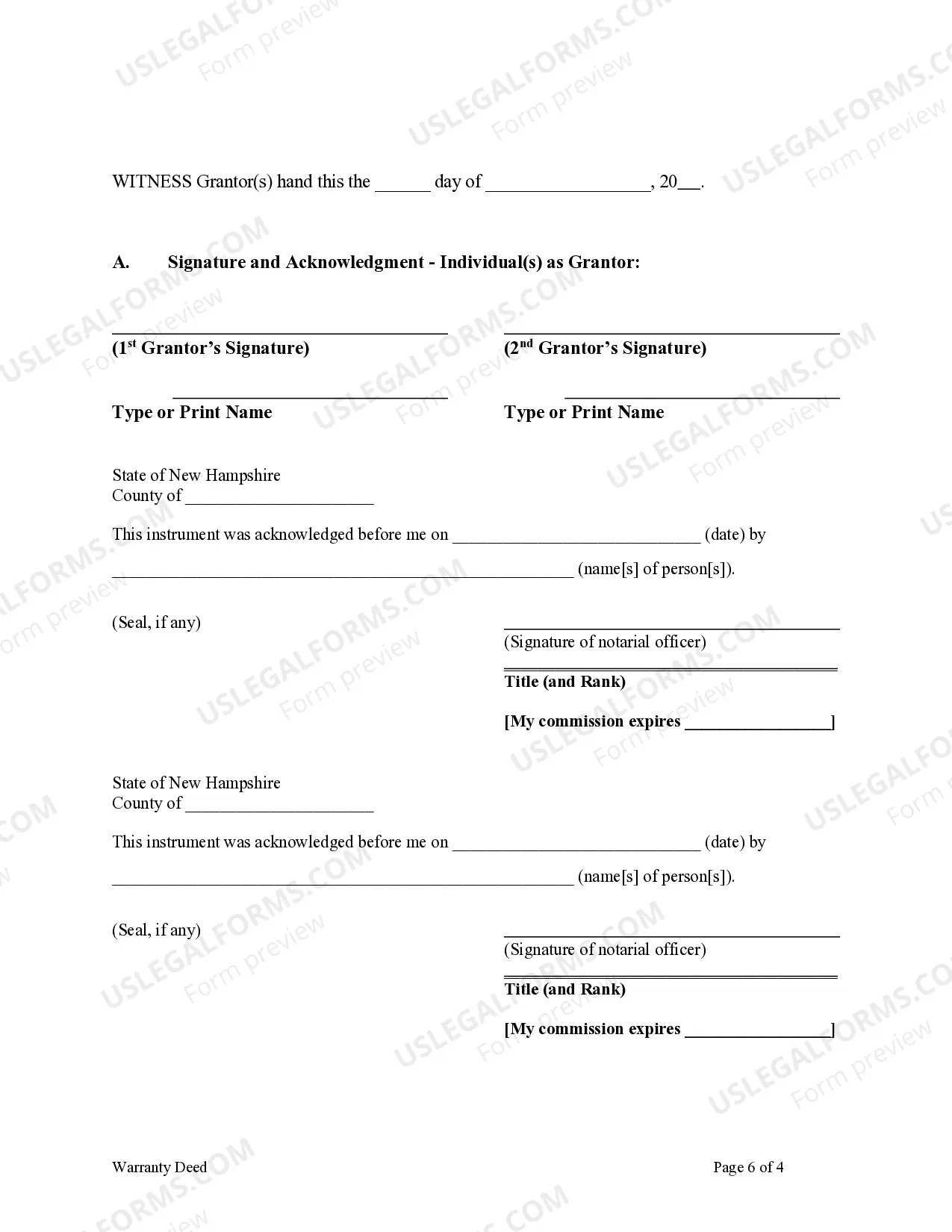
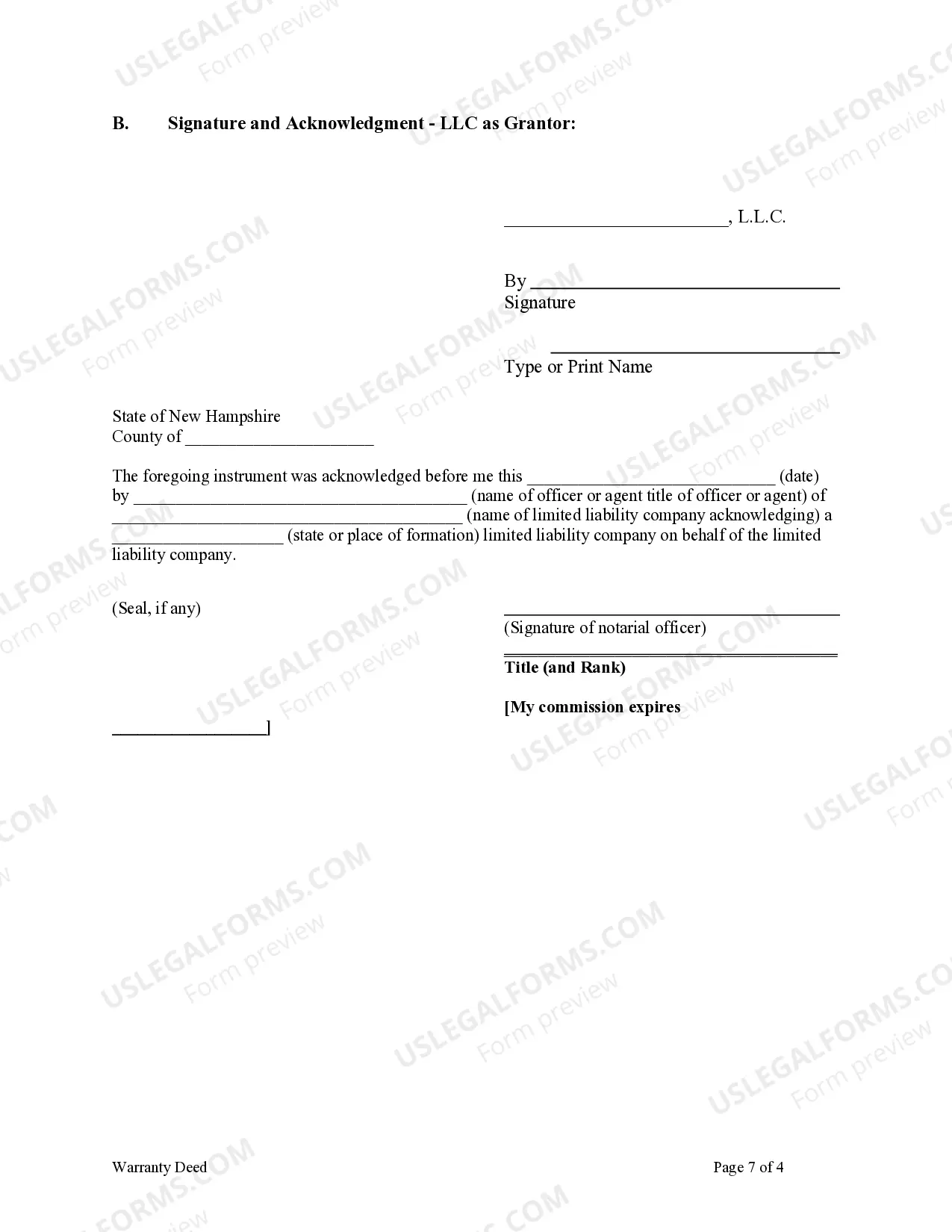
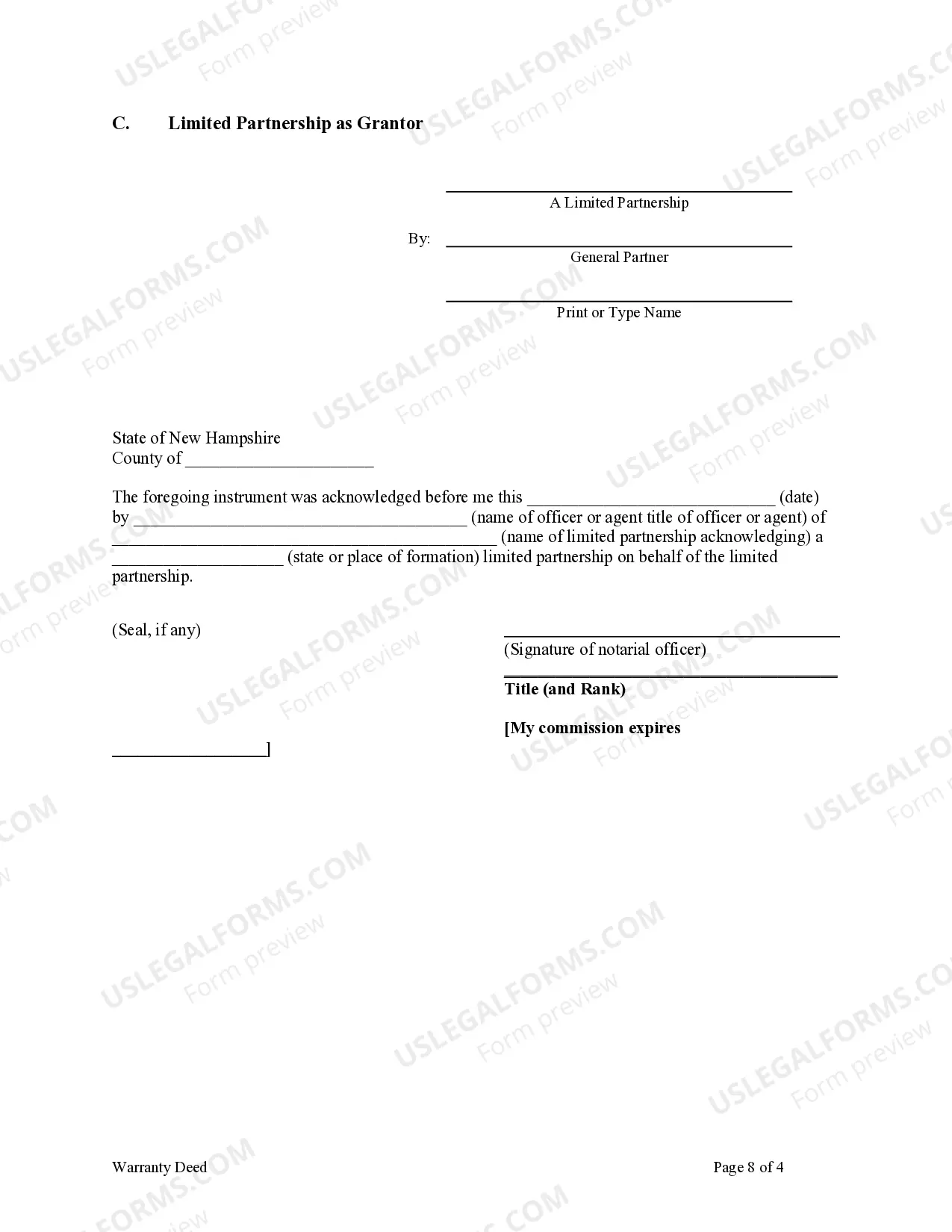
- Notarization requirements to validate the deed.
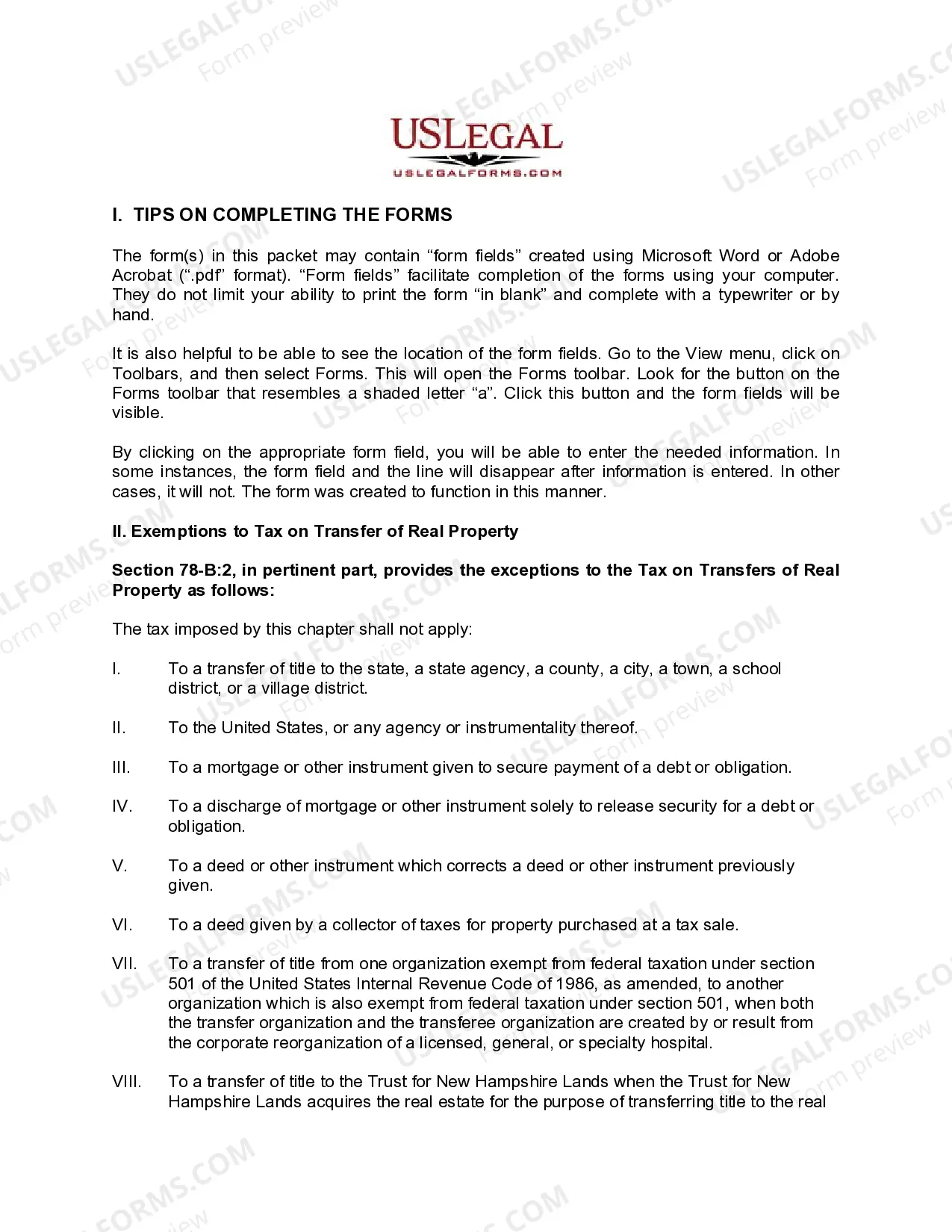
- Details regarding exemptions to the transfer tax.
- Signature fields for authorized representatives of the partnership or LLC.






When this form is needed
This Warranty Deed is typically used when a limited partnership or LLC wishes to transfer real estate property to another party, whether another business entity or an individual. It is crucial in scenarios such as selling or gifting property, relocating assets, or reorganizing business structures within a partnership or LLC.
Intended users of this form
This form is suitable for:
- Limited partnerships involved in the sale or transfer of real estate.
- Limited liability companies transferring property ownership.
- Legal representatives or officers within entities authorized to sign deeds.
- Any stakeholders in a partnership or LLC who are parties to a property transaction.
Completing this form step by step
- Identify the parties: Clearly specify the limited partnership or LLC as the grantor and the grantee.
- Specify the property: Provide a detailed legal description of the real estate being transferred.
- Enter consideration: Record the amount involved in the transfer, if applicable.
- Complete signature fields: Ensure that all authorized representatives sign the document.
- Notarize the document: Have the form notarized to ensure its legality and effectiveness.
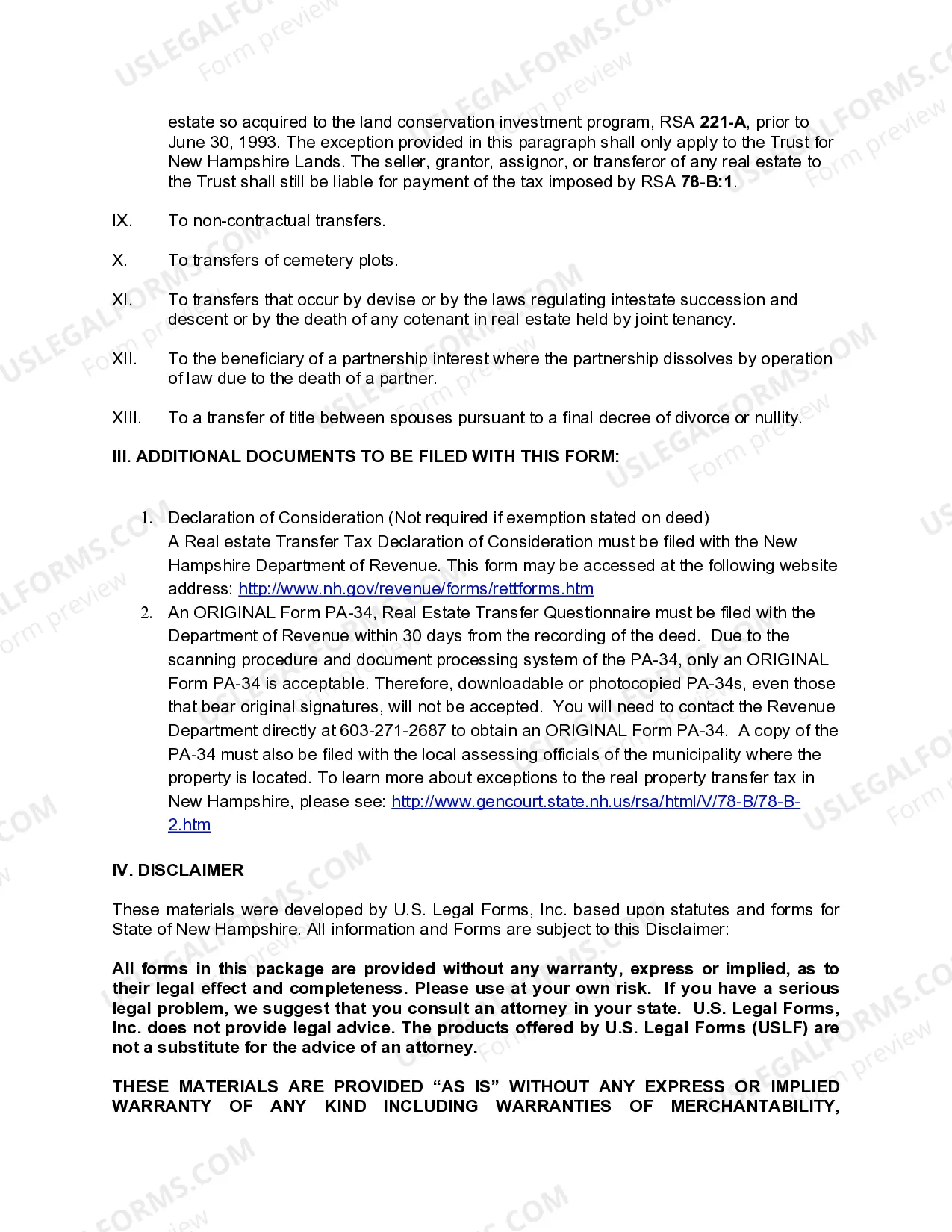
- File additional documents: Be aware of the requirement to submit related forms to relevant state departments.
Is notarization required?
Yes, this form must be notarized to be legally valid. Notarization confirms the identity of the parties signing the deed and helps prevent fraud. US Legal Forms offers integrated online notarization services with secure video calls available 24/7, so you can easily obtain notarization without needing to travel.
Get your form ready online
Our built-in tools help you complete, sign, share, and store your documents in one place.
Make edits, fill in missing information, and update formatting in US Legal Forms—just like you would in MS Word.
Download a copy, print it, send it by email, or mail it via USPS—whatever works best for your next step.
Sign and collect signatures with our SignNow integration. Send to multiple recipients, set reminders, and more. Go Premium to unlock E-Sign.
If this form requires notarization, complete it online through a secure video call—no need to meet a notary in person or wait for an appointment.
We protect your documents and personal data by following strict security and privacy standards.

Make edits, fill in missing information, and update formatting in US Legal Forms—just like you would in MS Word.

Download a copy, print it, send it by email, or mail it via USPS—whatever works best for your next step.

Sign and collect signatures with our SignNow integration. Send to multiple recipients, set reminders, and more. Go Premium to unlock E-Sign.

If this form requires notarization, complete it online through a secure video call—no need to meet a notary in person or wait for an appointment.

We protect your documents and personal data by following strict security and privacy standards.
Mistakes to watch out for
- Failing to include a clear legal description of the property.
- Not having the deed notarized, which may affect its validity.
- Omitting signatures from all required parties.
- Incorrectly completing the consideration section.
- Neglecting to file necessary additional forms or declarations.
Why use this form online
- Convenience: Access and complete your form anywhere with an internet connection.
- Editability: Easily make changes to your document without the need for handwritten corrections.
- Reliability: Obtain forms drafted by licensed attorneys, ensuring legal compliance.
- Time-saving: Download and complete your form instantly without the need to visit legal offices.
Legal use & context
- This warranty deed offers protection against future title claims, making it a preferred choice for real estate transactions.
- The form complies with New Hampshire's specific legal requirements for property transfer, bolstering its enforceability.
- Using this form minimizes disputes related to ownership rights by explicitly stating the terms of the transfer.
Quick recap
- The Warranty Deed from Limited Partnership or LLC is crucial for transferring property ownership securely.
- Proper completion, including notarization, is essential for the deed's legal validity.
- Using this form correctly can prevent future legal complications regarding property ownership.
Looking for another form?
Form popularity
FAQ
It's important to note that a warranty deed does not actually prove the grantor has ownership (a title search is the best way to prove that), but it is a promise by the grantor that they are transferring ownership and if it turns out they don't actually own the property, the grantor will be responsible for compensating
A grantee is the recipient of something, such as a college grant or real estate property. A grantor is a person or entity that transfers to another person or entity the interest or ownership rights to an asset. Legal documents, such as deeds, detail the transfer of assets between grantors and grantees.
No, California does not require that the Grantee sign a warranty deed. However, some states and counties require that the deed be signed by the Grantee in addition to the Grantor.
In general, a grantor is someone who transfers a property right to a grantee. In a real estate transaction, the grantor is the current holder of the property right, or in other words, the seller. The deed, which transfers ownership, is the grant.
Typically, the lender will provide you with a copy of the deed of trust after the closing. The original warranty deeds are often mailed to the grantee after they are recorded. These are your original copies and should be kept in a safe place, such as a fireproof lockbox or a safe deposit box at a financial institution.
In a Warranty Deed, the grantee is the person who the interest in a property is being transferred to. For example, if you are buying a property from someone else, you are the grantee, and the person selling it is the grantor.
Grantor's signature: The grantor must sign the deed for it to be valid. Usually, if more than one person owns a property, all the owners must sign. In some states a husband or wife who own property by themselves may have to have the spouse also sign the deed even though the spouse does not have title to the property.
No, in most states, the Grantee is not required to sign the Quitclaim Deed. However, some counties do require that the Quitclaim Deed be signed by the Grantee in addition to the Grantor.
The Grantor is any person conveying or encumbering, whom any Lis Pendens, Judgments, Writ of Attachment, or Claims of Separate or Community Property shall be placed on record. The Grantor is the seller (on deeds), or borrower (on mortgages). The Grantor is usually the one who signed the document.