New Hampshire Letter from Landlord to Tenant about Tenant engaging in illegal activity in premises as documented by law enforcement and if repeated, lease terminates
What is this form?
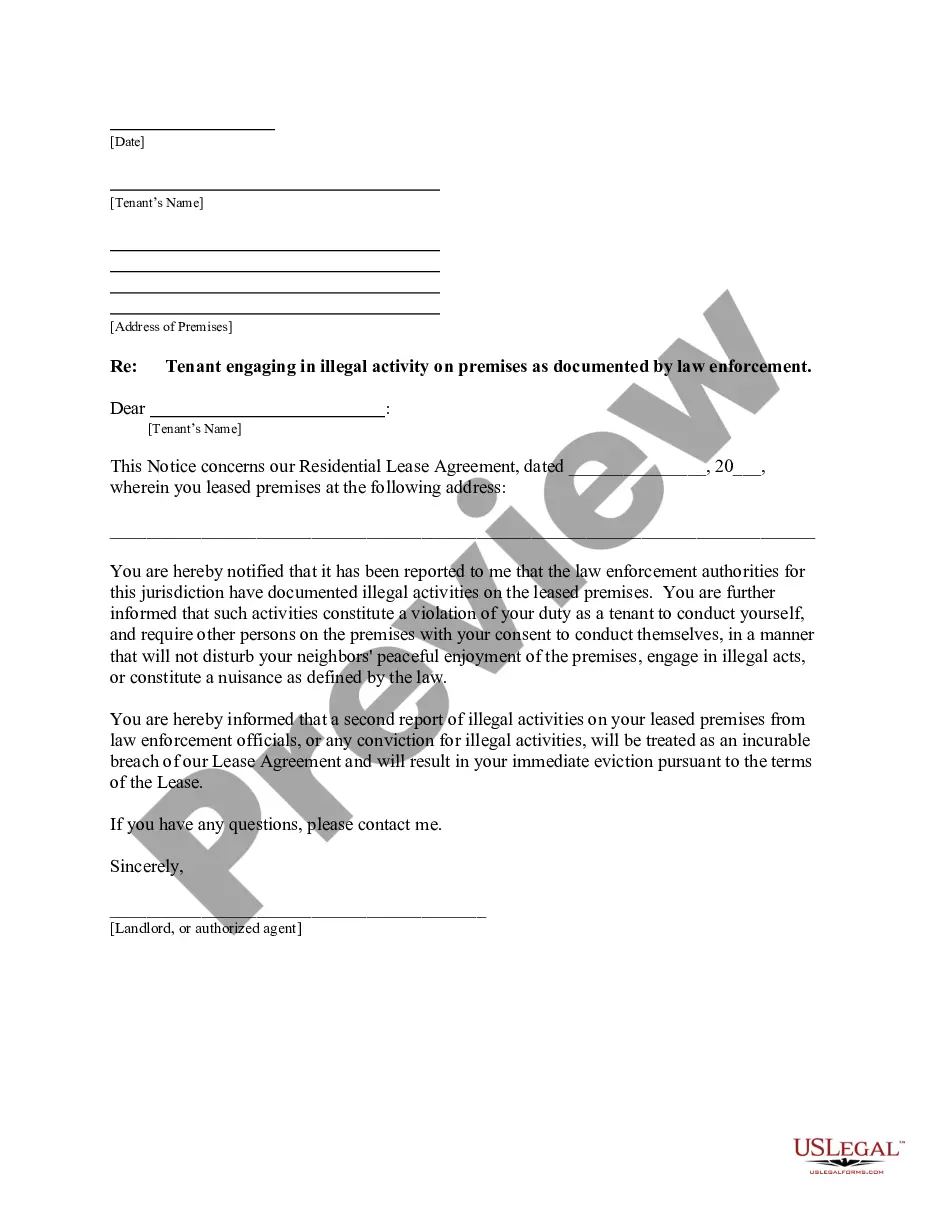
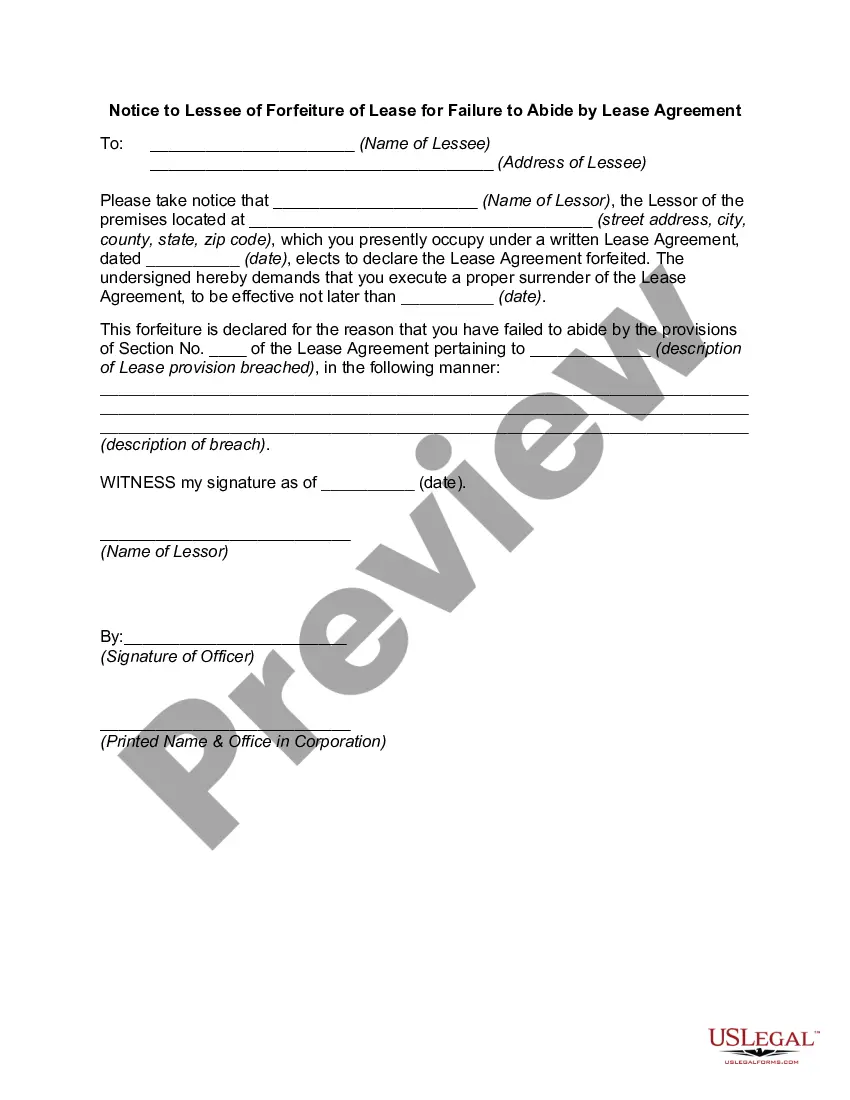
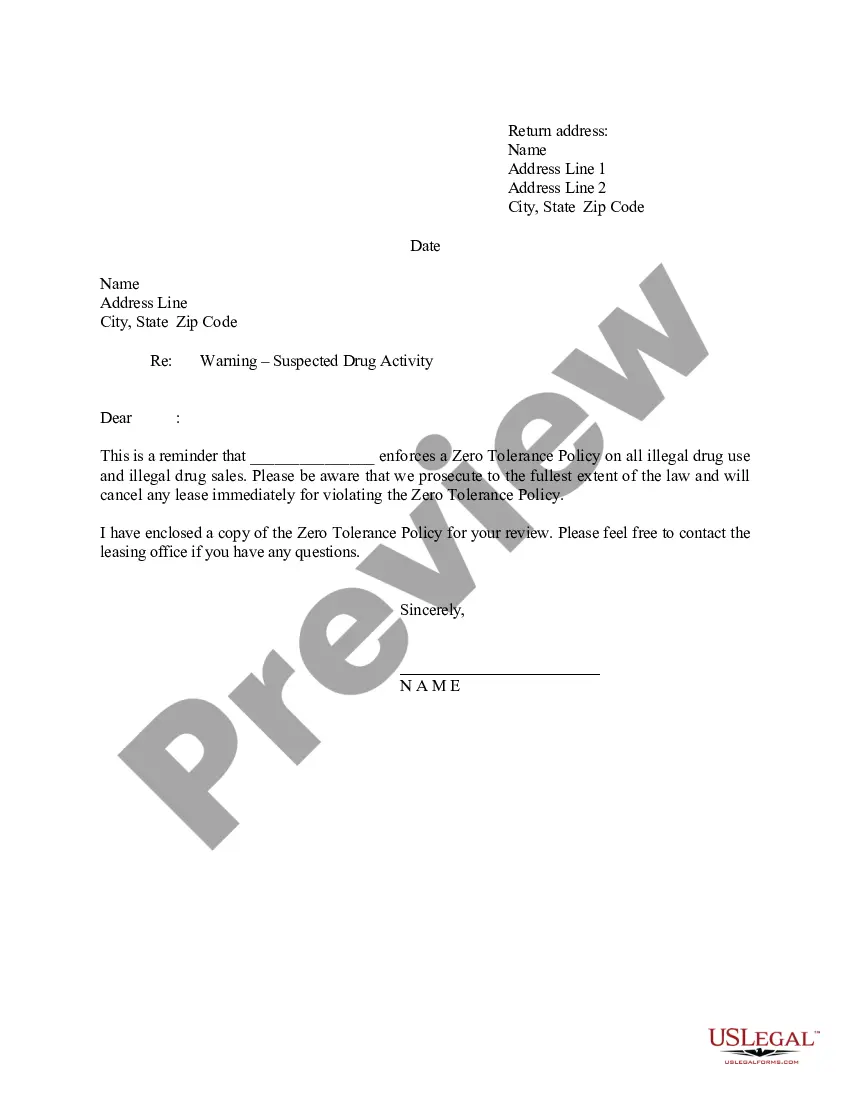
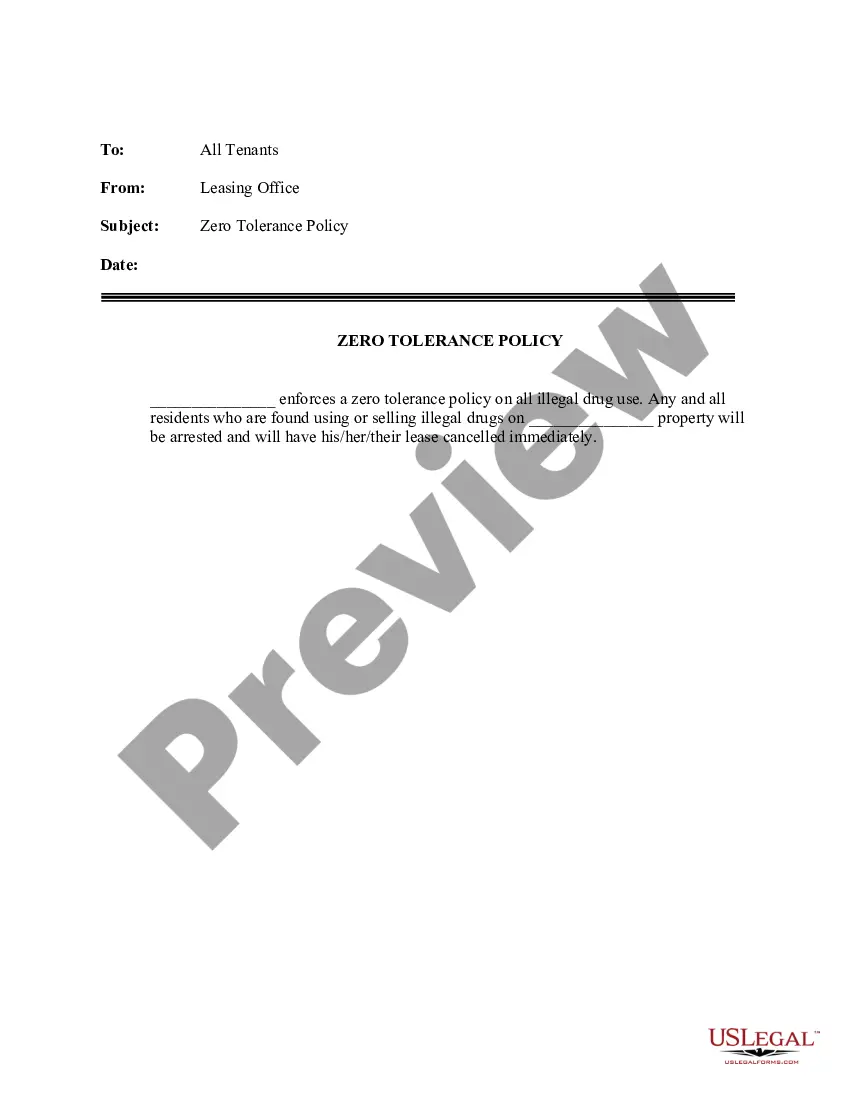
This form is a formal letter from a landlord to a tenant addressing illegal activities reported by law enforcement occurring on the leased premises. It serves as a notice demanding the tenant to cease such activities, warning that repeated offenses may lead to termination of the lease. Unlike other tenant communications, this letter specifically focuses on documented illegal conduct, highlighting the seriousness of the issue and the potential consequences for the tenant.
Main sections of this form
- A statement notifying the tenant of illegal activities reported by law enforcement.
- An explanation of the tenant's responsibilities regarding conduct on the premises.
- A warning that a second report or conviction for illegal activities will result in eviction.
- A space for the landlord's signature and contact information for questions.

Common use cases
This letter should be used when a landlord has received reports from law enforcement about illegal activities taking place on the property. It is essential to inform the tenant formally about their violations and the potential consequences. This form is particularly useful if a landlord wishes to document the issue before proceeding with eviction or further legal action.
Who this form is for
- Landlords who suspect their tenants are engaging in illegal activities.
- Property managers acting on behalf of the landlord for tenant relations.
- Landlords facing repeated violations under their lease agreements.
Instructions for completing this form
- Identify the parties involved, including the landlord's name and the tenant's name.
- Specify the property address where the illegal activities occurred.
- Clearly outline the illegal activities reported to you by law enforcement.
- Include a statement indicating the consequences of repeated illegal conduct.
- Sign the letter and provide your contact information for any questions.
Is notarization required?
This form usually doesn’t need to be notarized. However, local laws or specific transactions may require it. Our online notarization service, powered by Notarize, lets you complete it remotely through a secure video session, available 24/7.
Get your form ready online
Our built-in tools help you complete, sign, share, and store your documents in one place.
Make edits, fill in missing information, and update formatting in US Legal Forms—just like you would in MS Word.
Download a copy, print it, send it by email, or mail it via USPS—whatever works best for your next step.
Sign and collect signatures with our SignNow integration. Send to multiple recipients, set reminders, and more. Go Premium to unlock E-Sign.
If this form requires notarization, complete it online through a secure video call—no need to meet a notary in person or wait for an appointment.
We protect your documents and personal data by following strict security and privacy standards.

Make edits, fill in missing information, and update formatting in US Legal Forms—just like you would in MS Word.

Download a copy, print it, send it by email, or mail it via USPS—whatever works best for your next step.

Sign and collect signatures with our SignNow integration. Send to multiple recipients, set reminders, and more. Go Premium to unlock E-Sign.

If this form requires notarization, complete it online through a secure video call—no need to meet a notary in person or wait for an appointment.

We protect your documents and personal data by following strict security and privacy standards.
Common mistakes to avoid
- Failing to document specific illegal activities reported by law enforcement.
- Not providing clear consequences, which may confuse the tenant.
- Forgetting to include contact information for follow-up inquiries.
Advantages of online completion
- Immediate access to a professionally drafted letter for legal compliance.
- Easy to customize for specific situations and tenant names.
- Convenient options for downloading and printing the document as needed.
Legal use & context
- A valid notification letter strengthens the landlord's position in possible legal proceedings.
- Provides a documented record of communication regarding tenant conduct for future reference.
- Helps landlords comply with notice requirements under landlord-tenant law.
Key takeaways
- This letter is an important tool for addressing illegal tenant behavior.
- Documentation of illegal activities is crucial for lease enforcement.
- Contact landlords for clarification or questions regarding the letter's content.
Looking for another form?
Form popularity
FAQ
Be in writing. be signed and dated by you as the property manager, or by your client. be properly addressed to the tenant. give the day on which the residential tenancy agreement is terminated and by which the tenant is required to vacate. where appropriate, give the grounds or reason for the notice.
Send a 3-day notice to fix or quit. If the tenant doesn't follow through with a fix, visit your local courthouse and begin a filing for eviction. In some states, you can file to only evict the unauthorized tenant. In others, you'll have the option to evict your tenant as well as the unauthorized occupant.
Tell Them The Problem & Consequences. Explain the reason that you want the tenant to go. Offer Them a Way Out. Let the tenant know that you are willing to give them a lump sum of cash in agreement for leaving the property. The Release.
If your landlord breaches the warranty of habitability or the warranty of quiet enjoyment, you may be able to sue her to recover monetary damages.In some states, such as California and Arizona, you may be able to seek emotional distress damages if the landlord's actions were particularly egregious.
Know your state's landlord/tenant laws. Read and respond to the court summons. Try to work out a settlement. Consider legal counsel. Show up for court. Look sharp and provide evidence.
If you're seeking damages for emotional distress caused by a landlord's discrimination, or punitive damages for especially blatant and intentional discrimination, a lawsuit may well be your best bet. Understand what's involved in suing your landlord. You may file a lawsuit in either federal or state court.
The landlord had a duty to reasonably maintain the property; The landlord knew or should have known of the dangerous condition; The landlord breached their duty by failing to repair/fix the dangerous condition;
The rental property address, including unit number (if applicable) The names of all tenants on the lease agreement. The date the lease violation notice was written. The specific reason for the notice. The time and date the violation occurred (if applicable)
A landlord cannot legally evict you without a court order, whether or not you have a lease.) How long does it take for a landlord to evict a tenant? A landlord can evict a tenant only by going through a formal eviction proceeding, which can take a few weeks from start to finish.