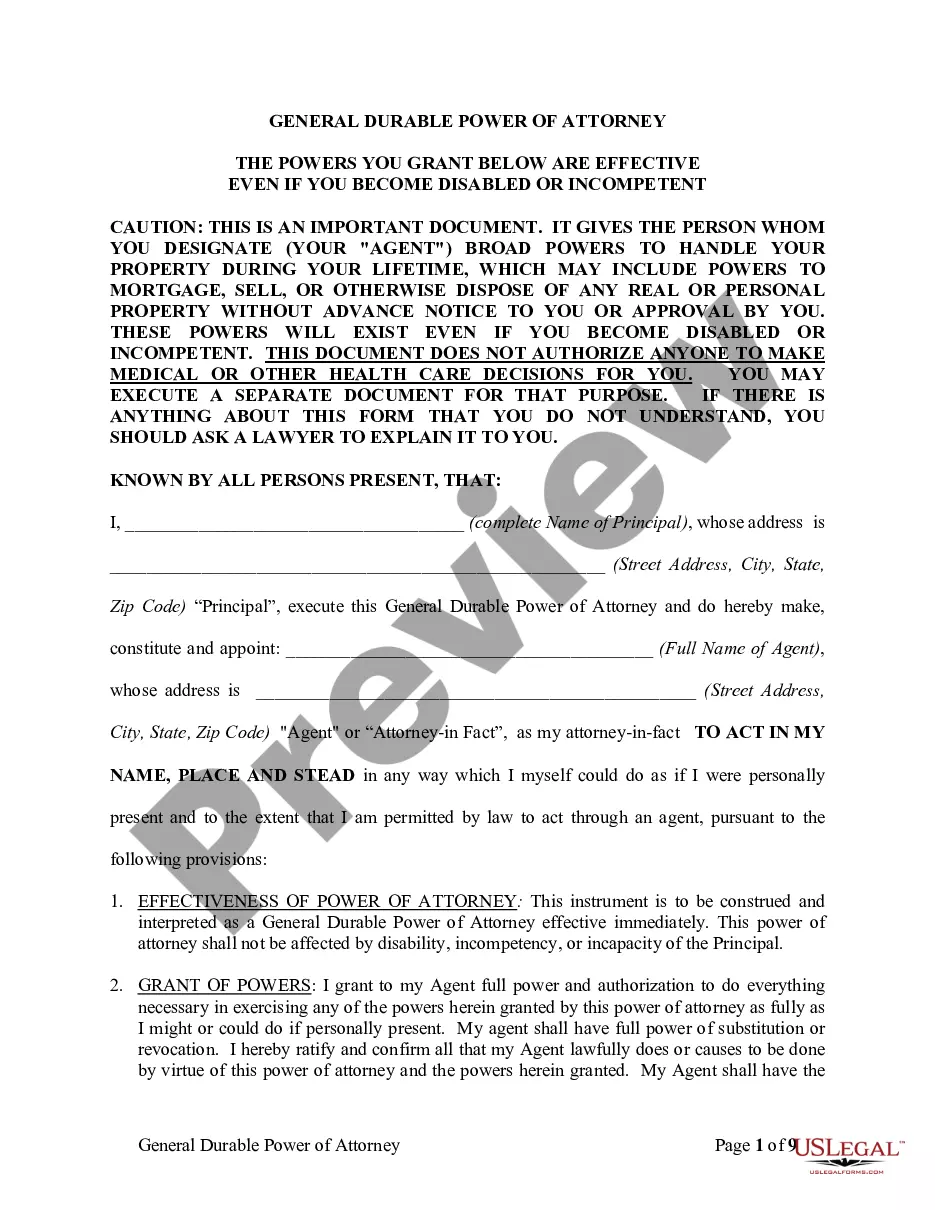
New Jersey Complaint for Dishonored Check
What is this form?
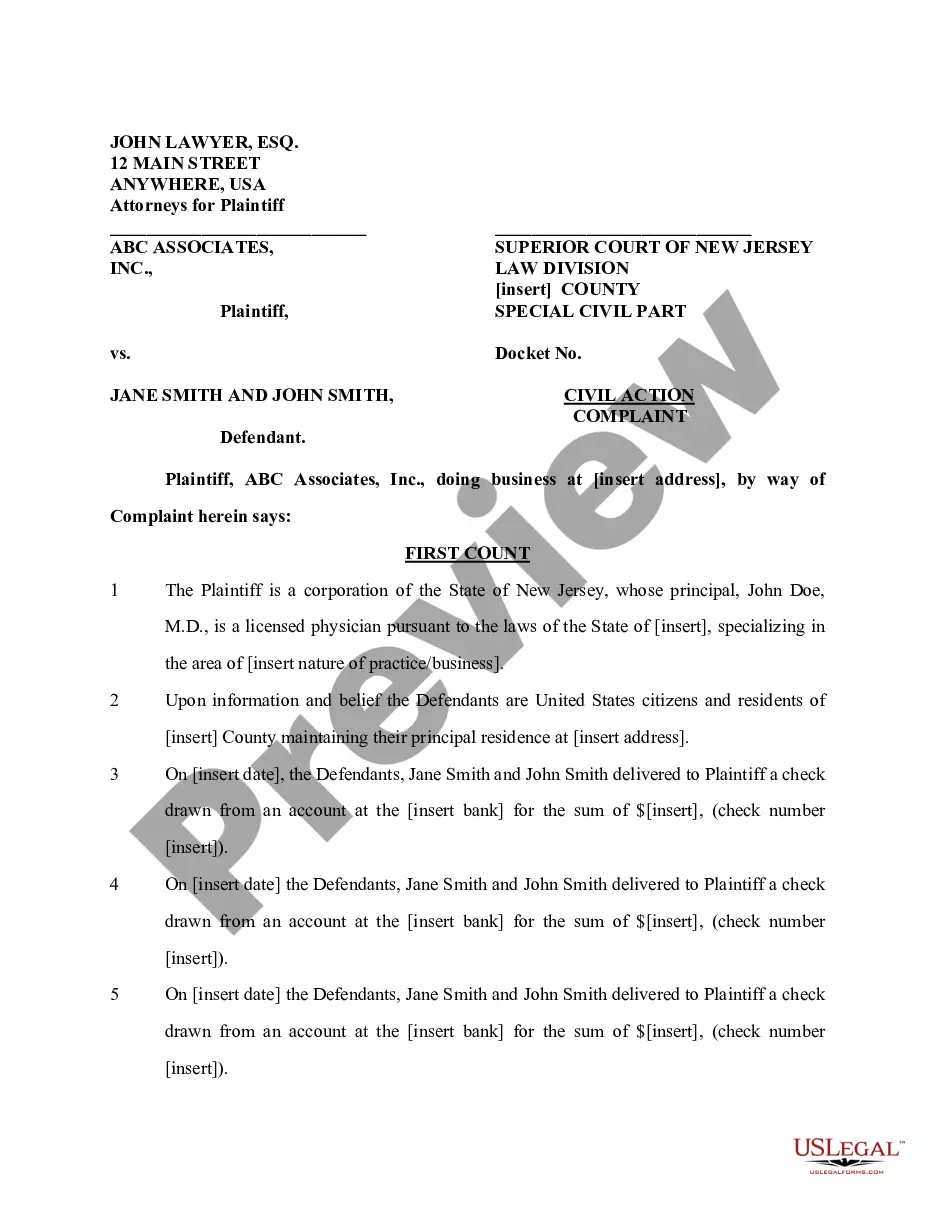
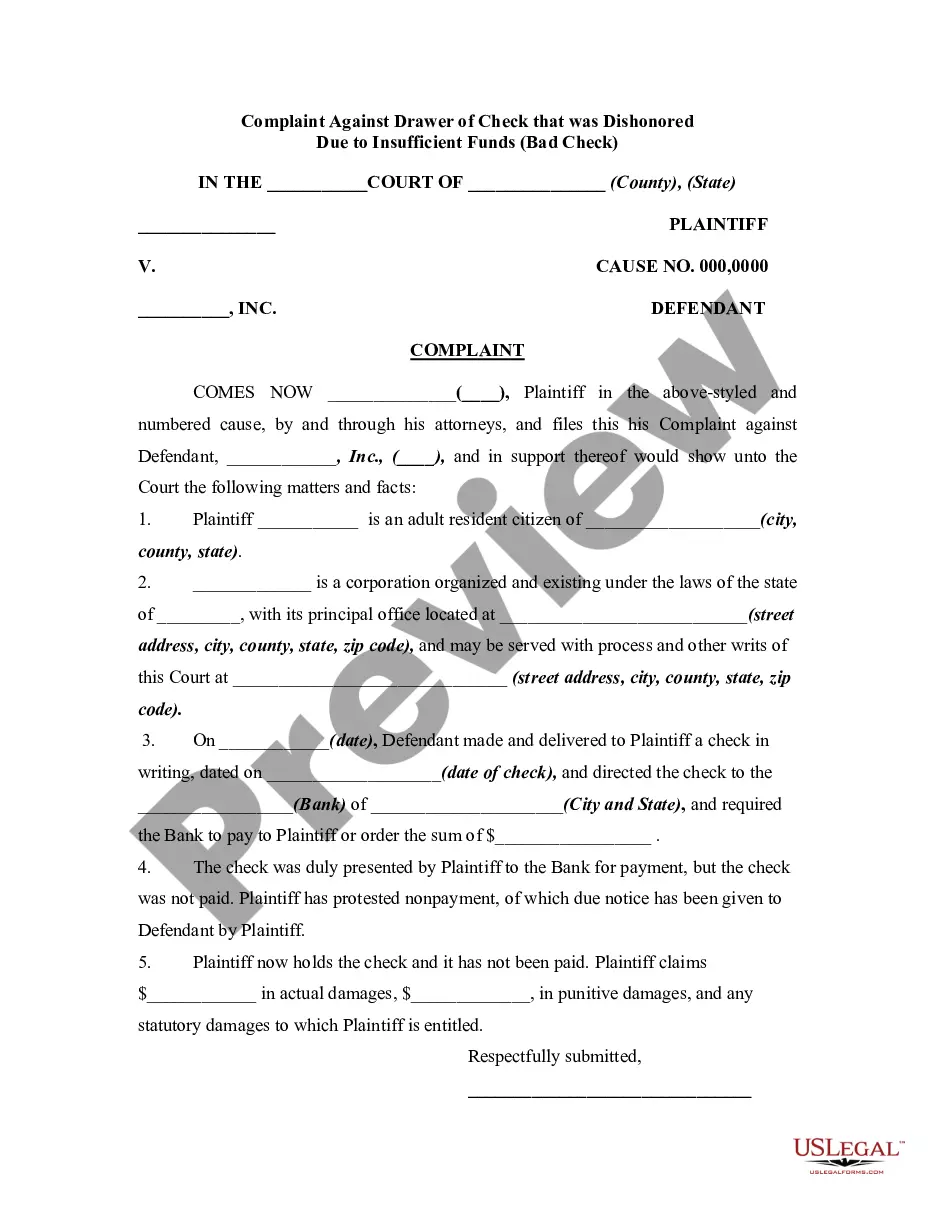
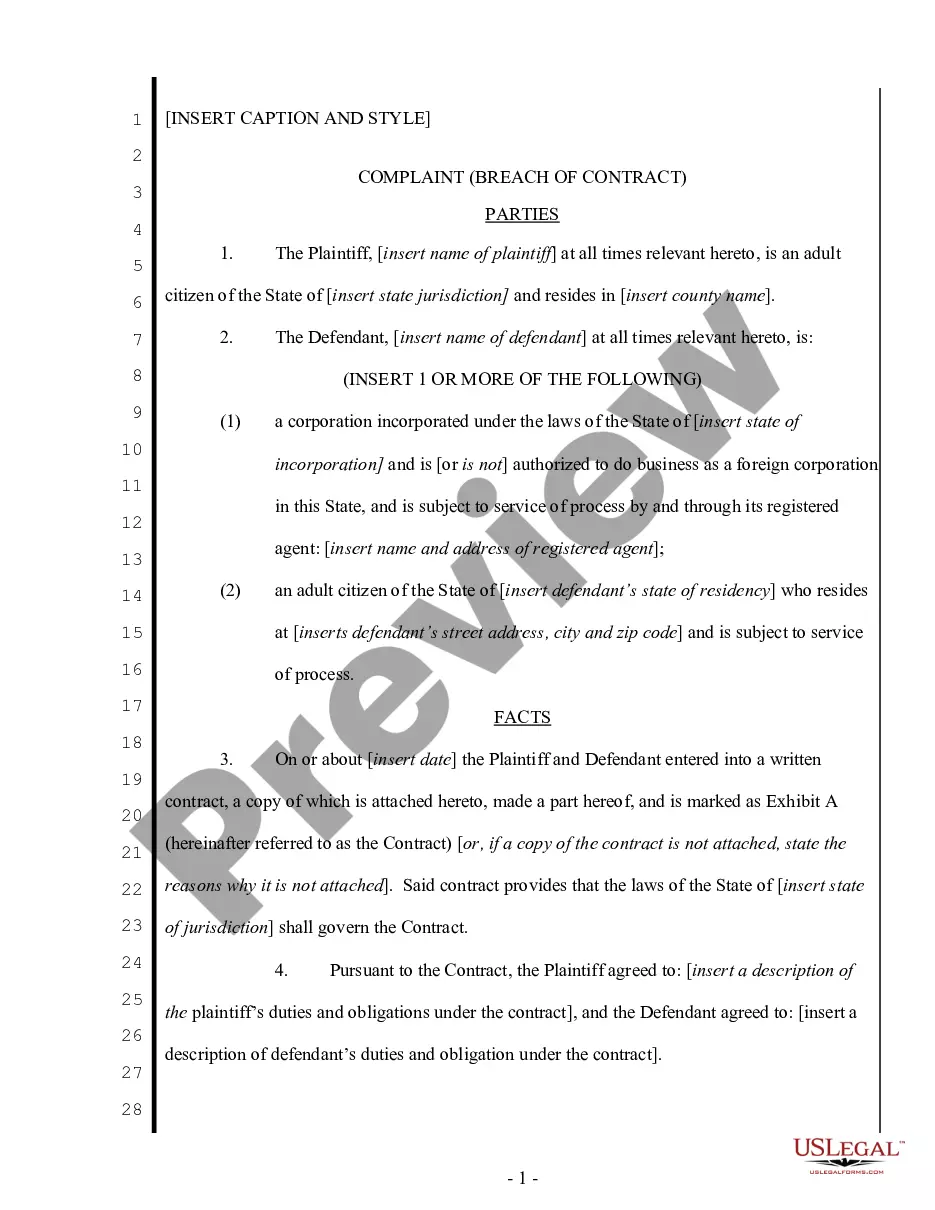
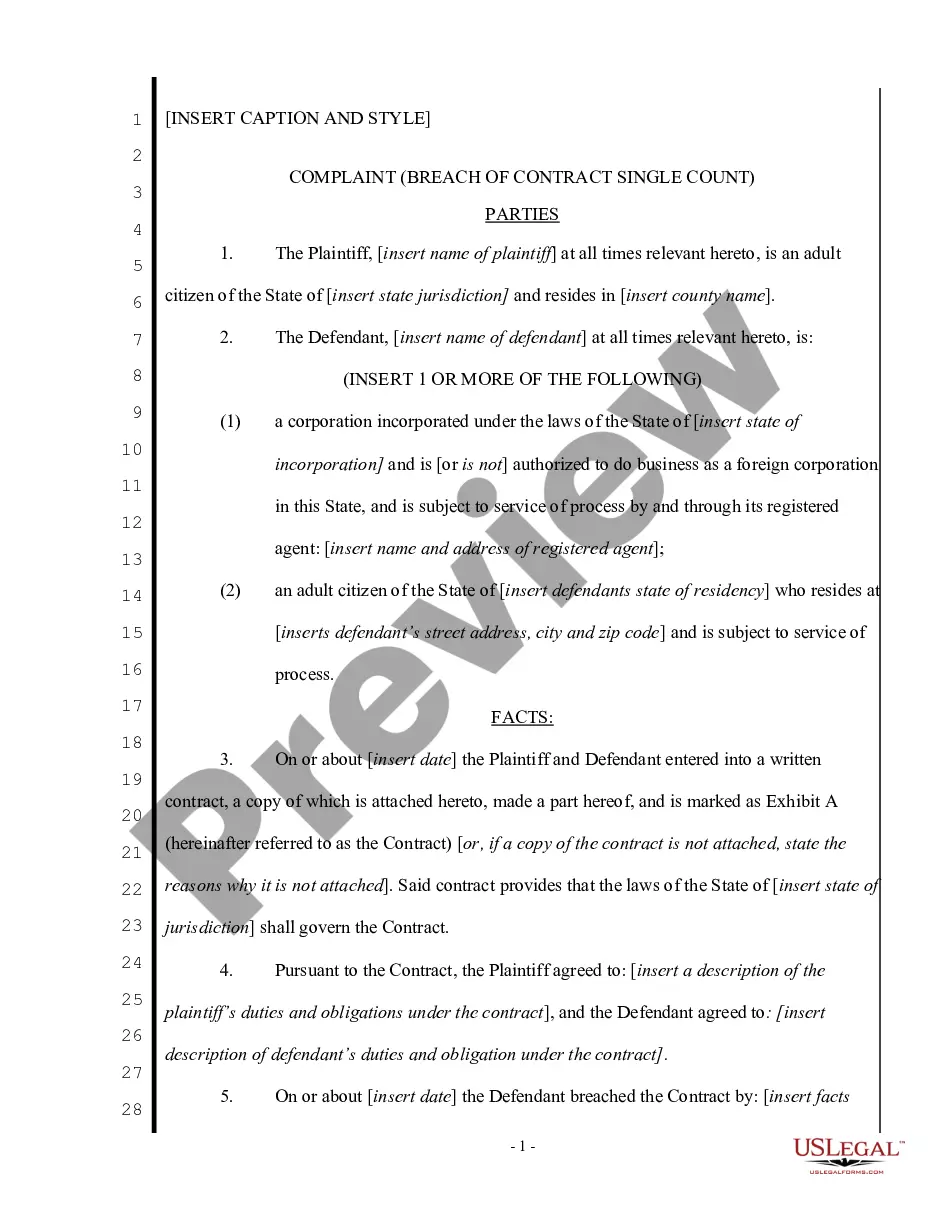
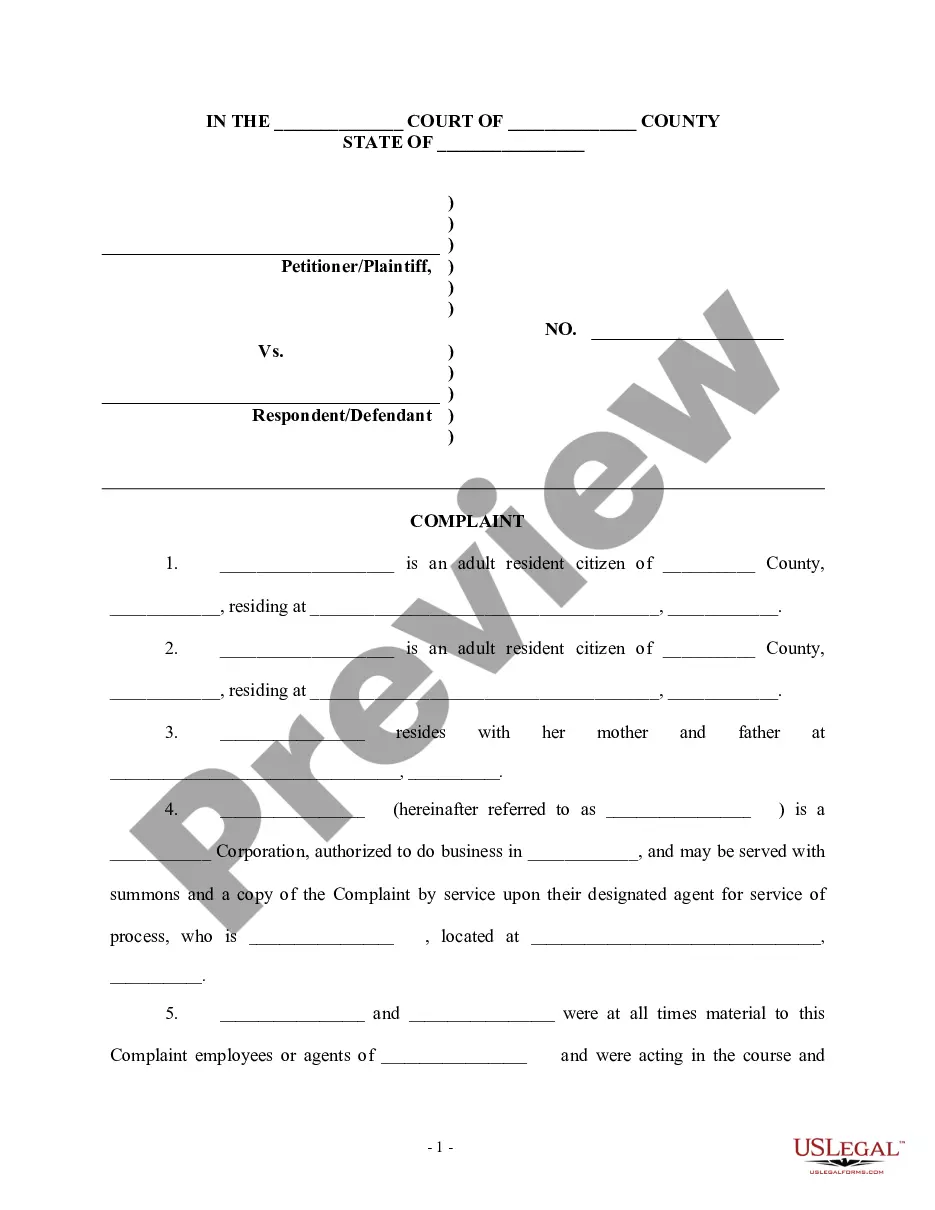
The Complaint for Dishonored Check is a legal document used to initiate a lawsuit against a defendant who has issued a check that has not been honored by the bank. This form allows the plaintiff to claim damages resulting from the dishonored checks, distinguishing it from other forms of complaints by its specific focus on bad checks issued and their non-payment.
What’s included in this form
- Plaintiff and defendant details, including names and addresses.
- Description of the dishonored checks, including amounts and check numbers.
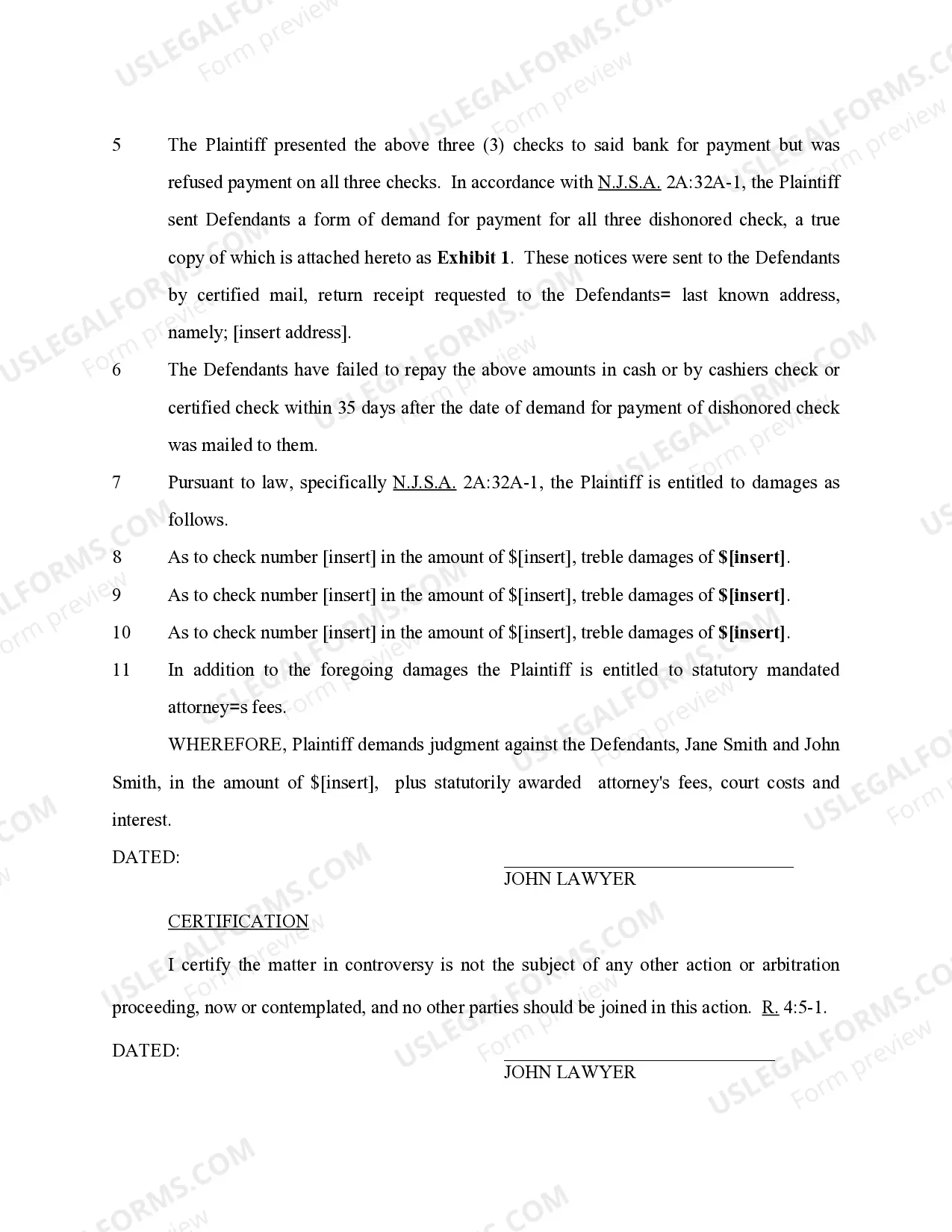
- A statement of demand sent to the defendants for repayment.
- Provisions for claiming damages, including treble damages and legal fees.
- Certification that the matter is not under any other legal action.

When this form is needed
This form should be used when an individual or business has received one or more checks from a defendant that have not cleared the bank. If the debtor fails to pay back the amount owed after a formal demand is made, the plaintiff can use this complaint to seek restitution through legal channels.
Intended users of this form
This form is suitable for:
- Businesses that have received a dishonored check from a customer.
- Individuals who have been issued checks that bounce or are not honored.
- Attorneys representing plaintiffs in cases of dishonored checks.
Instructions for completing this form
- Fill in your name and address as the plaintiff, and include the defendant's details.
- Describe each dishonored check, including the date issued, amount, and check number.
- Attach a copy of the demand for payment that was sent to the defendants.
- Calculate and enter the amounts you are claiming, including any applicable damages and attorneys' fees.
- Sign and date the form to certify its accuracy.
Does this document require notarization?
In most cases, this form does not require notarization. However, some jurisdictions or signing circumstances might. US Legal Forms offers online notarization powered by Notarize, accessible 24/7 for a quick, remote process.
Get your form ready online
Our built-in tools help you complete, sign, share, and store your documents in one place.
Make edits, fill in missing information, and update formatting in US Legal Forms—just like you would in MS Word.
Download a copy, print it, send it by email, or mail it via USPS—whatever works best for your next step.
Sign and collect signatures with our SignNow integration. Send to multiple recipients, set reminders, and more. Go Premium to unlock E-Sign.
If this form requires notarization, complete it online through a secure video call—no need to meet a notary in person or wait for an appointment.
We protect your documents and personal data by following strict security and privacy standards.

Make edits, fill in missing information, and update formatting in US Legal Forms—just like you would in MS Word.

Download a copy, print it, send it by email, or mail it via USPS—whatever works best for your next step.

Sign and collect signatures with our SignNow integration. Send to multiple recipients, set reminders, and more. Go Premium to unlock E-Sign.

If this form requires notarization, complete it online through a secure video call—no need to meet a notary in person or wait for an appointment.

We protect your documents and personal data by following strict security and privacy standards.
Avoid these common issues
- Failing to include all dishonored checks in the complaint.
- Not providing accurate addresses for the defendants.
- Omitting the attached demand for payment documentation.
- Calculating incorrect damages or fees.
Why complete this form online
- Convenient access to legally accurate forms that are easy to download and print.
- Editability allows you to personalize the form with your specific information quickly.
- Reliability backed by licensed attorneys who draft and review the form.
Legal use & context
- This complaint is a legal recourse for collecting debts related to dishonored checks.
- Timeliness in filing the complaint is crucial to ensure the claim is heard by the court.
- Statutory fees and damages may vary based on state laws, impacting the total amount claimed.
Main things to remember
- The Complaint for Dishonored Check is essential for legal action against non-paying debtors.
- Proper completion of the form is critical to strengthen your case in court.
- Understanding state-specific requirements is necessary for compliance and effectiveness.
Looking for another form?

Form popularity
FAQ
Step 1: Contact The Recipient. Let the recipient know immediately that you're aware your check bounced. Step 2: Make Good On The Check. Step 3: Pay The Fees You Owe To Your Bank. Step 4: Ask For Receipts.
A bad check valued at $200 or more is an indictable offense (felony) in NJ.
Writing bad checks can lead to several theft charges, but with the help of a skilled defense attorney, you can work to reduce or even dismiss charges.
As defined under California Penal Code Section 476a, writing a check while knowing that funds are insufficient can be charged as a misdemeanor offense that can result in sentence of up to one year in county jail.
Send the letter certified mail. Visit your local district attorney's office if you do not hear back from the debtor. Bring your correspondence with you and a copy of the bad check. He will take the case over, and likely prosecute the check writer.
Under criminal penalties, you can be prosecuted and even arrested for writing a bad check.This can be seen as a felony in many states, especially when the checks are for more than $500. It's important to note that provision is made for accidents, because bookkeeping mistakes do happen.
Write a letter to the person who passed you the bad check. Inform him that they need to pay the check in full plus any resulting fees. Give them 7 to 10 days to pay the debt in full. Send the letter certified so you have proof it was received.
It is a fourth degree crime to write a bad check that is at least $200 but less than $1,000. A bounced check results in a third degree crime where it is written in an amount of at least $1,000 but less than $75,000.