New Hampshire Financial Statements only in Connection with Prenuptial Premarital Agreement
What is this form?
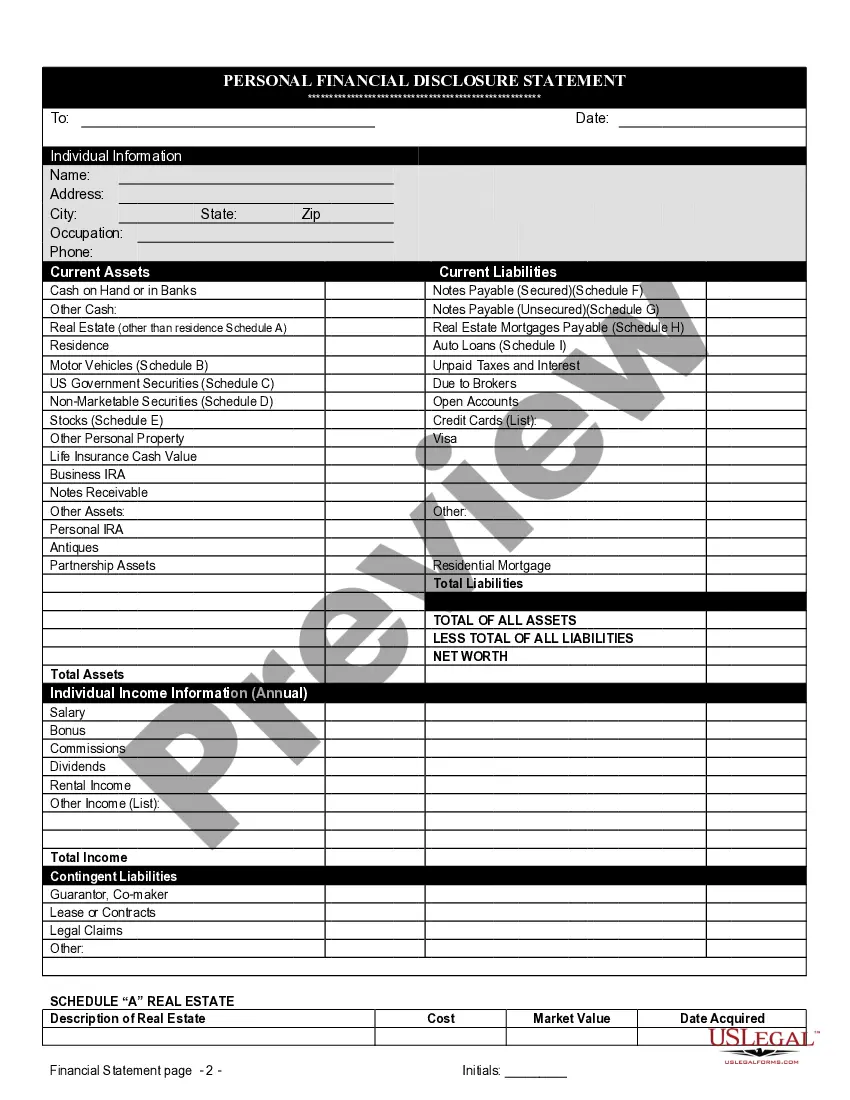
The Financial Statements only in Connection with Prenuptial Premarital Agreement form is designed for couples preparing to enter a prenuptial agreement. This form ensures both parties provide a complete and accurate disclosure of their financial situations, including all assets and liabilities. Unlike other financial forms, this one focuses specifically on the requirements for negotiating a premarital agreement, fostering transparency and trust between the parties involved.
What’s included in this form
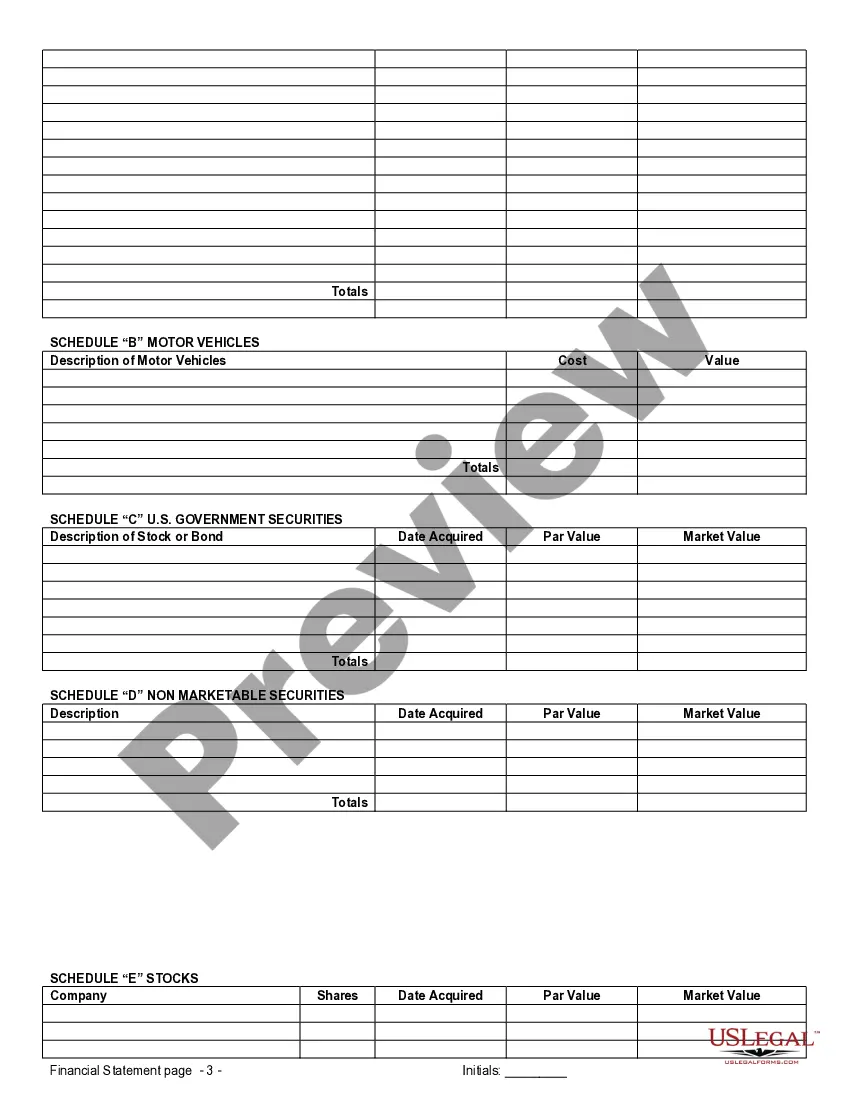
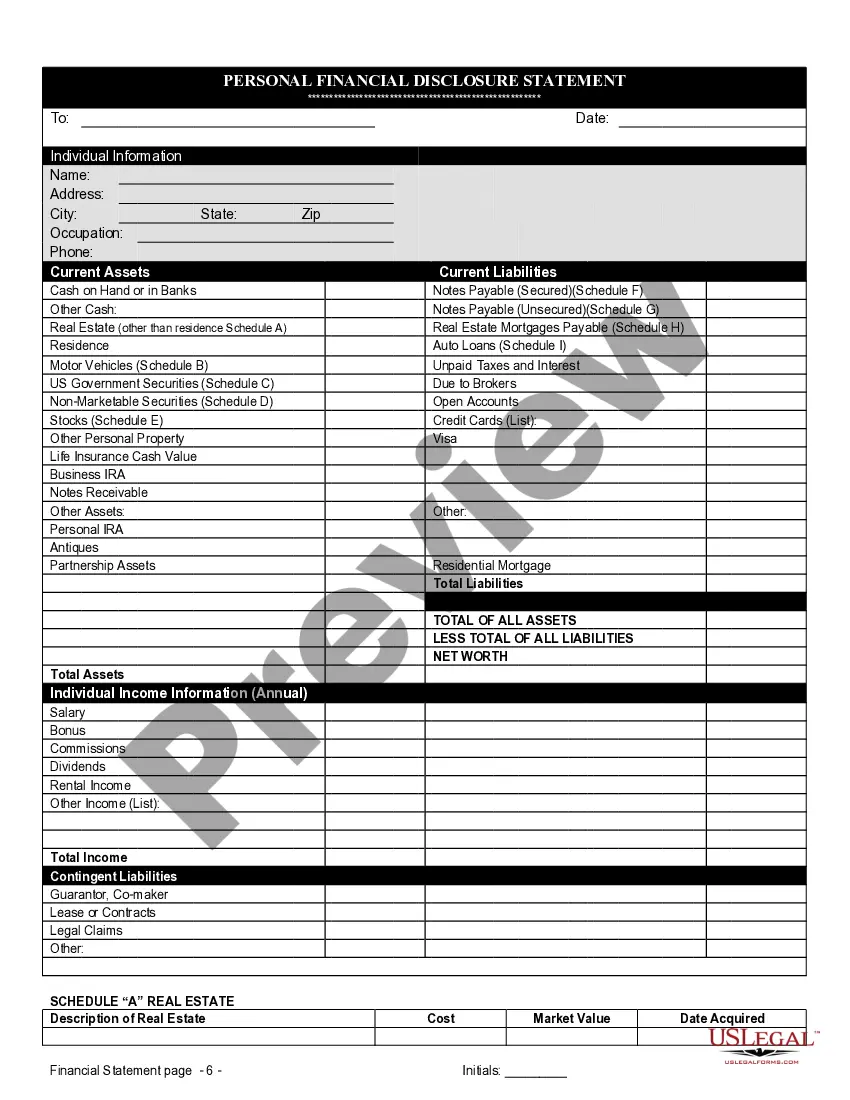
- Personal financial disclosure statement for each party
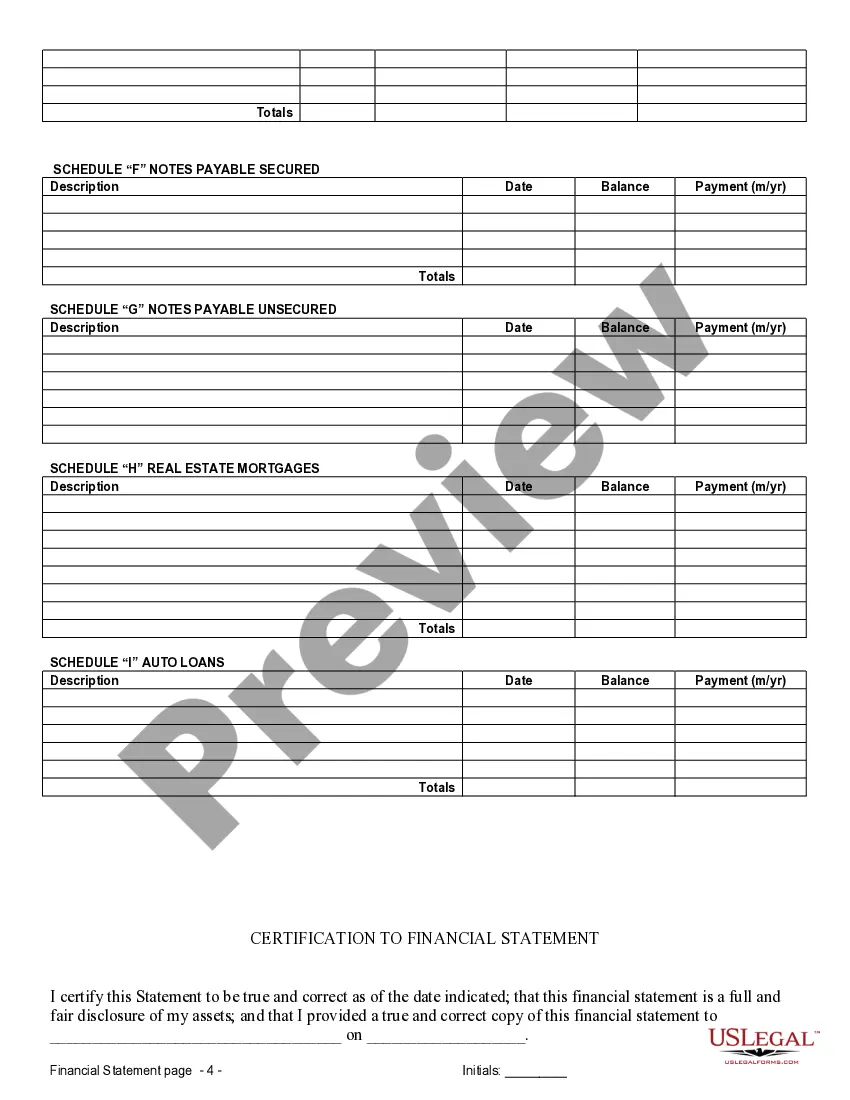
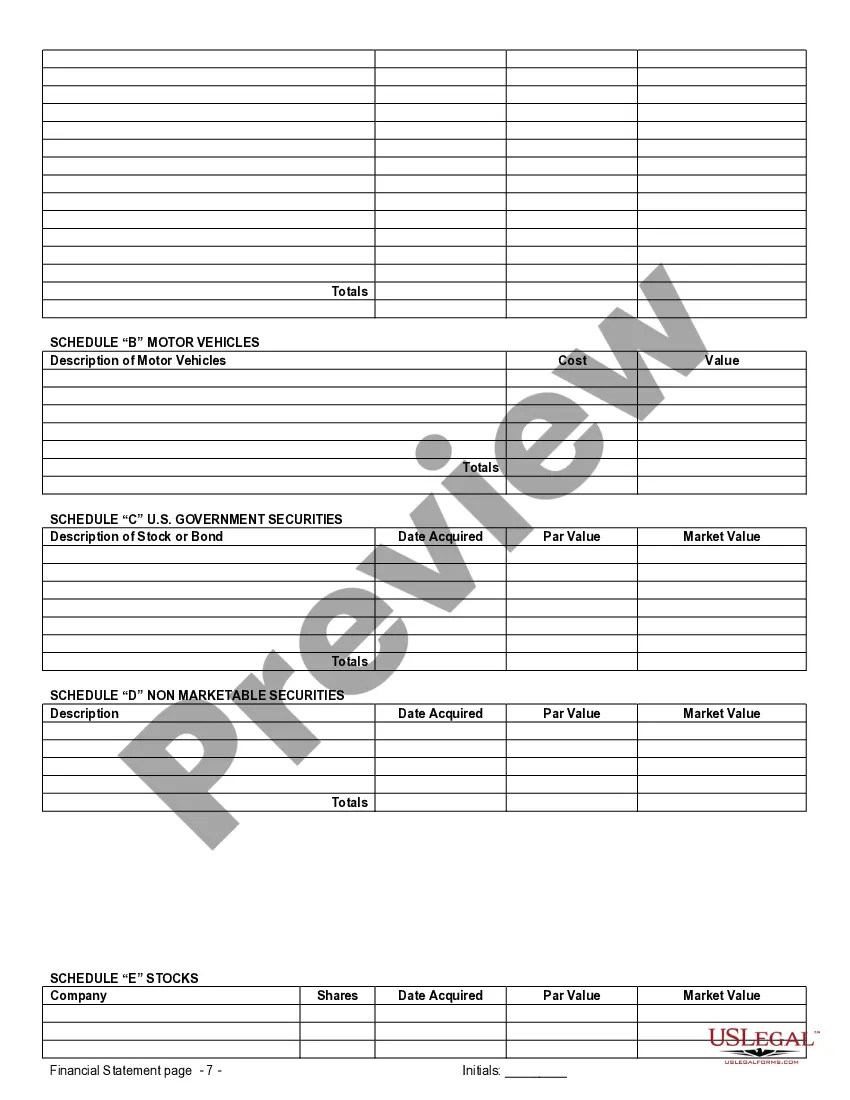
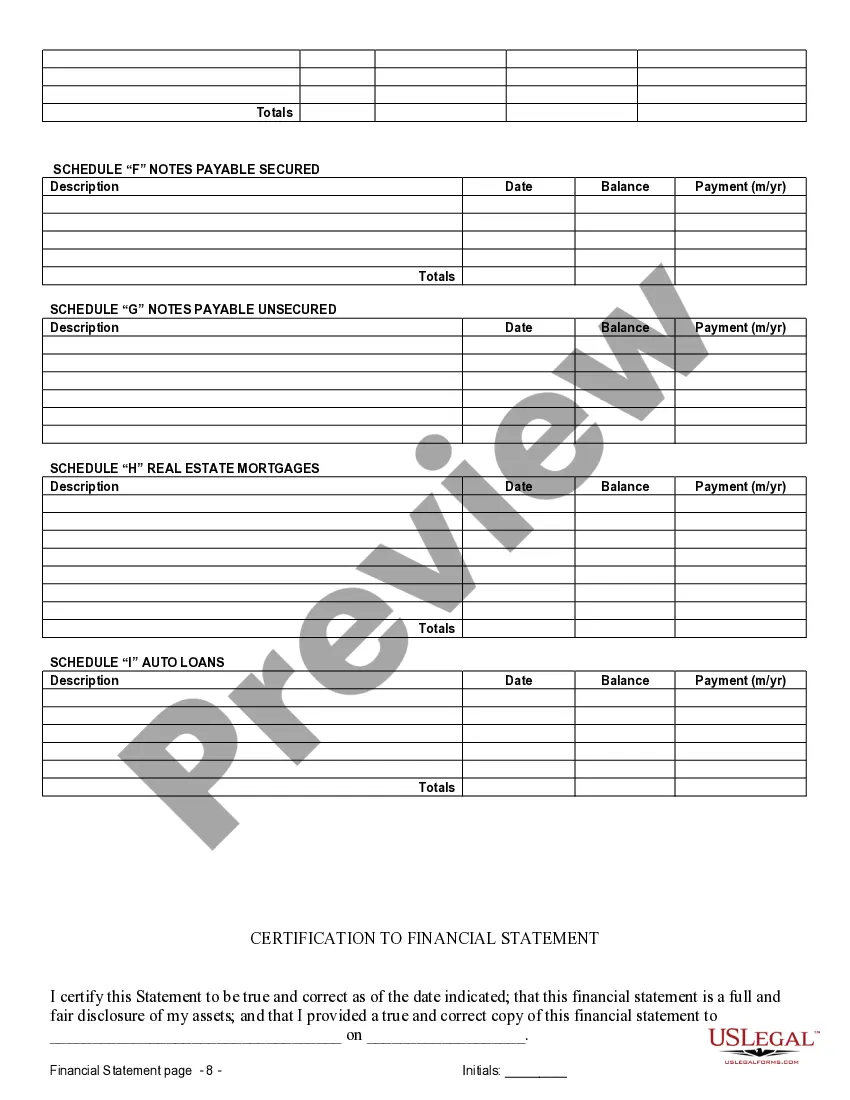
- Complete listing of assets and liabilities
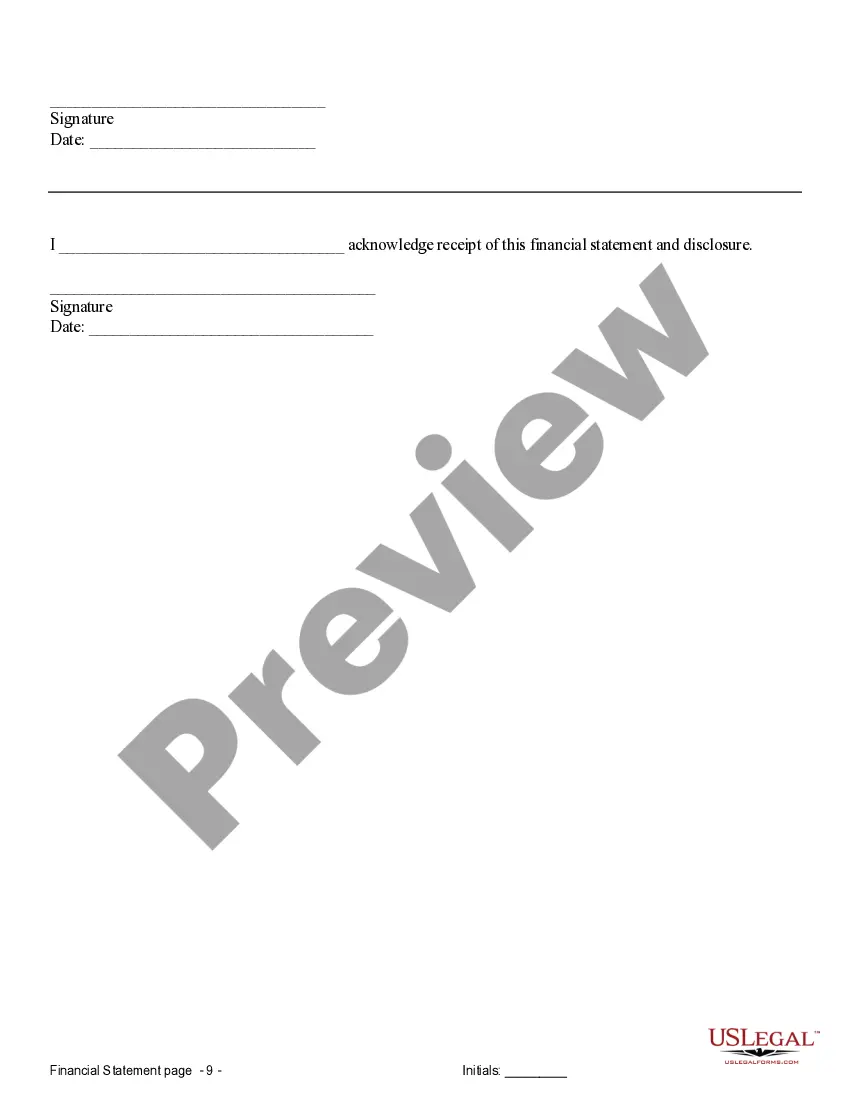
- Initials required on each page for acknowledgment
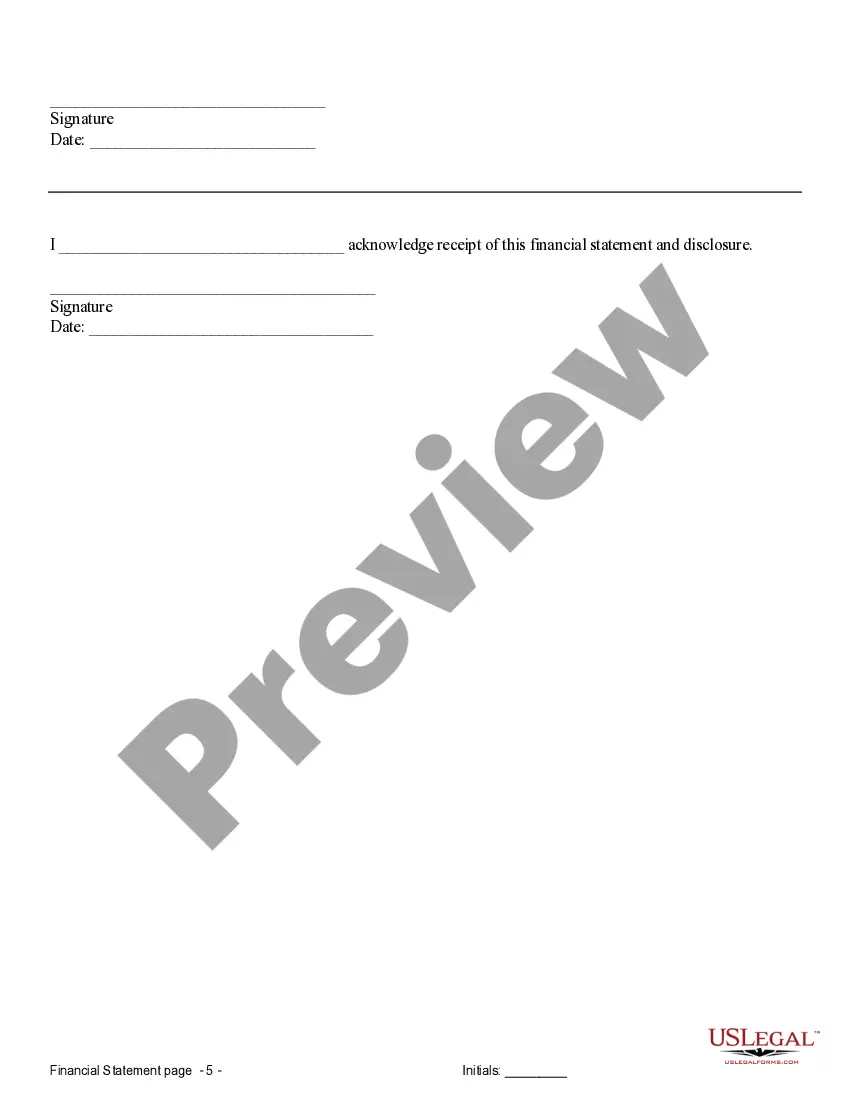
- Final signature page to confirm receipt and accuracy
- Instructions for additional information if needed

When to use this form
This form should be used when two individuals are entering into a prenuptial agreement and need to fully disclose their financial situations. It is essential in situations where one or both parties has significant assets, debts, or income that they wish to protect or clarify before marriage.
Who should use this form
- Couples preparing for marriage who wish to clarify their financial rights and obligations
- Individuals with substantial assets or debts seeking to protect their financial interests
- Anyone who wants to ensure transparency and avoid misunderstandings in their relationship regarding finances
How to complete this form
- Begin by entering your personal information and financial details on the form.
- List all assets, including properties, bank accounts, and investments.
- Detail any liabilities, such as loans, mortgages, or credit card debts.
- Initial each page to indicate that you have reviewed the information.
- Sign the last page to confirm the accuracy of your financial statement.
- Provide a copy of your completed form to your prospective spouse.
Notarization requirements for this form
This form does not typically require notarization unless specified by local law. It is advisable to verify local requirements to ensure legal compliance.
Get your form ready online
Our built-in tools help you complete, sign, share, and store your documents in one place.
Make edits, fill in missing information, and update formatting in US Legal Forms—just like you would in MS Word.
Download a copy, print it, send it by email, or mail it via USPS—whatever works best for your next step.
Sign and collect signatures with our SignNow integration. Send to multiple recipients, set reminders, and more. Go Premium to unlock E-Sign.
If this form requires notarization, complete it online through a secure video call—no need to meet a notary in person or wait for an appointment.
We protect your documents and personal data by following strict security and privacy standards.

Make edits, fill in missing information, and update formatting in US Legal Forms—just like you would in MS Word.

Download a copy, print it, send it by email, or mail it via USPS—whatever works best for your next step.

Sign and collect signatures with our SignNow integration. Send to multiple recipients, set reminders, and more. Go Premium to unlock E-Sign.

If this form requires notarization, complete it online through a secure video call—no need to meet a notary in person or wait for an appointment.

We protect your documents and personal data by following strict security and privacy standards.
Typical mistakes to avoid
- Failing to include all relevant assets and liabilities.
- Not signing or initialing each page as required.
- Providing incomplete or misleading information.
- Neglecting to provide a copy of the completed form to the other party.
Benefits of using this form online
- Convenience of downloading and completing the form at your own pace.
- Editability allows you to easily make changes and complete details.
- Access to reliable templates created by licensed attorneys.
Legal use & context
- This financial statement is essential for the enforceability of any prenuptial agreement.
- Having accurate disclosures safeguards against future legal disputes regarding asset division.
- Compliance with local laws enhances the validity of the prenuptial agreement.
What to keep in mind
- Complete the form accurately for transparency in financial matters before marriage.
- Both parties must submit separate statements and acknowledge receipt for validity.
- Review state requirements for any additional regulations or notarization needs.
- Using this form online provides flexibility, ease of use, and legal reliability.
Looking for another form?
Form popularity
FAQ
In the event of divorce, a prenup can protect a spouse from being liable for any debt the other spouse brought into the marriage.A prenup can also protect any income or assets you earn during the marriage, as well as unearned income from a bequest or a trust distribution.
Yes, a prenuptial agreement can protect future assets. Those are common provisions you would put in to a prenuptial agreement.However, if your prenuptial agreement addresses your premarital accounts then you will most likely not have to share those with your spouse.
While a prenuptial agreement can protect your assets and preserve the separate property character of the asset, a prenuptial agreement is not for everyone in California, and sometimes a prenuptial agreement can cause problems and distrust just when the focus should be on uniting households and planning a future
Just as a future asset can be protected by a prenup if adequately described, future income can also be treated as belonging to one partner but not both.
A well-drafted prenup will protect future earnings, as well.While a prenup may protect future assets and income, it may also help avoid future debt. The prenup can address each spouse's potential liabilities, and ensure one spouse's debts do not become the responsibility of the other spouse.
One formality that many do not realize the importance of is a full and fair disclosure of assets and debts prior to the prenuptial agreement being signed. In other words, both parties are supposed to disclosure all the assets and debts that they are bringing into the marriage.
2. Prenups make you think less of your spouse. And at their root, prenups show a lack of commitment to the marriage and a lack of faith in the partnership.Ironically, the marriage becomes more concerned with money after a prenup than it would have been without the prenup.
A prenuptial agreement is a legally binding contract that dictates the division of premarital assets, but it can also include other agreements between the parties. A will, on the other hand, dictates the distribution of an individual's assets to their heirs when they pass away.