Nebraska Mutual Wills or Last Will and Testaments for Man and Woman living together, not Married with Minor Children
Overview of this form
This package contains mutual wills for a man and woman living together, who are not married and have minor children. These wills allow each partner to specify how their property should be distributed to one another and their children after death. This form is particularly useful for couples seeking to provide for their loved ones without the legal implications of marriage. Unlike individual wills, mutual wills create a binding contract between partners regarding their estates.
What’s included in this form
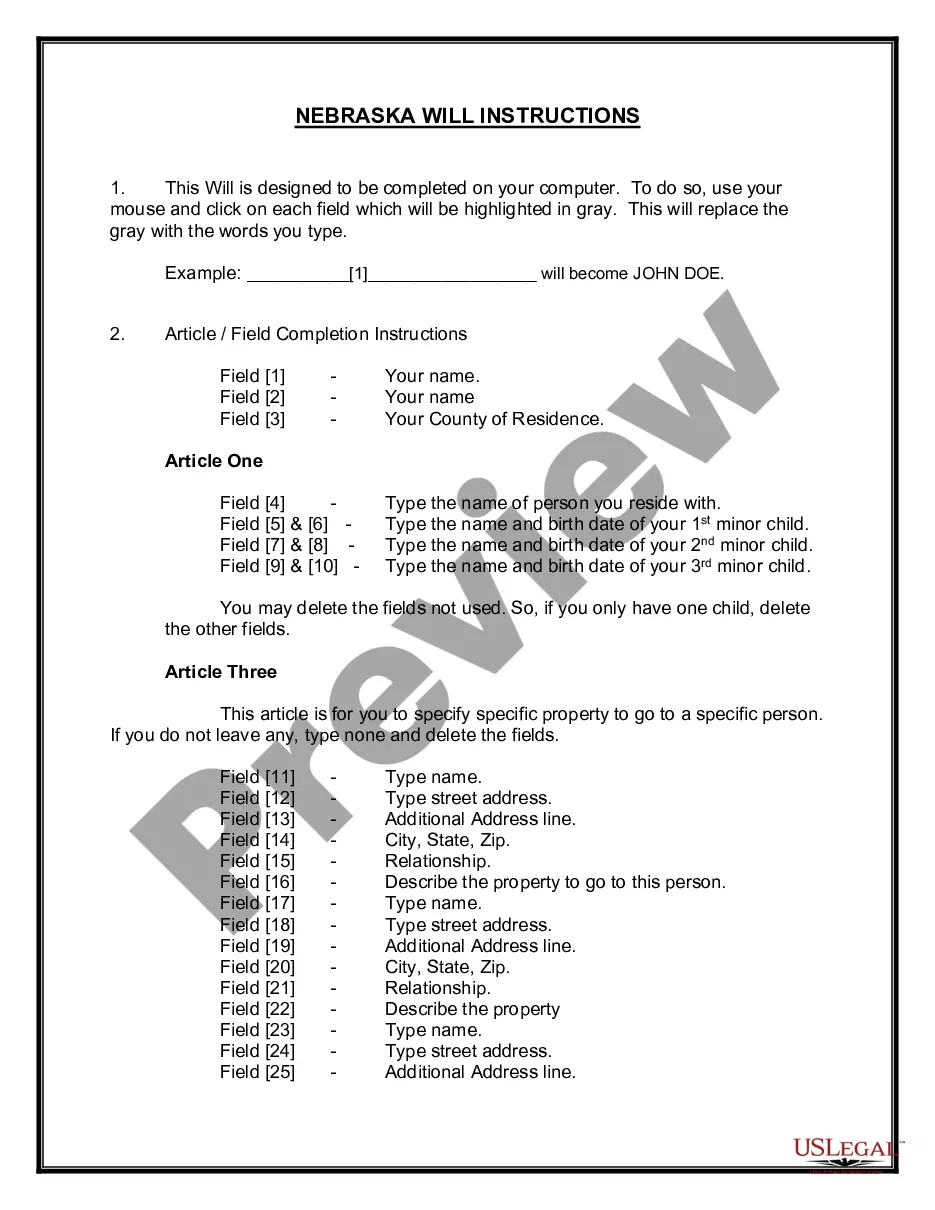
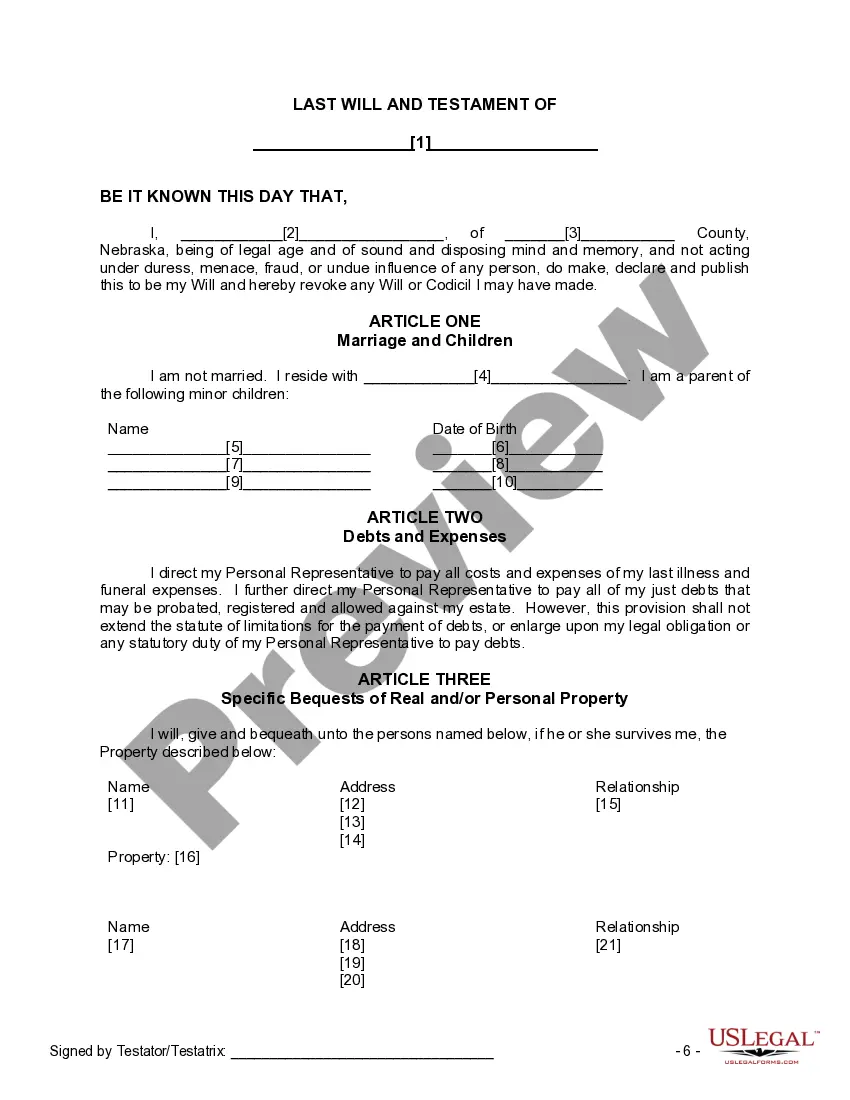
- Article One: States the relationship between the partners and lists minor children.
- Article Two: Directs payment of debts and funeral expenses.
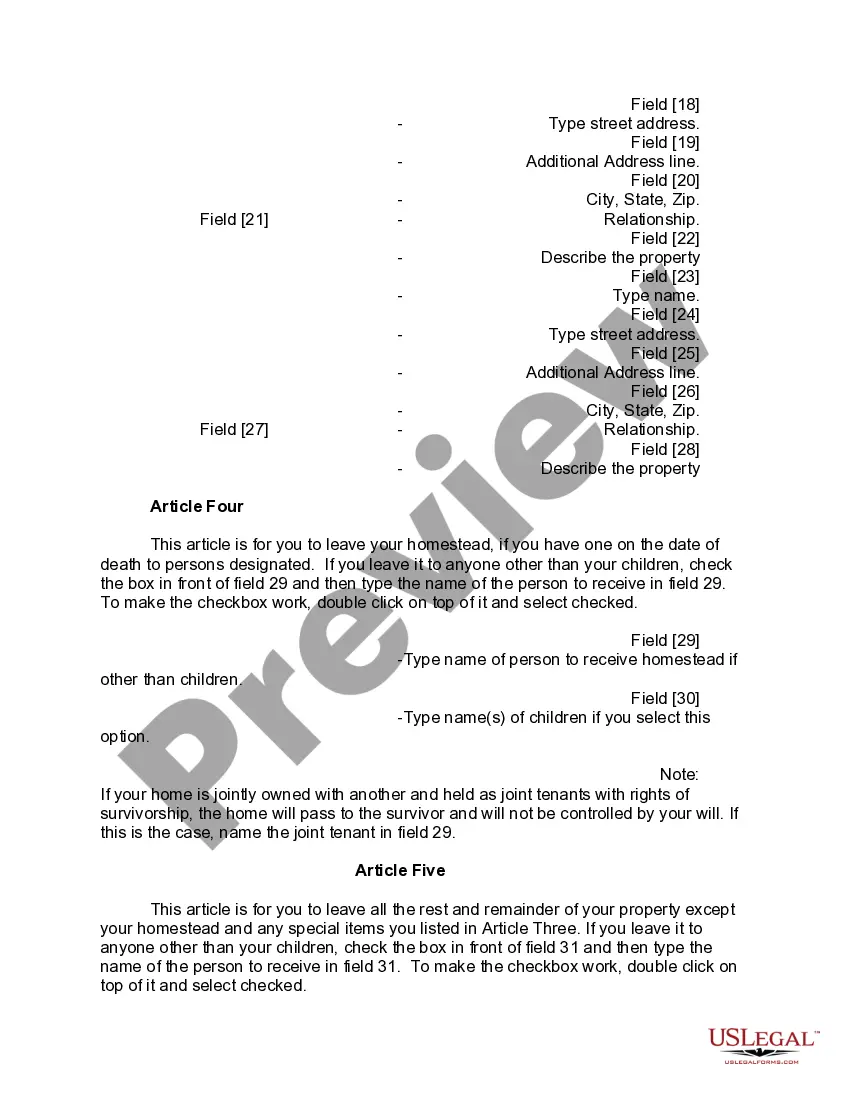
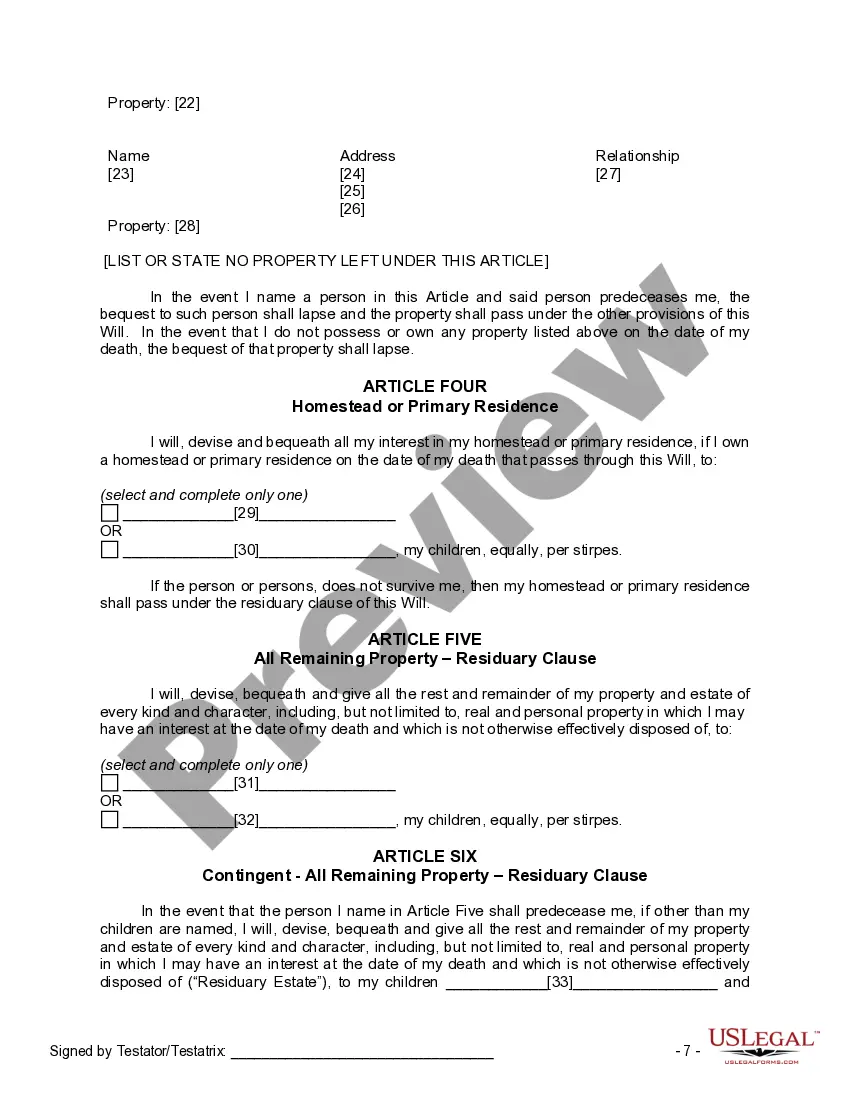
- Article Three: Allows for specific bequests of property to chosen individuals.
- Article Four: Designates how the family home (homestead) should be handled.
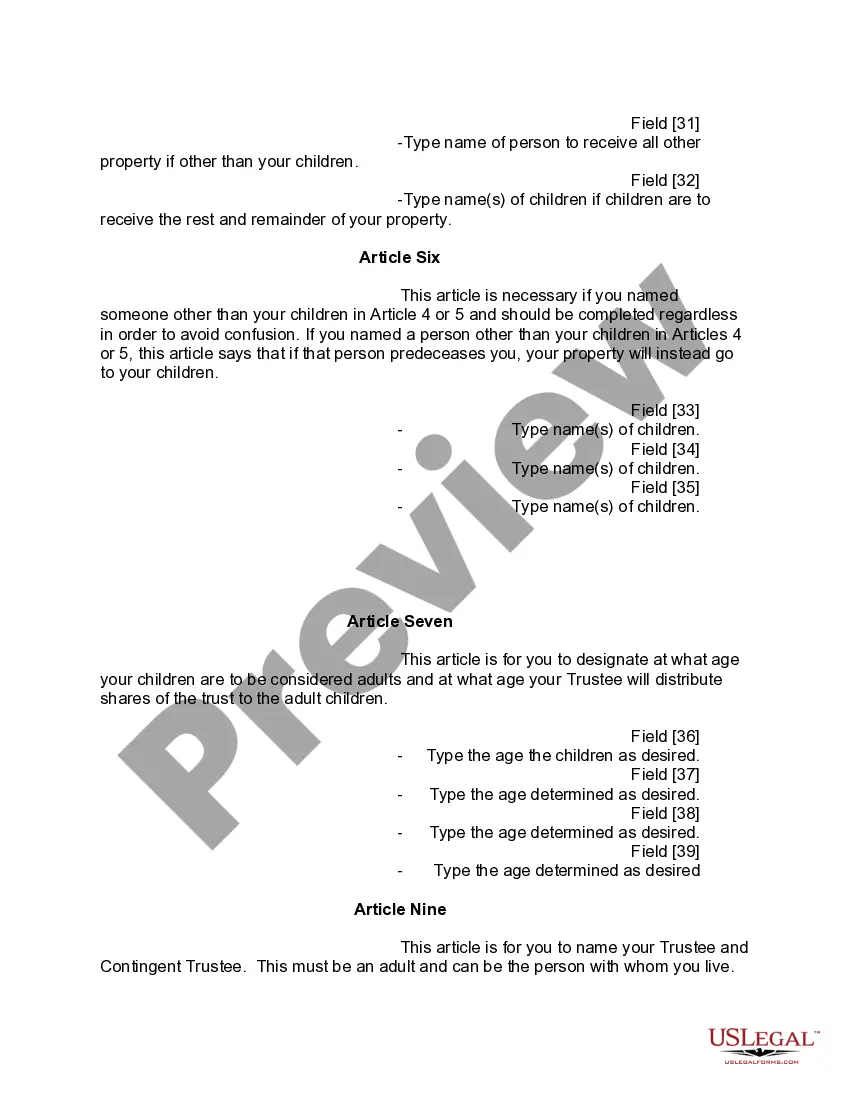
- Article Five: Details the distribution of remaining property.
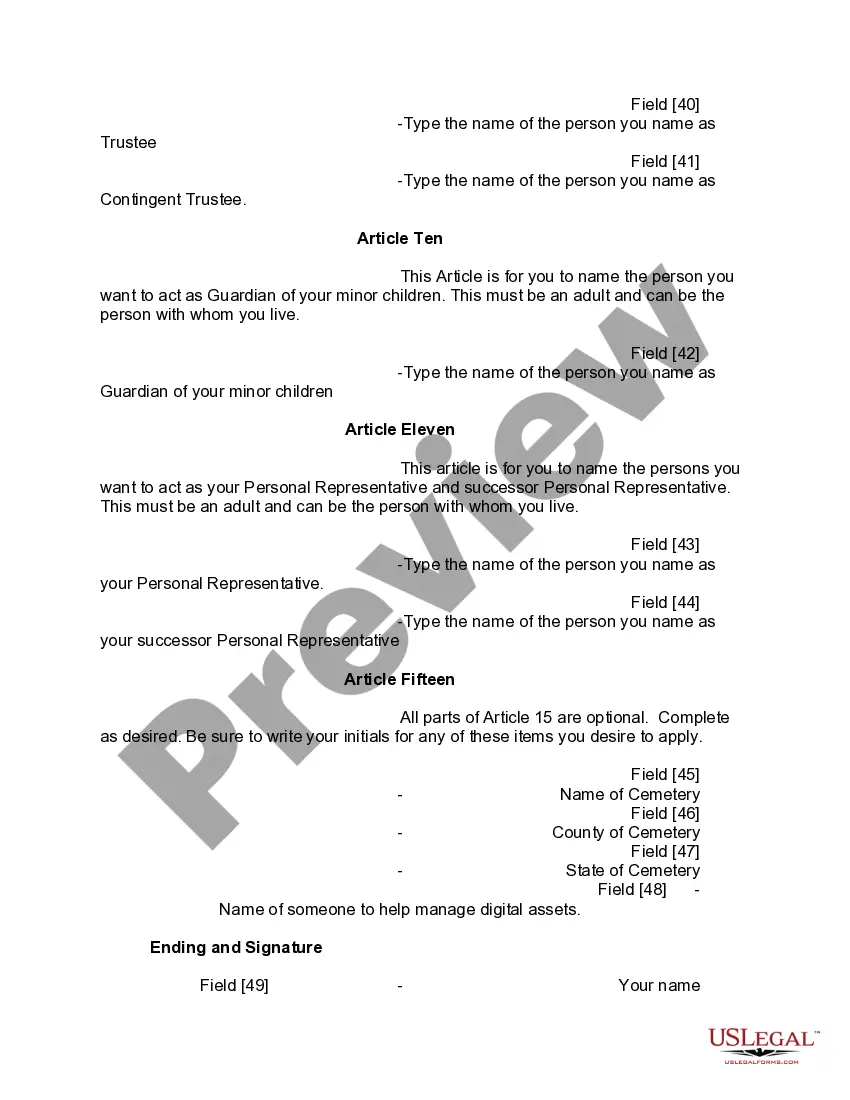
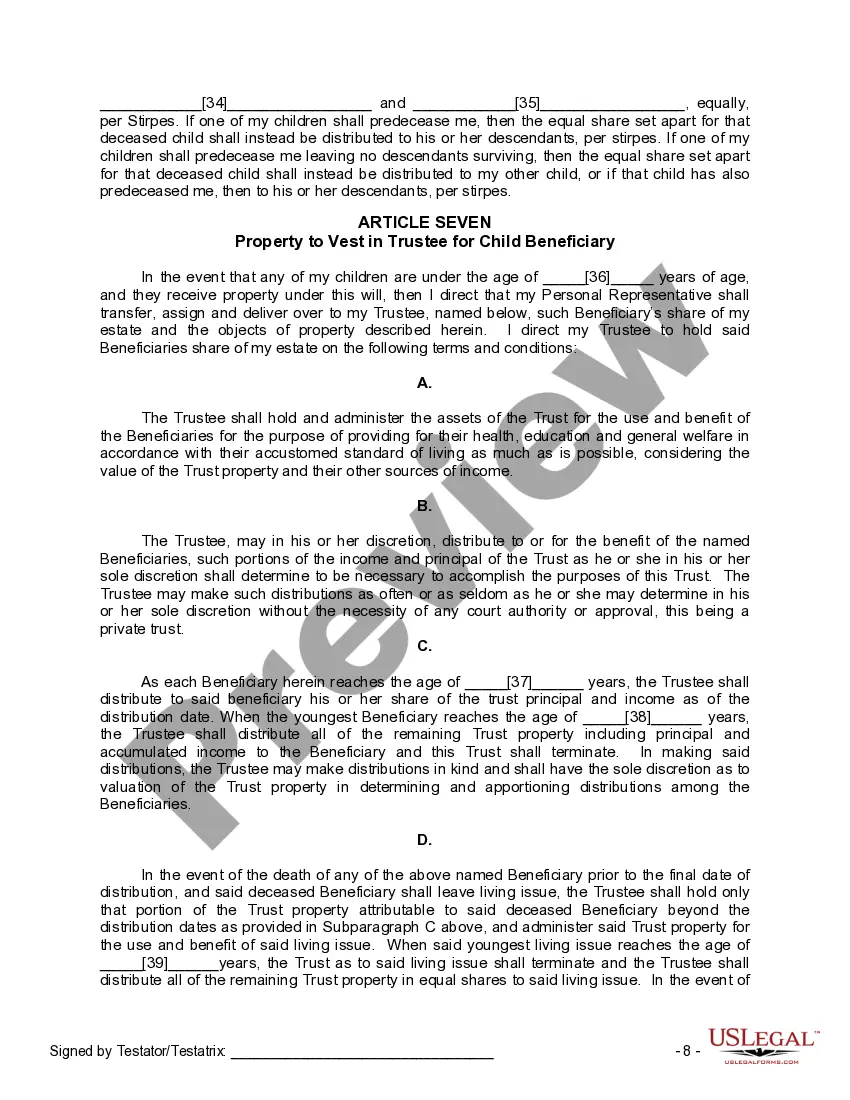
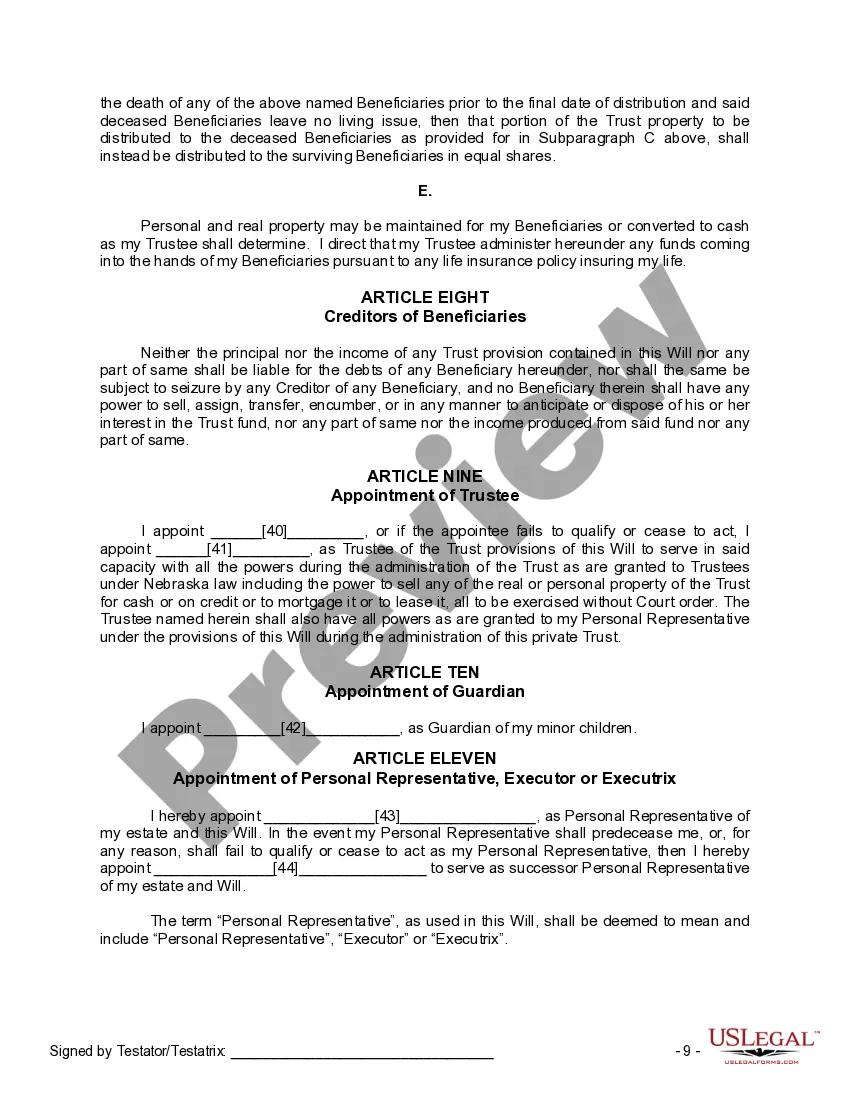
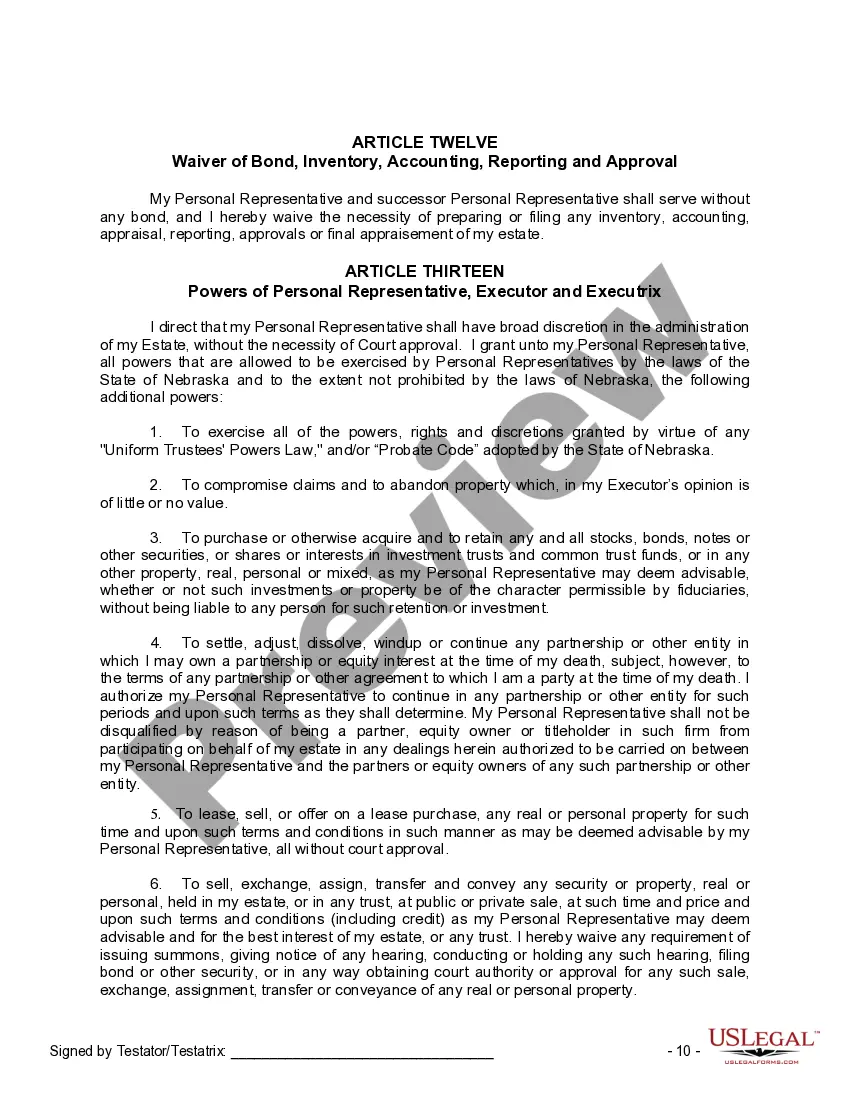
- Article Ten: Appoints a guardian for minor children.



When to use this form
This form is ideal for couples who cohabitate but are not legally married and wish to ensure that their assets are passed on according to their wishes. If you have minor children and want to specify guardianship and property distribution, this will is especially beneficial. Using mutual wills can help provide peace of mind and clarity for both partners and their children regarding estate matters.
Who can use this document
- Cohabiting partners who are not married.
- Individuals who want to leave property to their partner and children.
- Parents wishing to designate guardianship for their minor children.
- Anyone looking to create a legally binding will that includes mutual provisions.
How to complete this form
- Begin by identifying the parties: include your full names and county of residence.
- Enter details for your minor children, including their names and birth dates.
- Specify any particular bequests of property you wish to leave to other individuals or entities.
- Designate who will be the guardian of your minor children.
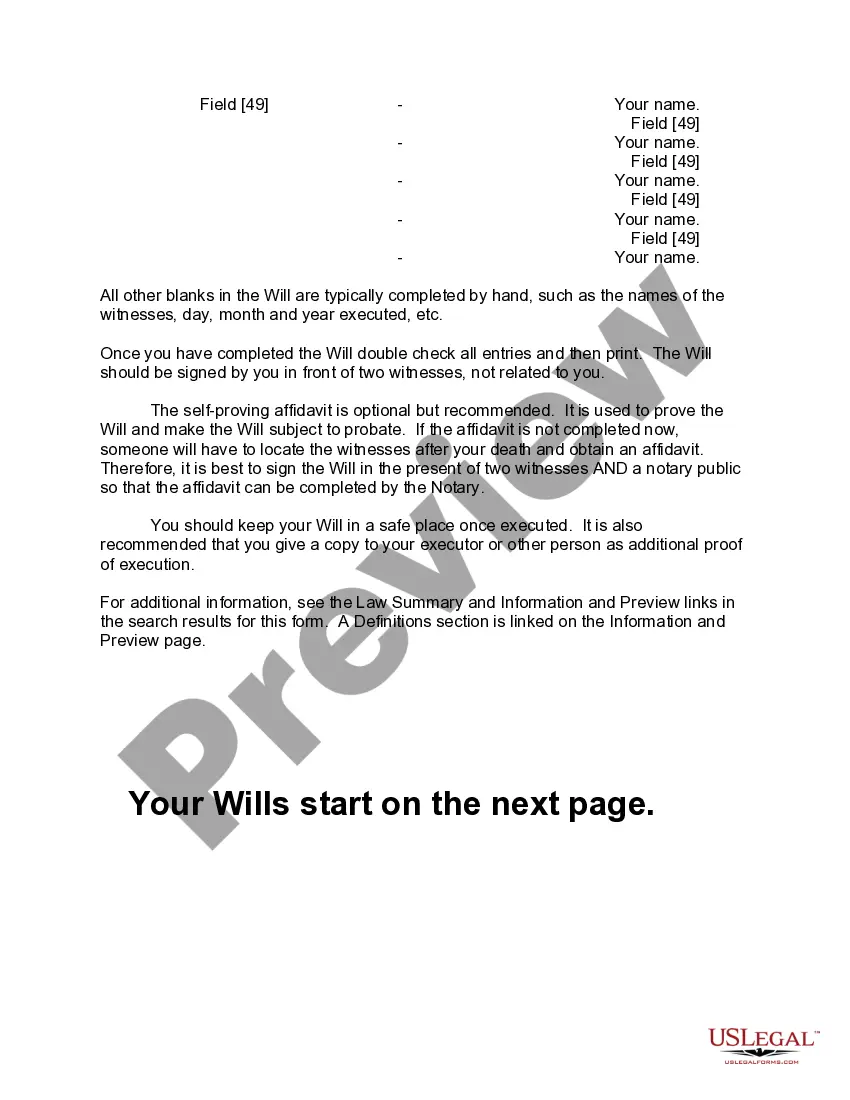
- Complete your wills by signing in the presence of two witnesses who are not related to you.
Notarization requirements for this form
This form must be notarized to be legally valid. US Legal Forms provides secure online notarization powered by Notarize, allowing you to complete the process through a verified video call.
Get your form ready online
Our built-in tools help you complete, sign, share, and store your documents in one place.
Make edits, fill in missing information, and update formatting in US Legal Forms—just like you would in MS Word.
Download a copy, print it, send it by email, or mail it via USPS—whatever works best for your next step.
Sign and collect signatures with our SignNow integration. Send to multiple recipients, set reminders, and more. Go Premium to unlock E-Sign.
If this form requires notarization, complete it online through a secure video call—no need to meet a notary in person or wait for an appointment.
We protect your documents and personal data by following strict security and privacy standards.

Make edits, fill in missing information, and update formatting in US Legal Forms—just like you would in MS Word.

Download a copy, print it, send it by email, or mail it via USPS—whatever works best for your next step.

Sign and collect signatures with our SignNow integration. Send to multiple recipients, set reminders, and more. Go Premium to unlock E-Sign.

If this form requires notarization, complete it online through a secure video call—no need to meet a notary in person or wait for an appointment.

We protect your documents and personal data by following strict security and privacy standards.
Mistakes to watch out for
- Failing to have the wills signed by the required witnesses, which can invalidate the document.
- Not specifying guardianship, potentially leaving minor children unprotected.
- Omitting specific bequests that could lead to disputes among heirs.
Why complete this form online
- Convenience of filling out the form from home at any time.
- Editability to ensure all information is accurate and up-to-date.
- Access to legal expertise through templates prepared by licensed attorneys.
Quick recap
- This Mutual Wills package offers an efficient way for non-married couples with children to plan their estate.
- Legal documentation ensures that your wishes regarding property and guardianship are honored.
- Utilizing an online platform provides convenience and access to necessary legal forms.
Looking for another form?
Form popularity
FAQ
Drafting the will yourself is less costly and may put you out about $150 or less. Depending on your situation, expect to pay anywhere between $300 and $1,000 to hire a lawyer for your will. While do-it-yourself will kits may save you time and money, writing your will with a lawyer ensures it will be error-free.
Contrary to popular belief, you do not need to have an attorney draft a will for you. Anyone can write this document on their own, and as long as it meets all of the legal requirements of the state, courts will recognize one you wrote yourself.
Bank accounts. Brokerage or investment accounts. Retirement accounts and pension plans. A life insurance policy.
While you can write your own last will and testament, it's very important to follow your state's requirements. If the court finds it invalid, someone other than your chosen executor could handle your estate and distribute your assets differently than you intended.
Decide what property to include in your will. Decide who will inherit your property. Choose an executor to handle your estate. Choose a guardian for your children. Choose someone to manage children's property. Make your will. Sign your will in front of witnesses.
If you've got a life partner but no marriage (or civil union or domestic partnership) certificate, estate planning is a must. Without it, neither of you will inherit from each otherand neither of you will have a say in the other's end-of-life medical care.
Most single people should have a will. A will can help you determine who will get your property (including your home, business, pets, and digital assets), name guardians for your children, and name an executor. A will also puts your wishes in writing so there's no confusion about your intentions.
A joint will is a legal document executed by two (or more) people, which merges their individual wills into a single, combined last will and testament. Like most wills, a joint will lets the will-makers name who will get their property and assets after they die. Joint wills are usually created by married couples.
Create the initial document. Start by titling the document Last Will and Testament" and including your full legal name and address. Designate an executor. Appoint a guardian. Name the beneficiaries. Designate the assets. Ask witnesses to sign your will. Store your will in a safe place.