Nebraska Warranty Deed from Husband and Wife to an Individual
Understanding this form
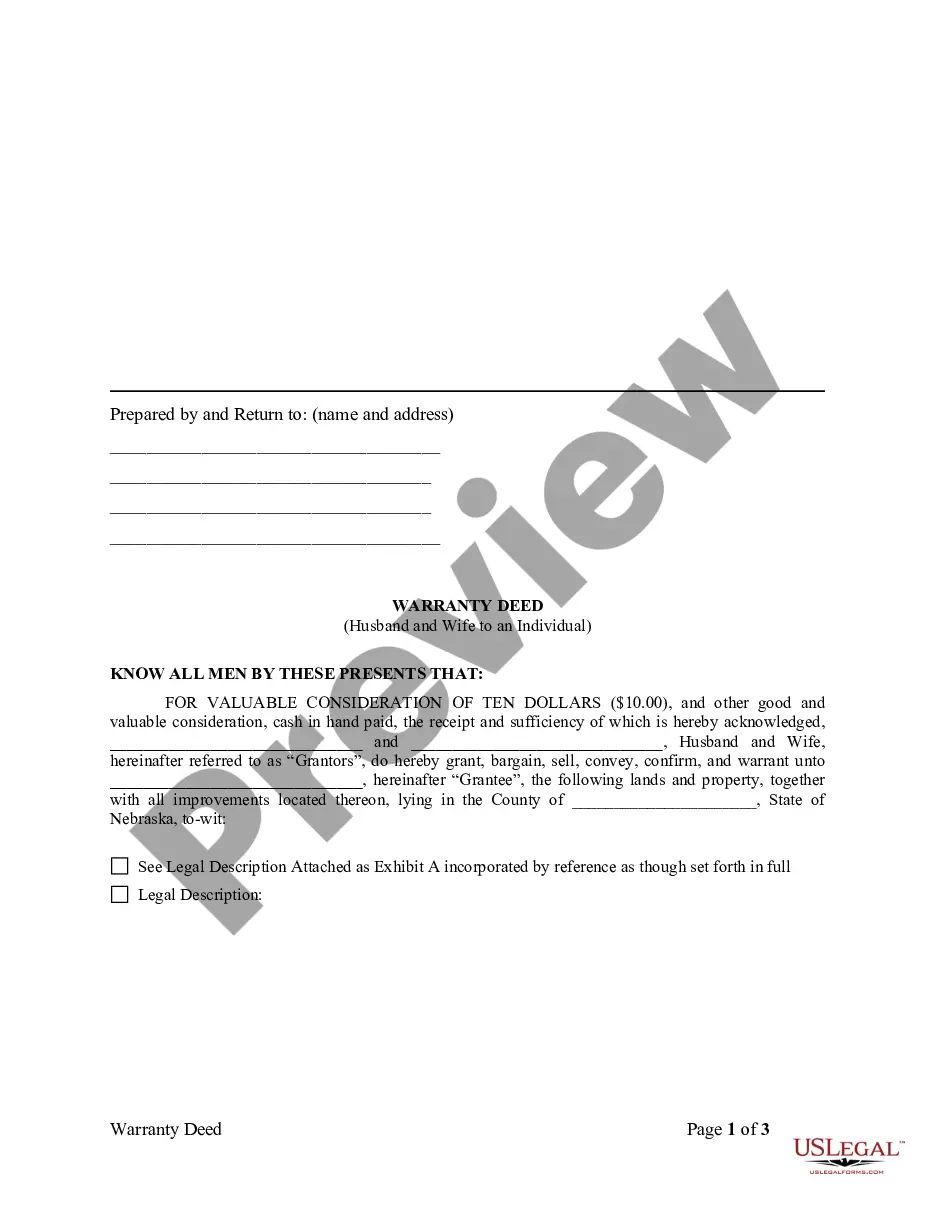
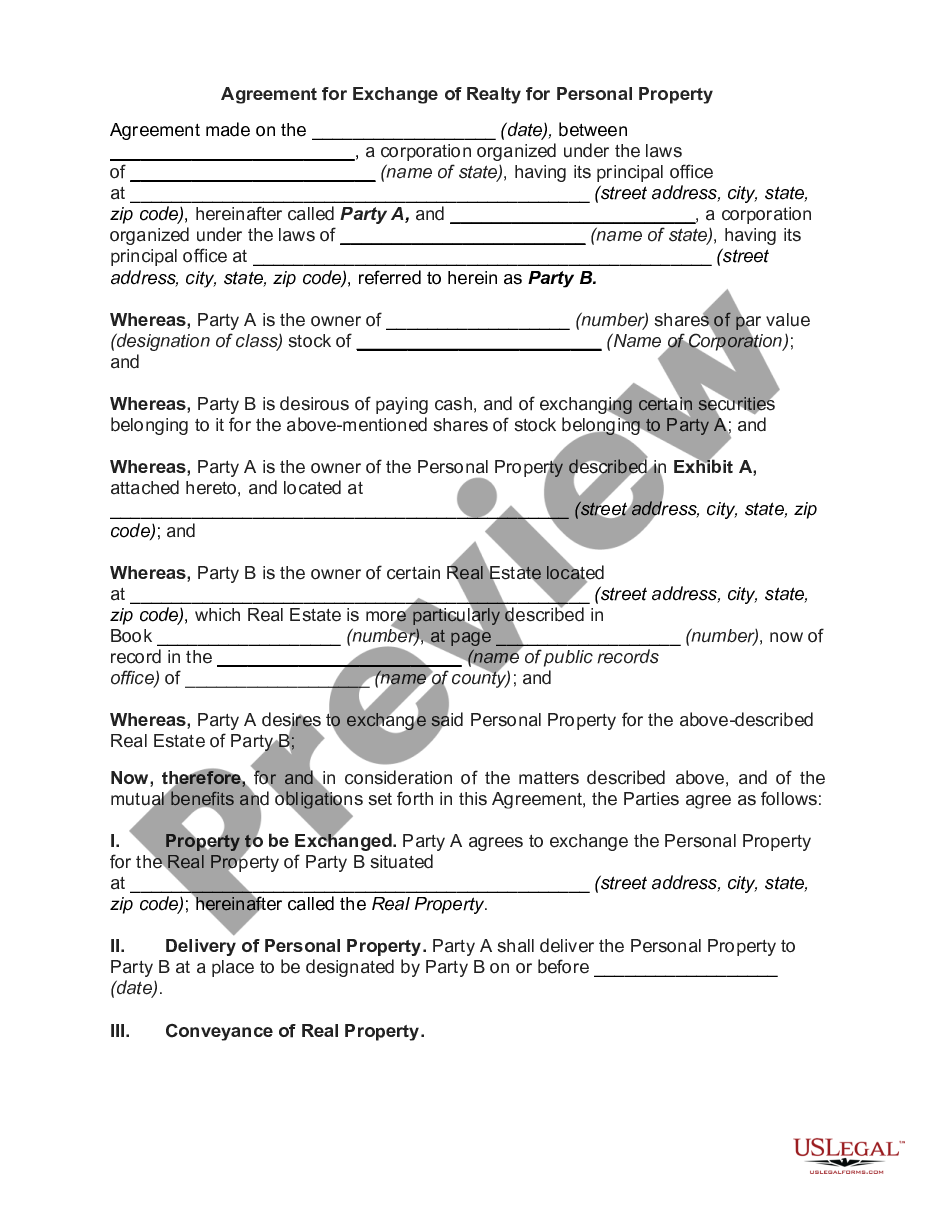
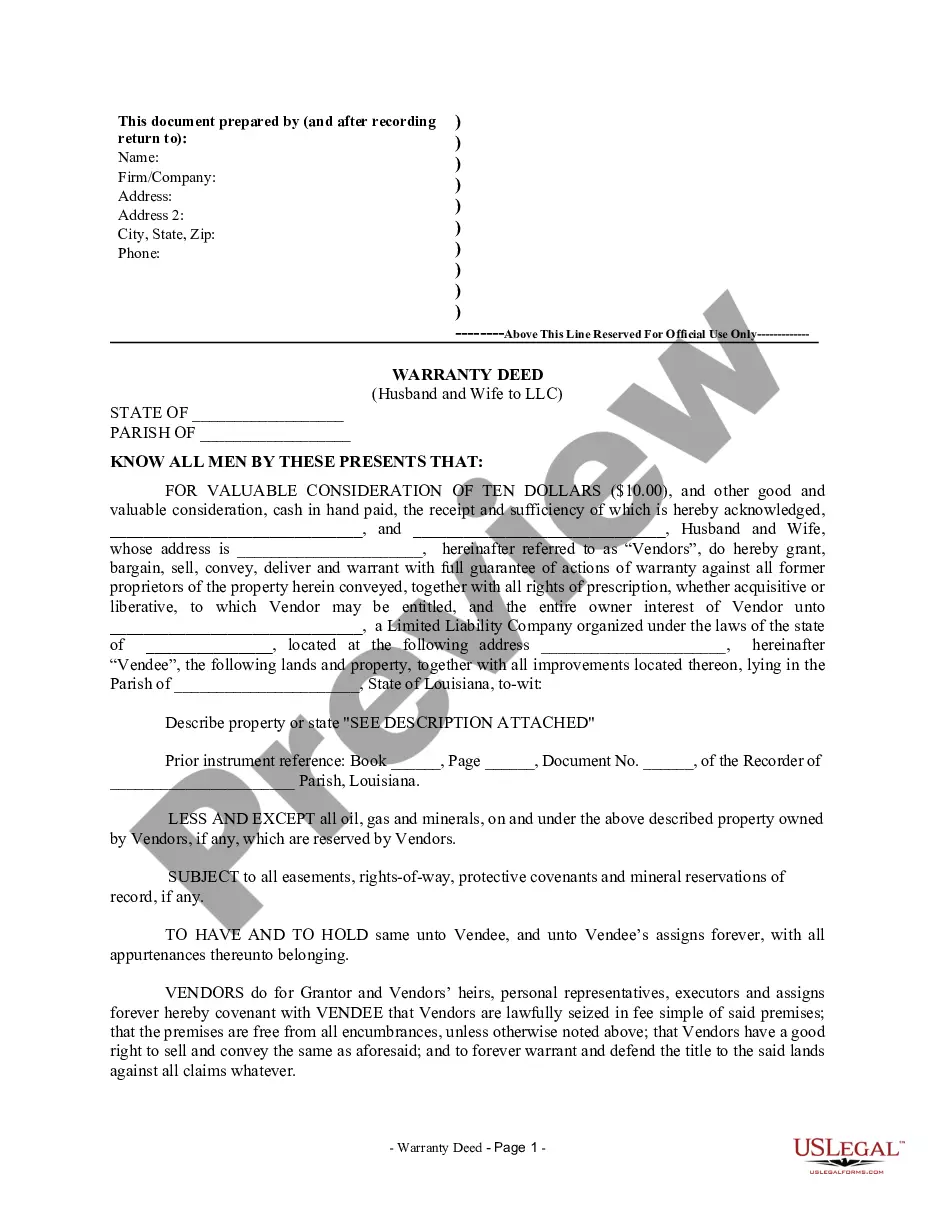
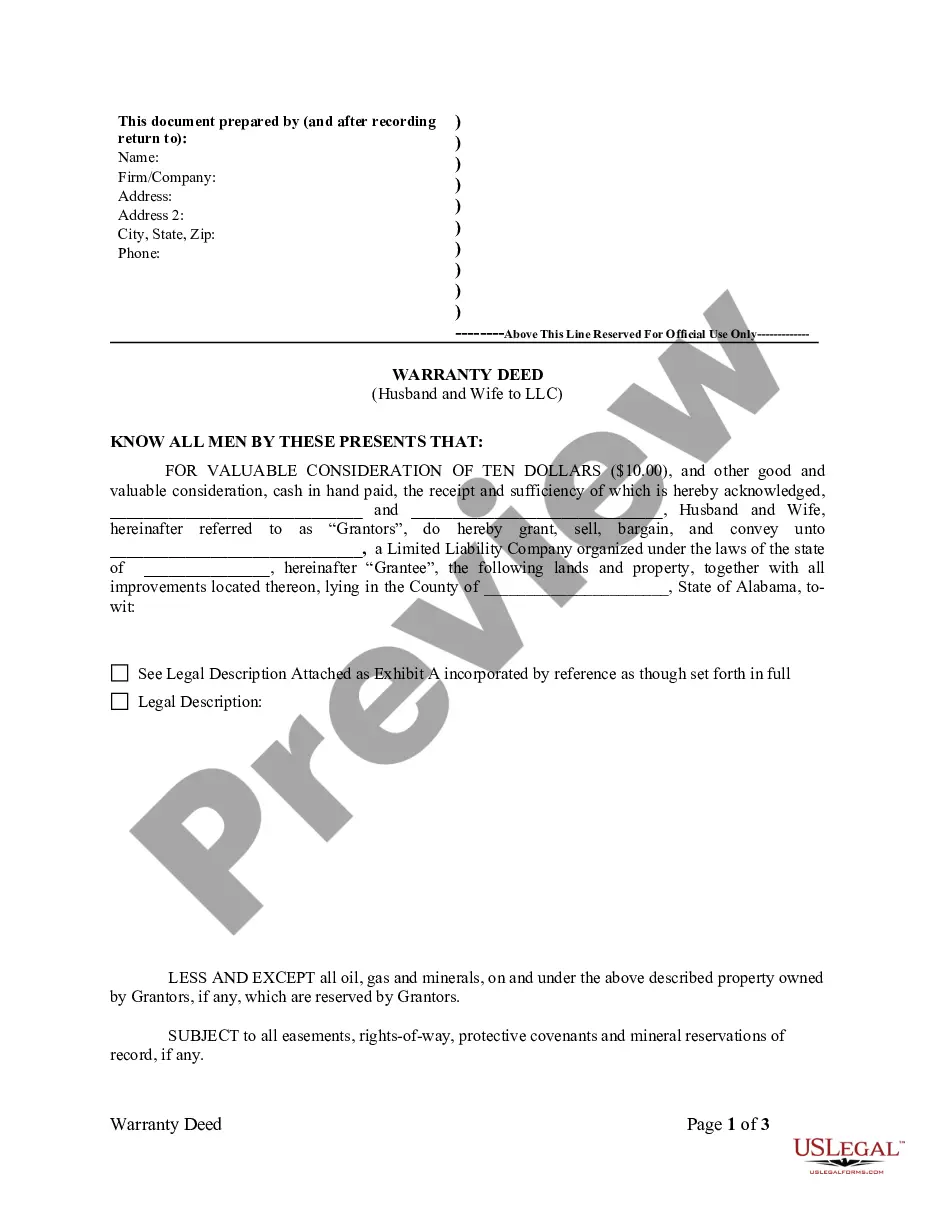
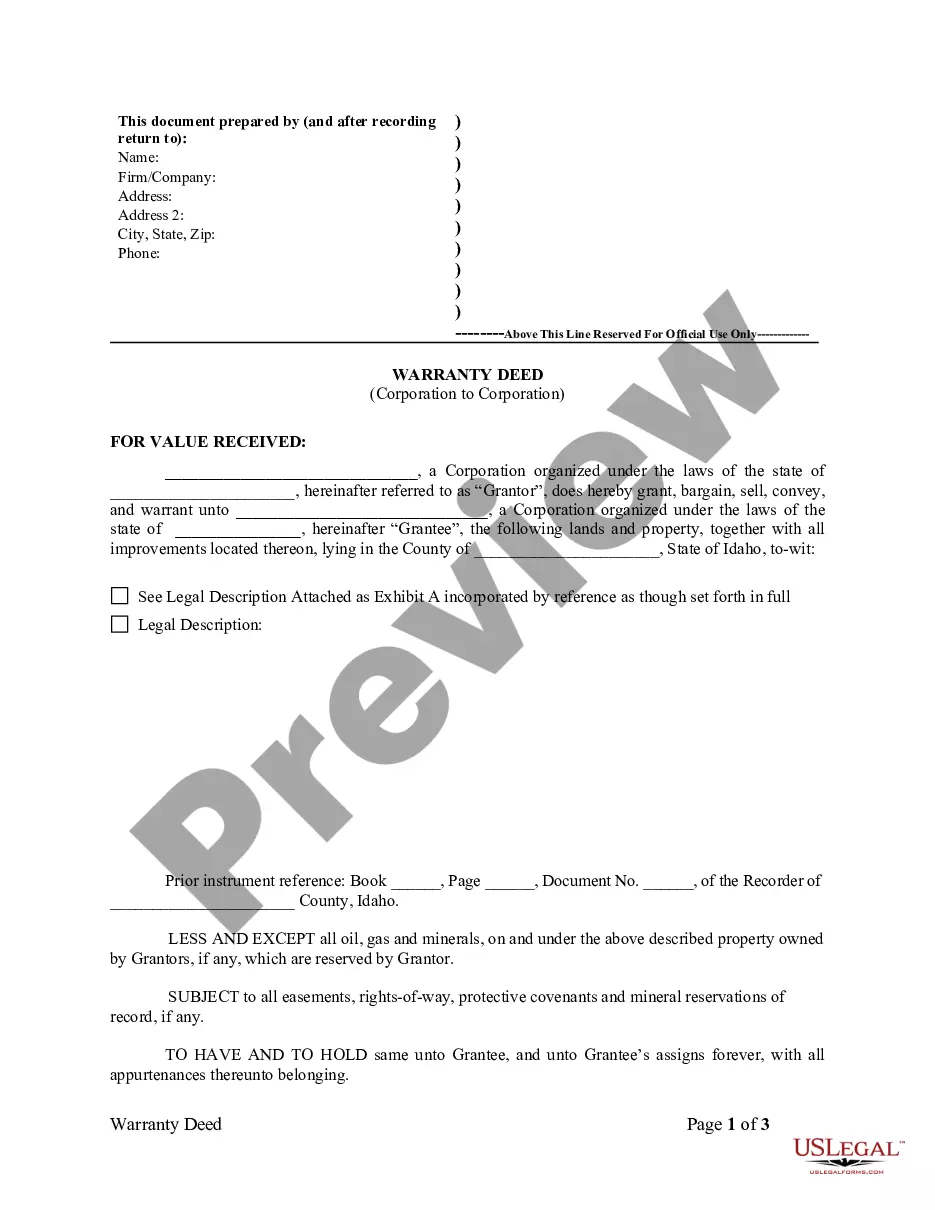
The Warranty Deed from Husband and Wife to an Individual is a legal document used to transfer property ownership from a married couple (the grantors) to an individual (the grantee). This type of warranty deed guarantees that the grantors hold clear title to the property and have the right to convey it. It includes a clause reserving certain mineral rights and is compliant with state statutory laws, making it distinct from other forms of property transfer such as quitclaim deeds, which do not provide such guarantees.
Key components of this form
- Grantors: The names of the husband and wife transferring the property.
- Grantee: The name of the individual receiving ownership of the property.
- Legal description of the property: Specifies the parcel of land being conveyed.
- Consideration: Typically states the payment amount, such as ten dollars.
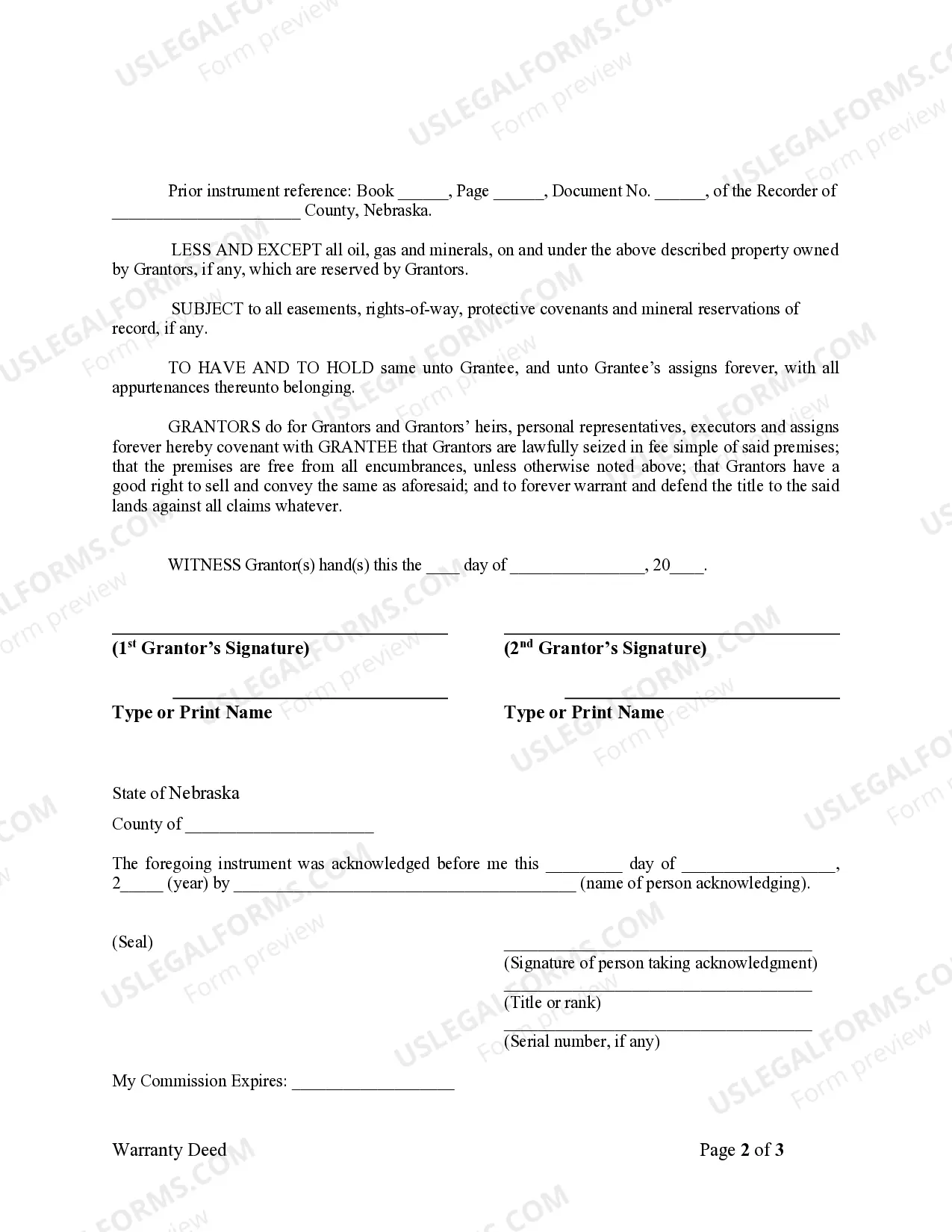
- Reservations: Includes any exceptions, such as the reservation of oil, gas, and minerals.
- Covenant: An assurance that the property is free from liens or claims, unless otherwise noted.
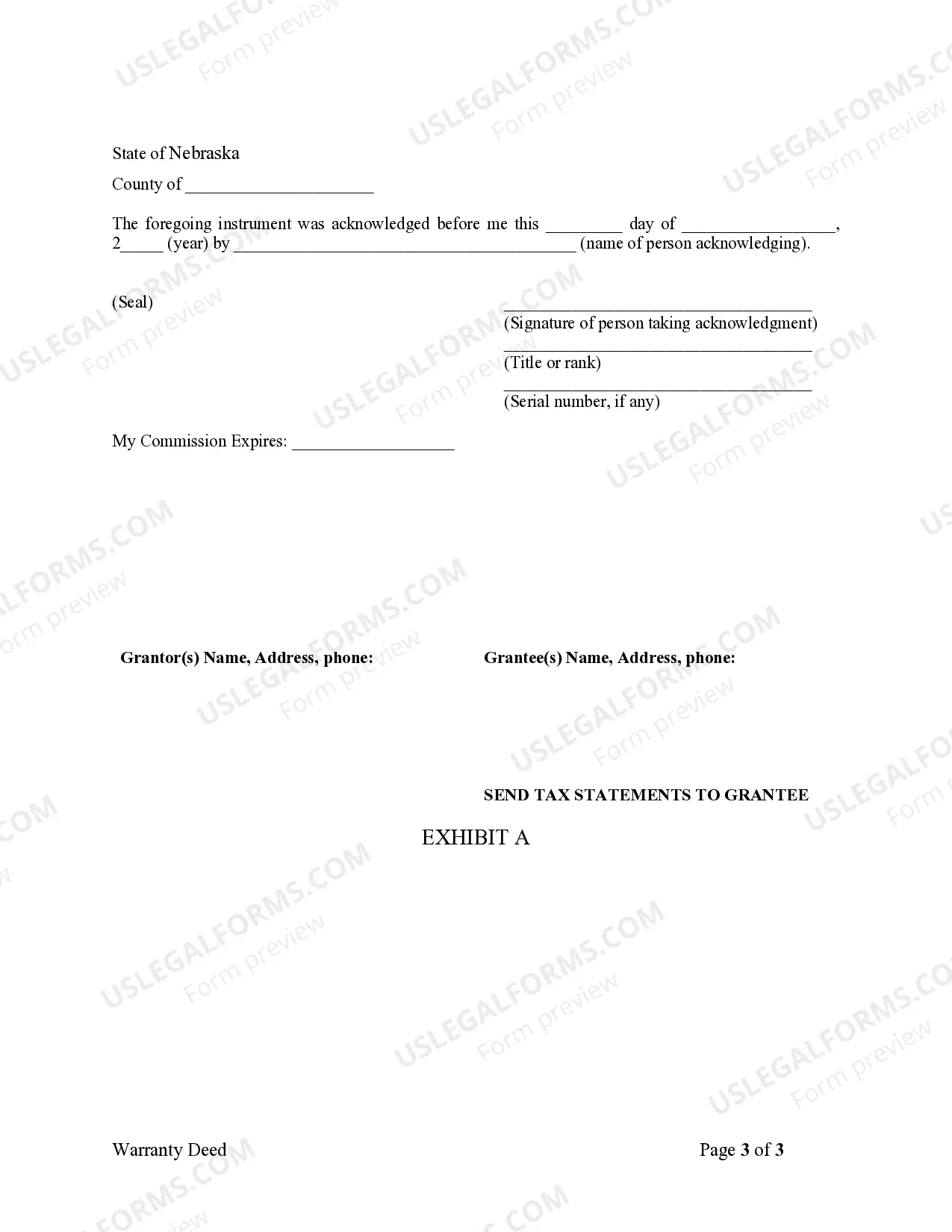
- Signatures: Requires signatures from the grantors and a notary public.





When to use this document
This warranty deed should be used when a husband and wife wish to convey a property they jointly own to a single individual. Typical scenarios include family inheritance arrangements, gifting property to a relative, or transferring property between spouses for estate planning purposes.
Intended users of this form
- Married couples looking to transfer ownership of jointly held property.
- Individuals receiving property from a spouse or family member.
- Legal representatives handling property transfers in estate matters.
Instructions for completing this form
- Identify the parties: Enter the full names of the husband and wife as grantors and the individual as grantee.
- Specify the property: Provide a detailed legal description of the property being transferred.
- State the consideration: Indicate the amount of consideration being exchanged, typically ten dollars.
- Complete the reservations: Include any reservations, such as oil, gas, or mineral rights that are being retained.
- Signatures: Have the grantors sign the document in the presence of a notary public.
Does this form need to be notarized?
This form must be notarized to be legally valid. US Legal Forms provides secure online notarization powered by Notarize, allowing you to complete the process through a verified video call.
Get your form ready online
Our built-in tools help you complete, sign, share, and store your documents in one place.
Make edits, fill in missing information, and update formatting in US Legal Forms—just like you would in MS Word.
Download a copy, print it, send it by email, or mail it via USPS—whatever works best for your next step.
Sign and collect signatures with our SignNow integration. Send to multiple recipients, set reminders, and more. Go Premium to unlock E-Sign.
If this form requires notarization, complete it online through a secure video call—no need to meet a notary in person or wait for an appointment.
We protect your documents and personal data by following strict security and privacy standards.

Make edits, fill in missing information, and update formatting in US Legal Forms—just like you would in MS Word.

Download a copy, print it, send it by email, or mail it via USPS—whatever works best for your next step.

Sign and collect signatures with our SignNow integration. Send to multiple recipients, set reminders, and more. Go Premium to unlock E-Sign.

If this form requires notarization, complete it online through a secure video call—no need to meet a notary in person or wait for an appointment.

We protect your documents and personal data by following strict security and privacy standards.
Common mistakes
- Not providing complete names for the grantors or grantee.
- Failing to include a thorough legal description of the property.
- Omitting the consideration amount, which can lead to questions about the validity of the transfer.
- Not signing the deed in front of a notary public.
Advantages of online completion
- Convenient downloadable format allows for easy access and use.
- Editable templates help customize the form to meet specific needs.
- Professionally drafted to ensure legal accuracy and compliance.
Key takeaways
- The Warranty Deed from Husband and Wife to an Individual conveys property ownership while providing a guarantee of title.
- This deed should clearly specify the property, parties involved, and any exceptions to ownership rights.
- Notarization is required for this form to ensure its legal validity.
Looking for another form?
Form popularity
FAQ
A California Interspousal Transfer Grant Deed is used to create, transfer, or terminate a real property ownership interest between spouses. This instrument applies to a present owner's interest and has been drafted to comply with the Revenue and Taxation Code Section 63.
The most recognized form for a married couple is to own their home as Tenants by the Entirety. A tenancy by the entirety is ownership in real estate under the fictional assumption that a husband and wife are considered one person for legal purposes. This method of ownership conveys the property to them as one person.
In California, all property bought during the marriage with income that was earned during the marriage is deemed "community property." The law implies that both spouses own this property equally, regardless of which name is on the title deed.
Joint Tenancy Two or more people, including spouses, may hold title to their jointly owned real estate as joint tenants. There is a so-called right of survivorship, which means that when one dies, the property automatically transfers to the survivor without the necessity of probating the estate.
It's often easier to qualify for a joint mortgage, because both spouses can contribute income and assets to the application. However, if one spouse can qualify for a mortgage based on his own income and credit, the mortgage does not need to be in both spouses' names unless you live in a community property state.
If you live in a common-law state, you can keep your spouse's name off the title the document that says who owns the property.You can put your spouse on the title without putting them on the mortgage; this would mean that they share ownership of the home but aren't legally responsible for making mortgage payments.
In estate law, joint tenancy is a special form of ownership by two or more persons of the same property. The individuals, who are called joint tenants, share equal ownership of the property and have the equal, undivided right to keep or dispose of the property. Joint tenancy creates a Right of Survivorship.