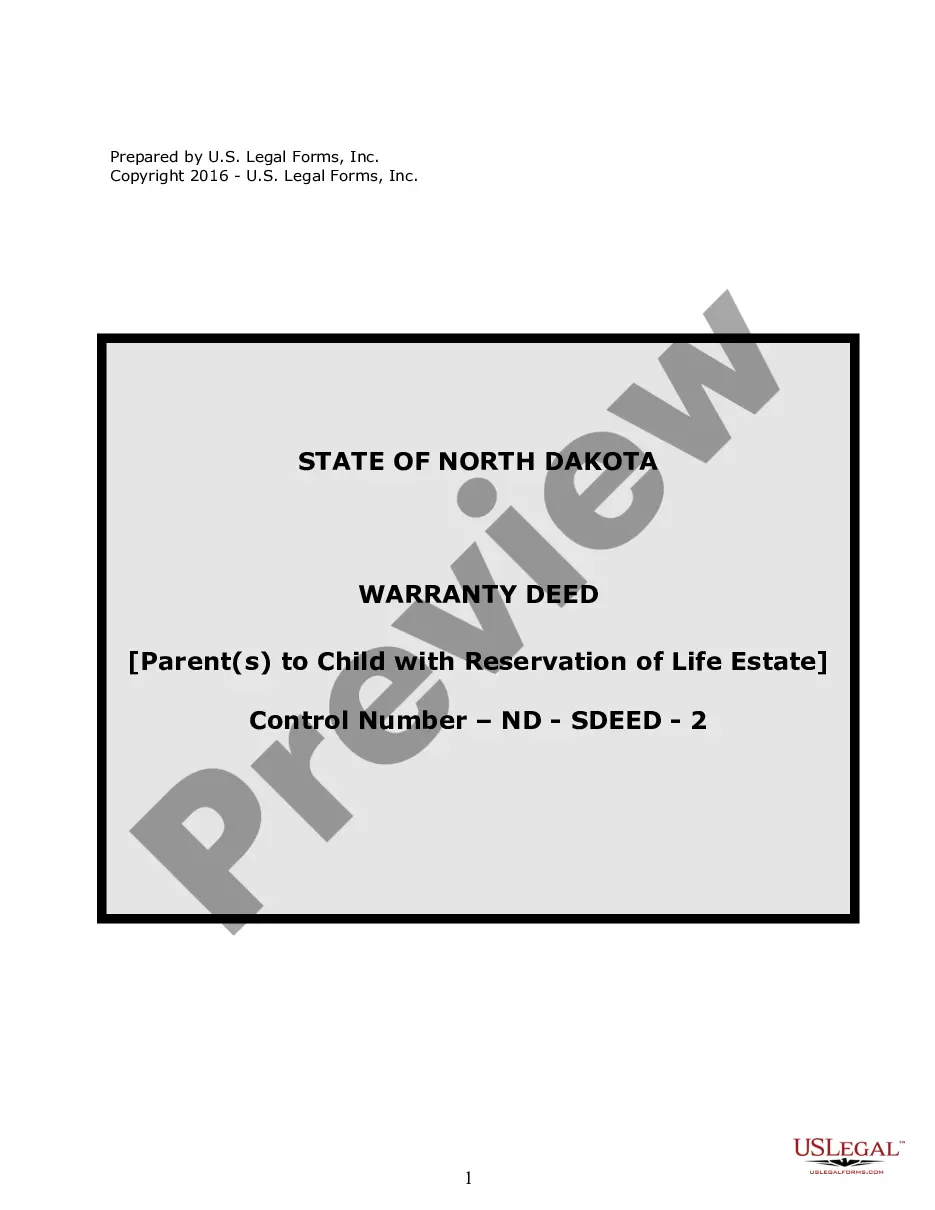
North Dakota Warranty Deed for Parents to Child with Reservation of Life Estate
About this form
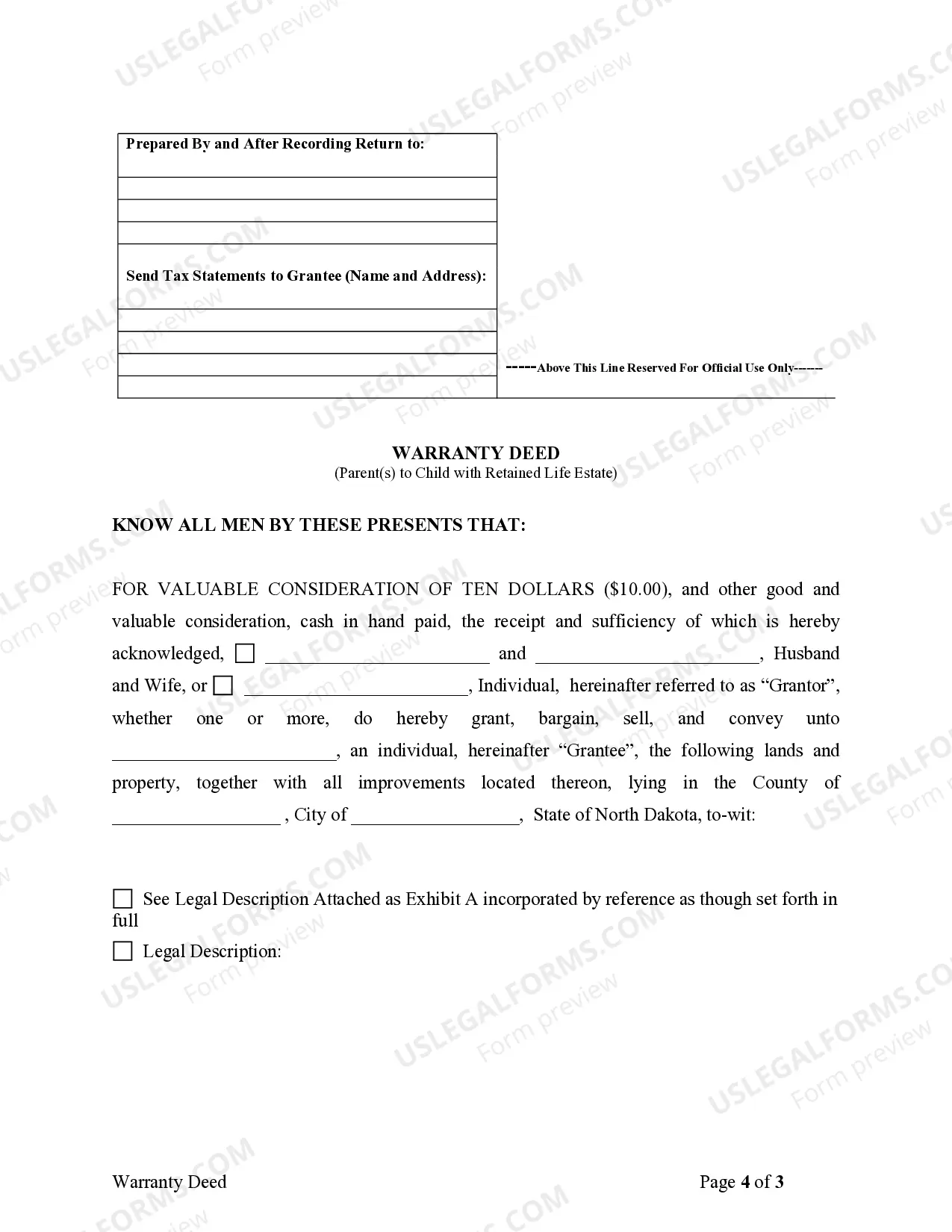
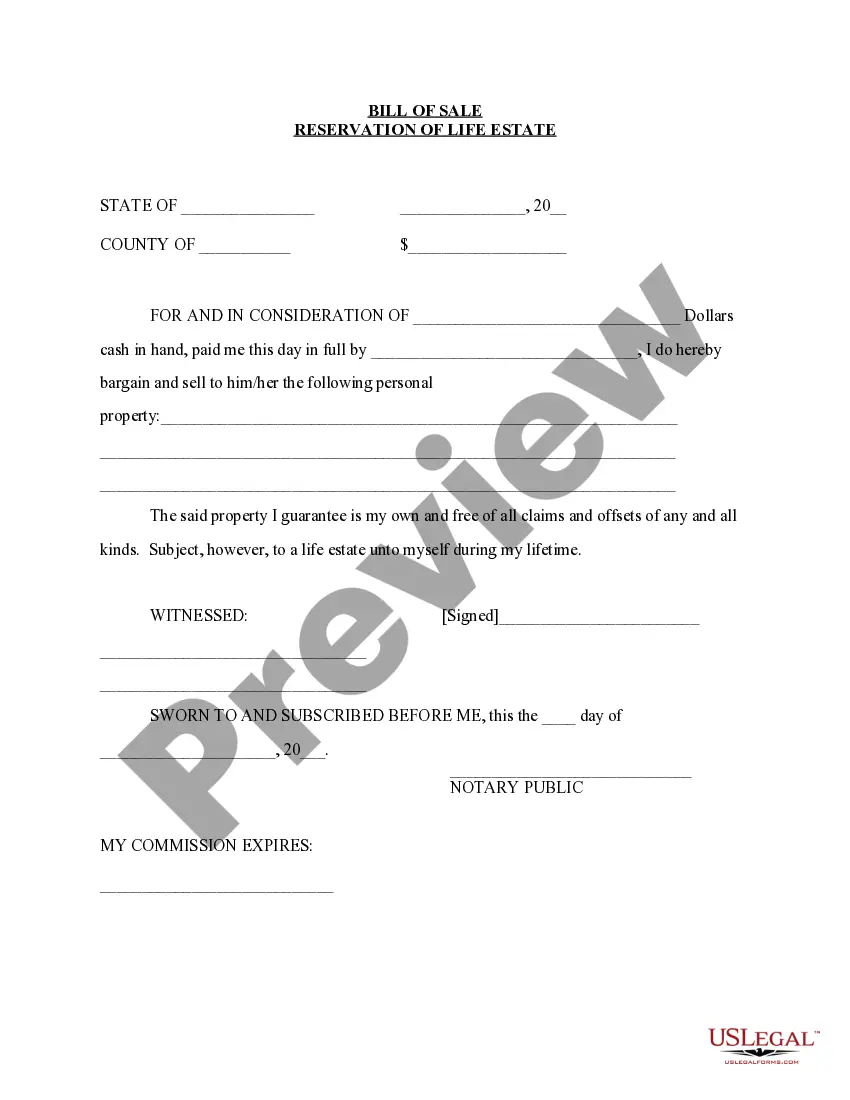
The Warranty Deed for Parents to Child with Reservation of Life Estate is a legal document used to transfer property ownership from parents to their child while allowing the parents to retain the right to live in and use the property for the remainder of their lives. Unlike a standard warranty deed, this form ensures that the parents can continue to benefit from the property, creating a secure arrangement for both parties involved. This type of deed is often utilized in estate planning and family asset management.
Key parts of this document
- Party identification: Details of the grantor(s) (parents) and grantee (child).
- Property description: Explicitly identifies the property being transferred.
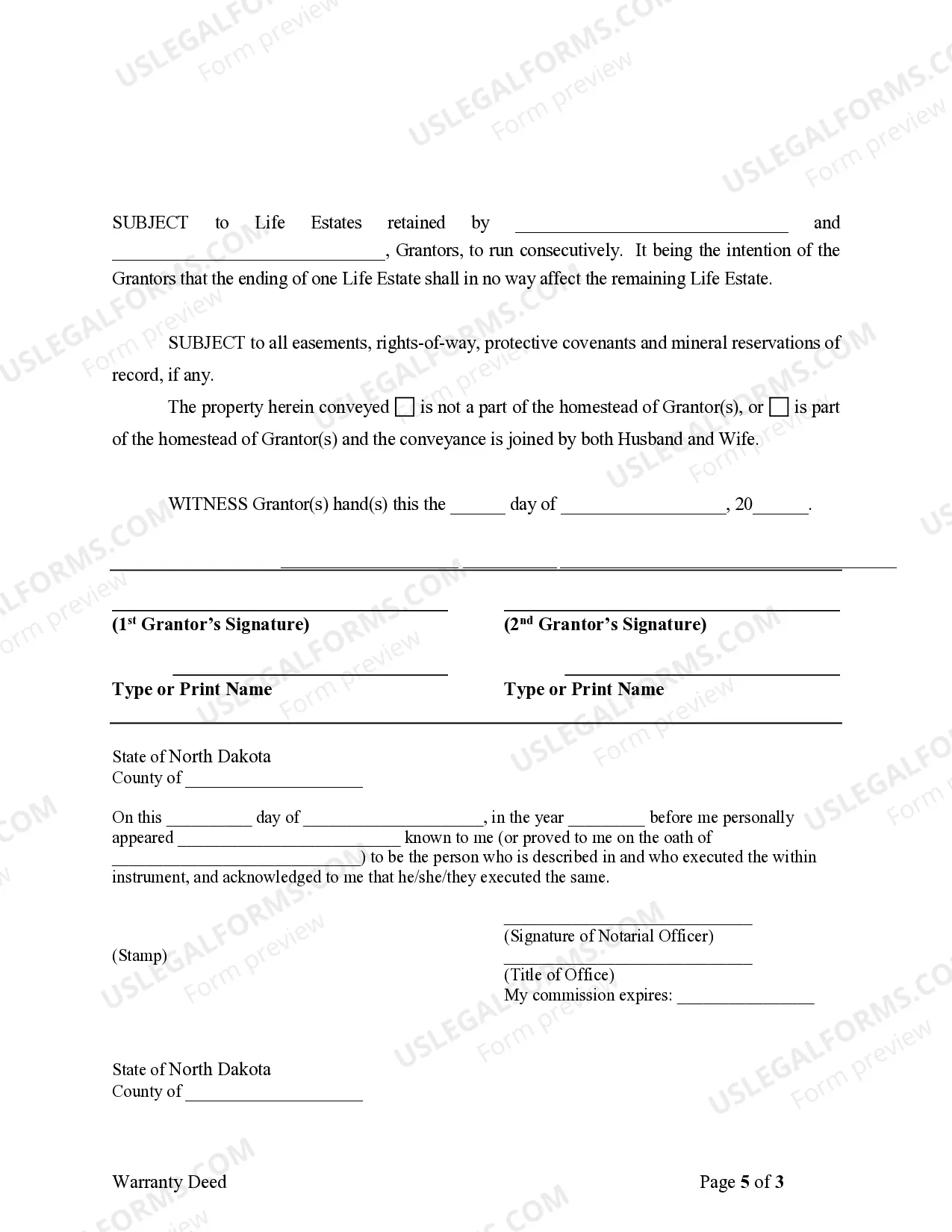
- Life estate clause: Specifies that the grantor(s) retain a life estate in the property.
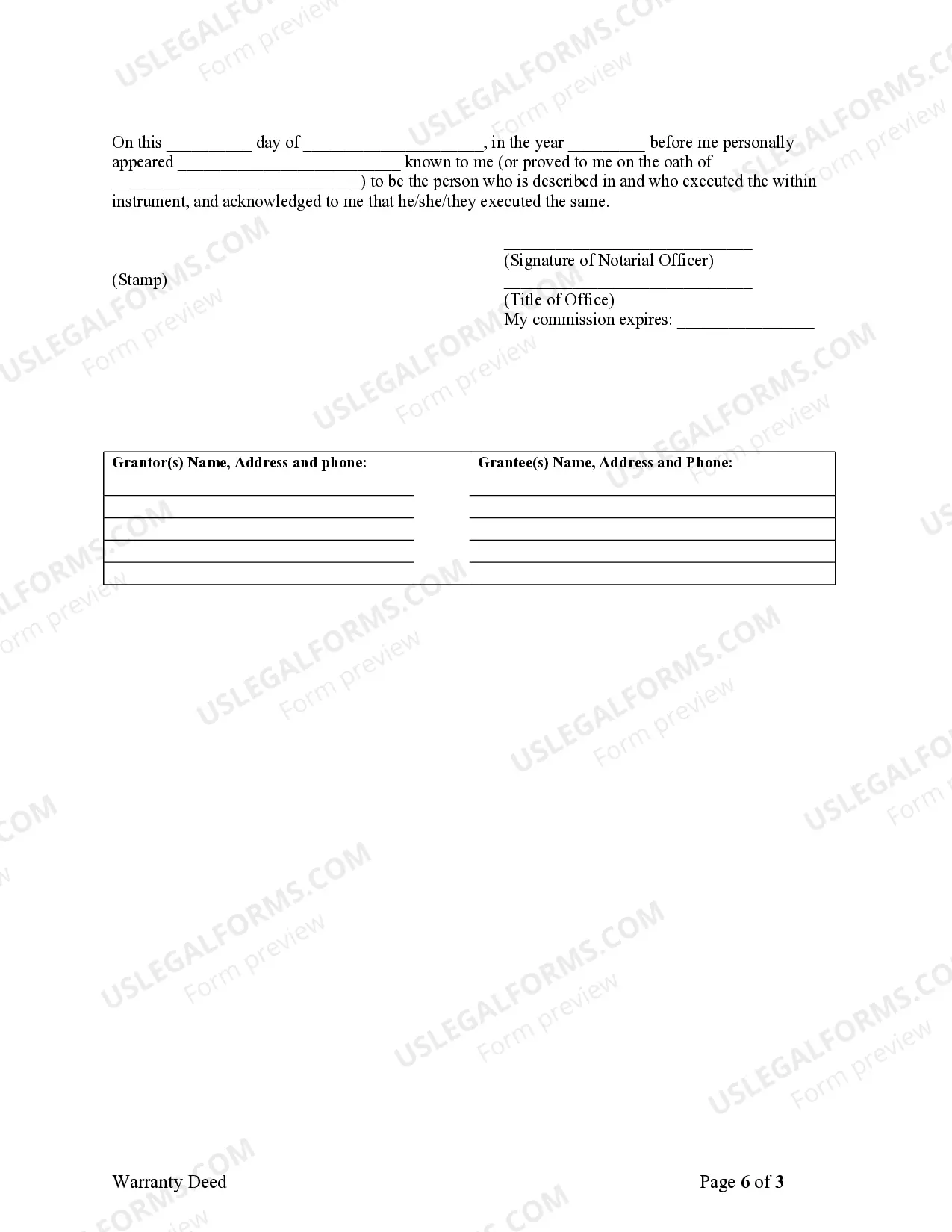
- Signatures: Required signatures of the grantor(s) and a notary public for validation.
- Easements and covenants: Notes any existing easements or rights concerning the property.



Situations where this form applies
This form should be used when parents wish to transfer property to their child while maintaining the right to occupy the property for their lifetime. It is particularly useful in estate planning scenarios where parents want to ensure family property remains within the family while also avoiding the complications of probate. Additionally, it can serve to provide financial clarity and stability for both the parents and the child.
Who this form is for
- Parents who wish to transfer property to their child while retaining a life estate.
- Individuals planning their estate to avoid probate complications.
- Families managing real estate assets for tax or inheritance purposes.
- Those seeking to simplify property ownership arrangements within their family.
Instructions for completing this form
- Identify the parties involved by entering the full names of the grantor(s) and the grantee.
- Specify the property being transferred by providing a complete legal description.
- Fill in the date of execution and ensure the grantor(s) sign in the designated areas.
- Have the document notarized to validate the signatures and the transaction.
- Keep copies of the completed deed for your records and any necessary future transactions.
Does this form need to be notarized?
This document requires notarization to meet legal standards. US Legal Forms provides secure online notarization powered by Notarize, allowing you to complete the process through a verified video call, available 24/7.
Get your form ready online
Our built-in tools help you complete, sign, share, and store your documents in one place.
Make edits, fill in missing information, and update formatting in US Legal Forms—just like you would in MS Word.
Download a copy, print it, send it by email, or mail it via USPS—whatever works best for your next step.
Sign and collect signatures with our SignNow integration. Send to multiple recipients, set reminders, and more. Go Premium to unlock E-Sign.
If this form requires notarization, complete it online through a secure video call—no need to meet a notary in person or wait for an appointment.
We protect your documents and personal data by following strict security and privacy standards.

Make edits, fill in missing information, and update formatting in US Legal Forms—just like you would in MS Word.

Download a copy, print it, send it by email, or mail it via USPS—whatever works best for your next step.

Sign and collect signatures with our SignNow integration. Send to multiple recipients, set reminders, and more. Go Premium to unlock E-Sign.

If this form requires notarization, complete it online through a secure video call—no need to meet a notary in person or wait for an appointment.

We protect your documents and personal data by following strict security and privacy standards.
Typical mistakes to avoid
- Incorrectly identifying the property description, leading to legal ambiguities.
- Failing to notarize the document, which may render it invalid.
- Omitting required signatures or dates from the form, which can delay the transfer process.
- Not consulting with a legal expert if there are complexities in the asset ownership.
Why complete this form online
- Convenience: Access and complete the form from your own device without the need for physical paperwork.
- Editability: Fill in the form digitally, reducing errors from handwriting.
- Efficiency: Save time compared to traditional methods of obtaining legal documents.
- Secure storage: Keep your completed documents stored securely online for easy access.
Quick recap
- The form facilitates the transfer of property from parents to their child while retaining usage rights for the grantor(s).
- It is important to correctly identify all parties and provide an accurate legal description of the property.
- Notarization is required to ensure the legality of the warranty deed.
Looking for another form?





Form popularity
FAQ
A life estate is a form of joint ownership that allows one person to remain in a house until his or her death, when it passes to the other owner.
The name and address of the seller (called the grantor) The name and address of the buyer (called the grantee) A legal description of the property (found on the previous deed) A statement that the grantor is transferring the property to the grantee.
This life estate deed is a document that transfers ownership of real property, while reserving access and use of the property for the duration of the grantor's life. It allows the original owner (grantor) to remain on the premises with full access to and benefits from the property.
A warranty deed guarantees that: The grantor is the rightful owner of the property and has the legal right to transfer the title.The title would withstand third-party claims to ownership of the property. The grantor will do anything to ensure the grantee's title to the property.
A person owns property in a life estate only throughout their lifetime. Beneficiaries cannot sell property in a life estate before the beneficiary's death. One benefit of a life estate is that property can pass when the life tenant dies without being part of the tenant's estate.
A life estate deed permits the property owner to have full use of their property until their death, at which point the ownership of the property is automatically transferred to the beneficiary.
This life estate deed is a document that transfers ownership of real property, while reserving access and use of the property for the duration of the grantor's life. It allows the original owner (grantor) to remain on the premises with full access to and benefits from the property.
Reservation of the present interest allows the owner to retain ownership for a period of time measured by the life of one or more individuals, by a term of years, or by a combination of the two.
What happens to a life estate after someone dies? Upon the life tenant's death, the property passes to the remainder owner outside of probate.If the remainder owner dies first, then their ownership interest must be probated. Whoever was named in the will or determined to be the heir will become the new remainderman.