North Dakota Letter from Landlord to Tenant that Sublease granted - Rent Paid by Subtenant, Old Tenant Released from Liability for Rent
About this form
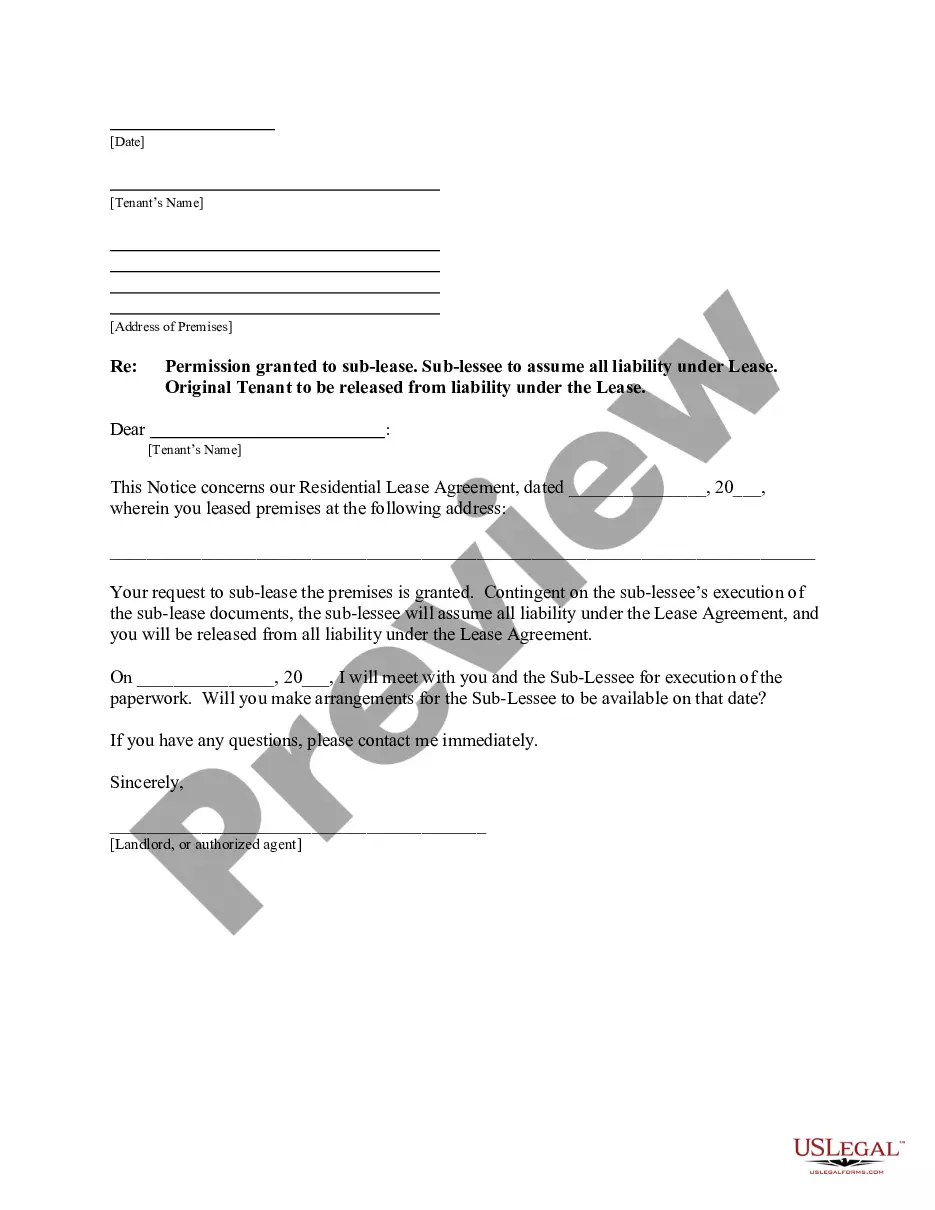
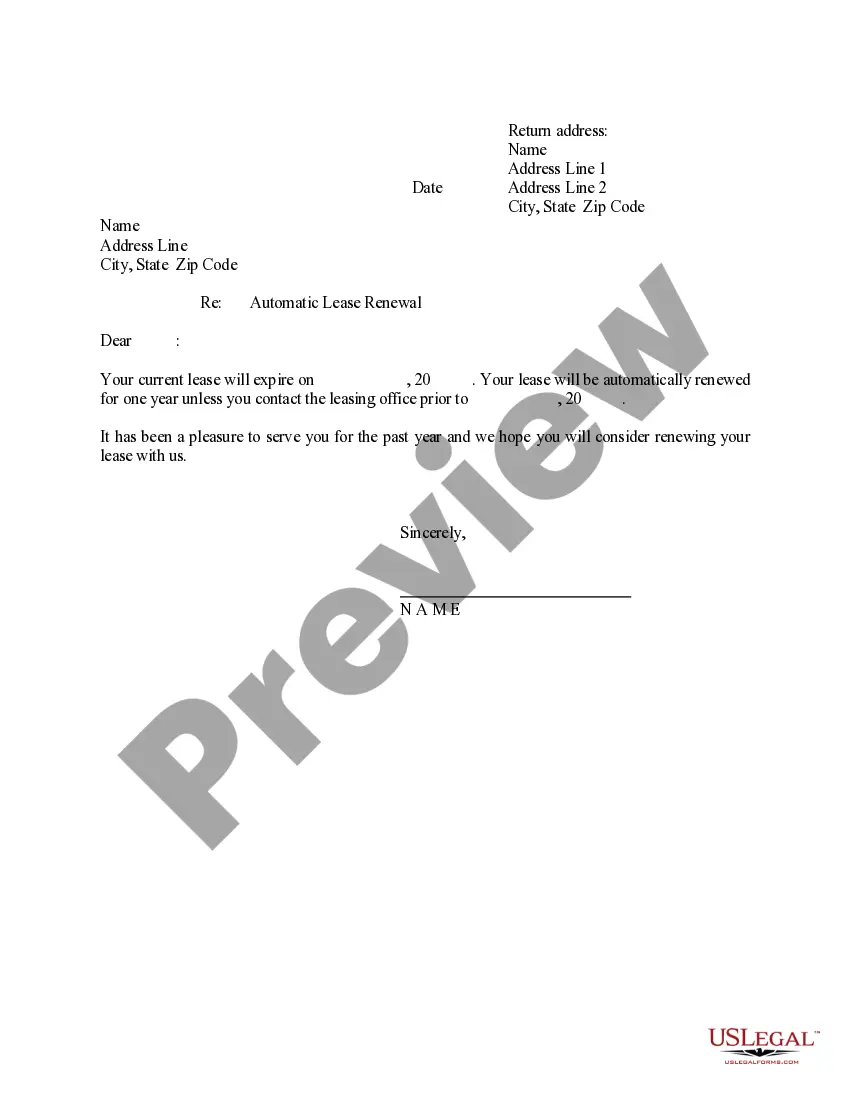
This form is a Letter from Landlord to Tenant informing them that a sublease has been granted. It clarifies that the rent will be paid by the sub-tenant, releasing the original tenant from any liability regarding rent payments. This letter is essential for formalizing the arrangement between the landlord, the original tenant, and the subtenant, ensuring clear communication and documentation of the subleasing agreement.
Form components explained
- Confirmation of tenant's request to sublease the premises.
- Effective date for when the sublease will take effect.
- Details regarding the subtenant's assumption of liability under the Lease Agreement.
- Statement releasing the original tenant from liability for rent payments.
- Schedule for executing the necessary sublease documents.

Common use cases
This form should be used when a tenant wishes to sublease their rented property and requires formal permission from the landlord. It is necessary to ensure that both the landlord and the original tenant are protected from future financial liabilities related to rent once the subtenant takes over payment responsibilities.
Who needs this form
- Landlords who need to approve a sublease arrangement.
- Original tenants who want to sublet their rental space.
- Subtenants looking to formalize their agreement with the original tenant and landlord.
Steps to complete this form
- Identify the original tenant and the subtenant involved in the sublease.
- Specify the property being subleased.
- Indicate the date when the sublease will take effect.
- Sign the letter as the landlord or authorized agent.
- Ensure that both the original tenant and subtenant understand their responsibilities.
Notarization guidance
In most cases, this form does not require notarization. However, some jurisdictions or signing circumstances might. US Legal Forms offers online notarization powered by Notarize, accessible 24/7 for a quick, remote process.
Get your form ready online
Our built-in tools help you complete, sign, share, and store your documents in one place.
Make edits, fill in missing information, and update formatting in US Legal Forms—just like you would in MS Word.
Download a copy, print it, send it by email, or mail it via USPS—whatever works best for your next step.
Sign and collect signatures with our SignNow integration. Send to multiple recipients, set reminders, and more. Go Premium to unlock E-Sign.
If this form requires notarization, complete it online through a secure video call—no need to meet a notary in person or wait for an appointment.
We protect your documents and personal data by following strict security and privacy standards.

Make edits, fill in missing information, and update formatting in US Legal Forms—just like you would in MS Word.

Download a copy, print it, send it by email, or mail it via USPS—whatever works best for your next step.

Sign and collect signatures with our SignNow integration. Send to multiple recipients, set reminders, and more. Go Premium to unlock E-Sign.

If this form requires notarization, complete it online through a secure video call—no need to meet a notary in person or wait for an appointment.

We protect your documents and personal data by following strict security and privacy standards.
Common mistakes to avoid
- Failing to obtain landlord approval before subleasing.
- Not including the effective date of the sublease.
- Forgetting to have all parties sign the documents.
- Neglecting to communicate any specific obligations of the subtenant.
Why use this form online
- Convenient access to the form at any time.
- Immediate download allows for quick processing.
- Editable features enable customization to specific needs.
- Reliable format that meets legal standards for formal agreements.
Legal use & context
- This letter serves as official documentation of the subleasing arrangement.
- It protects both the landlord and original tenant from future disputes regarding rent obligations.
- Using this form helps ensure all parties understand their legal rights and responsibilities.
Key takeaways
- Use this form to formalize a subleasing agreement between a landlord, original tenant, and subtenant.
- Ensure all parties are clear on their responsibilities concerning rent and liability.
- Check specific local laws regarding subleasing to ensure compliance.
Looking for another form?


Form popularity
FAQ
Only landlords are allowed to evict their tenants. A master tenant is considered a landlord in relation to his or her subtenant, meaning that a master tenant is able to evict a subtenant.Similarly, roommates who are co-tenants cannot evict their fellow co-tenants.
A tenant has signed a lease or rental agreement with a landlord. A subtenant, on the other hand, is someone who subleases or rents all or part of the rental property from a tenant, and does not sign a lease or rental agreement with the landlord.
A sublease is a legally binding contract made between a tenant and a new tenant (also known as a subtenant or a sublessee).Usually, the first tenant must get consent from the landlord before he/she is allowed to sublease the premises.
A subtenant is not a cotenant and does not have a direct relationship with your landlord. As their landlord, you can (and should) require them to pay rent directly to you and evict them if they fail to follow through. This differs from a cotenant, who can be evicted only by your landlord.
If the headlease is forfeited because the tenant has breached its terms, the underlease will end automatically.As an alternative, a tenant may be able to agree with the landlord that if the headlease is forfeited and the underlease falls away, the landlord will grant a new lease to the undertenant.
If a tenant is subletting without consent, it's likely they will have broken terms in their tenancy agreement. This breach of contract means that the landlord can take action to evict them from their home. Possession proceedings can be started quickly, but it's important to follow the correct legal process.
The Subtenant or Sublessee is the person who is entering into a lease for some or all of the Landlord's property from the Sublandlord (the original tenant).The Master/Original lease is the lease that the Sublandlord (the original tenant) entered into with the Landlord.
If a court finds you guilty of the first offence of unlawful subletting, you can be fined in the magistrates' court.At the magistrates' court, you can get up to six months in prison or a fine, or both. At the Crown Court the maximum penalty is imprisonment for two years or a fine, or both.