North Carolina Last Will and Testament for Single Person with Adult Children
What is this form?
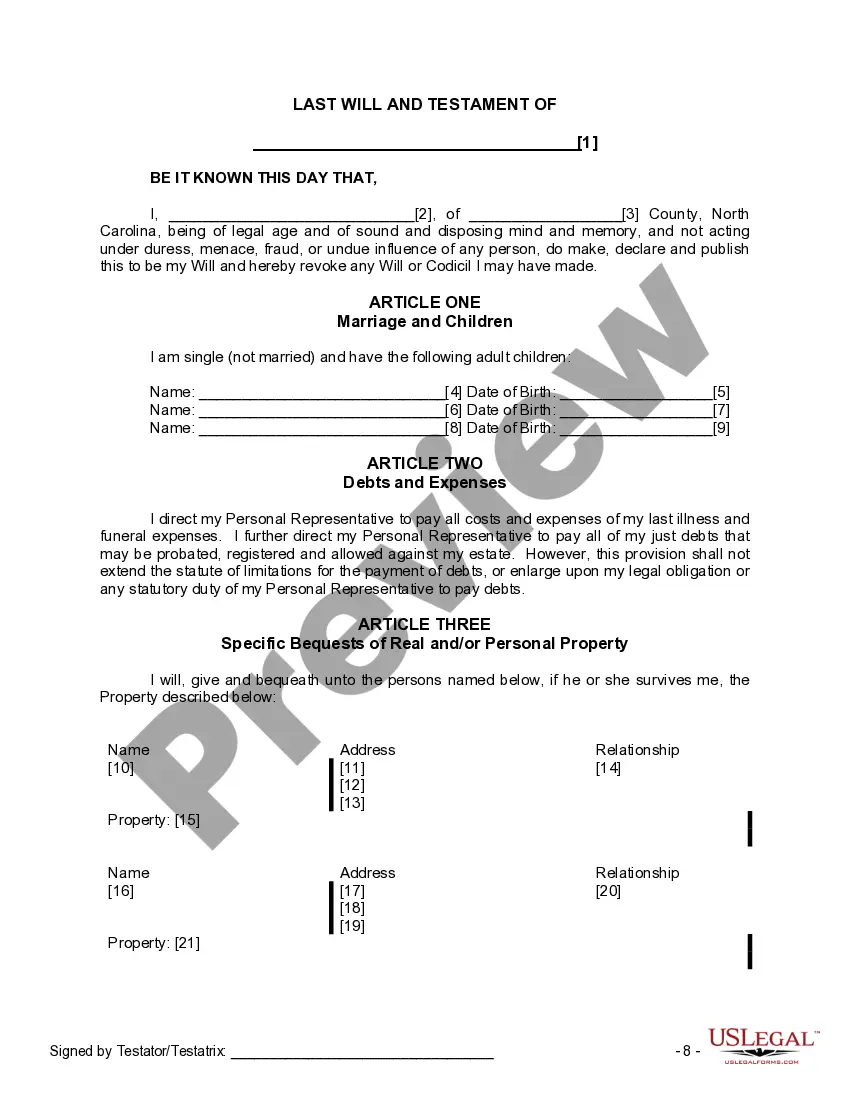
The Last Will and Testament for Single Person with Adult Children is a legal document that allows an individual who is single and has adult children to outline their wishes regarding the distribution of their estate after death. This form is designed specifically for those who have never been married and provide specific provisions for personal representatives, debts, bequests, and the executor of the estate, distinguishing it from other wills that may include minor children or married individuals.
Key components of this form
- Declaration of the Testator's identity and sound mind.
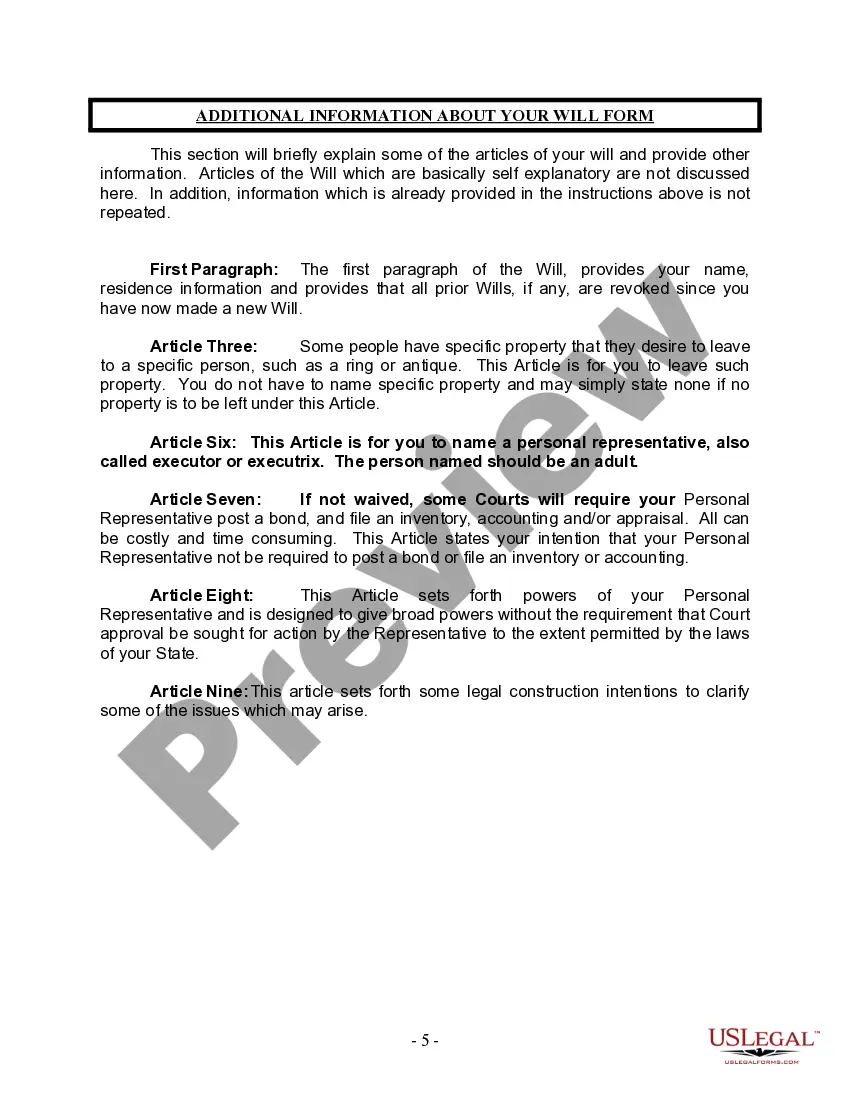
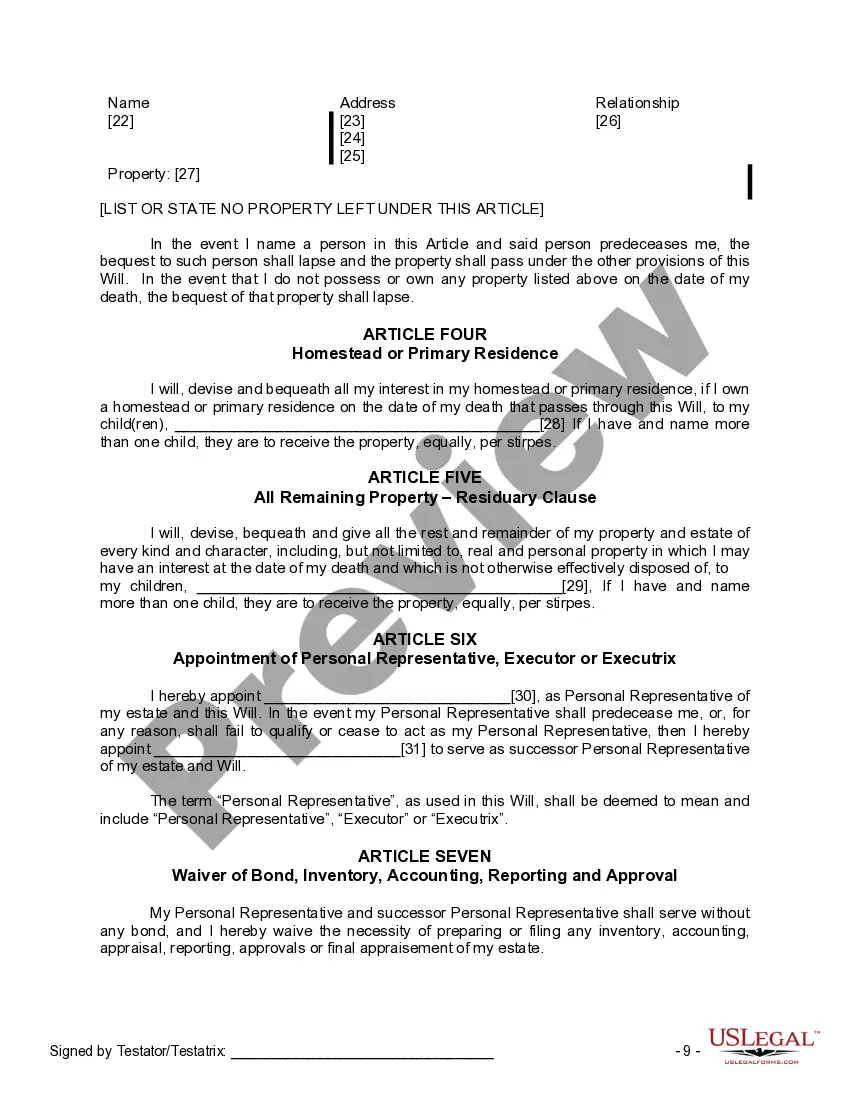
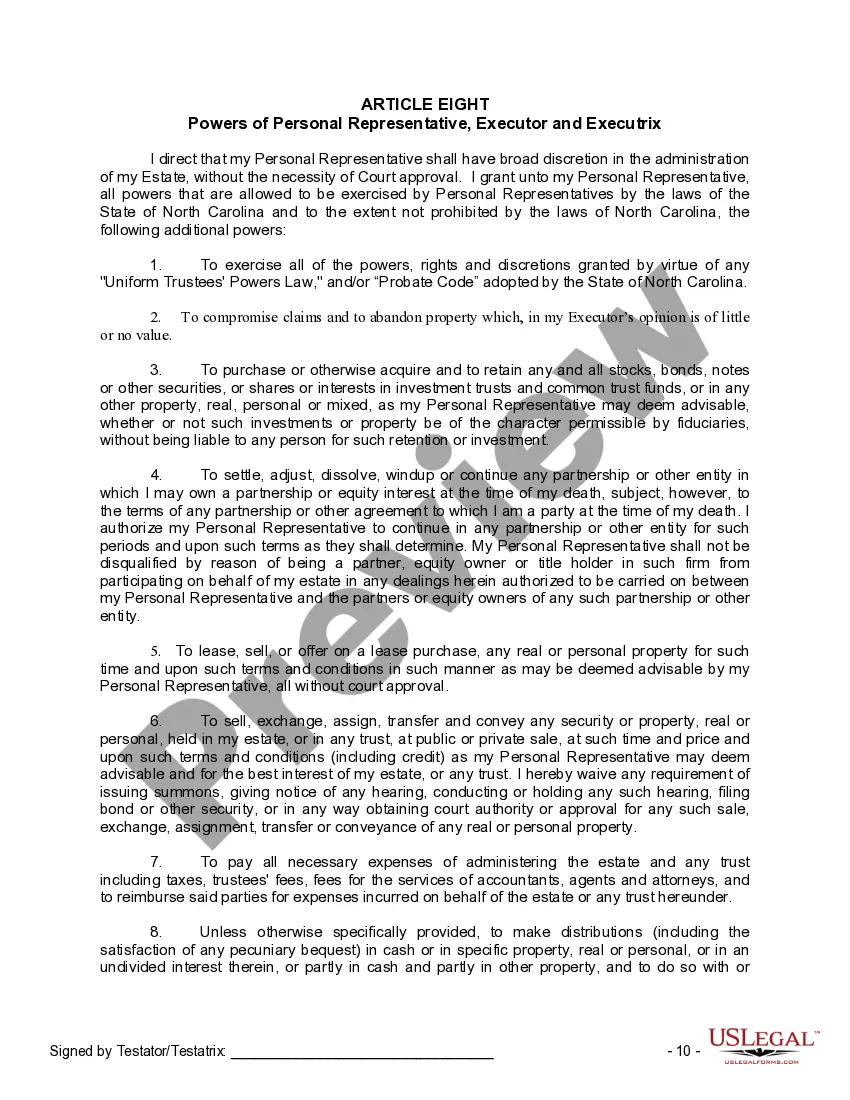
- Appointment of a personal representative to manage the estate.
- Provision for payment of debts and expenses before distribution of assets.
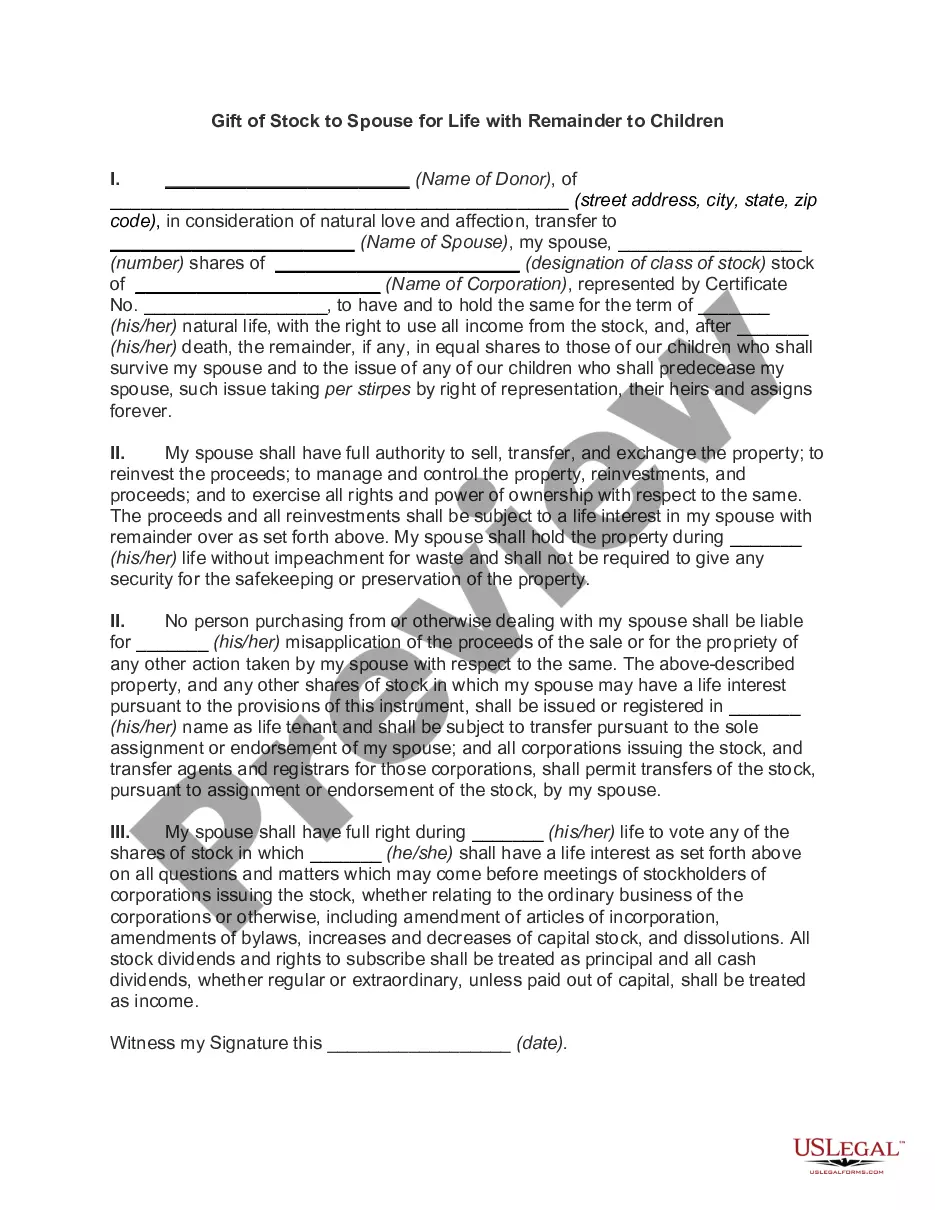
- Specific bequests of real and personal property to designated beneficiaries.
- Distribution of remaining property among children as per stirpes.
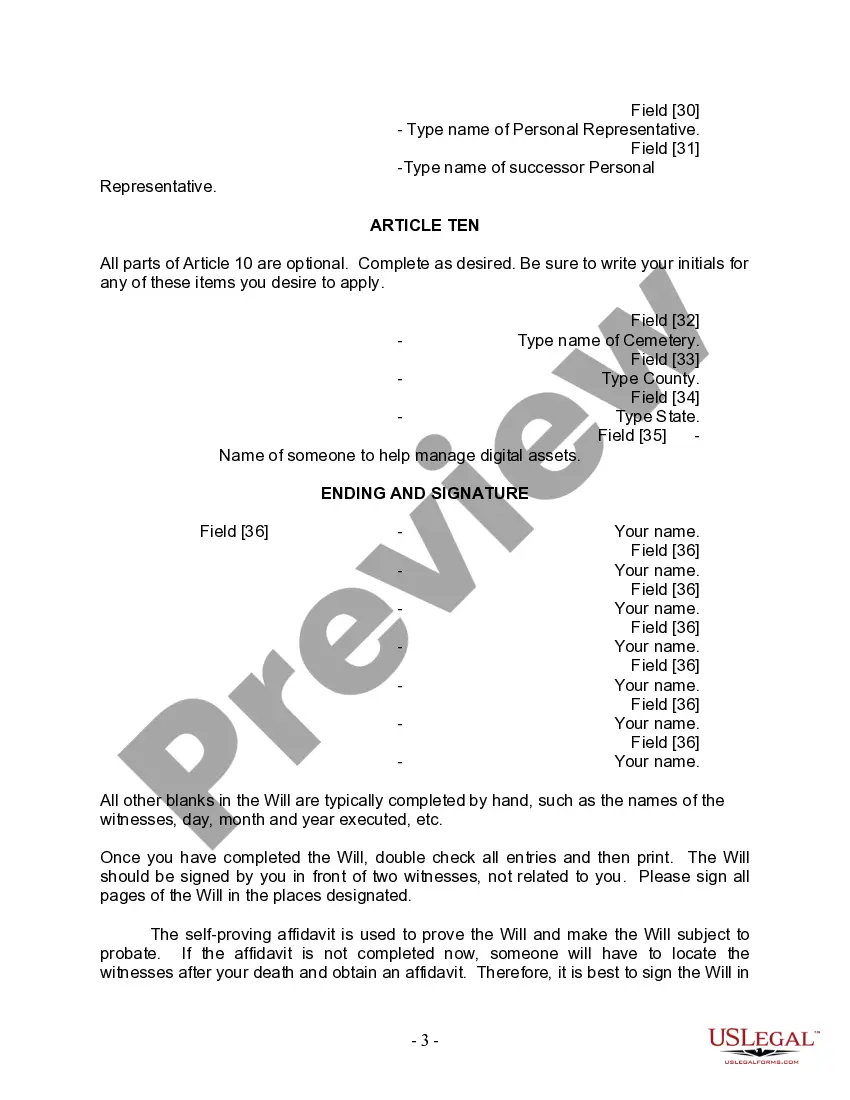
- Legal requirements for witnesses and notarization, including a self-proving affidavit if applicable.






Situations where this form applies
This form is useful in several scenarios, including when a single person wants to ensure their adult children inherit their assets upon their passing. It is ideal for individuals who have specific wishes for asset distribution and wish to avoid disputes among heirs. Additionally, it becomes essential when managing debts and funeral costs and when appointing someone to oversee the execution of their wishes regarding the estate.
Who this form is for
- Individuals who are single and have never been married.
- Parents with adult children who wish to clarify their wishes after death.
- Individuals looking to designate specific assets to beneficiaries.
- Those who want to appoint a personal representative for their estate.
- Anyone wanting to ensure their debts and final expenses are paid from their estate.
How to complete this form
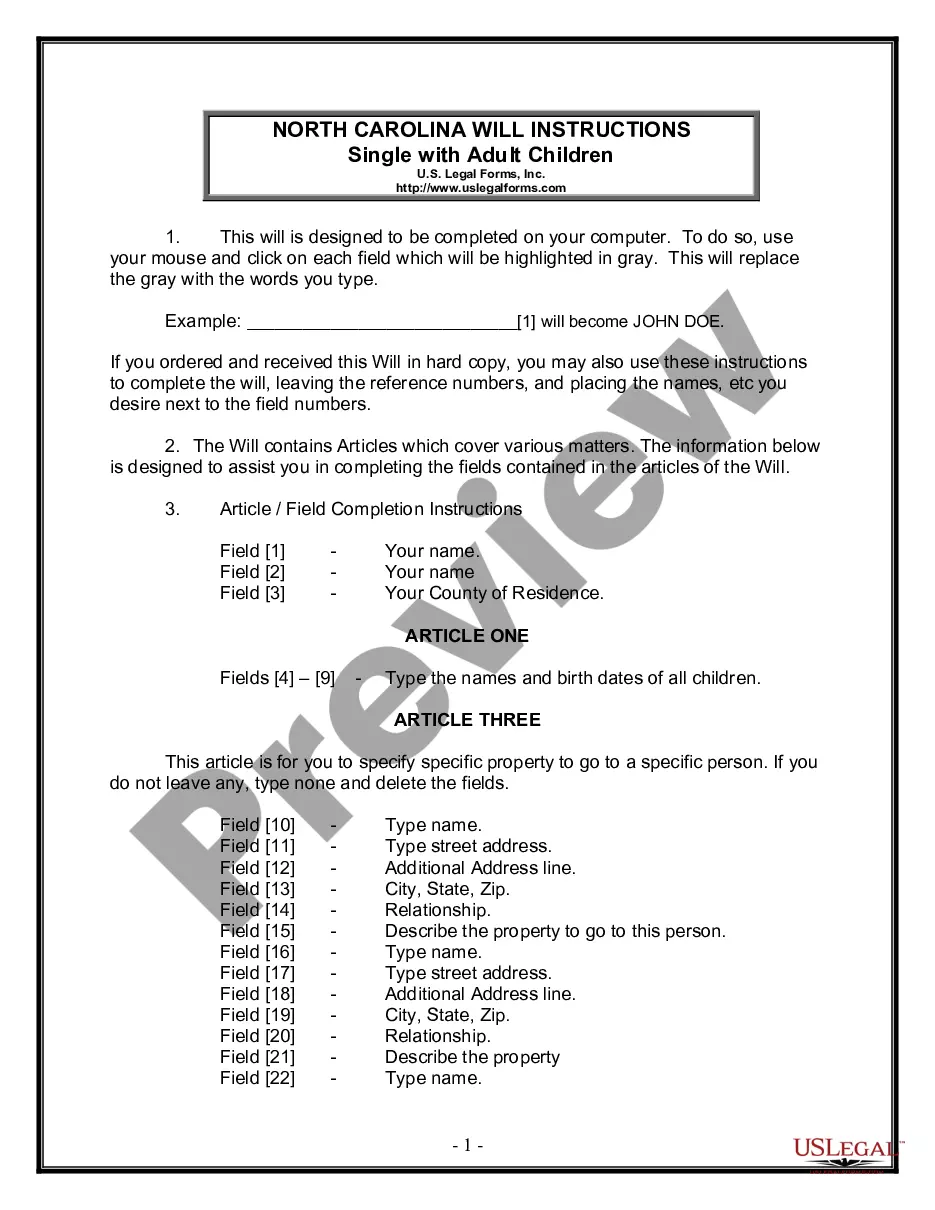
- Enter your personal information at the beginning of the document, including your full name and county.
- List your adult children and their dates of birth under the relevant article.
- Specify any debts and expenses to be paid before asset distribution.
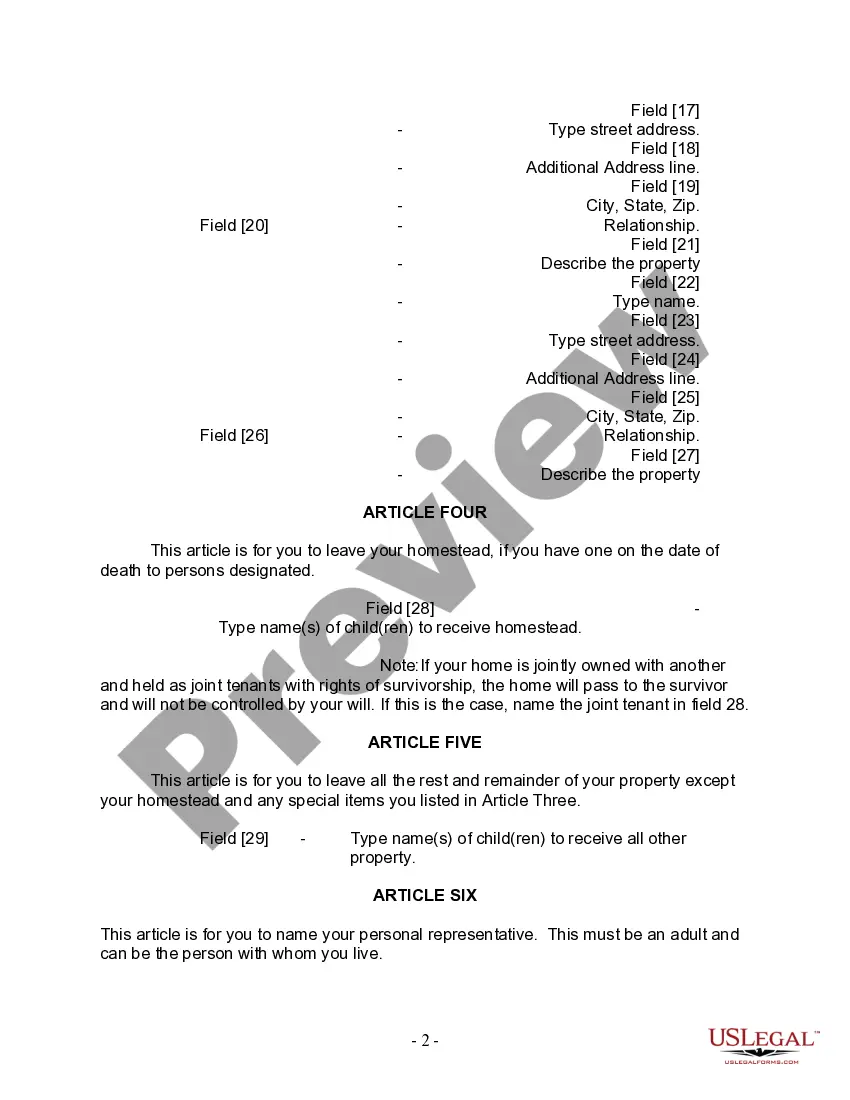
- Detail specific property bequests to your children or other beneficiaries.
- Appoint a personal representative for your estate and ensure they understand their responsibilities.
- Sign the document in the presence of two witnesses and a notary if required.
Does this form need to be notarized?
Yes, this form must be notarized to be legally valid. The process of notarization ensures that the testator's identity is confirmed and that they are signing the document willingly. US Legal Forms offers integrated online notarization services, allowing you to securely complete the notarization via a video call without needing to travel.
Get your form ready online
Our built-in tools help you complete, sign, share, and store your documents in one place.
Make edits, fill in missing information, and update formatting in US Legal Forms—just like you would in MS Word.
Download a copy, print it, send it by email, or mail it via USPS—whatever works best for your next step.
Sign and collect signatures with our SignNow integration. Send to multiple recipients, set reminders, and more. Go Premium to unlock E-Sign.
If this form requires notarization, complete it online through a secure video call—no need to meet a notary in person or wait for an appointment.
We protect your documents and personal data by following strict security and privacy standards.

Make edits, fill in missing information, and update formatting in US Legal Forms—just like you would in MS Word.

Download a copy, print it, send it by email, or mail it via USPS—whatever works best for your next step.

Sign and collect signatures with our SignNow integration. Send to multiple recipients, set reminders, and more. Go Premium to unlock E-Sign.

If this form requires notarization, complete it online through a secure video call—no need to meet a notary in person or wait for an appointment.

We protect your documents and personal data by following strict security and privacy standards.
Common mistakes
- Failing to sign in front of required witnesses which can invalidate the will.
- Not clearly identifying beneficiaries or listing property that does not belong to the estate.
- Overlooking the need for a self-proving affidavit if applicable in the state.
- Neglecting to update the will after significant life changes.
Benefits of completing this form online
- Convenient access at any time, allowing you to complete the form at your own pace.
- Editable templates that ensure you can adjust the will as your circumstances change.
- Reliability of having legal language vetted by licensed attorneys.
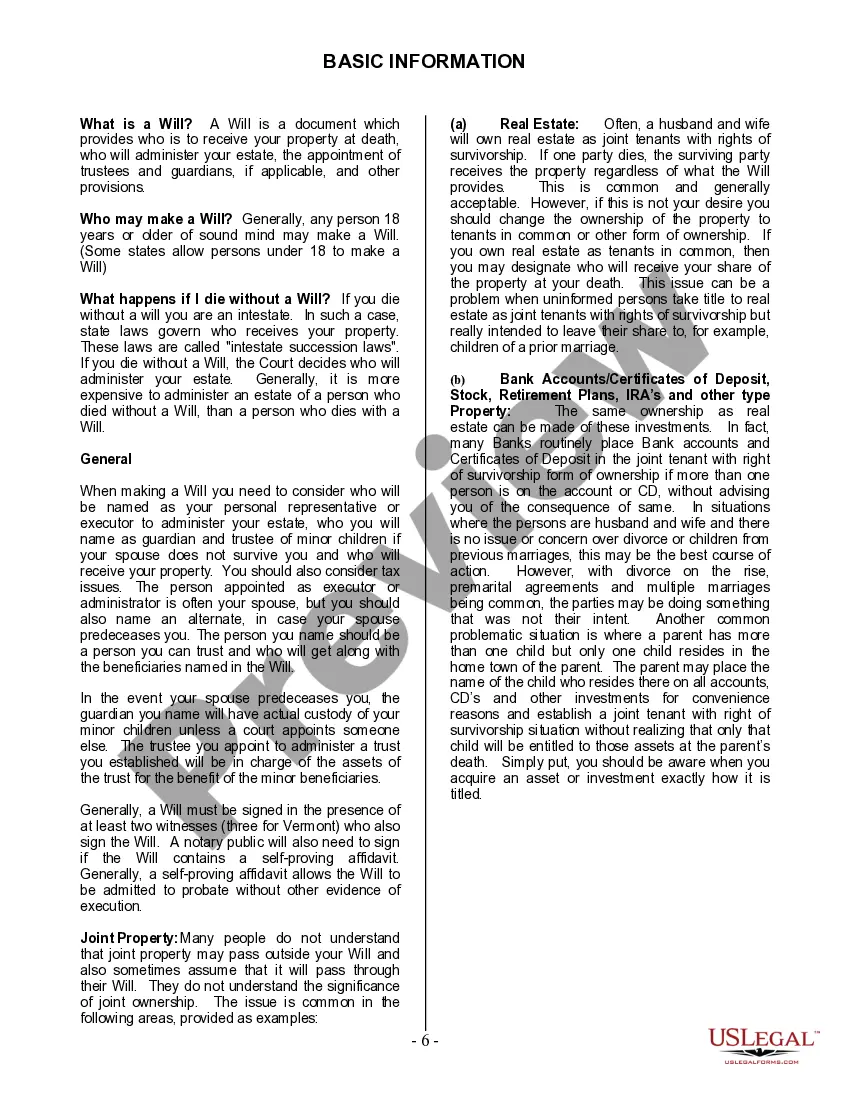
- This will serves as a legal document that communicates your final wishes regarding asset distribution.
- It is enforceable in court, provided it meets state-specific requirements.
- Failure to create a valid will may result in your estate being distributed according to intestacy laws, which may not align with your wishes.
What to keep in mind
- This Last Will and Testament is tailored for single individuals with adult children.
- It is crucial to accurately list assets and beneficiaries to avoid family disputes.
- Proper execution involves the signature of the testator in front of witnesses and possibly a notary.
Looking for another form?


Form popularity
FAQ
A self-proving will is a last will and testament that is accompanied by an affidavit signed by the two witnesses who signed the will.
Name of each respective beneficiary. Enter an address for each person named. Specify the beneficiary's relationship to the testator. Enter the last four digits of the SSN for all named beneficiaries (required) Provide description(s) of any property bequeathed to each person named in the document.
Find an online template or service. Make a list of your assets. Be specific about who gets what. If you have minor children, choose a guardian. Give instructions for your pet. Choose an executor. Name a 'residuary beneficiary' List your funeral preferences.
Contrary to popular belief, you do not need to have an attorney draft a will for you. Anyone can write this document on their own, and as long as it meets all of the legal requirements of the state, courts will recognize one you wrote yourself.
You can make your own will in North Carolina, using Nolo's do-it-yourself will software or online will programs. However, you may want to consult a lawyer in some situations. For example, if you think that your will might be contested or if you want to disinherit your spouse, you should talk with an attorney.
Most single people should have a will. A will can help you determine who will get your property (including your home, business, pets, and digital assets), name guardians for your children, and name an executor. A will also puts your wishes in writing so there's no confusion about your intentions.
North Carolina law does not require a formal reading of the will. How may I get a copy of a will after my loved one has died? After someone has died, the will may be filed with a clerk of court. A decedent's will becomes a public record when it is filed, after the decedent's death, with the clerk of court.
According to North Carolina law, a valid written Will is constituted by several formalities. The testator must be of sound mind and eighteen years of age or older. Essentially, the testator must be found competent at the time the Will is executed.