North Carolina Last Will and Testament for Single Person with No Children

Understanding this form
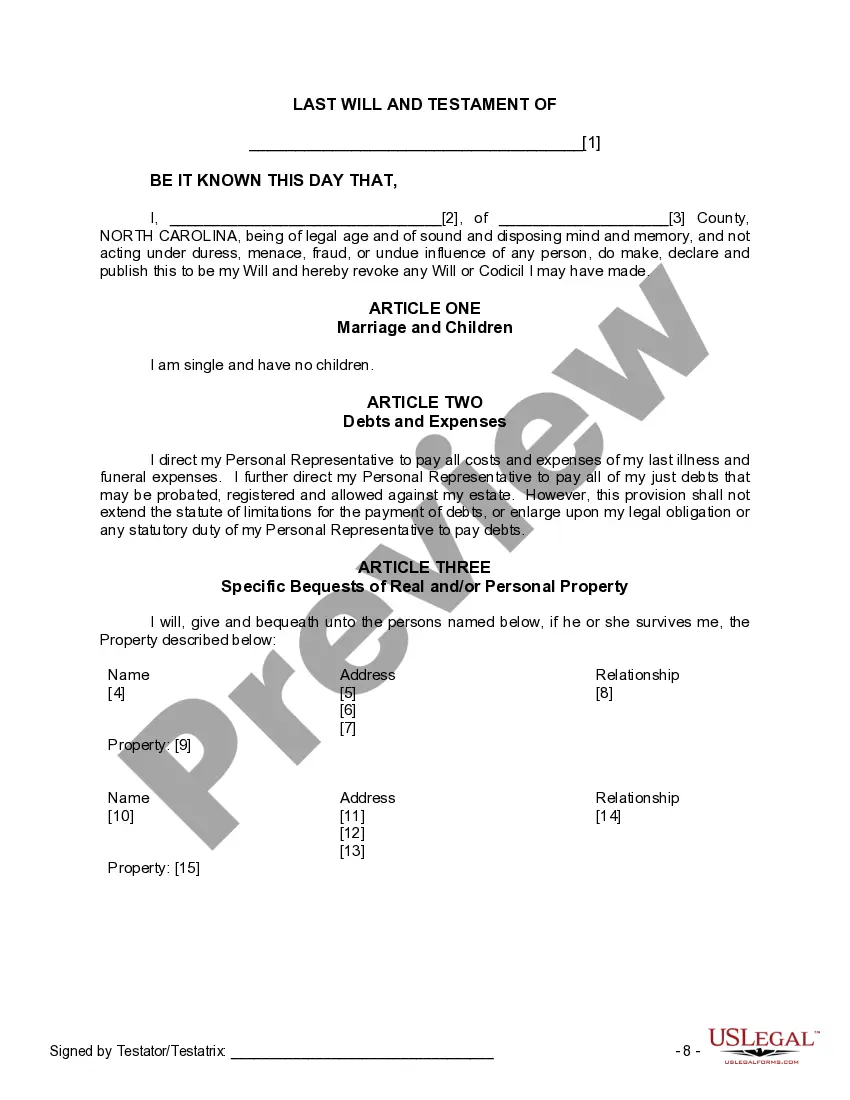
The Last Will and Testament for a Single Person with No Children is a legal document that specifies how an individual's assets will be distributed upon their death. This form is tailored for those who are single and without children, allowing them to designate recipients for their property and appoint an executor to handle their estate. Unlike standard wills, this version is specifically designed to address the unique situation of single individuals, making it an essential tool for managing one's estate proactively.
Key components of this form
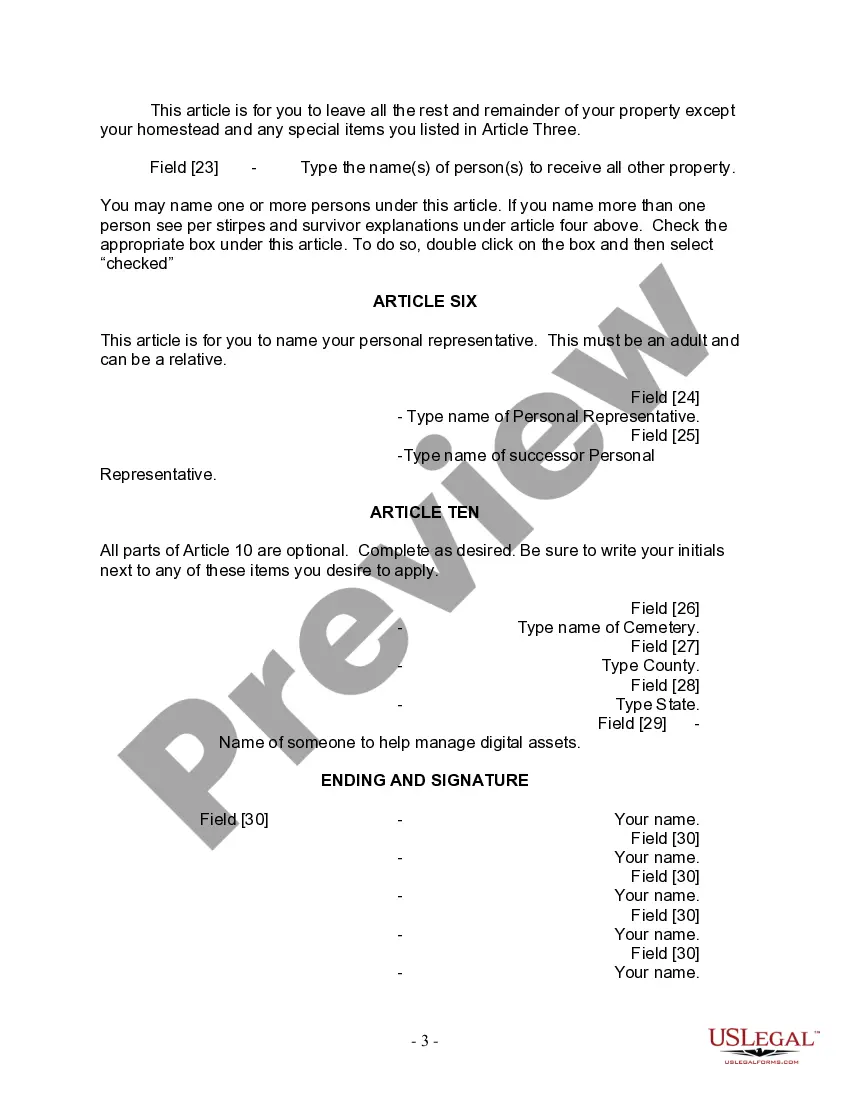
- Personal information: Includes fields for your name and county of residence.
- Specific bequests: Allows you to designate specific property to specific individuals.
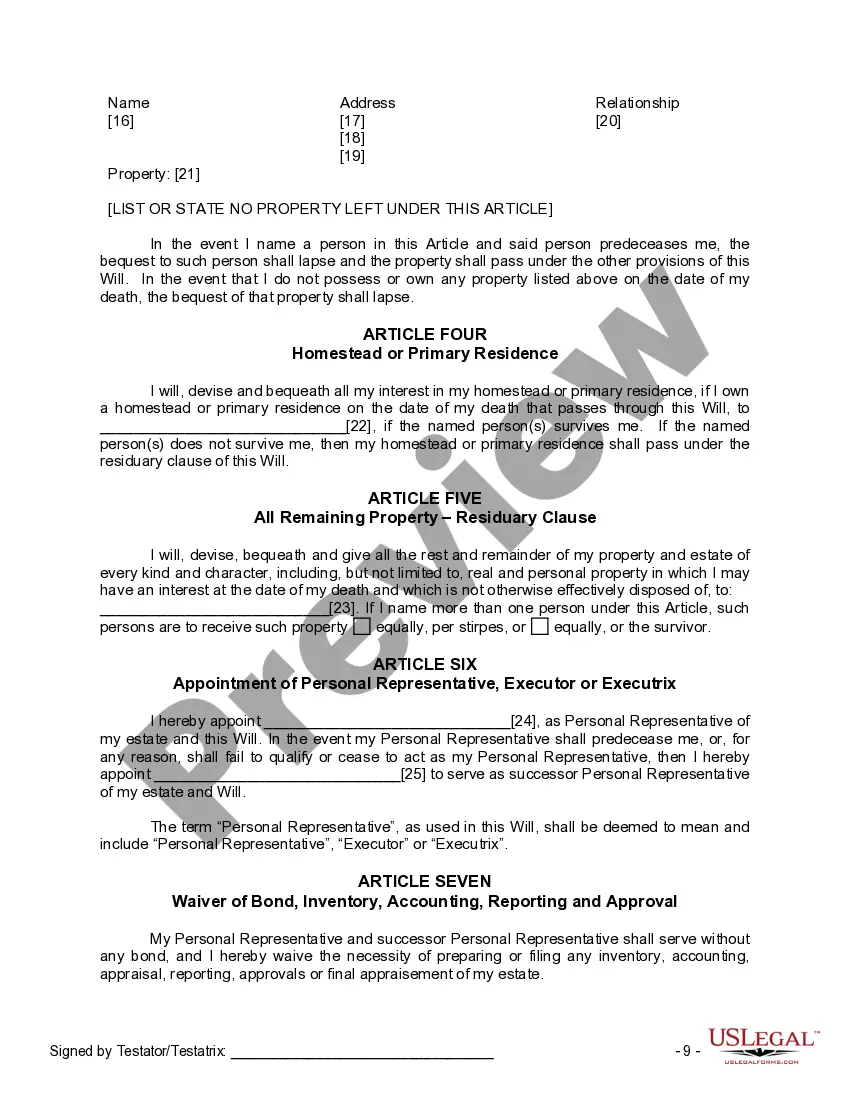
- Homestead provision: Details how to distribute your homestead or primary residence.
- Residuary clause: Outlines how all remaining property should be distributed.
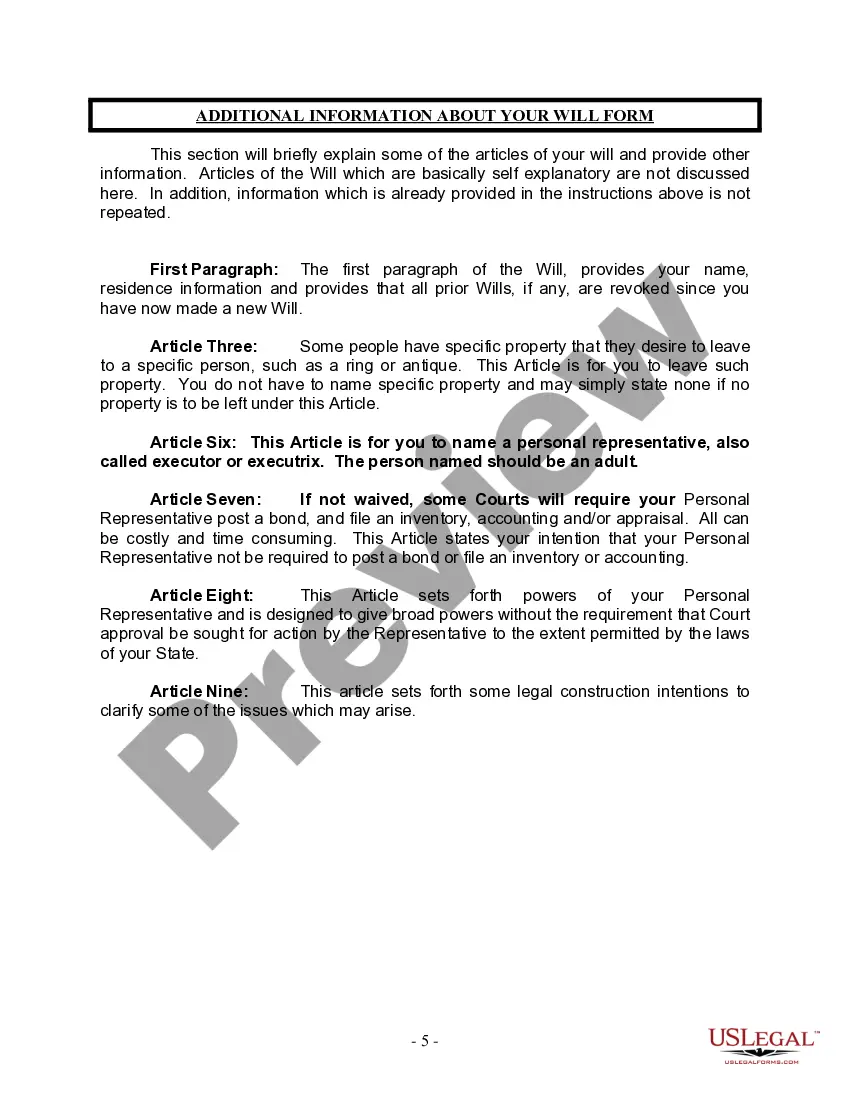
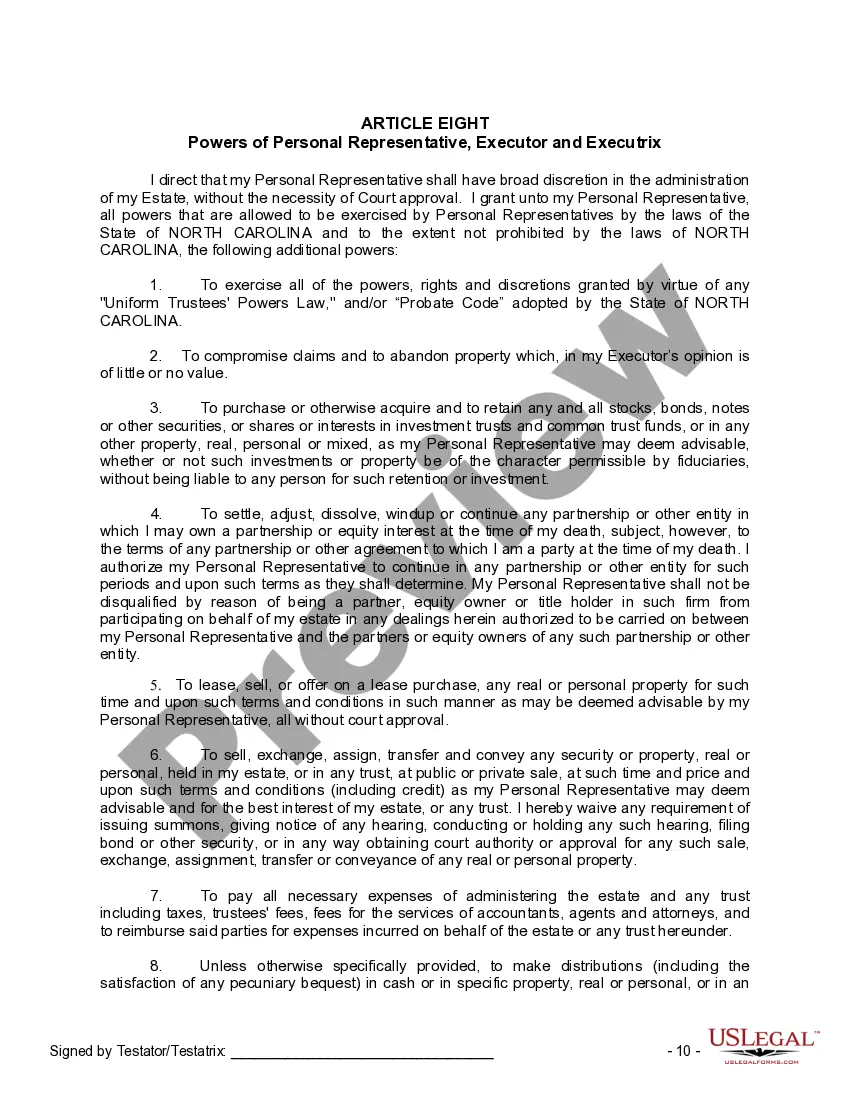
- Personal representative appointment: Designates an executor to manage your estate.



When to use this document
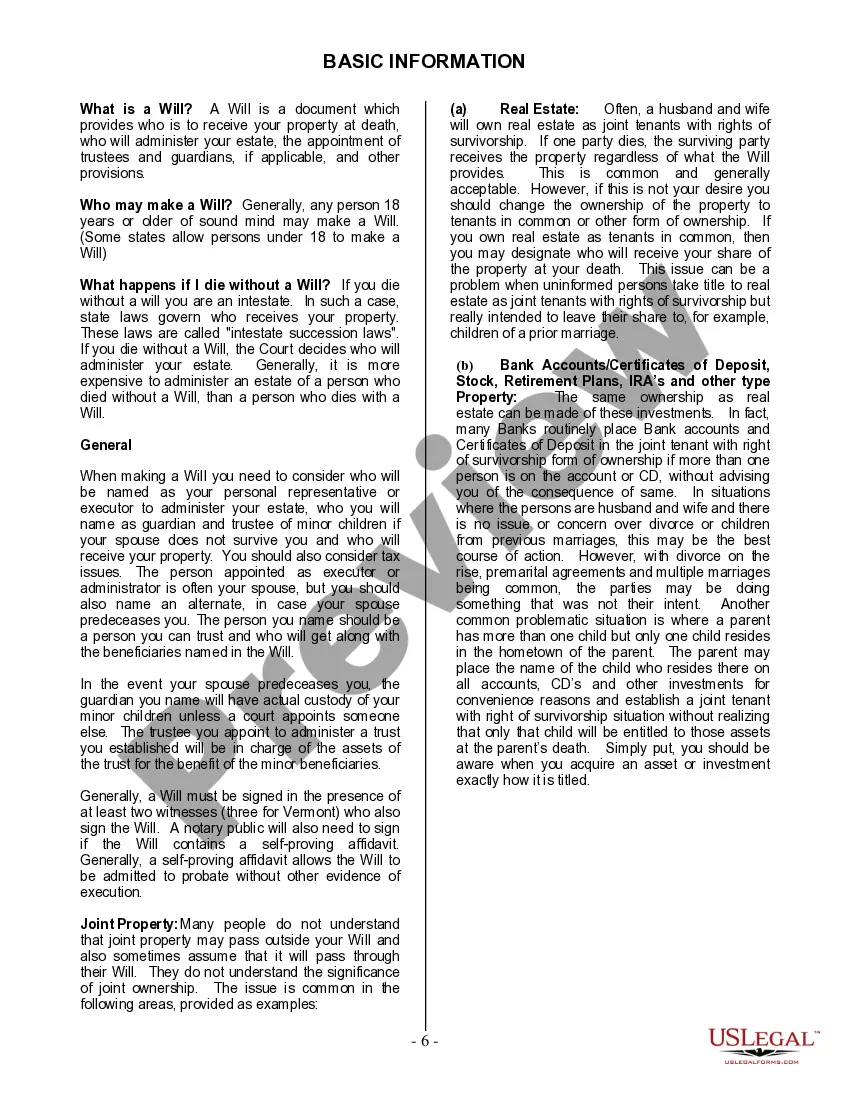
This form should be used by individuals who are single and do not have children, who wish to ensure their assets are distributed according to their wishes after their death. Some scenarios for using this form include wanting to explicitly state who receives your personal belongings, identifying a trusted individual to manage your estate, or addressing the distribution of your home or other significant assets.
Who needs this form
- Individuals aged 18 or older who are single and have no children.
- People who want to designate an executor for their estate.
- Anyone seeking to ensure their assets are distributed according to their wishes.
How to prepare this document
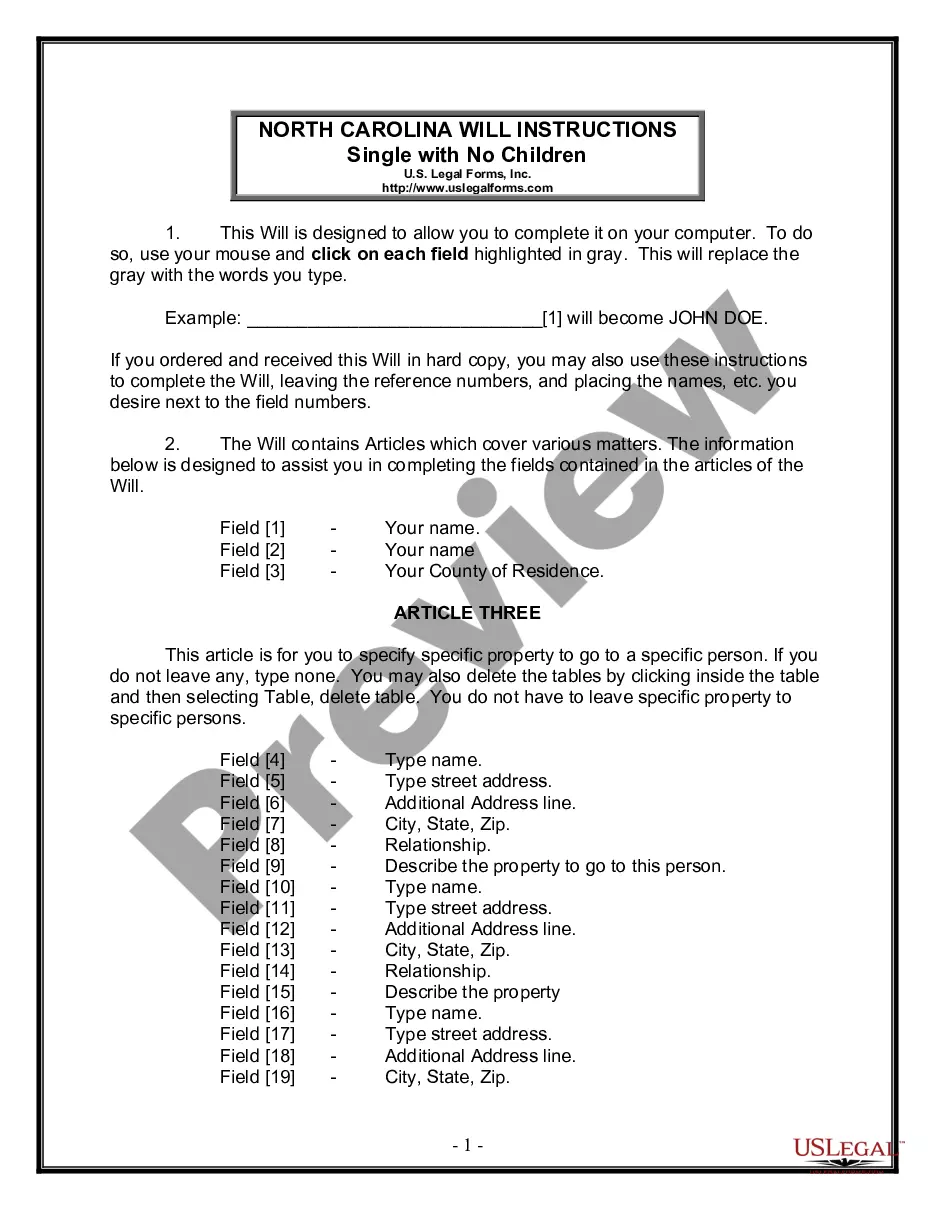
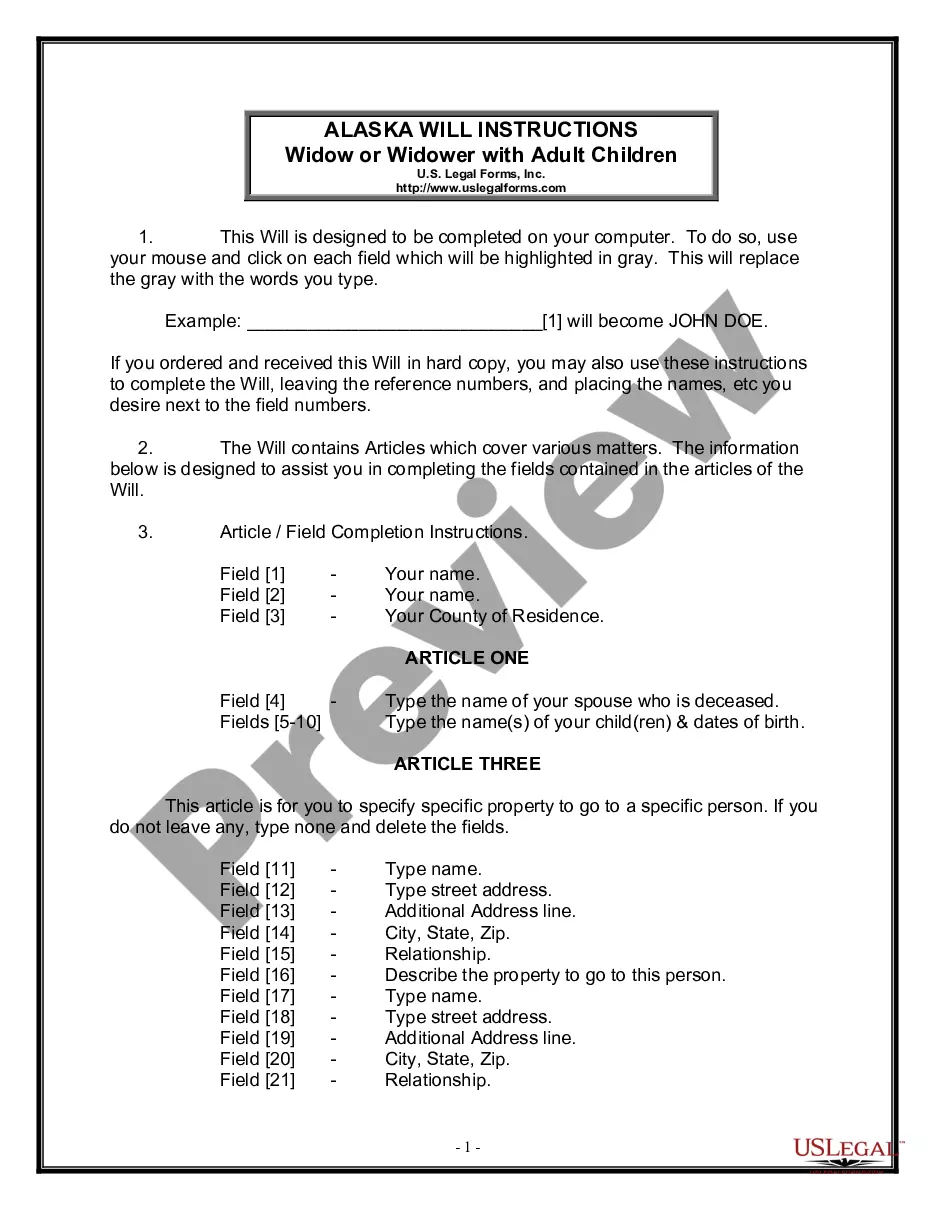
- Fill in your name and county of residence at the indicated fields.
- Specify any specific assets you wish to bequeath to individuals and provide their details.
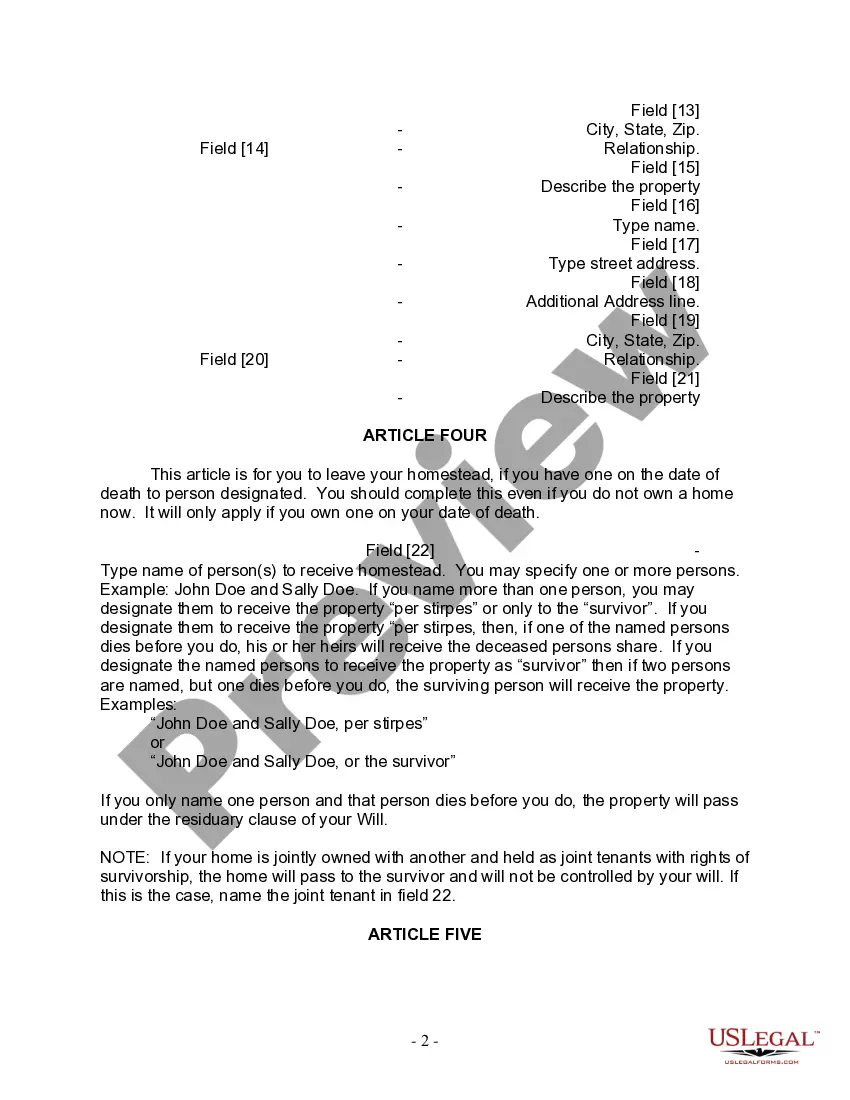
- Designate your homestead or primary residence and the person it should go to.
- List any remaining property under the residuary clause and identify the recipients.
- Appoint a personal representative to manage your estate and fill in the successor's name if needed.
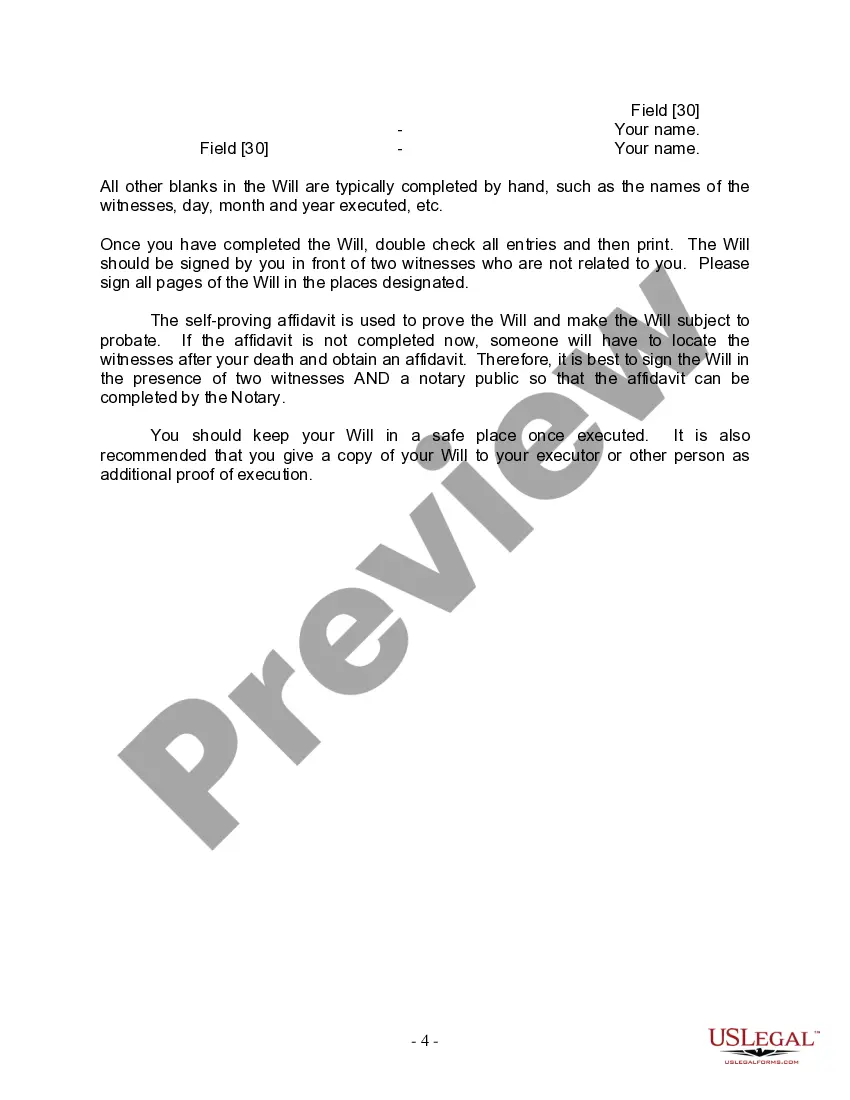
- Ensure the Will is signed in front of two witnesses and, if applicable, notarized.
Notarization guidance
Yes, this form must be notarized to be legally valid. A notary public will sign the document to complete the self-proving affidavit, allowing your Will to be admitted to probate without additional evidence of its execution. US Legal Forms offers integrated online notarization, providing secure video calls and 24/7 availability for your convenience.
Get your form ready online
Our built-in tools help you complete, sign, share, and store your documents in one place.
Make edits, fill in missing information, and update formatting in US Legal Forms—just like you would in MS Word.
Download a copy, print it, send it by email, or mail it via USPS—whatever works best for your next step.
Sign and collect signatures with our SignNow integration. Send to multiple recipients, set reminders, and more. Go Premium to unlock E-Sign.
If this form requires notarization, complete it online through a secure video call—no need to meet a notary in person or wait for an appointment.
We protect your documents and personal data by following strict security and privacy standards.

Make edits, fill in missing information, and update formatting in US Legal Forms—just like you would in MS Word.

Download a copy, print it, send it by email, or mail it via USPS—whatever works best for your next step.

Sign and collect signatures with our SignNow integration. Send to multiple recipients, set reminders, and more. Go Premium to unlock E-Sign.

If this form requires notarization, complete it online through a secure video call—no need to meet a notary in person or wait for an appointment.

We protect your documents and personal data by following strict security and privacy standards.
Typical mistakes to avoid
- Failing to sign the document in the presence of two witnesses.
- Neglecting to choose a successor personal representative.
- Overlooking the homestead provision if not currently owning property.
- Not updating the Will if significant changes occur in your life.
Why use this form online
- Convenience: Complete the form from the comfort of your home at your own pace.
- Editability: Easily make changes to reflect your current wishes or circumstances.
- Legally reliable: The form is drafted by licensed attorneys, ensuring compliance with legal standards.
Key takeaways
- The Last Will and Testament for a Single Person with No Children is essential for managing your estate after death.
- This form offers specific provisions tailored to singles without children.
- Proper execution, including witness signatures and notarization, is vital for its validity.
Looking for another form?

Form popularity
FAQ
Form a Last Will in North Carolina Signature: The will must be signed by the testator with the intent to sign or by another person under his direction and in his presence. Witnesses: At least two witnesses must sign a North Carolina last will and testament in order for it to be valid.
You can make your own will in North Carolina, using Nolo's do-it-yourself will software or online will programs. However, you may want to consult a lawyer in some situations. For example, if you think that your will might be contested or if you want to disinherit your spouse, you should talk with an attorney.
Find an online template or service. Make a list of your assets. Be specific about who gets what. If you have minor children, choose a guardian. Give instructions for your pet. Choose an executor. Name a 'residuary beneficiary' List your funeral preferences.
Name of each respective beneficiary. Enter an address for each person named. Specify the beneficiary's relationship to the testator. Enter the last four digits of the SSN for all named beneficiaries (required) Provide description(s) of any property bequeathed to each person named in the document.
No. You can make your own will in North Carolina, using Nolo's do-it-yourself will software or online will programs. However, you may want to consult a lawyer in some situations. For example, if you think that your will might be contested or if you want to disinherit your spouse, you should talk with an attorney.
North Carolina law does not require a formal reading of the will. How may I get a copy of a will after my loved one has died? After someone has died, the will may be filed with a clerk of court. A decedent's will becomes a public record when it is filed, after the decedent's death, with the clerk of court.
North Carolina recognizes hand written Wills known as Holographic Wills in certain circumstances. A holographic will is handwritten, not typed, and must be entirely in the handwriting of the person making the Will (known as the Testator or Testatrix).
Signature: The will must be signed by the testator with the intent to sign or by another person under his direction and in his presence. Witnesses: At least two witnesses must sign a North Carolina last will and testament in order for it to be valid.