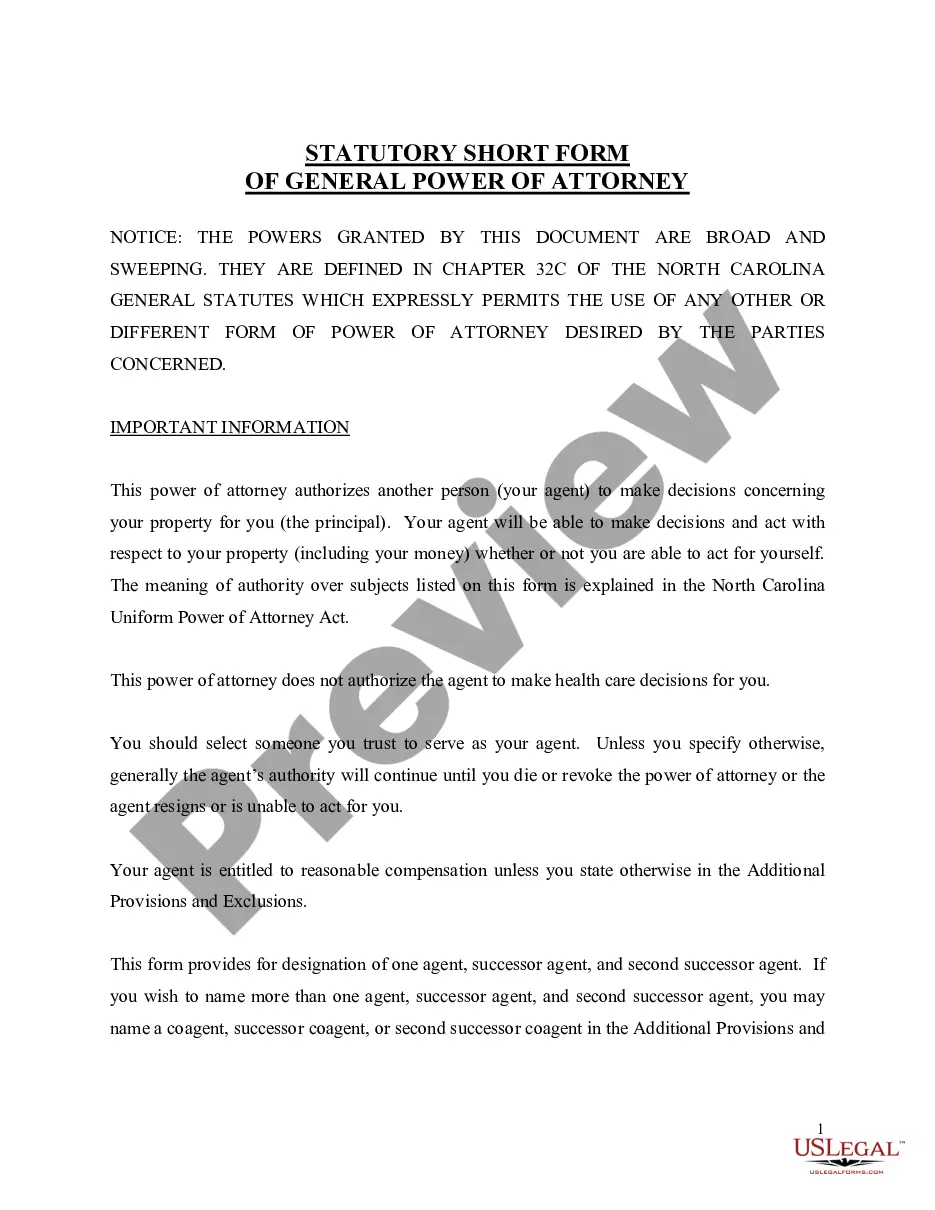
North Carolina Statutory Short Form of General Power of Attorney
Understanding this form
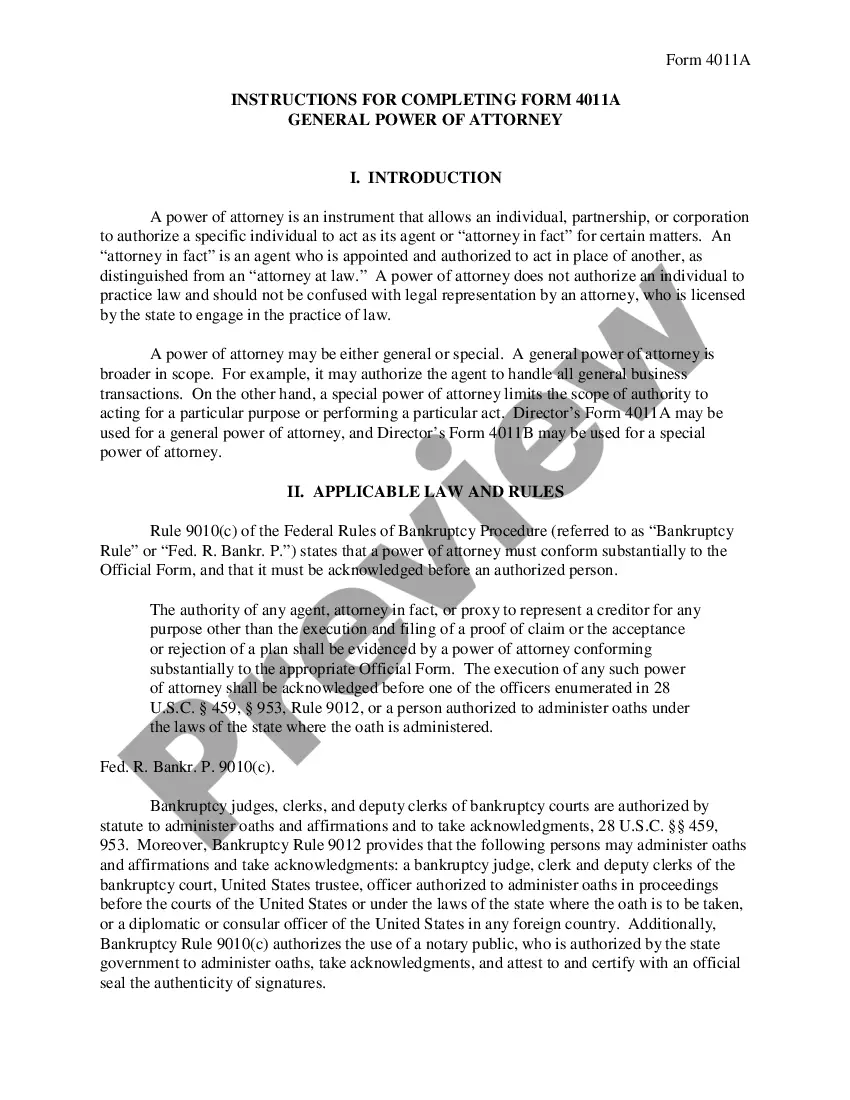
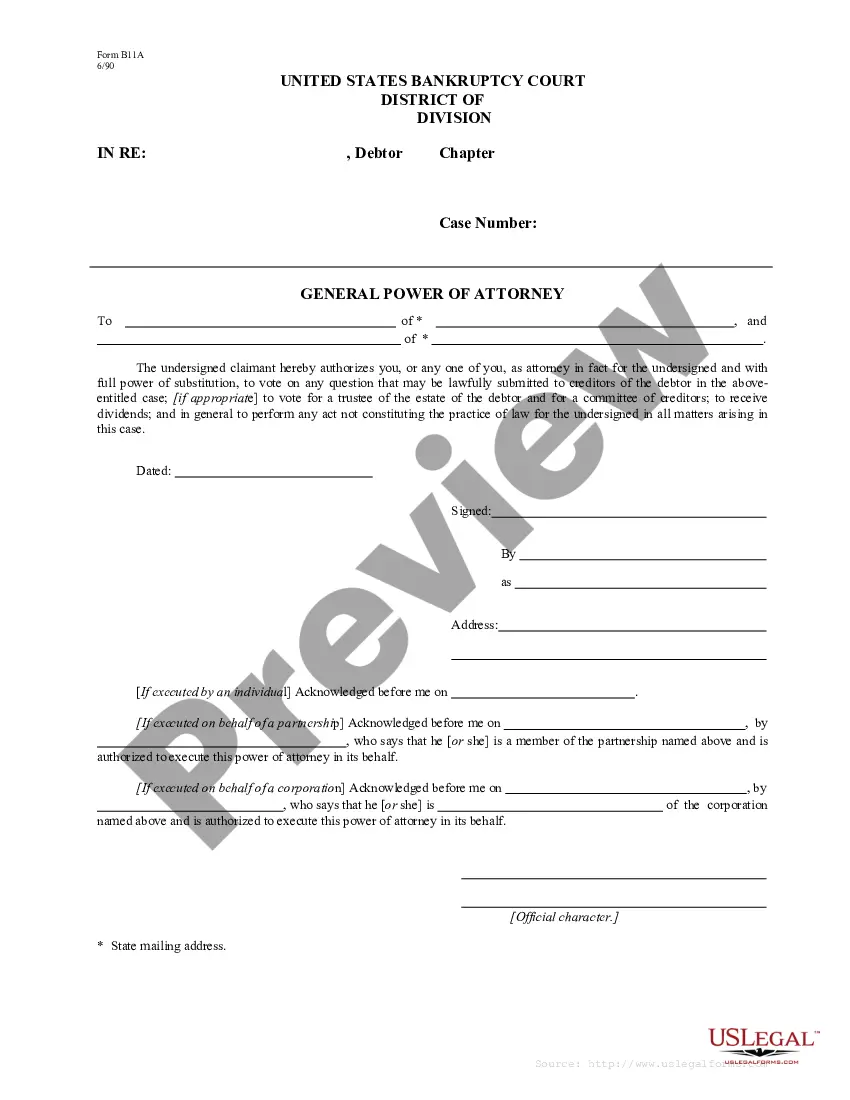
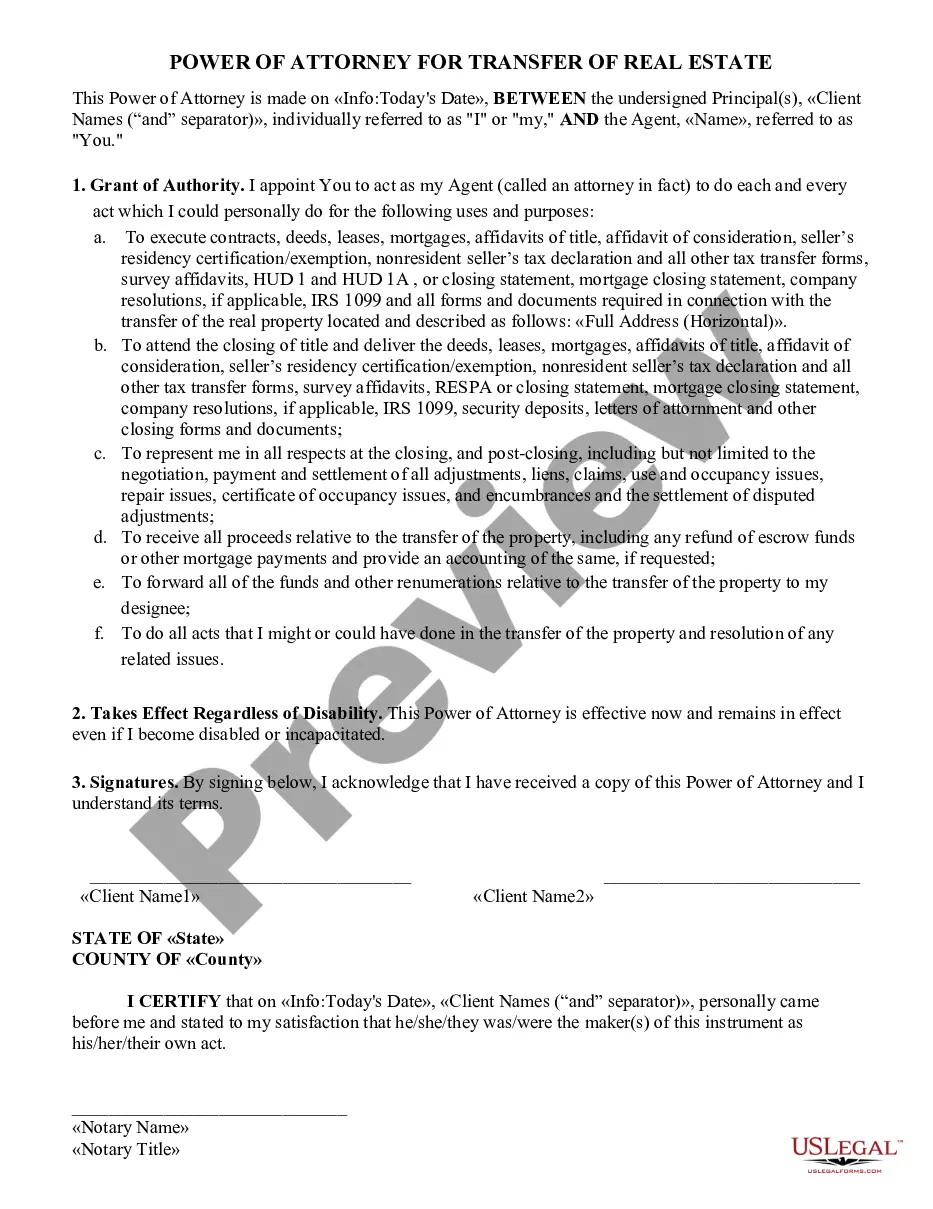
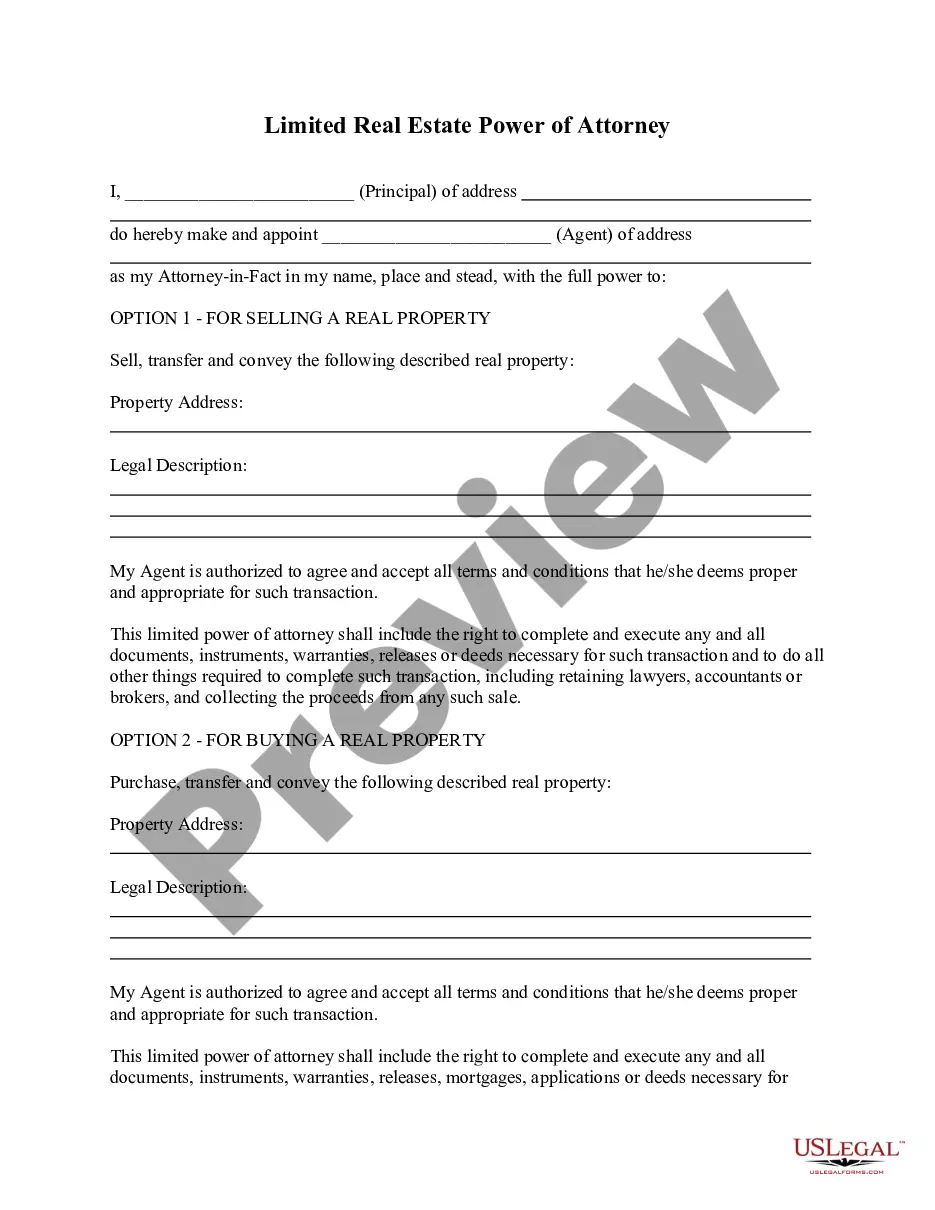
The Statutory Short Form of General Power of Attorney is a legal document provided under the North Carolina General Statutes. This form allows you to designate an attorney-in-fact (agent) to make decisions on your behalf regarding property, financial, and business matters. It's important to note that this power of attorney does not cover health care decisions. If you choose to create a durable power of attorney, it must be registered with the Register of Deeds office to remain effective after you become disabled.
Main sections of this form
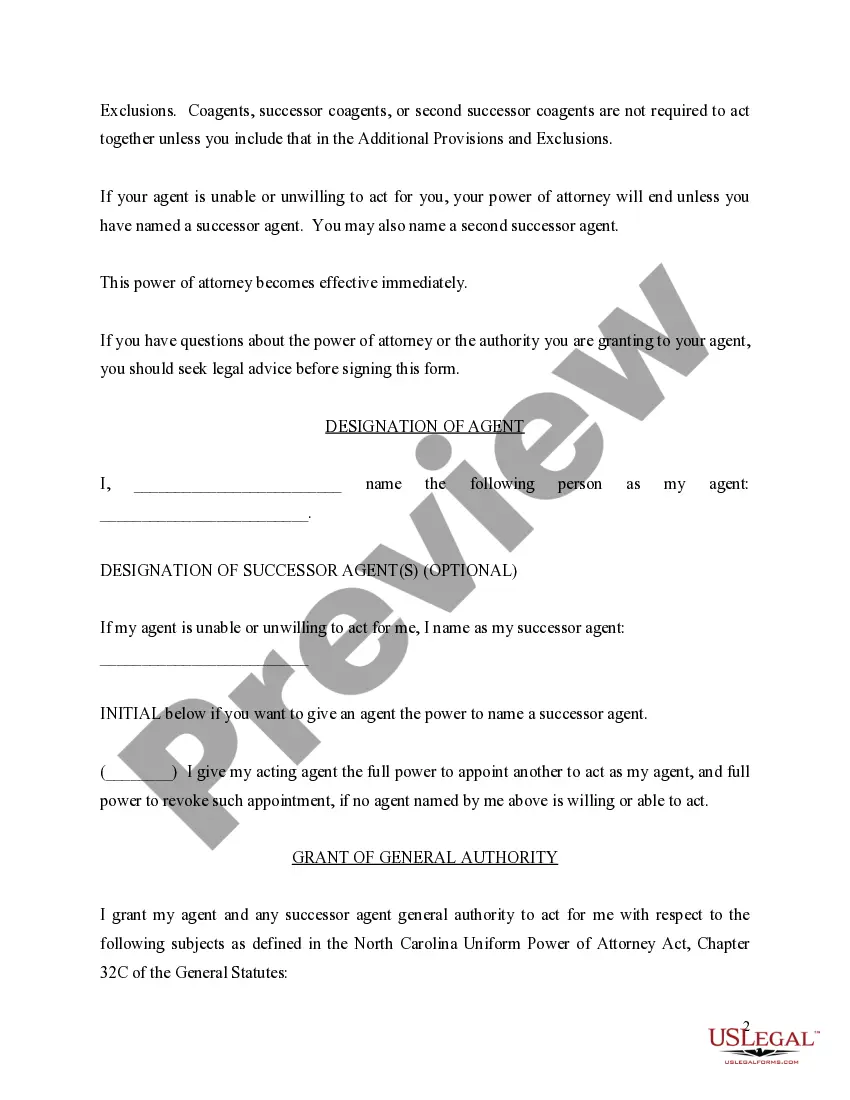
- Designation of Agent: Identifies the person who will act on your behalf.
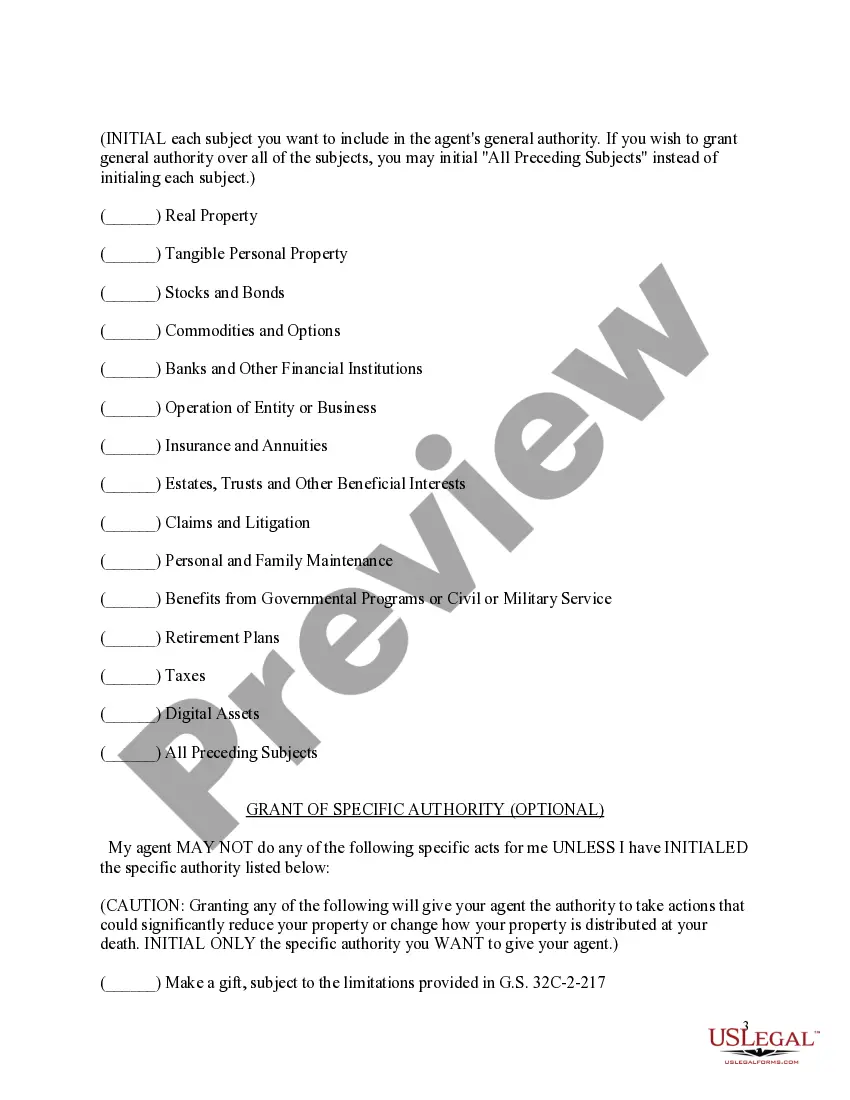
- Grant of General Authority: Specifies the powers granted to your agent regarding various property and financial matters.
- Successor Agents: Allows you to designate alternate agents if your primary agent cannot act.
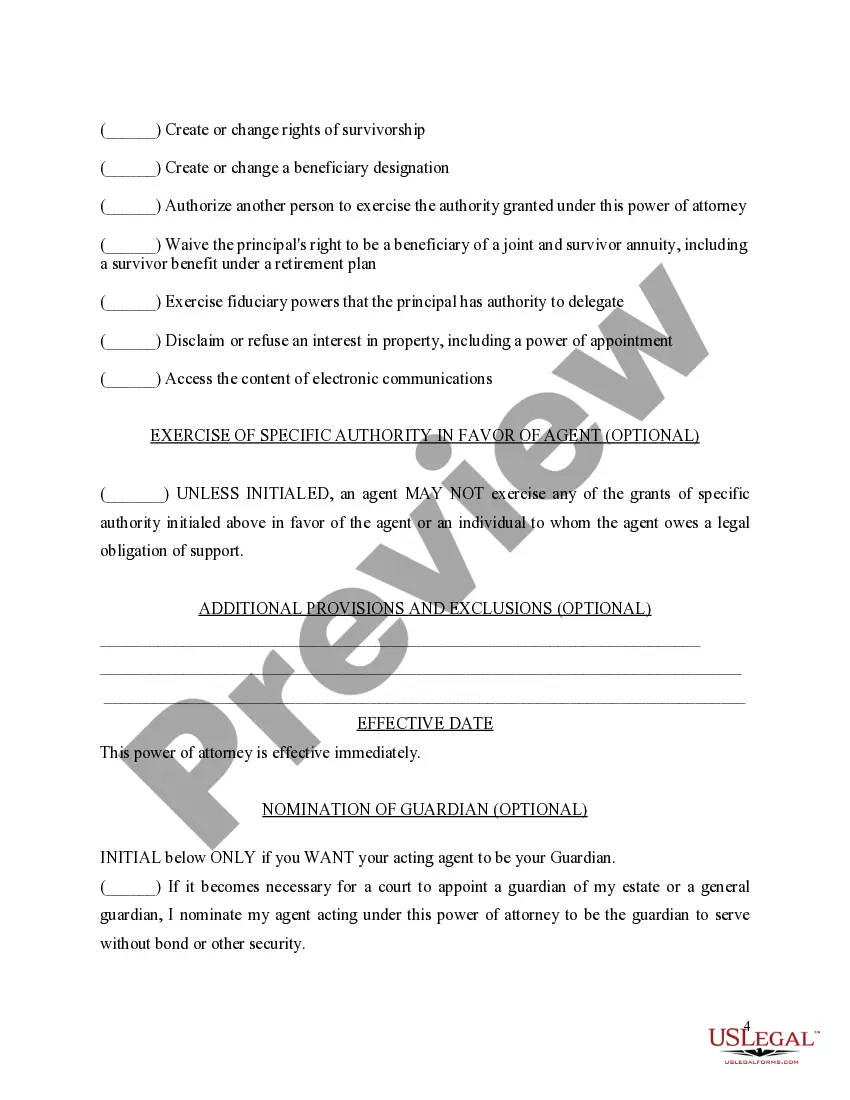
- Specific Authority: Outlines additional powers your agent may only exercise if explicitly authorized.
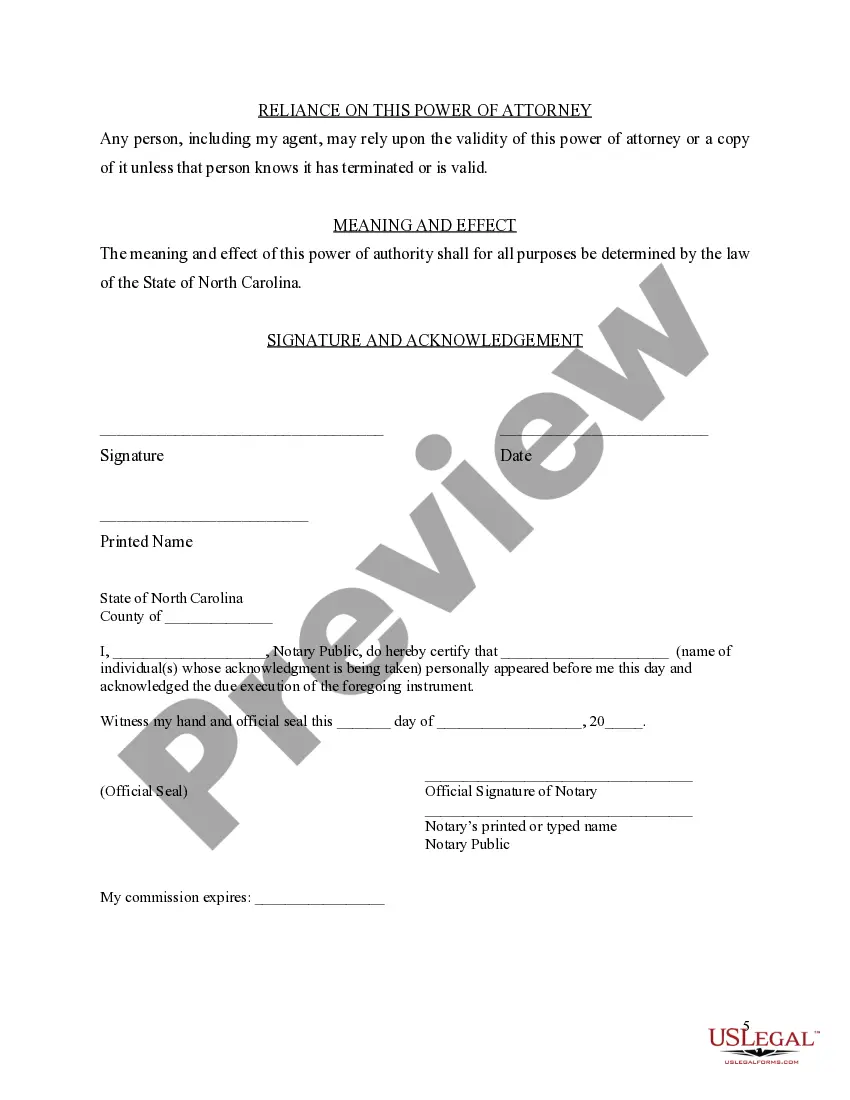
- Notary Acknowledgment: Requires a signature and acknowledgment by a notary public to validate the document.
Common use cases
You should use the Statutory Short Form of General Power of Attorney when you need someone to manage your financial and property matters, especially if you anticipate a future inability to do so due to illness or disability. It is ideal for situations where you are looking for a trusted individual to handle transactions, pay bills, or manage investments in your stead.
Who should use this form
- Individuals planning for future incapacitation.
- People with significant assets or complex financial situations.
- Those wishing to designate a trusted person to handle their affairs.
- Residents of North Carolina seeking a legally recognized power of attorney form.
How to complete this form
- Identify and provide your name and the name of your agent in the designation section.
- Specify any successor agents you want in the appropriate fields.
- Initial the subjects in the 'Grant of General Authority' to grant powers concerning your property.
- Initial any specific authorities you wish to give your agent, if necessary.
- Sign and date the form in the presence of a notary public for validation.
Notarization requirements for this form
To make this form legally binding, it must be notarized. Our online notarization service, powered by Notarize, lets you verify and sign documents remotely through an encrypted video session.
Get your form ready online
Our built-in tools help you complete, sign, share, and store your documents in one place.
Make edits, fill in missing information, and update formatting in US Legal Forms—just like you would in MS Word.
Download a copy, print it, send it by email, or mail it via USPS—whatever works best for your next step.
Sign and collect signatures with our SignNow integration. Send to multiple recipients, set reminders, and more. Go Premium to unlock E-Sign.
If this form requires notarization, complete it online through a secure video call—no need to meet a notary in person or wait for an appointment.
We protect your documents and personal data by following strict security and privacy standards.

Make edits, fill in missing information, and update formatting in US Legal Forms—just like you would in MS Word.

Download a copy, print it, send it by email, or mail it via USPS—whatever works best for your next step.

Sign and collect signatures with our SignNow integration. Send to multiple recipients, set reminders, and more. Go Premium to unlock E-Sign.

If this form requires notarization, complete it online through a secure video call—no need to meet a notary in person or wait for an appointment.

We protect your documents and personal data by following strict security and privacy standards.
Common mistakes to avoid
- Not naming a successor agent, which can leave you without representation if the primary agent is unavailable.
- Failing to initial grants of specific authority when needed.
- Not properly signing and having the document notarized, which may invalidate the power of attorney.
Why complete this form online
- Convenience of filling out the form from home at your own pace.
- Easily customizable to meet your specific needs.
- Access to legal quality forms drafted by licensed attorneys.
Legal use & context
- This power of attorney may be used to delegate broad financial responsibilities to an agent.
- It is enforceable under North Carolina law, ensuring legal authority is granted to the appointed agent.
- Care should be taken in granting authority, as it could impact your financial interests permanently.
What to keep in mind
- The Statutory Short Form of General Power of Attorney is essential for managing financial and property matters.
- It is tailored for North Carolina residents and governs the authority granted to an agent.
- Proper execution, including notarization, is crucial for its validity.
- Choosing a reliable agent is vital, as they will have significant control over your financial affairs.
Looking for another form?
Form popularity
FAQ
A statutory form is a form created by a government, usually designed to serve as a model form or a free form for the public. The text of the form resides within the government's statutes. For example, many states have statutory durable powers of attorney forms written into their laws.
If the EPA is not registered, you can just destroy it. You can then complete an LPA form and apply for this to be registered see under Lasting power of attorney. Unlike an EPA, an LPA is not valid unless it has been registered.
Choose an agent. Before you begin to fill out the form, you have some decisions to make. Decide on the type of authority. You can choose whether you want your POA to be broad or narrow. Identify the length of time the POA will be in effect. Fill out the form. Execute the document.
Recording. One of the most welcomed changes in the NC Uniform Power of Attorney Act is that it does not require durable POAs to be recorded with the Register of Deeds.The full POA does not need to be recorded.
Your power of attorney must be registered with the Land and Property Management Authority (LPMA) if your attorney needs to deal with your real estate (eg sell, mortgage or lease it).
A general power of attorney ends the moment you become incapacitated.A durable power of attorney stays effective until the principle dies or until they act to revoke the power they've granted to their agent. But there are a handful of circumstances where courts will end durable power of attorney.
If you want your attorney to deal with any real estate you own in NSW, then the Power of Attorney document must be registered with the NSW Land Registry Services. Otherwise, there is no requirement for your Power of Attorney to be registered.
After the principal's name, write by and then sign your own name. Under or after the signature line, indicate your status as POA by including any of the following identifiers: as POA, as Agent, as Attorney in Fact or as Power of Attorney.