North Carolina Letter from Tenant to Landlord containing Notice to landlord to cease retaliatory decrease in services
Overview of this form
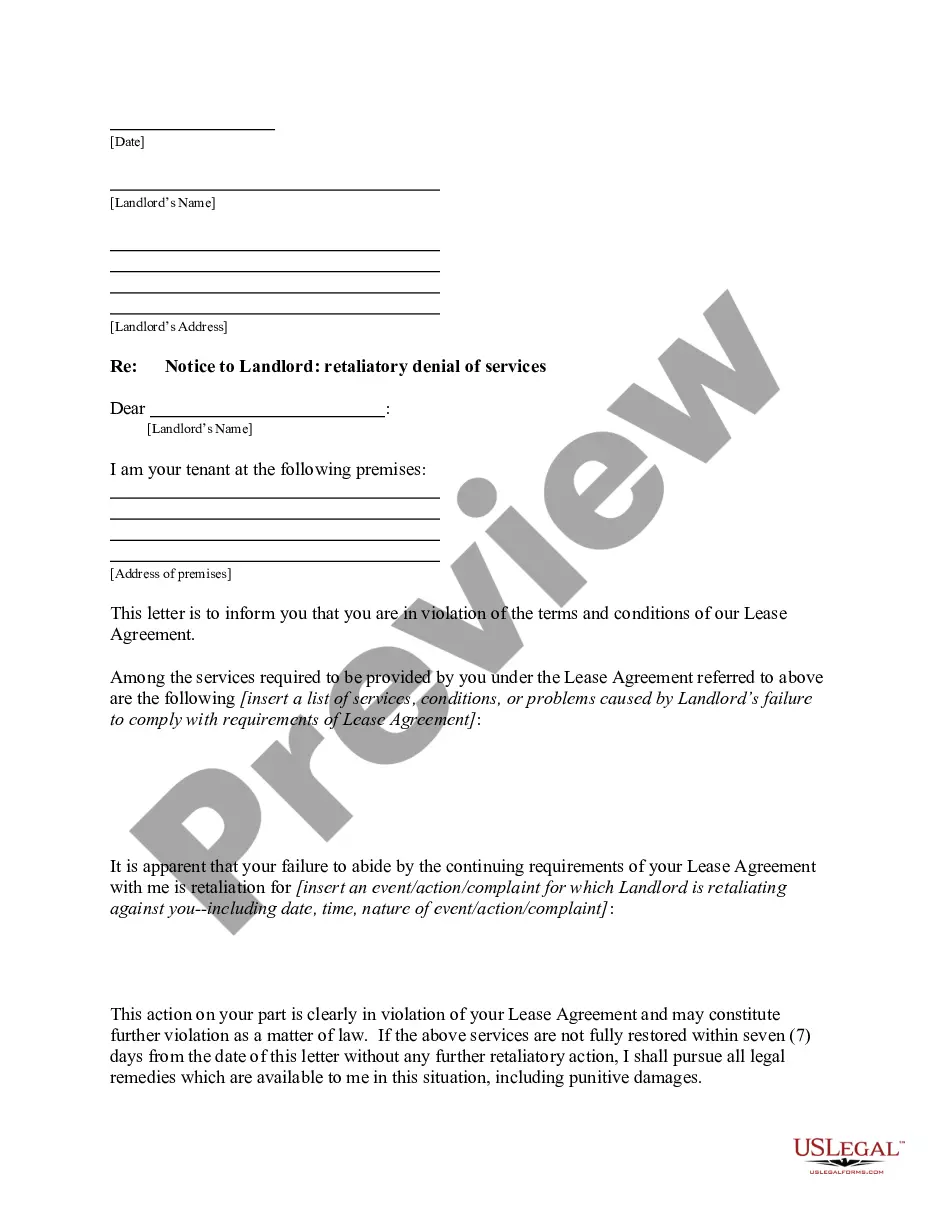
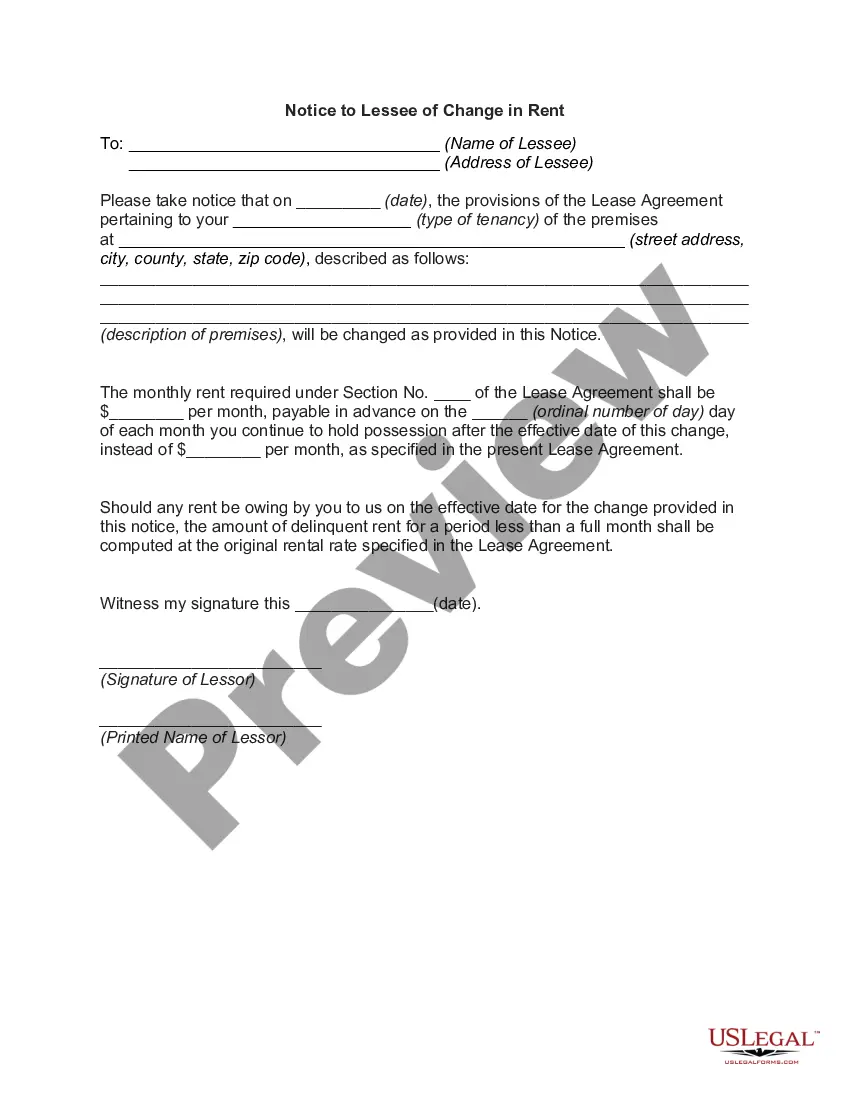
This form is a Letter from Tenant to Landlord containing Notice to cease retaliatory decrease in services. It serves as a formal communication from the tenant to the landlord, alleging that the landlord's reduction of services is retaliation for the tenant's actions. The form notifies the landlord of the breach of the lease agreement and potential legal violations. This letter is crucial for tenants who believe they are being penalized unfairly, differentiating it from general complaint letters or notice forms.
What’s included in this form
- Identification of tenant and landlord parties
- Detailed list of services that are being denied
- Statement of alleged retaliatory actions by the landlord
- Notice of breach of lease agreement
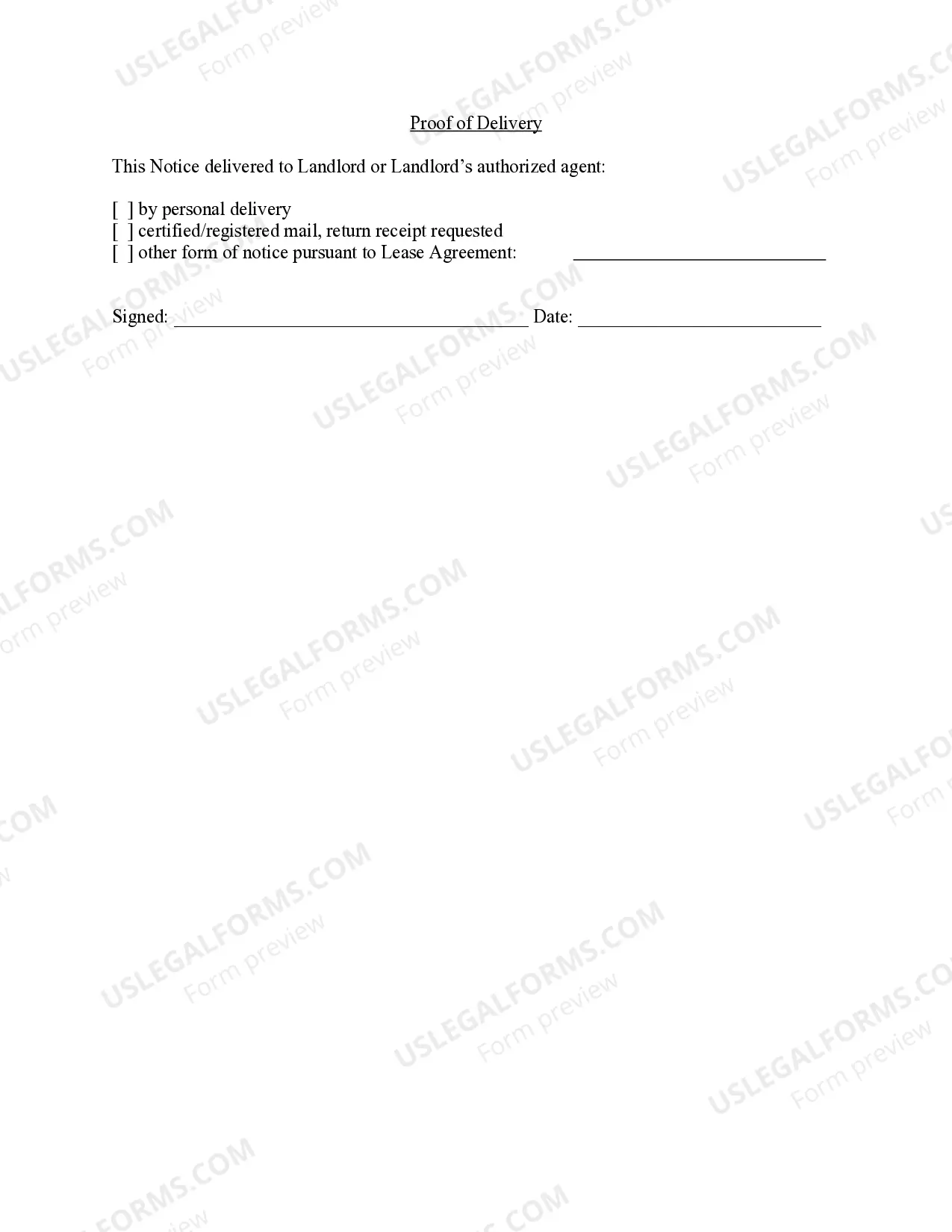
- Provision for proof of delivery to the landlord



When this form is needed
This form should be used when a tenant believes that their landlord is unfairly decreasing services, such as repairs or maintenance, in retaliation for specific actions taken by the tenant. It is particularly relevant if the tenant has previously complained about issues or exercised their rights under the lease. By sending this letter, the tenant formally addresses the issue and seeks to resolve the conflict amicably before escalating the matter legally.
Who should use this form
- Tenants experiencing service reductions from their landlord
- Individuals who have raised concerns or complaints to their landlord
- Tenants wishing to formally document retaliatory actions
- Anyone who wants to clarify their rights under a lease agreement
How to complete this form
- Identify the parties: Enter the names and addresses of both the tenant and the landlord.
- List the services being denied: Clearly specify which services have not been provided as per the lease agreement.
- State the alleged retaliatory action: Describe how the landlord's actions are retaliatory in nature.
- Include the lease agreement reference: Mention any relevant lease terms being violated.
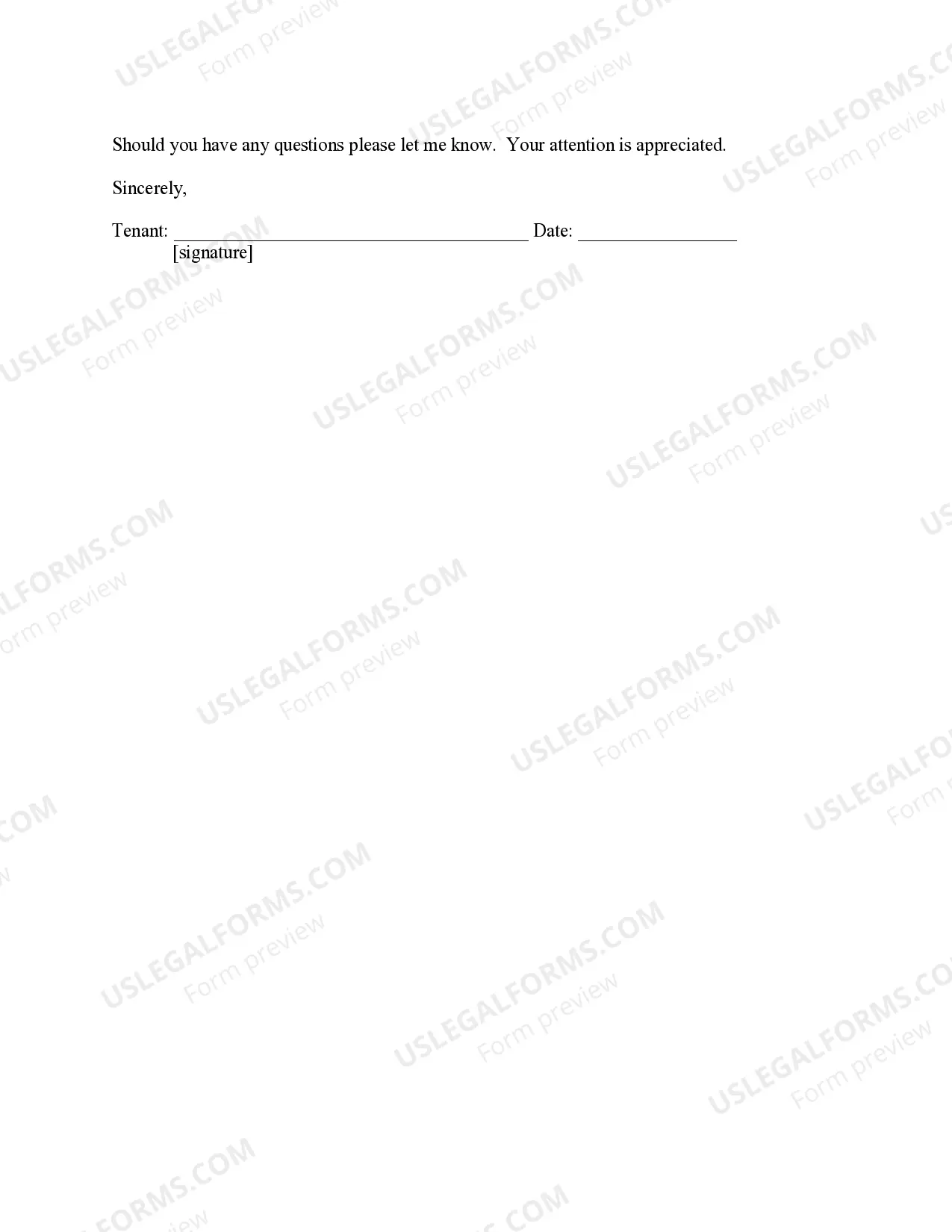
- Sign and date the letter: Ensure to include your signature and the date of the notice.
- Choose the delivery method: Decide how you will send the notice to the landlord and ensure you have proof of delivery.
Does this form need to be notarized?
In most cases, this form does not require notarization. However, some jurisdictions or signing circumstances might. US Legal Forms offers online notarization powered by Notarize, accessible 24/7 for a quick, remote process.
Get your form ready online
Our built-in tools help you complete, sign, share, and store your documents in one place.
Make edits, fill in missing information, and update formatting in US Legal Forms—just like you would in MS Word.
Download a copy, print it, send it by email, or mail it via USPS—whatever works best for your next step.
Sign and collect signatures with our SignNow integration. Send to multiple recipients, set reminders, and more. Go Premium to unlock E-Sign.
If this form requires notarization, complete it online through a secure video call—no need to meet a notary in person or wait for an appointment.
We protect your documents and personal data by following strict security and privacy standards.

Make edits, fill in missing information, and update formatting in US Legal Forms—just like you would in MS Word.

Download a copy, print it, send it by email, or mail it via USPS—whatever works best for your next step.

Sign and collect signatures with our SignNow integration. Send to multiple recipients, set reminders, and more. Go Premium to unlock E-Sign.

If this form requires notarization, complete it online through a secure video call—no need to meet a notary in person or wait for an appointment.

We protect your documents and personal data by following strict security and privacy standards.
Common mistakes to avoid
- Failing to specify the services being denied
- Not including a clear statement of retaliation
- Forget to sign and date the letter
- Not keeping a copy for personal records
Benefits of using this form online
- Convenient access: Download the form anytime, from anywhere.
- Editability: Customize the letter to fit your specific situation quickly.
- Expert review: Forms are drafted by licensed attorneys for reliability.
Legal use & context
- This form helps tenants assert their rights against retaliatory actions from landlords.
- Using this form may strengthen your position in any future legal disputes.
- Legal protections vary by jurisdiction; understanding local laws is essential.
Summary of main points
- This form helps tenants formally notify landlords of perceived retaliatory actions.
- It is essential for tenants to document their claims to protect their rights.
- Effective delivery and completion of the form are critical for legal standing.
Looking for another form?
Form popularity
FAQ
Detail the issue that you're experiencing in your rental (include pictures if helpful) propose a reasonable solution. mention possible consequences, such as health problems, a fire, or a burglary or assault, of not dealing with the issue promptly, and.
Today's Date. Landlord's Name. Property Address and Unit Number. State Your Desire to Move Out of the Apartment. Include Desired Move-Out Date. That You Expect the Return of Your Security Deposit Under State Law. A Forwarding Address Where Your Security Deposit Can Be Sent.
When writing to your landlord, be specific in describing the problems you are having. Do not exaggerate or under-emphasize the extent of the problem. The landlord may show this letter to a judge if your problem is ever litigated.
State who you are and why you need a rental. Mention where you found their ad and how you can afford the rental. Offer to provide references (work/volunteer/housing office) Include some highlighting feature from the original ad so that when you receive a response you can remember which rental you are talking about (ex.
You can send your letter by email if your tenancy agreement says you can. You should say something like: I am giving 1 month's notice to end my tenancy, as required by law. I will be leaving the property on (date xxxxx).
The termination notice must be in writing, signed by the landlord/agent and set out: the address of the premises. the day by which the landlord/agent wants vacant possession. the grounds for termination (the reason/s, if any).
You should say something like: I am giving 1 month's notice to end my tenancy, as required by law. I will be leaving the property on (date xxxxx). I would like you to be at the property on the day I move out to check the premises and for me to return the keys.
Pay any delinquent rent that is due to the landlord within the allotted time of the notice. Move out of the premises within the allotted time of the notice. File an answer with the judicial court. File a motion to stay with the court.
For some landlords and property managers, a written email with all of the necessary information will do the trick. Keep your written notice simple and polite. Your notice to vacate letter is not the place to raise complaints or settle past issues with your landlord, property manager, or leasing staff.