North Carolina General Warranty Deed from Individual to a Trust
Overview of this form
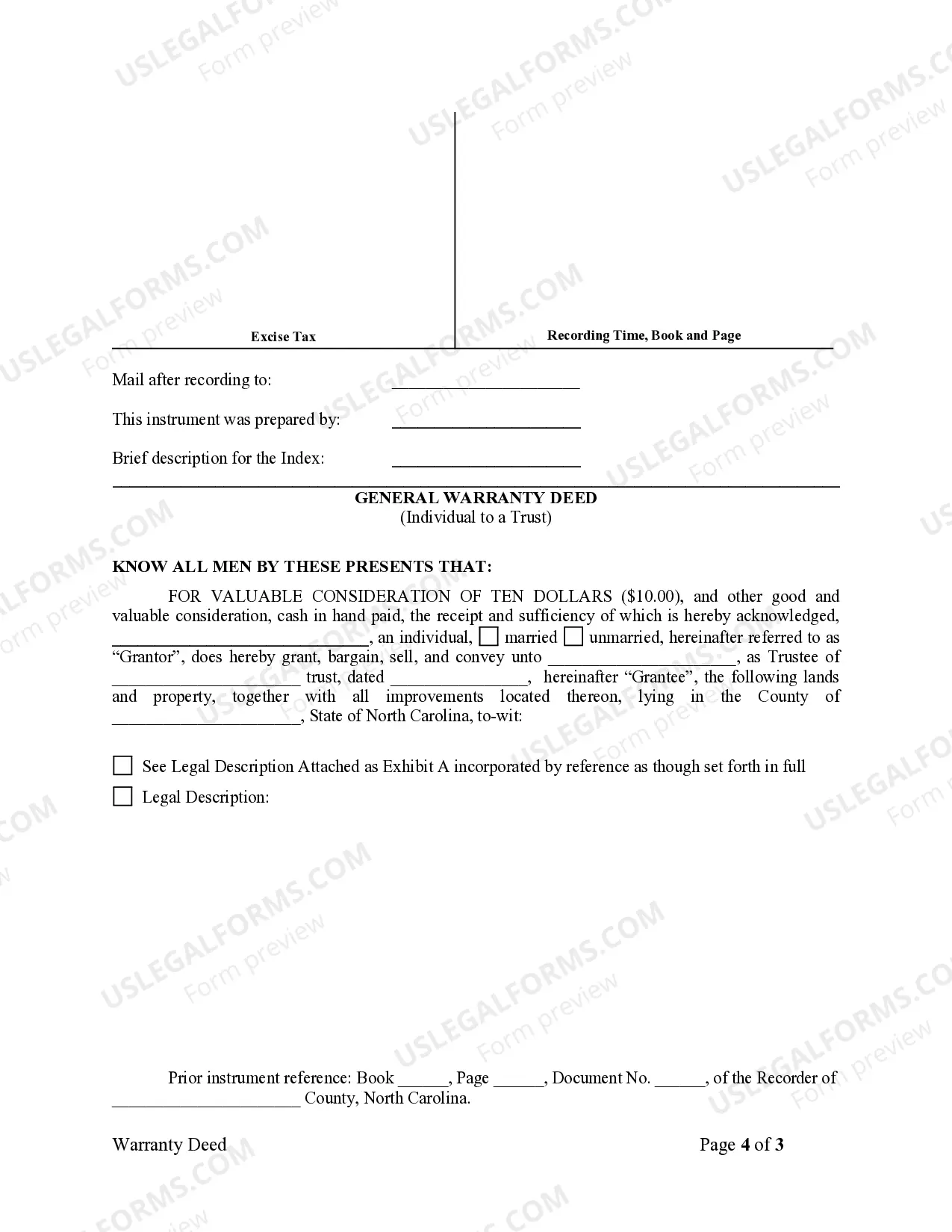
A General Warranty Deed from Individual to a Trust is a legal document that facilitates the transfer of real property ownership from an individual (the grantor) to a trust (the grantee). This deed ensures that the grantor guarantees clear title to the property, affirming they have the authority to convey it and warranting against any potential claims. Unlike other forms of property transfer, this deed includes specific assurances and protections, making it particularly useful when the property is being placed into a trust for future management or estate planning purposes.
Form components explained
- Identification of the grantor and grantee, including their legal statuses.
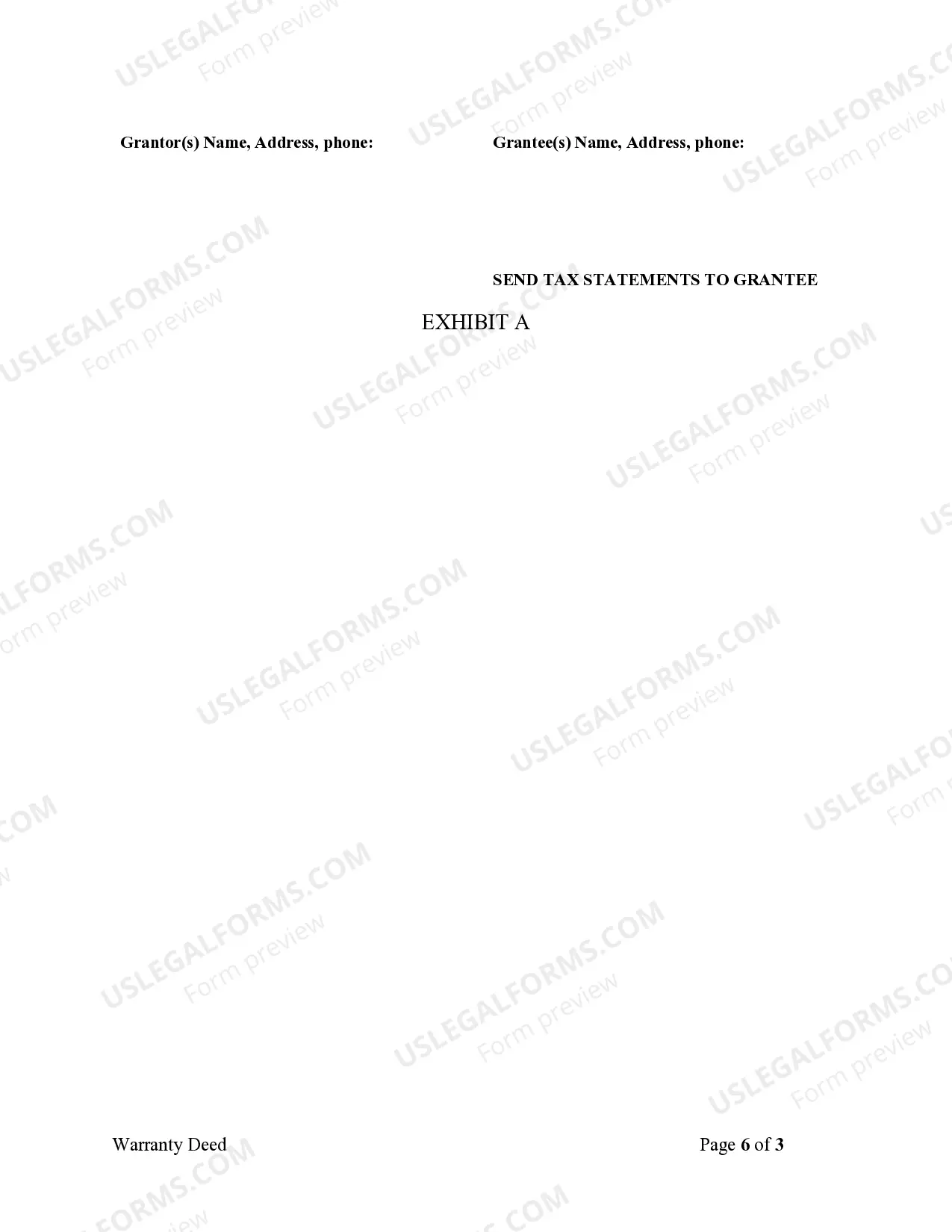
- Specification of the property being transferred, along with any easements or reservations.
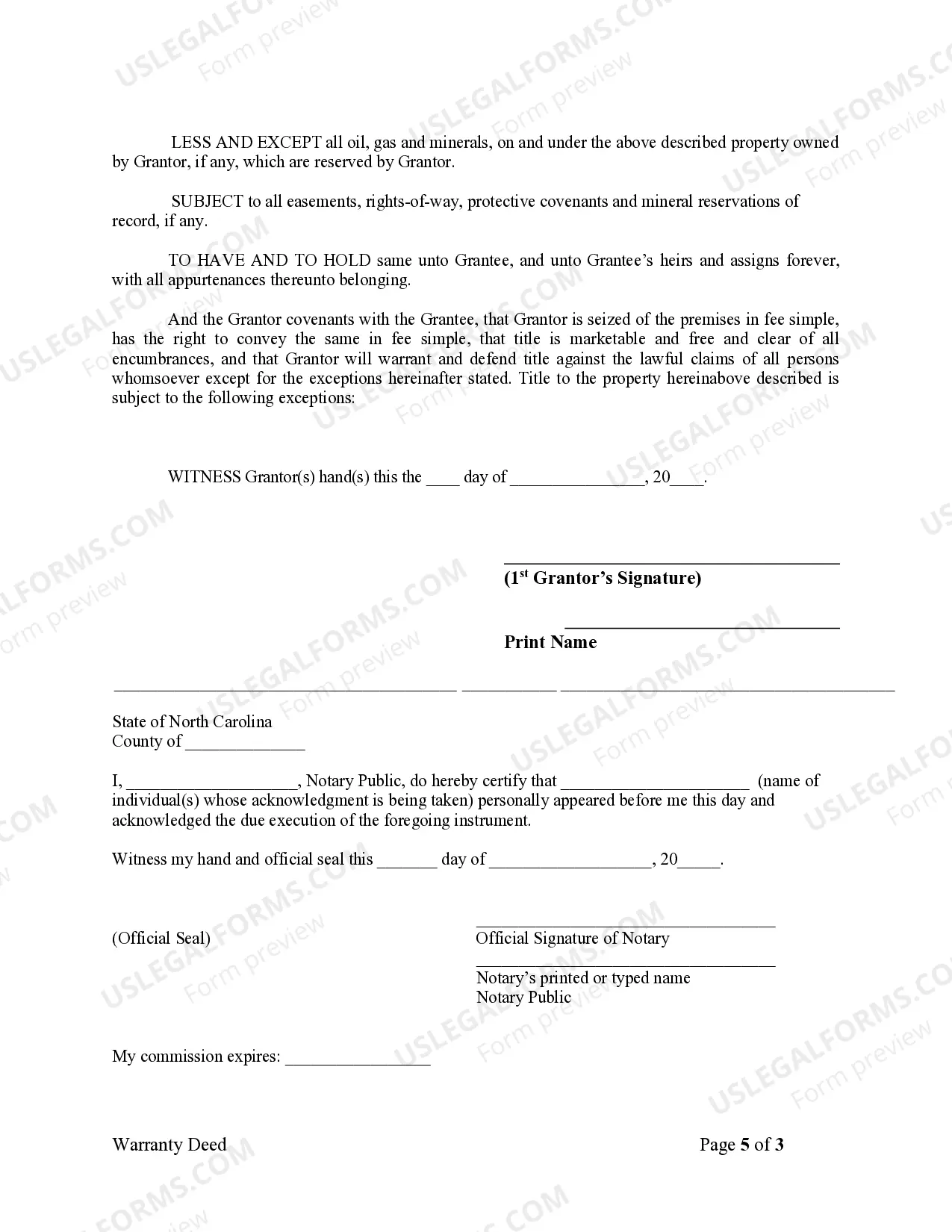
- Covenants from the grantor assuring marketable title and defendable ownership.
- Space for the date of execution and signatures of the parties involved.
- Notary acknowledgment section to validate the deed.





When this form is needed
This form is used when an individual wants to transfer real estate into a trust. This situation may arise during estate planning, when the grantor seeks to ensure the property is managed by a trustee for the benefit of named beneficiaries. Additionally, this form is vital when seeking to clarify ownership interests or when the individual wishes to protect the property from personal liabilities.
Who needs this form
This General Warranty Deed is suitable for:
- Individuals wishing to transfer property they own into a trust.
- Trustees managing the acquisition of property on behalf of a trust.
- Estate planners looking to secure clear property transactions.
- Real estate professionals assisting clients with trust-related property transfers.
How to prepare this document
- Identify the grantor (the individual) and the grantee (the trust), including their legal titles.
- Provide a detailed description of the property being transferred, referencing the legal description.
- Include any mineral reservations or exceptions to the title in the specified section.
- Sign the document in the presence of a notary public, ensuring all parties provide their signatures.
- Fill in the date of execution to finalize the deed.
Notarization guidance
To make this form legally binding, it must be notarized. Our online notarization service, powered by Notarize, lets you verify and sign documents remotely through an encrypted video session.
Get your form ready online
Our built-in tools help you complete, sign, share, and store your documents in one place.
Make edits, fill in missing information, and update formatting in US Legal Forms—just like you would in MS Word.
Download a copy, print it, send it by email, or mail it via USPS—whatever works best for your next step.
Sign and collect signatures with our SignNow integration. Send to multiple recipients, set reminders, and more. Go Premium to unlock E-Sign.
If this form requires notarization, complete it online through a secure video call—no need to meet a notary in person or wait for an appointment.
We protect your documents and personal data by following strict security and privacy standards.

Make edits, fill in missing information, and update formatting in US Legal Forms—just like you would in MS Word.

Download a copy, print it, send it by email, or mail it via USPS—whatever works best for your next step.

Sign and collect signatures with our SignNow integration. Send to multiple recipients, set reminders, and more. Go Premium to unlock E-Sign.

If this form requires notarization, complete it online through a secure video call—no need to meet a notary in person or wait for an appointment.

We protect your documents and personal data by following strict security and privacy standards.
Common mistakes
- Failing to provide a complete legal description of the property.
- Not signing the document in front of a notary public.
- Omitting any existing easements or mineral rights reservations.
- Using incorrect names or titles for the grantor and grantee.
Advantages of online completion
- Convenient download that allows for immediate access to the document.
- Editable fields make it easy to complete the form accurately.
- Reliability of a template drafted by licensed attorneys to ensure compliance with state laws.
Legal use & context
- This warranty deed provides a high level of protection to the grantee, ensuring clear title.
- In the event of disputes, it establishes the grantor's responsibility to defend against claims on the title.
- Usage and enforceability are subject to the specific laws of North Carolina.
What to keep in mind
- The General Warranty Deed is essential for transferring property into a trust.
- It offers comprehensive title assurances protecting the grantee.
- Proper completion and notarization are critical for the deed's legality.
Looking for another form?



Form popularity
FAQ
Be in writing. make clear on its face that it is intended to be a deed by the person making it or the parties to it. be validly executed as a deed by the person making it or one or more of the parties to it (section 1 of the Law of Property (Miscellaneous Provisions) Act 1989)
Failure to record a deed effectively makes it impossible for the public to know about the transfer of a property. That means the legal owner of the property appears to be someone other than the buyer, a situation that can generate serious ramifications.
Contrary to normal expectations, the Deed DOES NOT have to be recorded to be effective or to show delivery, and because of that, the Deed DOES NOT have to be signed in front of a Notary Public. However, if you plan to record it, then it does have to be notarized as that is a County Recorder requirement.
The deed did not meet the written requirements (such as if it failed to accurately describe the property); The deed was forged; The deed was induced by fraud, misrepresentation, coercion, duress, or undue influence; The deed was not delivered, or not delivered properly, and there was no acceptance by the grantee.
There are several different essentials to a valid deed: 1. It must be in writing; 2. The parties must be properly described; 3. The parties must be competent to convey and capable of receiving the grant of the property; 4.
1The name and address of the seller (called the grantor)2The name and address of the buyer (called the grantee)3A legal description of the property (found on the previous deed)4A statement that the grantor is transferring the property to the grantee.How to Use a General Warranty Deed .com\nwww..com >> How to Use a General Warranty Deed
Nominal Consideration Most deeds recite nominal consideration (e.g., the sum of $10.00).Actual Consideration Actual consideration is sometimes used if the parties want to publicly document the purchase price paid for the property.Gift If the property is a gift, there is no consideration.What is Consideration for a Deed to Real Estate? - DeedClaim\nwww.deedclaim.com > consideration
They are (1) covenant for seisin; (2) covenant of the right to convey; (3) covenant against encumbrances; (4) covenant for QUIET ENJOYMENT; (5) covenant of general WARRANTY; and (6) covenant for further assurances.
The requirements for a valid deed are a grantor, a grantee, a writing and subscription, delivery, and acceptance.Thus, an unrecorded deed is valid as between the parties and as to all those who have notice thereof. (Cal.