Montana Letter from Landlord to Tenant that Sublease granted - Rent Paid by Subtenant, Old Tenant Released from Liability for Rent
What this document covers
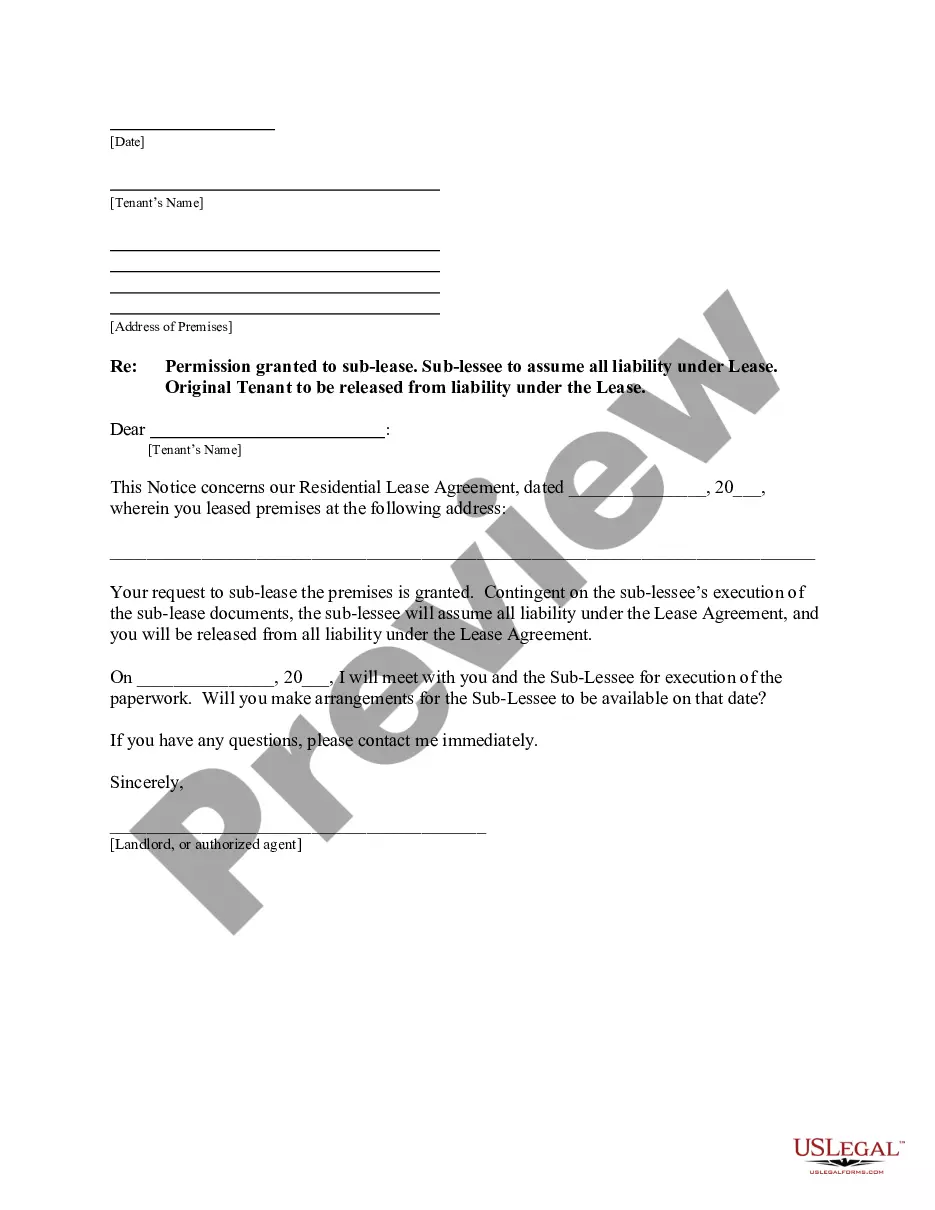
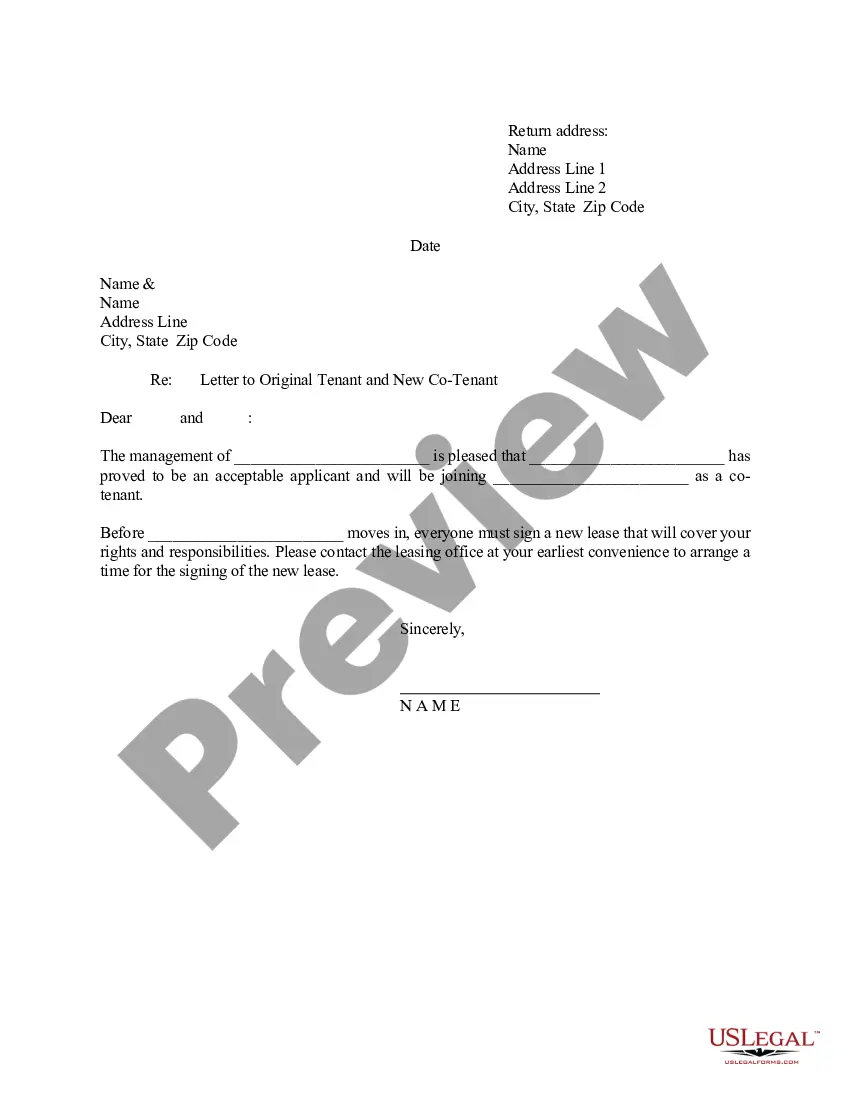
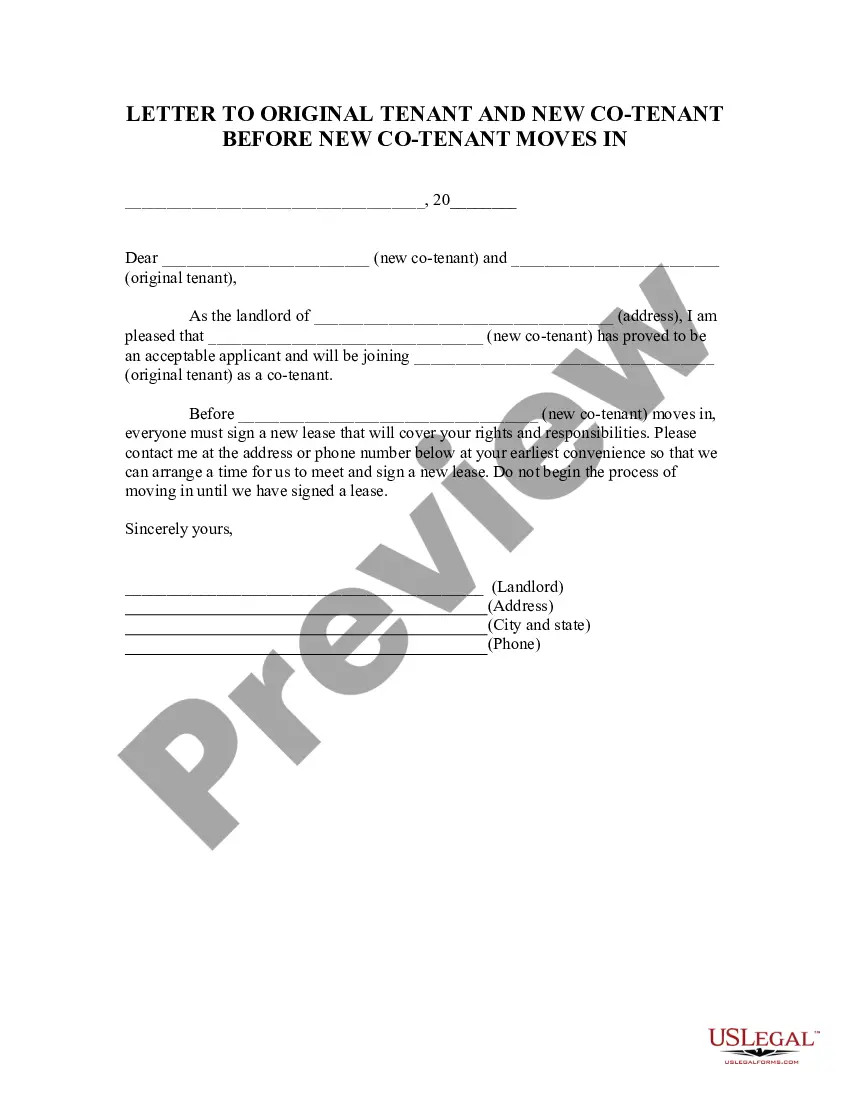
This form is a Letter from Landlord to Tenant that confirms a sublease has been granted, allowing rent to be paid by the subtenant. It serves to release the original tenant from liability for rent payments, making it distinct from other rental agreements by explicitly documenting the sublease arrangement and the shifting of financial responsibility.
Main sections of this form
- Confirmation of sublease approval and details regarding the subtenant's assumption of liabilities.
- Date for the execution of sublease documents involving the landlord, original tenant, and subtenant.
- Contact information for the landlord or authorized agent for any inquiries.
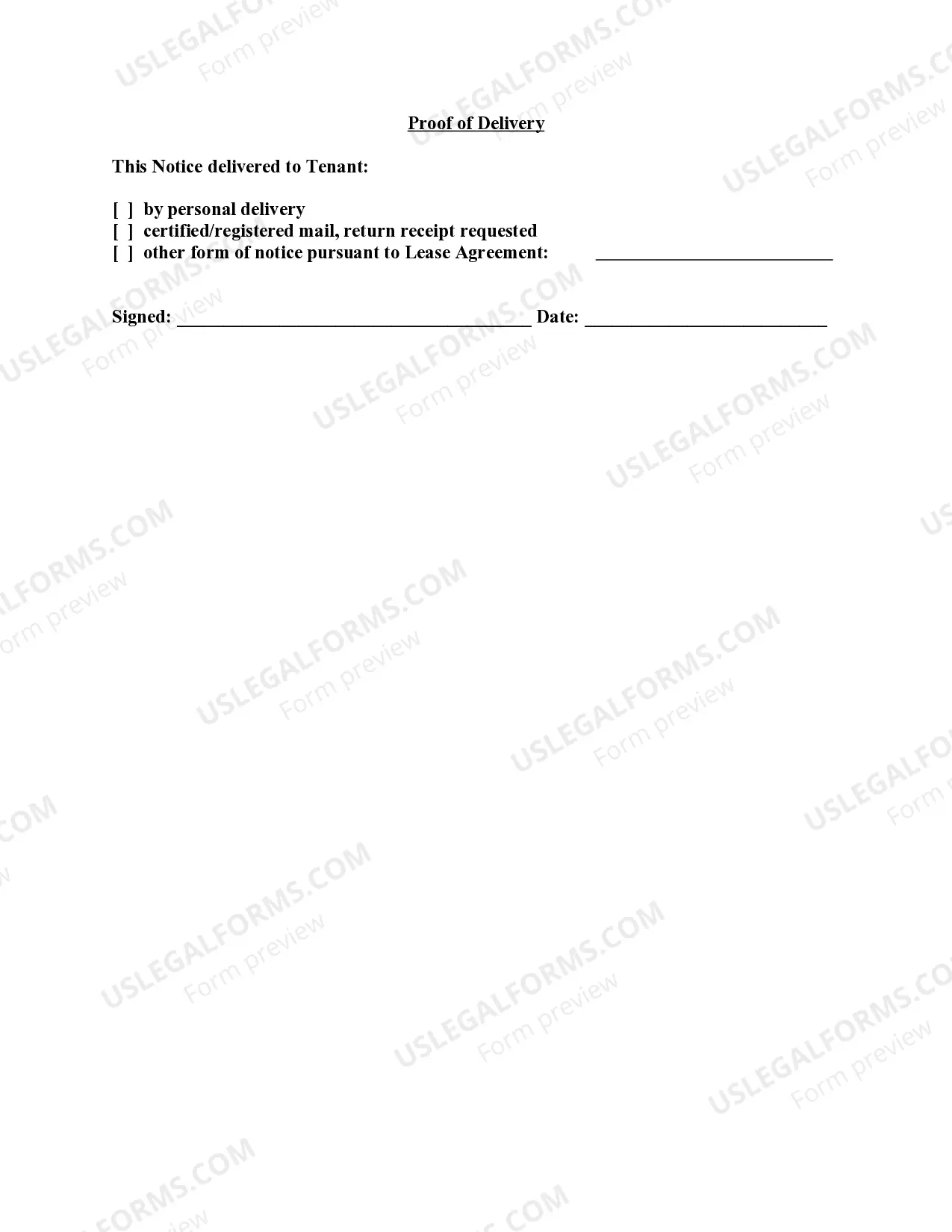
- Proof of delivery section to confirm how the notice was delivered to the tenant.

When this form is needed
This form should be used when a tenant wishes to sublease rental property and seeks official confirmation from the landlord. It is necessary when rent payments will be transferred to the subtenant and the original tenant needs to be released from further financial obligations under the lease agreement.
Intended users of this form
- Landlords who need to document a sublease agreement officially.
- Original tenants who are transferring their rental responsibilities to a subtenant.
- Subtenants seeking confirmation of their rental agreement status concerning the original lease.
How to complete this form
- Fill in the date on which the sublease is to take effect.
- Provide the name and contact details of the subtenant.
- Schedule a meeting date for executing the sublease documents with all parties involved.
- Sign the letter as the landlord or an authorized agent.
- Deliver the letter to the tenant using one of the accepted methods noted in the form.
Notarization requirements for this form
This form does not typically require notarization unless specified by local law. Always check local regulations to ensure compliance.
Get your form ready online
Our built-in tools help you complete, sign, share, and store your documents in one place.
Make edits, fill in missing information, and update formatting in US Legal Forms—just like you would in MS Word.
Download a copy, print it, send it by email, or mail it via USPS—whatever works best for your next step.
Sign and collect signatures with our SignNow integration. Send to multiple recipients, set reminders, and more. Go Premium to unlock E-Sign.
If this form requires notarization, complete it online through a secure video call—no need to meet a notary in person or wait for an appointment.
We protect your documents and personal data by following strict security and privacy standards.

Make edits, fill in missing information, and update formatting in US Legal Forms—just like you would in MS Word.

Download a copy, print it, send it by email, or mail it via USPS—whatever works best for your next step.

Sign and collect signatures with our SignNow integration. Send to multiple recipients, set reminders, and more. Go Premium to unlock E-Sign.

If this form requires notarization, complete it online through a secure video call—no need to meet a notary in person or wait for an appointment.

We protect your documents and personal data by following strict security and privacy standards.
Common mistakes
- Failing to specify the date for executing the sublease documents.
- Not including contact information for follow-up questions.
- Inaccurately describing the responsibilities of the subtenant.
- Not providing proof of delivery to the tenant.
Benefits of completing this form online
- Convenience of accessing and completing the form from anywhere.
- Editability allows you to tailor the letter to your specific needs.
- Reliability, as the form is drafted by licensed attorneys to meet legal standards.
Looking for another form?
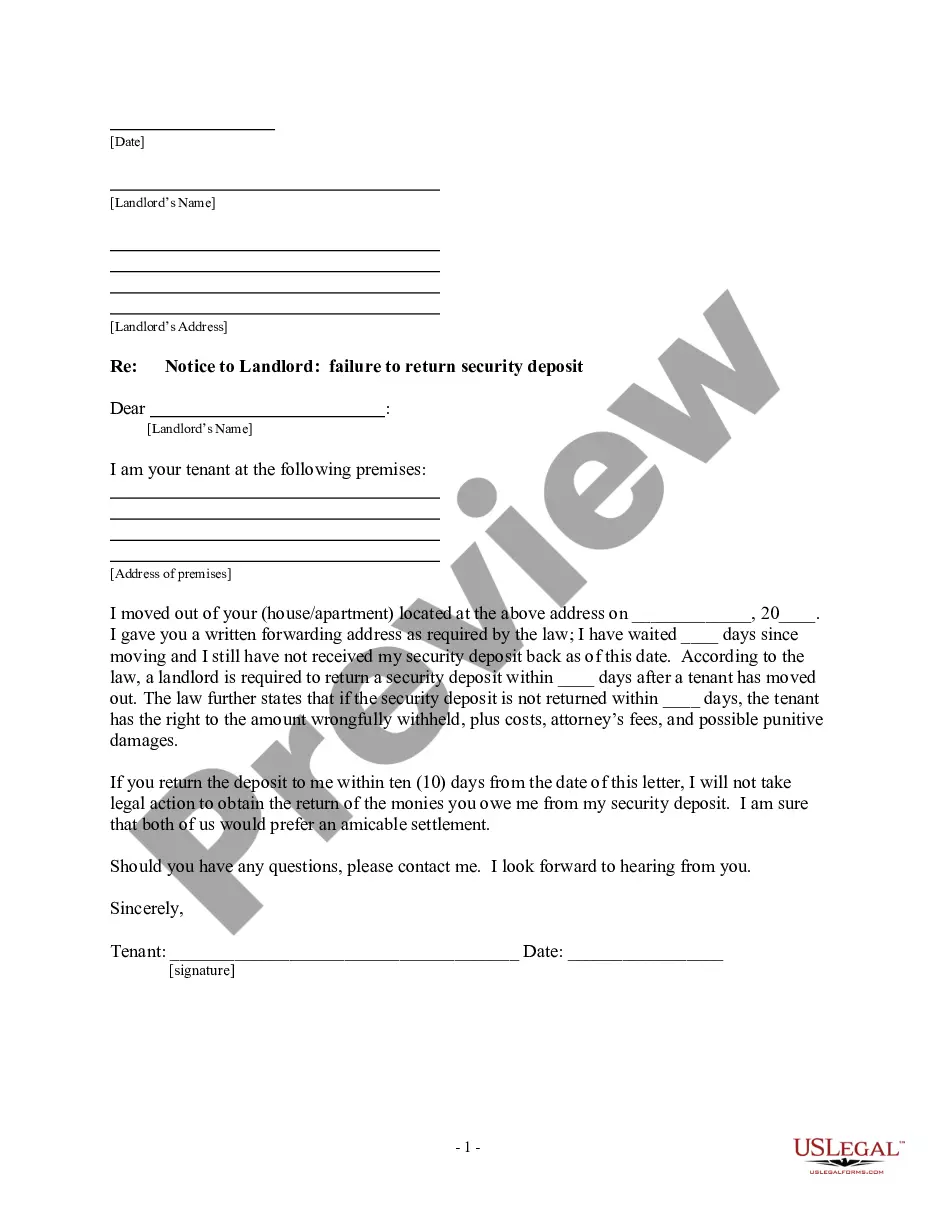
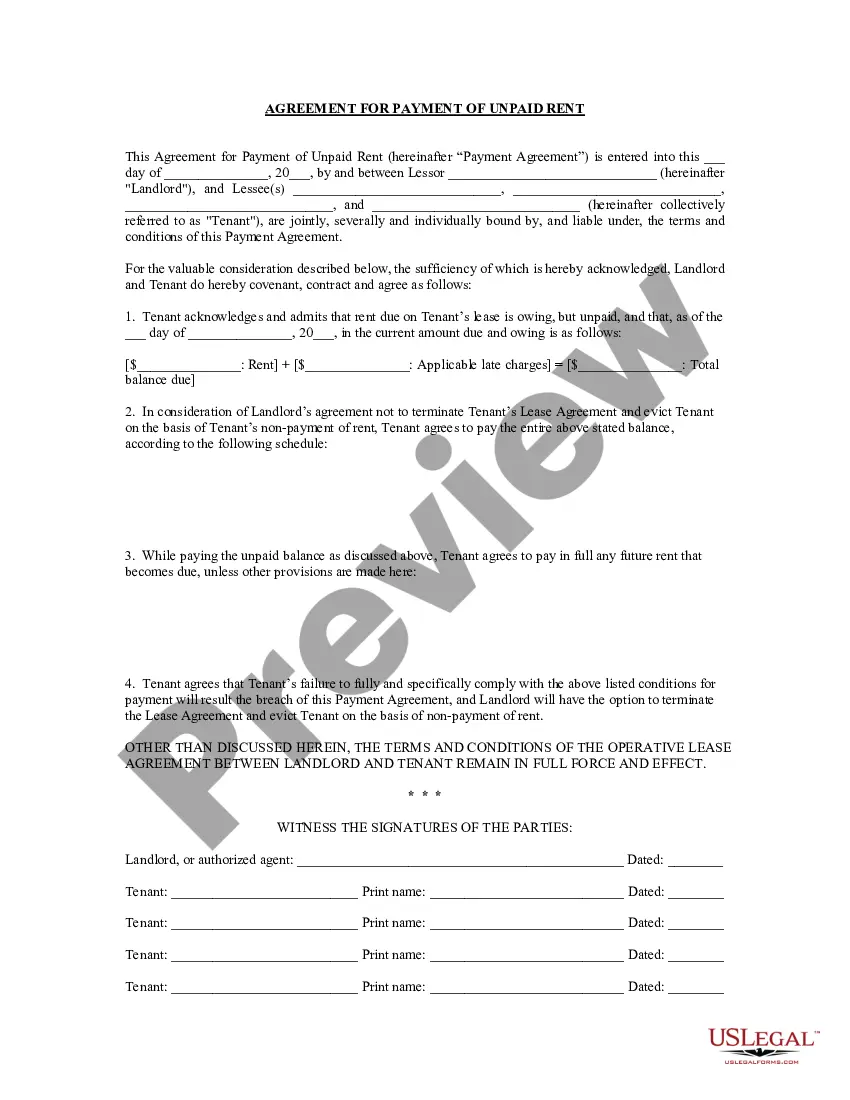
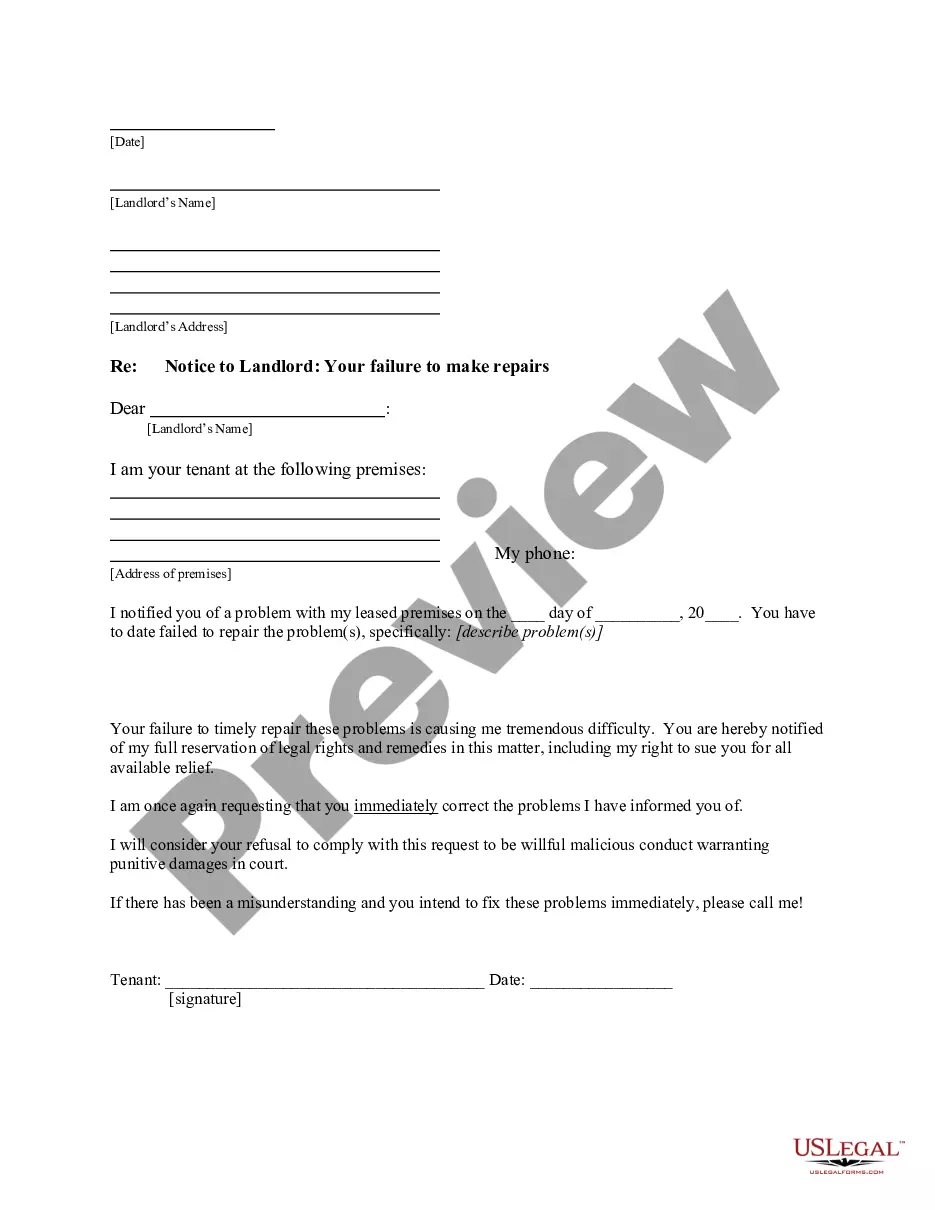
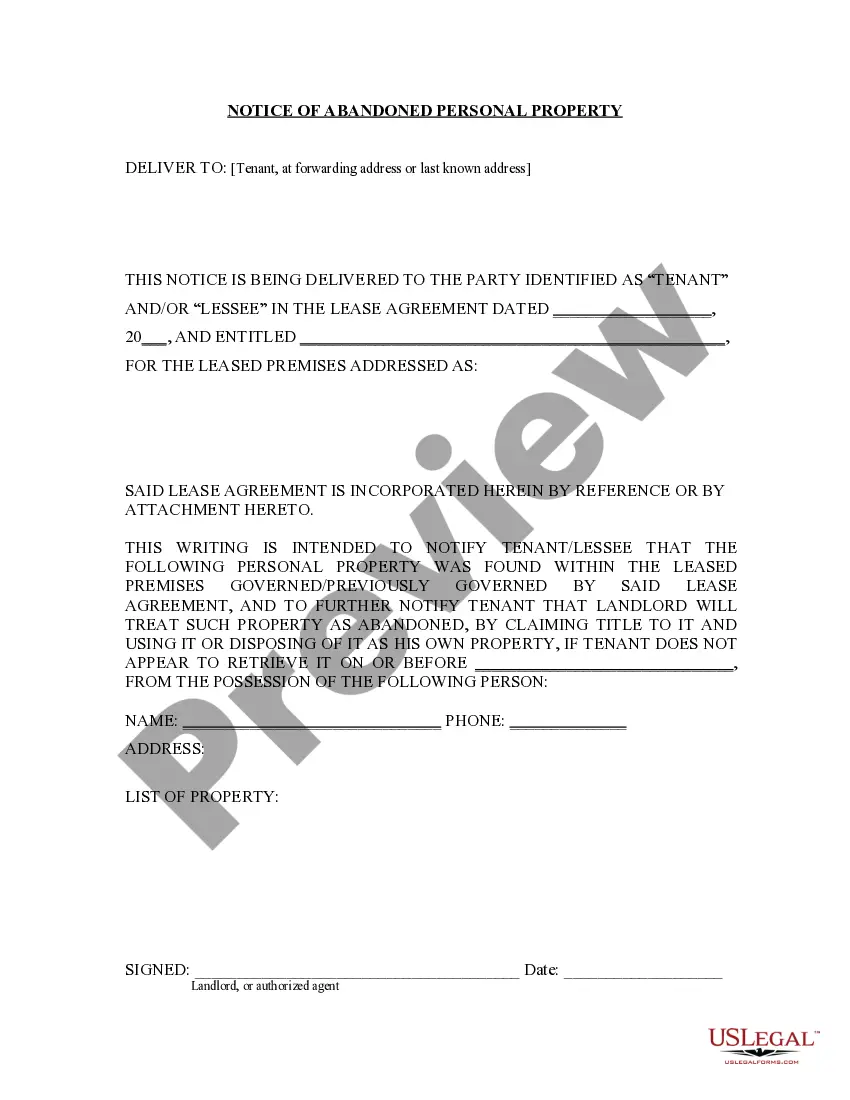
Form popularity
FAQ
The subtenant must give a notice of one month in order to terminate the sublease. The subtenant is also required to give reasons for leaving the premises. A sublease can be terminated early if the subtenant is willing to pay the rent until the end of the month and an amount in addition to this.
Dear (Name of landlord or manager), This letter constitutes my written (number of days' notice that you need to give based on your lease agreement)-day notice that I will be moving out of my apartment on (date), the end of my current lease. I am leaving because (new job, rent increase, etc.)
In New South Wales if your housemate is a sub-tenant on an open-ended agreement, they'll likely still have 90 days to vacate the property even after you secure an order to evict them.
If a tenant is subletting without consent, it's likely they will have broken terms in their tenancy agreement. This breach of contract means that the landlord can take action to evict them from their home. Possession proceedings can be started quickly, but it's important to follow the correct legal process.
Oftentimes, sub-tenants have the right to be presented with an eviction notice in advance of having to move out and, in some jurisdictions, may be able to bring a lawsuit against the landlord.
Each state has different laws regarding subtenancy, with most landlords prohibiting subletting a property without prior permission. If subletting occurs without the landlord's knowledge, that landlord has the right to serve a three-day notice of eviction to both the tenant and the sublessor.
Early Termination of a Sublease The subtenant must give a notice of one month in order to terminate the sublease.The subtenant should also sign an Early Termination Request form and submit it to the tenant with the termination fee that could amount to nearly three months' rent (the amount may vary in some instances).
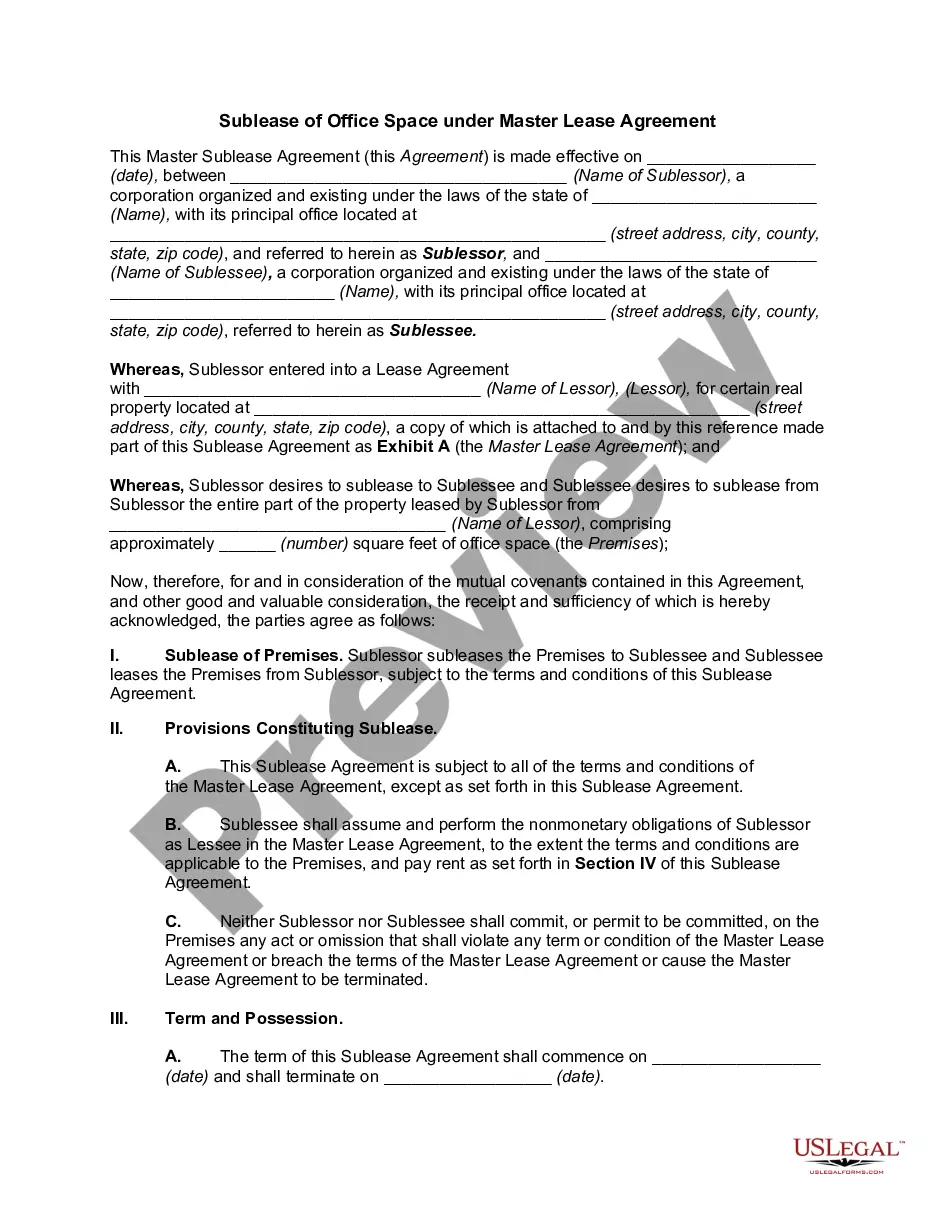
A Residential Sublease is a legally binding contract made between the original tenant of a rental property (sublandlord) and a new tenant (also known as a subtenant or a sublessee). The sublease gives the subtenant the right to share or to take over the rented premises from the original tenant.