Mississippi Last Will and Testament for Divorced Person Not Remarried with No Children
What is this form?
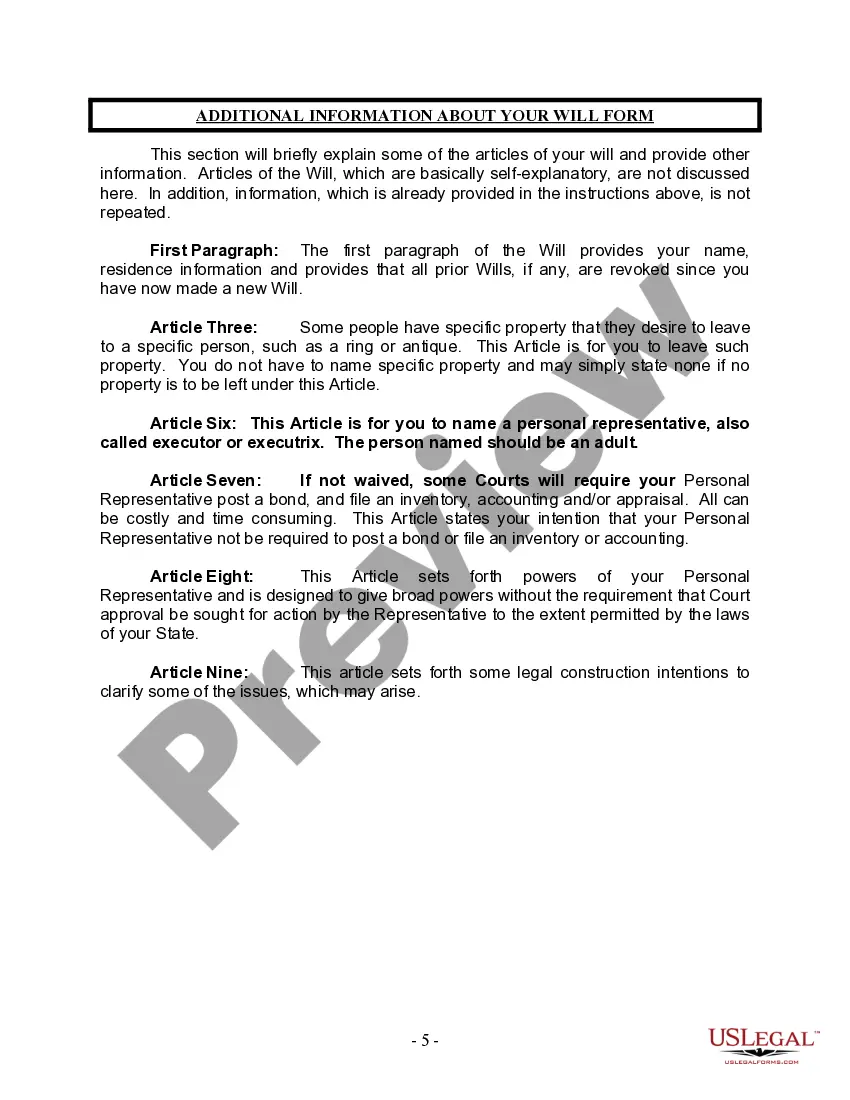
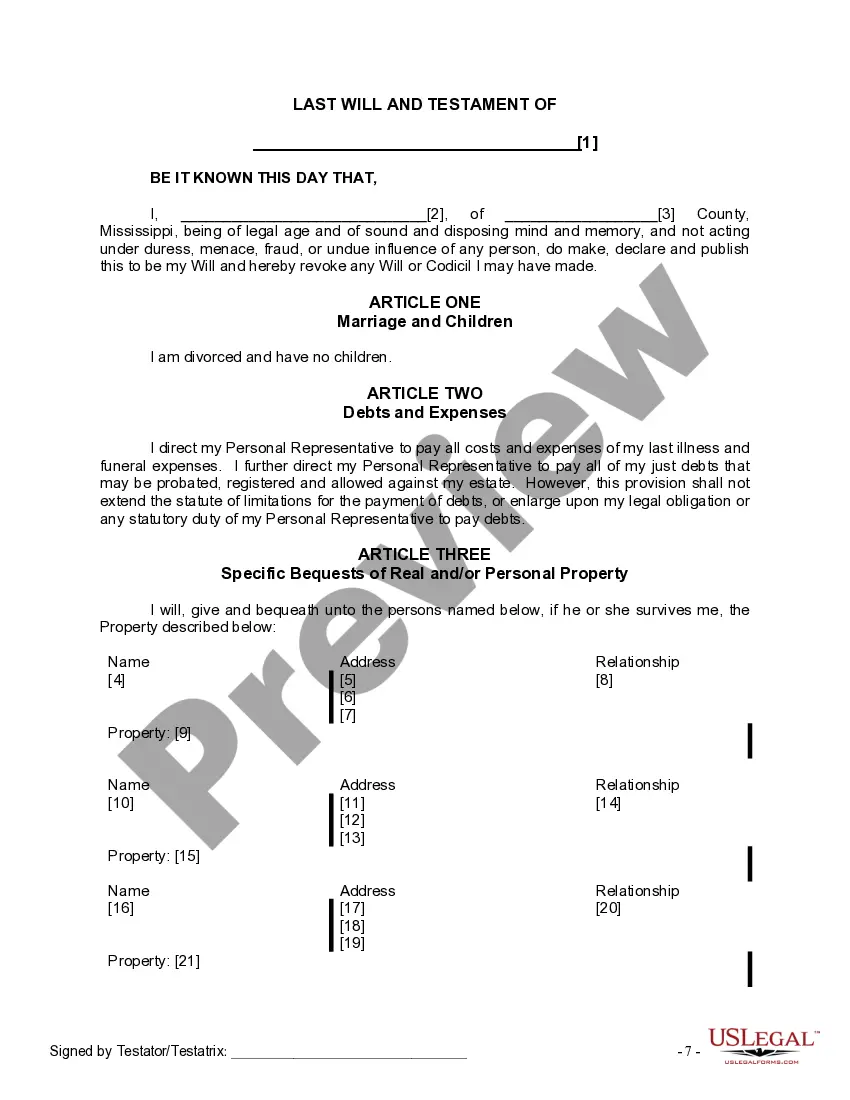
The Last Will and Testament for Divorced Person Not Remarried with No Children is a legal document that outlines how a person's assets will be distributed after their death. Unlike other wills, this form is specifically designed for individuals who are divorced, not remarried, and do not have any children. This will allows you to appoint a personal representative, designate beneficiaries, and specify any additional wishes regarding your estate.
Main sections of this form
- Your personal details, including name and county of residence.
- Specific bequests, allowing you to designate who will receive particular assets.
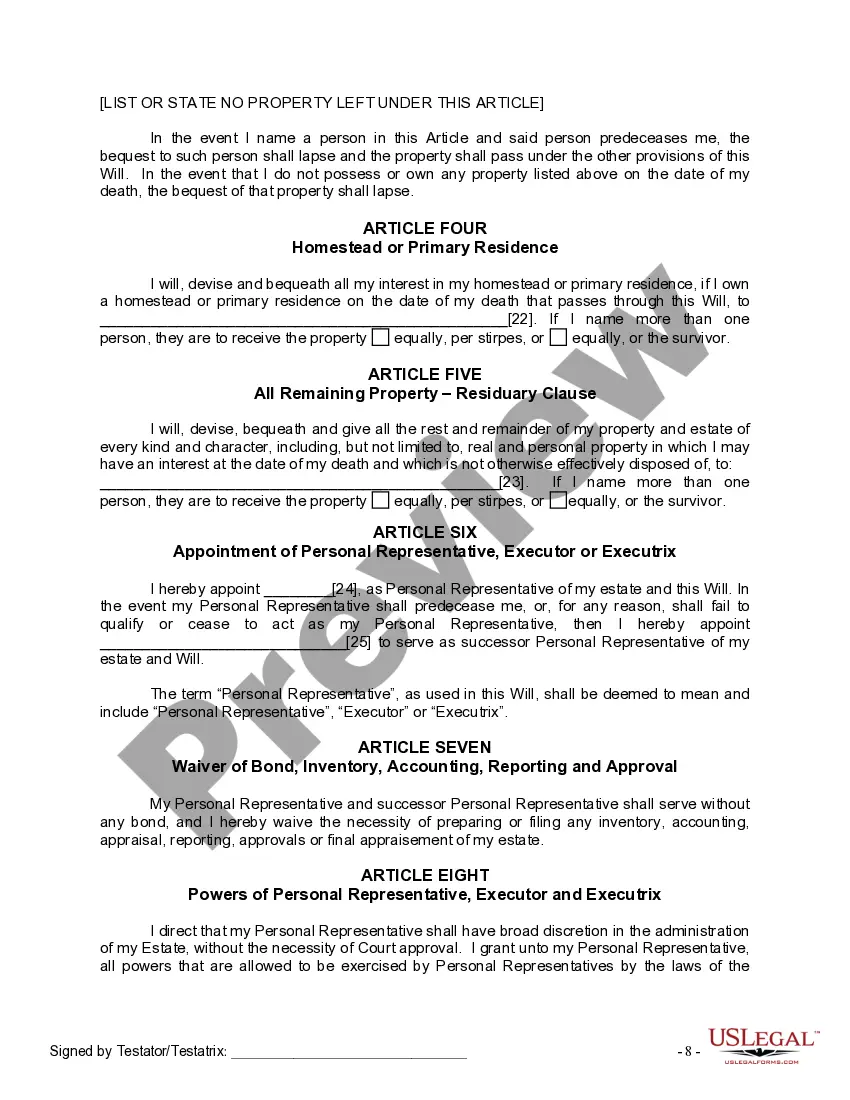
- Homestead provisions that specify the distribution of your primary residence.
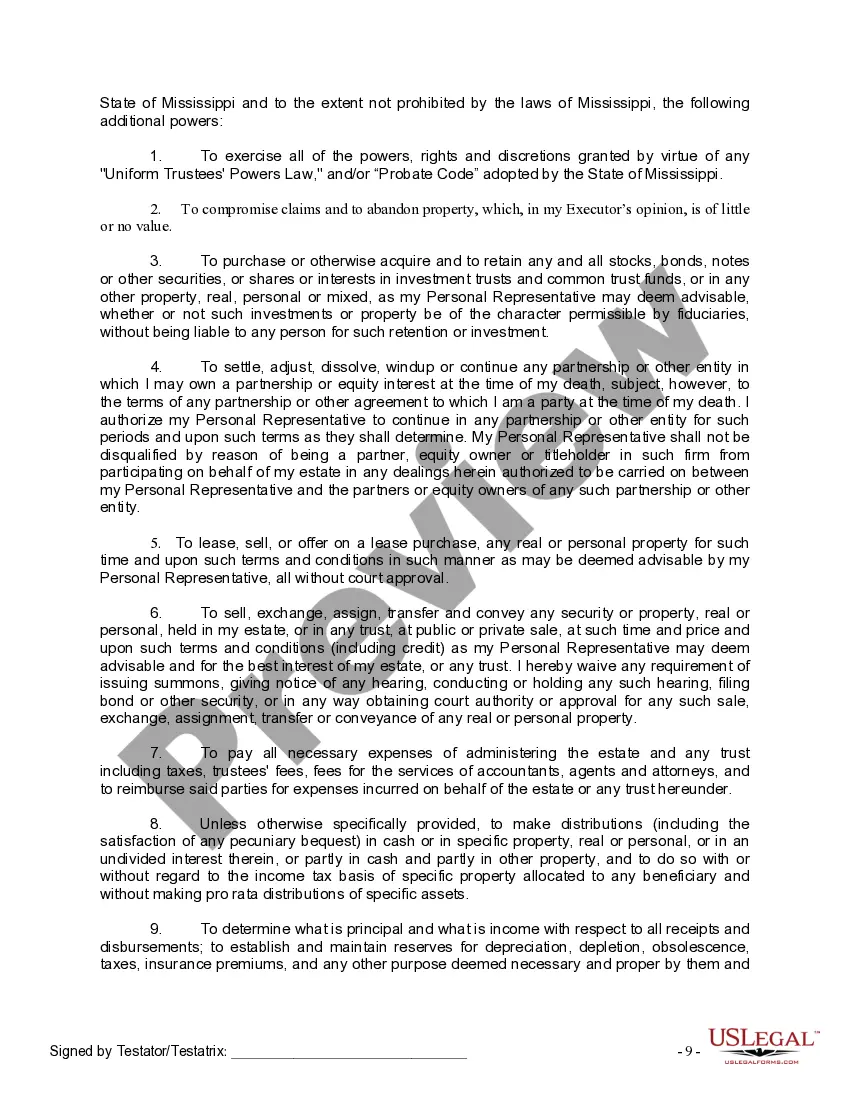
- Appointment of a personal representative to administer your estate.
- Additional clauses that cover any remaining property not specifically mentioned.



When to use this form
This form is appropriate for individuals who have gone through a divorce and are not remarried, especially those without children. It is particularly useful when you want to ensure that your wishes are clearly stated regarding the distribution of your assets after your passing. Use this form when you wish to provide instructions for your estate, appoint an executor, and ensure a smooth process for your beneficiaries.
Who can use this document
- Individuals who are divorced and have not remarried.
- Those who do not have children or dependents.
- Individuals wanting to outline how their assets should be distributed after death.
How to prepare this document
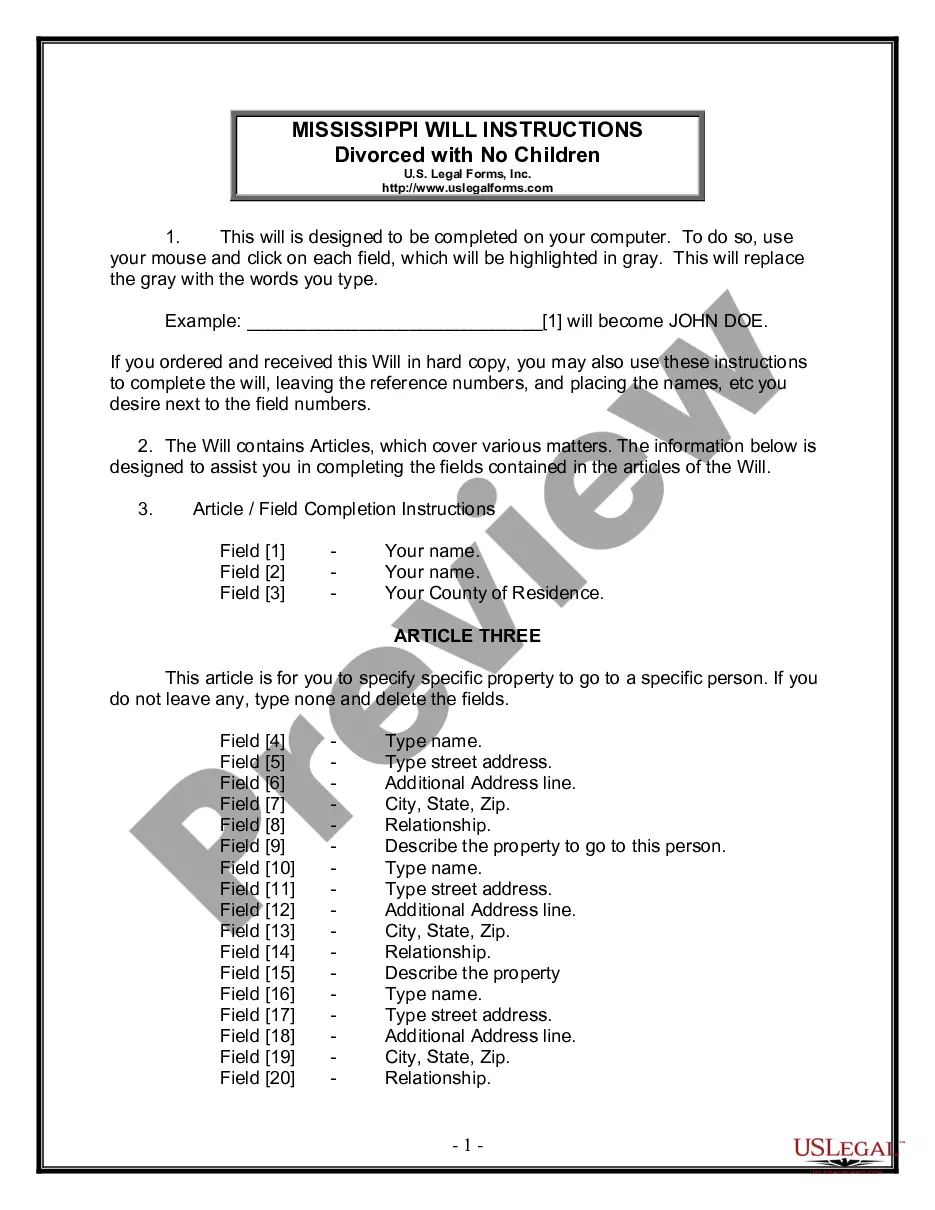
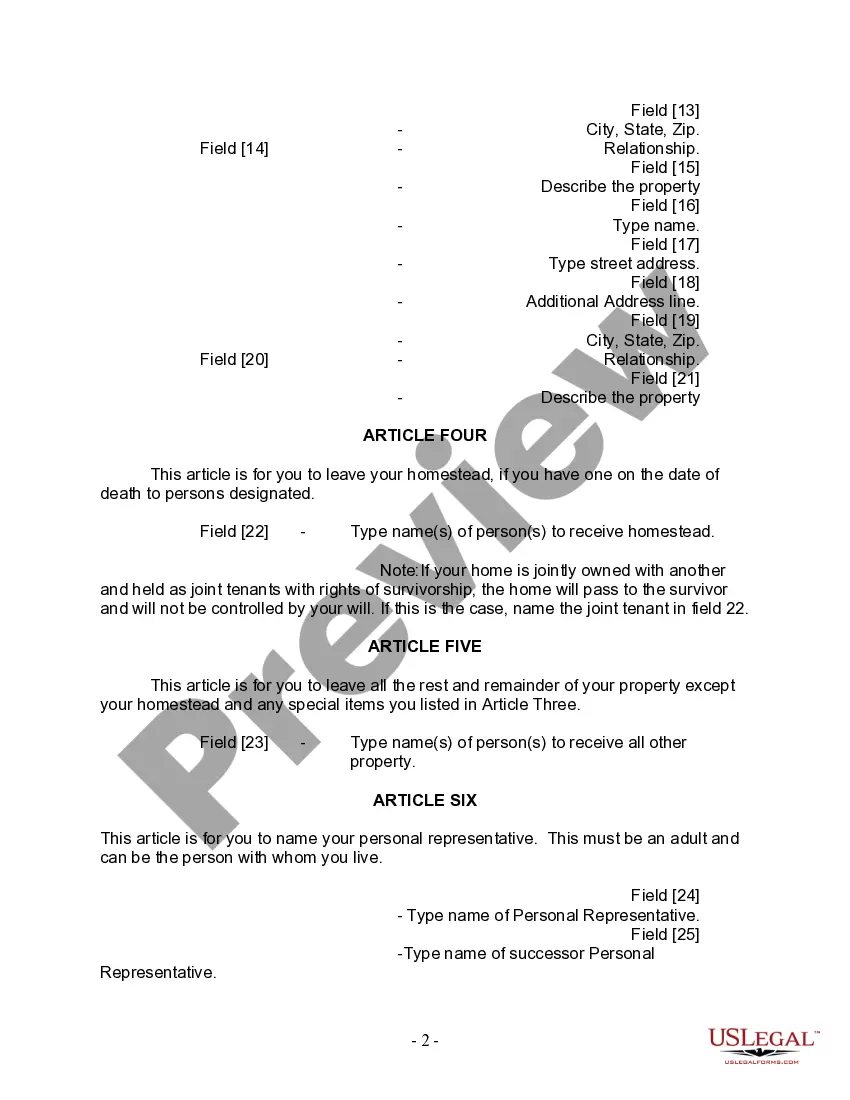
- Enter your personal details such as your name and county of residence.
- Clearly specify any property you wish to bequeath to particular individuals.
- Designate who will receive your homestead or primary residence, if applicable.
- Appoint a personal representative responsible for managing your estate.
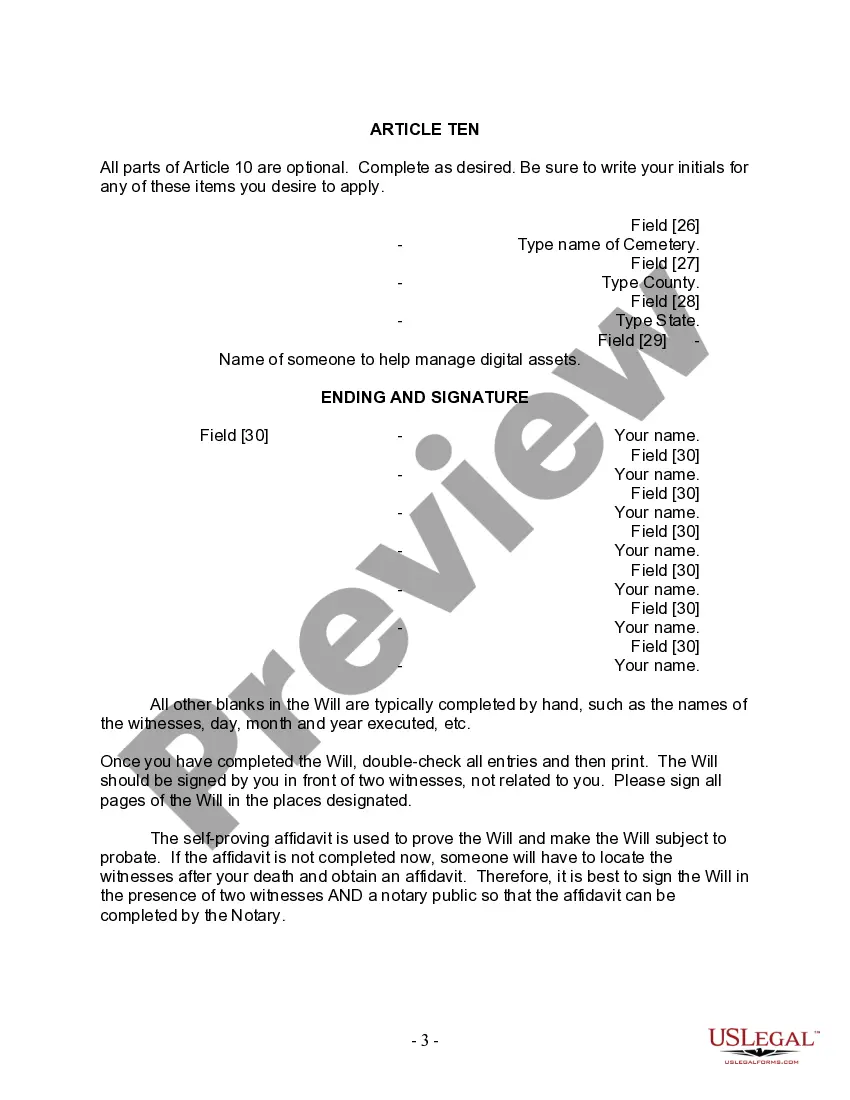
- Review and print the document, ensuring all names and dates are filled out correctly.
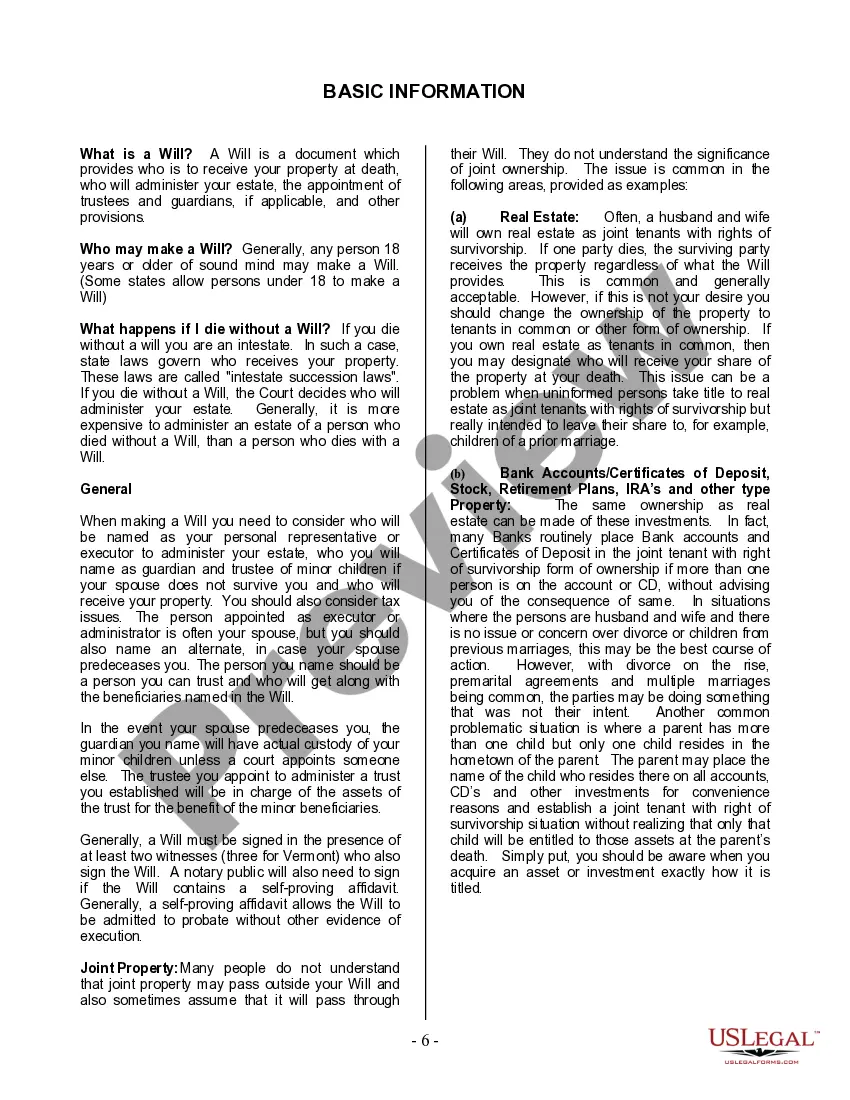
- Sign the completed will in front of two qualified witnesses and, if needed, a notary public.
Notarization requirements for this form
This form must be notarized to be legally valid. US Legal Forms provides secure online notarization powered by Notarize, allowing you to complete the process through a verified video call.
Get your form ready online
Our built-in tools help you complete, sign, share, and store your documents in one place.
Make edits, fill in missing information, and update formatting in US Legal Forms—just like you would in MS Word.
Download a copy, print it, send it by email, or mail it via USPS—whatever works best for your next step.
Sign and collect signatures with our SignNow integration. Send to multiple recipients, set reminders, and more. Go Premium to unlock E-Sign.
If this form requires notarization, complete it online through a secure video call—no need to meet a notary in person or wait for an appointment.
We protect your documents and personal data by following strict security and privacy standards.

Make edits, fill in missing information, and update formatting in US Legal Forms—just like you would in MS Word.

Download a copy, print it, send it by email, or mail it via USPS—whatever works best for your next step.

Sign and collect signatures with our SignNow integration. Send to multiple recipients, set reminders, and more. Go Premium to unlock E-Sign.

If this form requires notarization, complete it online through a secure video call—no need to meet a notary in person or wait for an appointment.

We protect your documents and personal data by following strict security and privacy standards.
Avoid these common issues
- Failing to have the will signed in front of the required witnesses.
- Not updating the will after significant life changes.
- Leaving out important details regarding specific bequests.
Benefits of using this form online
- Convenience of completing the form from home.
- Editable fields allow for immediate changes before printing.
- Access to professionally drafted legal templates enhances reliability.
Looking for another form?


Form popularity
FAQ
No, in Mississippi, you do not need to notarize your will to make it legal. However, Mississippi allows you to make your will "self-proving" and you'll need to go to a notary if you want to do that.
Create the initial document. Start by titling the document Last Will and Testament" and including your full legal name and address. Designate an executor. Appoint a guardian. Name the beneficiaries. Designate the assets. Ask witnesses to sign your will. Store your will in a safe place.
To write a will, Mississippi law states you must be at least 18 years old, of sound and disposing mind, must intend the document to be your will and must have the written will validly executed. Upon your death, your will must go through probate, a court proceeding that declares the will valid or invalid.
A. You don't have to have a lawyer to create a basic will you can prepare one yourself. It must meet your state's legal requirements and should be notarized.A do-it-yourself will that's poorly drafted can save you money but create a mess for your heirs when you're gone.
Fraud or Undue Influence A nonfamily caregiver forcing the testator to leave them an inheritance. A family member getting the testator to sign a will by pretending it is just a general legal document that needs a signature.
No. You can make your own will in Mississippi, using Nolo's do-it-yourself will software or online will programs. However, you may want to consult a lawyer in some situations. For example, if you think that your will might be contested or if you want to disinherit your spouse, you should talk with an attorney.
What Makes a Handwritten Will Legally Binding? A written will is valid if it is: (1) in writing; (2) signed by the testator, i.e., the person making the will; and (3) signed by at least two witnesses who saw the testator sign the will or acknowledge the signature on the will.
A holographic or handwritten will is valid in Mississippi if it's testamentary in character (i.e. intended to be a will, not just a letter to a friend) and is wholly written, dated, and signed by the testator or creator of the will.