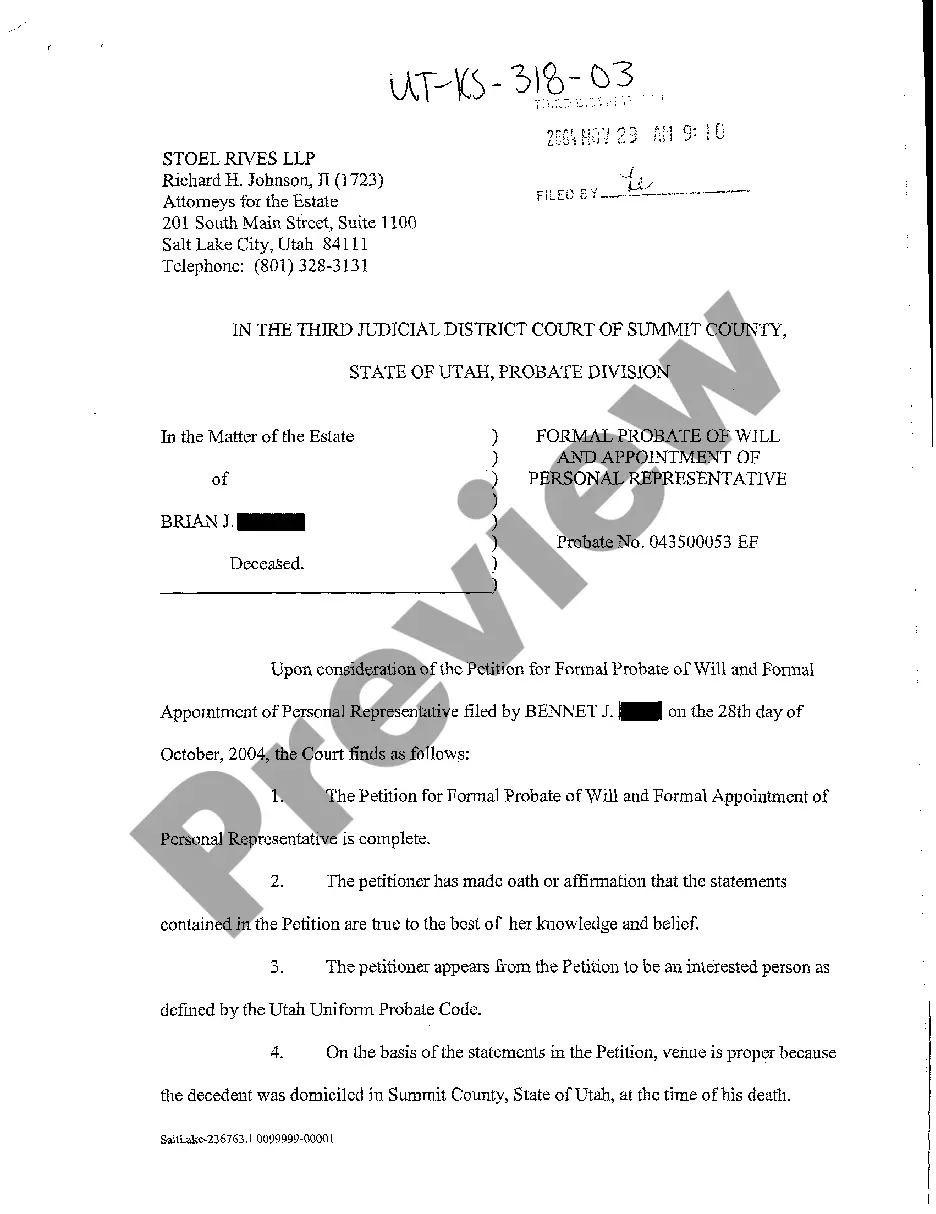
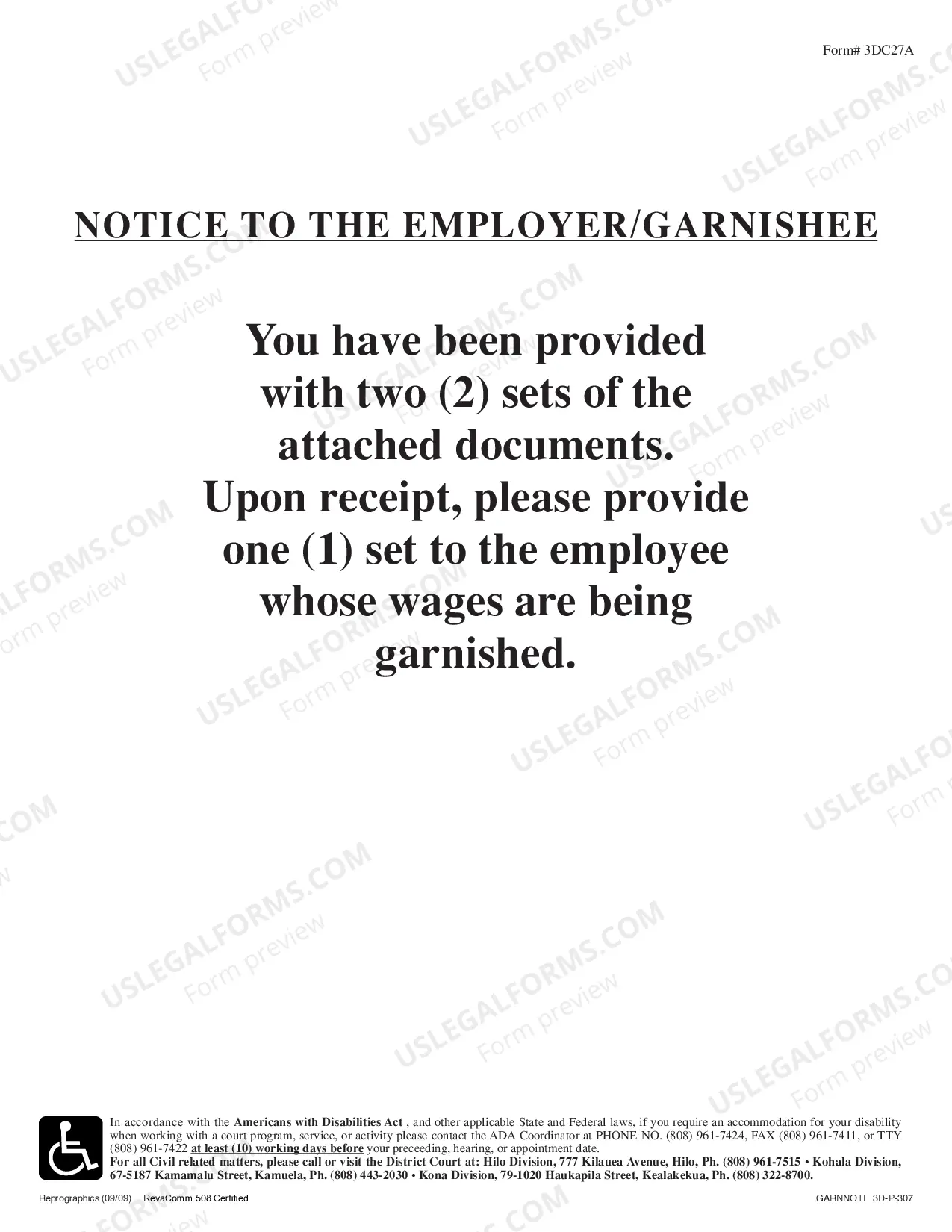
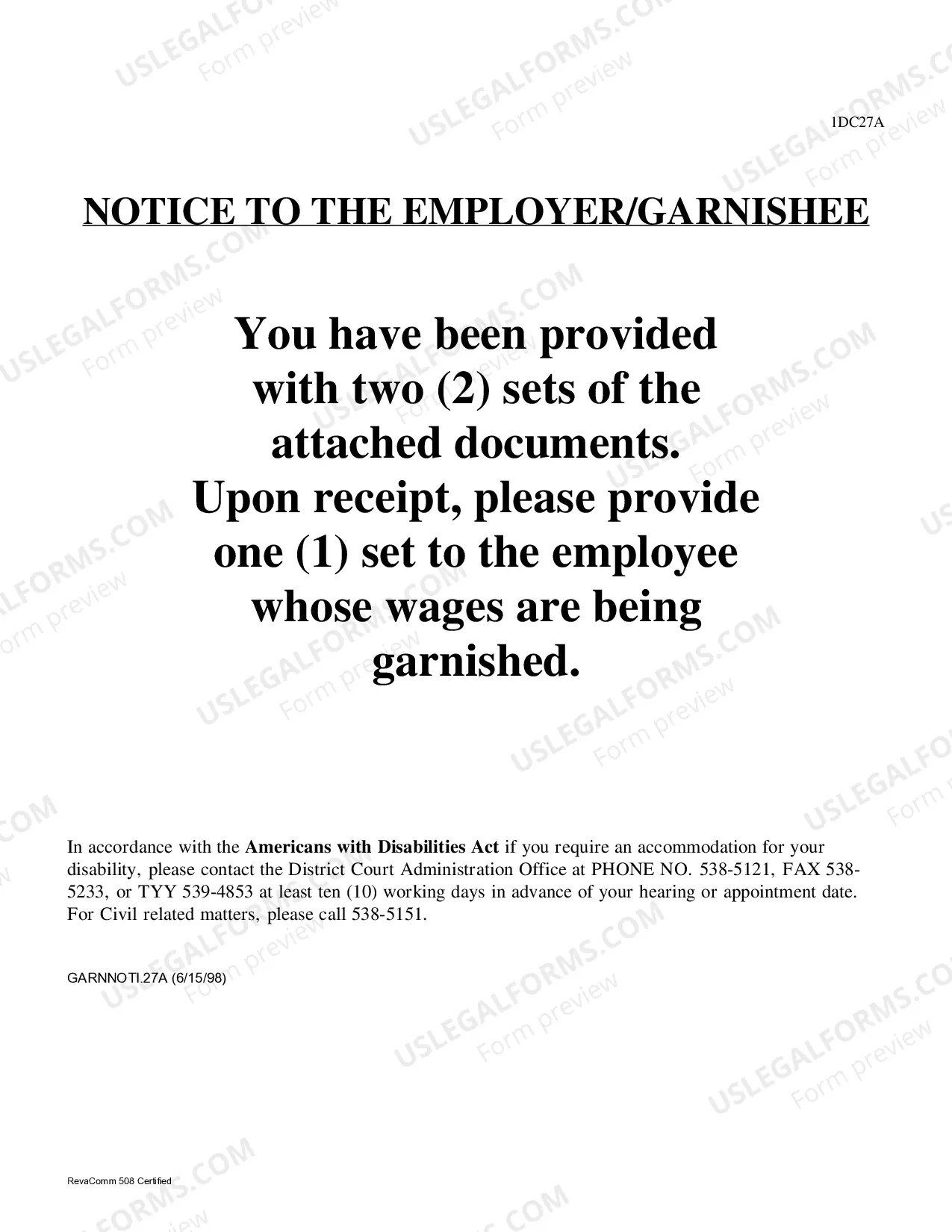
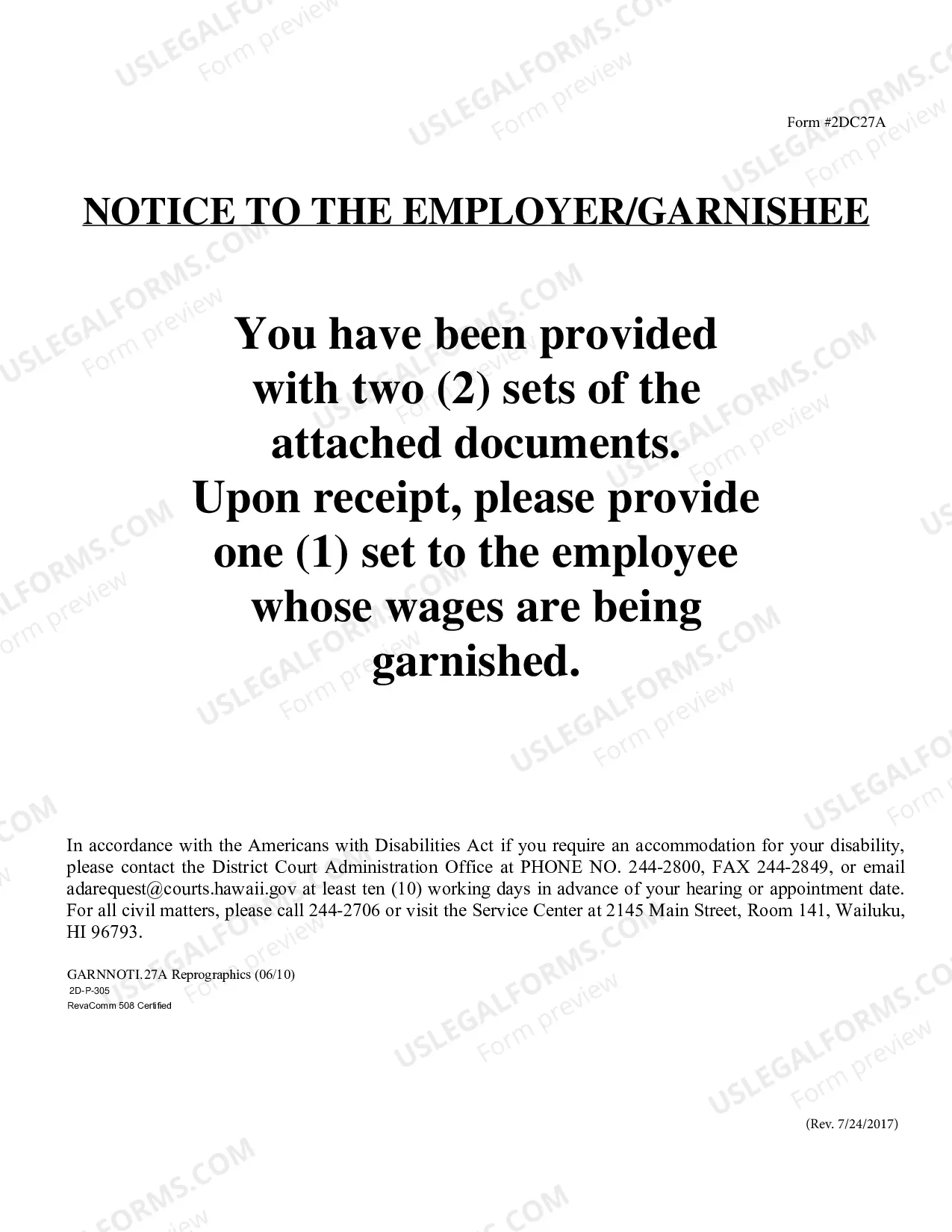
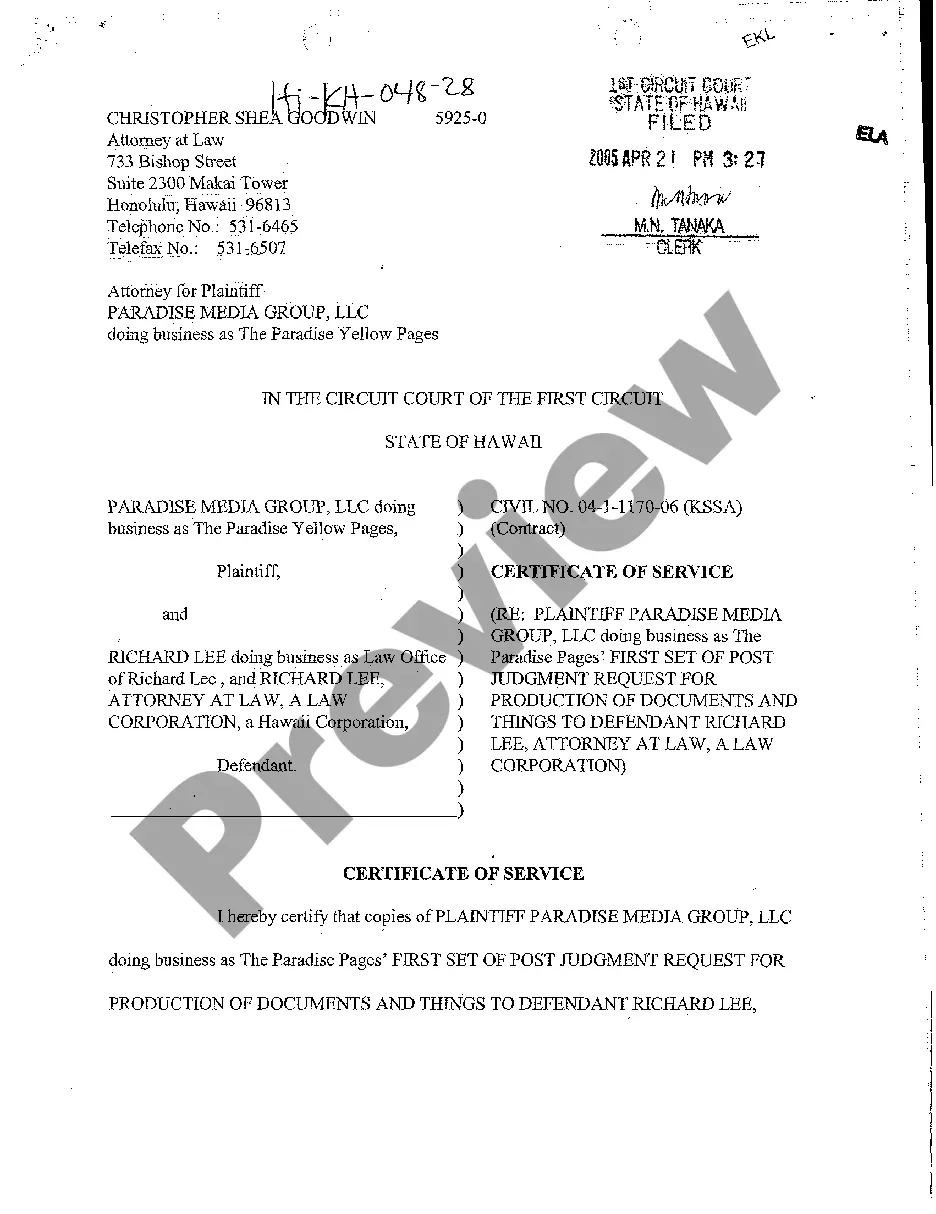
Hawaii Notice To Employer Garnishee
Description
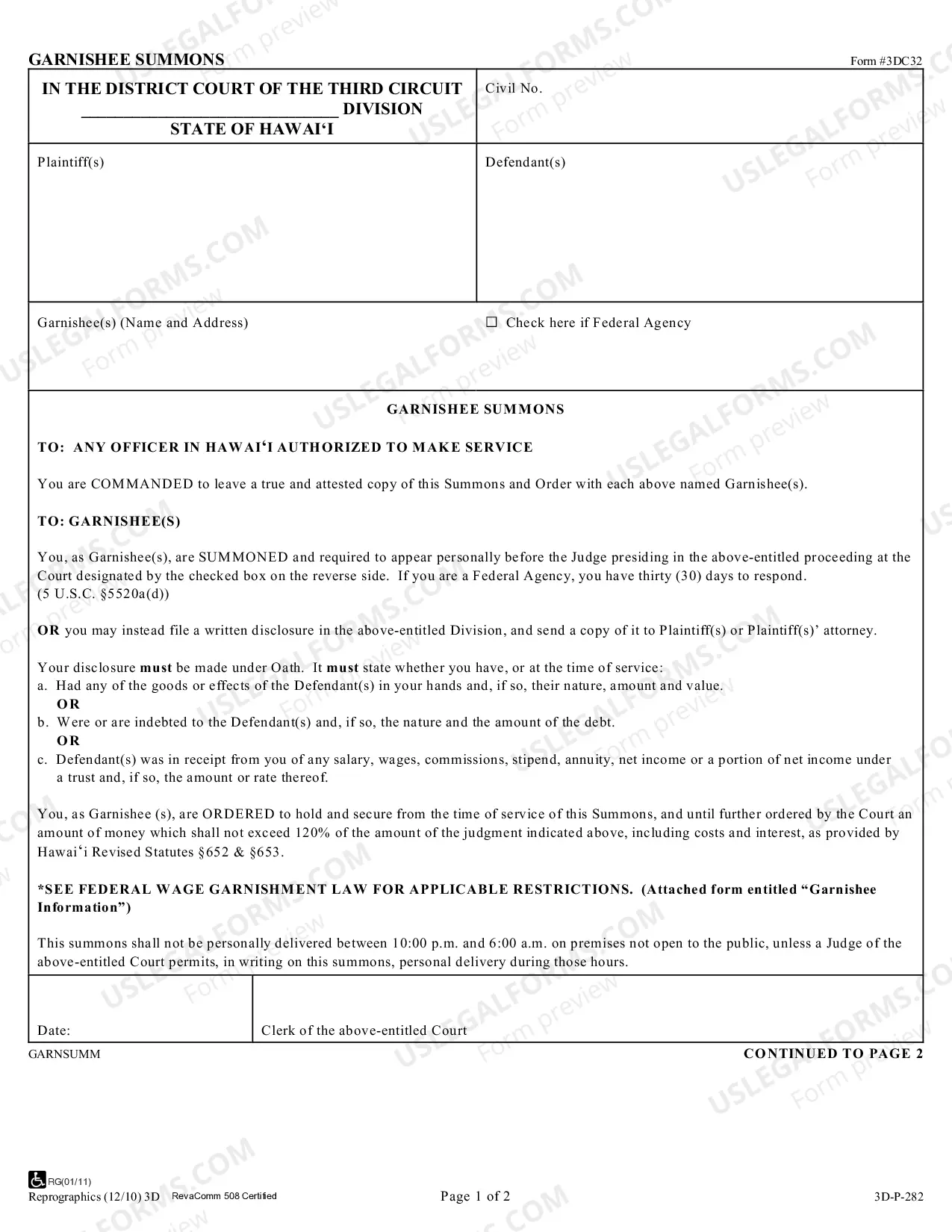
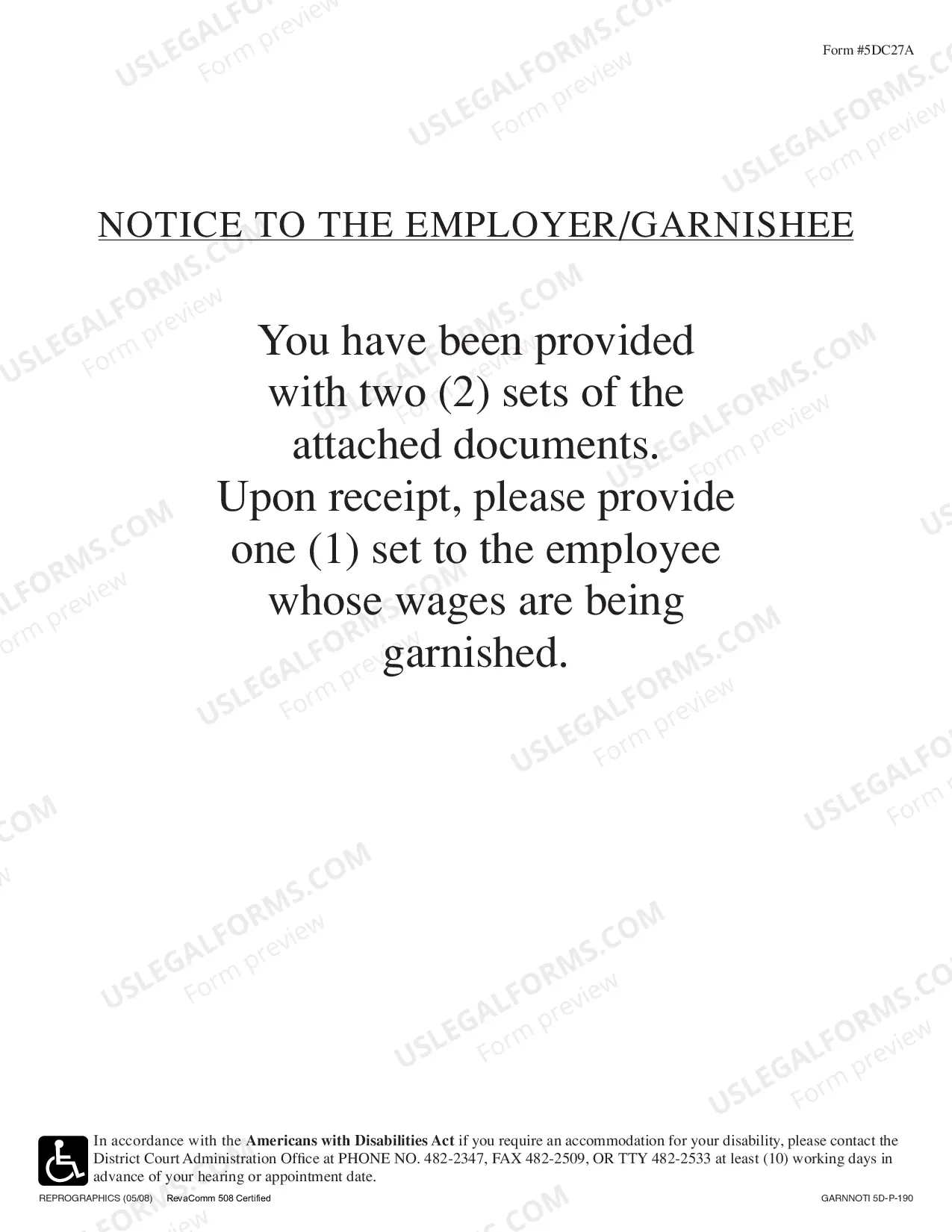
Get your form ready online
Our built-in tools help you complete, sign, share, and store your documents in one place.
Make edits, fill in missing information, and update formatting in US Legal Forms—just like you would in MS Word.
Download a copy, print it, send it by email, or mail it via USPS—whatever works best for your next step.
Sign and collect signatures with our SignNow integration. Send to multiple recipients, set reminders, and more. Go Premium to unlock E-Sign.
If this form requires notarization, complete it online through a secure video call—no need to meet a notary in person or wait for an appointment.
We protect your documents and personal data by following strict security and privacy standards.

Make edits, fill in missing information, and update formatting in US Legal Forms—just like you would in MS Word.

Download a copy, print it, send it by email, or mail it via USPS—whatever works best for your next step.

Sign and collect signatures with our SignNow integration. Send to multiple recipients, set reminders, and more. Go Premium to unlock E-Sign.

If this form requires notarization, complete it online through a secure video call—no need to meet a notary in person or wait for an appointment.

We protect your documents and personal data by following strict security and privacy standards.
Looking for another form?
How to fill out Hawaii Notice To Employer Garnishee?
Engaging with legal documentation necessitates focus, accuracy, and the utilization of properly formulated templates. US Legal Forms has been assisting individuals across the country in this endeavor for 25 years, ensuring that when you select your Hawaii Notice To Employer Garnishee template from our platform, it complies with both federal and state statutes.
Utilizing our platform is straightforward and efficient. To retrieve the necessary documents, all that is required is an account with an active subscription. Here is a brief guide to help you acquire your Hawaii Notice To Employer Garnishee in just a few minutes.
All documents are crafted for multiple uses, such as the Hawaii Notice To Employer Garnishee you see on this page. If you require them in the future, you can fill them out without additional payment - simply access the My documents tab in your account and complete your document whenever necessary. Try US Legal Forms to efficiently handle your business and personal paperwork while ensuring complete legal compliance!
- Be sure to thoroughly examine the form's content and its alignment with general and legal standards by reviewing it or perusing its description.
- Look for another official template if the one you opened earlier does not suit your situation or state regulations (the option for this is located in the top corner of the page).
- Log in to your account and download the Hawaii Notice To Employer Garnishee in your desired format. If this is your first experience with our website, click Buy now to proceed.
- Create an account, choose your subscription plan, and make a payment using your credit card or PayPal account.
- Select the format in which you wish to receive your document and click Download. Print the form or use a professional PDF editor to prepare it electronically.
Form popularity
FAQ
Hawaii's garnishment laws regulate how creditors can collect debts through wage garnishment. Under these laws, creditors must follow specific procedures, including providing the Hawaii Notice To Employer Garnishee to you as the employer. These regulations ensure that the debtor's rights are protected while allowing creditors to retrieve owed funds. If you wish to learn more about these laws, uslegalforms offers comprehensive resources and templates to assist you.
When you receive a Hawaii Notice To Employer Garnishee, it’s important to understand your responsibilities. You must respond to the notice promptly and accurately. Assess the wage garnishment amount and confirm if you are legally obligated to withhold these funds from the employee's paycheck. If you need guidance, uslegalforms can help you navigate the process effectively.
Filling out a challenge to garnishment form involves providing your personal details, information about the garnishment, and the reasons for your challenge. Ensure you clearly state any financial hardships or legal grounds for your challenge. The Hawaii Notice To Employer Garnishee may be referenced to help clarify the situation with your employer, ensuring all parties are informed.
To stop wage garnishment, consider negotiating with your creditor or filing for bankruptcy, if applicable. Additionally, you must send a request to the court that issued the garnishment, explaining why it should be lifted. It's important to utilize the Hawaii Notice To Employer Garnishee, as this opens the line of communication with your employer and creditors about your situation.
A judgment proof letter serves to communicate your financial situation clearly. In this letter, explain your income sources and expenses to show that you do not have any disposable income for garnishment. Including the Hawaii Notice To Employer Garnishee in your documentation may strengthen your position by providing a formal notification of your current financial standing.
To freeze a garnishment, you can file a motion with the court that ordered the garnishment. This legal action halts the collection process while your case is reviewed. Utilizing the Hawaii Notice To Employer Garnishee can help ensure that all parties are notified of your freeze request, making it an essential step to protect your income.
Employers generally cannot refuse to garnish wages if they receive a lawful court order or a Hawaii Notice To Employer Garnishee. While employers must comply with these legal documents, they can inquire about any discrepancies or seek legal advice if they believe the garnishment is incorrect. However, failure to comply with a valid garnishment notice can lead to legal consequences for employers. Thus, understanding the garnishment process is critical.
To notify an employee of a garnishment, employers should present them with a copy of the Hawaii Notice To Employer Garnishee promptly. It's important to maintain clear communication, explaining the reasons for the garnishment and the amount being withheld from their paycheck. Providing a detailed explanation can help alleviate concerns and encourage dialogue about the employee’s financial situation. This proactive approach fosters better employee relations.
In Hawaii, the most that can typically be garnished from your paycheck is 25% of your disposable earnings. However, if your income is less than the federal minimum wage multiplied by 30 times, the garnishment amount may be lower. It's essential to refer to your Hawaii Notice To Employer Garnishee to understand your specific circumstances. Being informed can help you make better financial decisions during garnishment.
Hawaii laws regarding garnishment require a court order for any wage deductions. The maximum amount that can be garnished is typically 25% of disposable earnings or the amount by which weekly earnings exceed 30 times the federal minimum wage. Additionally, employees should receive a Hawaii Notice To Employer Garnishee, informing their employer about the court's decision. Familiarity with these laws can help employees protect their rights during wage garnishment situations.