Mississippi Commercial Building or Space Lease

About this form
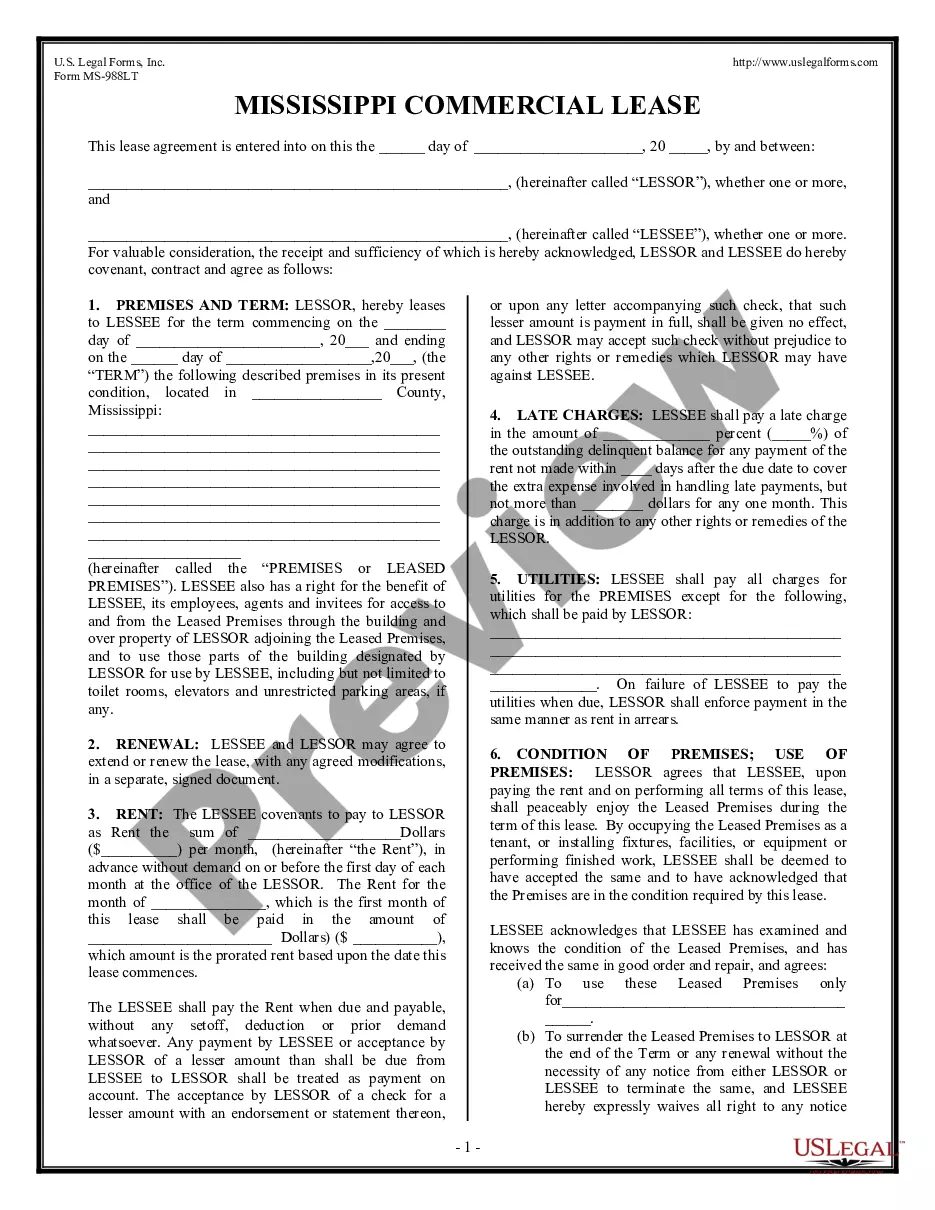
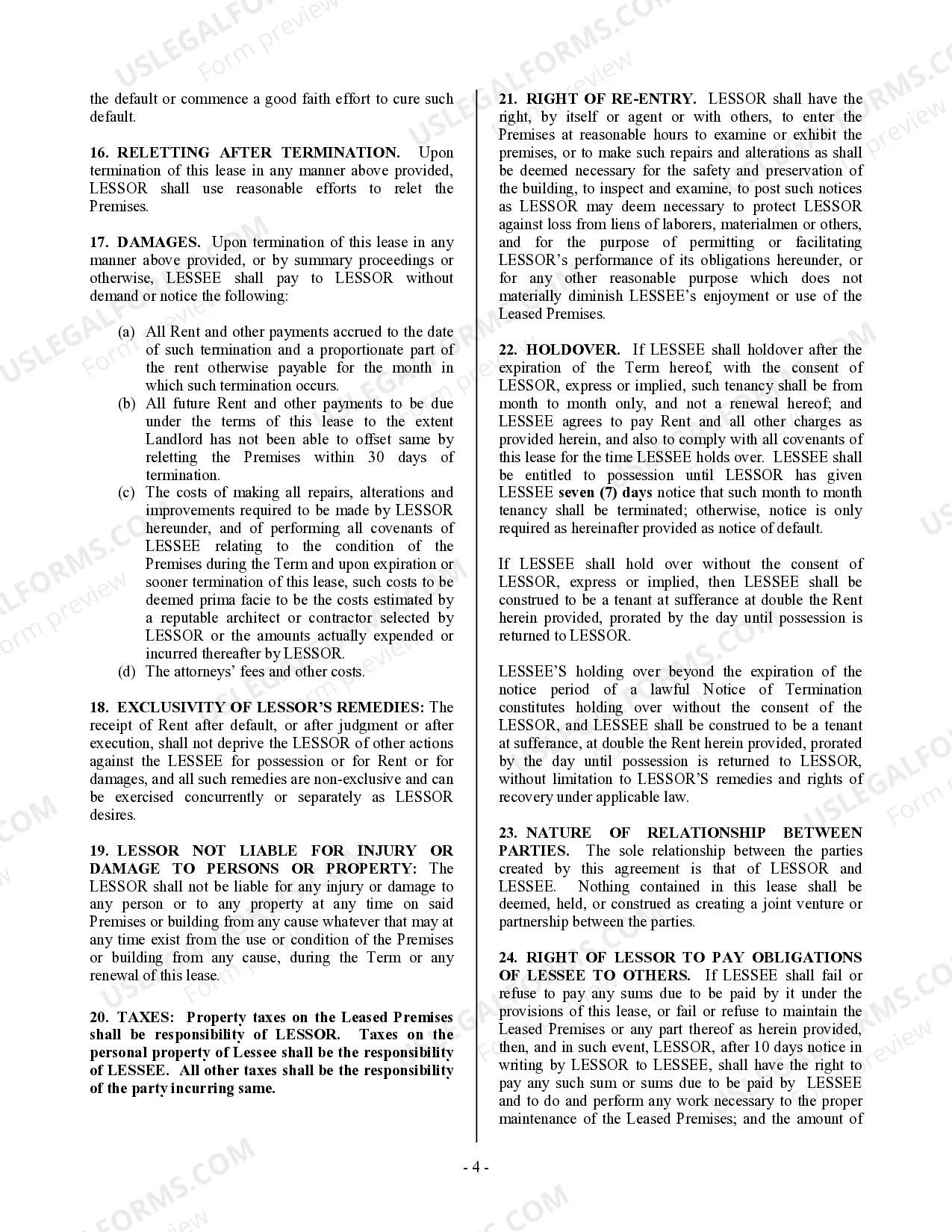
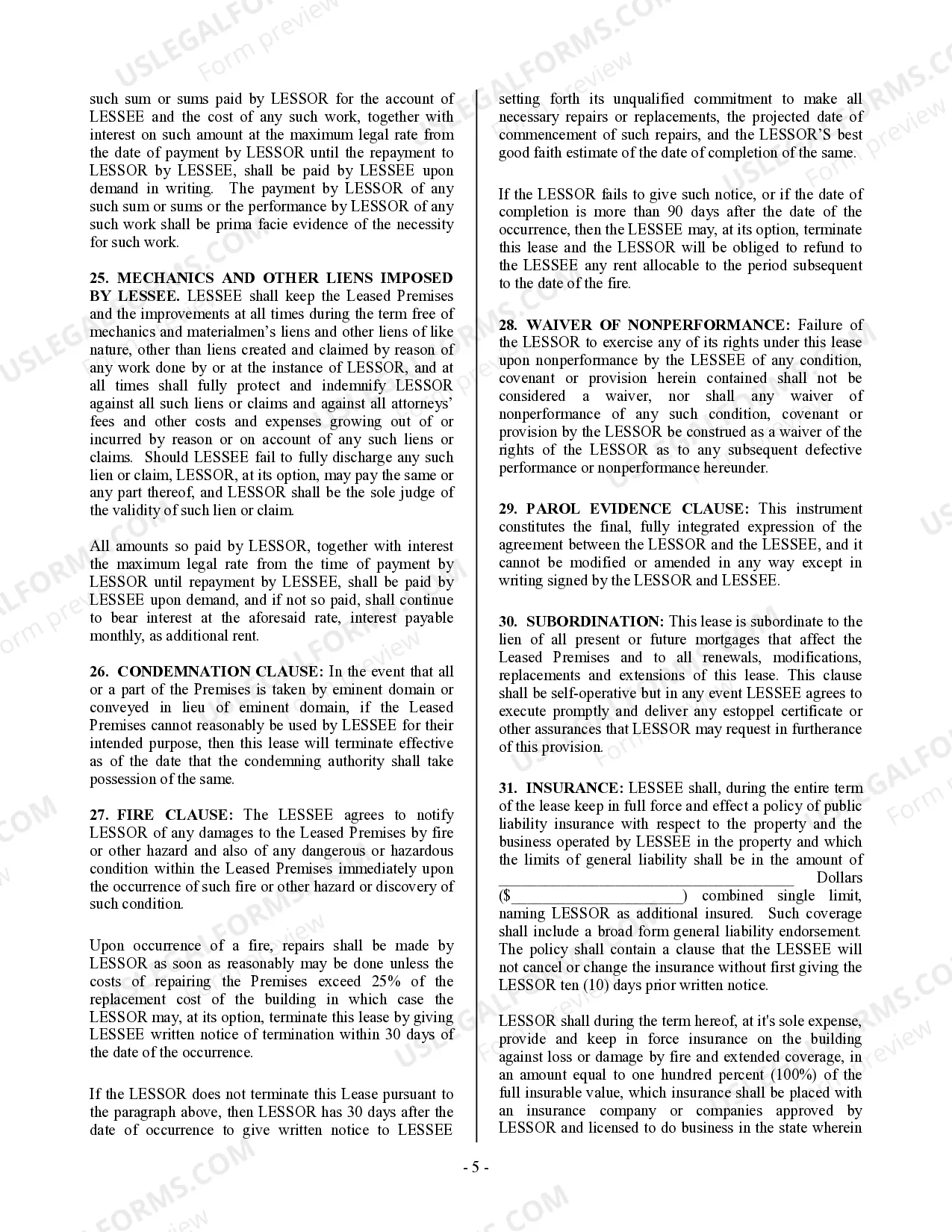
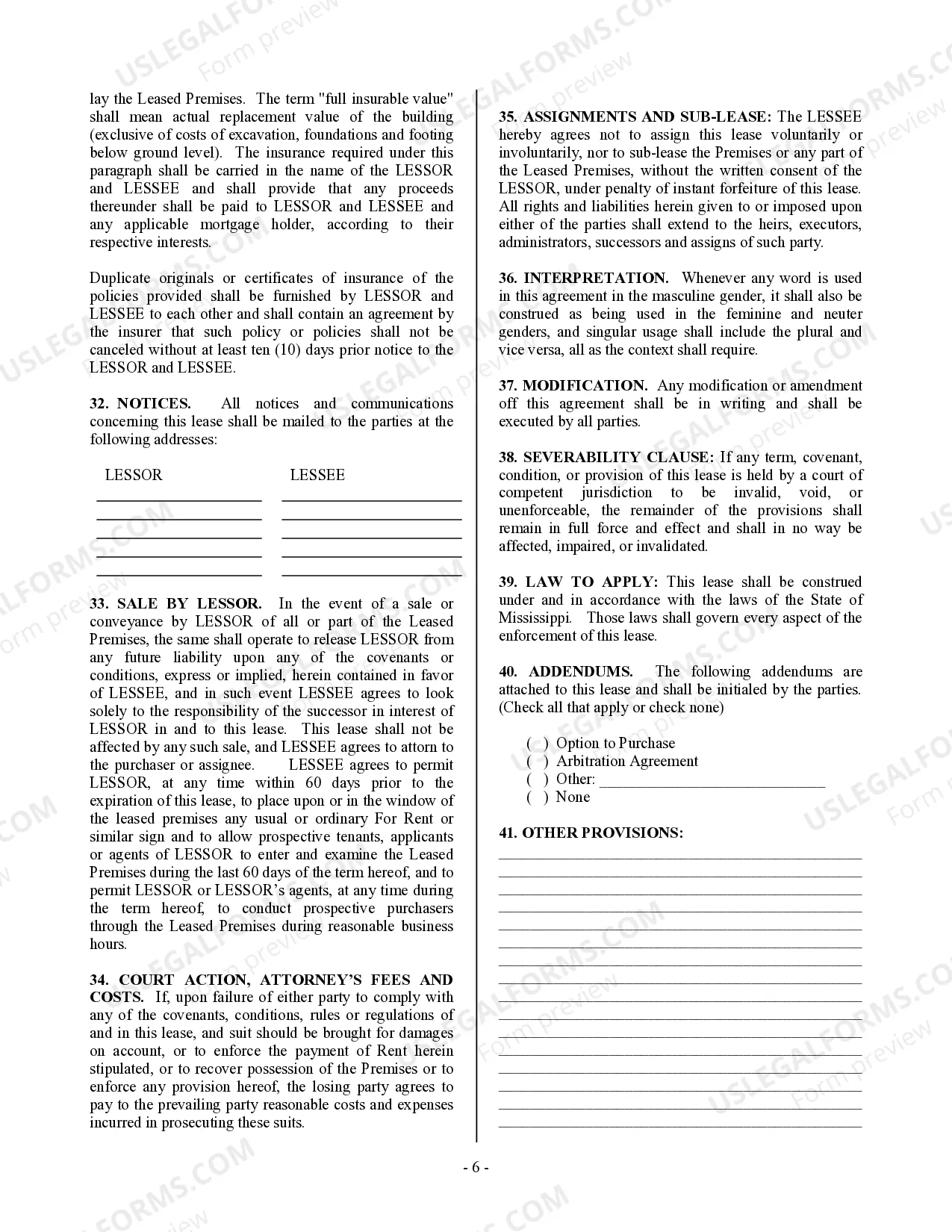
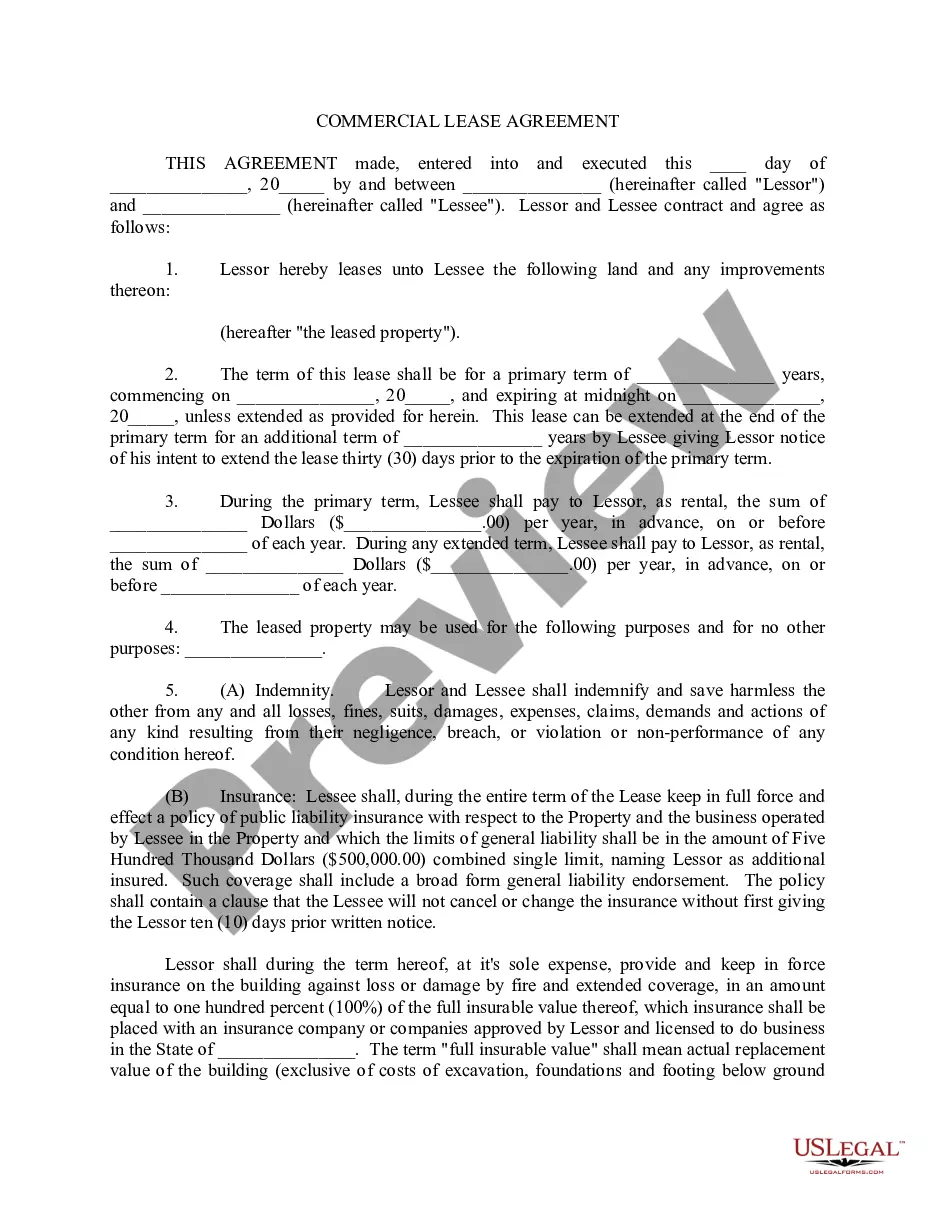
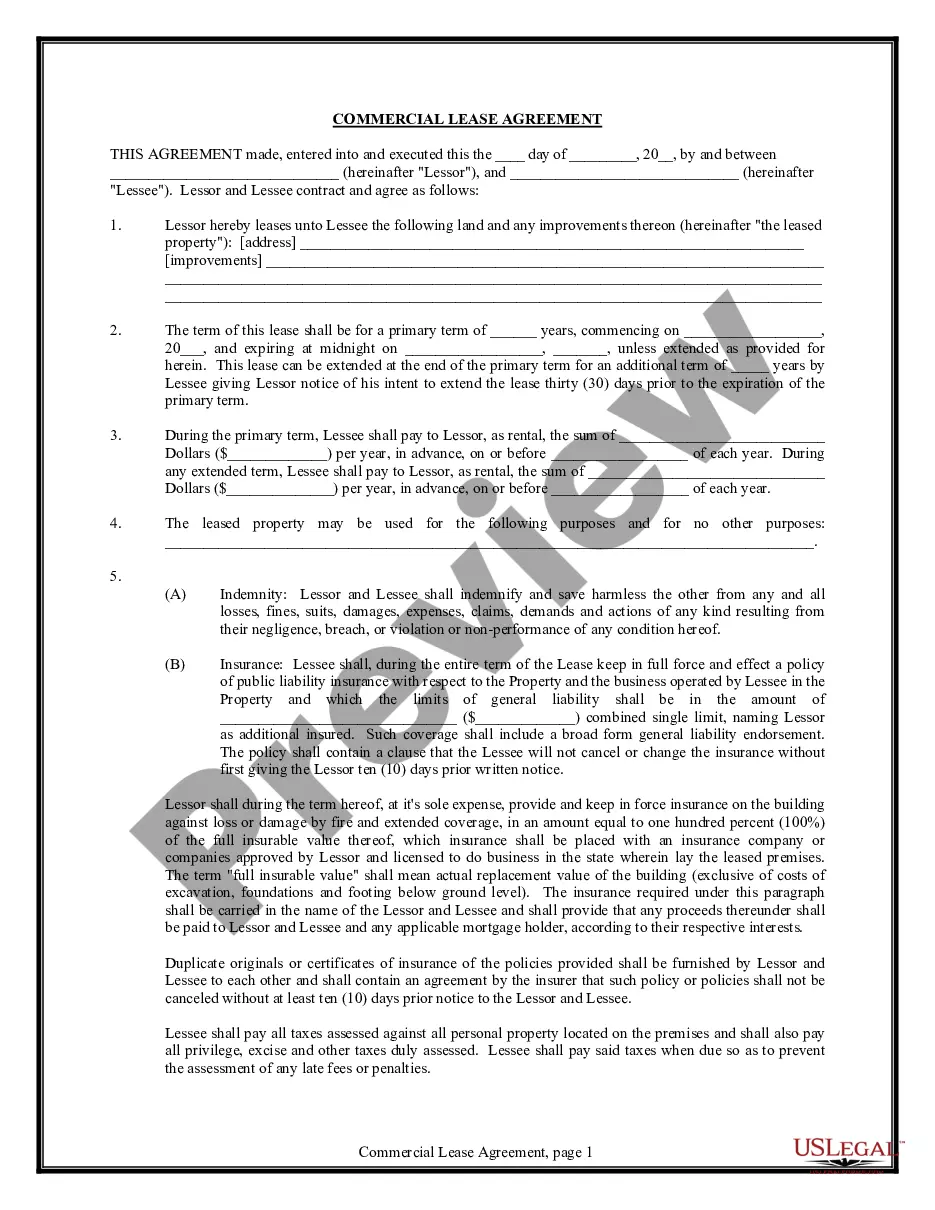
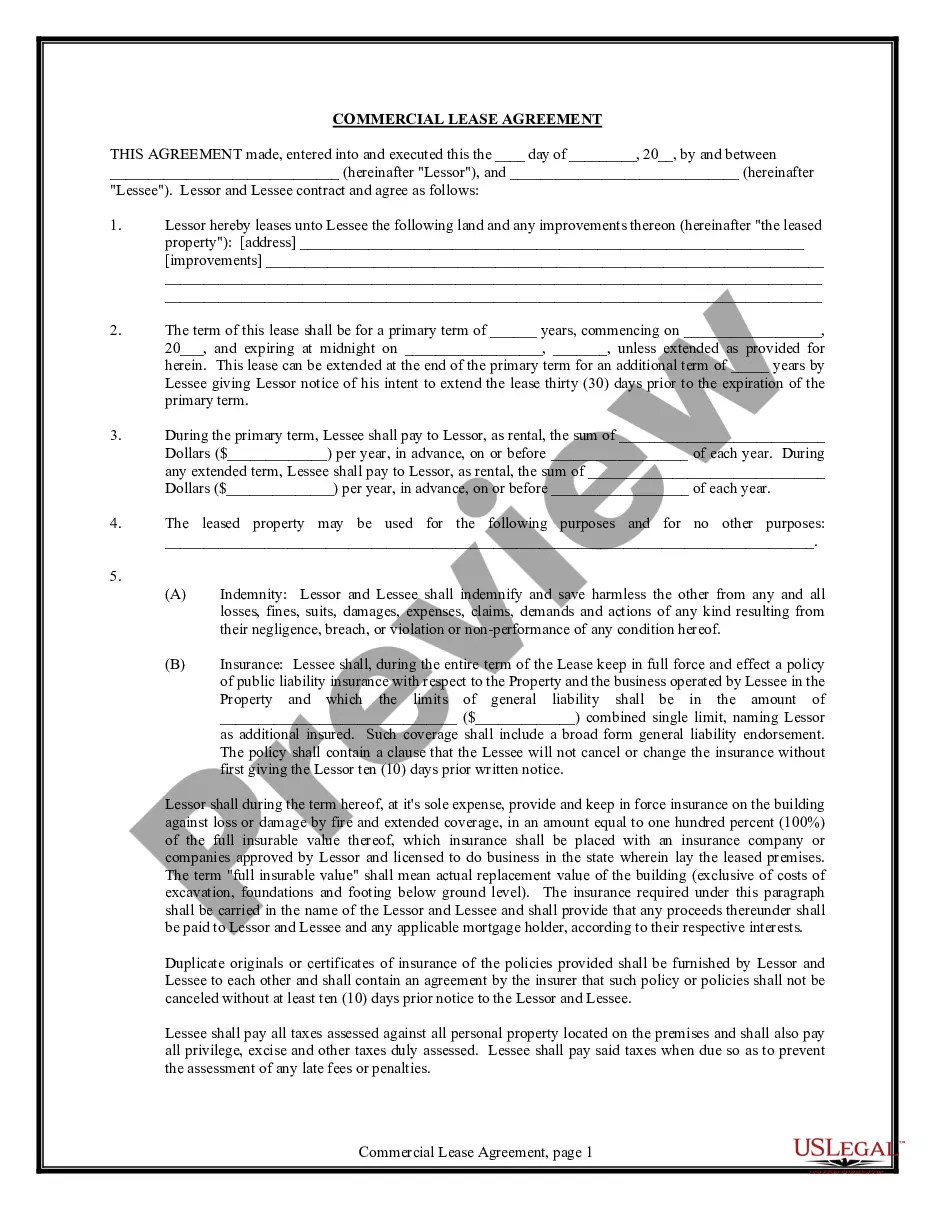
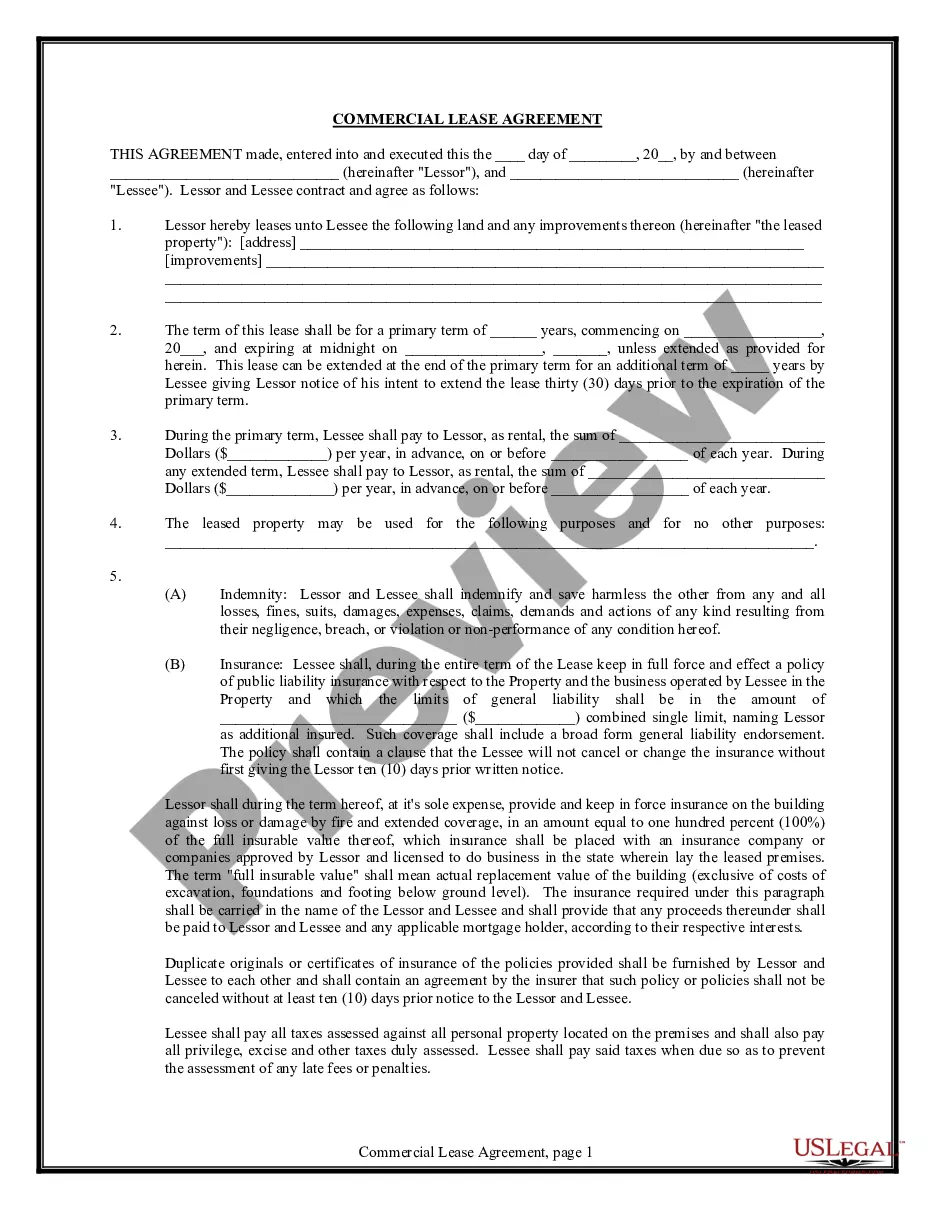
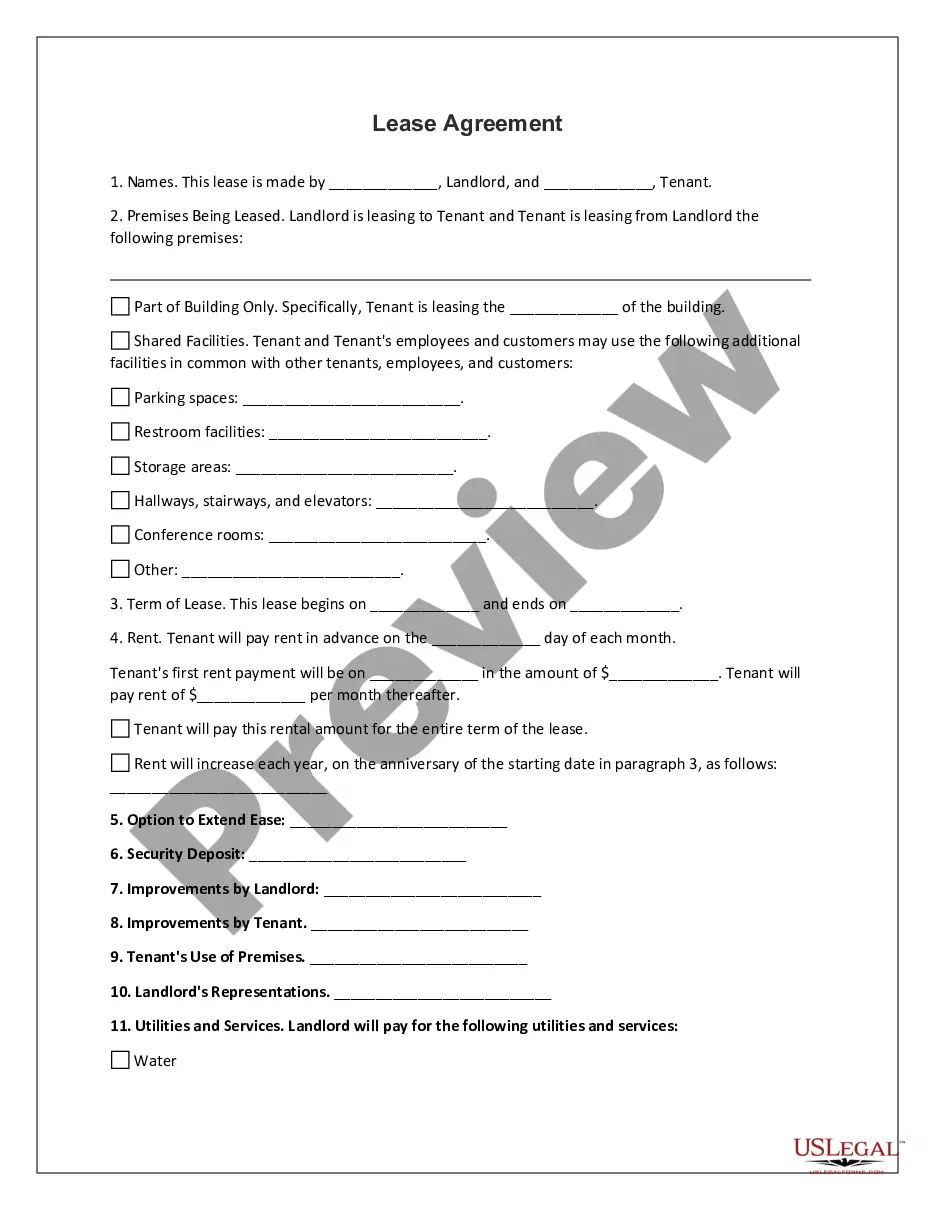
The Commercial Building or Space Lease is a legally binding document used for leasing commercial property in Mississippi. This lease outlines the responsibilities and rights of both the lessor (landlord) and lessee (tenant), making it a vital tool for clear communication and compliance throughout the lease term. Unlike residential leases, this form addresses more complex commercial agreements, including payment terms, maintenance responsibility, and conditions of the leased premises.
Main sections of this form
- Parties Involved: Identification of the lessor and lessee.
- Premises: Description of the leased property and its condition.
- Lease Term: Specifies the start and end dates of the lease.
- Rent Payment: Details the rent amount, payment schedule, and late charges.
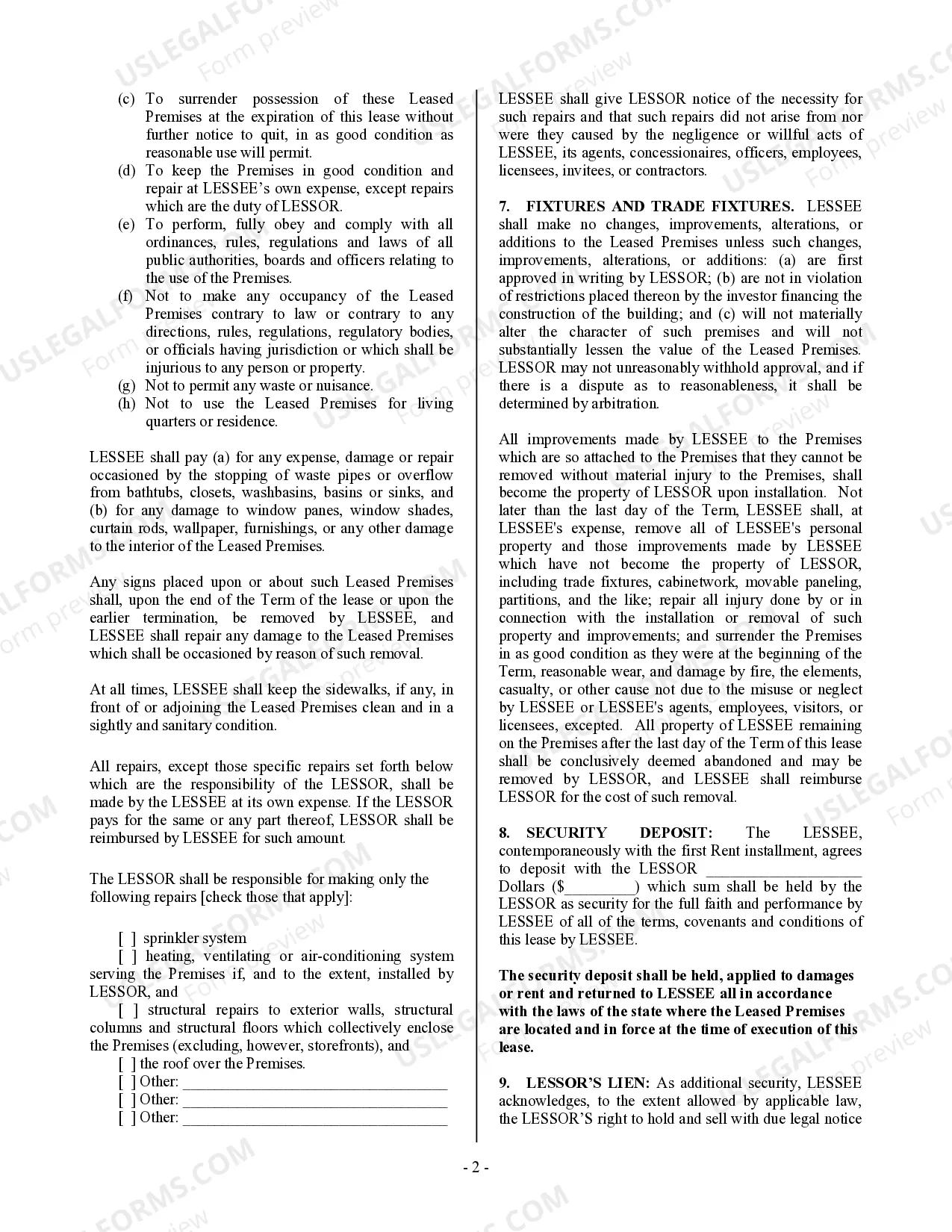
- Utilities and Maintenance: Outlines utility responsibilities and maintenance obligations.
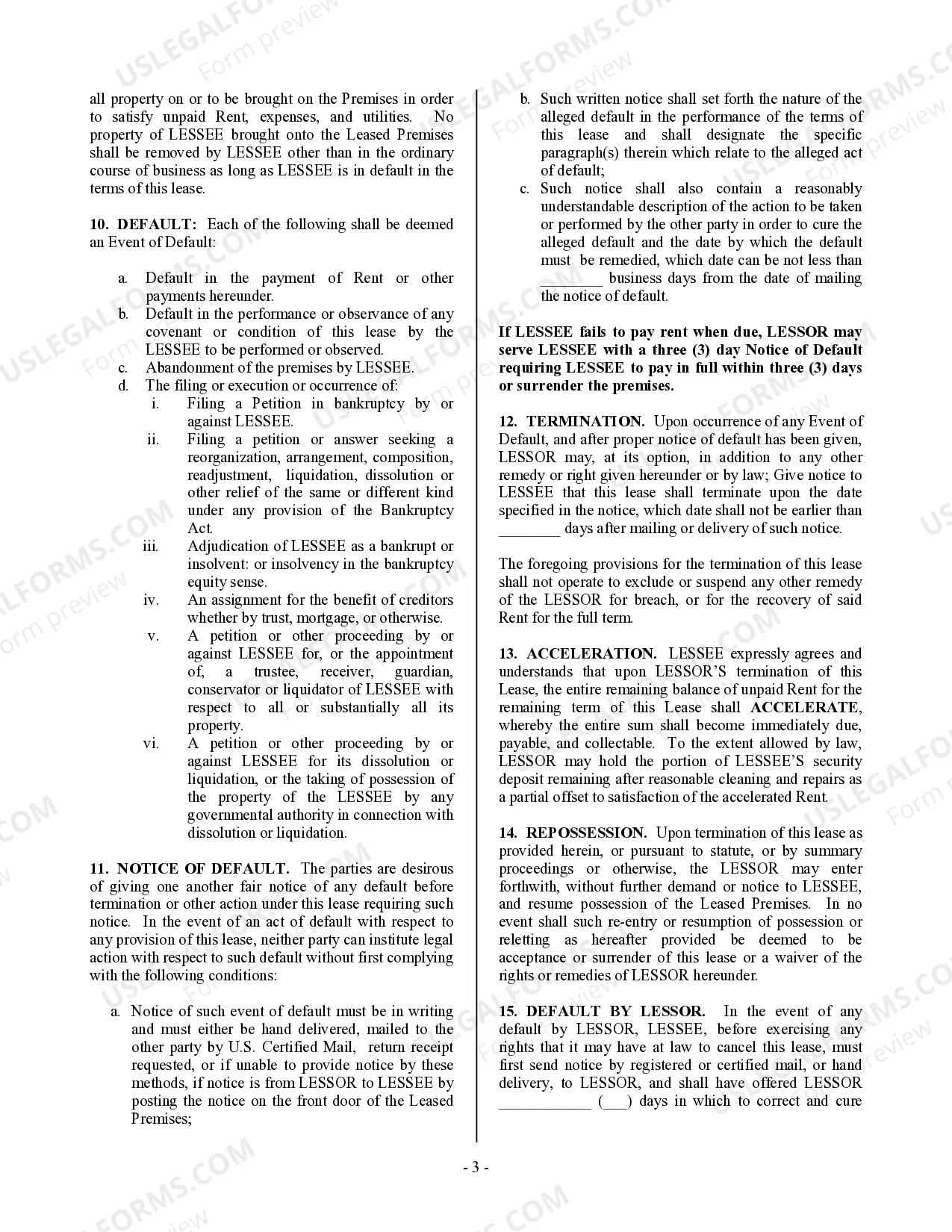
- Default and Termination: Conditions under which the lease may be terminated and the rights of both parties.
Common use cases
This Commercial Building or Space Lease should be used in situations where a business needs to lease a building or space for commercial purposes, such as an office or retail space. This form is ideal for business owners seeking to formalize their rental agreements and ensure all necessary terms are clearly documented to avoid future disputes.
Who needs this form
- Business owners looking to lease a commercial space.
- Landlords renting out commercial properties in Mississippi.
- Real estate agents facilitating lease agreements for commercial property.
Completing this form step by step
- Identify the parties by entering the names of the lessor and lessee.
- Specify the property by providing a detailed description of the leased premises.
- Enter the lease term by indicating the start and end dates of the lease agreement.
- Set the rent amount, noting when and how it should be paid, including any late fees.
- Review utility responsibilities and maintenance clauses, making adjustments as necessary.
- Sign and date the lease, ensuring all parties receive a copy for their records.
Notarization requirements for this form
Notarization is not commonly needed for this form. However, certain documents or local rules may make it necessary. Our notarization service, powered by Notarize, allows you to finalize it securely online anytime, day or night.
Get your form ready online
Our built-in tools help you complete, sign, share, and store your documents in one place.
Make edits, fill in missing information, and update formatting in US Legal Forms—just like you would in MS Word.
Download a copy, print it, send it by email, or mail it via USPS—whatever works best for your next step.
Sign and collect signatures with our SignNow integration. Send to multiple recipients, set reminders, and more. Go Premium to unlock E-Sign.
If this form requires notarization, complete it online through a secure video call—no need to meet a notary in person or wait for an appointment.
We protect your documents and personal data by following strict security and privacy standards.

Make edits, fill in missing information, and update formatting in US Legal Forms—just like you would in MS Word.

Download a copy, print it, send it by email, or mail it via USPS—whatever works best for your next step.

Sign and collect signatures with our SignNow integration. Send to multiple recipients, set reminders, and more. Go Premium to unlock E-Sign.

If this form requires notarization, complete it online through a secure video call—no need to meet a notary in person or wait for an appointment.

We protect your documents and personal data by following strict security and privacy standards.
Typical mistakes to avoid
- Failing to provide a complete description of the premises.
- Neglecting to clarify payment terms, including due dates and late fees.
- Not reviewing state-specific laws that may affect the lease.
- Omitting signatures from all parties involved in the agreement.
Advantages of online completion
- Convenient access to a legally vetted template whenever needed.
- Easy customization to fit specific leasing circumstances.
- Availability of integrated online notarization to enhance validation if required.
- Time-saving process that allows businesses to focus on their operations rather than legal paperwork.
Legal use & context
- This lease is enforceable under Mississippi law, provided both parties comply with its terms.
- The lease should be stored securely, as it serves as a crucial legal record of the rental agreement.
- Failure to adhere to the lease terms can result in legal disputes and potential financial penalties.
Summary of main points
- The Commercial Building or Space Lease is crucial for formalizing a rental agreement for businesses.
- Both lessor and lessee must understand and agree to all terms outlined in the lease.
- Accurate completion of the form can prevent potential disputes and legal issues.
Looking for another form?

Form popularity
FAQ
A lease is automatically void when it is against the law, such as a lease for an illegal purpose. In other circumstances, like fraud or duress, a lease can be declared void at the request of one party but not the other.
The lease becomes legally binding when all parties have signed: the landlord and all tenants living in the unit who are 18 and older. If you're worried about situations where a lease needs to end early, learn about breaking a lease and grounds for eviction.
The Lease Must be in Writing It does not matter if the lease is handwritten or typed. If the lease is for more than one year, it must be in written form and contain the following terms.
Names of all tenants. Limits on occupancy. Term of the tenancy. Rent. Deposits and fees. Repairs and maintenance. Entry to rental property. Restrictions on tenant illegal activity.
Typically, commercial space is evaluated at $X per square foot, and that rate times the rentable square feet for your space determines your monthly rent.You may have exactly what lease promised in rentable square feet.
Name the parties. A simple rental agreement form needs to name the parties signing the lease and where they live. Describe the premises. Define the term of the lease. Set how much rent is owed. Assign a security deposit amount. Finalize the lease.
The Lease Must be in Writing It does not matter if the lease is handwritten or typed.
As long as the contract spells out specific details and both parties have signed that they agree to the contract's terms, a handwritten contract is legally binding and enforceable in court.
The Introduction. The beginning of the lease agreement should contain the name of the landlord and tenant, as well as a statement of the agreement into which they are entering. Rent. Deposit. Taxes. Property Insurance. Utilities and Amenities. Remodeling and Improvements. Repairs and Maintenance.