Mississippi Bad Faith Complaint
Understanding this form
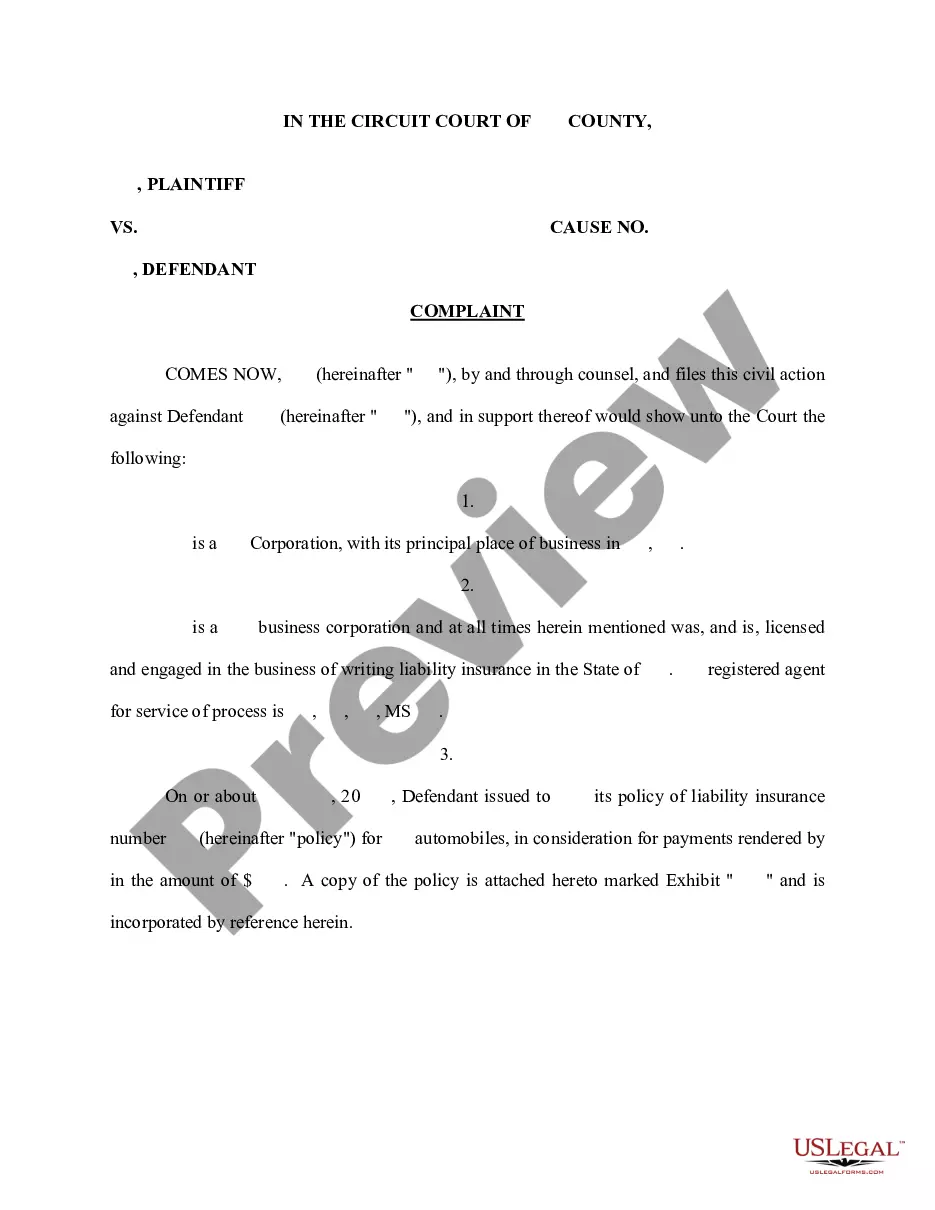
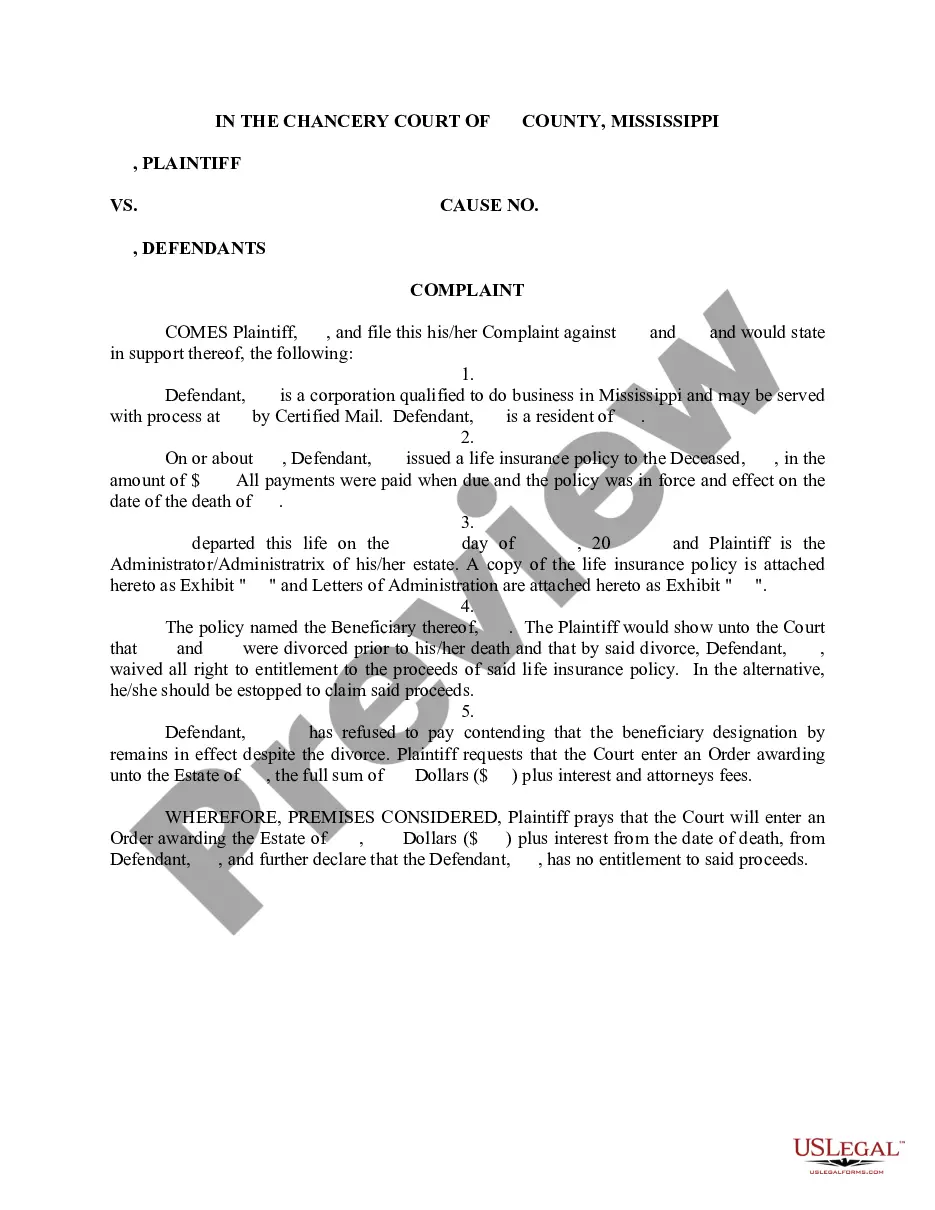
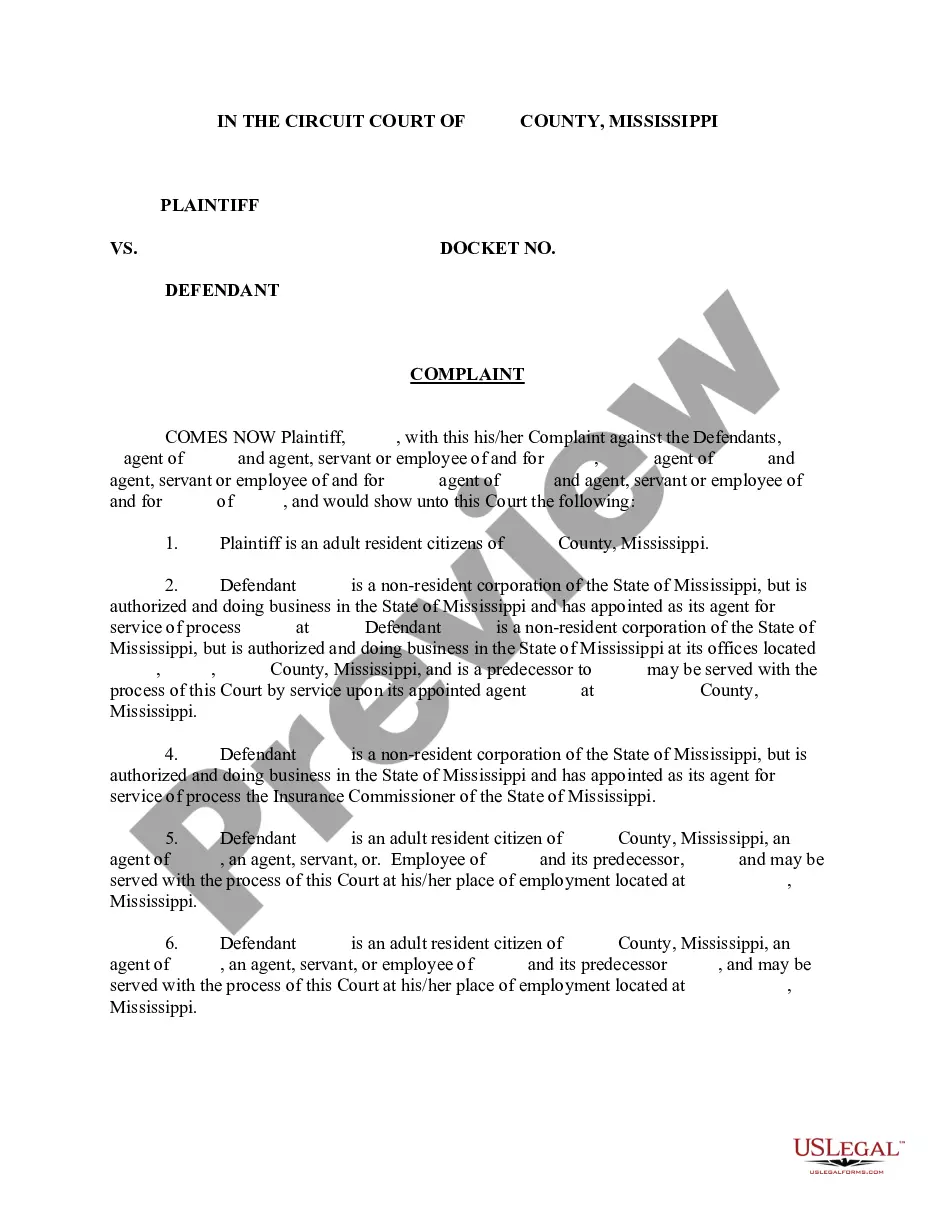
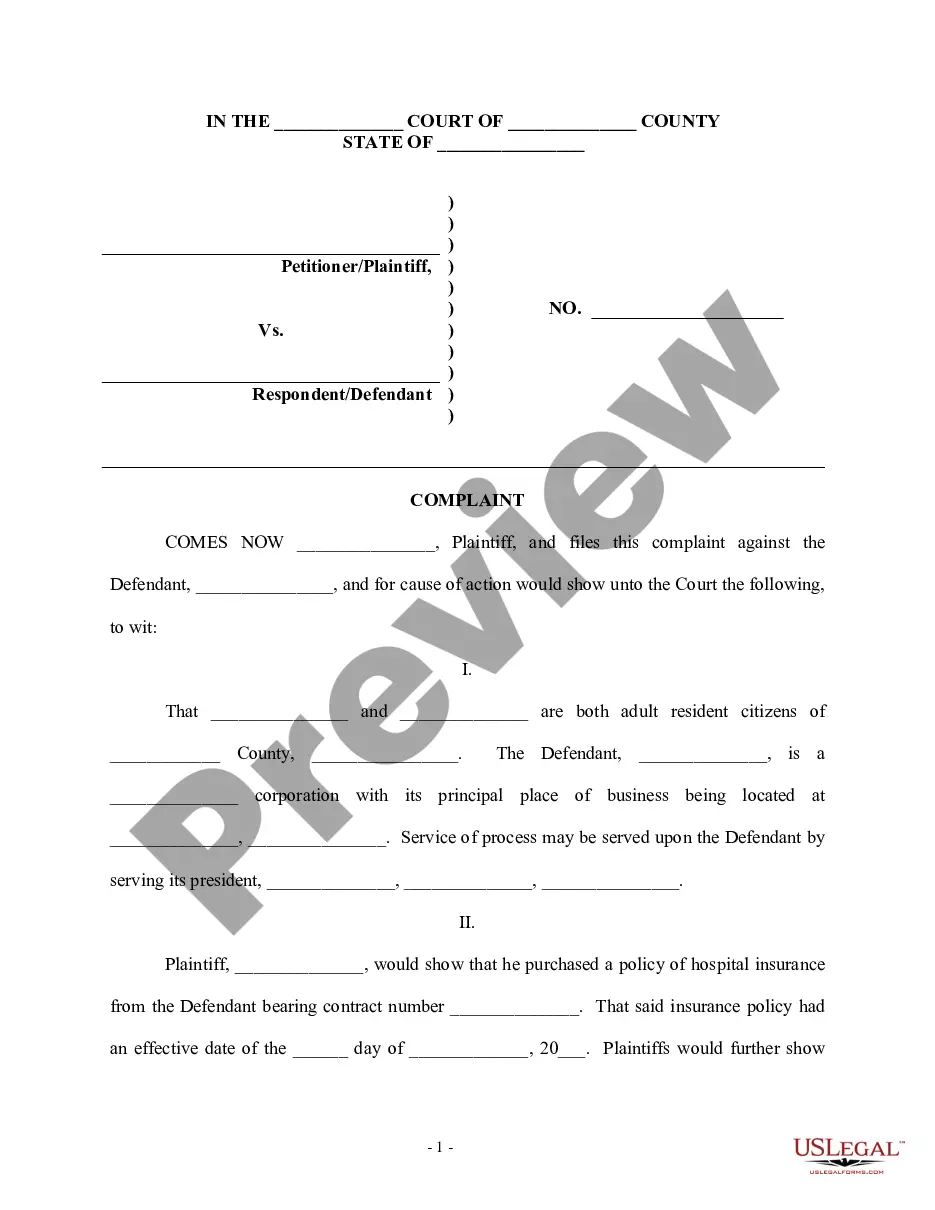
A Bad Faith Complaint is a legal document that initiates a lawsuit against an insurance company for failing to uphold the terms of an insurance policy. This form is specifically designed for disputes involving alleged bad faith practices by the insurer, such as denying coverage or failing to provide necessary notice about policy cancellations. By using this Bad Faith Complaint, you can assert your legal rights and seek compensation for damages incurred due to the insurer's actions.
Main sections of this form
- Introduction of the plaintiff and defendant and the relevant details for the legal action.
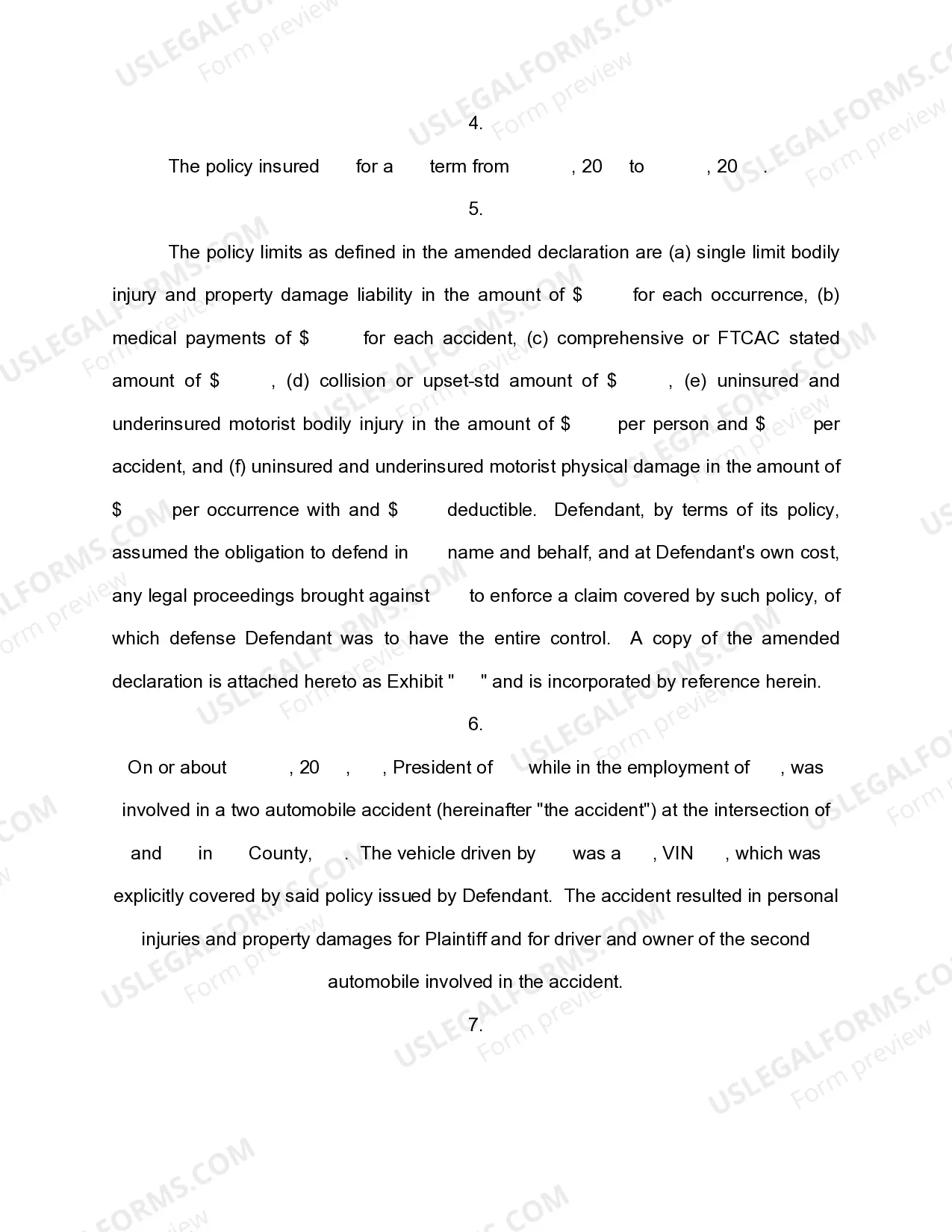
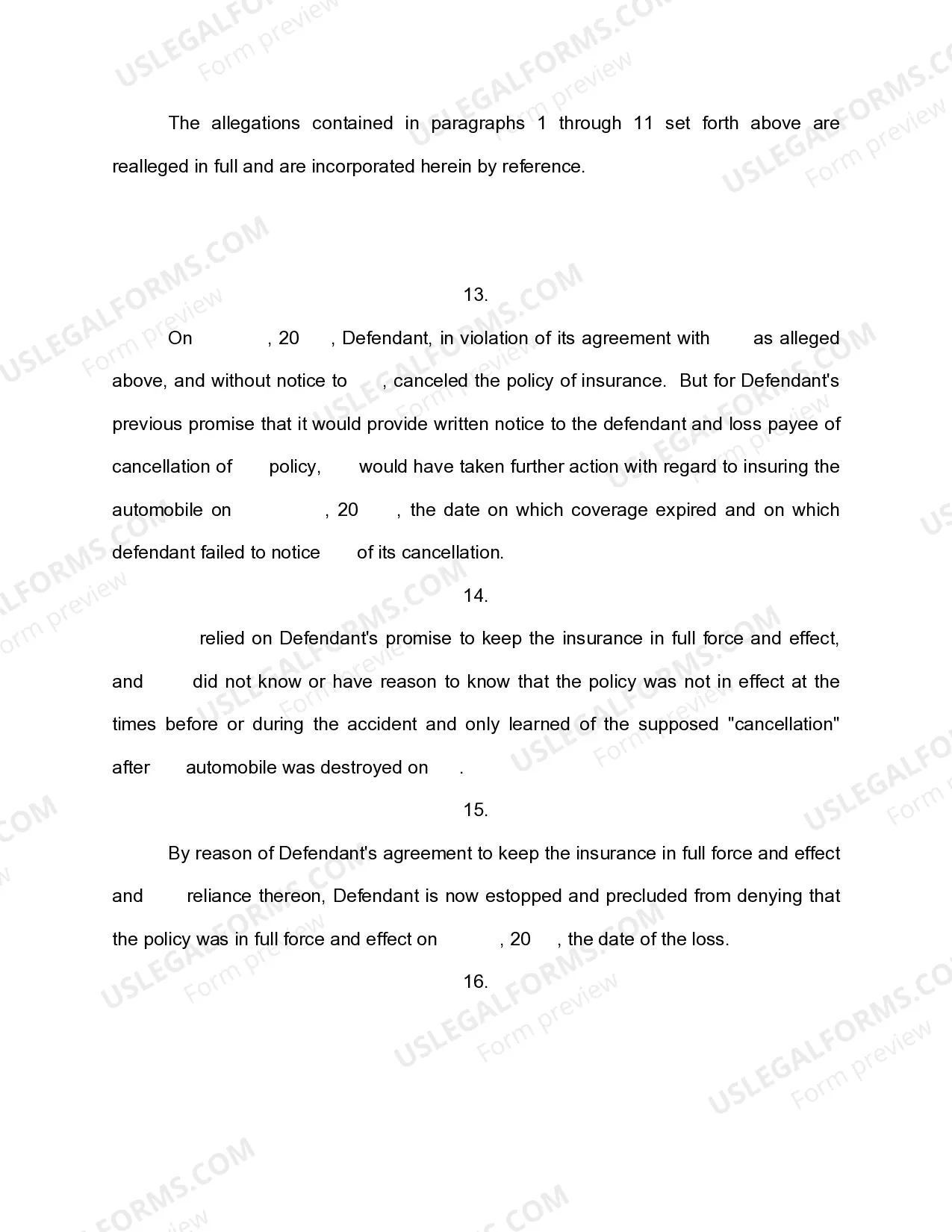
- Allegations outlining the relationship between the parties and the insurance policy terms.
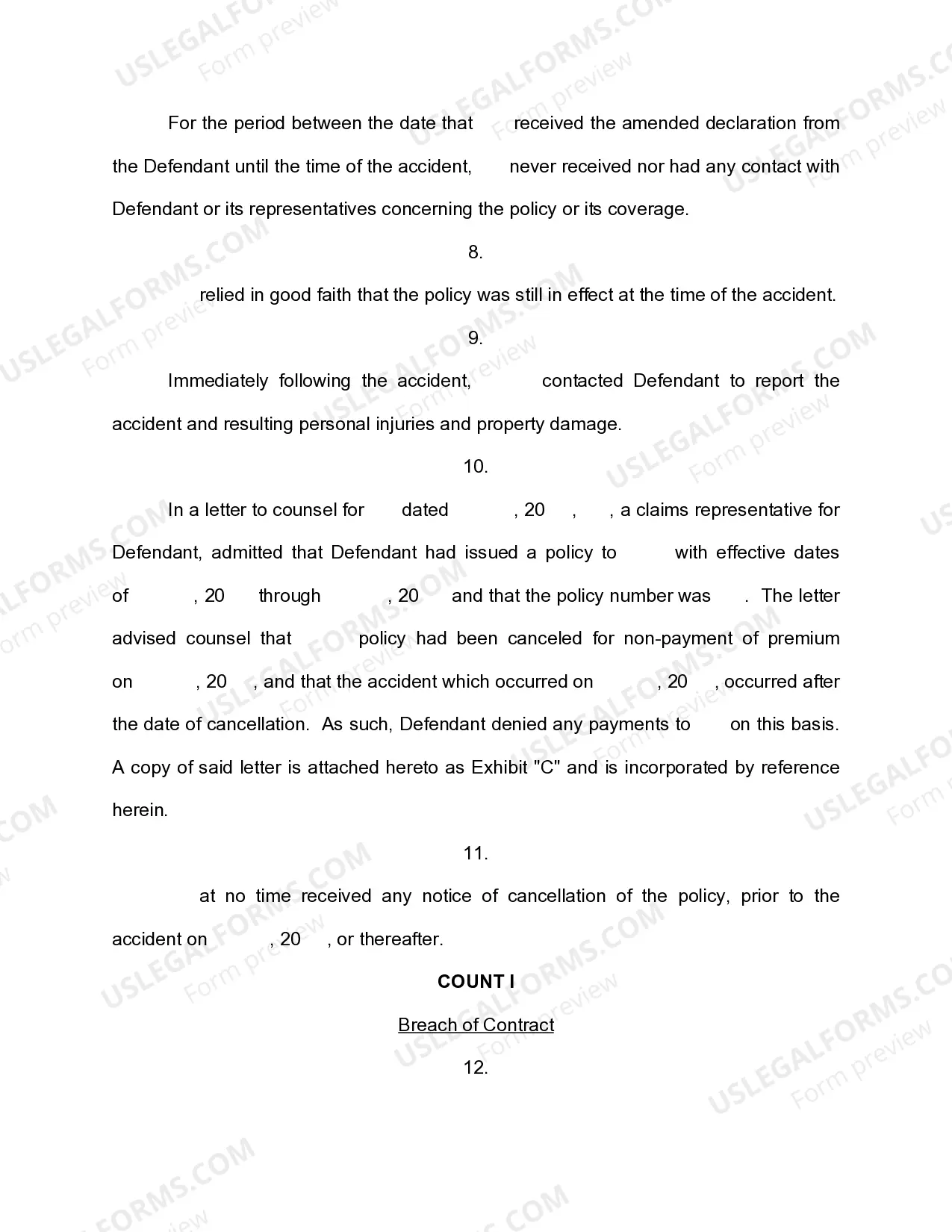
- Specific incidents leading to the complaint, including dates and relevant correspondence.
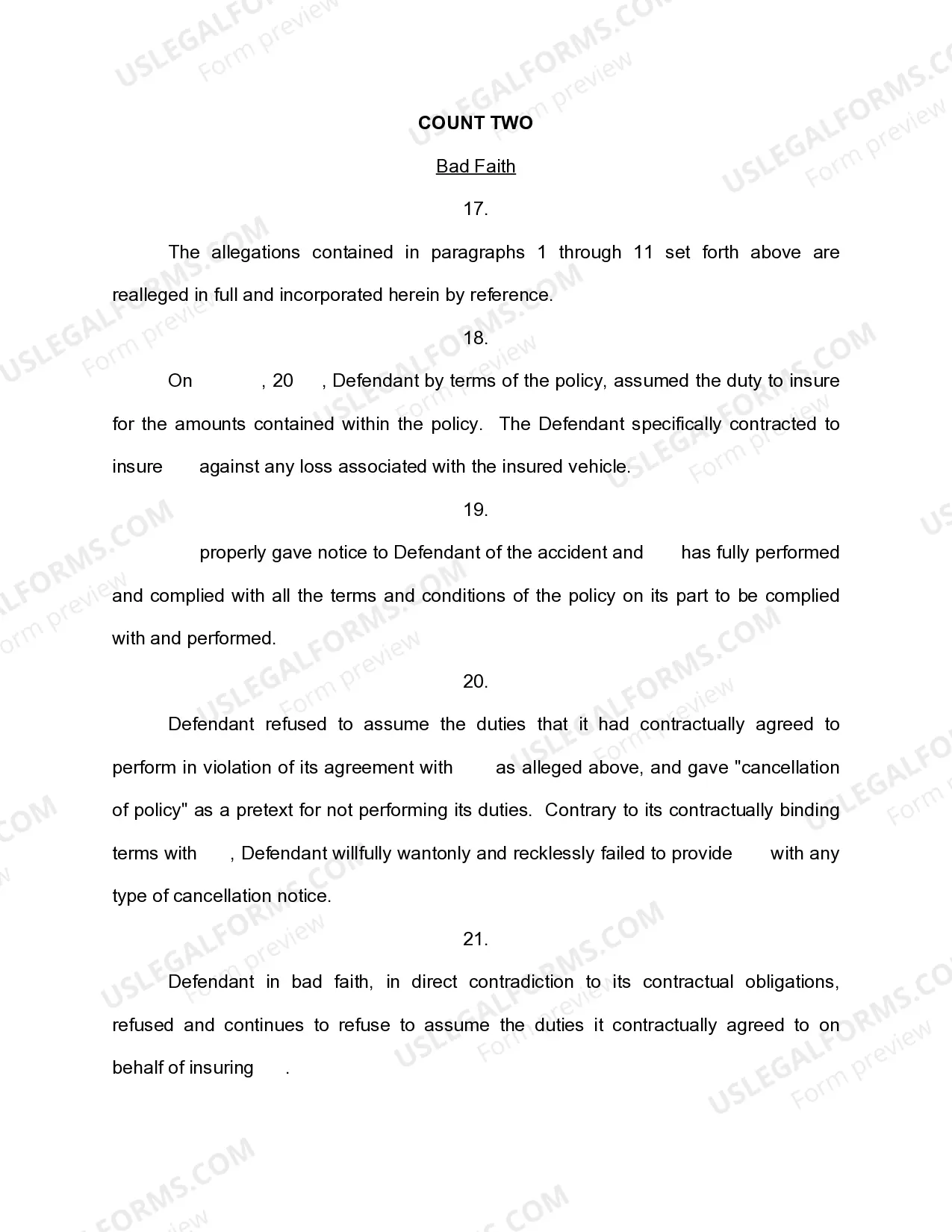
- Counts detailing breach of contract and bad faith claims against the defendant.
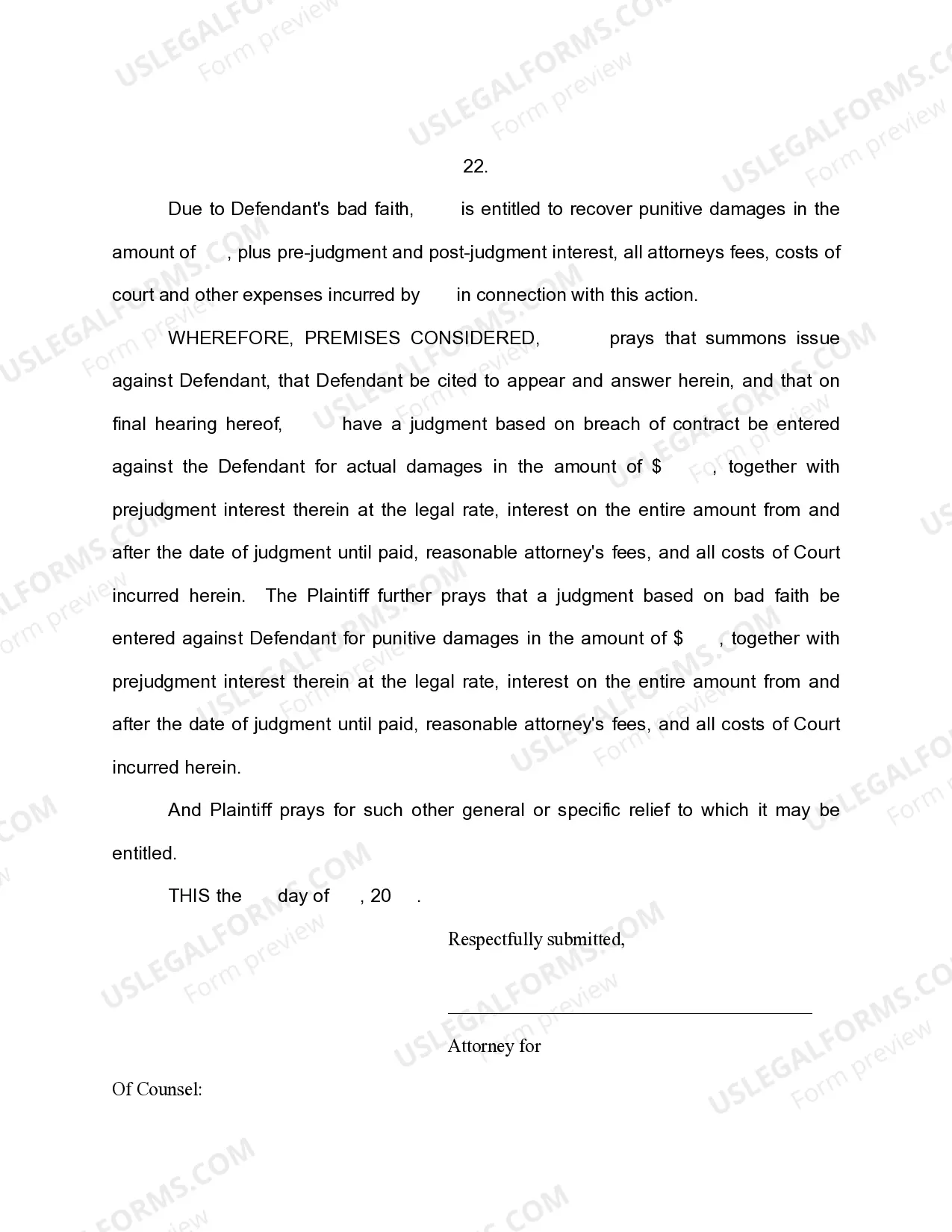
- Requests for relief, including actual damages, punitive damages, and attorney fees.



When to use this document
This form is appropriate in situations where a policyholder believes their insurance company has acted in bad faith. Situations may include when the insurer denies a claim without justification, fails to provide necessary cancellation notices, or otherwise violates the terms of the policy agreement. If you find yourself facing such issues with your insurance provider, this complaint serves as a formal starting point for seeking resolution through the legal system.
Intended users of this form
- Individuals who have purchased an insurance policy and believe the insurer acted in bad faith.
- Policyholders who have had claims denied or delayed without adequate explanation.
- Anyone needing to initiate legal proceedings against an insurance company for breach of contract or bad faith.
Completing this form step by step
- Identify the parties involved, including the plaintiff and defendant, and their roles.
- Provide details about the insurance policy, including policy numbers, effective dates, and coverage limits.
- Outline the pertinent events leading to the dispute, including dates of accidents and correspondence with the insurer.
- Specify the counts related to breach of contract and bad faith, clearly stating the claims against the insurer.
- Detail the relief sought, including actual damages and punitive damages, along with legal fees.
Is notarization required?
This form usually doesn’t need to be notarized. However, local laws or specific transactions may require it. Our online notarization service, powered by Notarize, lets you complete it remotely through a secure video session, available 24/7.
Get your form ready online
Our built-in tools help you complete, sign, share, and store your documents in one place.
Make edits, fill in missing information, and update formatting in US Legal Forms—just like you would in MS Word.
Download a copy, print it, send it by email, or mail it via USPS—whatever works best for your next step.
Sign and collect signatures with our SignNow integration. Send to multiple recipients, set reminders, and more. Go Premium to unlock E-Sign.
If this form requires notarization, complete it online through a secure video call—no need to meet a notary in person or wait for an appointment.
We protect your documents and personal data by following strict security and privacy standards.
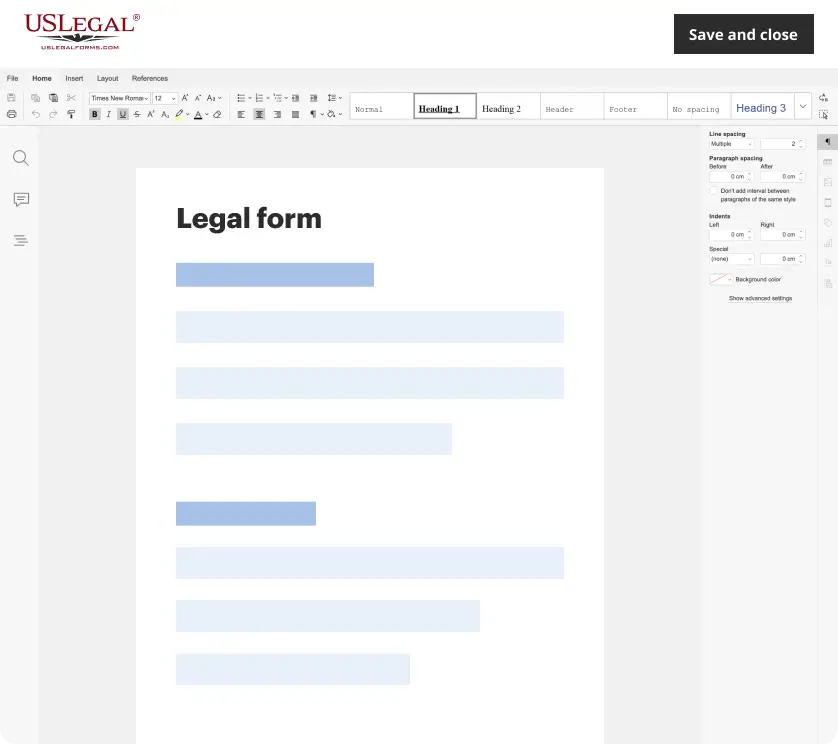
Make edits, fill in missing information, and update formatting in US Legal Forms—just like you would in MS Word.
Download a copy, print it, send it by email, or mail it via USPS—whatever works best for your next step.
Sign and collect signatures with our SignNow integration. Send to multiple recipients, set reminders, and more. Go Premium to unlock E-Sign.

If this form requires notarization, complete it online through a secure video call—no need to meet a notary in person or wait for an appointment.
We protect your documents and personal data by following strict security and privacy standards.
Typical mistakes to avoid
- Failing to include all relevant facts and details about the insurance policy and the claims process.
- Not properly identifying parties involved in the complaint.
- Omitting critical dates or correspondence related to the claim and insurance policy.
Advantages of online completion
- Convenience of drafting and downloading the form from anywhere, at any time.
- Editable format allows you to customize the document to fit your specific situation.
- Access to professionally drafted forms that comply with legal standards.
Legal use & context
- This complaint serves as the primary document to initiate legal action against an insurance company.
- Properly filling out this form can help ensure your rights are protected and assist in the recovery of damages.
- Understanding the legal context of bad faith claims can enhance your approach to completing and filing this form.
Main things to remember
- A Bad Faith Complaint is essential for asserting your rights against insurers who fail to act in good faith.
- Be thorough and accurate when completing the form to avoid common errors.
- Online access to this form streamlines the process and provides higher reliability.
Looking for another form?
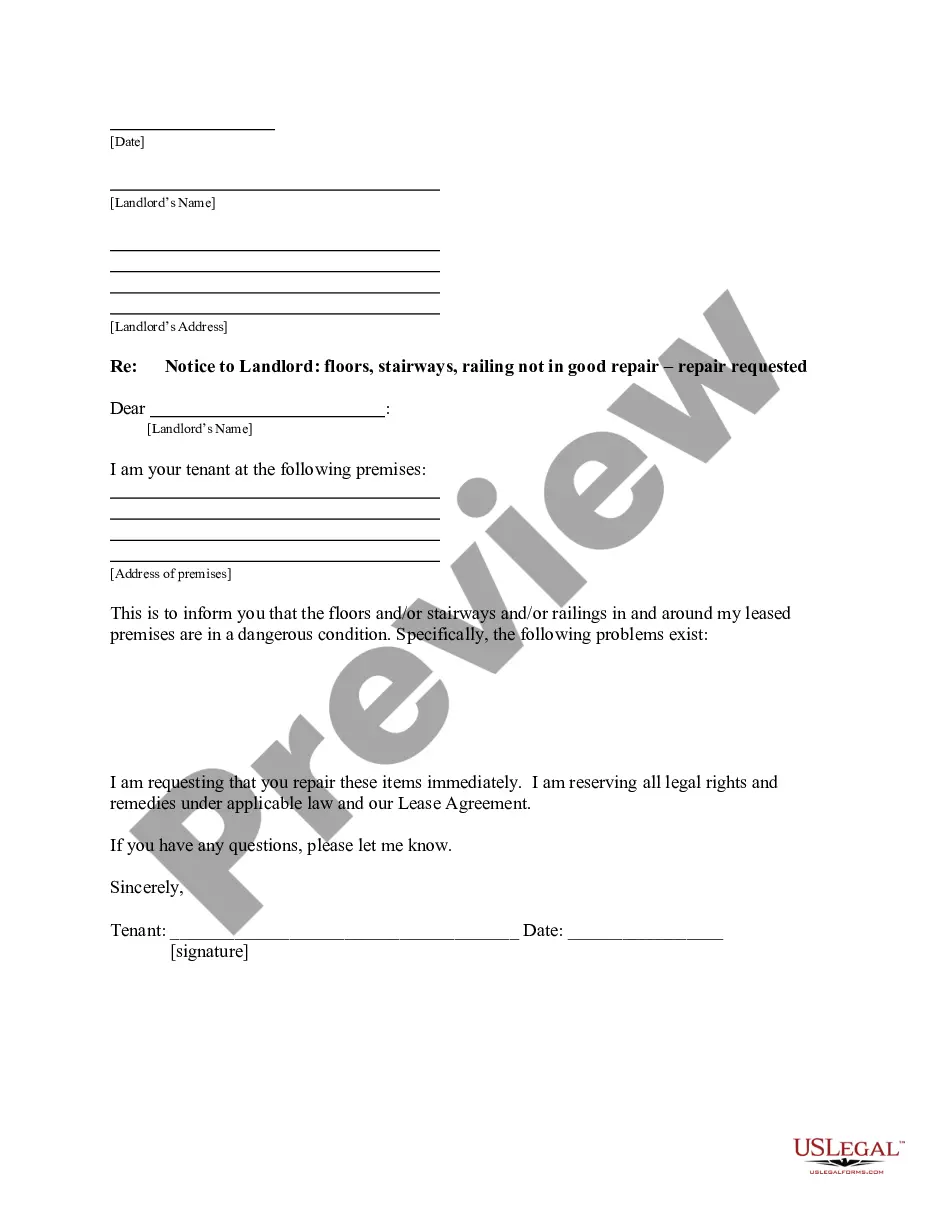
Form popularity
FAQ
When someone acts in bad faith, he is acting with the intent to defraud or deceive another person. An example of bad faith might occur if a boss makes a promise to an employee, with no intention of ever keeping that promise.Someone can also practice bad faith against himself.
It means that you're not arguing to come to a mutual understanding.A bad faith argument is an attempt to antagonize them, usually by ignoring what they say, engaging in personal insults, or otherwise wasting their time and energy on someone who doesn't care.
In the philosophy of existentialism, bad faith (mauvaise foi) is the psychological phenomenon whereby individuals act inauthentically, by yielding to the external pressures of society to adopt false values and disown their innate freedom as sentient human beings.
To prove bad faith, one must generally prove that the insurer acted unreasonably and without proper cause. Proving bad faith usually requires evidence that the insurer did not make a prompt, full and fair claim investigation and that there was no genuine dispute over coverage.