Arizona Application for Entry of Default (Small Claims)
About this form
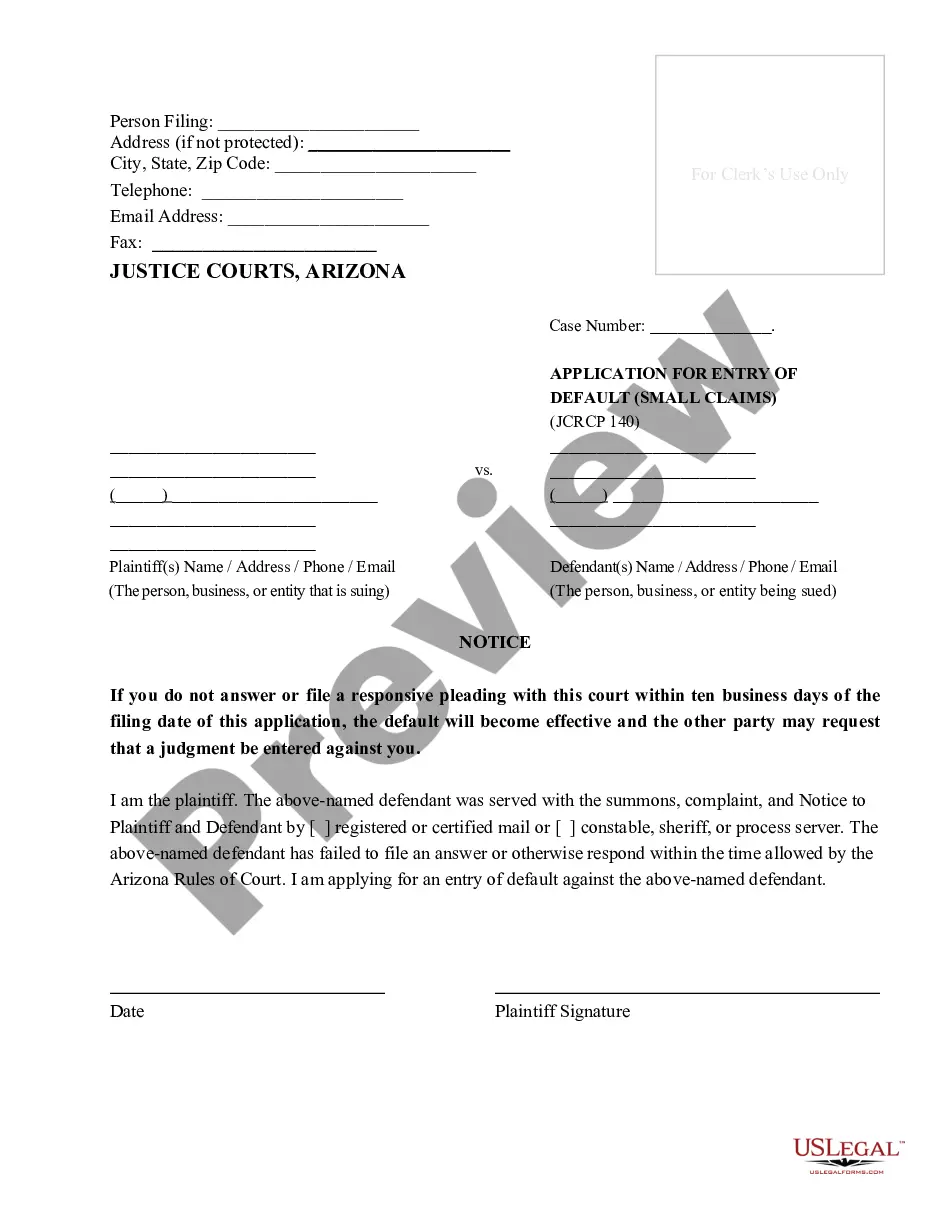
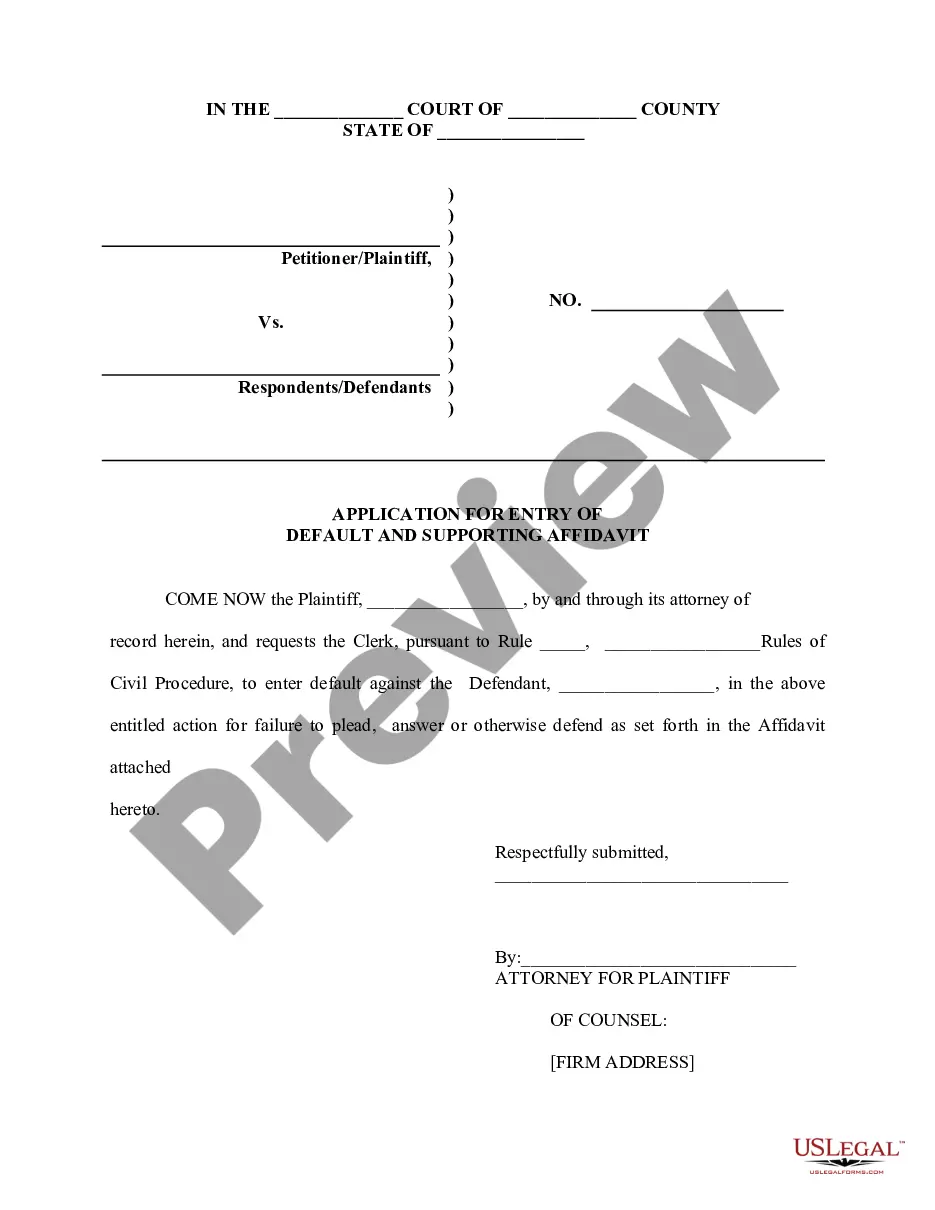
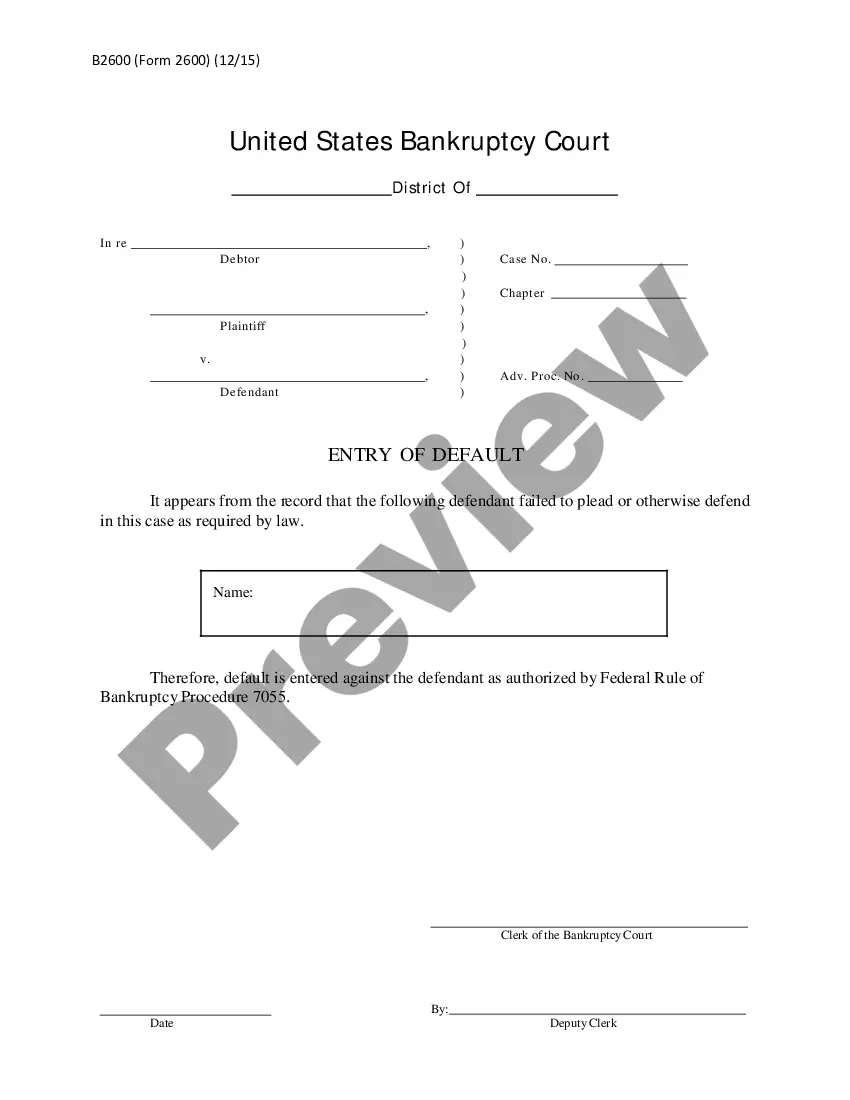
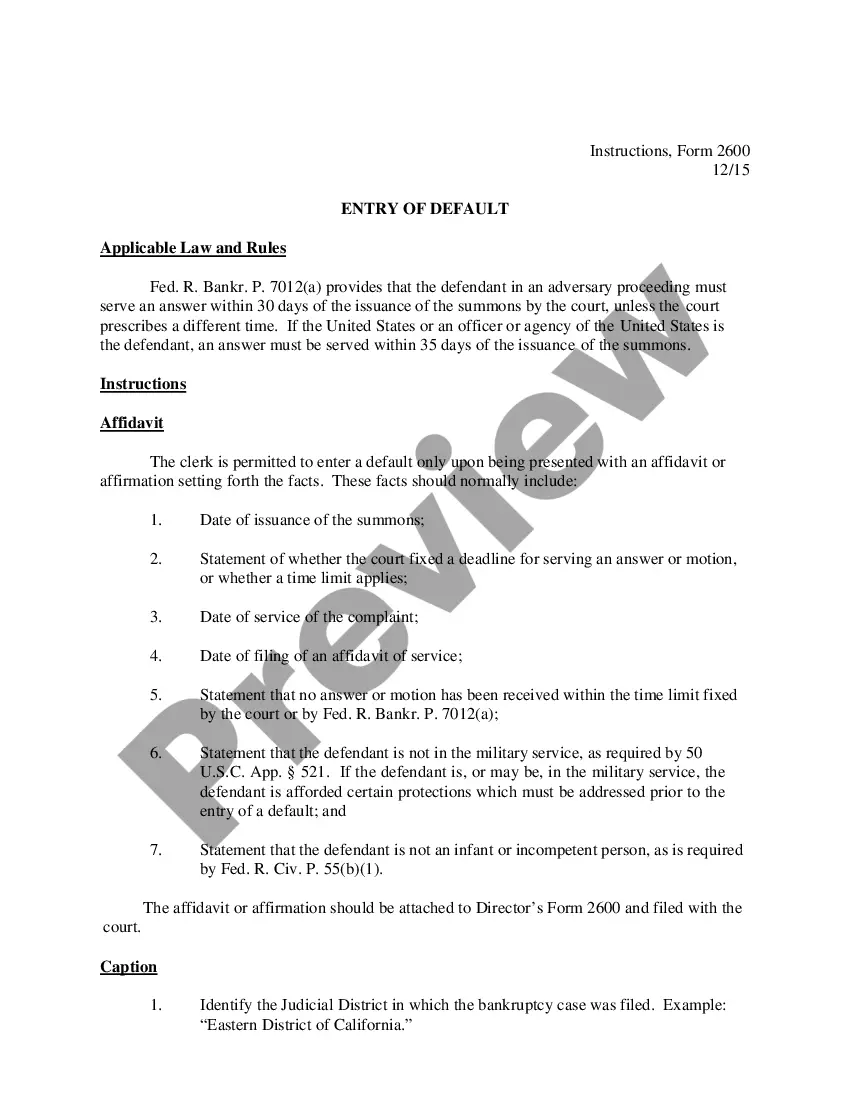
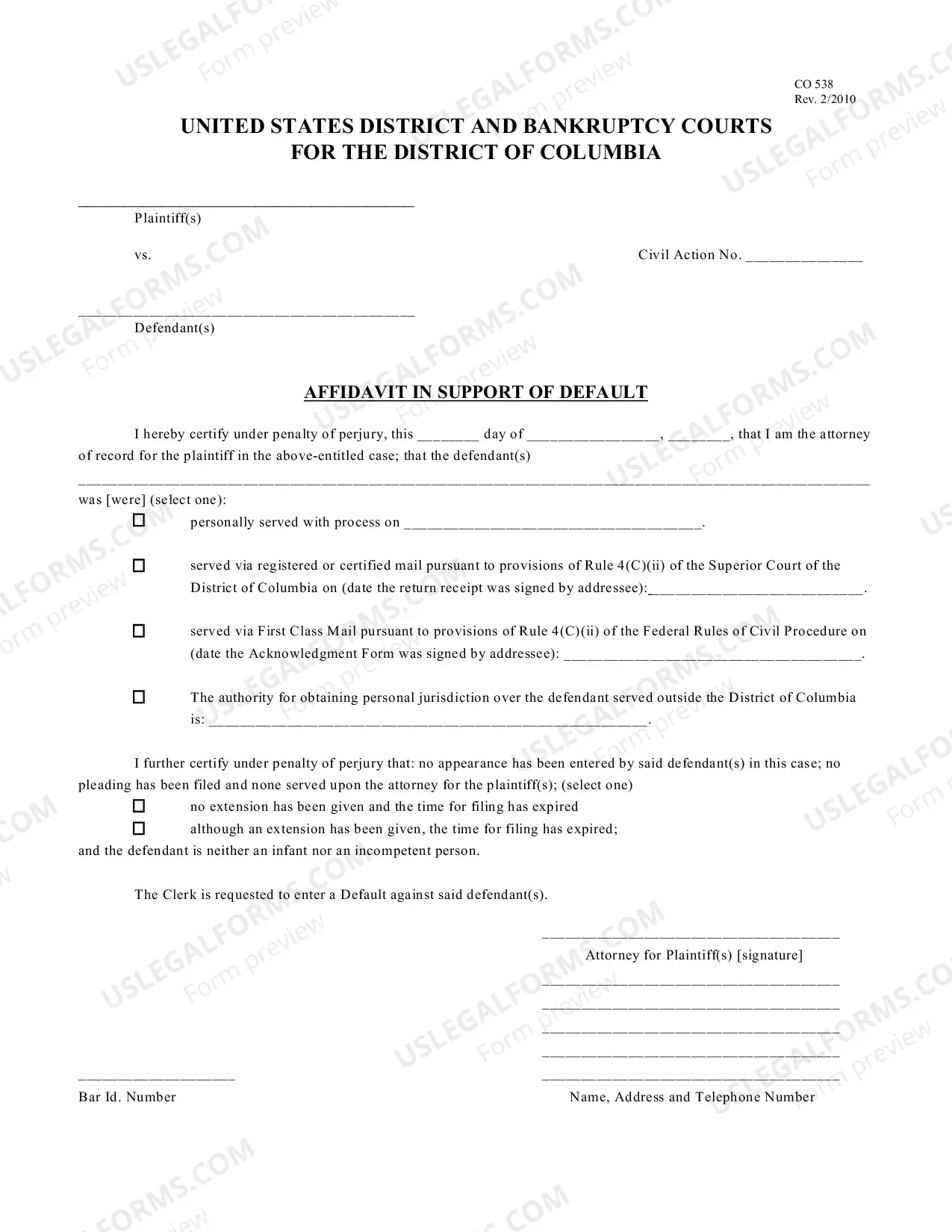
The Application for Entry of Default is a legal document used in small claims court in Arizona. This form allows a plaintiff to request a courtâs entry of default against a defendant who has failed to respond to a lawsuit within the specified timeframe. It differs from traditional court motions in that it specifically addresses defaults, ensuring that a claim can proceed without the defendant's input when they have not fulfilled their legal obligation to respond.
What’s included in this form
- Contact information for the plaintiff, including address, phone, and email.
- Identification of the defendant, including their name and contact details.
- Case number assigned by the court.
- A section confirming service of the summons and complaint to the defendant.
- Notice regarding the consequences of not responding to the application.
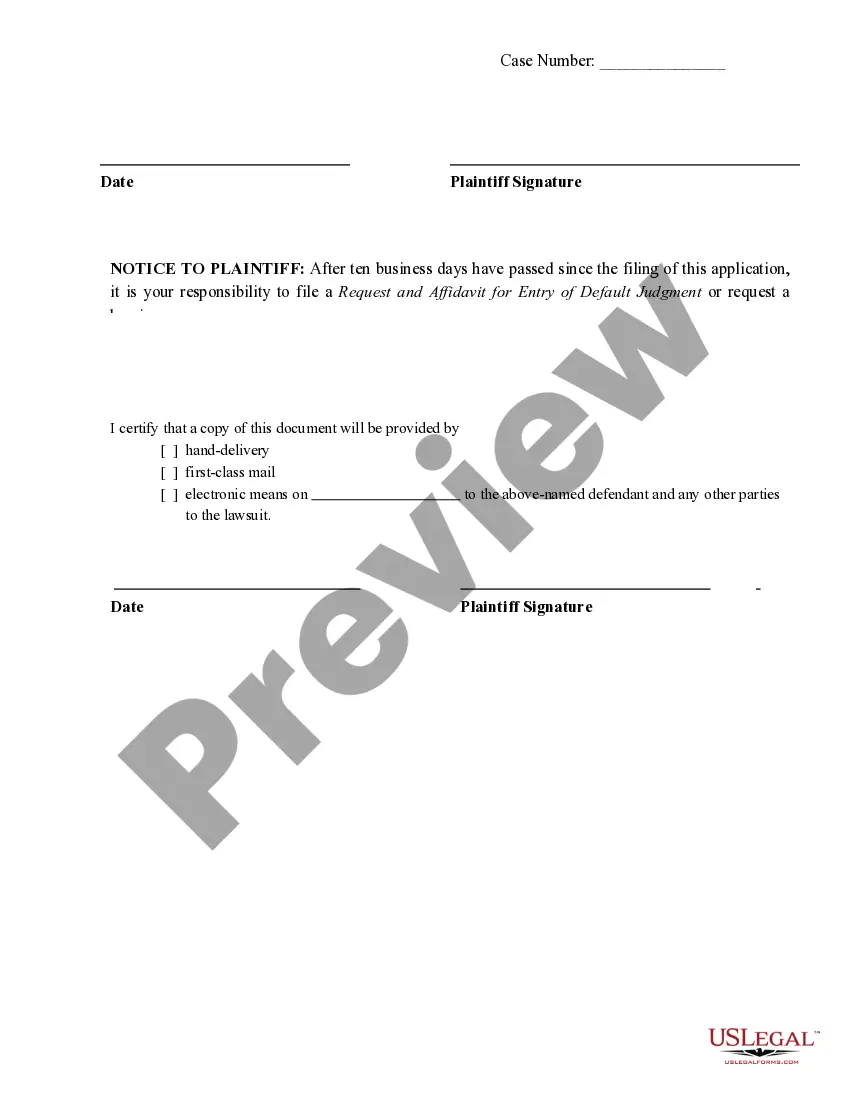
- Certification of document delivery to the defendant and other parties involved.
When to use this document
This form is used when the plaintiff has served a defendant with a small claims lawsuit, and the defendant has not filed an answer or any responsive pleading within ten business days. It is essential for moving forward with a legal claim, enabling the plaintiff to seek a default judgment and resolve the matter efficiently.
Who this form is for
- Individuals or businesses acting as plaintiffs in small claims court.
- Parties who have properly served the defendant and are seeking to resolve an unresolved claim.
- Anyone needing to formalize the process of obtaining a judgment due to a defendant's failure to respond.
Steps to complete this form
- Fill in your contact information as the plaintiff, including your address and phone number.
- Provide the name and contact details of the defendant you are suing.
- Enter the case number assigned by the court.
- Indicate how the defendant was served with the complaint (e.g., mail, process server).
- Sign and date the application to certify its accuracy and completeness.
Notarization guidance
This form does not typically require notarization unless specified by local law. It is essential to review any additional court requirements that may apply in your specific jurisdiction.
Get your form ready online
Our built-in tools help you complete, sign, share, and store your documents in one place.
Make edits, fill in missing information, and update formatting in US Legal Forms—just like you would in MS Word.
Download a copy, print it, send it by email, or mail it via USPS—whatever works best for your next step.
Sign and collect signatures with our SignNow integration. Send to multiple recipients, set reminders, and more. Go Premium to unlock E-Sign.
If this form requires notarization, complete it online through a secure video call—no need to meet a notary in person or wait for an appointment.
We protect your documents and personal data by following strict security and privacy standards.

Make edits, fill in missing information, and update formatting in US Legal Forms—just like you would in MS Word.

Download a copy, print it, send it by email, or mail it via USPS—whatever works best for your next step.

Sign and collect signatures with our SignNow integration. Send to multiple recipients, set reminders, and more. Go Premium to unlock E-Sign.

If this form requires notarization, complete it online through a secure video call—no need to meet a notary in person or wait for an appointment.

We protect your documents and personal data by following strict security and privacy standards.
Common mistakes
- Failing to provide complete and accurate contact information for both parties.
- Not specifying the method of service used for the defendant.
- Overlooking the requirement to submit the application within the correct timeframe.
- Not signing or dating the application, which can render it invalid.
Benefits of using this form online
- Convenient access to form templates that can be downloaded and completed at your own pace.
- The ability to customize the document with your specific case details online.
- Reliable guidance provided by templates created by licensed attorneys, ensuring legal compliance.
Looking for another form?


Form popularity
FAQ
In Arizona, judgments typically remain valid for a span of five years, after which they can become unenforceable if not renewed. To keep a judgment active, a creditor must file a motion to renew it before the expiration date. This method ensures that you maintain your ability to collect without losing your legal rights. If you find yourself needing to pursue a renewal, the Arizona Application for Entry of Default (Small Claims) can guide your actions effectively.
In Arizona, you do not need a lawyer to file a claim in small claims court. Many individuals choose to represent themselves, especially for straightforward cases where an Arizona Application for Entry of Default (Small Claims) may apply. However, having legal guidance can help clarify the process and improve your chances of a favorable outcome. It's essential to weigh your options and decide what best suits your situation.
Rule 7 of the Arizona Rules of Small Claims Procedure outlines the process for obtaining a default judgment. This rule states that if the defendant does not respond to the claim in time, the plaintiff can file an Arizona Application for Entry of Default (Small Claims) to seek a judgment. This procedure helps streamline the resolution process, ensuring you receive a timely decision. Understanding this rule can help you effectively manage your small claims case.
To set aside a default judgment in Arizona, you should file a motion with the court that issued the judgment. This motion must include valid reasons for the request, along with supporting documentation. Filling out an Arizona Application for Entry of Default (Small Claims) may help you clearly articulate your case and navigate this process smoothly.
Arizona's small claims court typically does not have a minimum amount requirement for filing a claim. However, it is important to consider whether the amount justifies the time and effort involved. If you decide to proceed, complete your Arizona Application for Entry of Default (Small Claims) to start the process.
After winning a small claims judgment in Arizona, the next step is to collect what you are owed. You can request the court's assistance to enforce the judgment by filing an enforcement lawsuit. Using the Arizona Application for Entry of Default (Small Claims) can help clarify your claim and facilitate the collection process.
Taking someone to small claims court in Arizona begins with filing a complaint. You will need to complete an Arizona Application for Entry of Default (Small Claims) form, which details your claim against the other party. After filing, serve the other party with notice and keep track of important dates to ensure a smooth process.
To appeal a default, you must first file a notice of appeal with the court that issued the default judgment. This process typically involves completing an Arizona Application for Entry of Default (Small Claims) form and submitting it with the required fees. Ensure you check the deadlines for filing an appeal, as these can be strict and vary based on your case.
To get a set aside in Arizona, you must file a motion asking the court to overturn the default judgment. You will need to provide valid reasons, such as improper service of process or mistakes. Utilizing the Arizona Application for Entry of Default (Small Claims) effectively can help you manage your legal matters and reduce the likelihood of needing to pursue a set aside.
To remove a default judgment in Arizona, you typically need to file a motion with the court. You must show that you had a valid reason for missing your court date, such as not receiving proper notice. Using the Arizona Application for Entry of Default (Small Claims) correctly can help you avoid future default judgments and maintain control over your cases.