Mississippi Memorandum Brief in Support of Motion in Limine
About this form
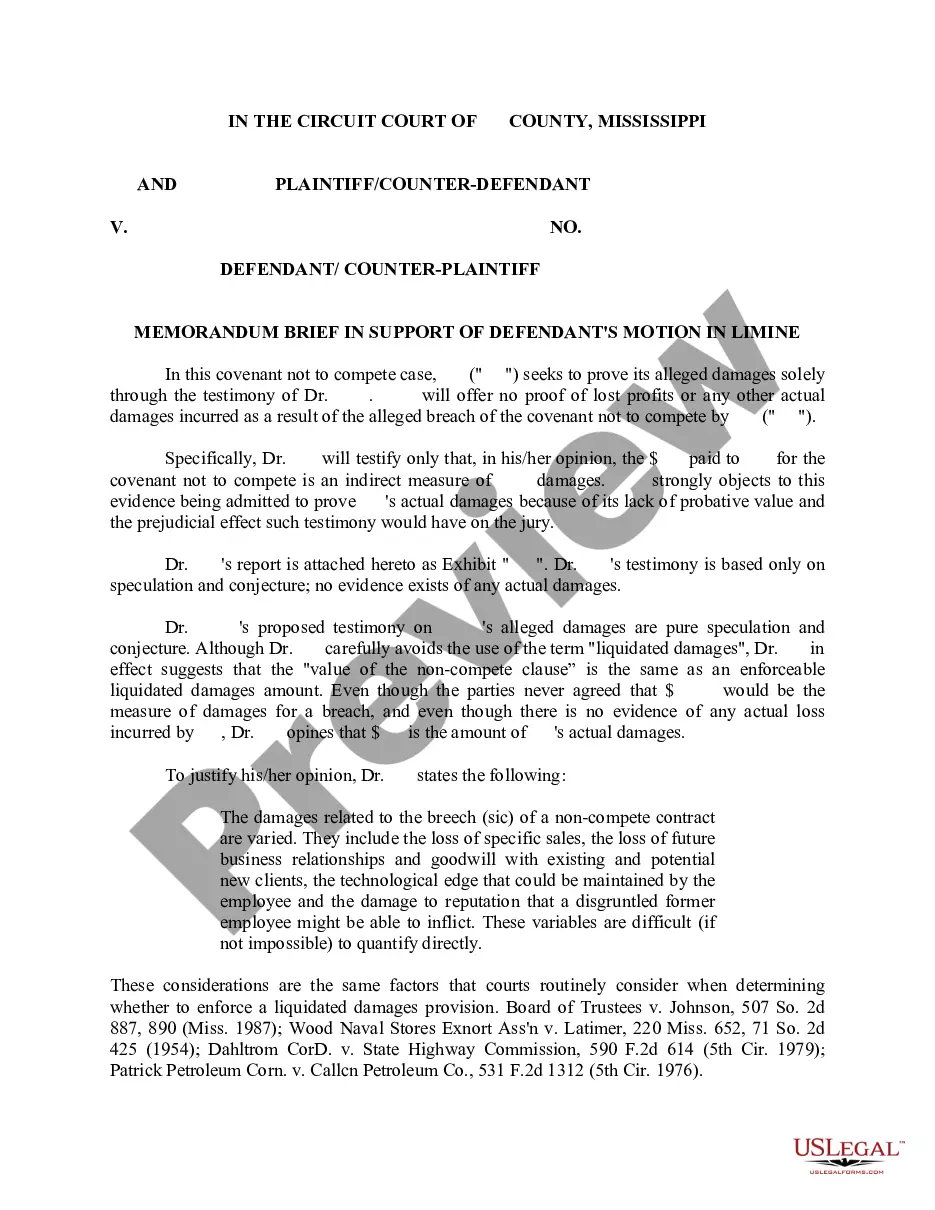
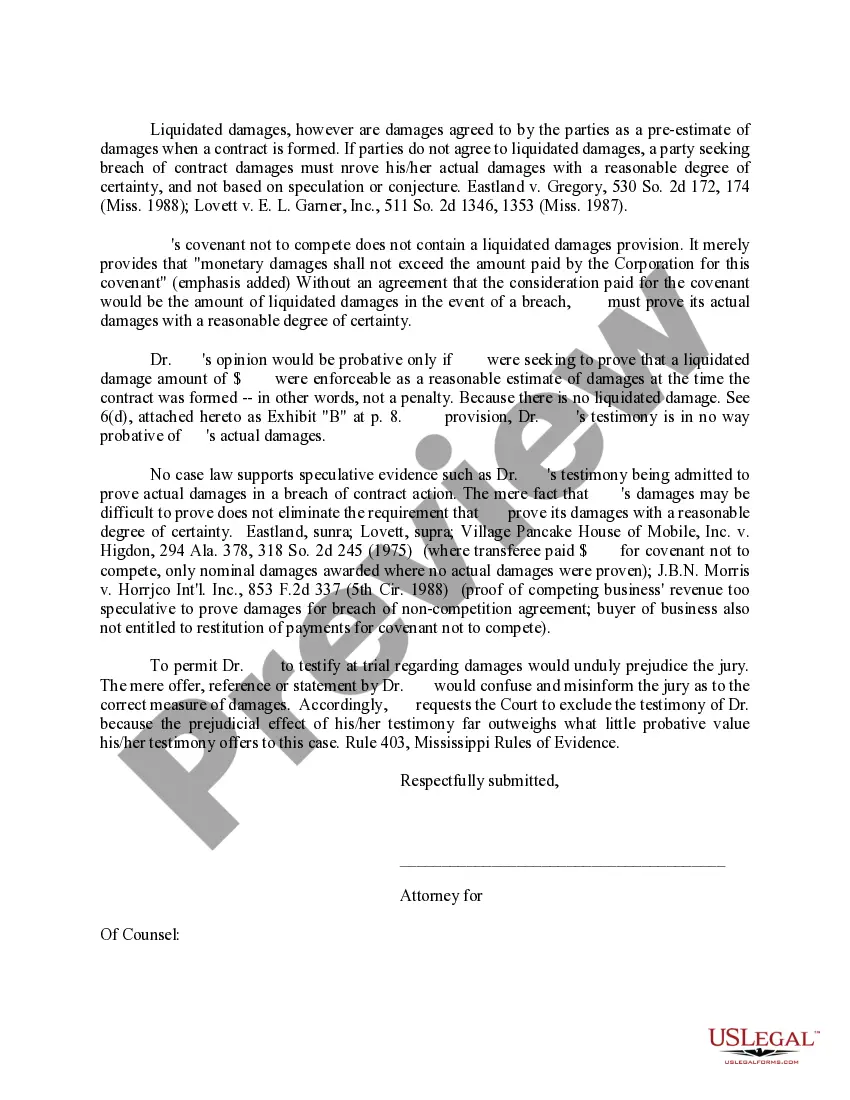
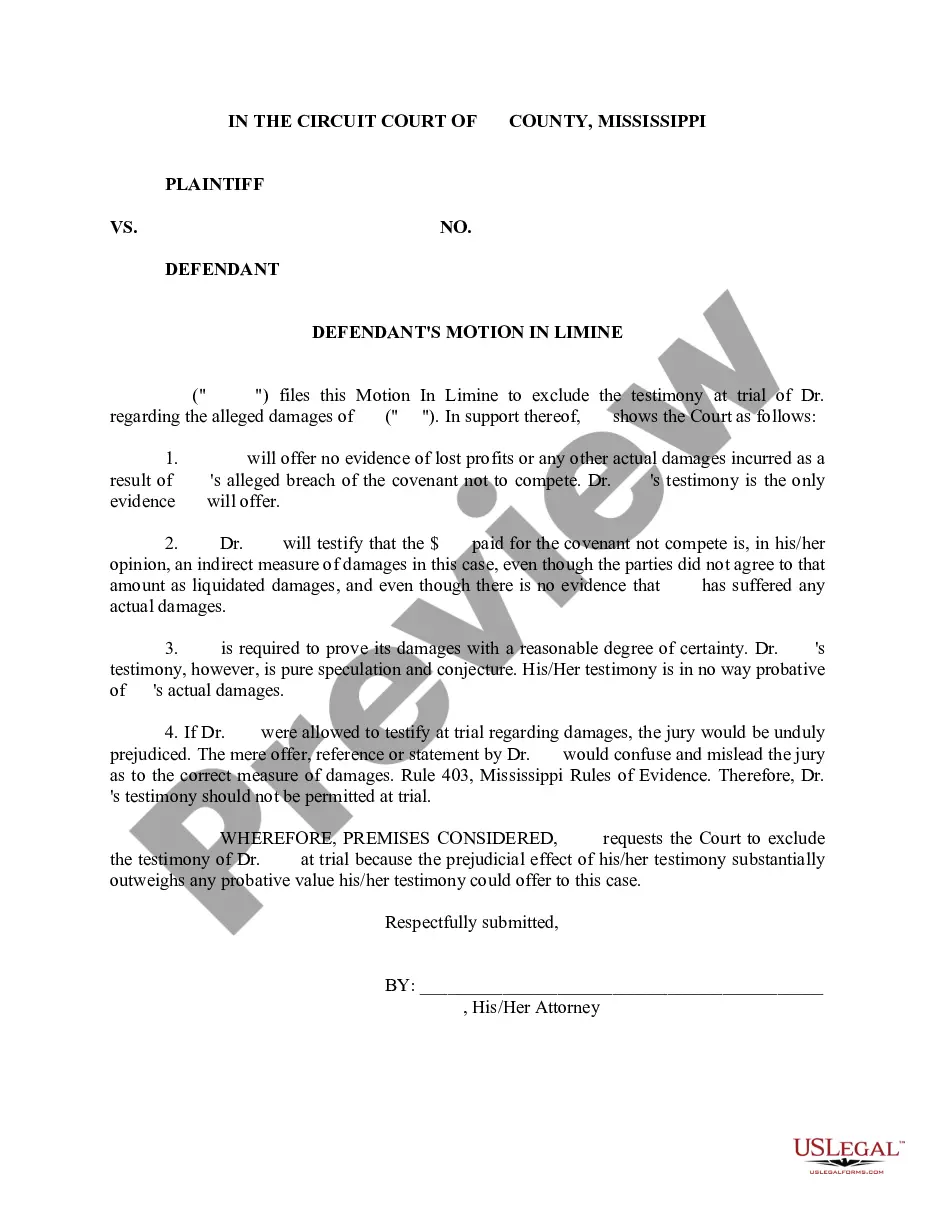
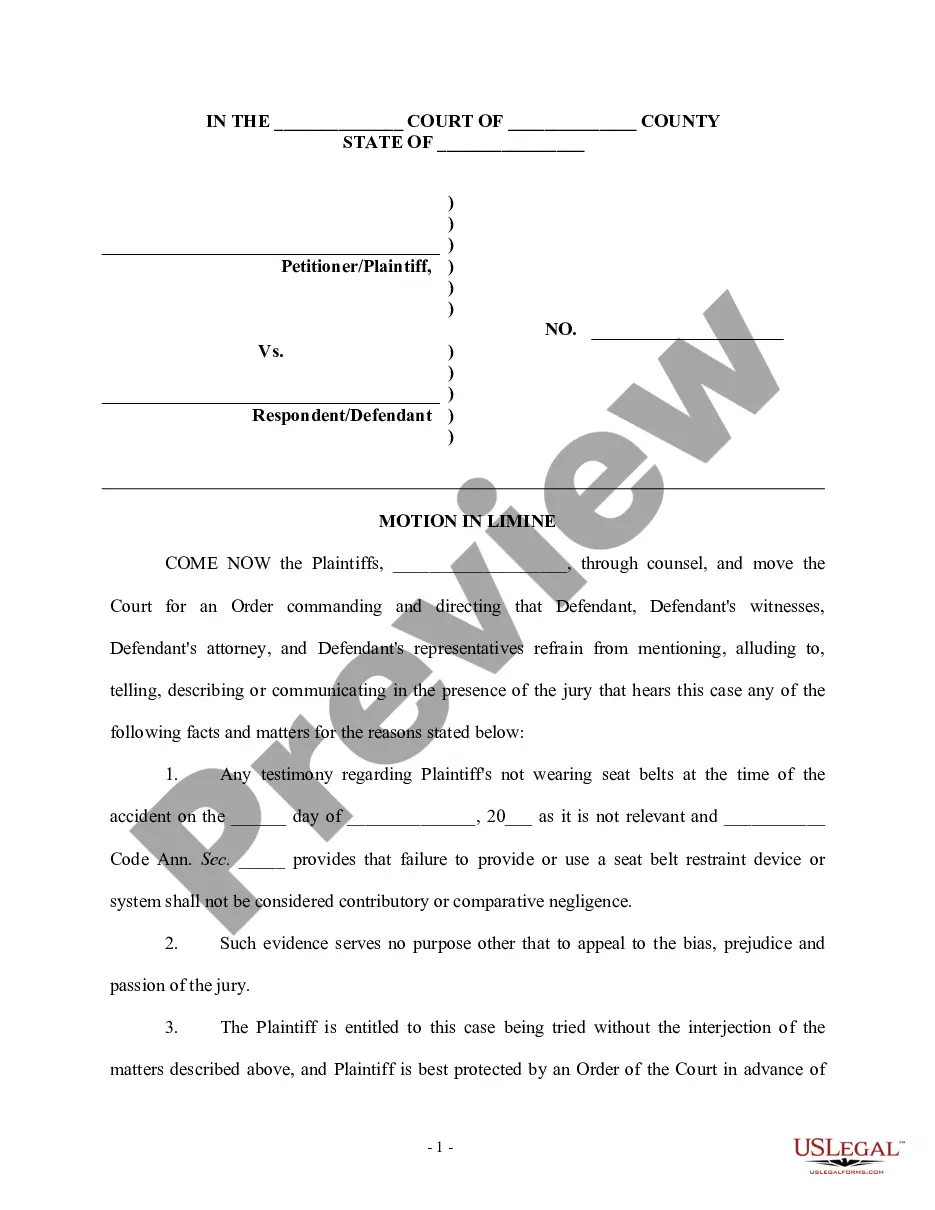
A memorandum brief in support of a motion in limine is a legal document that requests the court to exclude specific evidence from being presented during a trial. This form outlines the reasons why certain testimony or evidence is prejudicial, thereby helping to protect a fair trial for the parties involved. Unlike other motions, the motion in limine specifically seeks to limit evidence in advance of the trial proceedings, making it a critical tool in legal strategy.
Key components of this form
- Parties involved: Clearly identifies the plaintiff and defendant in the case.
- Motion description: Detailed explanation of the evidence or testimony being challenged.
- Legal basis: References applicable laws and precedents that support the motion.
- Objections: States the objections to the admission of evidence based on its prejudicial nature.
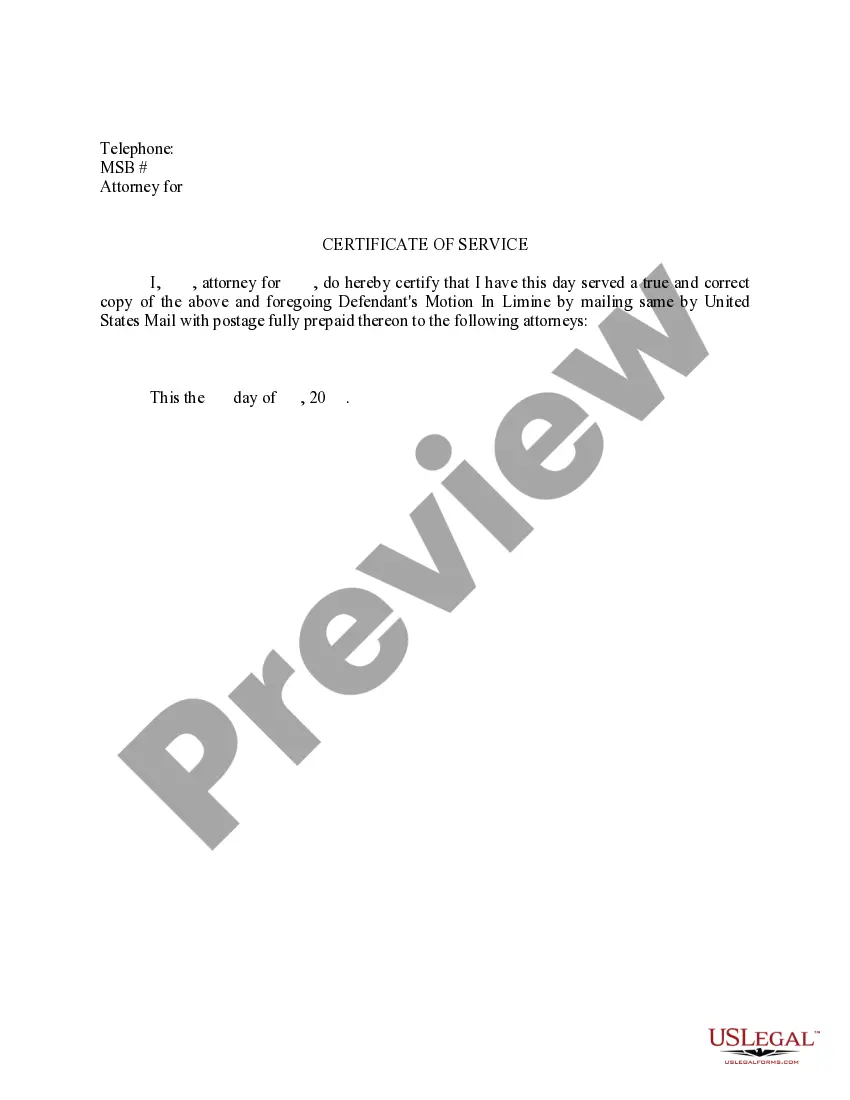
- Certification: Includes a certification of service confirming that relevant parties have received a copy of the motion.
When this form is needed
This form should be used when a party in a court case wishes to prevent specific evidence from being introduced at trial. For example, if a party believes that a witness's testimony is based on speculation or does not meet legal standards of proof, they may submit this memorandum brief to seek exclusion of that testimony. It is particularly useful in cases where evidence may unfairly influence the jury's perception without providing reliable data supporting the claims made.
Who can use this document
- Litigants involved in civil or criminal cases who need to limit evidence presented against them.
- Attorneys representing clients in trials who are concerned about the admissibility of certain testimony or evidence.
- Individuals seeking to ensure a fair trial by challenging prejudicial evidence that lacks probative value.
Instructions for completing this form
- Enter the names of the parties: Fill in the names of the plaintiff and defendant at the top of the document.
- Specify the motion: Clearly articulate the evidence or testimony you are requesting to exclude from the trial.
- Provide legal reasoning: Include the legal precedents and reasoning that support your request to limit evidence.
- Attach exhibits: If applicable, attach any supporting documents or reports that should accompany the motion.
- Sign and date the document: Ensure the form is signed by the attorney and dated appropriately before submission to the court.
Is notarization required?
Notarization is not commonly needed for this form. However, certain documents or local rules may make it necessary. Our notarization service, powered by Notarize, allows you to finalize it securely online anytime, day or night.
Get your form ready online
Our built-in tools help you complete, sign, share, and store your documents in one place.
Make edits, fill in missing information, and update formatting in US Legal Forms—just like you would in MS Word.
Download a copy, print it, send it by email, or mail it via USPS—whatever works best for your next step.
Sign and collect signatures with our SignNow integration. Send to multiple recipients, set reminders, and more. Go Premium to unlock E-Sign.
If this form requires notarization, complete it online through a secure video call—no need to meet a notary in person or wait for an appointment.
We protect your documents and personal data by following strict security and privacy standards.

Make edits, fill in missing information, and update formatting in US Legal Forms—just like you would in MS Word.

Download a copy, print it, send it by email, or mail it via USPS—whatever works best for your next step.

Sign and collect signatures with our SignNow integration. Send to multiple recipients, set reminders, and more. Go Premium to unlock E-Sign.

If this form requires notarization, complete it online through a secure video call—no need to meet a notary in person or wait for an appointment.

We protect your documents and personal data by following strict security and privacy standards.
Avoid these common issues
- Failing to provide adequate legal justification for the exclusion of evidence.
- Omitting required signatures or certifications of service.
- Using vague language instead of specific legal terms and clauses.
- Not attaching necessary supporting documents or exhibits with the filing.
Benefits of completing this form online
- Convenience: Downloadable forms allow you to quickly access and complete necessary documents from any location.
- Editability: You can easily customize the form to fit the specifics of your case and local requirements.
- Reliability: Forms are drafted and reviewed by licensed attorneys to ensure compliance with current laws and regulations.
Legal use & context
- This form is used in legal proceedings to challenge the admissibility of evidence based on its potential to mislead or confuse the jury.
- The effectiveness of this memorandum relies on clear, convincing arguments supported by relevant legal precedents.
- Ensuring that only fair and relevant evidence is presented at trial helps maintain the integrity of the judicial process.
Key takeaways
- The form is essential for formally challenging evidence in court to ensure a fair trial.
- Complete the memorandum with specific arguments and relevant case law to support your motion.
- Ensure adherence to jurisdictional rules to enhance the likelihood of your motion being granted.
Looking for another form?
Form popularity
FAQ
There is also authority for the proposition that if a motion in limine is denied, the party opposing the evidence can be the first to offer the objectionable evidence without waiving the merits of the evidentiary objection on appeal.
Examples of motions in limine would be that the attorney for the defendant may ask the judge to refuse to admit into evidence any personal information, or medical, criminal or financial records, using the legal grounds that these records are irrelevant, immaterial, unreliable, or unduly prejudicial, and/or that their
Your motion in limine should be broken into two sections: (1) Factual Background and (2) Argument. The Factual Background section of your Memorandum should include all of the facts necessary for the judge to resolve every issue raised in your motion. appropriate, include procedural posture, as well.
Whereas the motion in limine is based on the trial court's inherent discretion to exclude prejudicial evidence, the motion to suppress is based on the court's duty to exclude evidence which has been im- properly Qbtained.
A motion in limine is a powerful weapon for advocates that can alter the entire makeup of the case. This type of motion is a pretrial request of the court to rule on the admissibility of a certain piece of evidence.
: on the threshold : as a preliminary matter used for motions regarding the admissibility of evidence brought up at a pretrial hearing.
The term in limineor on the thresholdmisleadingly suggests that any motion filed shortly before the start of trial is a motion in limine.There are many advantages to an advance ruling on the evidentiary issues outside the presence of the jury, and motions in limine are a powerful tool for astute trial attorneys.