Missouri Letter from Tenant to Landlord for Failure of Landlord to comply with building codes affecting health and safety or resulting in untenantable condition - demand for remedy
What this document covers
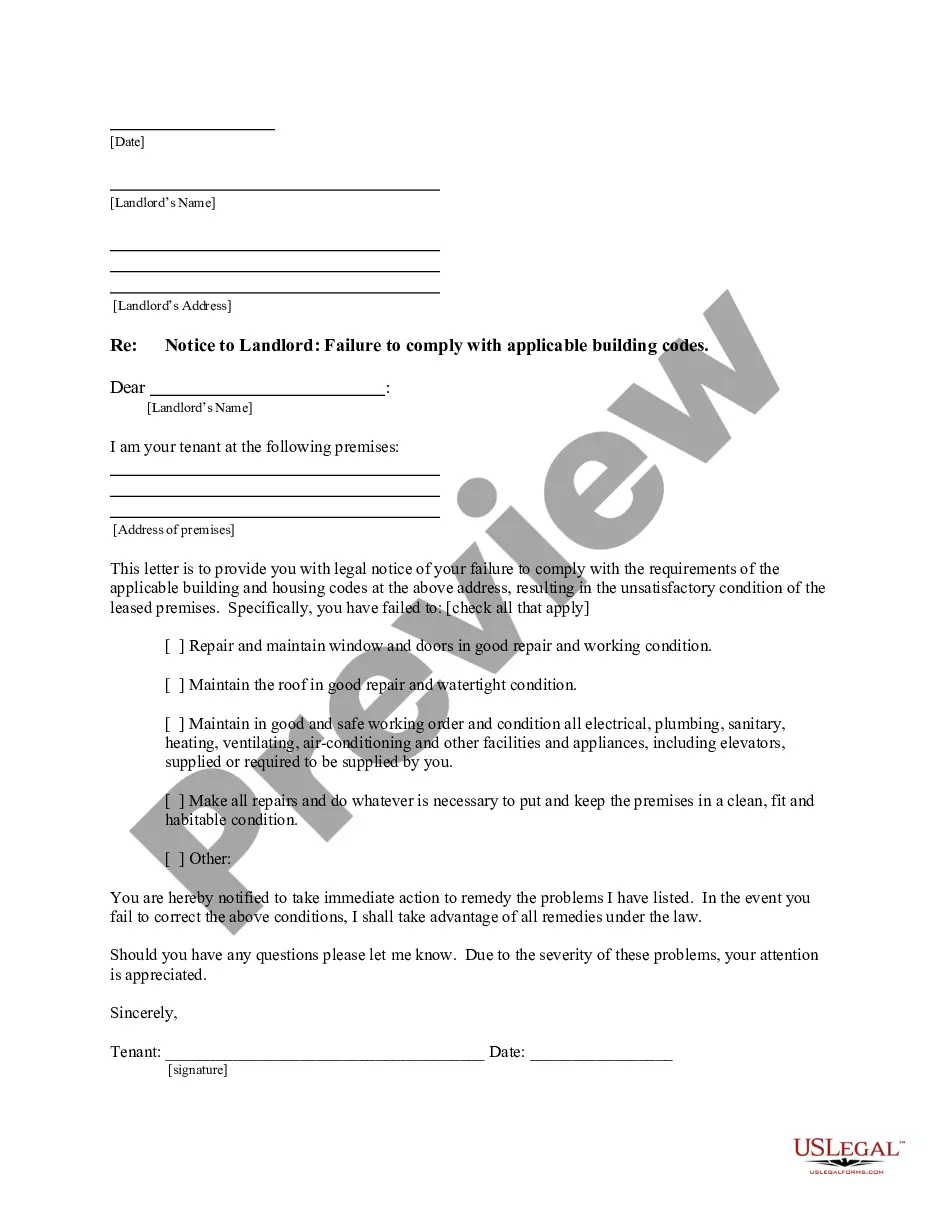
This document is a demand letter from a tenant to a landlord, addressing the landlord's failure to comply with building codes that affect health and safety or create an untenantable condition. Unlike general complaint letters, this form specifically demands that necessary repairs be made within ten days, emphasizing the urgency of the situation and the tenant's right to a safe living environment.
What’s included in this form
- Details of the tenant's request for compliance with building codes.
- A clear deadline for repairs, typically set at ten days.
- Specific issues mentioned, such as window, door, and roof maintenance.
- A section for the tenant's signature and date.
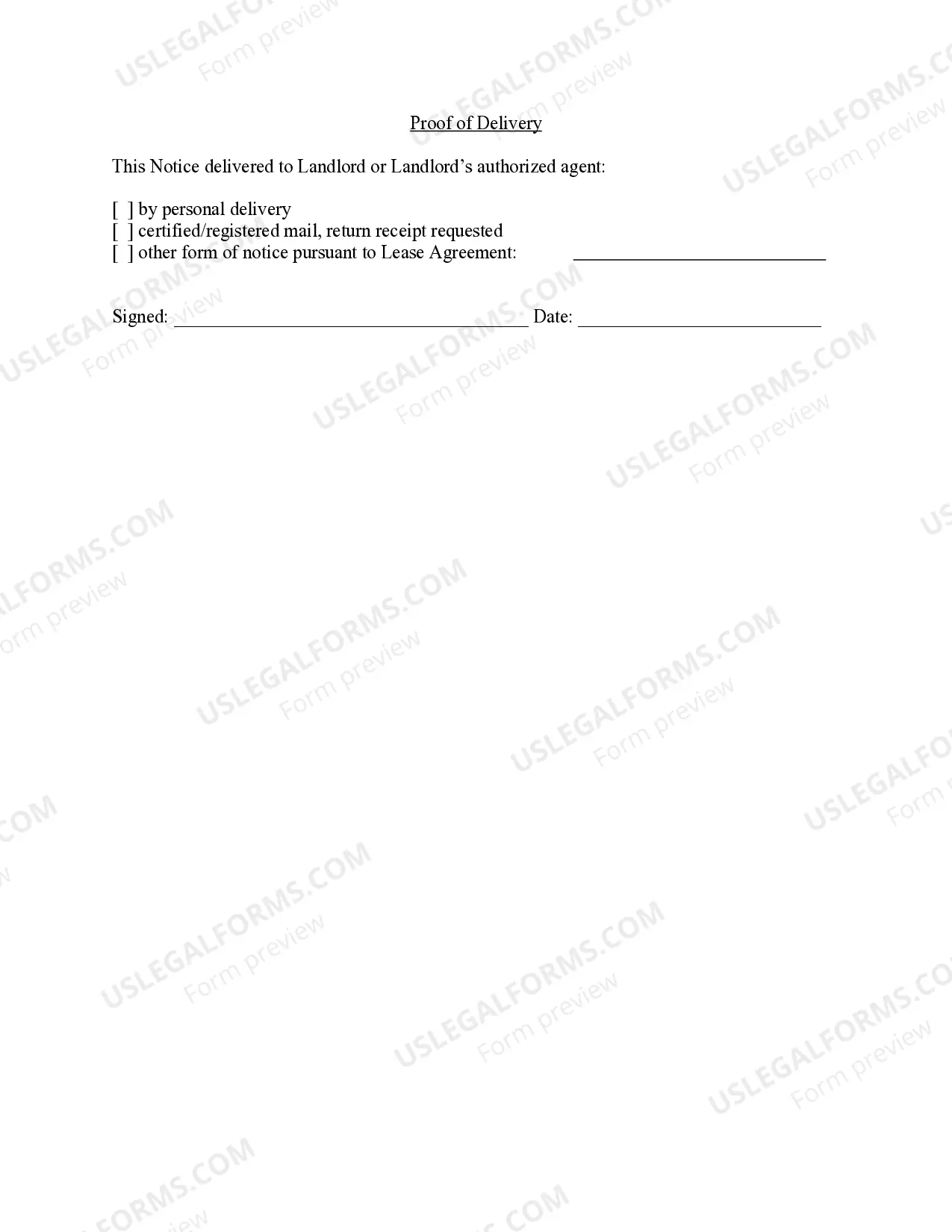
- Proof of delivery section for documentation.


Situations where this form applies
This form should be used when a tenant identifies health and safety violations within their rental property that the landlord has not addressed. These violations may include issues like mold, structural hazards, or non-functional utilities. It is essential to use this letter to formally request repairs and to maintain a record of communication regarding the landlord's obligations.
Who this form is for
- Tenants who are experiencing unsafe or unhealthy living conditions due to the landlord's negligence.
- Individuals looking to document the landlord's failure to comply with building codes.
- Renters wishing to escalate the issue before potentially pursuing legal action.
How to prepare this document
- Identify the parties by entering the tenant's and landlord's names and addresses.
- Specify the property by providing the address of the leased premises.
- Detail the health and safety issues that need addressing, referencing building codes if possible.
- Enter the specific date by which repairs should be completed (typically ten days from the date of the letter).
- Sign and date the letter, ensuring you keep a copy for your records.
- Provide proof of delivery to document that the landlord received the notice.
Is notarization required?
Notarization is generally not required for this form. However, certain states or situations might demand it. You can complete notarization online through US Legal Forms, powered by Notarize, using a verified video call available anytime.
Get your form ready online
Our built-in tools help you complete, sign, share, and store your documents in one place.
Make edits, fill in missing information, and update formatting in US Legal Forms—just like you would in MS Word.
Download a copy, print it, send it by email, or mail it via USPS—whatever works best for your next step.
Sign and collect signatures with our SignNow integration. Send to multiple recipients, set reminders, and more. Go Premium to unlock E-Sign.
If this form requires notarization, complete it online through a secure video call—no need to meet a notary in person or wait for an appointment.
We protect your documents and personal data by following strict security and privacy standards.

Make edits, fill in missing information, and update formatting in US Legal Forms—just like you would in MS Word.

Download a copy, print it, send it by email, or mail it via USPS—whatever works best for your next step.

Sign and collect signatures with our SignNow integration. Send to multiple recipients, set reminders, and more. Go Premium to unlock E-Sign.

If this form requires notarization, complete it online through a secure video call—no need to meet a notary in person or wait for an appointment.

We protect your documents and personal data by following strict security and privacy standards.
Avoid these common issues
- Failing to specify the exact violations or necessary repairs.
- Neglecting to include a deadline for the landlord to respond.
- Not keeping a copy of the letter and proof of delivery.
- Using vague language that may lead to misinterpretation of requests.
Why complete this form online
- Convenient access and download from any device.
- Editable templates allow for personalization without needing legal assistance.
- Reliable and professionally drafted content that adheres to legal standards.
Legal use & context
- This form serves as a formal notice, providing a basis for further legal action if the landlord fails to respond or remedy the cited issues.
- Proper completion and delivery demonstrate the tenant's proactive approach in maintaining safe living conditions.
Quick recap
- The form is essential for tenants facing health and safety issues in rental properties.
- Quick action is necessary; landlords are usually required to address issues within ten days.
- This letter strengthens tenants' positions should further legal action become necessary.
Looking for another form?







Form popularity
FAQ
The most common action taken by landlords against tenants in breach of contract is filing for eviction due to unpaid rent or lease violations. Landlords often initiate this process after providing the tenant with appropriate notice, as required by Missouri law. Utilizing a Missouri Letter from Tenant to Landlord for Failure of Landlord to comply with building codes affecting health and safety or resulting in untenantable condition - demand for remedy can strengthen a tenant's position in disputes. This can help clarify the responsibilities of both parties and facilitate a resolution.
In Missouri, landlords typically need to provide a notice period of at least 30 days for eviction due to non-payment of rent. However, the notice period may vary based on the reason for eviction, such as lease violations or other contractual breaches. Using a Missouri Letter from Tenant to Landlord for Failure of Landlord to comply with building codes affecting health and safety or resulting in untenantable condition - demand for remedy can also influence the eviction process if the tenant has previously reported issues. It's crucial to follow the legal guidelines to ensure a smooth eviction process.
Statute 441.060 in Missouri outlines the responsibilities of landlords regarding the maintenance and safety of rental properties. It emphasizes that landlords must comply with building codes that affect health and safety. If a landlord fails to meet these standards, tenants can use a Missouri Letter from Tenant to Landlord for Failure of Landlord to comply with building codes affecting health and safety or resulting in untenantable condition - demand for remedy to formally address the issue. This letter serves as a crucial step in ensuring that landlords rectify any violations.
Proving landlord negligence involves documenting the issues affecting the rental property and demonstrating how the landlord failed to act. Keep records of communication with the landlord, photos of the problems, and any relevant repair requests. In cases where you need to escalate the matter, you can write a Missouri Letter from Tenant to Landlord for Failure of Landlord to comply with building codes affecting health and safety or resulting in untenantable condition - demand for remedy. This process can help solidify your case and ensure your rights are protected.
A rental property is considered uninhabitable in Missouri if it lacks essential services such as heat, water, or electricity, or if it has significant health and safety violations. Conditions like pest infestations, mold, or structural damage can also render a rental uninhabitable. In such cases, tenants can utilize a Missouri Letter from Tenant to Landlord for Failure of Landlord to comply with building codes affecting health and safety or resulting in untenantable condition - demand for remedy to formally request repairs. Understanding these criteria helps tenants advocate for their rights effectively.
Law 441.060 in Missouri outlines the responsibilities of landlords regarding maintenance and habitability of rental properties. It mandates that landlords must comply with local building codes that affect health and safety. If a landlord fails to meet these standards, tenants have the right to send a Missouri Letter from Tenant to Landlord for Failure of Landlord to comply with building codes affecting health and safety or resulting in untenantable condition - demand for remedy. This law empowers tenants to seek necessary repairs and ensures their living conditions are safe.
A 14/30 notice in Missouri is a legal document that a landlord uses to inform a tenant of lease violations. The notice gives the tenant 14 days to correct the issue or face eviction within 30 days. Understanding this notice is crucial for both landlords and tenants. Utilizing a Missouri Letter from Tenant to Landlord for Failure of Landlord to comply with building codes affecting health and safety or resulting in untenantable condition - demand for remedy can also help tenants respond effectively to such notices.
If a tenant breaches a tenancy agreement, the landlord may have grounds to terminate the lease and seek eviction. Depending on the nature of the breach, the landlord could also pursue damages in court. It's essential for tenants to understand their rights and obligations. A Missouri Letter from Tenant to Landlord for Failure of Landlord to comply with building codes affecting health and safety or resulting in untenantable condition - demand for remedy can help tenants address issues before they escalate.
Writing a tenant complaint letter involves clearly stating your issue and referencing any relevant laws or lease terms. Start with your address, the landlord's address, and the date. Include a concise description of the problem, such as the failure to comply with building codes, and demand a timely remedy. Using a Missouri Letter from Tenant to Landlord for Failure of Landlord to comply with building codes affecting health and safety or resulting in untenantable condition - demand for remedy can provide a solid template for your concerns.
In Missouri, the amount you can sue for uninhabitable living conditions varies based on damages incurred. You may seek compensation for repair costs, lost rent, and even emotional distress. It's important to document all issues thoroughly and consider using a Missouri Letter from Tenant to Landlord for Failure of Landlord to comply with building codes affecting health and safety or resulting in untenantable condition - demand for remedy, as this can strengthen your case.