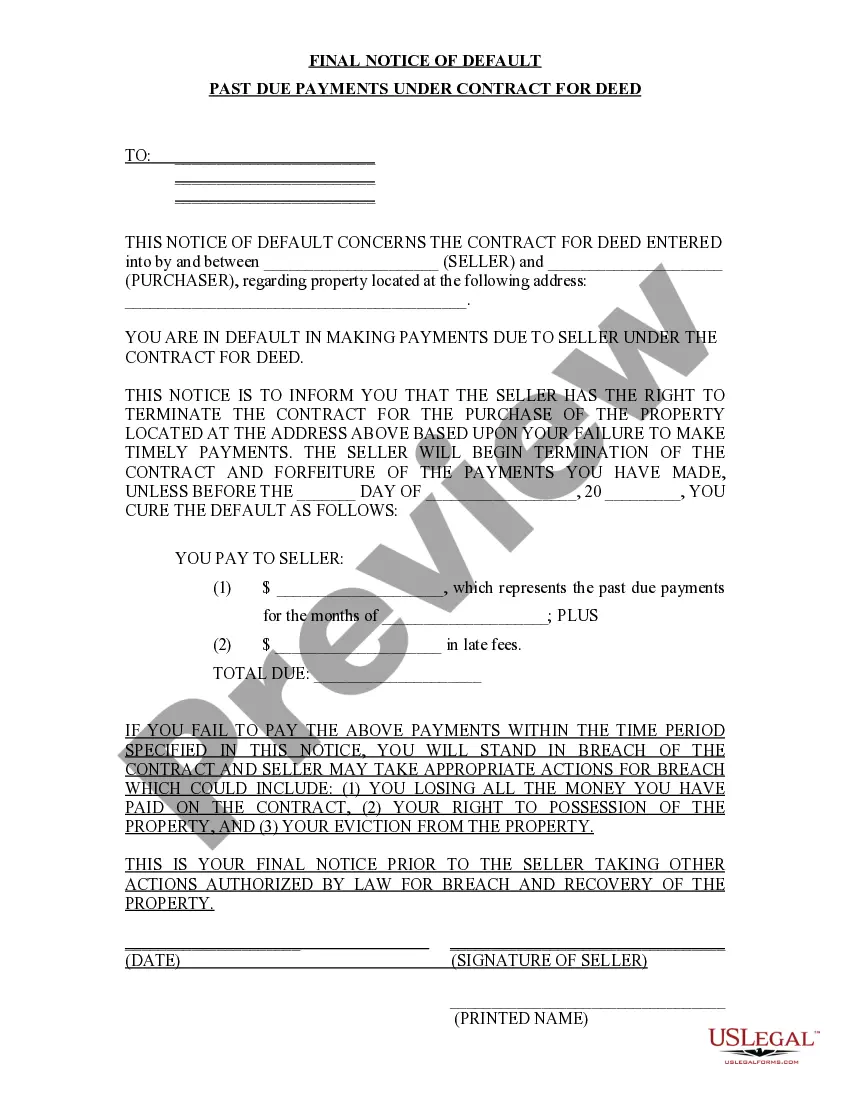
Missouri Final Notice of Default for Past Due Payments in connection with Contract for Deed
What is this form?
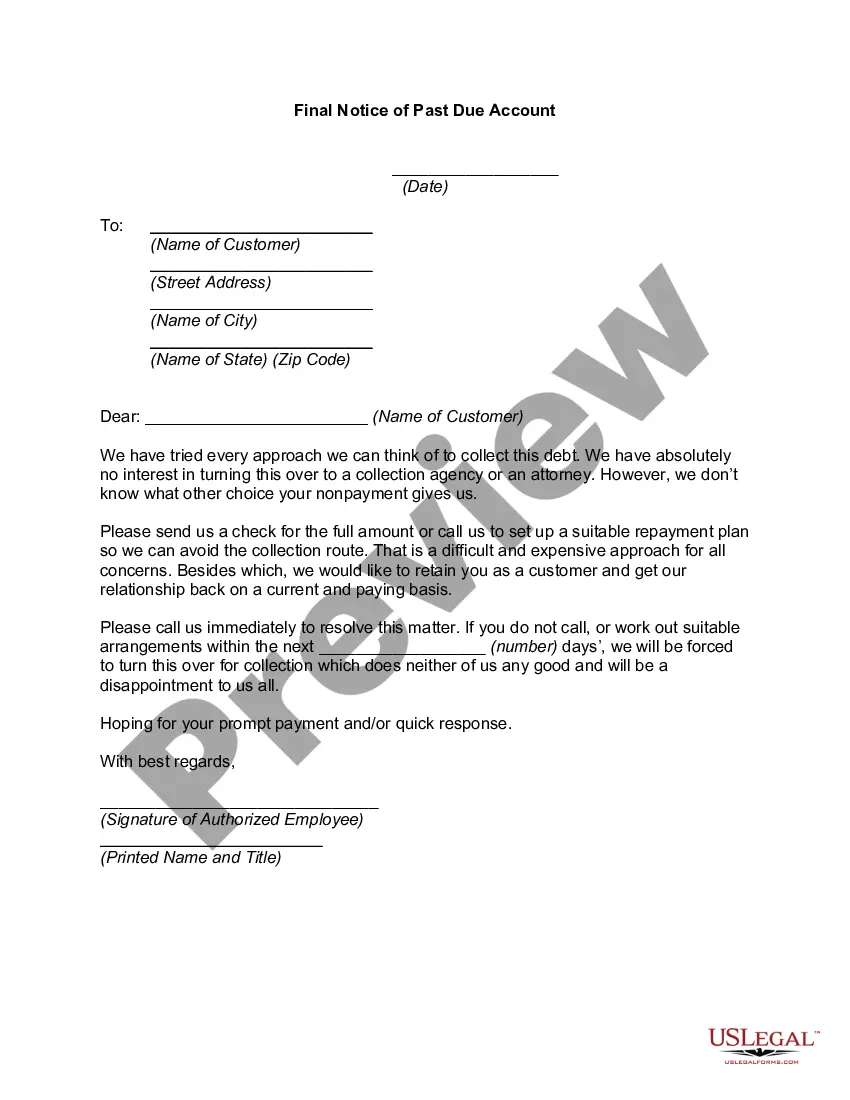
The Final Notice of Default for Past Due Payments in connection with Contract for Deed is a formal document that notifies a Purchaser of their failure to make required payments under a Contract for Deed. This notice serves as a final opportunity for the Purchaser to cure their default before the Seller may take further legal actions, such as terminating the contract or evicting the Purchaser. This form is essential for protecting the Seller's rights and outlines the specific actions that must be taken by the Purchaser to avoid repercussions.
What’s included in this form
- Identifies the Seller and Purchaser involved in the Contract for Deed.
- Specifies the property address subject to the contract.
- States the amount and details of past due payments and any applicable late fees.
- Indicates a deadline for payment to cure the default.
- Explains the consequences of failing to remedy the default.

Situations where this form applies
This form should be used when a Purchaser has fallen behind on payments due under a Contract for Deed. If the Seller has previously communicated missed payments to the Purchaser without resolution, this final notice serves as the last reminder before more serious steps, such as contract termination, are pursued. Use this notice if you want to ensure you have documented the formal communication of default and the seriousness of the situation.
Who this form is for
This form is intended for:
- Sellers of property under a Contract for Deed who need to notify Purchasers of payment defaults.
- Purchasers who have received notice of a payment default and wish to understand the implications.
- Real estate professionals seeking to assist clients involved in a Contract for Deed situation.
Instructions for completing this form
- Identify the parties involved by entering the names of the Seller and Purchaser.
- Fill in the address of the property under the Contract for Deed.
- Specify the total amount due, including the months for which payment is past due and any late fees.
- Set a deadline for the Purchaser to cure the default.
- Obtain the Seller's signature and printed name, along with the date.
Notarization guidance
This document requires notarization to meet legal standards. US Legal Forms provides secure online notarization powered by Notarize, allowing you to complete the process through a verified video call, available 24/7.
Get your form ready online
Our built-in tools help you complete, sign, share, and store your documents in one place.
Make edits, fill in missing information, and update formatting in US Legal Forms—just like you would in MS Word.
Download a copy, print it, send it by email, or mail it via USPS—whatever works best for your next step.
Sign and collect signatures with our SignNow integration. Send to multiple recipients, set reminders, and more. Go Premium to unlock E-Sign.
If this form requires notarization, complete it online through a secure video call—no need to meet a notary in person or wait for an appointment.
We protect your documents and personal data by following strict security and privacy standards.

Make edits, fill in missing information, and update formatting in US Legal Forms—just like you would in MS Word.

Download a copy, print it, send it by email, or mail it via USPS—whatever works best for your next step.

Sign and collect signatures with our SignNow integration. Send to multiple recipients, set reminders, and more. Go Premium to unlock E-Sign.

If this form requires notarization, complete it online through a secure video call—no need to meet a notary in person or wait for an appointment.

We protect your documents and personal data by following strict security and privacy standards.
Typical mistakes to avoid
- Failing to provide the correct amount of past due payments.
- Not including a specific deadline for curing the default.
- Omitting signatures or dates, which can invalidate the notice.
- Using vague language that does not clearly communicate the default status.
Advantages of online completion
- Convenience: Easily fill out the form from anywhere at any time.
- Editable: Customize the template to fit your specific situation.
- Reliable: Legal forms provided by licensed attorneys, ensuring accuracy and compliance.
Legal use & context
- The notice serves as a formal alert of a default situation, potentially leading to legal actions if not addressed.
- It is enforceable in court as long as it meets the local legal requirements for notification and contract enforcement.
- Parties should be aware that failure to respond to the notice could result in loss of property and funds already paid.
Summary of main points
- This form is a final notice for defaults on contract for deed payments.
- Timely completion and delivery are essential to enforce rights under the contract.
- Sellers should understand the implications of sending this notice, including potential legal actions.
Looking for another form?




Form popularity
FAQ
The 407.675 law in Missouri addresses consumer protection in real estate transactions, particularly focusing on contracts for deed. This law outlines the rights of buyers and sellers, ensuring transparency and fairness throughout the process. Understanding this law is vital, especially when dealing with a Missouri Final Notice of Default for Past Due Payments in connection with Contract for Deed. For assistance with navigating these legal requirements, the US Legal Forms platform offers a wealth of resources and forms that can help you stay informed and compliant.
A notice of default in real estate indicates that a borrower has failed to meet their mortgage obligations. This official document informs the borrower of their delinquency and outlines the potential consequences if the situation remains unresolved. It is important to understand that receiving a Missouri Final Notice of Default for Past Due Payments in connection with Contract for Deed can lead to foreclosure proceedings. Therefore, addressing the notice promptly can significantly impact the borrower's future choices.
In Missouri, the right to cure notice serves as a formal notification to a borrower regarding their default status. This notice provides the borrower with a specific timeframe to address the overdue payments before further legal action is taken. Essentially, it acts as a final opportunity for the borrower to rectify the situation, thus avoiding a Missouri Final Notice of Default for Past Due Payments in connection with Contract for Deed. Understanding this notice is crucial for both borrowers and lenders to navigate the complexities of real estate transactions.
In the first instance, if your deed is not recorded, there is nothing in the public record to stop the seller from conveying the property to another person.The second situation could happen if your seller fails to pay his or her debts and the seller's creditors file liens or judgments against your property.
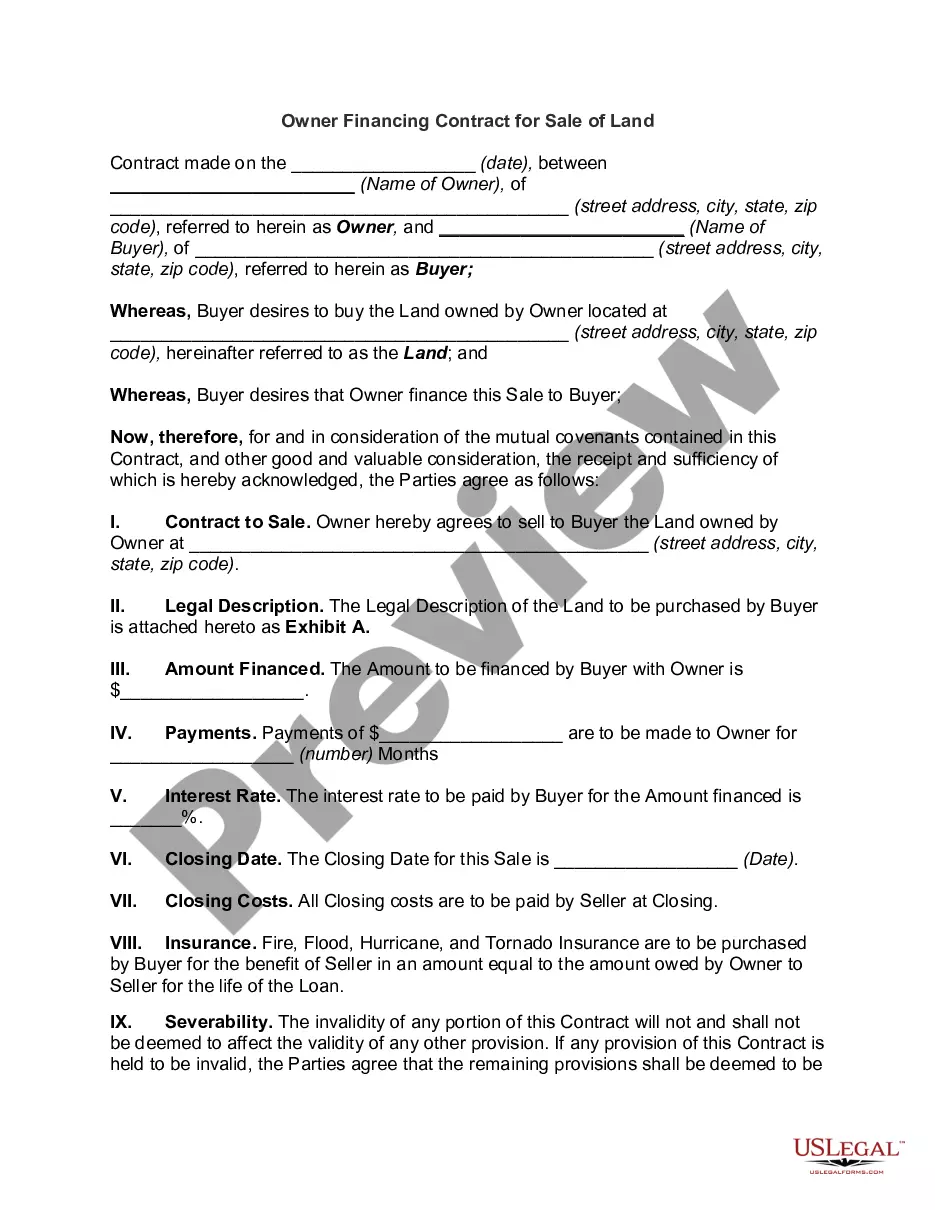
Purchase price. Down payment. Interest rate. Number of monthly installments. Responsibilities of the buyer and seller. Legal remedies for the seller if the buyer does not make payments.
What Is A Deed Of Termination? A Deed of Termination is a document signed by parties to confirm that a legally binding contract previously entered into is to be terminated. This typically relates to the ending of a commercial relationship between two parties prior to the natural expiration of the contract between them.
Generally, the seller will look for a down payment anywhere from 10% to 20% of the purchase price. The interest on a contract for deed could be anywhere from 1% to 2.5% higher than the current market rate.
The buyer must record the contract for deed with the county recorder where the land is located within four months after the contract is signed. Contracts for deed must provide the legal name of the buyer and the buyer's address.
The buyer should record the contract for deed with the county recorder where the land is located and does so normally within four months after the contract is signed, though the time may vary depending on state law.
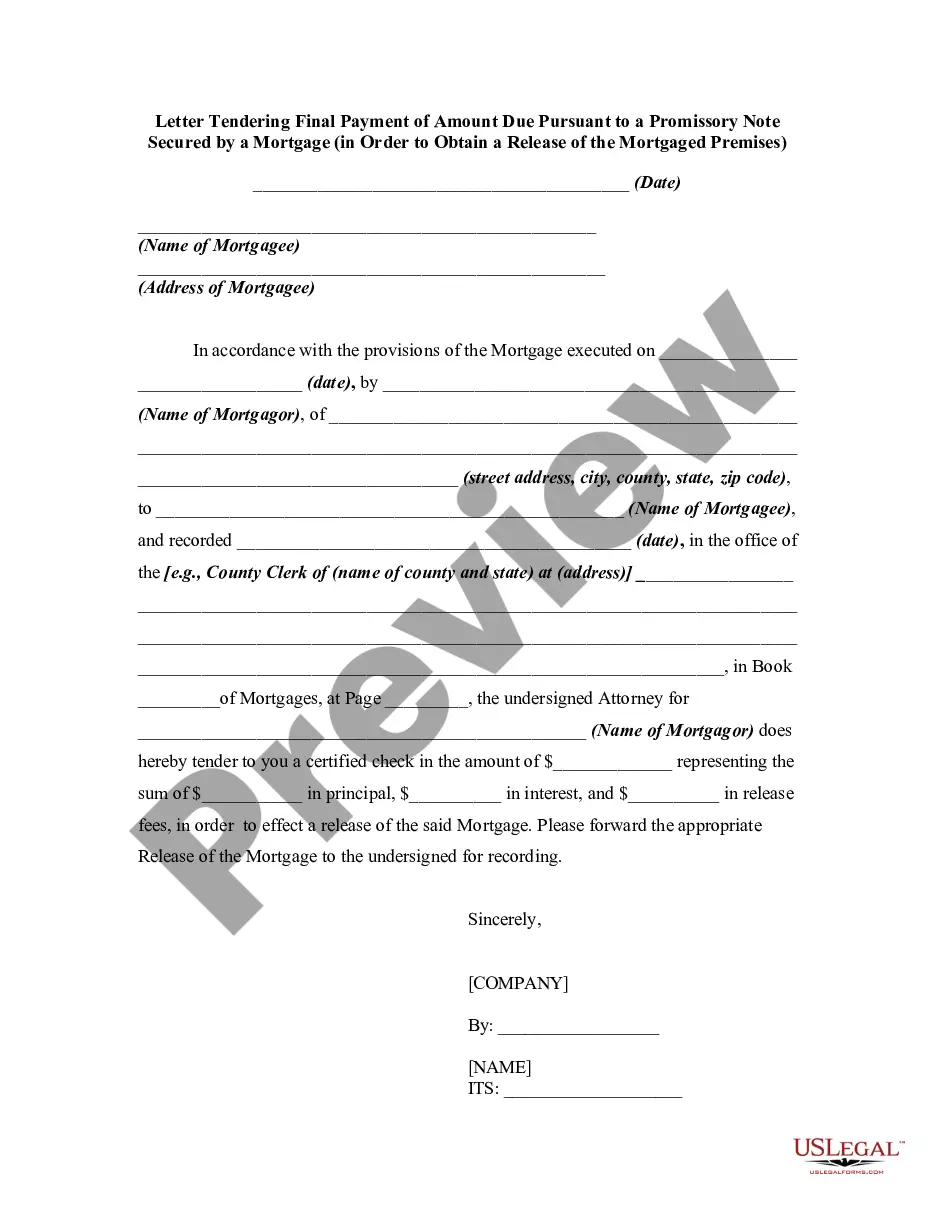
A disadvantage to the seller is that a contract for deed is frequently characterized by a low down payment and the purchase price is paid in installments instead of one lump sum.The legal fees and time frame for this process will be more extensive than a standard Power of Sale foreclosure.