Minnesota Last Will and Testament for a Married Person with No Children
What is this form?
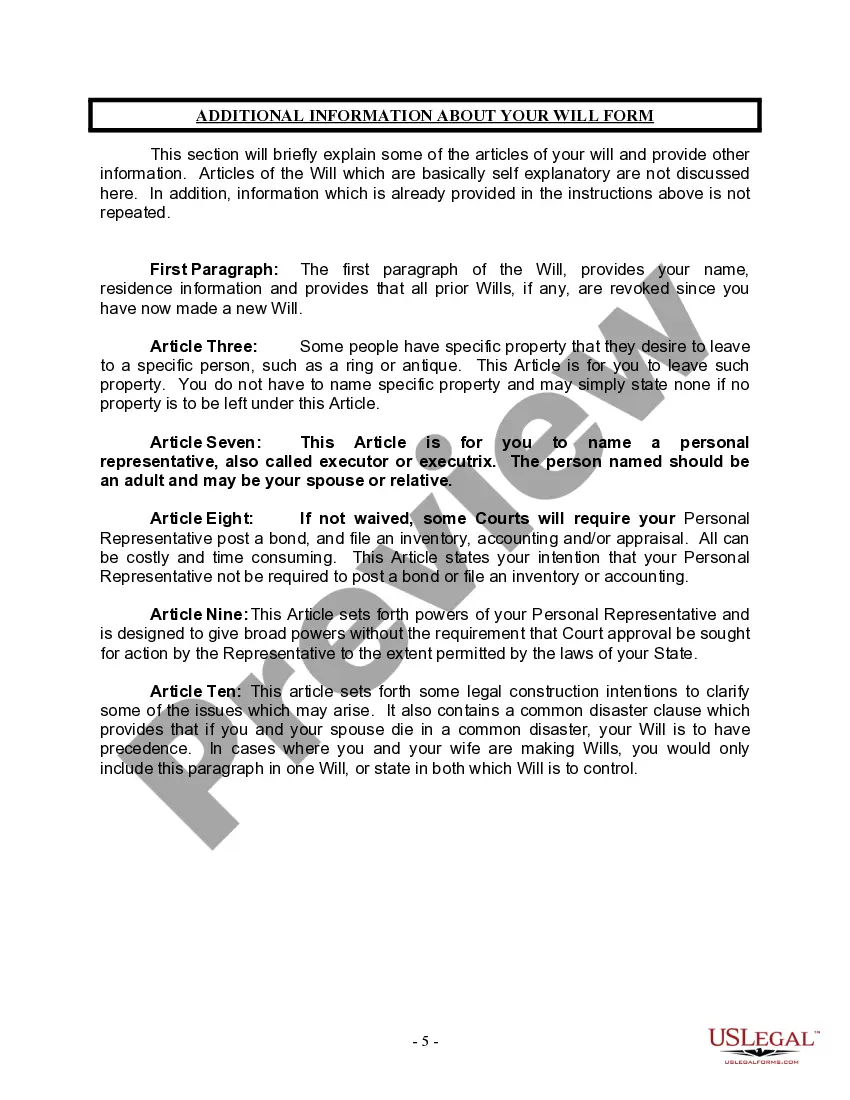
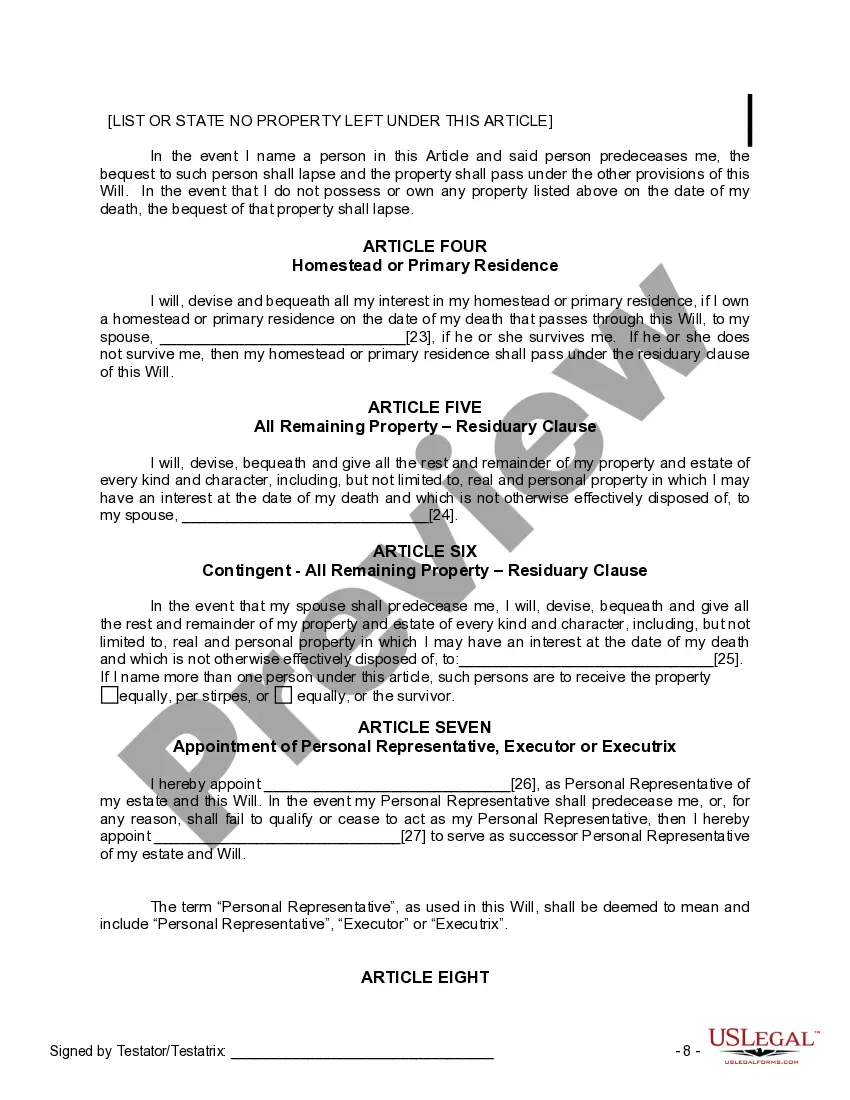
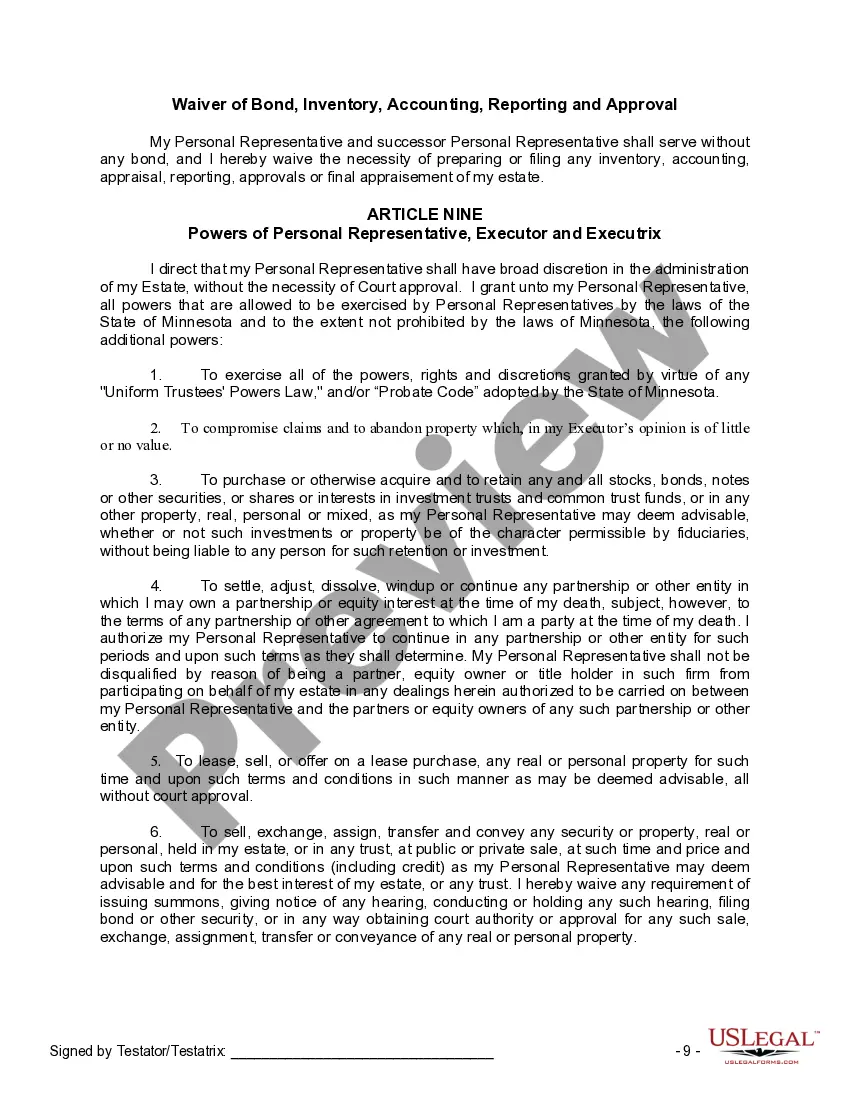
The Last Will and Testament for a Married Person with No Children is a legal document that allows a married individual without children to specify how their assets should be distributed upon their death. This form enables the appointment of a personal representative to handle the estate and includes provisions for the surviving spouse. It distinctly differs from other wills by focusing on situations where children are not present, simplifying the decision-making process for property distribution and executor appointment.
Form components explained
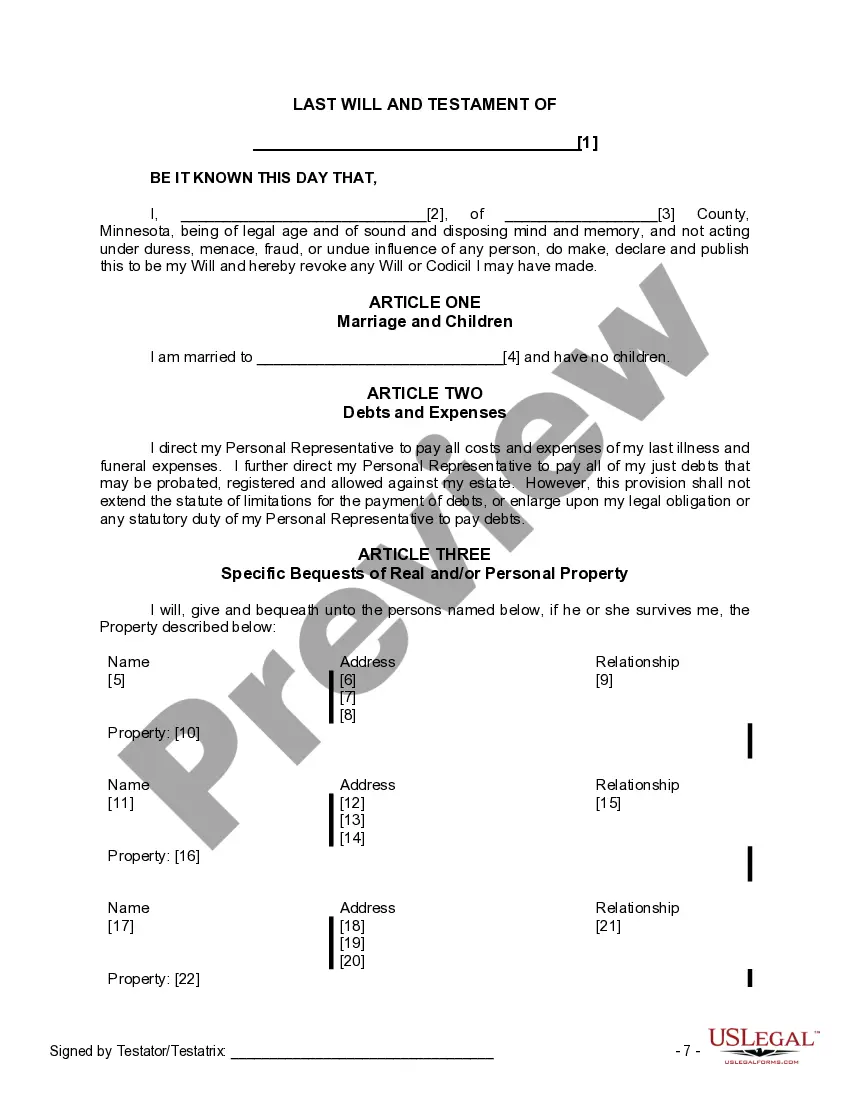
- Personal Information: Your name and county of residence.
- Spouse Details: Section for naming your spouse and their relationship.
- Specific Bequests: Option to name specific items to be given to others.
- Homestead Clause: Specifies how your primary residence will be handled.
- Personal Representative: Appointment of the executor to manage your estate.
- Signatures and Witnesses: Required signatures from two witnesses and potential notarization for validity.






When to use this document
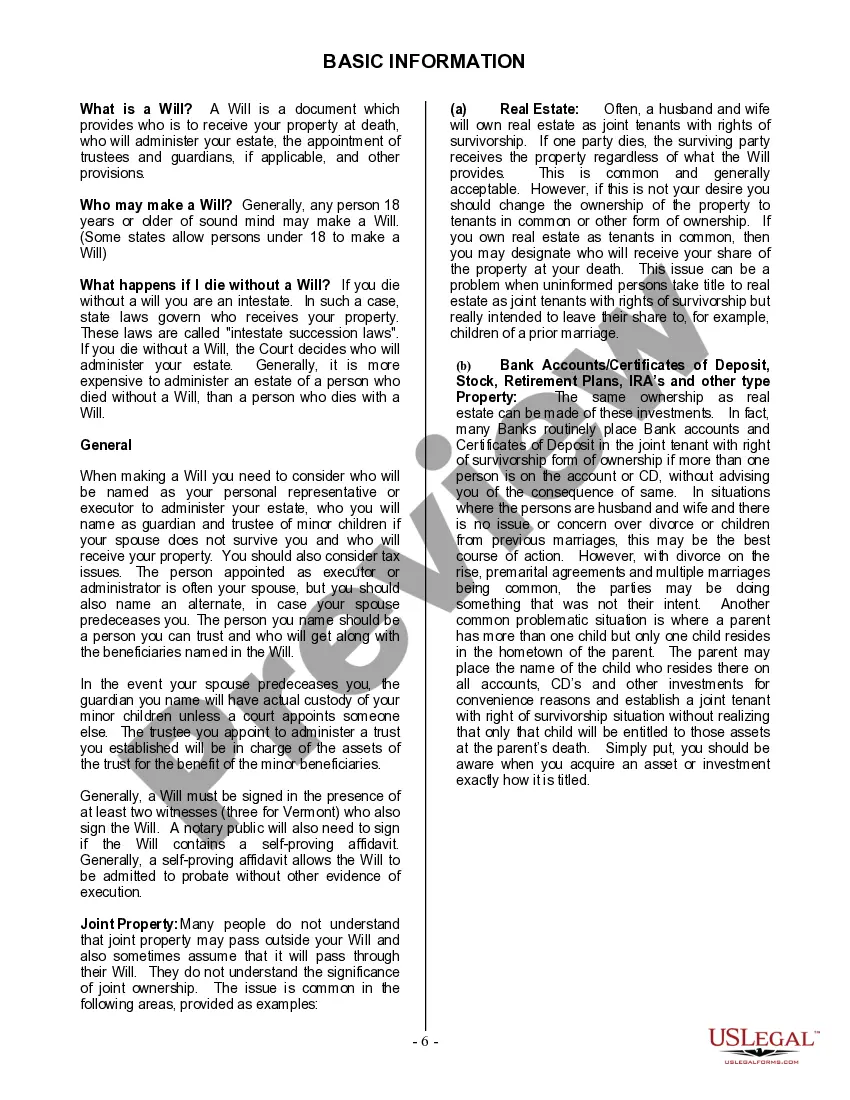
You should use this Last Will and Testament form if you are a married person without children and wish to outline how your assets will be distributed after your death. This may be necessary if you want to ensure that your spouse inherits your property and that your final wishes are documented clearly. This will is especially useful if you own significant property or assets and want to avoid intestacy laws that would otherwise determine how your estate is divided.
Who needs this form
- Married individuals without children.
- Spouses looking to secure their partner's financial future.
- Anyone wishing to specifically direct the distribution of their estate.
- Individuals seeking to avoid the complications of intestacy laws.
Instructions for completing this form
- Fill in your personal information, including your name and county of residence.
- Identify your spouse by entering their name in the designated field.
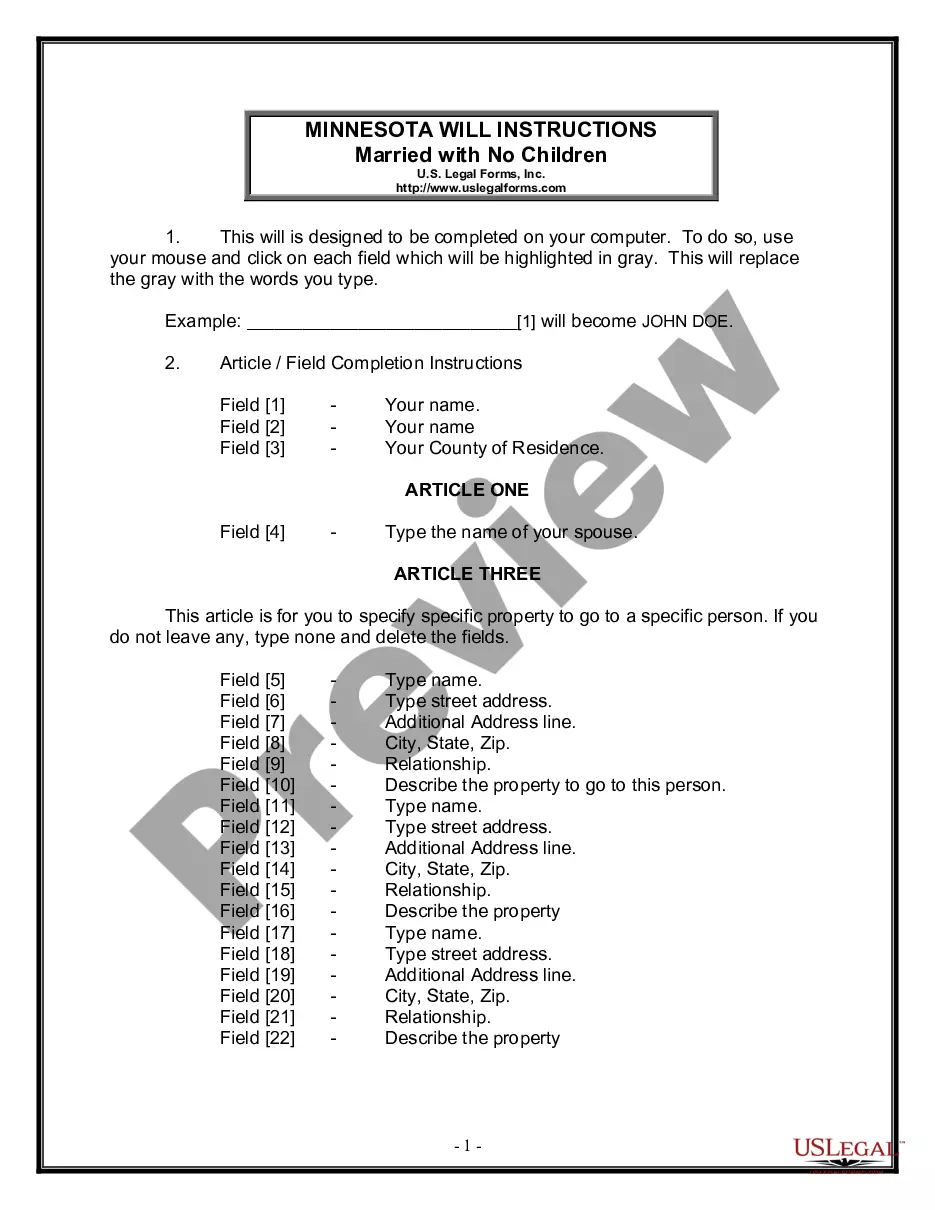
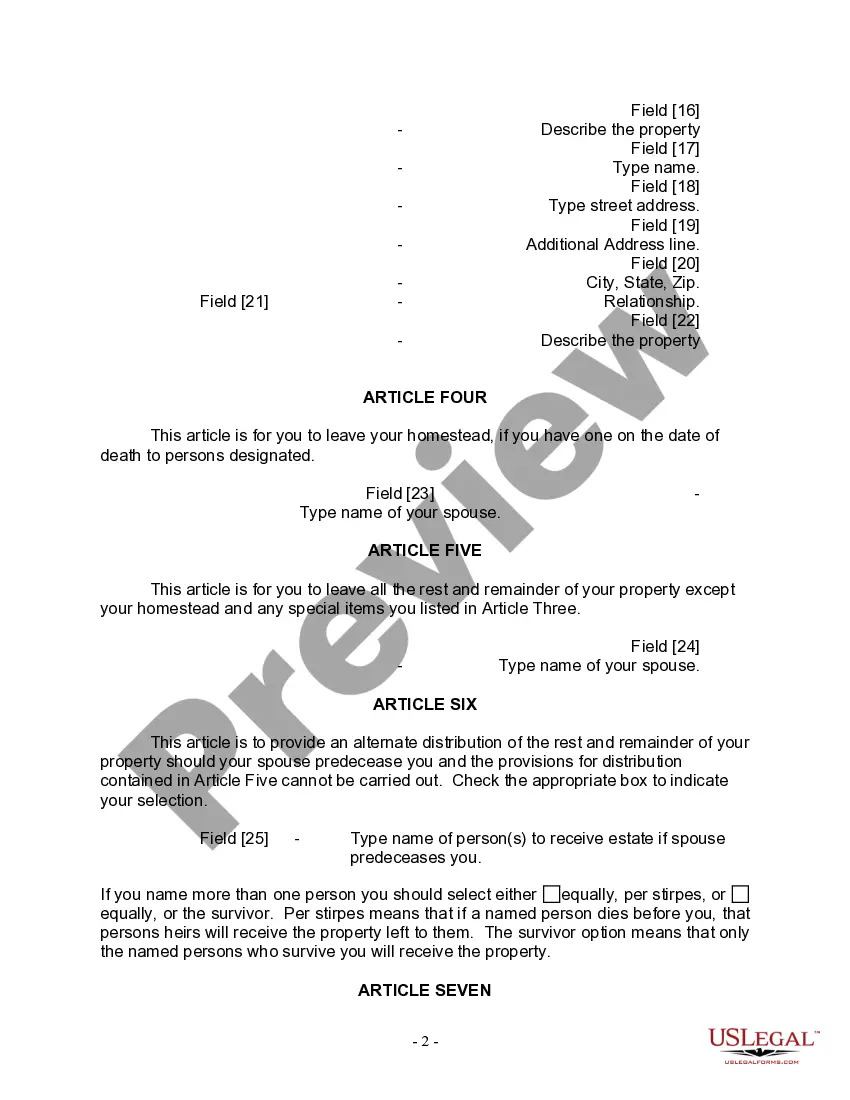
- Outline any specific bequests of property by providing detailed descriptions and intended recipients in the appropriate sections.
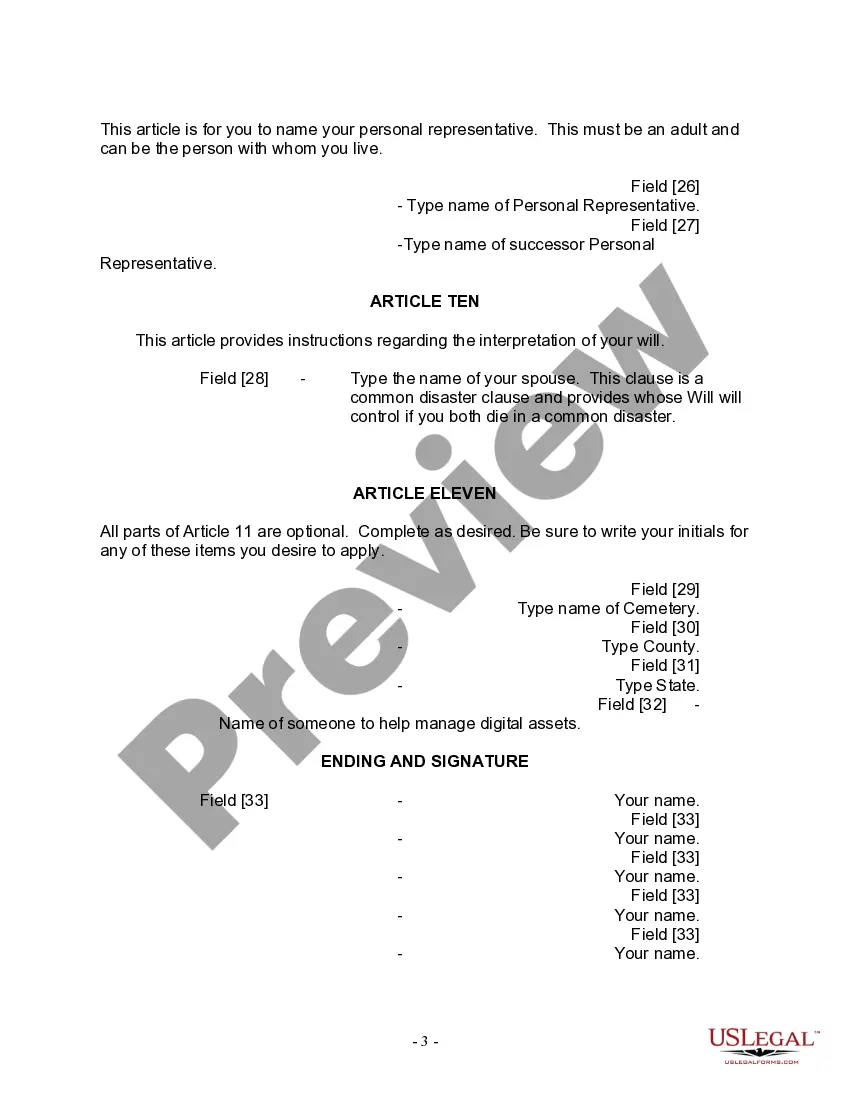
- Designate a personal representative who will execute your estate in line with your wishes.
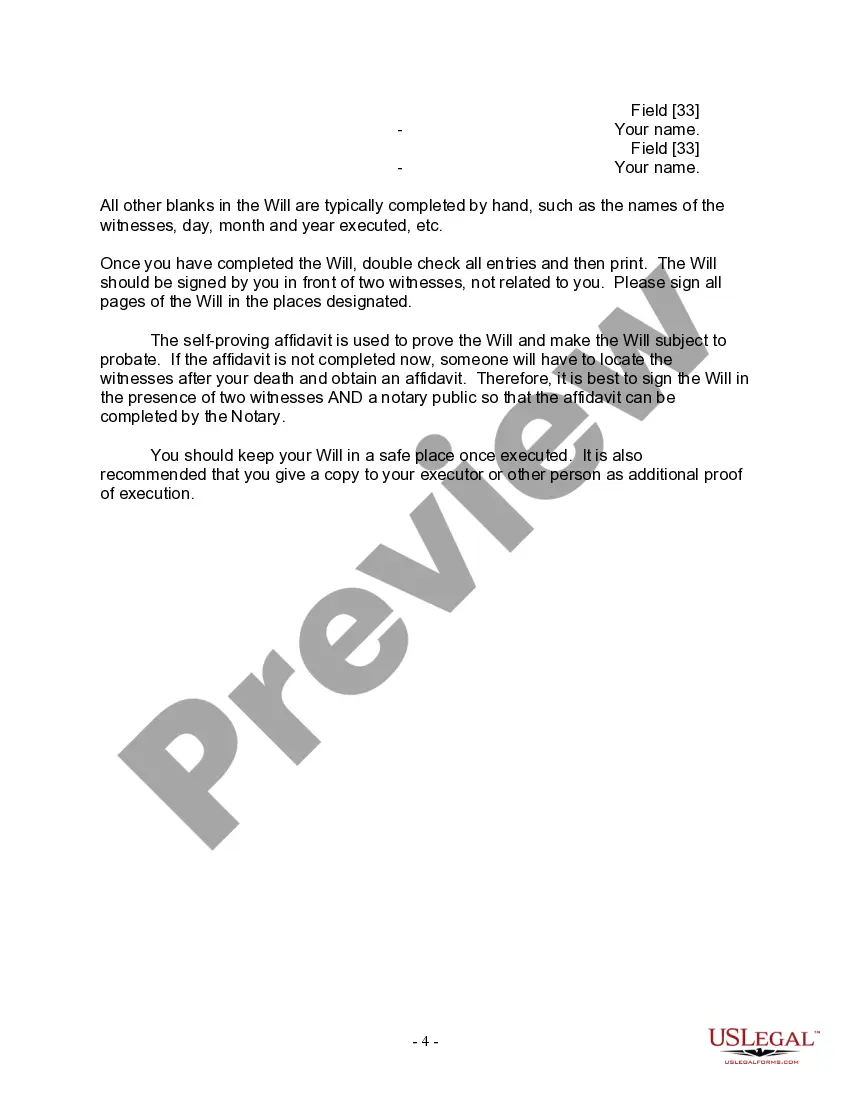
- After completion, sign the will in the presence of two witnesses, ensuring they are not named in the will.
Notarization requirements for this form
This document requires notarization to meet legal standards. US Legal Forms provides secure online notarization powered by Notarize, allowing you to complete the process through a verified video call, available 24/7.
Get your form ready online
Our built-in tools help you complete, sign, share, and store your documents in one place.
Make edits, fill in missing information, and update formatting in US Legal Forms—just like you would in MS Word.
Download a copy, print it, send it by email, or mail it via USPS—whatever works best for your next step.
Sign and collect signatures with our SignNow integration. Send to multiple recipients, set reminders, and more. Go Premium to unlock E-Sign.
If this form requires notarization, complete it online through a secure video call—no need to meet a notary in person or wait for an appointment.
We protect your documents and personal data by following strict security and privacy standards.

Make edits, fill in missing information, and update formatting in US Legal Forms—just like you would in MS Word.

Download a copy, print it, send it by email, or mail it via USPS—whatever works best for your next step.

Sign and collect signatures with our SignNow integration. Send to multiple recipients, set reminders, and more. Go Premium to unlock E-Sign.

If this form requires notarization, complete it online through a secure video call—no need to meet a notary in person or wait for an appointment.

We protect your documents and personal data by following strict security and privacy standards.
Typical mistakes to avoid
- Not having the will signed in the presence of required witnesses.
- Failing to specify alternative beneficiaries if a primary beneficiary predeceases you.
- Omitting specific property details in bequests, leading to uncertainty.
- Not keeping the will in a secure but accessible location.
Advantages of online completion
- Convenience of completing the form on your computer at your own pace.
- Editability allows you to make changes easily before finalizing.
- Access to templates created by licensed attorneys ensures legal validity.
- Immediate download makes the form readily available for use.
Summary of main points
- The Last Will and Testament for a Married Person with No Children ensures a clear distribution of your assets.
- Appoint a personal representative to handle your estate matters effectively.
- Specific bequests allow you to leave particular items to chosen individuals.
- This form needs to be signed in front of witnesses and potentially notarized for legal enforceability.
Looking for another form?
Form popularity
FAQ
Even if you are married with no kids, having a will is still important. A Minnesota Last Will and Testament for a Married Person with No Children allows you to specify how your assets should be distributed and can prevent family disputes. Additionally, it ensures that your spouse receives your property as you intend. Consider using US Legal Forms to create a personalized will that reflects your wishes.
In Minnesota, a spouse does not automatically inherit everything if there is no will. The state laws dictate how assets are divided, particularly when there are surviving relatives. For a married person with no children, a Minnesota Last Will and Testament can clarify your wishes and ensure a smooth transition of assets. US Legal Forms can help you create a legally sound will to protect your spouse's interests.
Yes, you can write your own will and have it notarized in Minnesota. However, it's essential to ensure that your will meets all legal requirements for it to be valid. A Minnesota Last Will and Testament for a Married Person with No Children can be simple to create with the right guidelines. US Legal Forms provides templates and instructions that can simplify this process for you.
To avoid probate in Minnesota without a will, consider using joint ownership or beneficiary designations. This way, assets automatically transfer to the surviving owner or beneficiary upon death. Additionally, creating a trust can help manage your assets outside of the probate process. For those seeking guidance, US Legal Forms offers resources to help you navigate these options effectively.
Download them from IRS.gov. Order by phone at 1-800-TAX-FORM (1-800-829-3676)
If you're planning to file electronically through e-file, you won't be able to e-file your state taxes before you e-file your federal taxes. Generally, e-file programs require you to file your federal return first, then file any state returns.
You do not need to send copies of your state returns with your Federal return. Many states require that you send a copy of your Federal return with your state return. TT will usually print out the Federal return with the state return if this is needed. Yes, you can staple your W-2 to your return.
You can file your Minnesota Individual Income Tax return electronically or by mail.You may qualify for free electronic filing if your income is $72,000 or less.
Am I required to include my federal tax return with my state of Illinois return? Yes, you need to send a copy of your federal tax return with your state return.
These states are Alaska, Florida, Nevada, South Dakota, Texas, Wyoming and Washington. If you are a resident in any of these states, you can ignore the process of filing state income tax and focus solely on your federal return.