Minnesota Warranty Deed from Limited Partnership or LLC is the Grantor, or Grantee
Understanding this form
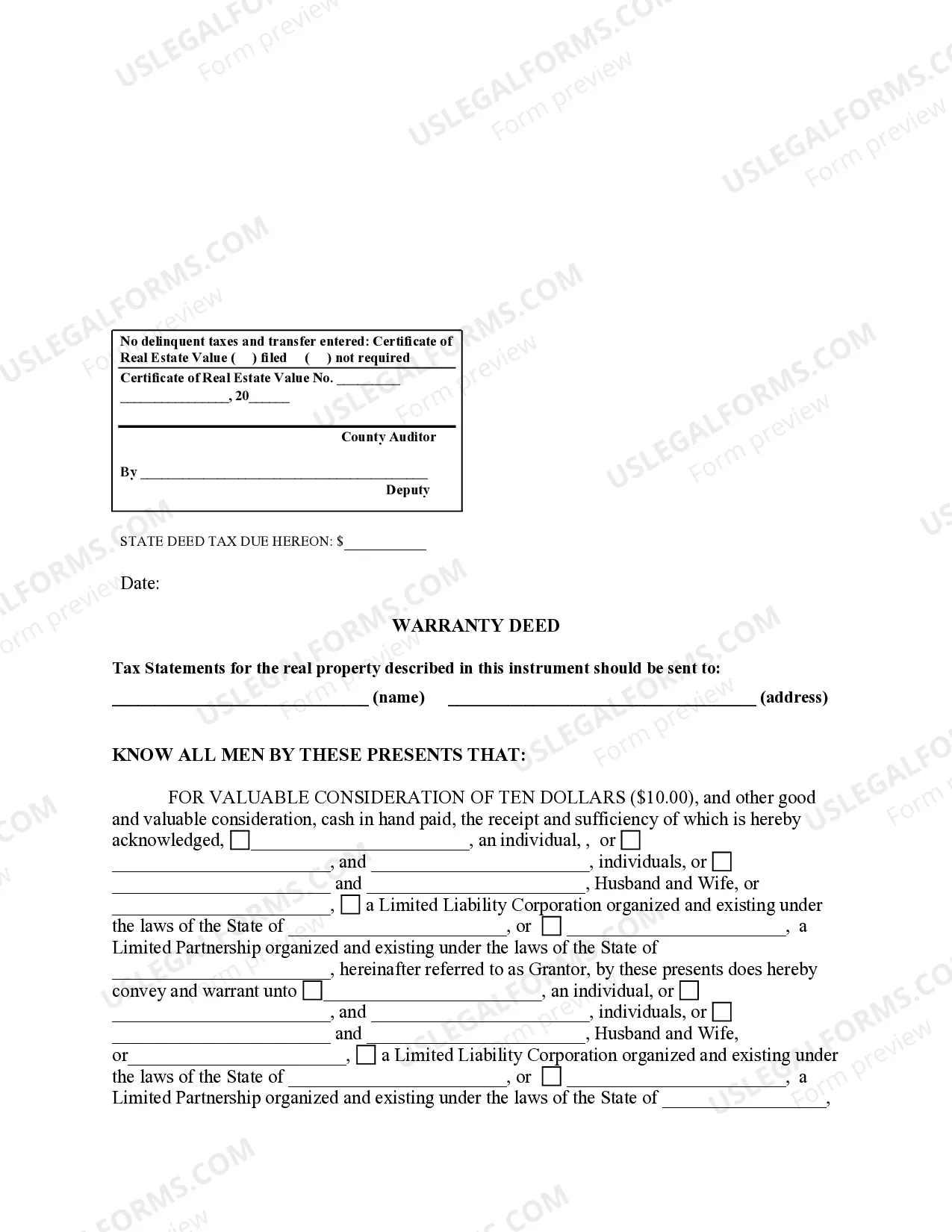
The Warranty Deed from Limited Partnership or LLC is a legal document used to transfer property ownership from a grantor, which can be a limited partnership or limited liability corporation (LLC), to a grantee. This form guarantees that the grantor holds clear title to the property and has the right to transfer it. It is distinct from other deeds, such as quitclaim deeds, because it includes explicit warranties of title against defects. This warranty provides assurance to the grantee regarding the safety of their investment in the property.
Main sections of this form
- Identification of the grantor and grantee, specifying their legal status as limited partnership or LLC.
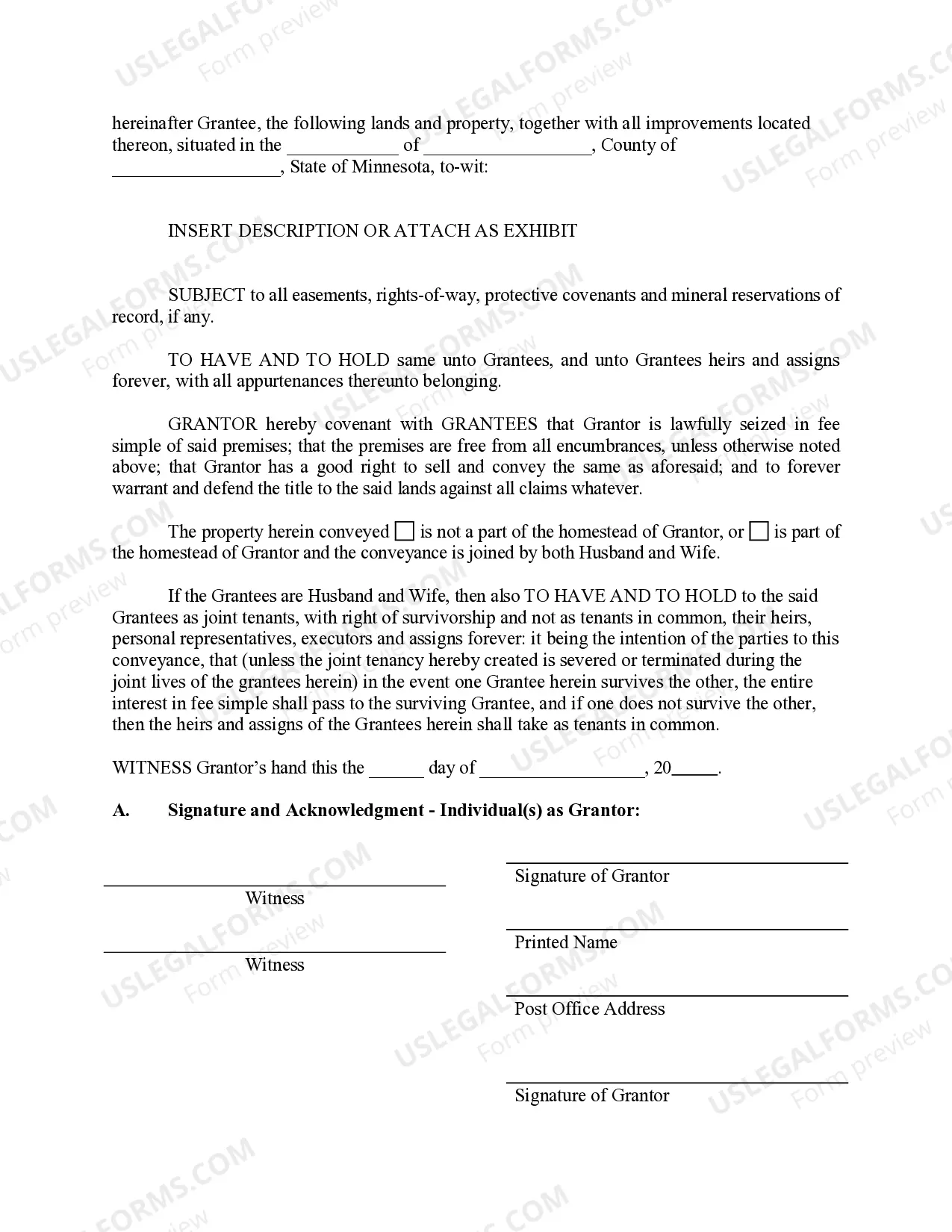
- Legal description of the property being transferred.
- Express warranties of title, ensuring the property is free from encumbrances.
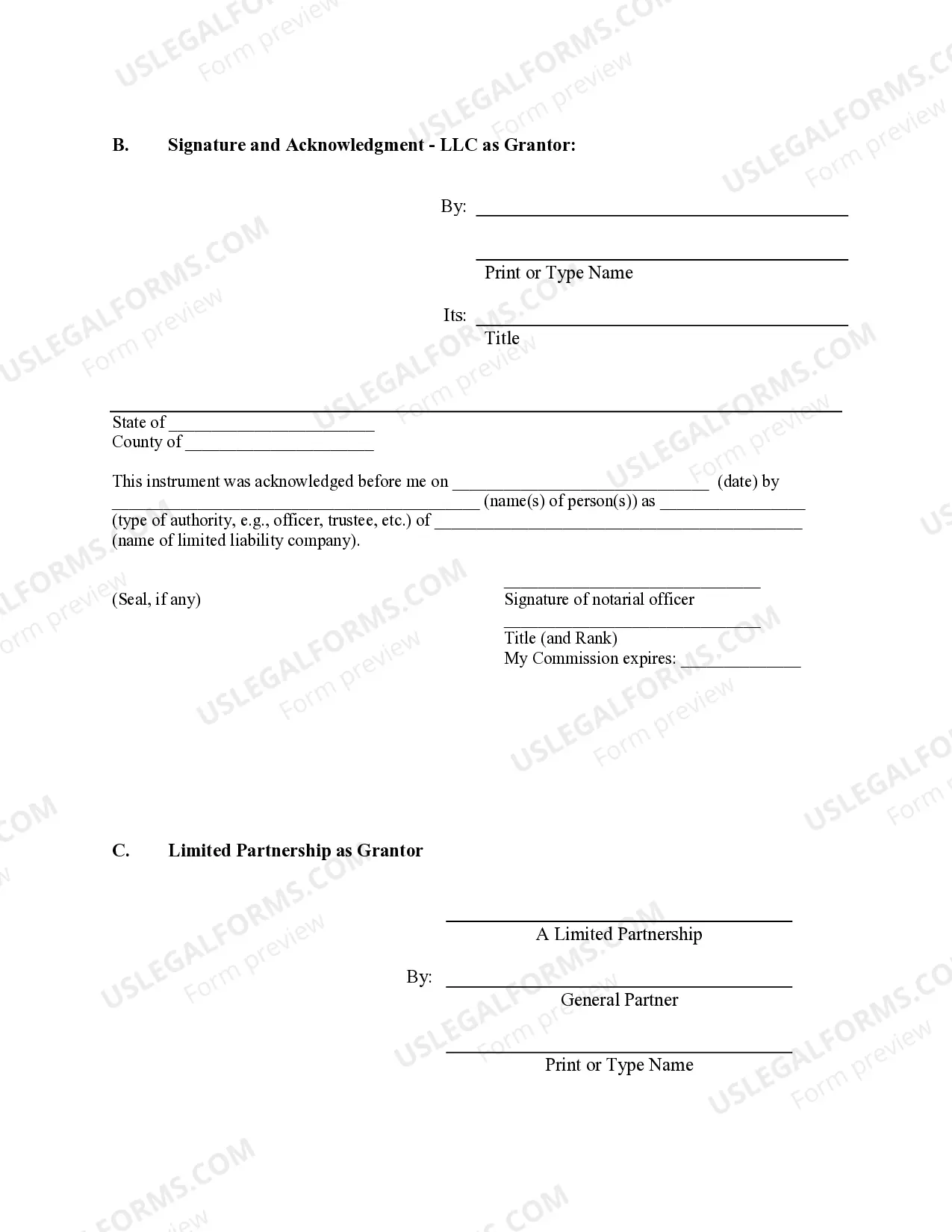
- Signature lines for the grantor, and if applicable, the co-signatures of spouses.
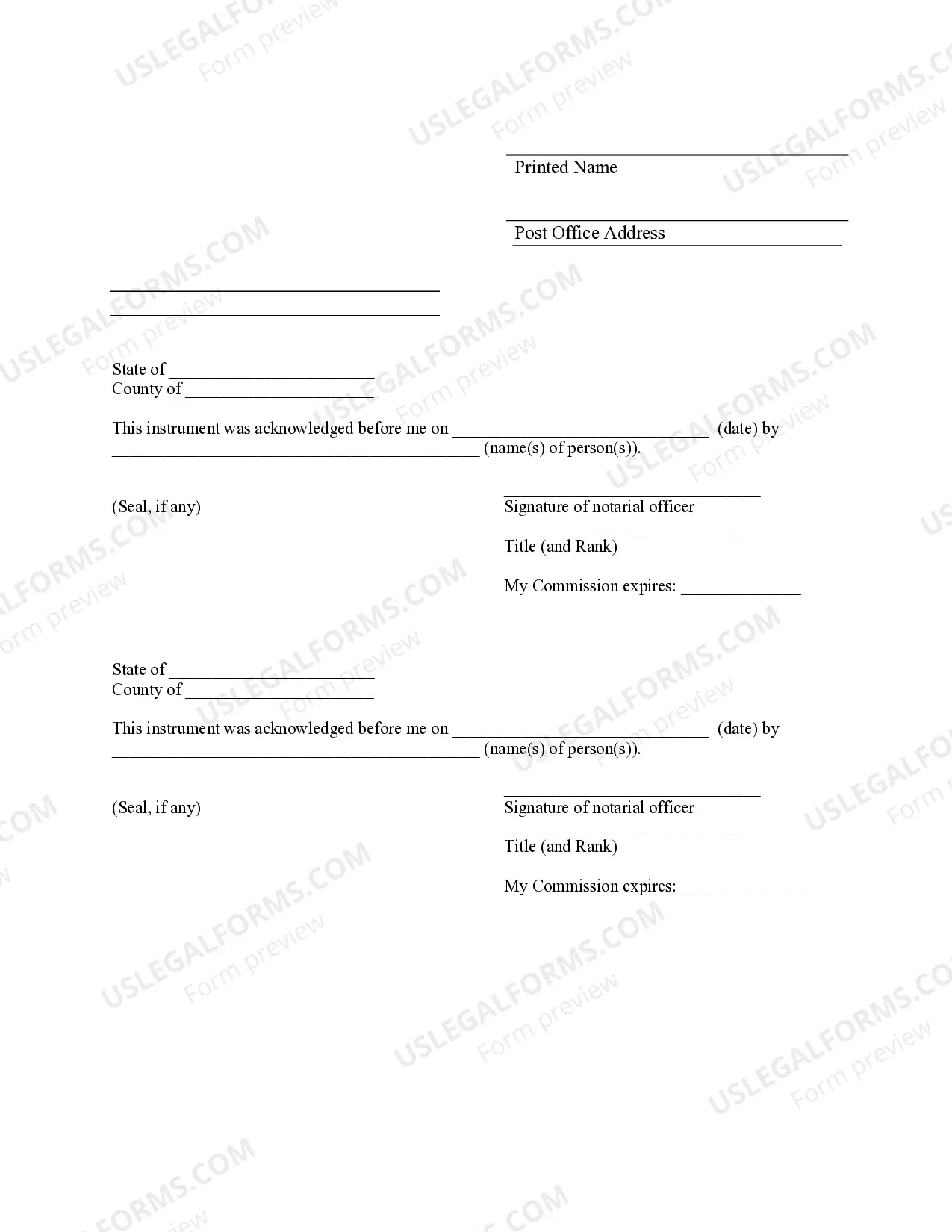
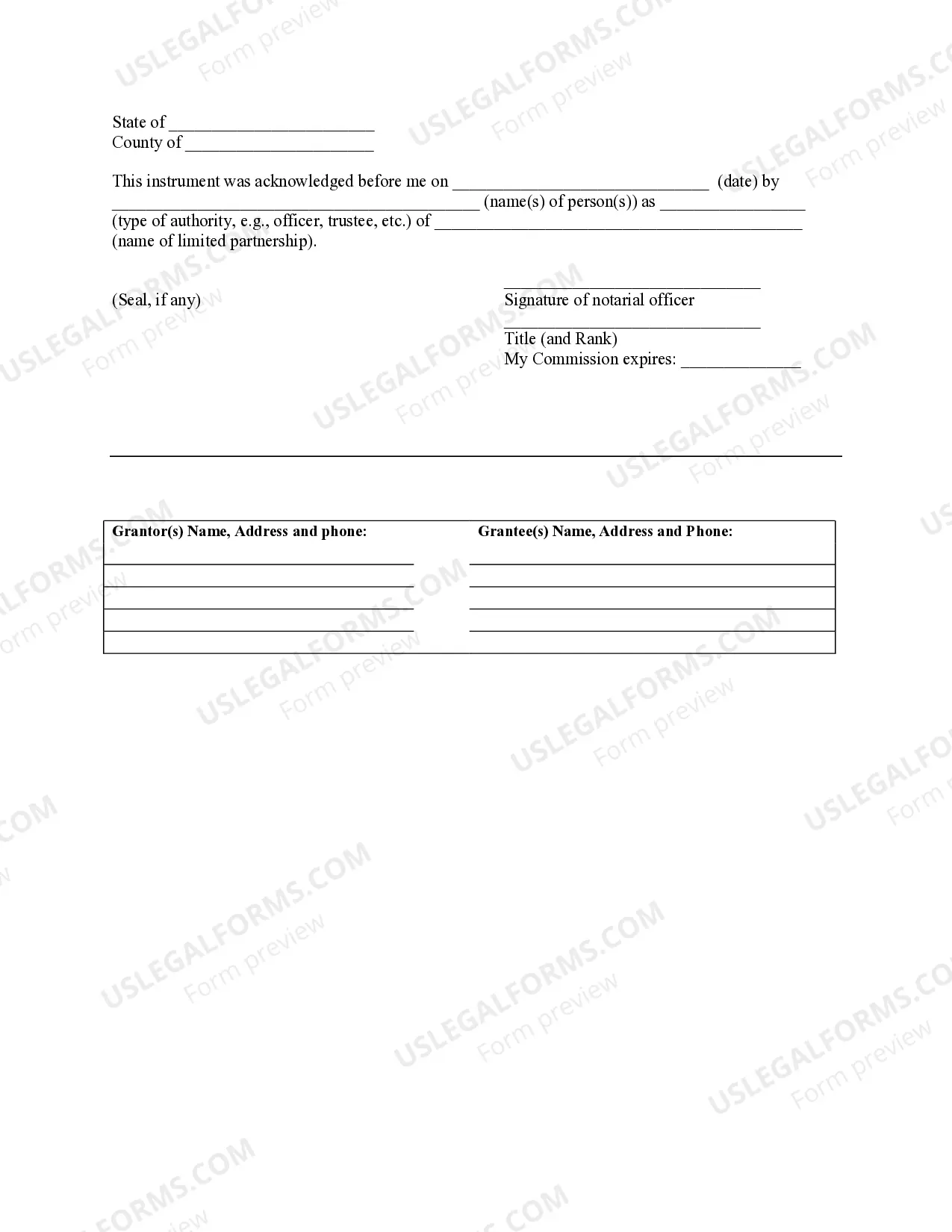
- Notarial acknowledgment section to validate the deed.




Situations where this form applies
This form is necessary when a limited partnership or LLC is involved in the transfer of real estate ownership, whether selling, gifting, or otherwise conveying property. It is commonly used in real estate transactions, investment property transfers, or any situation where an entity rather than an individual is the property owner. It's particularly useful when the grantor wants to provide legal assurances regarding the title to the property.
Who needs this form
This form is suitable for:
- Limited partnerships or LLCs that are transferring properties.
- Individuals acting on behalf of a limited partnership or LLC.
- Real estate professionals assisting clients with property transactions involving limited partnerships or LLCs.
How to complete this form
- Identify the full legal names of the grantor (limited partnership or LLC) and the grantee.
- Provide a clear legal description of the property, including location and boundaries.
- Enter any considerations given in exchange for the property, typically denoted as a nominal amount.
- Ensure signatures are collected from all required parties, including representatives of the grantor.
- Complete the notarial acknowledgment section to validate the deed.
Is notarization required?
To make this form legally binding, it must be notarized. Our online notarization service, powered by Notarize, lets you verify and sign documents remotely through an encrypted video session.
Get your form ready online
Our built-in tools help you complete, sign, share, and store your documents in one place.
Make edits, fill in missing information, and update formatting in US Legal Forms—just like you would in MS Word.
Download a copy, print it, send it by email, or mail it via USPS—whatever works best for your next step.
Sign and collect signatures with our SignNow integration. Send to multiple recipients, set reminders, and more. Go Premium to unlock E-Sign.
If this form requires notarization, complete it online through a secure video call—no need to meet a notary in person or wait for an appointment.
We protect your documents and personal data by following strict security and privacy standards.

Make edits, fill in missing information, and update formatting in US Legal Forms—just like you would in MS Word.

Download a copy, print it, send it by email, or mail it via USPS—whatever works best for your next step.

Sign and collect signatures with our SignNow integration. Send to multiple recipients, set reminders, and more. Go Premium to unlock E-Sign.

If this form requires notarization, complete it online through a secure video call—no need to meet a notary in person or wait for an appointment.

We protect your documents and personal data by following strict security and privacy standards.
Common mistakes
- Not including a complete legal description of the property.
- Failing to sign the document where required.
- Omitting necessary disclosures or warranties related to the property.
- Inadequate notarization or acknowledgment if required.
Why complete this form online
- Convenience of accessing the form remotely and downloading it at any time.
- Editability allows for quick adjustments to be made as needed.
- Reliable format ensures compliance with legal standards established in Minnesota.
- 24/7 access to customer support for any queries while completing the form.
What to keep in mind
- The Warranty Deed is essential for property transfers involving limited partnerships or LLCs.
- This form provides important legal protections for grantees regarding property title.
- Proper completion requires careful attention to detail, including notarization.
- Utilizing online forms streamlines the process and ensures compliance with state laws.
Looking for another form?


Form popularity
FAQ
For a Minnesota Warranty Deed, you need to provide essential information such as the names of the grantor and grantee, a legal description of the property, and the signature of the grantor. Additionally, the deed must be notarized to be valid. Make sure to include any specific clauses that address warranties and covenants. Using US Legal Forms can help you access the necessary forms and ensure compliance with Minnesota's legal requirements.
Typically, the grantor, which can be a Limited Partnership or LLC, files the Minnesota Warranty Deed. This deed serves as a legal document transferring property ownership to the grantee. It is crucial for the grantor to ensure that all information is accurate before submitting the deed. You can find assistance and templates on the US Legal Forms platform to streamline this process.
The primary difference between a warranty deed and a limited warranty deed lies in the extent of the guarantees provided. A warranty deed offers a full guarantee that the title is clear of any claims, while a limited warranty deed only covers claims arising during the grantor's ownership. If a Minnesota Warranty Deed from Limited Partnership or LLC is the Grantor, it is important to know whether you're receiving a full or limited warranty deed, as it impacts your protection as the grantee. Uslegalforms can help clarify these distinctions and assist you in choosing the right deed for your needs.
In a warranty deed, the grantor is the person or entity transferring ownership of the property, while the grantee is the person or entity receiving that ownership. When a Minnesota Warranty Deed from Limited Partnership or LLC is the Grantor, it signifies that the entity is the one transferring the property rights. Understanding the roles of the grantor and grantee is essential for ensuring a smooth transaction.
A limited warranty deed in Minnesota offers a level of protection that is not as comprehensive as a full warranty deed. This type of deed guarantees that the grantor is only responsible for claims that arose during their ownership of the property. If a Minnesota Warranty Deed from Limited Partnership or LLC is the Grantor, it means that the entity will only cover issues related to its ownership period. This deed type is useful when the seller cannot guarantee a clear title for the entire history of the property.
You typically obtain a warranty deed from a property owner who is transferring their interest in the property. In the case where a Minnesota Warranty Deed from Limited Partnership or LLC is the Grantor, you will receive the deed from that legal entity. This ensures that the entity provides a guarantee of clear title to the property being transferred. Using platforms like uslegalforms can help you navigate this process smoothly.
A general warranty deed is used to transfer an interest in real estate in Minnesota in most real estate transactions. A Minnesota warranty deed conveys real property with warranty covenants to the buyer. It requires an acknowledgement of the grantor's signature.
A general warranty deed is used to transfer an interest in real estate in Minnesota in most real estate transactions. A Minnesota warranty deed conveys real property with warranty covenants to the buyer. It requires an acknowledgement of the grantor's signature.
Special warranty deeds are most commonly used with commercial property transactions. Single-family and other residential property transactions will usually use a general warranty deed. Many mortgage lenders insist upon the use of the general warranty deed.
A Minnesota Quit Claim Deed is a legal document that is used to convey property from one person to the next within the state. This type of transfer comes with no guarantee as to whether or not the title is clear, and doesn't reveal whether or not the seller has the legal right or authority to sell the property.