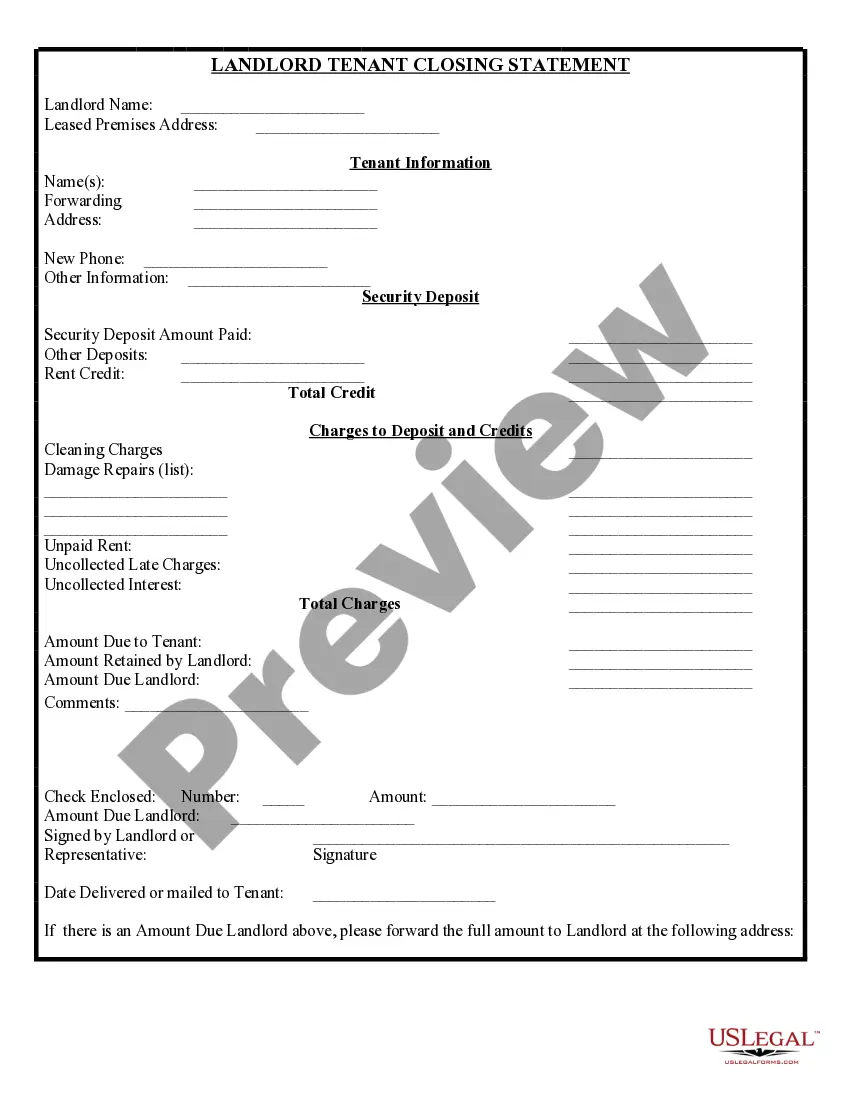
Minnesota Landlord Tenant Closing Statement to Reconcile Security Deposit
Understanding this form
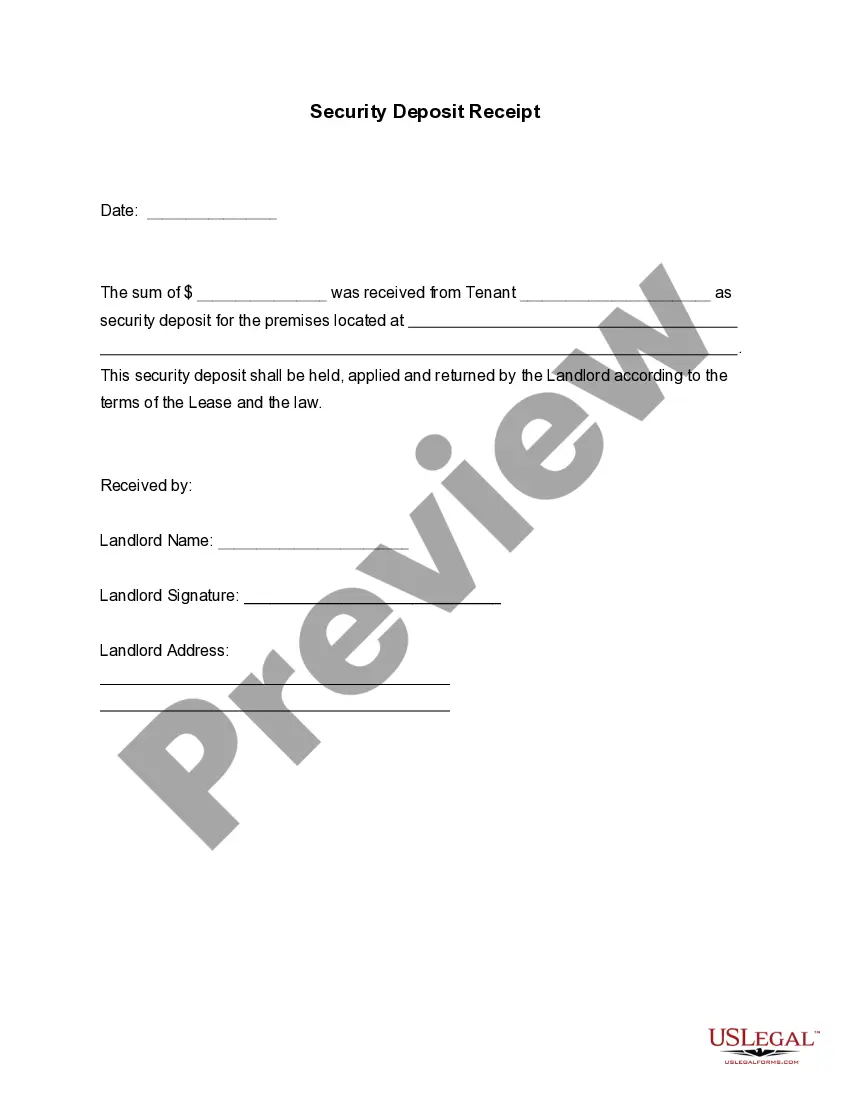
The Landlord Tenant Closing Statement to Reconcile Security Deposit is a document used by landlords to detail the handling of security deposits collected from tenants. This form is essential to provide transparency regarding the amounts held, including deposits and credits, while outlining any deductions made for damages beyond normal wear and tear. Unlike rental agreements, this form specifically addresses the management and potential return of security deposits, ensuring that both landlords and tenants have a clear understanding of their rights and responsibilities.
Key parts of this document
- Identification of parties involved: landlord and tenant details.
- Amount of security deposit initially collected.
- Record of any deductions along with reasons specified.
- Documentation of credits and payments made by the tenant.
- Final amount to be returned to the tenant, if applicable.
When to use this form
This form should be used at the end of a lease when a tenant vacates the property and the landlord needs to account for the security deposit. It helps to establish a clear record of any deductions made for damages, unpaid rent, or other reasons, and to inform the tenant of the final amount being returned to them. Using this statement can help prevent disputes between landlords and tenants regarding the security deposit settlement.
Intended users of this form
- Landlords who manage rental properties.
- Property managers handling lease agreements.
- Tenants who need to verify the status of their security deposit.
How to complete this form
- Identify the landlord and tenant involved by providing their full names and addresses.
- Specify the total amount of the security deposit collected from the tenant.
- Detail any deductions made, including descriptions and amounts for each deduction.
- List any credits applied towards the security deposit, including payments made by the tenant.
- Calculate the final balance to be returned to the tenant and provide a summary of the transaction.
Does this form need to be notarized?
This form does not typically require notarization to be legally valid. However, some jurisdictions or document types may still require it. US Legal Forms provides secure online notarization powered by Notarize, available 24/7 for added convenience.
Get your form ready online
Our built-in tools help you complete, sign, share, and store your documents in one place.
Make edits, fill in missing information, and update formatting in US Legal Forms—just like you would in MS Word.
Download a copy, print it, send it by email, or mail it via USPS—whatever works best for your next step.
Sign and collect signatures with our SignNow integration. Send to multiple recipients, set reminders, and more. Go Premium to unlock E-Sign.
If this form requires notarization, complete it online through a secure video call—no need to meet a notary in person or wait for an appointment.
We protect your documents and personal data by following strict security and privacy standards.

Make edits, fill in missing information, and update formatting in US Legal Forms—just like you would in MS Word.

Download a copy, print it, send it by email, or mail it via USPS—whatever works best for your next step.

Sign and collect signatures with our SignNow integration. Send to multiple recipients, set reminders, and more. Go Premium to unlock E-Sign.

If this form requires notarization, complete it online through a secure video call—no need to meet a notary in person or wait for an appointment.

We protect your documents and personal data by following strict security and privacy standards.
Common mistakes
- Failing to document all deductions clearly, which could lead to disputes.
- Not providing a detailed explanation for each deduction made from the security deposit.
- Neglecting to include the final amount due to the tenant.
- Forgetting to have both parties sign the form to acknowledge agreement.
Why complete this form online
- Convenience of instant access and download.
- Editability to customize details pertinent to your lease.
- Reliability of using attorney-drafted forms to meet legal standards.
Looking for another form?





Form popularity
FAQ
When writing a letter to your landlord requesting the return of your security deposit, start by clearly stating your address and the date. Include a polite request for the return of the deposit, referencing the Minnesota Landlord Tenant Closing Statement to Reconcile Security Deposit, and specify the amount due. Make sure to mention any relevant dates, such as when you moved out, to establish context. Lastly, keep a copy of the letter for your records, and consider sending it via certified mail for proof of delivery.
If your landlord does not return your security deposit, you should first review your lease agreement for specific terms regarding the return policy. Next, you can send a formal letter requesting the return of your deposit, citing any legal obligations under Minnesota law. If the landlord still fails to respond, consider consulting resources like US Legal Forms to explore your options, including filing a small claims court case to recover the funds.
Yes, a security deposit should be listed on a Minnesota Landlord Tenant Closing Statement to Reconcile Security Deposit as a credit. This ensures transparency in the financial transaction between the landlord and tenant. By reflecting the security deposit as a credit, both parties can clearly see how it impacts the total amount due or refunded at closing. This practice helps avoid disputes and fosters a clear understanding of financial obligations.
While this question pertains to Colorado, it's essential to note that each state has its own regulations. In Colorado, landlords must return a tenant's security deposit within 60 days after the lease ends. Understanding these laws can help landlords and tenants in Minnesota prepare their own Minnesota Landlord Tenant Closing Statement to Reconcile Security Deposit effectively, ensuring compliance with state laws.
A letter of reconciliation for a security deposit is a document that outlines the final accounting of a tenant's security deposit. It details any deductions, such as repairs or unpaid rent, and provides a summary of the remaining deposit amount. This letter is a vital part of the Minnesota Landlord Tenant Closing Statement to Reconcile Security Deposit, ensuring transparency between landlords and tenants.
Filling out a landlord statement involves providing clear and concise information about the lease, the security deposit, and any deductions made. It's crucial to include all relevant details to avoid disputes. Utilizing resources from uslegalforms can guide you in crafting a comprehensive Minnesota Landlord Tenant Closing Statement to Reconcile Security Deposit that meets legal requirements.
To record a tenant's security deposit, you should create a detailed record that includes the amount received, the date of the transaction, and the tenant's name. This record can serve as a reference when preparing a Minnesota Landlord Tenant Closing Statement to Reconcile Security Deposit. Using a digital platform like uslegalforms can simplify this process by providing templates and tools for accurate record-keeping.
In Minnesota, landlords must return a tenant's security deposit within 21 days after the lease ends. If there are any deductions, landlords must provide an itemized list of those deductions along with the remaining deposit amount. This process is essential for creating a Minnesota Landlord Tenant Closing Statement to Reconcile Security Deposit, ensuring that both parties understand the final financial transactions.
To take your landlord to court over a security deposit, you should first gather all relevant documentation, including your lease agreement and the Minnesota Landlord Tenant Closing Statement to Reconcile Security Deposit. Next, you may want to attempt to resolve the issue through direct communication with your landlord. If that fails, you can file a small claims case in your local court. Utilizing resources like US Legal Forms can help you prepare the necessary documents to support your claim.