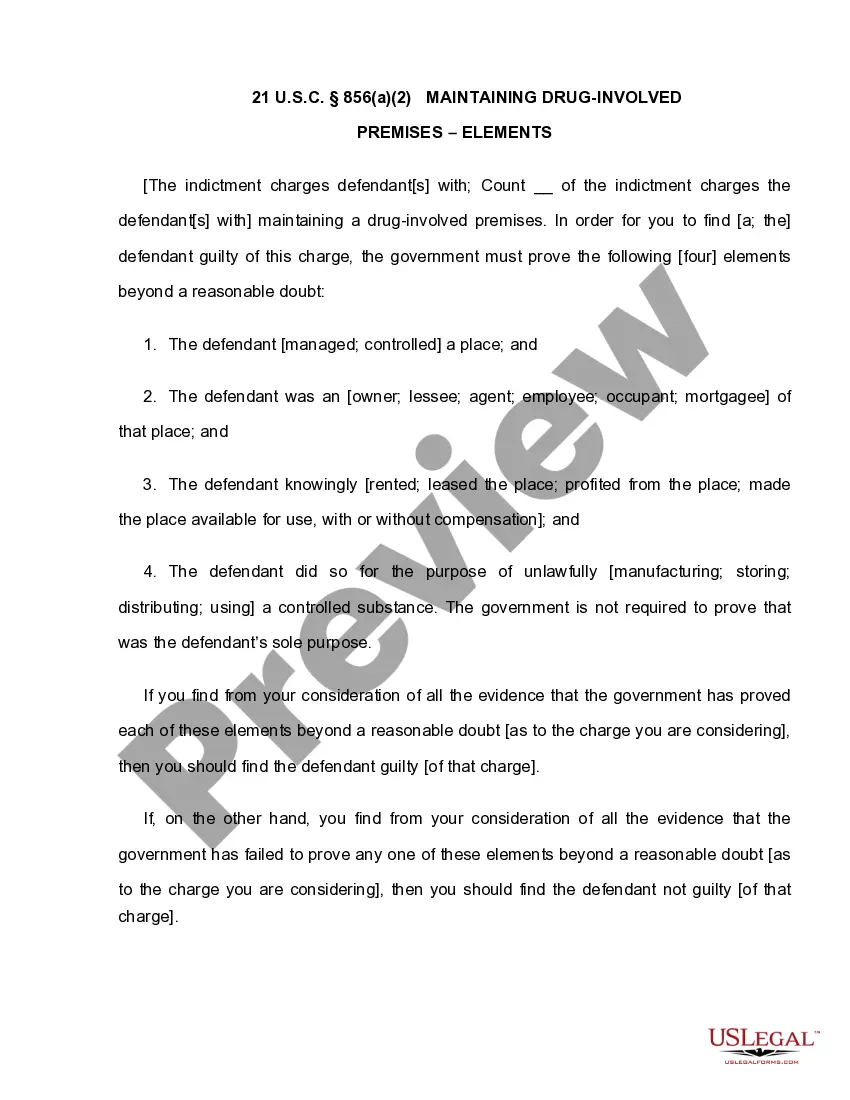
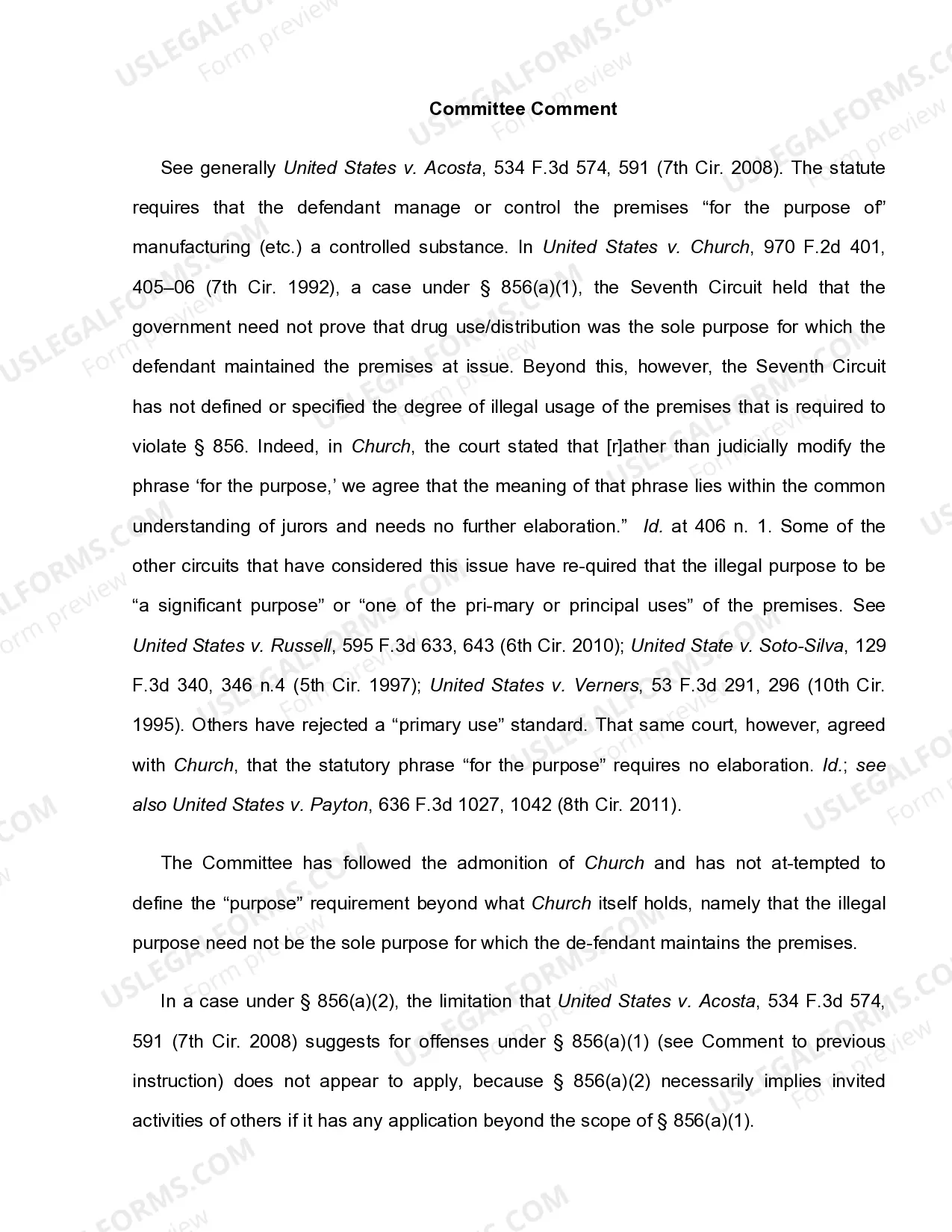
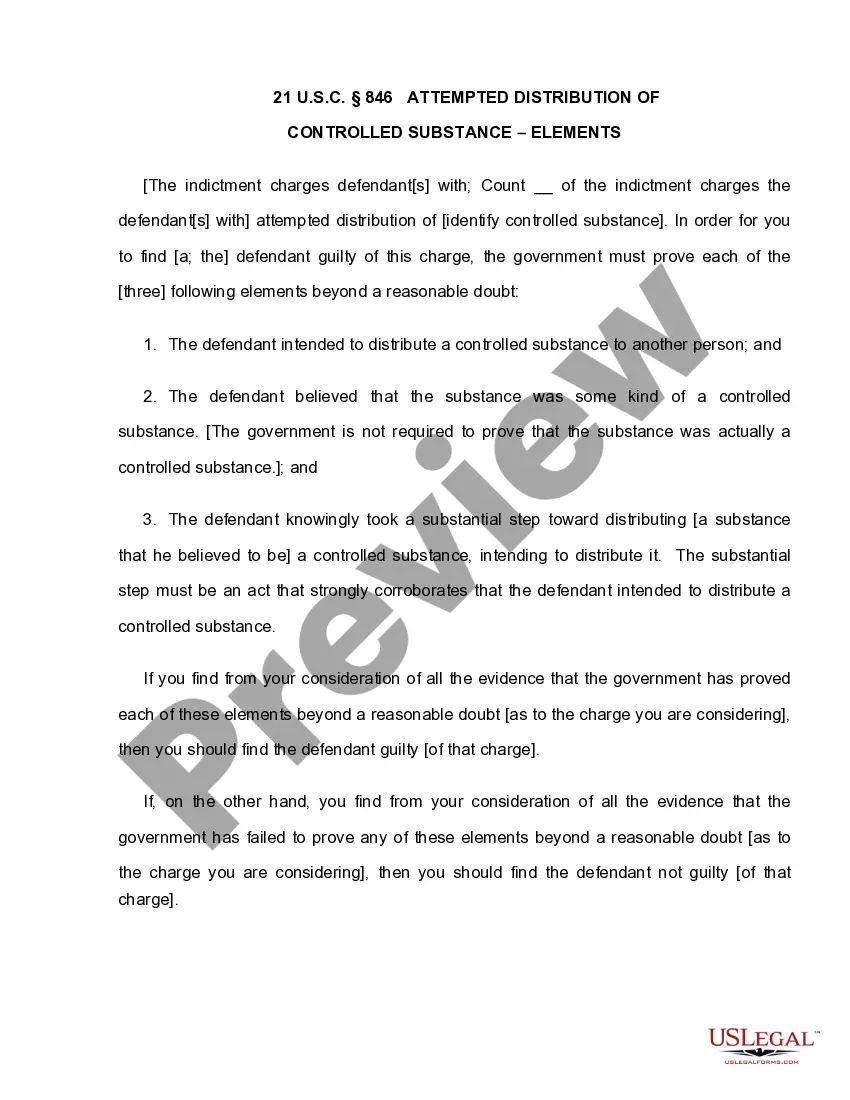
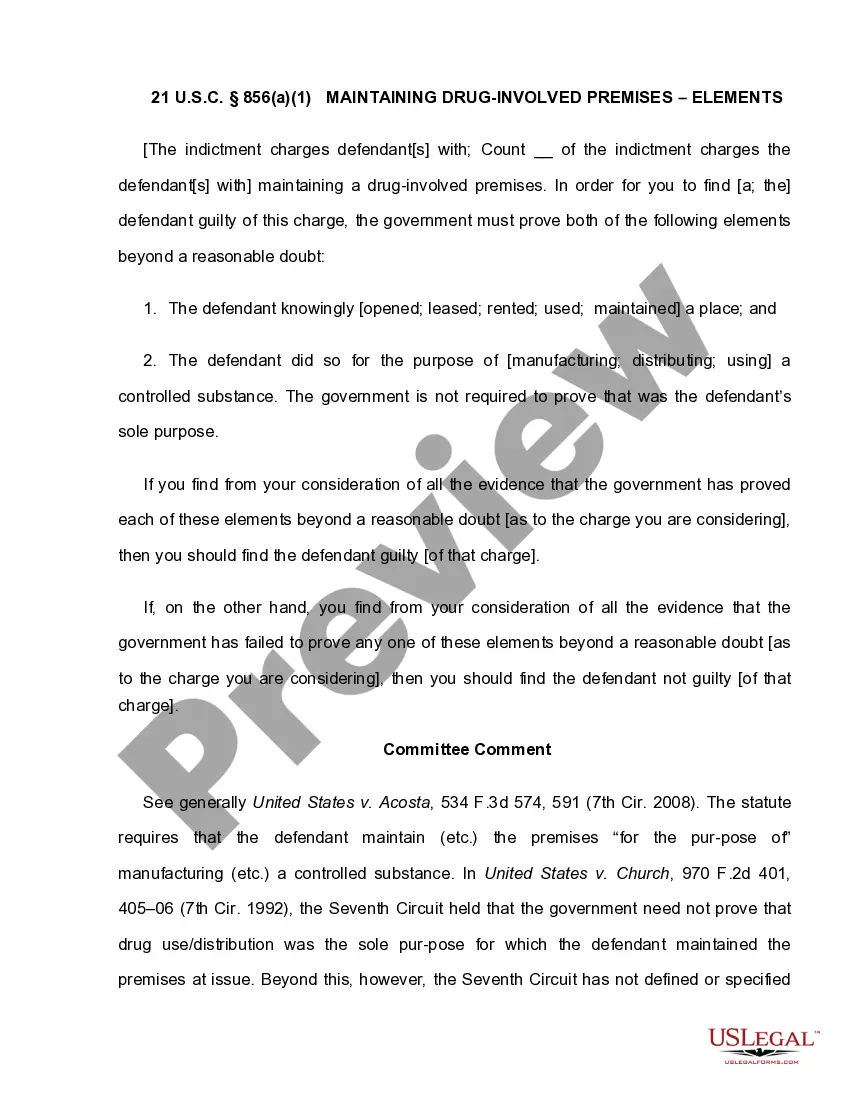
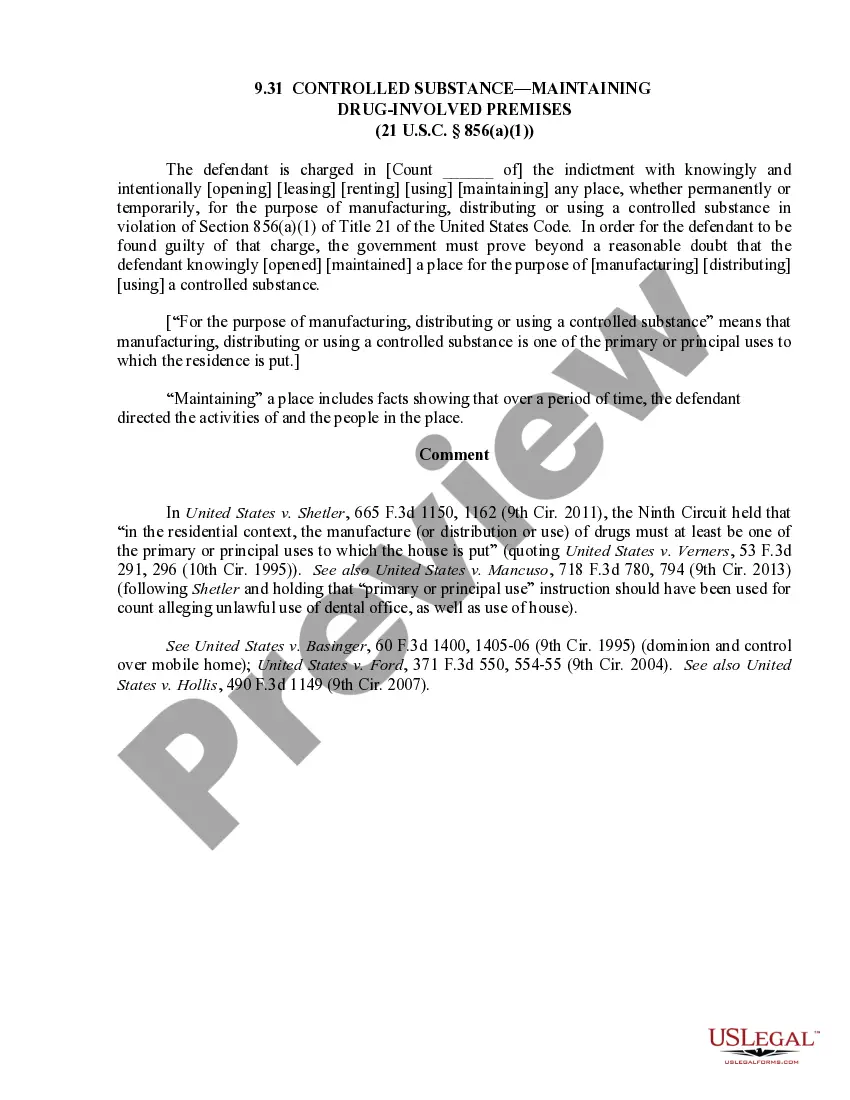
21 U.S.C. Sec. 856(A)(2) MAINTAINING DRUG-INVOLVED PREMISES

Does this form need to be notarized?
In most cases, this form does not require notarization. However, some jurisdictions or signing circumstances might. US Legal Forms offers online notarization powered by Notarize, accessible 24/7 for a quick, remote process.
Get your form ready online
Our built-in tools help you complete, sign, share, and store your documents in one place.
Make edits, fill in missing information, and update formatting in US Legal Forms—just like you would in MS Word.
Download a copy, print it, send it by email, or mail it via USPS—whatever works best for your next step.
Sign and collect signatures with our SignNow integration. Send to multiple recipients, set reminders, and more. Go Premium to unlock E-Sign.
If this form requires notarization, complete it online through a secure video call—no need to meet a notary in person or wait for an appointment.
We protect your documents and personal data by following strict security and privacy standards.

Make edits, fill in missing information, and update formatting in US Legal Forms—just like you would in MS Word.

Download a copy, print it, send it by email, or mail it via USPS—whatever works best for your next step.

Sign and collect signatures with our SignNow integration. Send to multiple recipients, set reminders, and more. Go Premium to unlock E-Sign.

If this form requires notarization, complete it online through a secure video call—no need to meet a notary in person or wait for an appointment.

We protect your documents and personal data by following strict security and privacy standards.
Looking for another form?



Form popularity
FAQ
Conspiracy to distribute and to possess with intent to distribute less than 28 grams of crack cocaine, or less than 500 grams of cocaine, in violation of 21 U.S.C. § 846 and 21 U.S.C. § 841(b)(1)(C) carries a possible punishment of up to twenty years imprisonment and a fine of up to $1 million.
Any person who violates subsection (a) of this section shall be sentenced to a term of imprisonment of not more than 20 years or a fine of not more than $500,000, or both, or a fine of $2,000,000 for a person other than an individual.
Congress enacted 21 U.S.C. S856 as part of the Anti-Drug Abuse Act of 1986. This law is commonly known as the "crack house" statute because its primary purpose was to outlaw the operation of houses and buildings where crack and other drugs are made or used.
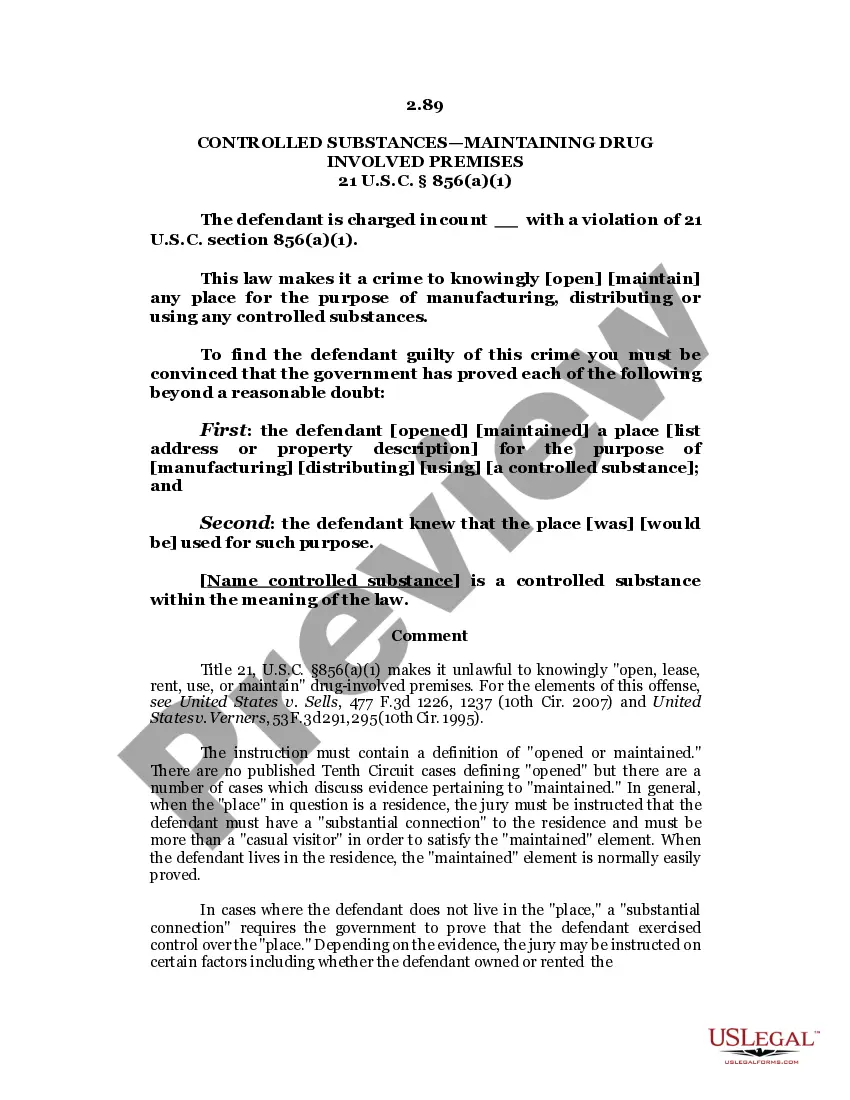
Under 21 U.S.C. Section 856, a person is guilty of Maintaining Drug Involved Premises, when s/he: Knowingly opens, leases, rents, uses or maintains any place (whether permanently or temporarily) for the purpose of manufacturing, distributing or using any controlled substance, OR.
Not less than 10 yrs. or more than life. If death or serious bodily injury, life imprisonment. Fine not more than $20 moillion if an individual, $75 million if other than an individual.
A person is inadmissible if immigration authorities have probative and substantial ?reason to believe? that the person has ever participated in drug trafficking, or if they are the immigrant spouse or child of an immigrant drug trafficker and benefited from the trafficking within the last five years.
Smuggling Drugs Into the United States For many Schedule I and II controlled substances, the first trafficking offense is punishable by at least 5 years in prison. If someone was seriously injured in the process, the minimum sentence is moved to 20 years.
The ?crack house statute,? which makes it illegal to maintain or open any place for the purpose of using any controlled substance, is the federal statute that complicates opening OPCs. Proponents of OPCs want states and localities to open centers to help combat the opioid overdose crisis.
