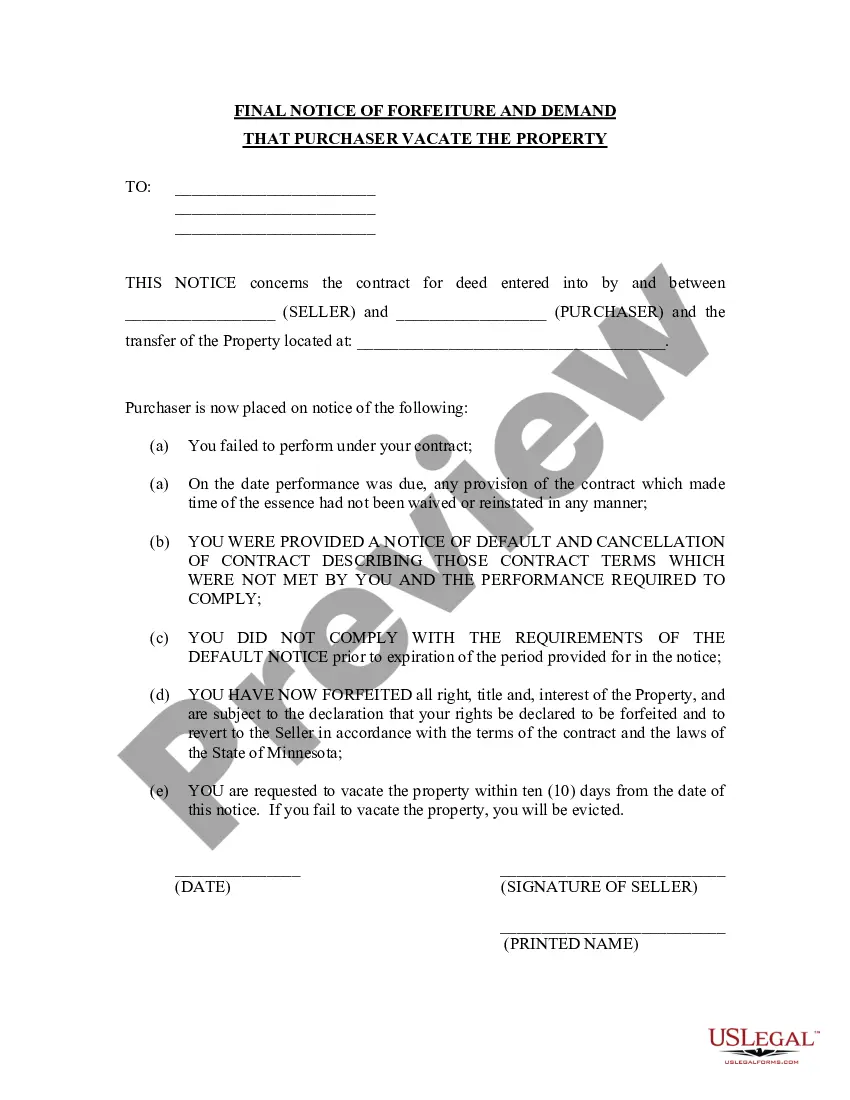
Minnesota Final Notice of Forfeiture and Request to Vacate Property under Contract for Deed
What is this form?
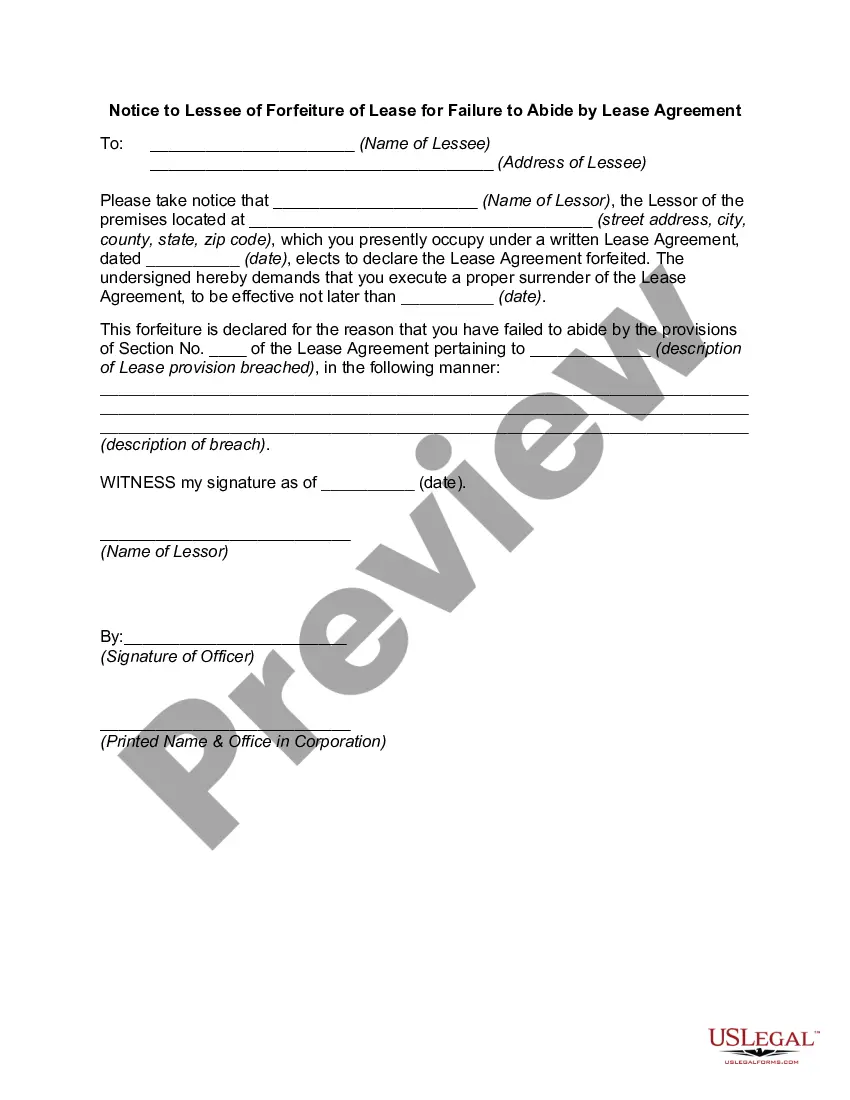
The Final Notice of Forfeiture and Request to Vacate Property under Contract for Deed is a legal notice issued by the seller to the purchaser when the terms of a contract for deed have not been met. This form serves to inform the buyer that the seller has chosen to cancel the contract, resulting in all past payments being forfeited. Unlike other notices, this document signifies the end of the contractual relationship and initiates a request for the buyer to vacate the property.
Key components of this form
- Details of the prior notice of default.
- Statement of contract cancellation by the seller.
- Notice regarding forfeiture of past payments.
- Instructions for the buyer to vacate the property.
- Legal consequences of non-compliance.
Situations where this form applies
This form is needed when a seller has previously notified a buyer about a default in the contract terms, and the buyer has failed to comply with the requirements by the deadline provided. It is used to formally conclude the contract for deed and demand the buyer vacate the property after all opportunities to resolve the breach have been exhausted.
Who should use this form
- Property sellers who have entered into a contract for deed.
- Buyers who have defaulted on their payment or obligations under the contract.
- Individuals seeking to legally terminate a contract for deed.
Instructions for completing this form
- Identify the parties involved: enter the names of the seller and buyer.
- Specify the details of the contract, including property description and relevant dates.
- Clearly outline the reasons for forfeiture as detailed in the prior notice.
- Include a statement instructing the buyer to vacate the property.
- Sign and date the form to validate this notice.
Does this document require notarization?
This form does not typically require notarization unless specified by local law. However, it is advisable to check any additional requirements in your state to ensure legal compliance.
Get your form ready online
Our built-in tools help you complete, sign, share, and store your documents in one place.
Make edits, fill in missing information, and update formatting in US Legal Forms—just like you would in MS Word.
Download a copy, print it, send it by email, or mail it via USPS—whatever works best for your next step.
Sign and collect signatures with our SignNow integration. Send to multiple recipients, set reminders, and more. Go Premium to unlock E-Sign.
If this form requires notarization, complete it online through a secure video call—no need to meet a notary in person or wait for an appointment.
We protect your documents and personal data by following strict security and privacy standards.

Make edits, fill in missing information, and update formatting in US Legal Forms—just like you would in MS Word.

Download a copy, print it, send it by email, or mail it via USPS—whatever works best for your next step.

Sign and collect signatures with our SignNow integration. Send to multiple recipients, set reminders, and more. Go Premium to unlock E-Sign.

If this form requires notarization, complete it online through a secure video call—no need to meet a notary in person or wait for an appointment.

We protect your documents and personal data by following strict security and privacy standards.
Avoid these common issues
- Failing to provide clear details about the previous notices sent.
- Not including the required signatures.
- Leaving out important dates related to the contract term.
- Neglecting to serve the notice properly to the buyer.
Why complete this form online
- Easy access to a legally vetted template drafted by professionals.
- Convenient editing options to customize the form for your specific situation.
- Instant download for immediate use.
- Reduced risk of errors compared to handwritten notices.
Legal use & context
- Enforceability: The form provides a clear legal basis for the seller to reclaim the property after contract cancellation.
- Compliance: Using the form correctly helps prevent disputes regarding the rightful possession of the property.
- Limitations: The effectiveness of the notice may vary based on state-specific contract and eviction laws.
Key takeaways
- The Final Notice of Forfeiture is a critical document in contract for deed disputes.
- It serves as the final step before legal action for eviction can be initiated.
- Ensure all breaches are clearly outlined to avoid complications.
- Use this form to protect your rights as a seller against non-compliant buyers.
Looking for another form?

Form popularity
FAQ
Yes, a deed can be terminated under specific circumstances, such as through mutual agreement or legal proceedings that involve the Minnesota Final Notice of Forfeiture and Request to Vacate Property under Contract for Deed. It's crucial to understand that terminating a deed does not automatically negate any obligations or liabilities. Engaging with resources like US Legal Forms can guide you through the termination process, ensuring you follow the correct legal steps while protecting your rights.
A contract can be terminated in several ways: mutual agreement, completion of terms, expiration, breach of contract, or through a legal process such as the Minnesota Final Notice of Forfeiture and Request to Vacate Property under Contract for Deed. Each method has its own implications, and understanding them can help you make informed decisions. Using a platform like US Legal Forms can provide you with the necessary resources to navigate these options effectively. Always consider seeking legal advice to explore the best course of action.
To cancel a contract for a deed in Minnesota, you must send a written notice to the seller, clearly stating your intent to cancel. It's essential to reference the Minnesota Final Notice of Forfeiture and Request to Vacate Property under Contract for Deed, as this document outlines the necessary steps for cancellation. Additionally, ensure you keep a copy of the notice for your records. Consulting with a legal professional can help you understand the process and protect your interests.
The property tax forfeiture process in Minnesota involves several steps, including notices to the property owner, public announcements, and ultimately, a forfeiture hearing. If taxes remain unpaid, the property is forfeited to the state and may be sold. Receiving a Minnesota Final Notice of Forfeiture and Request to Vacate Property under Contract for Deed signals the urgency of this matter, and getting professional help can guide you through the process effectively.
The tax forfeiture process in Minnesota begins when property taxes go unpaid for a certain period. The county sends notifications and, if the taxes remain unpaid, the property can be forfeited after a specific timeline. If you receive a Minnesota Final Notice of Forfeiture and Request to Vacate Property under Contract for Deed, it is crucial to understand this process and seek assistance to avoid losing your property.
A tax forfeiture settlement in Minnesota occurs when the property owner pays off their delinquent taxes to reclaim their property before it is forfeited to the state. This settlement can involve negotiating payment plans or settling the total amount due. If you are facing a Minnesota Final Notice of Forfeiture and Request to Vacate Property under Contract for Deed, it is essential to act quickly to explore your options for settlement and retain ownership.
To file a quitclaim deed in Minnesota, you need to prepare the deed form, which includes the legal description of the property and the names of the grantor and grantee. After completing the form, you must sign it in the presence of a notary public. Then, you can file the quitclaim deed with the county recorder's office. This process can help you transfer property ownership smoothly, particularly when dealing with situations like the Minnesota Final Notice of Forfeiture and Request to Vacate Property under Contract for Deed.
The three types of forfeiture cases include civil, criminal, and administrative forfeitures. Civil forfeiture typically involves property seized in connection with criminal activity, while criminal forfeiture occurs as a result of a conviction. Administrative forfeiture is a process initiated by government agencies to reclaim property without a court proceeding. If you receive a Minnesota Final Notice of Forfeiture and Request to Vacate Property under Contract for Deed, understanding these distinctions can help you navigate your situation more effectively.
The no chase law in Minnesota restricts law enforcement from pursuing suspects on foot or in vehicles under certain situations to enhance public safety. This law aims to prevent dangerous high-speed chases that could endanger civilians. If you are dealing with legal notices like the Minnesota Final Notice of Forfeiture and Request to Vacate Property under Contract for Deed, it's essential to familiarize yourself with your legal rights. Knowledge of such laws can empower you to respond effectively.
In Minnesota, vehicle forfeiture laws allow law enforcement to seize vehicles used in certain criminal activities. The law outlines specific circumstances under which a vehicle may be forfeited, providing a framework for owners to contest the seizure. If you find yourself facing a Minnesota Final Notice of Forfeiture and Request to Vacate Property under Contract for Deed, consider how similar legal principles apply. Understanding your rights can help you navigate these complex situations.