Michigan Last Will and Testament for Divorced person not Remarried with Minor Children
What is this form?
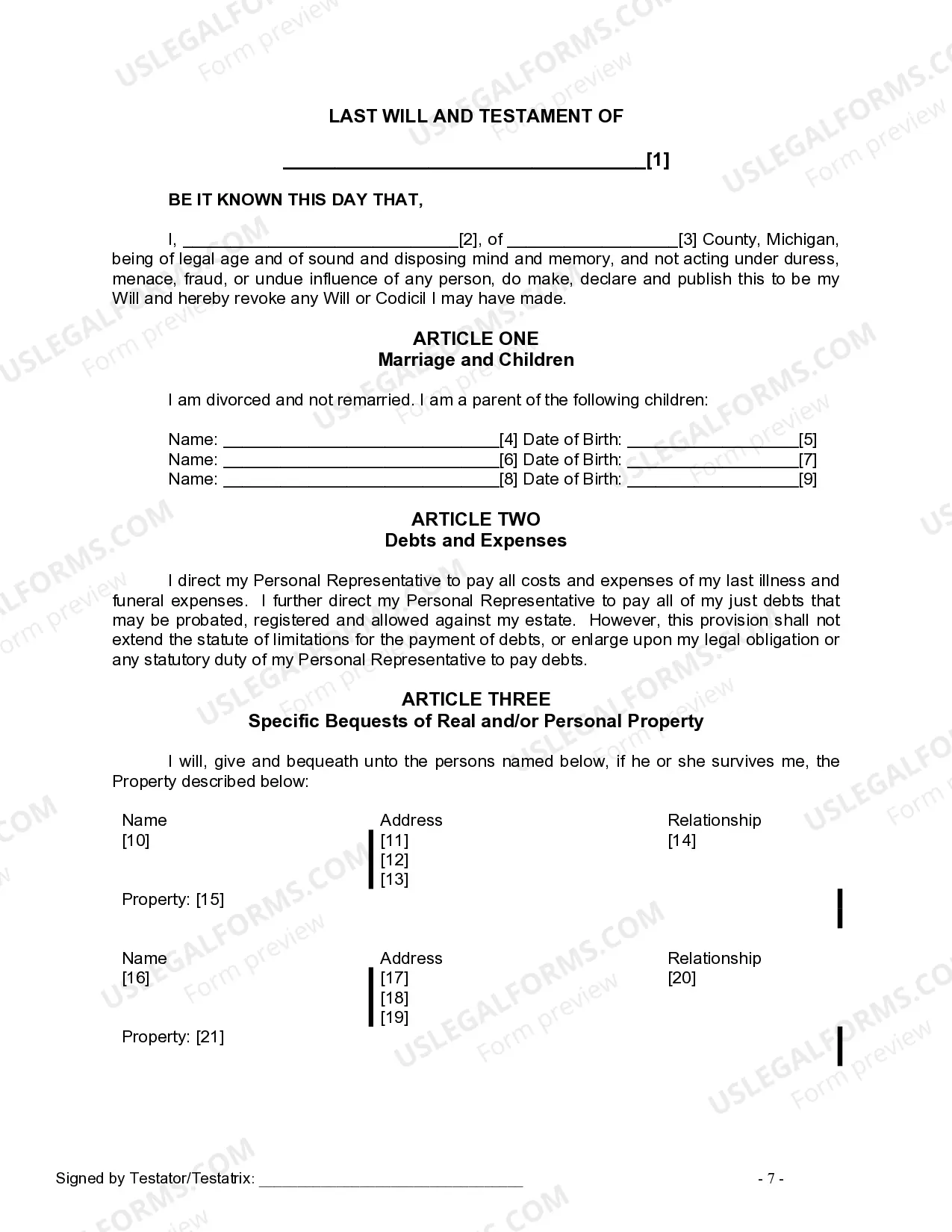
This Last Will and Testament form is specifically designed for a divorced individual who is not remarried and has minor children. Unlike a standard will, this document accounts for the unique circumstances of divorced parents, providing a clear plan for the distribution of assets and guardianship of children. It includes provisions for appointing an executor, specifying property bequests, and establishing trusts for minor beneficiaries, ensuring that your wishes are carried out after your passing.
Main sections of this form
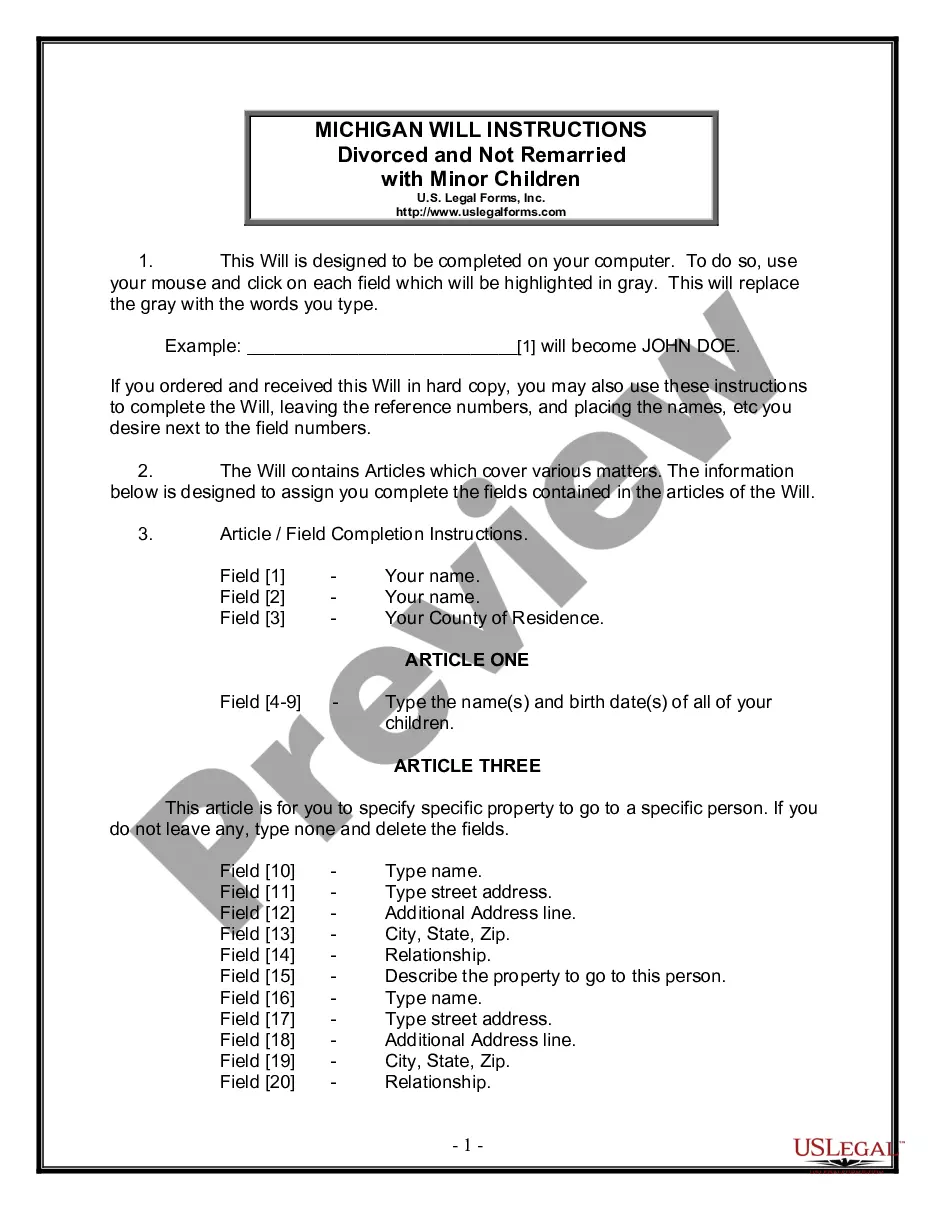
- Personal Information: Client's name and county of residence.
- Children's Information: Names and birth dates of all minor children.
- Specific Bequests: Designation of specific property to individuals.
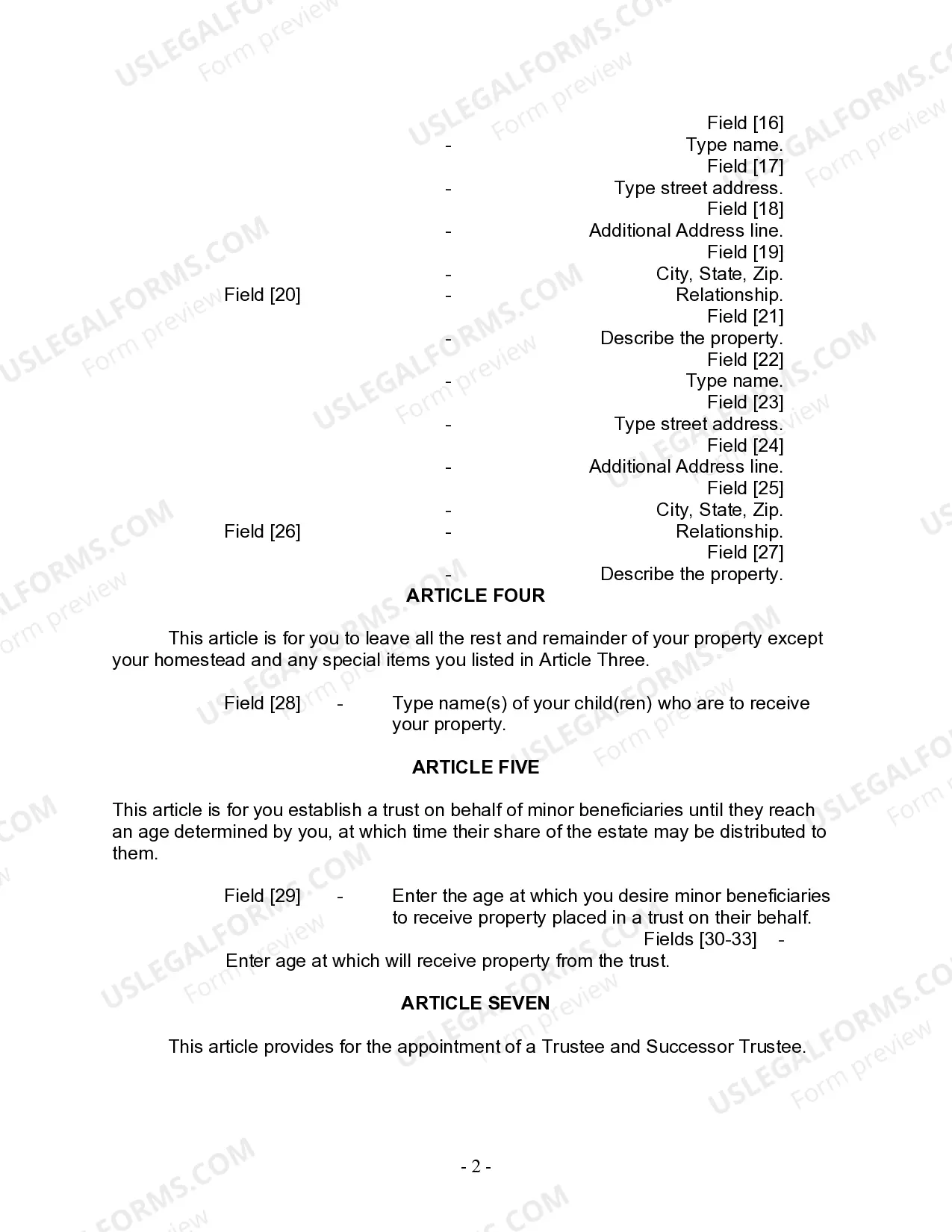
- Trust for Minors: Creation of a trust until children reach a specified age.
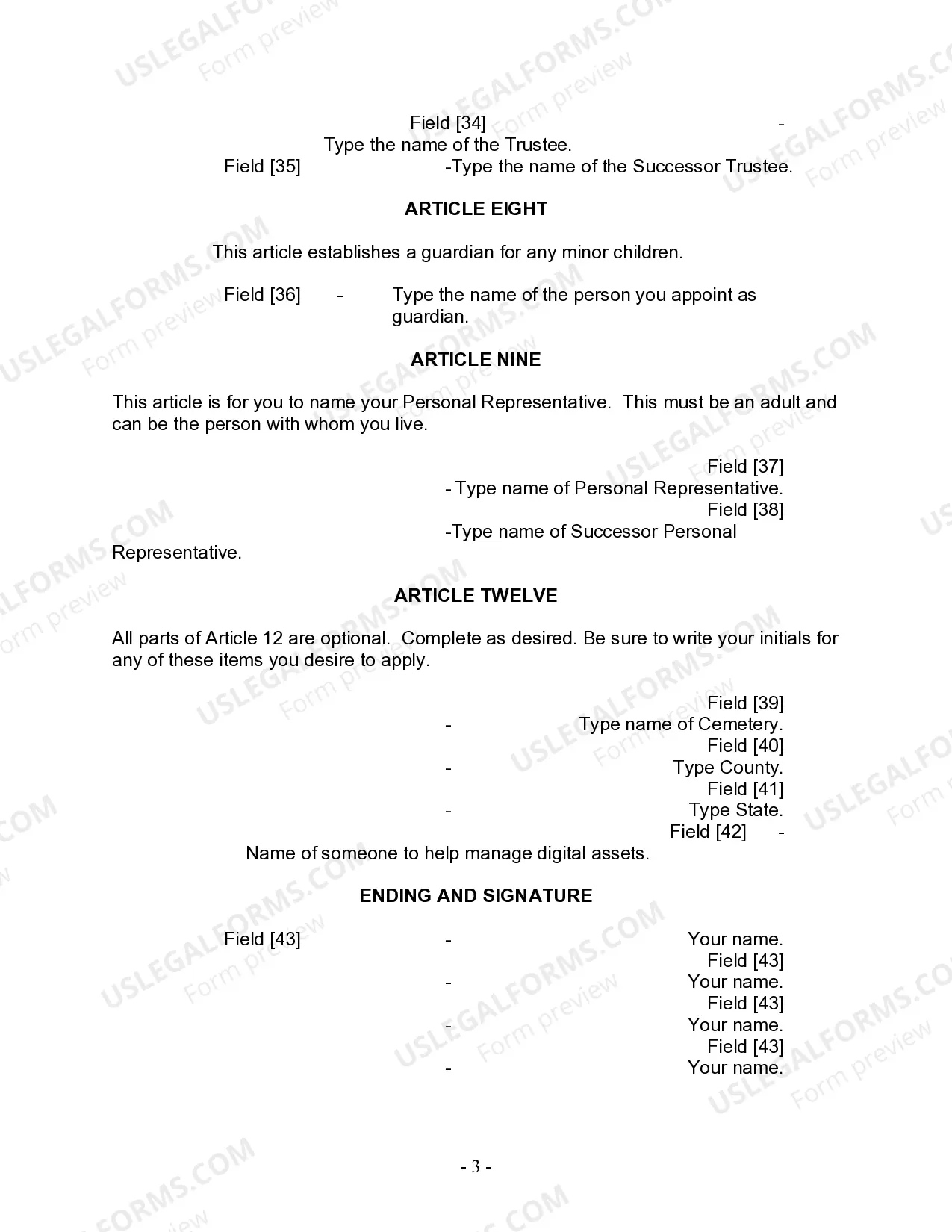
- Guardian Appointment: Designation of a guardian for minor children.
- Personal Representative: Appointment of an executor to manage the estate.


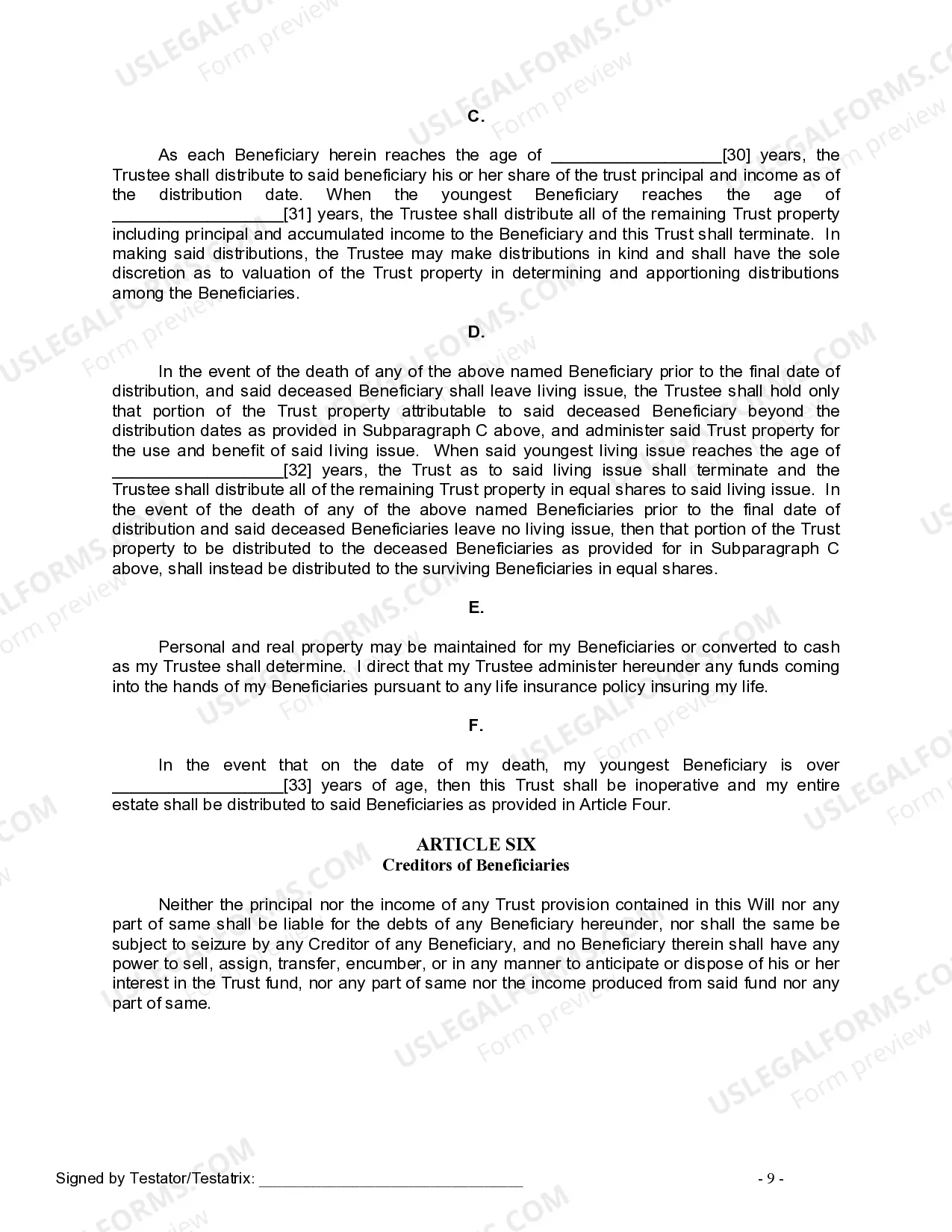




Situations where this form applies
This form should be used when a divorced person with minor children wants to outline their wishes regarding the distribution of their assets upon death. It is essential for anyone wishing to ensure that their minor children are cared for and that their estate is managed according to their desires, especially in cases where children may need a guardian or trust due to their age.
Who needs this form
- Divorced individuals with minor children.
- Persons wishing to specify guardianship arrangements for their children.
- Individuals wanting to ensure their estate is distributed according to their preferences.
- Those looking to appoint a personal representative to manage their estate after death.
How to prepare this document
- Enter your full name and county of residence in the designated fields.
- List the names and birth dates of all your minor children.
- Specify any specific property you wish to bequeath, or indicate 'none' if you have no specific bequests.
- Designate a guardian for your minor children and select a personal representative for your estate.
- Ensure the form is signed in front of two witnesses and, if applicable, notarized.
Notarization requirements for this form
This form must be notarized to be legally valid. US Legal Forms provides secure online notarization powered by Notarize, allowing you to complete the process through a verified video call.
Get your form ready online
Our built-in tools help you complete, sign, share, and store your documents in one place.
Make edits, fill in missing information, and update formatting in US Legal Forms—just like you would in MS Word.
Download a copy, print it, send it by email, or mail it via USPS—whatever works best for your next step.
Sign and collect signatures with our SignNow integration. Send to multiple recipients, set reminders, and more. Go Premium to unlock E-Sign.
If this form requires notarization, complete it online through a secure video call—no need to meet a notary in person or wait for an appointment.
We protect your documents and personal data by following strict security and privacy standards.

Make edits, fill in missing information, and update formatting in US Legal Forms—just like you would in MS Word.

Download a copy, print it, send it by email, or mail it via USPS—whatever works best for your next step.

Sign and collect signatures with our SignNow integration. Send to multiple recipients, set reminders, and more. Go Premium to unlock E-Sign.

If this form requires notarization, complete it online through a secure video call—no need to meet a notary in person or wait for an appointment.

We protect your documents and personal data by following strict security and privacy standards.
Typical mistakes to avoid
- Failing to properly sign the will in front of witnesses.
- Not specifying all children or leaving out any minor beneficiaries.
- Neglecting to include detailed descriptions of specific bequests.
- Overlooking state-specific notarization requirements.
Advantages of online completion
- Convenience of filling out the form from anywhere at any time.
- Editability allows you to make changes easily without starting over.
- Access to state-specific versions ensures compliance with local laws.
- Reliability of attorney-drafted templates reduces legal risks.
Legal use & context
- This Last Will and Testament is enforceable under Michigan state law, ensuring your wishes are honored after your death.
- It helps avoid complications arising from dying intestate, which can lead to court decisions about property distribution.
- Designated guardians and trustees provide clarity for the care of your children and management of assets.
Key takeaways
- This Last Will and Testament is tailored for divorced individuals with minor children.
- It includes specific provisions for guardianship and trustee appointments, essential for minors.
- Proper execution, including witnessing and notarization, is crucial for legality.
- Using this online form offers flexibility and reduces legal complexities.
Looking for another form?

Form popularity
FAQ
Yes, having a will is important even if you do not have children. A Michigan Last Will and Testament for Divorced person not Remarried with Minor Children allows you to specify how your assets will be divided among your loved ones. It provides peace of mind and clarity for your family members. Services like US Legal Forms can simplify the process of creating your will.
Married couples are not legally required to have a will, but it is highly advisable. A Michigan Last Will and Testament for Divorced person not Remarried with Minor Children can ensure that your wishes are carried out regarding your estate. It can also facilitate smoother transitions for your spouse. Platforms like US Legal Forms can assist you in drafting an effective will.
In Michigan, a last will and testament does not have to be notarized to be valid. However, having a notarized will can help eliminate challenges to its authenticity in the future. For those creating a Michigan Last Will and Testament for Divorced person not Remarried with Minor Children, notarization can add an extra layer of security. Consider using US Legal Forms for guidance on proper documentation.
Having a will is important even if you are married with no children. A Michigan Last Will and Testament for Divorced person not Remarried with Minor Children can clarify your intentions regarding your estate and protect your spouse. This legal document can help ease future complications for your loved ones. Tools like US Legal Forms make it easy to set this up.
Yes, a married couple without children should consider having a will. A Michigan Last Will and Testament for Divorced person not Remarried with Minor Children ensures that your wishes are honored regarding asset distribution. It also helps avoid potential disputes among family members. You can simplify the process by utilizing services like US Legal Forms.
Even if you are married and do not have children, creating a Michigan Last Will and Testament for Divorced person not Remarried with Minor Children can still be beneficial. A will allows you to specify how you want your assets distributed in the event of your passing. It also provides clarity and peace of mind to your spouse and family. Consider using platforms like US Legal Forms to easily create your will.
The 10 year rule in Michigan refers to the stipulation that if a divorced person does not remarry within ten years after the divorce, certain legal presumptions about assets and inheritance may apply. This rule can affect how you plan your estate and designate guardianship for any minor children. A comprehensive Michigan Last Will and Testament for Divorced person not Remarried with Minor Children can help clarify your wishes and ensure proper legal standing.
Yes, minor children are considered next of kin in Michigan. They have legal rights to inherit from their parents, which is crucial when planning your estate. Creating a Michigan Last Will and Testament for Divorced person not Remarried with Minor Children is vital to ensure your children's future is secure and your intentions are clear.
Even if you are married with no children, it is still advisable to create a will. A Michigan Last Will and Testament for Divorced person not Remarried with Minor Children can outline how you want your assets divided and can help avoid potential disputes among family members. Having a will provides clarity and peace of mind for you and your spouse.
When a person is not married and has minor children, the next of kin usually includes the minor children themselves. In Michigan, minor children have a direct claim to inheritance, which emphasizes the need for a well-drafted Michigan Last Will and Testament for Divorced person not Remarried with Minor Children. This will ensure that your wishes regarding guardianship and asset distribution are clearly defined.