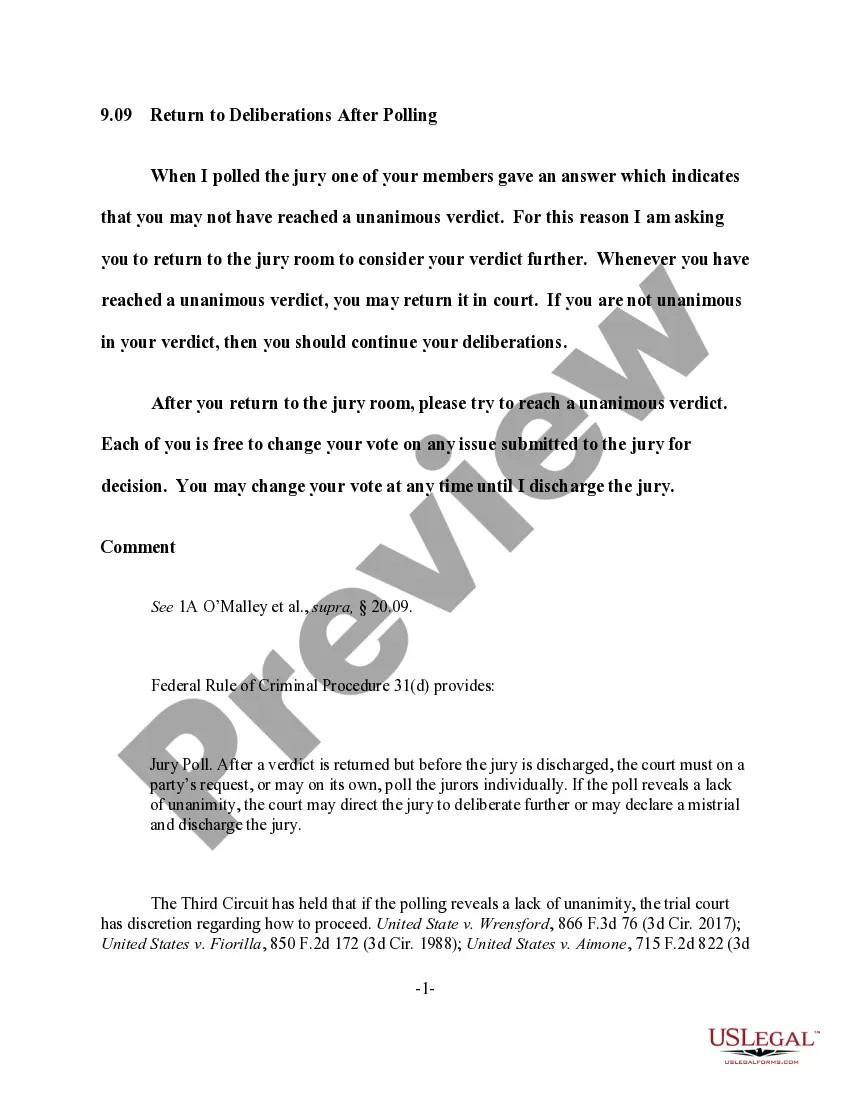
Michigan Warranty Deed from Limited Partnership or LLC is the Grantor, or Grantee
What is this form?
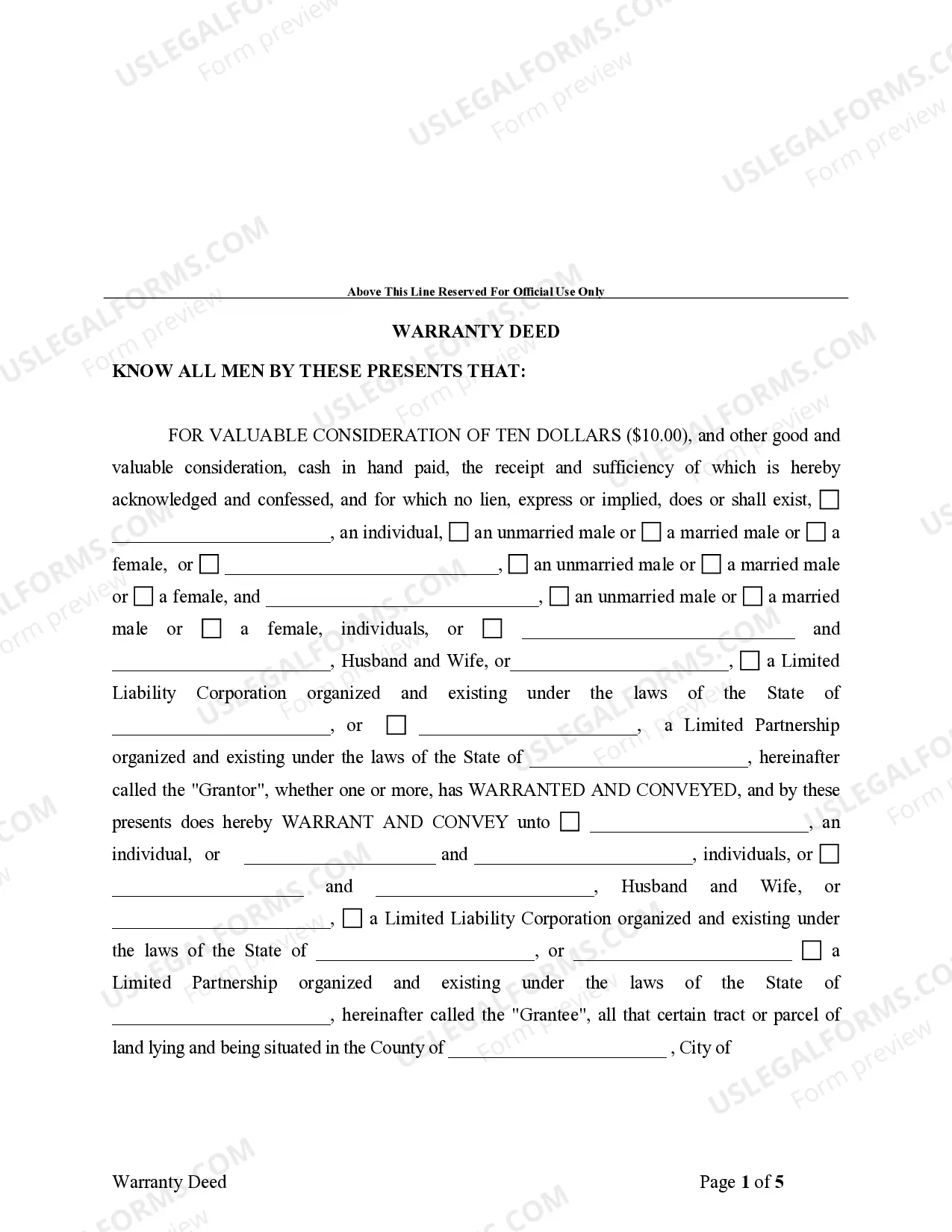
The Warranty Deed from Limited Partnership or LLC is a legal document that conveys property ownership from a grantor, which can be either a limited partnership or a limited liability company (LLC). Unlike other types of deeds, this form ensures that the grantor warrants the property is free from encumbrances and guarantees the grantee clear title. This deed is commonly used in real estate transactions involving business entities, providing clarity on ownership transfer and rights associated with the property.
Key components of this form
- Grantor and grantee identification, including designation as a limited partnership or LLC.
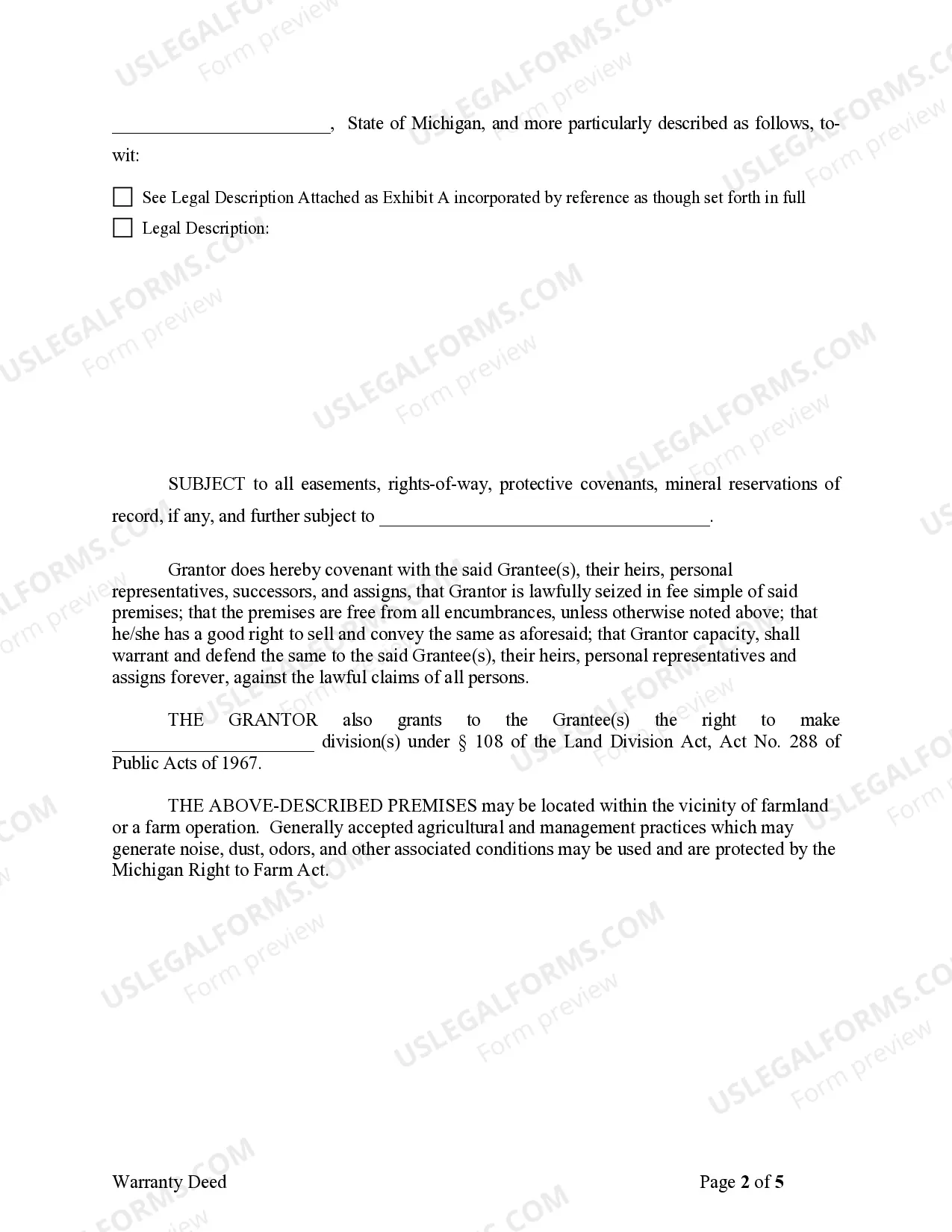
- Property description detailing the parcel of land being conveyed.
- Covenant clause ensuring the grantor's legal ownership and assurance of clear title.
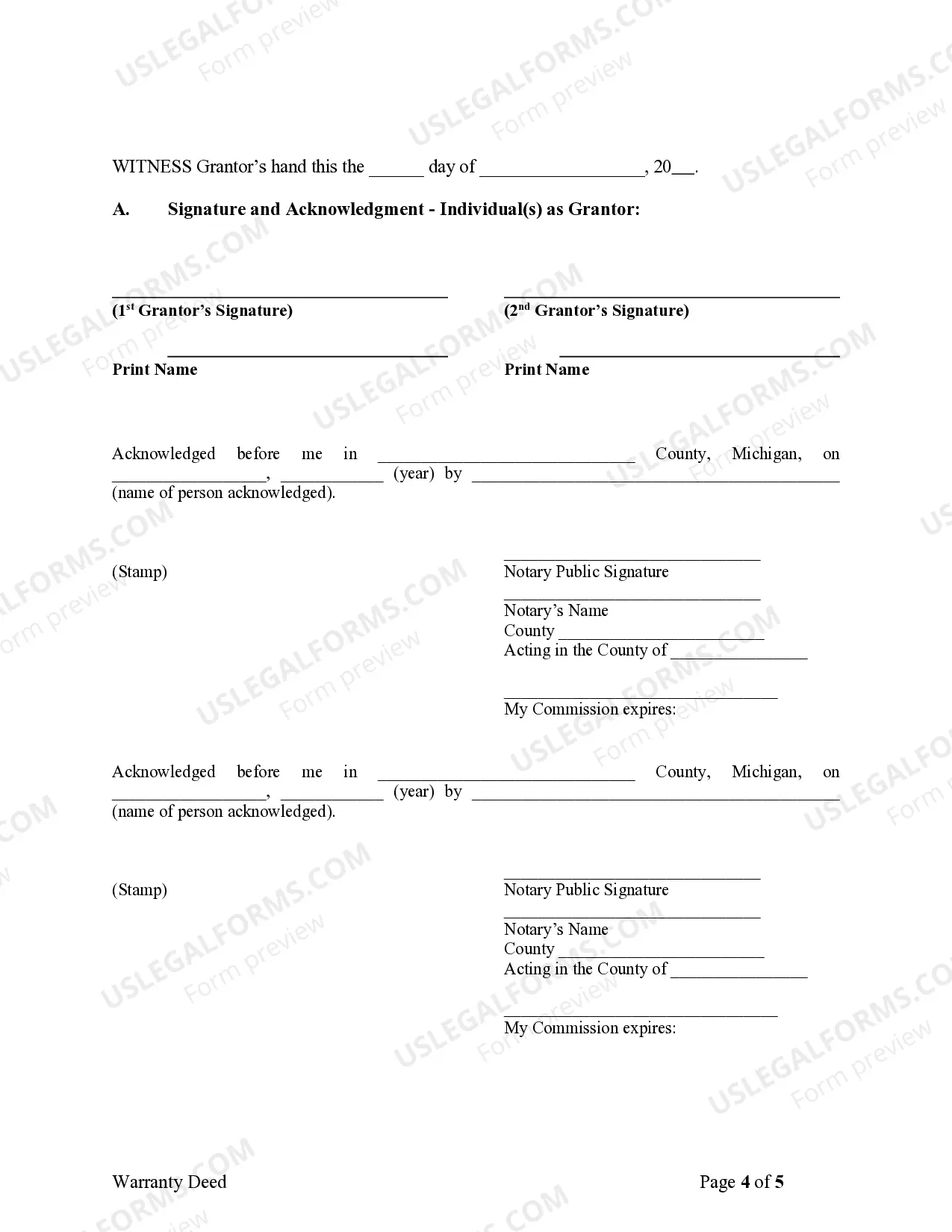
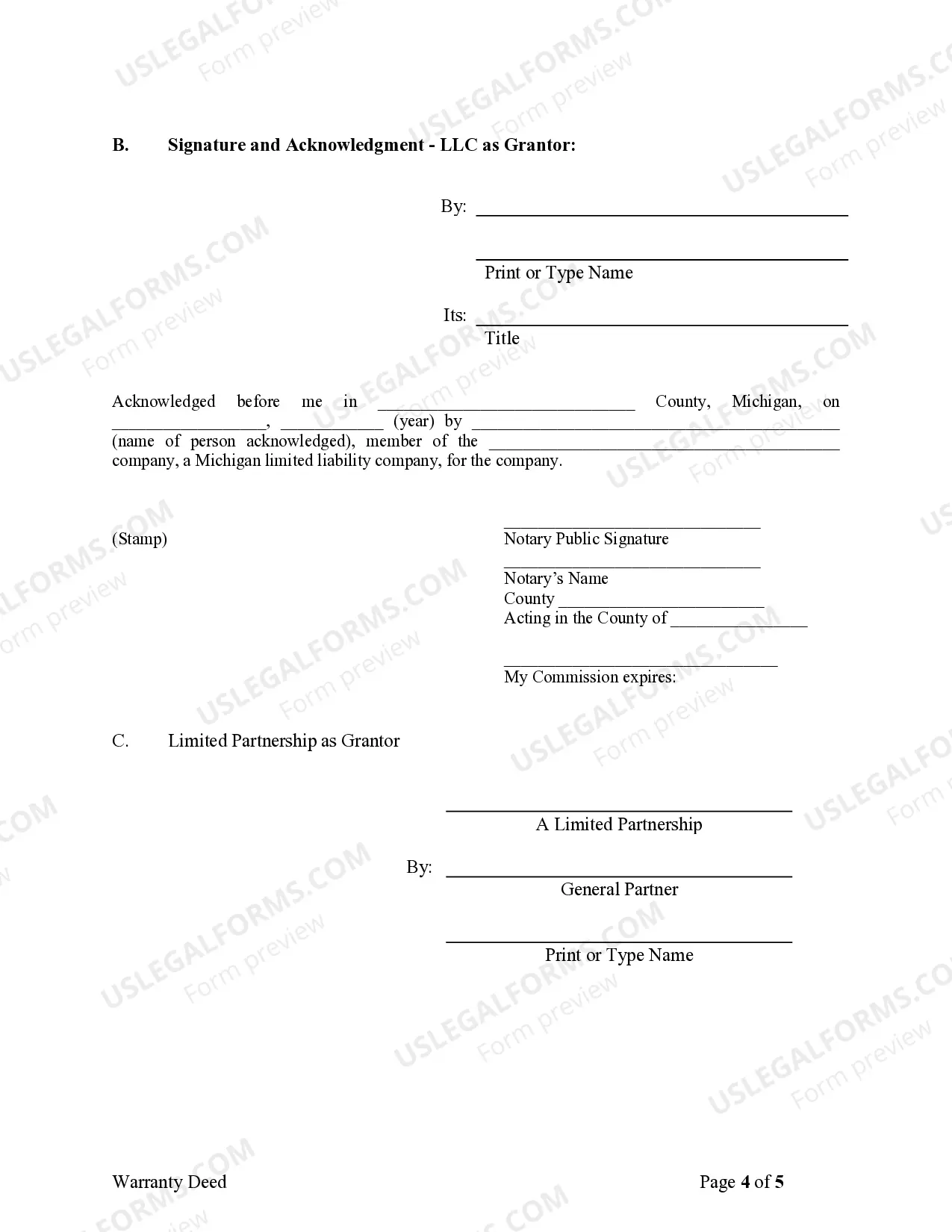
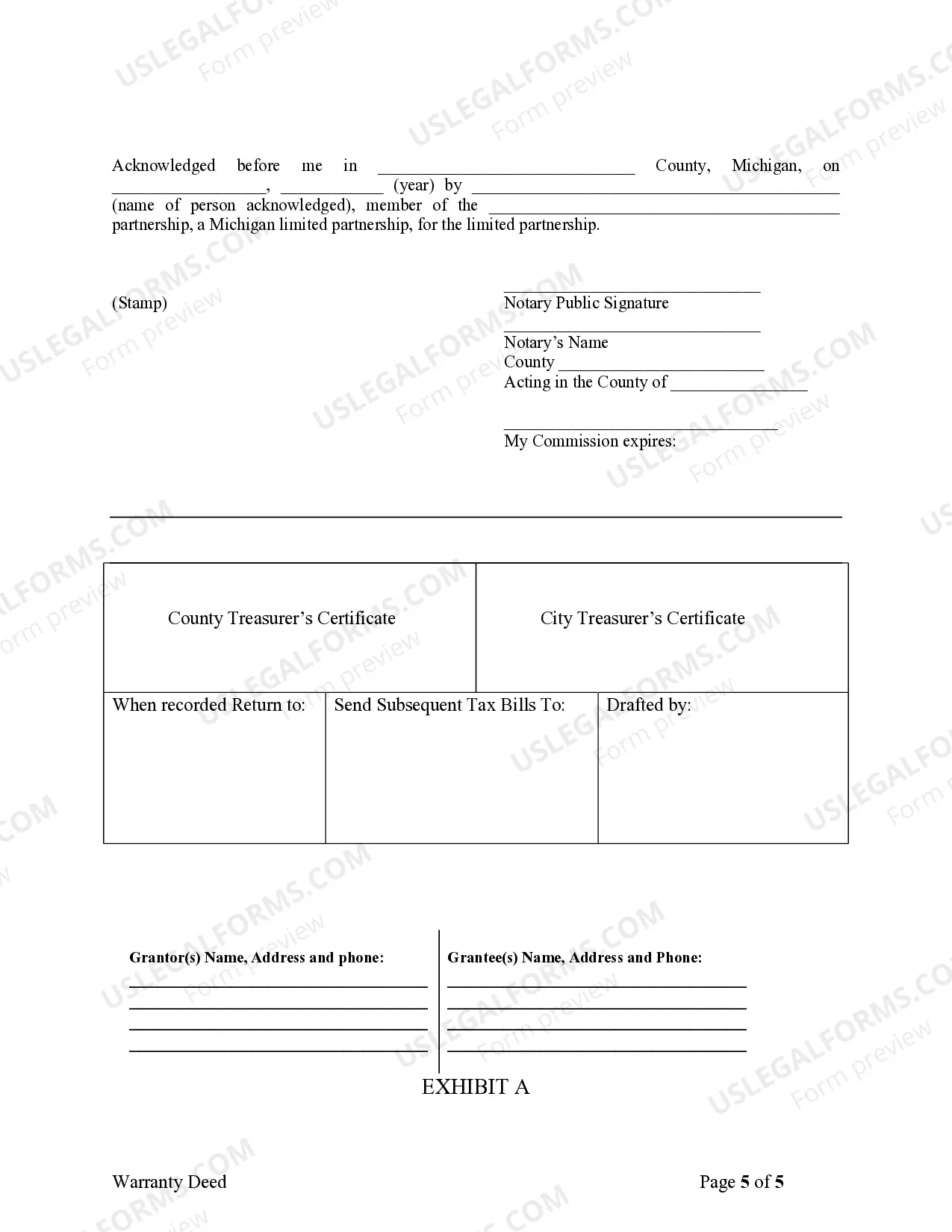
- Signature and acknowledgment sections for the grantor and a notary public.
- Provisions for potential divisions of the property under Michigan's Land Division Act.





When to use this document
This form is essential when a limited partnership or LLC is involved in the sale or transfer of real estate. It may be required when the property is held under a business entity rather than an individual name, ensuring proper legal compliance during ownership changes. Use this form when creating a legal record of the property's transfer, especially to protect the rights of the new owner.
Who this form is for
- Limited partnerships or LLCs transferring ownership of real estate.
- Individuals acting on behalf of a business entity in a property transaction.
- Lawyers or paralegals assisting clients in property transfers.
- Real estate agents representing business clients in conveyance matters.
Instructions for completing this form
- Identify the grantor and grantee, ensuring they are correctly designated as a limited partnership or LLC when applicable.
- Clearly describe the property being transferred, including any relevant details or encumbrances.
- Complete the covenant section to affirm the grantor's ownership and clear title.
- Gather signatures from the grantor(s) and arrange for notarization to validate the document.
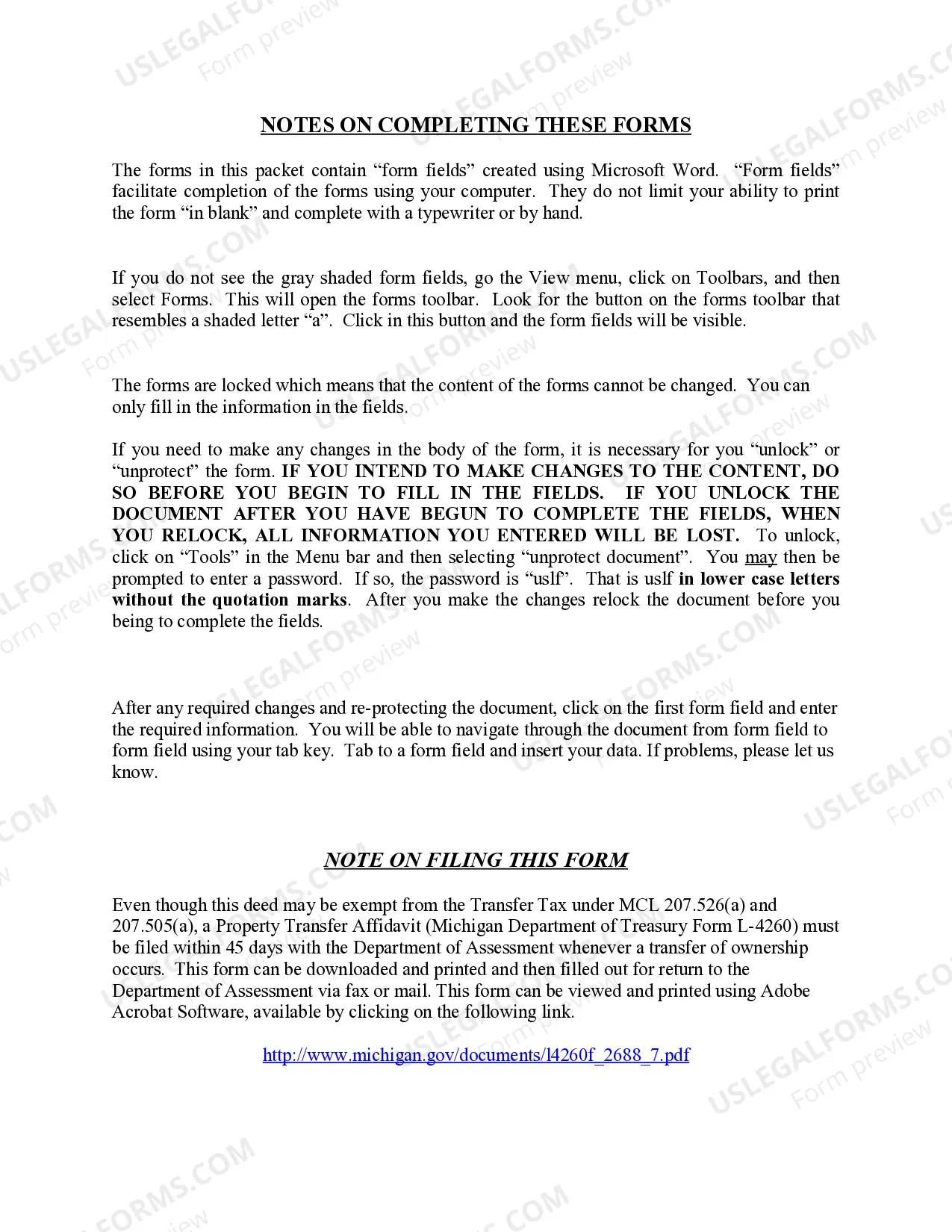
- File any required additional forms, such as the Property Transfer Affidavit, with the appropriate authorities.
Notarization guidance
Yes, this form must be notarized to be legally valid. Proper notarization ensures the authenticity of the signatures, which is essential for the deed's acceptance by local authorities. US Legal Forms offers integrated online notarization options, allowing you to securely notarize your document via a video call, providing convenience and legal equivalence without the need for travel.
Get your form ready online
Our built-in tools help you complete, sign, share, and store your documents in one place.
Make edits, fill in missing information, and update formatting in US Legal Forms—just like you would in MS Word.
Download a copy, print it, send it by email, or mail it via USPS—whatever works best for your next step.
Sign and collect signatures with our SignNow integration. Send to multiple recipients, set reminders, and more. Go Premium to unlock E-Sign.
If this form requires notarization, complete it online through a secure video call—no need to meet a notary in person or wait for an appointment.
We protect your documents and personal data by following strict security and privacy standards.

Make edits, fill in missing information, and update formatting in US Legal Forms—just like you would in MS Word.

Download a copy, print it, send it by email, or mail it via USPS—whatever works best for your next step.

Sign and collect signatures with our SignNow integration. Send to multiple recipients, set reminders, and more. Go Premium to unlock E-Sign.

If this form requires notarization, complete it online through a secure video call—no need to meet a notary in person or wait for an appointment.

We protect your documents and personal data by following strict security and privacy standards.
Mistakes to watch out for
- Failing to accurately identify the grantor and grantee as the correct business entities.
- Omitting the property description or including incomplete details.
- Neglecting to notarize the document, which is often required for legal validity.
- Forgetting to file the Property Transfer Affidavit within the required timeframe.
Why use this form online
- Convenient online access allows for immediate downloading and printing of the form.
- Editability of the form fields facilitates accurate completion before printing.
- Reliability of legal templates created by licensed attorneys ensures compliance with legal standards.
Summary of main points
- The Warranty Deed is crucial for transferring property owned by limited partnerships or LLCs.
- It serves to protect the rights of the new owner by ensuring the grantor has a clear title.
- Proper completion and notarization of the form are necessary for legal effectiveness.
- Be aware of state-specific laws, particularly filing requirements and timelines.
Looking for another form?
Form popularity
FAQ
A partnership warranty deed is a legal document used when a partnership transfers property ownership. This type of deed ensures that the partnership, as the Grantor, guarantees the title against any claims. It is particularly relevant when a Michigan Warranty Deed from Limited Partnership or LLC is involved, making it crucial for securing the interests of the Grantee.
In a warranty deed, the grantor is the person or entity transferring the property, while the grantee is the one receiving it. In cases where a Michigan Warranty Deed from Limited Partnership or LLC is the Grantor, it indicates that the limited partnership or LLC is relinquishing ownership. Understanding these roles is essential for a smooth transaction.
To get a warranty deed for your property, start by gathering the necessary information about the transaction, including details about the Grantor and Grantee. If a Michigan Warranty Deed from Limited Partnership or LLC is involved, ensure that the entity's details are accurately represented. Utilizing platforms like USLegalForms can simplify the process, offering templates and guidance tailored to your needs.
To obtain a warranty deed in Michigan, you will need to prepare the document and have it signed by the Grantor. You can complete this process through a real estate attorney or use online resources like USLegalForms to access templates specifically designed for Michigan Warranty Deeds. After signing, you must file the deed with the local county clerk's office to make it official.
Filling out a warranty deed form requires careful attention to detail. First, ensure you have the correct form for a Michigan Warranty Deed from Limited Partnership or LLC as the Grantor, or Grantee. Start by entering the names and addresses of the Grantor and Grantee, followed by a legal description of the property. You must also include any necessary signatures and dates to validate the deed. For added convenience, consider using the US Legal Forms platform, which provides easy-to-follow templates and guidance for completing your warranty deed accurately.
A limited warranty deed provides specific guarantees regarding the title of the property in question. When the grantor is a limited partnership or LLC, the deed typically ensures that the property has not been encumbered by any claims during the time the grantor owned it. However, it does not cover issues that arose before the grantor's ownership. If you need to draft a Michigan Warranty Deed from Limited Partnership or LLC as the Grantor or Grantee, consider using the resources available on the US Legal Forms platform to ensure accuracy and compliance.
Typically, the grantor or their representative files a warranty deed with the county clerk's office where the property is located. This filing is essential to record the change of ownership and make it public. If you're working with a Michigan Warranty Deed from Limited Partnership or LLC, it may be beneficial to consult a professional or service like uslegalforms to ensure all necessary steps are completed correctly.
The warranty deed provides the most assurances to the grantee, as it guarantees that the grantor holds clear title to the property and has the right to sell it. This type of deed protects the grantee against future claims on the property. When dealing with a Michigan Warranty Deed from Limited Partnership or LLC, these warranties are especially important for ensuring a secure transaction.
The grantor on a warranty deed is the individual or entity that is selling or transferring the property ownership. This means if a Limited Partnership or LLC is involved, it can serve as the grantor. This designation carries with it the responsibility to assure that the title is clear of any claims. Understanding this role is crucial when evaluating the protections offered by a Michigan Warranty Deed.
In real estate terms, the grantor is the party that conveys or transfers the property, while the grantee is the party receiving it. This relationship is critical in a deed, such as a Michigan Warranty Deed from Limited Partnership or LLC, where clarity regarding the roles helps prevent legal disputes. Knowing who the grantor and grantee are can simplify property transactions and ensure proper documentation.