Money Laundering - Unanimity Required
About this form
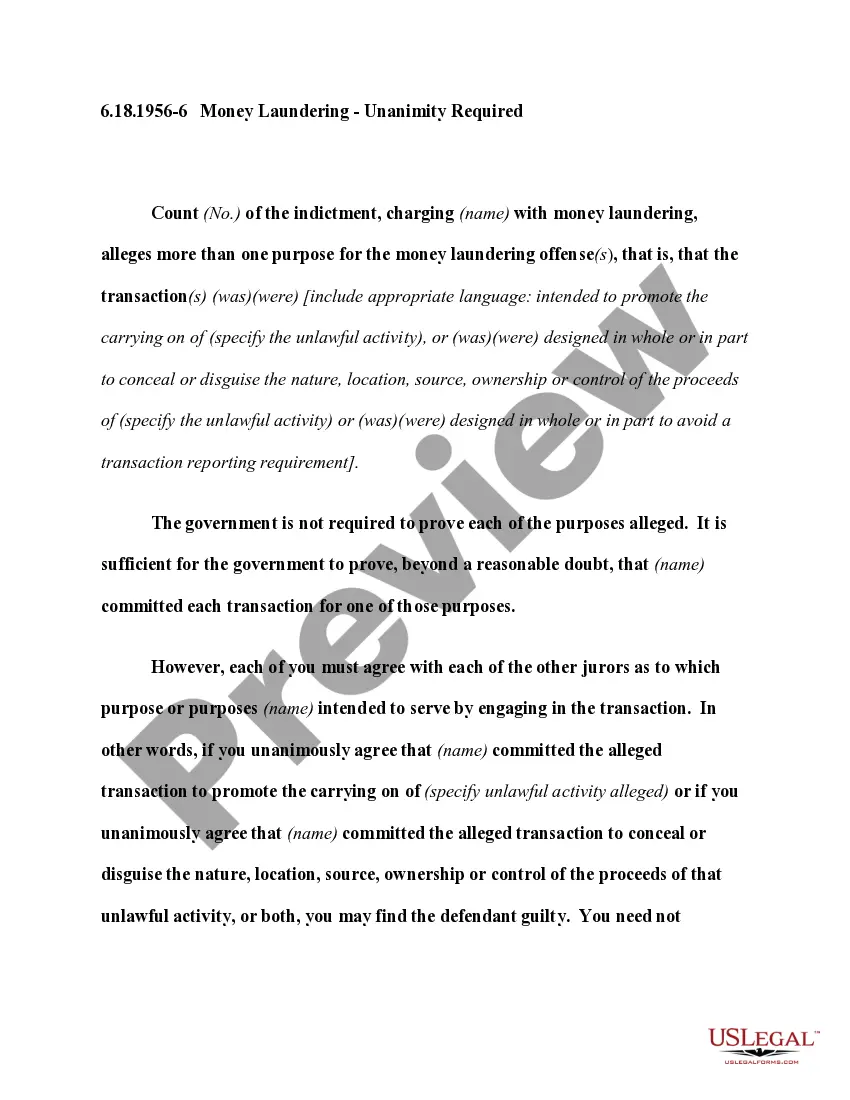
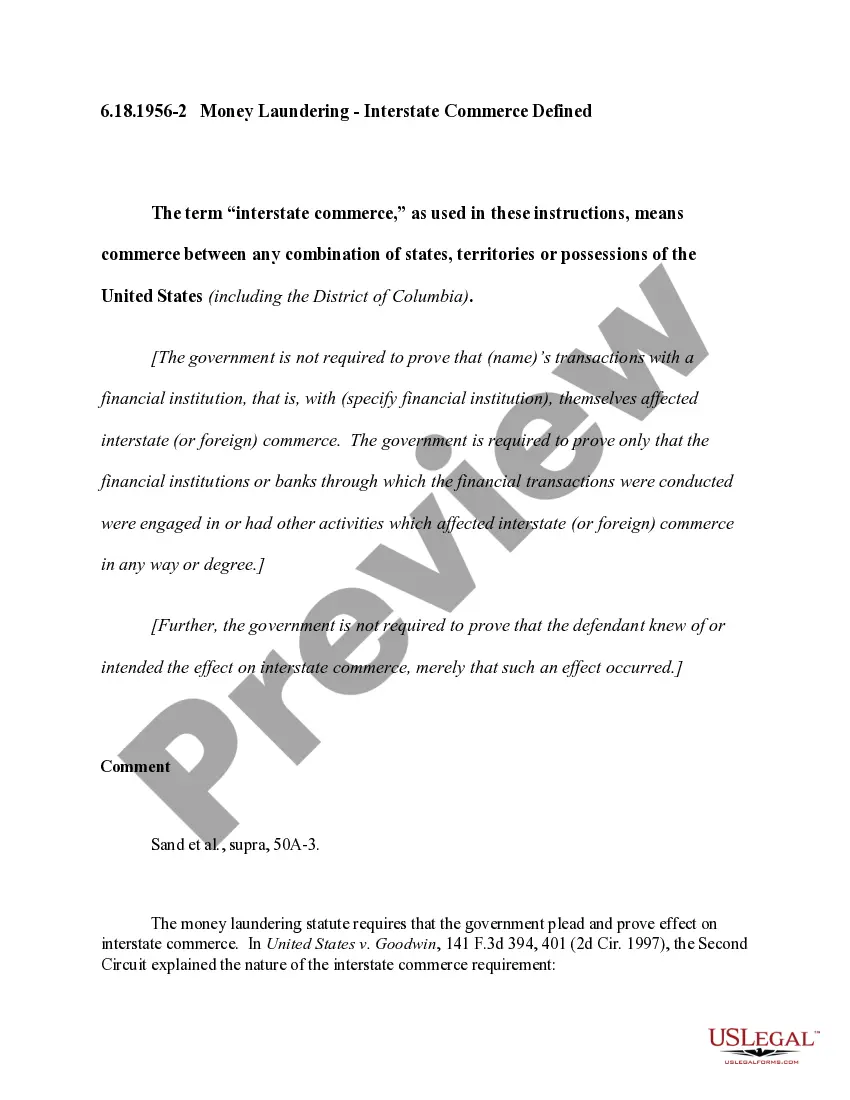
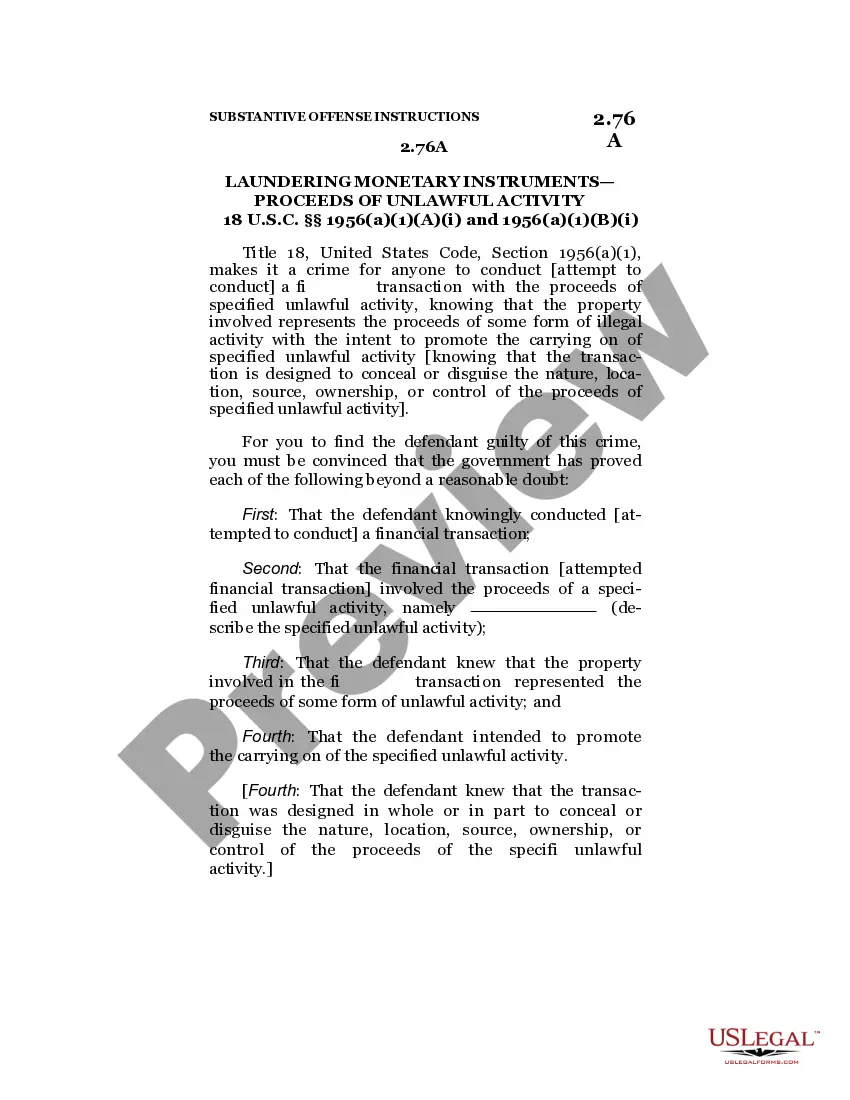
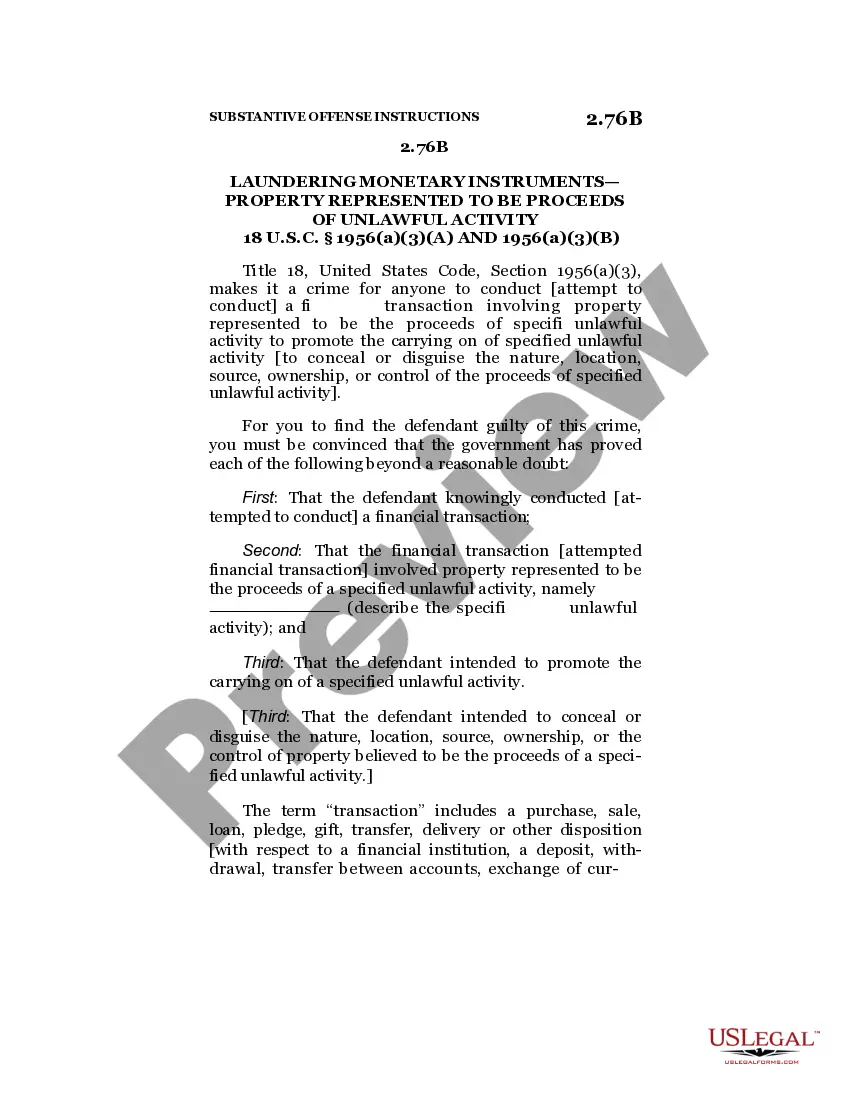
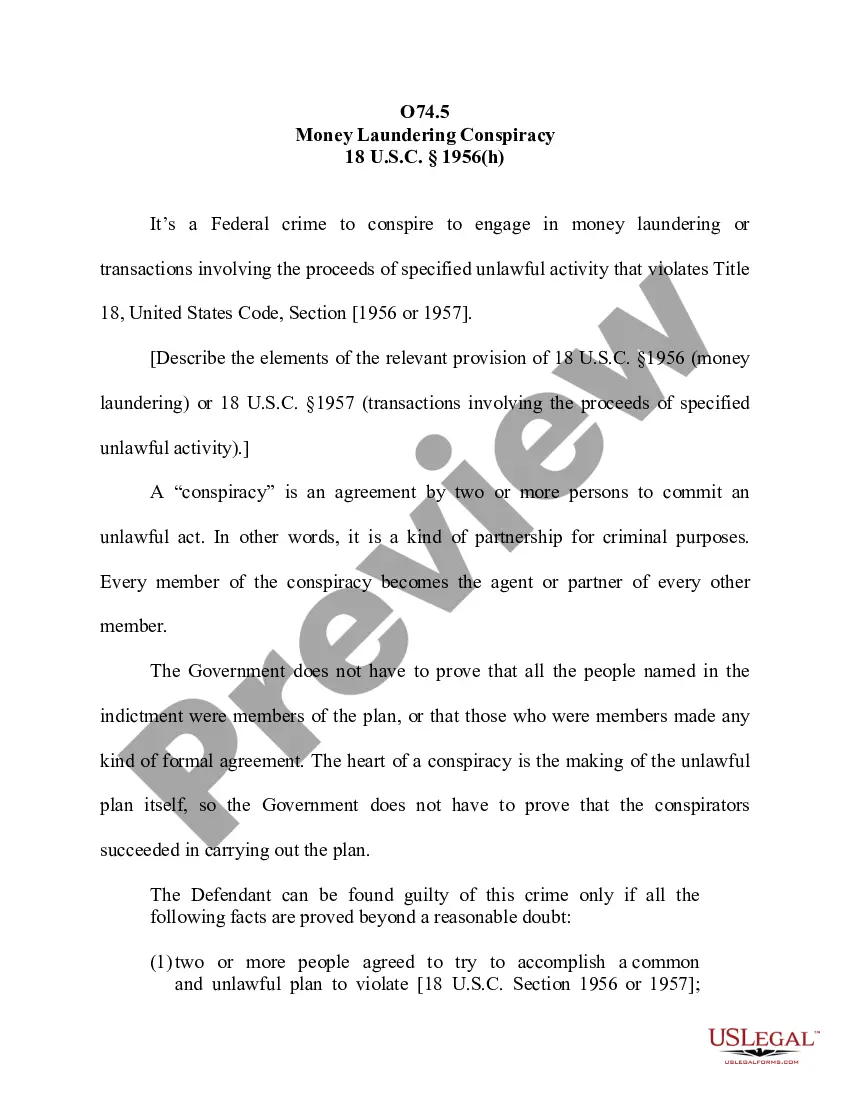
The Money Laundering - Unanimity Required form is a legal document used in criminal cases where a defendant is charged with money laundering involving multiple alleged purposes. This form is designed to ensure that jurors unanimously agree on at least one specific purpose behind the alleged money laundering transactions. Unlike other legal forms related to money laundering, this one specifically addresses the requirement of juror unanimity regarding the purpose of the offense.
Main sections of this form
- Indictment details specifying the defendant's name and the charges
- Citation of the respective unlawful activities related to the money laundering
- Clarification of the governmentâs burden of proof regarding the purpose of the transactions
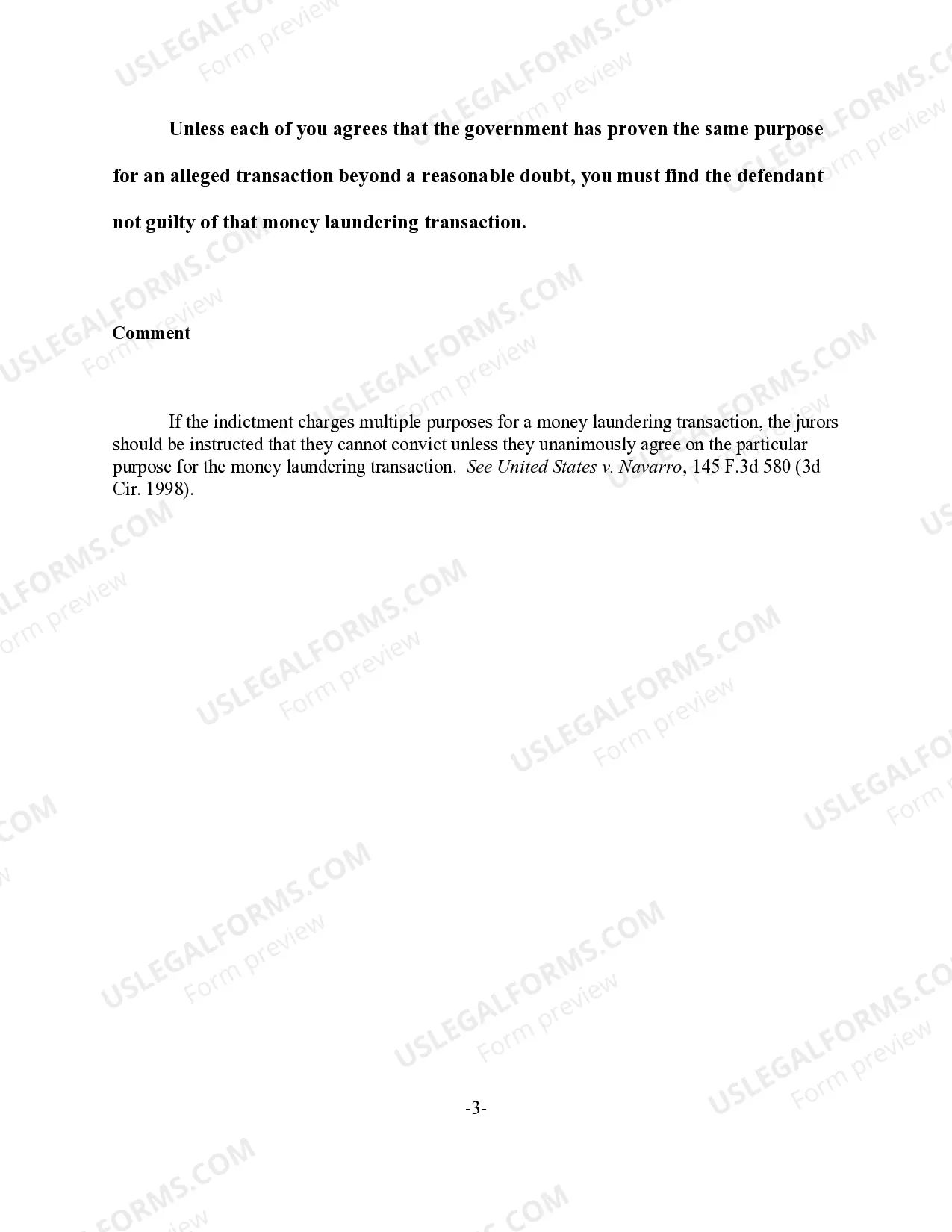
- Instructions for jurors on reaching a unanimous agreement on the specific purpose
- Citations of relevant legal precedents supporting the requirement for unanimity

When to use this document
This form is used during criminal trials when a defendant faces multiple money laundering charges that involve different purposes. It is essential for jurors to understand that they must reach a unanimous decision on at least one of those purposes to convict the defendant. This form helps to clarify this aspect of the legal process and is crucial for cases where the prosecution alleges various intents behind the transactions.
Who needs this form
- Prosecutors involved in criminal cases of money laundering
- Defense attorneys representing clients accused of money laundering
- Jurors serving on a money laundering trial
- Court judges overseeing the trial for legal clarity
Completing this form step by step
- Insert the defendant's name in the indictment section
- Clearly state the specific unlawful activities associated with the charges
- Include detailed descriptions of each purpose behind the money laundering allegations
- Provide relevant legal citations and precedents to support the instructions
- Distribute copies to all jurors and instruct them on the requirement for unanimity
Is notarization required?
This form does not typically require notarization unless specified by local law. Always verify with your local court for any additional requirements regarding notarization in criminal proceedings.
Get your form ready online
Our built-in tools help you complete, sign, share, and store your documents in one place.
Make edits, fill in missing information, and update formatting in US Legal Forms—just like you would in MS Word.
Download a copy, print it, send it by email, or mail it via USPS—whatever works best for your next step.
Sign and collect signatures with our SignNow integration. Send to multiple recipients, set reminders, and more. Go Premium to unlock E-Sign.
If this form requires notarization, complete it online through a secure video call—no need to meet a notary in person or wait for an appointment.
We protect your documents and personal data by following strict security and privacy standards.

Make edits, fill in missing information, and update formatting in US Legal Forms—just like you would in MS Word.

Download a copy, print it, send it by email, or mail it via USPS—whatever works best for your next step.

Sign and collect signatures with our SignNow integration. Send to multiple recipients, set reminders, and more. Go Premium to unlock E-Sign.

If this form requires notarization, complete it online through a secure video call—no need to meet a notary in person or wait for an appointment.

We protect your documents and personal data by following strict security and privacy standards.
Mistakes to watch out for
- Failing to provide clear descriptions of the purposes behind the money laundering
- Neglecting to include critical legal precedents that support the case
- Overlooking the importance of juror unanimity in reaching a verdict
Why complete this form online
- Easy access to a downloadable form crafted by licensed attorneys
- Editable format allows for customization based on case specifics
- Instant availability enables quick preparation for court proceedings
Legal use & context
- This form serves to instruct jurors, which is crucial for fair trial standards.
- Employing the correct legal language aids in the enforceability of jury decisions.
- Judicial authorities may reference this form in courtroom proceedings involving money laundering cases.
Looking for another form?

Form popularity
FAQ
Money laundering is more about the intent than the amount of money, but you will likely be investigated for money laundering if you bring more than $10,000 in cash into or out of the United States, deposit $10,000 or more in cash into a bank account, or if you spend more than $300,000 in cash on a real estate purchase.
Integration. This is the final stage of the money laundering process. This involves the process to get the funds back to the criminal from what seems to be a reputable source. After placing and layering the cash into the financial system, the funds become integrated.
Each individual money laundering stage can be extremely complex due to the criminal activity involved. Placement. Layering. Integration. Examples of the Money Laundering Stages.
Structuring and smurfing examples Let's say that someone has $90,000 in cash. If they want to avoid reporting requirements, they can split this into 10 transactions of $9,000. This is an example of structuring. Remember, structuring transactions in this way is illegal.
There are three stages introducing laundered funds into the financial system: Placement. Layering. Integration/extraction.
Money laundering requires the government to prove there was intent to prevent the illegally obtained funds from being traced to its origin and the money laundered came from a specific illegal activity.
There are three stages introducing laundered funds into the financial system: Placement. Layering. Integration/extraction.
Money laundering schemes vary in their complexity and methods, but there are three common phases for successful laundering: Placement, Layering and Integration.