Money Laundering Conspiracy
What this document covers
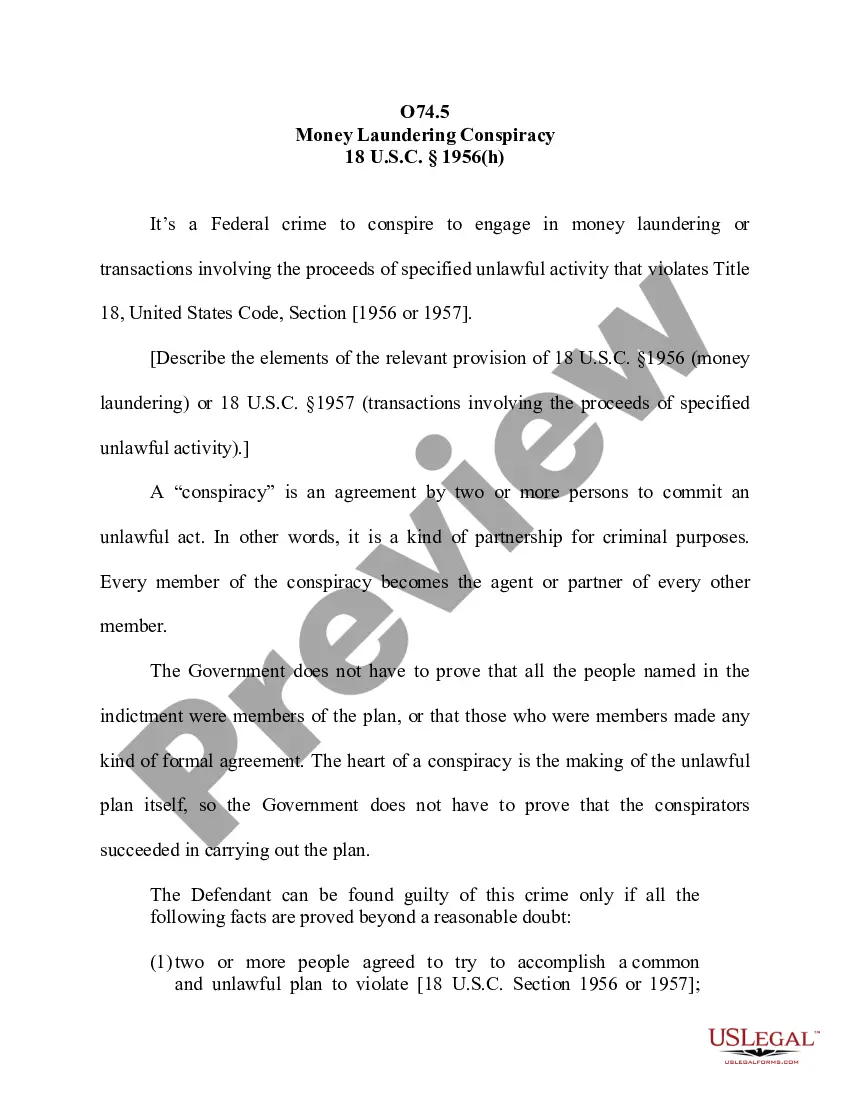
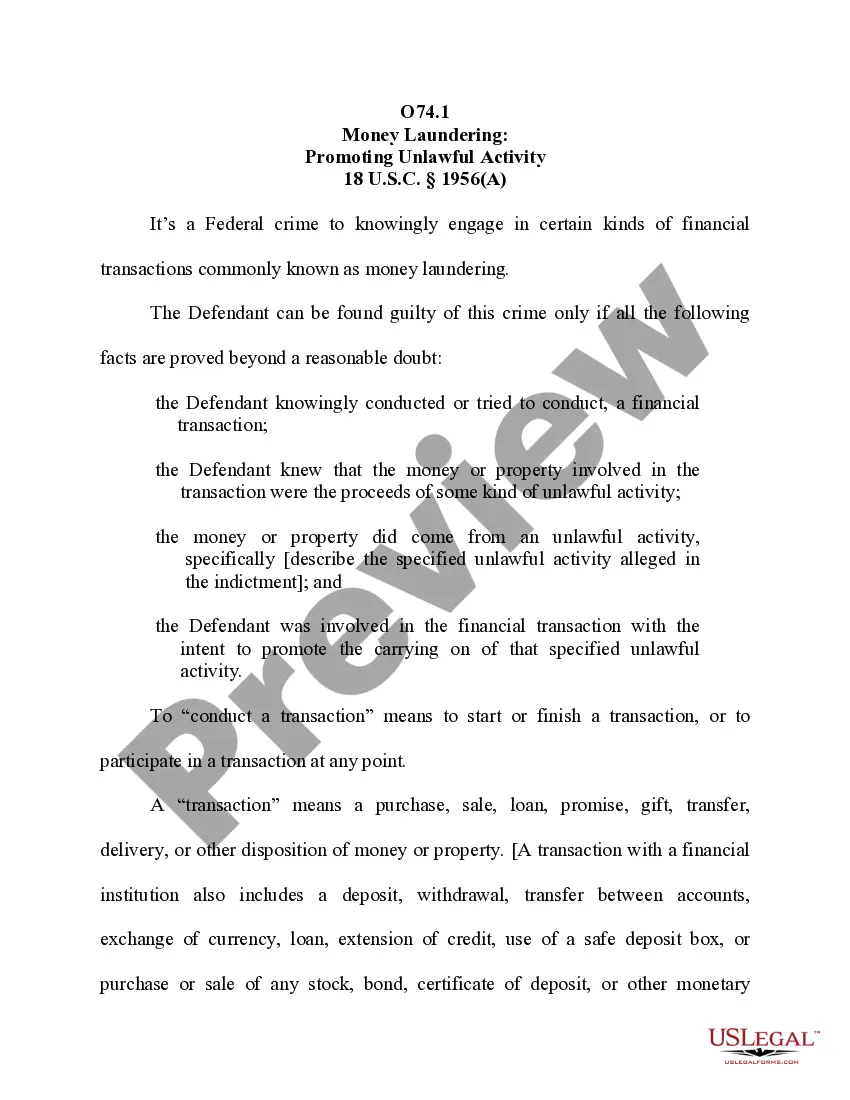
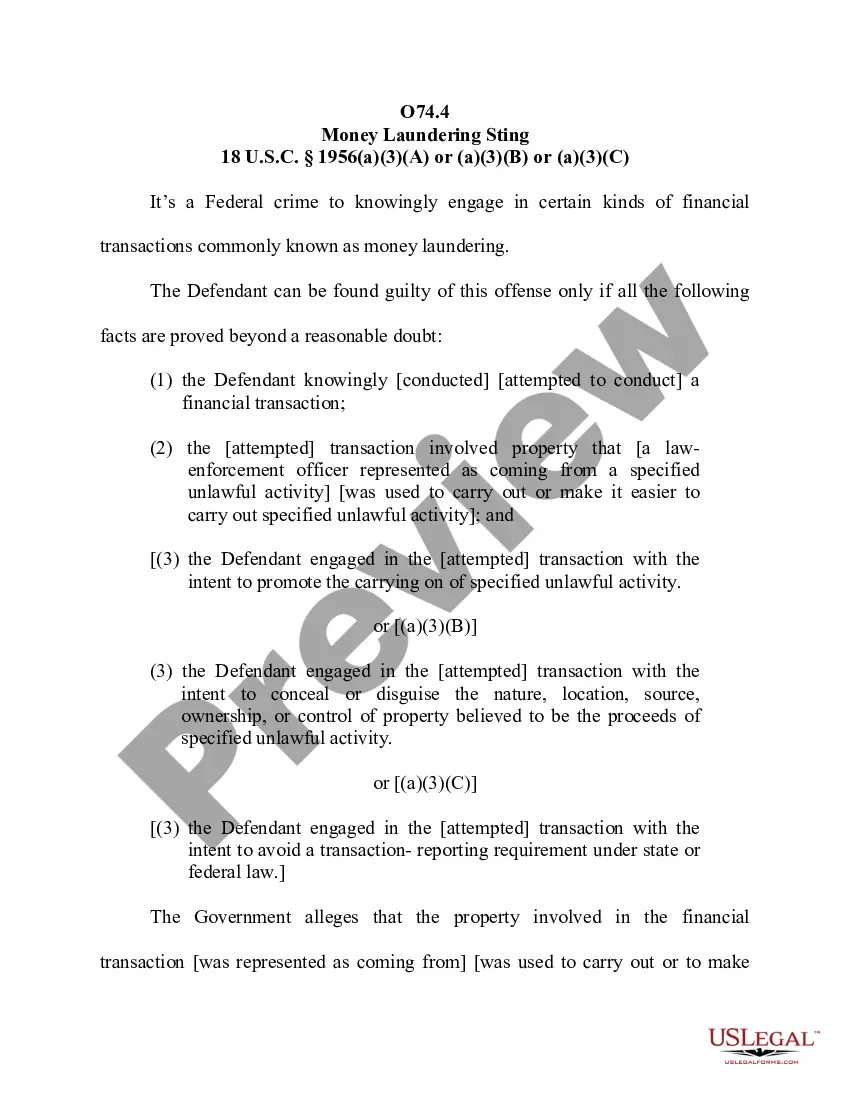
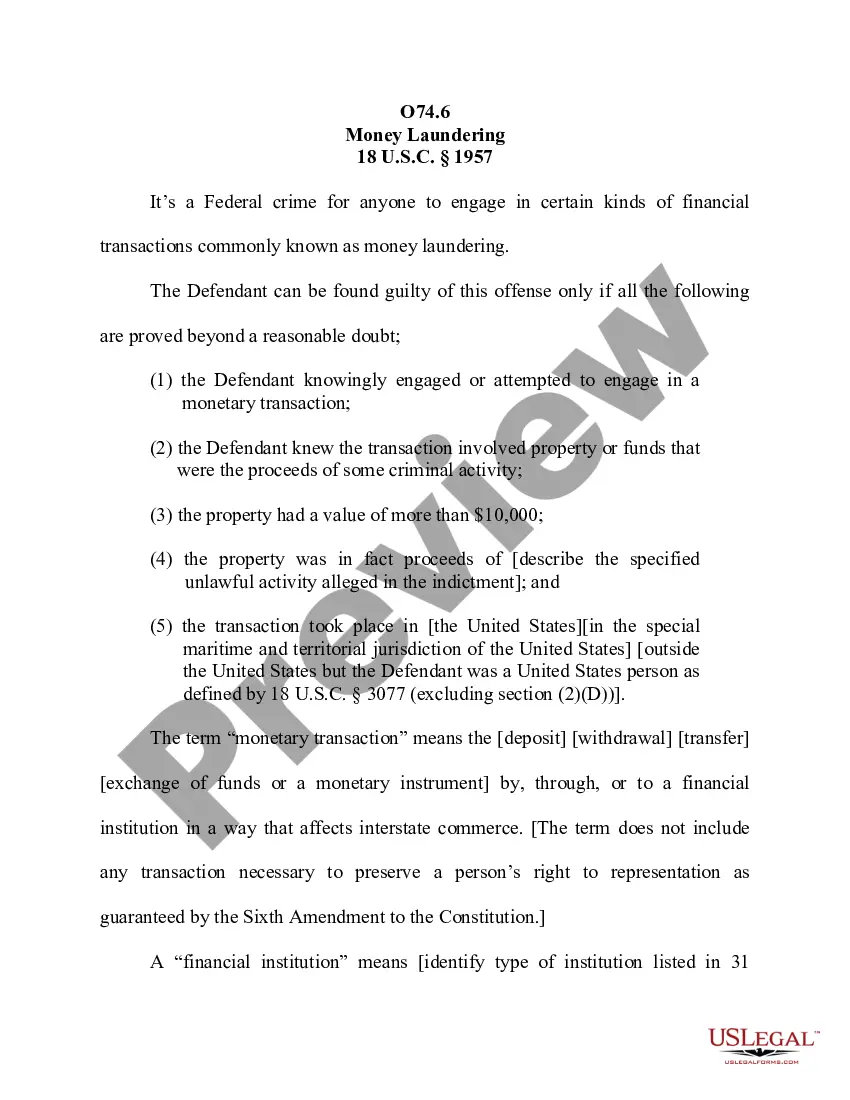
The Money Laundering Conspiracy form outlines the legal framework surrounding conspiracy to commit money laundering under federal law. This crime occurs when two or more individuals agree to engage in money laundering or transactions involving proceeds from unlawful activities. Unlike other charges, this form emphasizes the significance of the agreement itself, regardless of whether the conspirators succeed in carrying out their illicit plan.
Main sections of this form
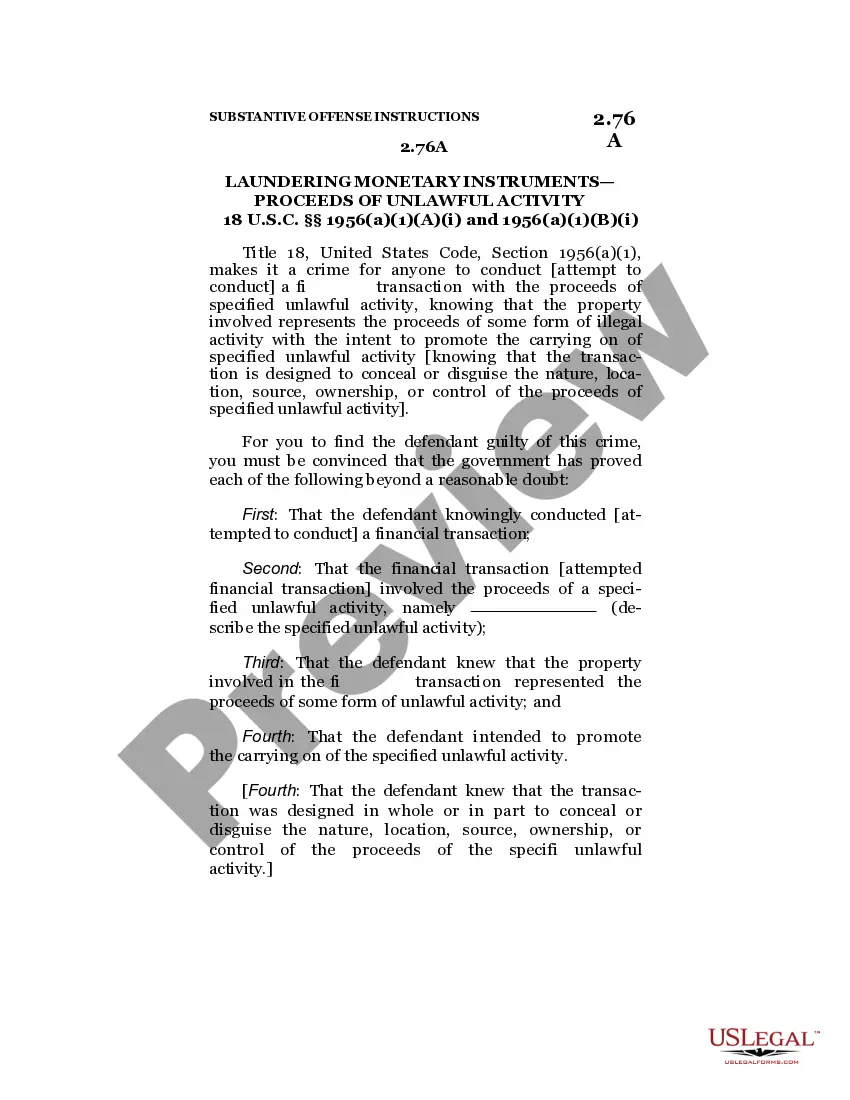
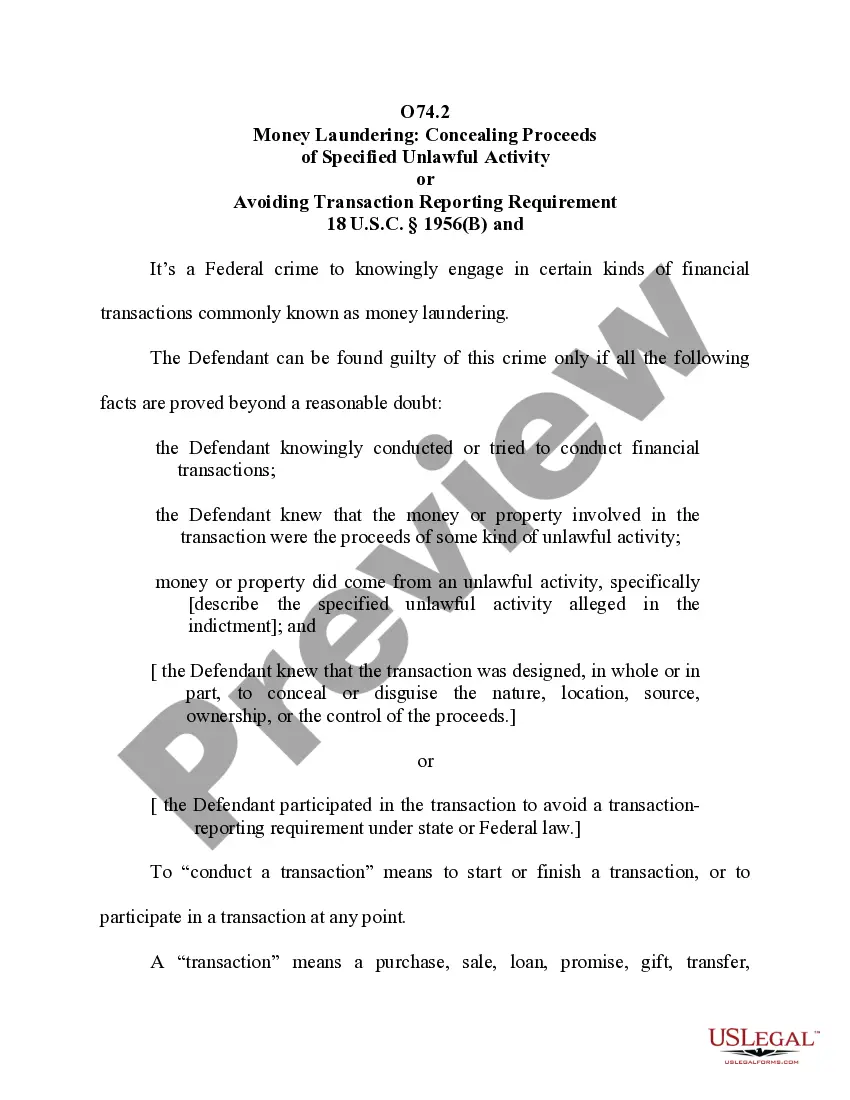
- Definition of money laundering as per 18 U.S.C. § 1956 and § 1957.
- Explanation of what constitutes a conspiracy and the roles of each conspirator.
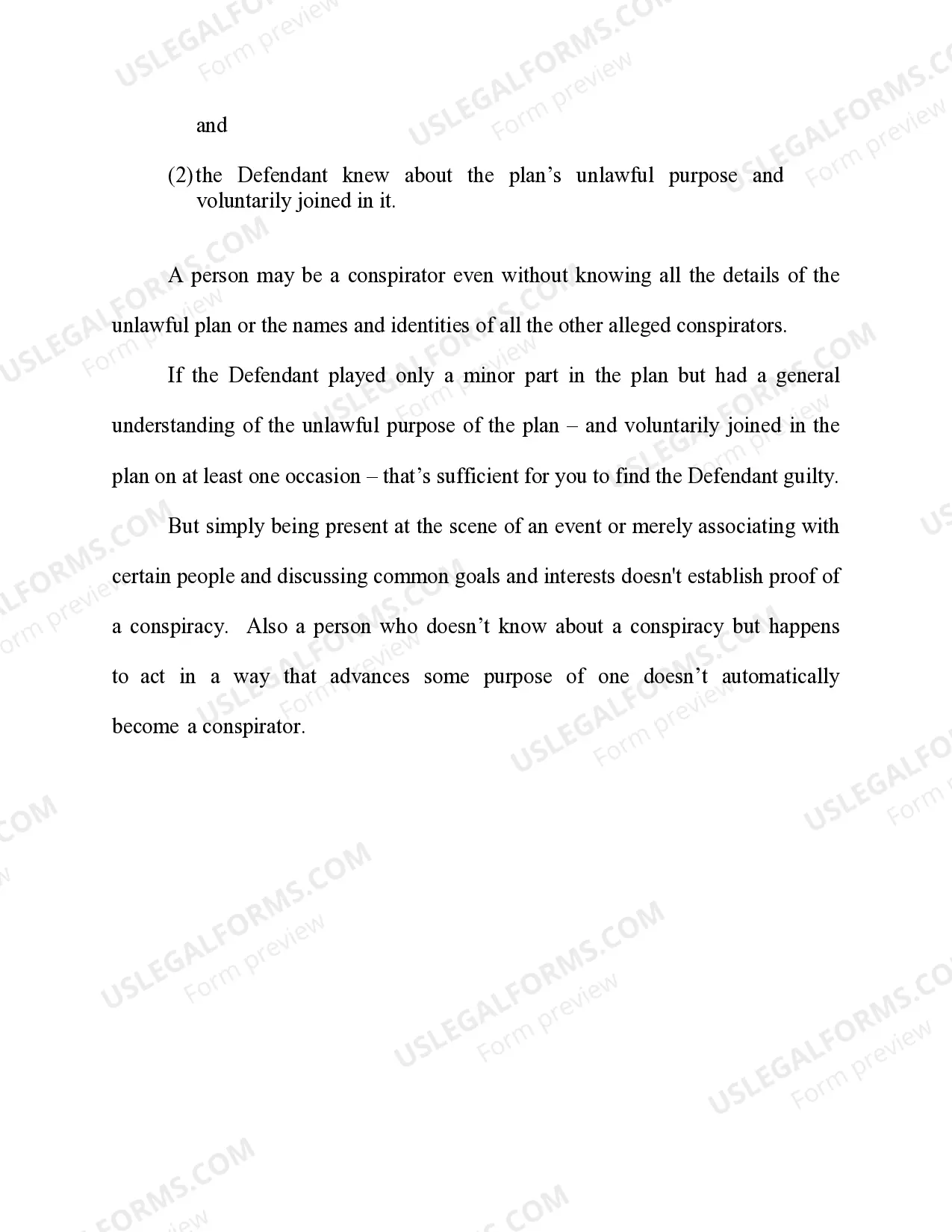
- Requirements for proving the conspiracy beyond a reasonable doubt.
- Clarification that all members do not need to be identified or that formal agreements need to exist.
- Explanation of minor participation and its sufficiency for establishing guilt.
When to use this document
This form is typically used in legal cases involving allegations of money laundering conspiracy. It may be required in situations where individuals are charged with planning to engage in financial transactions that are unlawful in nature, including situations where proceeds from illegal activities are involved.
Intended users of this form
- Individuals accused of conspiracy to commit money laundering.
- Defense attorneys representing clients facing such charges.
- Legal professionals looking to understand the framework of conspiracy law in money laundering cases.
- Students or researchers studying federal criminal law.
Steps to complete this form
- Identify the individuals involved in the conspiracy.
- Select the specific unlawful activities they agreed to commit.
- Detail the nature of the agreement regarding the unlawful plan.
- Document any communications or actions that demonstrate the intent to carry out the conspiracy.
- Include signatures from all relevant parties to acknowledge their involvement in the conspiracy.
Notarization guidance
This form usually doesn’t need to be notarized. However, local laws or specific transactions may require it. Our online notarization service, powered by Notarize, lets you complete it remotely through a secure video session, available 24/7.
Get your form ready online
Our built-in tools help you complete, sign, share, and store your documents in one place.
Make edits, fill in missing information, and update formatting in US Legal Forms—just like you would in MS Word.
Download a copy, print it, send it by email, or mail it via USPS—whatever works best for your next step.
Sign and collect signatures with our SignNow integration. Send to multiple recipients, set reminders, and more. Go Premium to unlock E-Sign.
If this form requires notarization, complete it online through a secure video call—no need to meet a notary in person or wait for an appointment.
We protect your documents and personal data by following strict security and privacy standards.

Make edits, fill in missing information, and update formatting in US Legal Forms—just like you would in MS Word.

Download a copy, print it, send it by email, or mail it via USPS—whatever works best for your next step.

Sign and collect signatures with our SignNow integration. Send to multiple recipients, set reminders, and more. Go Premium to unlock E-Sign.

If this form requires notarization, complete it online through a secure video call—no need to meet a notary in person or wait for an appointment.

We protect your documents and personal data by following strict security and privacy standards.
Common mistakes
- Assuming that mere association with alleged conspirators constitutes conspiracy.
- Failing to record all participants in the unlawful plan.
- Not clarifying the unlawful purpose of the conspiracy in the documentation.
Advantages of online completion
- Convenient access to legal templates at any time.
- Editability allows users to tailor the form to specific scenarios.
- Reliability from templates drafted by licensed attorneys.
Legal use & context
- The form serves as an essential document in federal criminal cases regarding conspiracy.
- Understanding this form helps clarify the legal implications of conspiracy charges related to money laundering.
- This document may help in defense preparations and plea negotiations.
Looking for another form?
Form popularity
FAQ
Types of circumstantial evidence that may be used in a money laundering case include accomplice evidence, which involves testimony from the person who caused the "creation" of the criminal proceeds, whether by drug sales, fraud, or other form of criminal activity; admissions by a defendant during a police interview;
As you can see, with many factors to consider, this entire process can take anywhere from 1 day to 1 week, depending on how quickly and accurately both firm and client collect and provide information and if any additional measures need to be taken, as well as the process and software used to detect fraud or verify.
Convicting someone of money laundering means the prosecution must show the defendant knowingly engaged in a financial transaction that was designed to conceal or disguise the origins of illegally obtained funds. This can be difficult to do, as the prosecution must also show that the defendant had the intent to defraud.
There are three stages introducing laundered funds into the financial system: Placement. Layering. Integration/extraction.
Despite 91.1% of money laundering offenders being imprisoned, 90% of money laundering crimes go undetected. While a 91.1% imprisonment rating is high, it neglects to address the fact that there are very few cases of money laundering crimes.
The Layering Stage Layering is the second stage of money laundering, and is performed to make the money as hard to detect as possible, further moving it away from the illegal source. It can often be the most complex stage of the laundering process.
The charge of money laundering conspiracy provides for a sentence of up to 20 years in prison, up to three years of supervised release and a fine of up to $500,000, or twice the amount involved, whichever is greater.