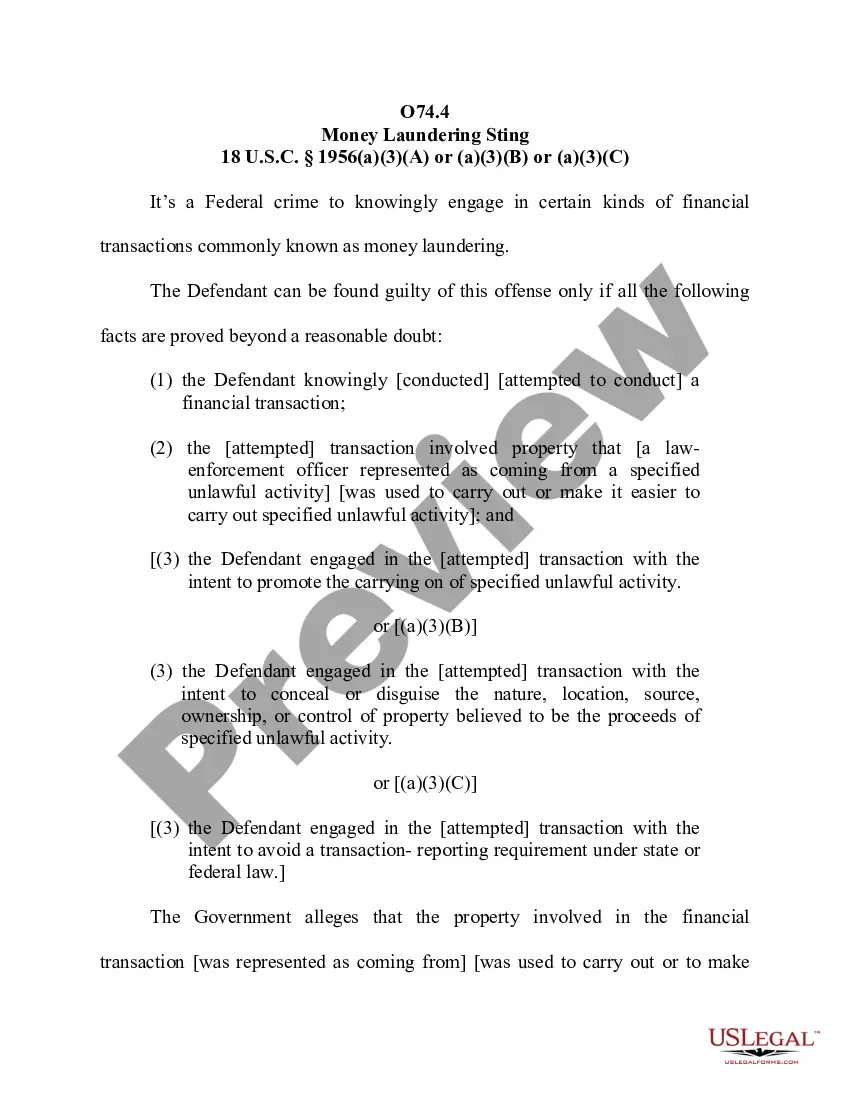
Money Laundering Sting
What is this form?
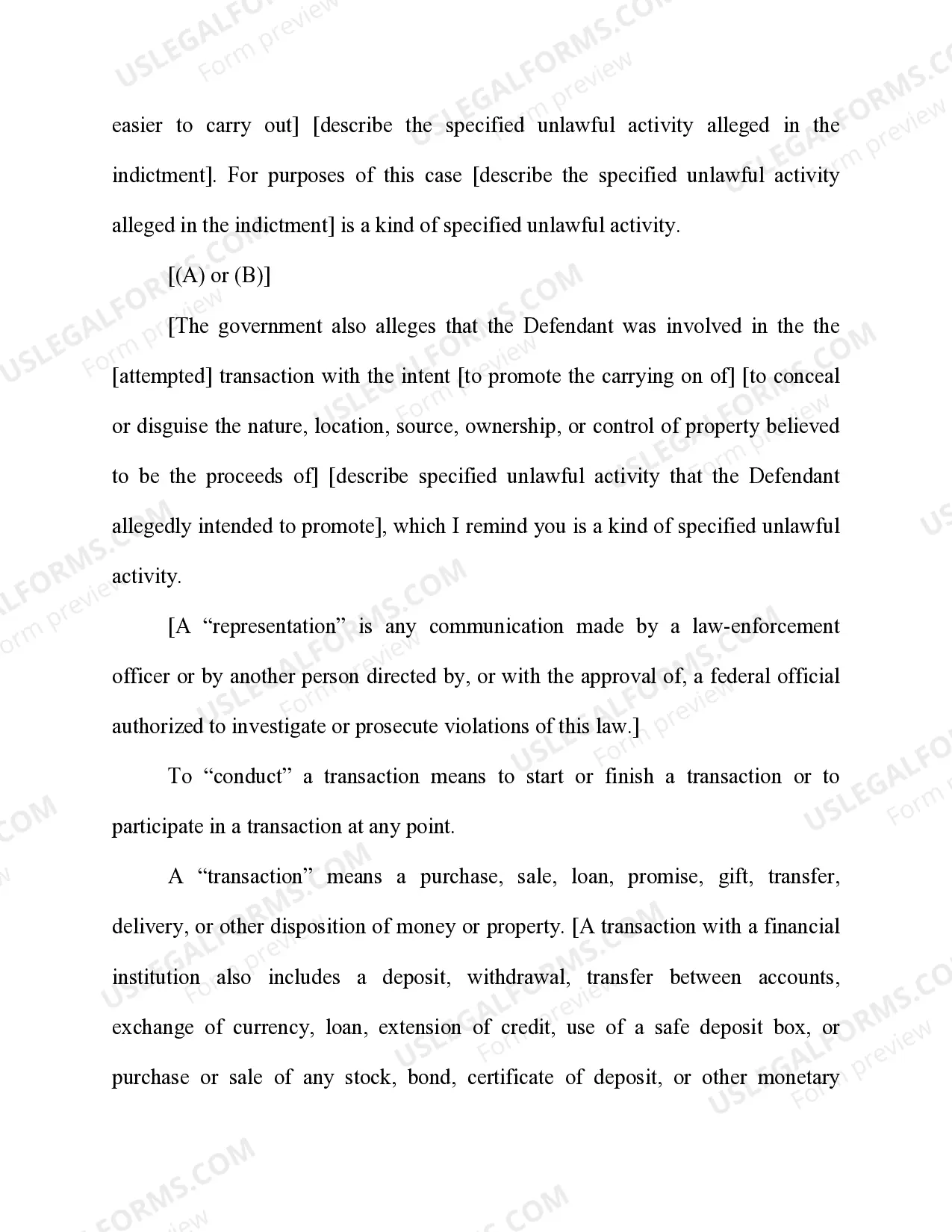
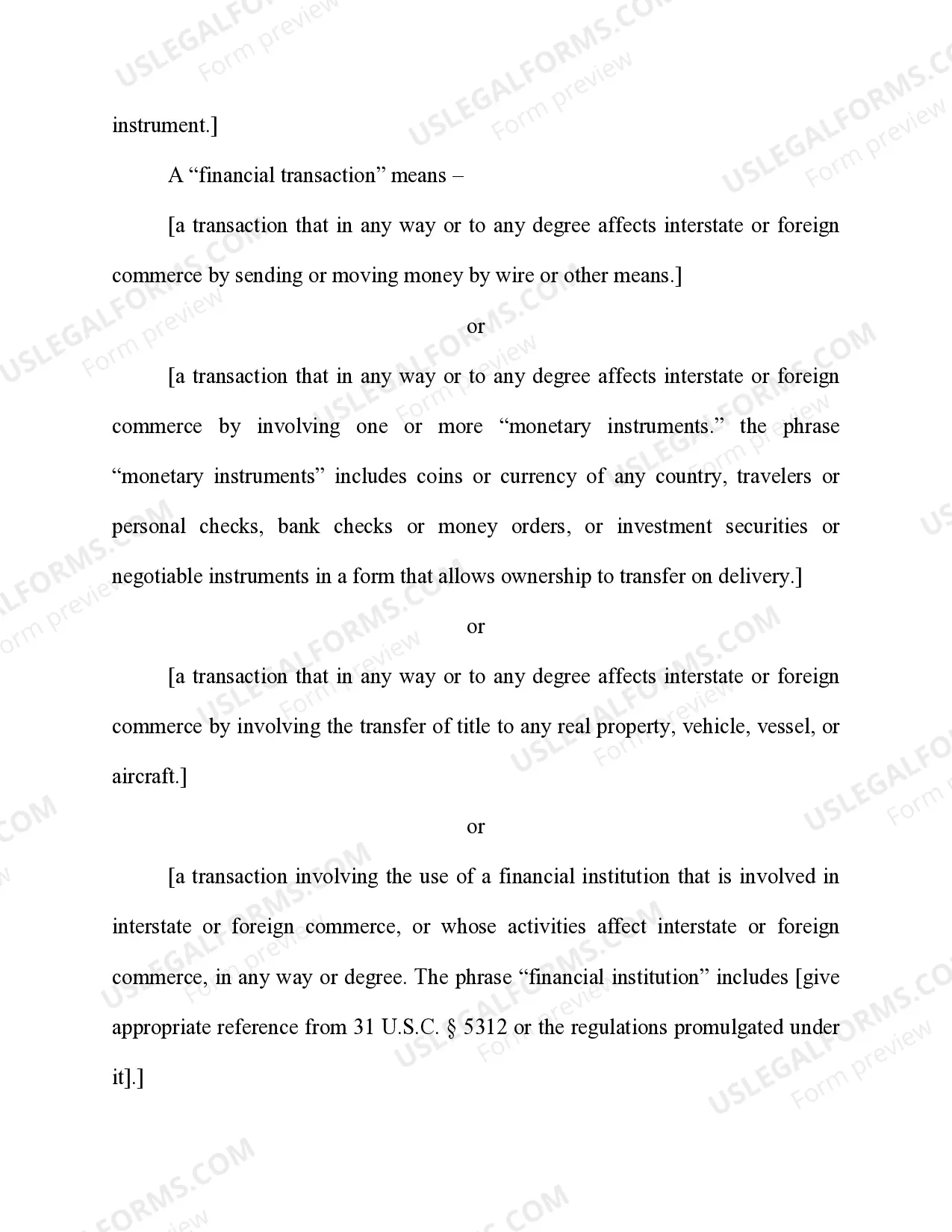
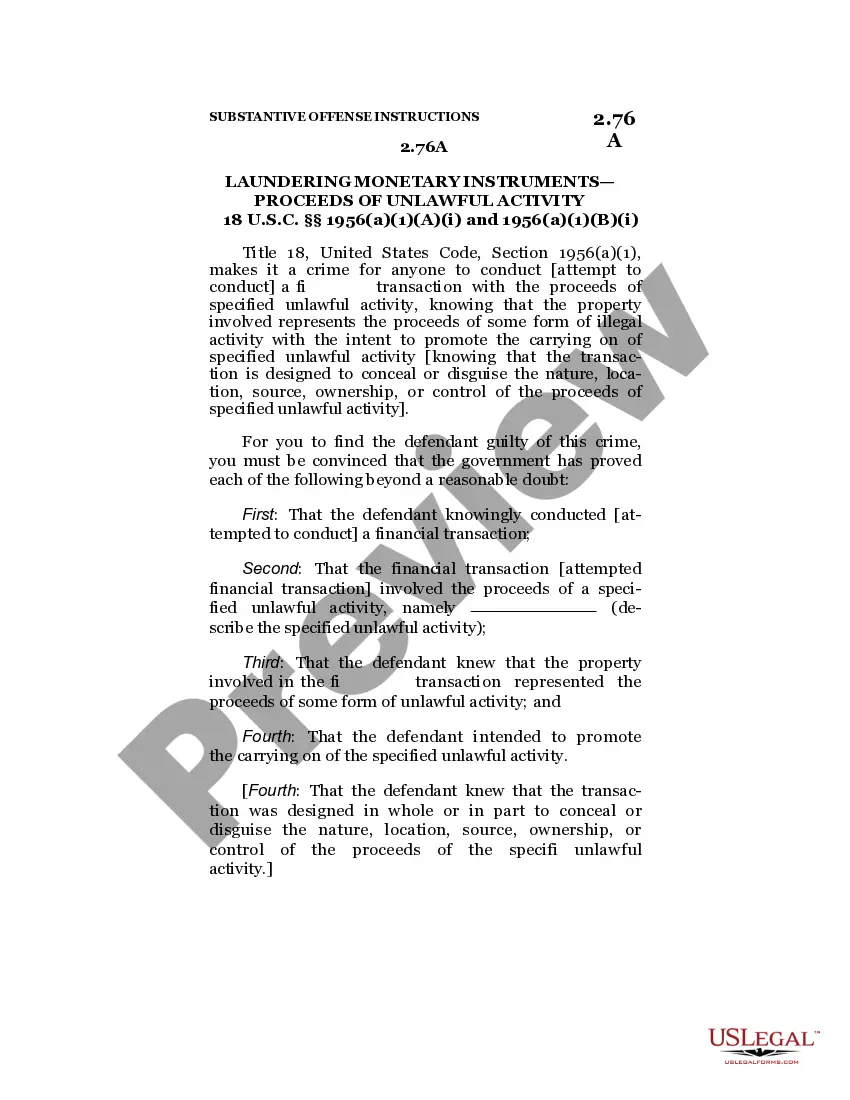
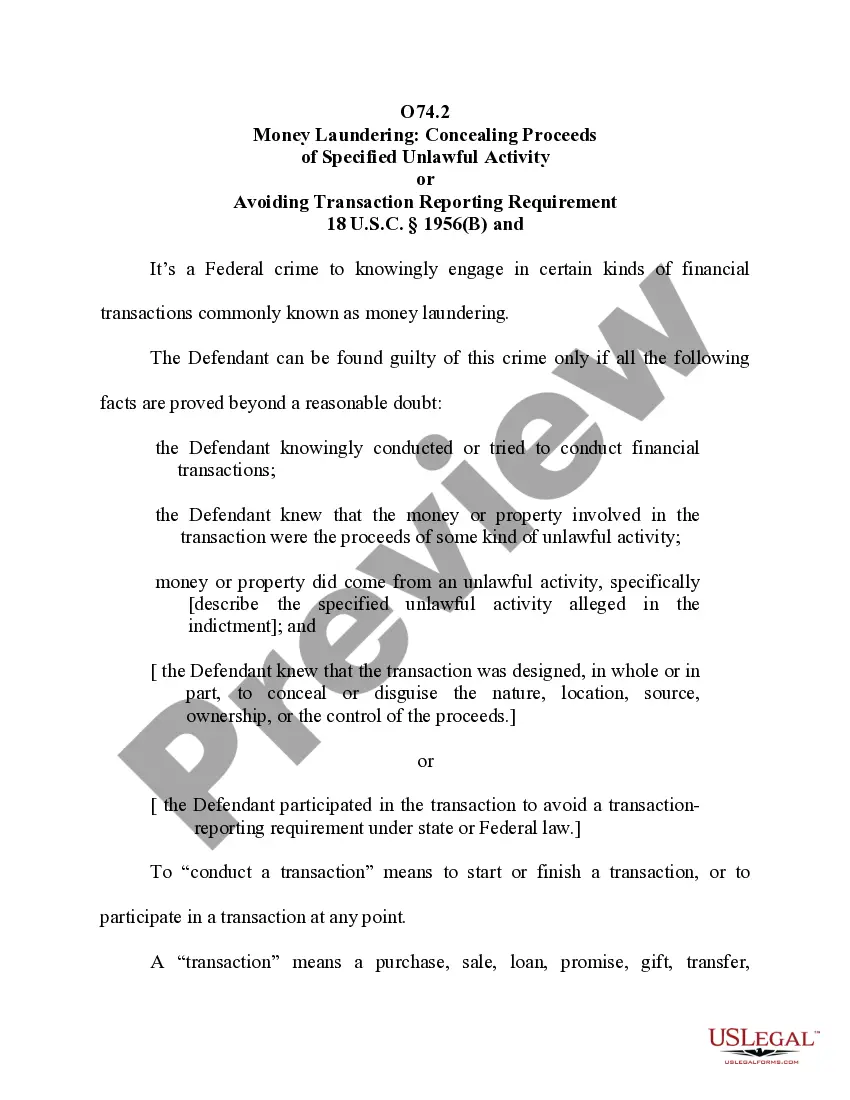
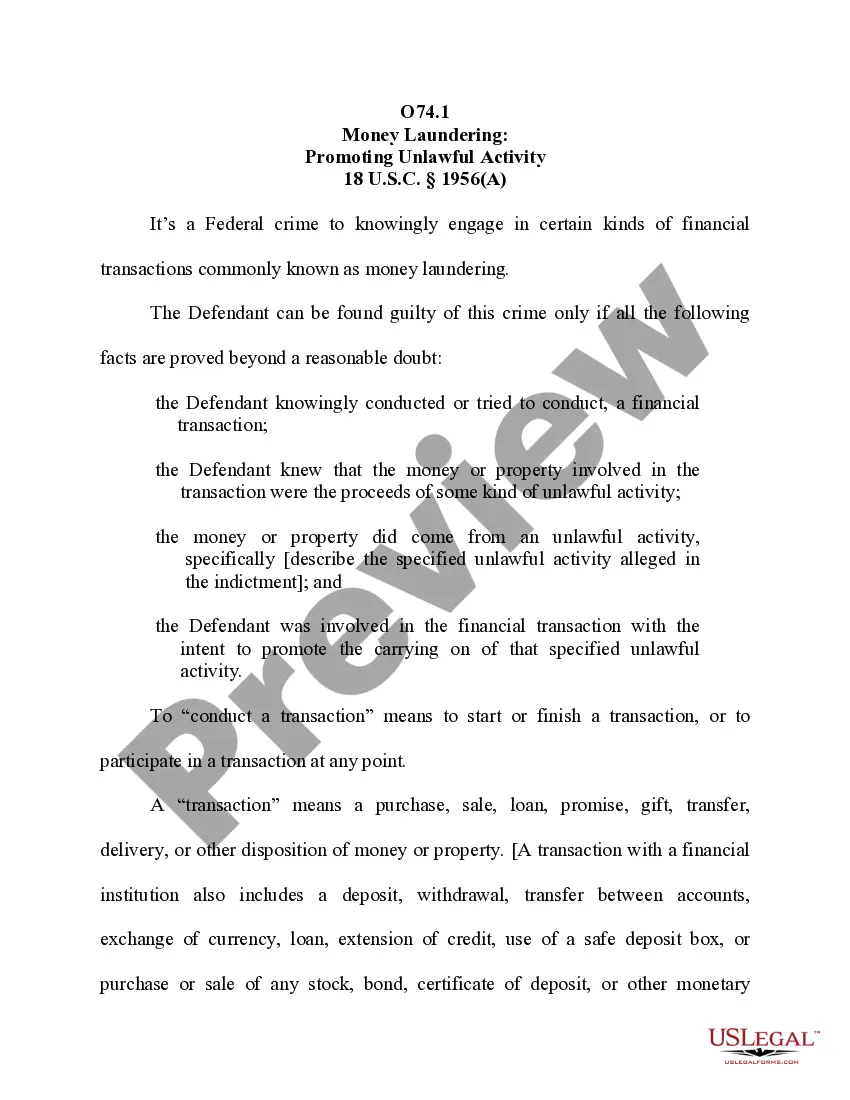
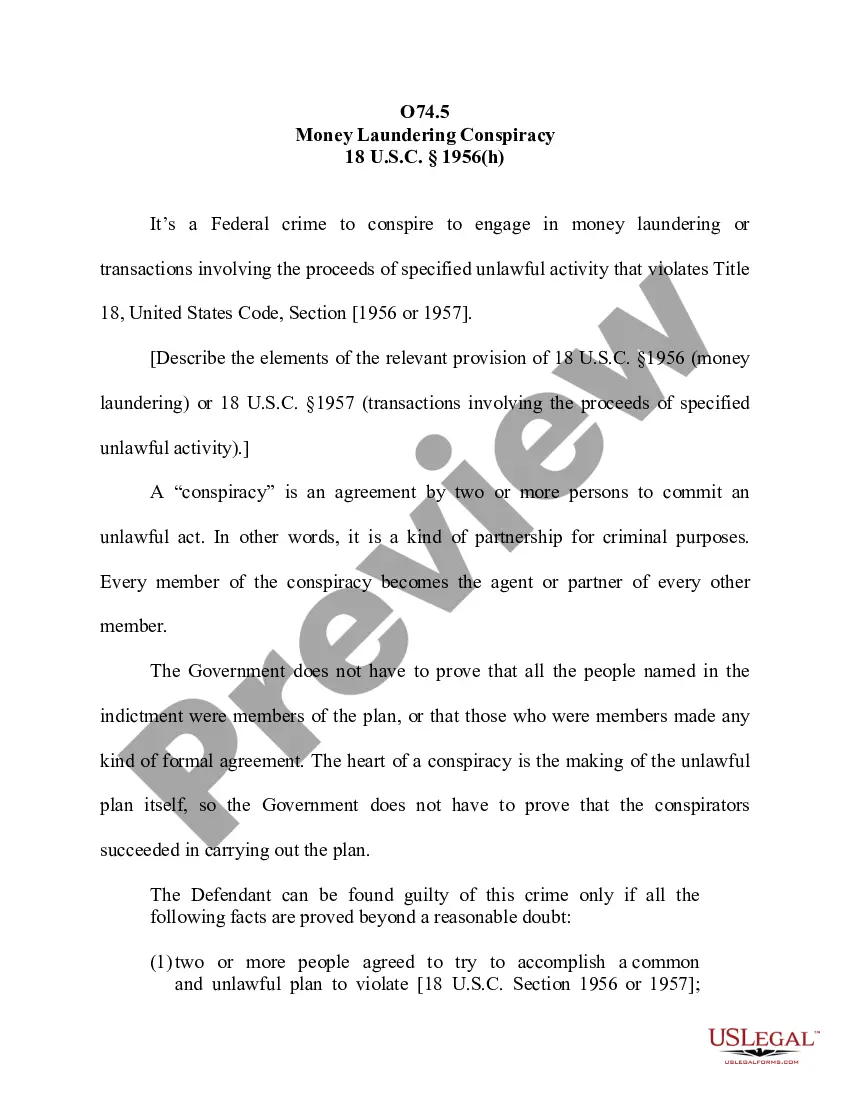
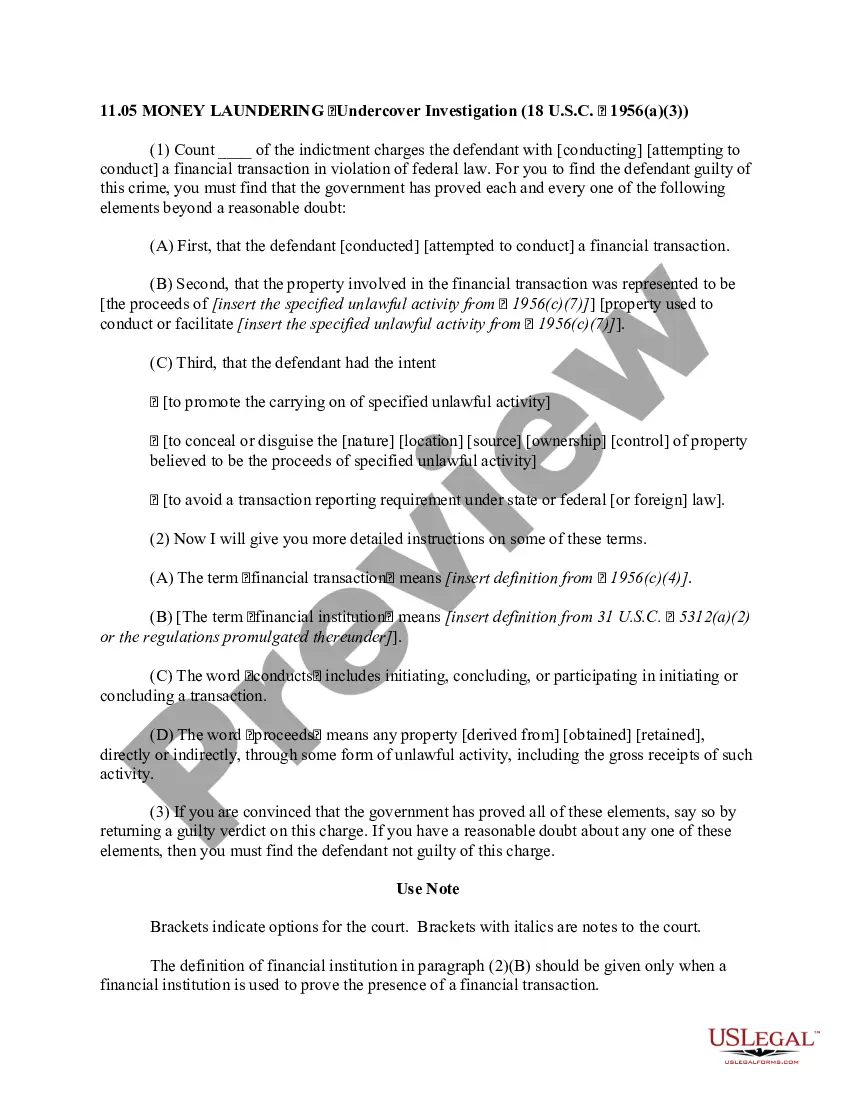
The Money Laundering Sting form is a set of jury instructions from the 11th Circuit Federal Court of Appeals that outlines the legal standards and requirements surrounding allegations of money laundering in a federal case. This form provides specific guidelines on how to determine guilt based on a defendant's intentions and actions during financial transactions related to unlawful activities. It is distinct from other legal forms as it pertains specifically to federal jury instructions, making it essential for use in federal criminal cases involving money laundering accusations.
Main sections of this form
- Definition of a financial transaction and its implications for interstate or foreign commerce.
- Criteria to establish the defendant's knowledge and intent in conducting the transaction.
- Distinction between various intents: promoting illegal activity, concealing property, or avoiding reporting requirements.
- Description of what constitutes a "specified unlawful activity."
- Clarification of the term "representation" in the context of law enforcement communications.

When this form is needed
This form is used during federal trials when a defendant is accused of engaging in money laundering activities. It is applicable when financial transactions are implicated in specified unlawful activities, allowing jurors to understand the legal framework for determining the defendant's guilt beyond a reasonable doubt. Legal professionals may rely on this form to guide jury instruction to ensure that all elements of the crime are properly conveyed during the trial.
Who should use this form
Eligibility includes:
- Legal professionals involved in federal criminal proceedings.
- Defendants facing criminal charges related to money laundering.
- Jurors needing guidance on the legal standards for evaluating the case.
Instructions for completing this form
- Identify the relevant parties and gather necessary information about the financial transaction.
- Specify the unlawful activity associated with the transaction as outlined in the indictment.
- State the intent of the defendant based on the specified criteria for money laundering.
- Ensure that all elements of the crime, such as the nature of the financial transaction, are clearly articulated.
- Review the completed jury instructions for clarity and accuracy before submission.
Notarization requirements for this form
Notarization is generally not required for this form. However, certain states or situations might demand it. You can complete notarization online through US Legal Forms, powered by Notarize, using a verified video call available anytime.
Get your form ready online
Our built-in tools help you complete, sign, share, and store your documents in one place.
Make edits, fill in missing information, and update formatting in US Legal Forms—just like you would in MS Word.
Download a copy, print it, send it by email, or mail it via USPS—whatever works best for your next step.
Sign and collect signatures with our SignNow integration. Send to multiple recipients, set reminders, and more. Go Premium to unlock E-Sign.
If this form requires notarization, complete it online through a secure video call—no need to meet a notary in person or wait for an appointment.
We protect your documents and personal data by following strict security and privacy standards.

Make edits, fill in missing information, and update formatting in US Legal Forms—just like you would in MS Word.

Download a copy, print it, send it by email, or mail it via USPS—whatever works best for your next step.

Sign and collect signatures with our SignNow integration. Send to multiple recipients, set reminders, and more. Go Premium to unlock E-Sign.

If this form requires notarization, complete it online through a secure video call—no need to meet a notary in person or wait for an appointment.

We protect your documents and personal data by following strict security and privacy standards.
Mistakes to watch out for
- Failing to define or clarify the specific unlawful activity involved in the case.
- Neglecting to outline the defendant's intent accurately in the context of jury instructions.
- Not fully explaining the implications of what constitutes a financial transaction under federal law.
Why use this form online
- Convenience of accessing legally sound jury instructions without requiring in-person consultations.
- Editability to customize information based on specific case details.
- Immediate availability of the form for quick reference during legal proceedings.
Legal use & context
- This form provides critical guidance for juries determining guilt in money laundering cases.
- It encompasses federal laws and references applicable to financial transactions affecting interstate commerce.
- Proper use of this form ensures compliance with legal standards required for federal criminal cases.
Looking for another form?
Form popularity
FAQ
Sting operations are common in many countries, such as the United States, but they are not permitted in some countries, such as Sweden or France.
A child in a chat room to identify a potential online child predator. a potential customer of illegal prostitution, or as a prostitute to catch a would-be customer. a hitman to catch customers and solicitors of murder-for-hire; or as a customer to catch a hitman. a spectator of an illegal dogfighting ring.
There are three stages introducing laundered funds into the financial system: Placement. Layering. Integration/extraction.
Investigative storefront sting operations are usually the most elaborate and expensive, though they do often result in the recovery of stolen property, thus offsetting the cost (see below).
Defining Sting Operations an opportunity or enticement to commit a crime, either created or exploited by police; a targeted likely offender or group of offenders for a particular crime type; an undercover or hidden police officer or surrogate, or some form of deception; and.
For the majority, sting operations contain four basic elements: (1) an opportunity or enticement to commit a crime, either created or exploited by police; (2) a targeted likely offender or group of offenders for a particular crime type; (3) an undercover or hidden police officer or surrogate, or some form of deception;
Sting operations, while extremely controversial, are a completely legal way to set up an opportunity to commit a crime whereas entrapment is an illegal form of coercing someone into committing a crime.
What is the purpose of a police sting operation? Combating fences, Identifying active criminals, and Recovering stolen property.