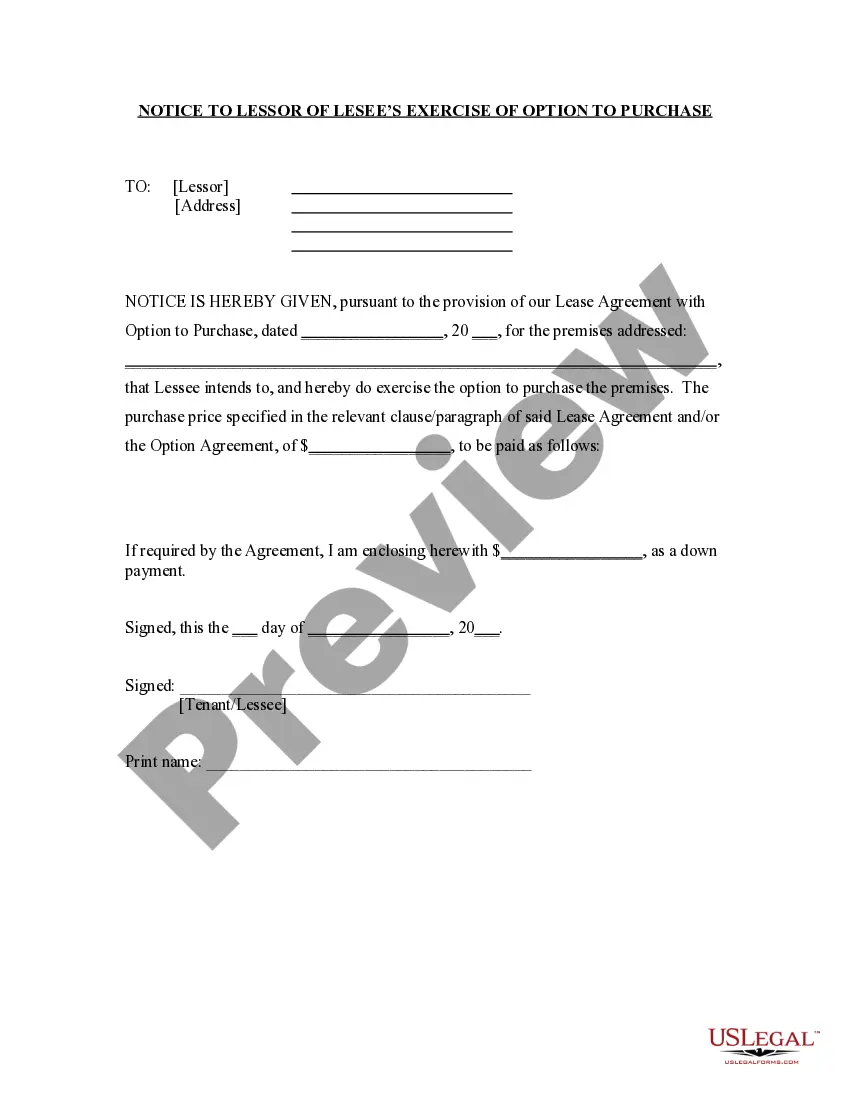
Nebraska Notice to Lessor Exercising Option to Purchase
Understanding this form
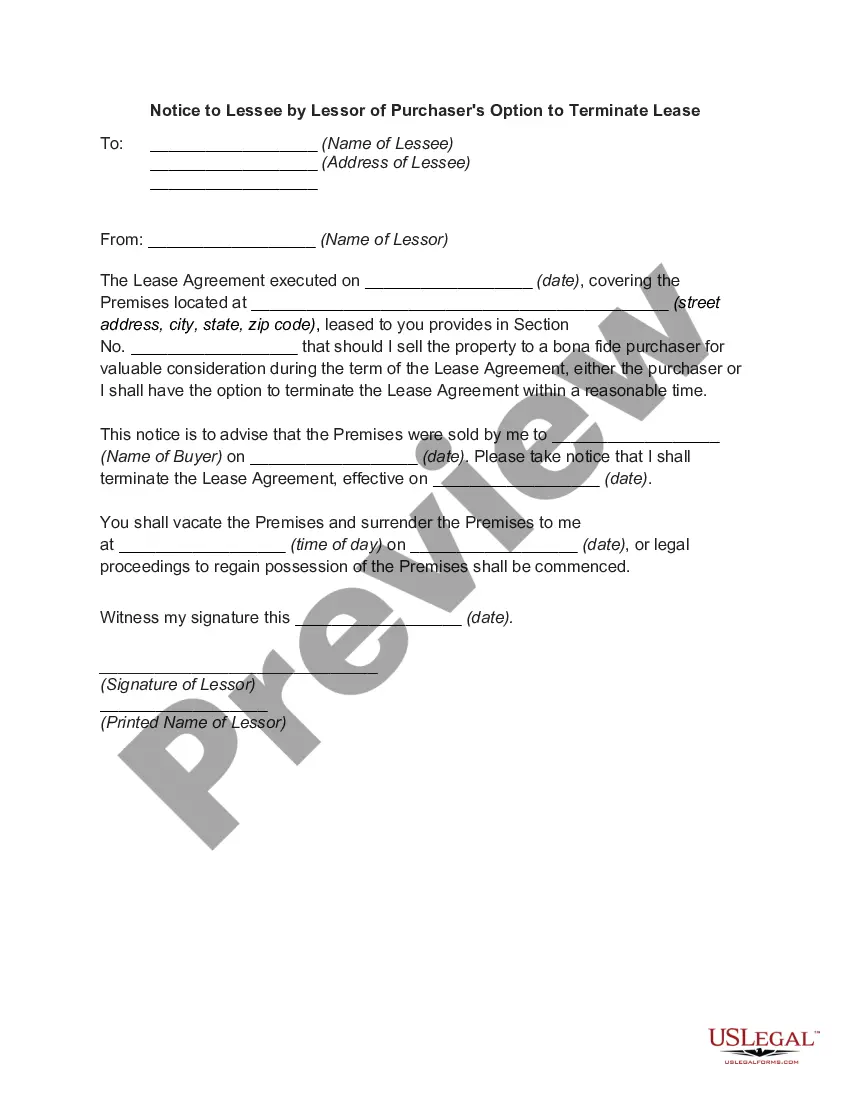
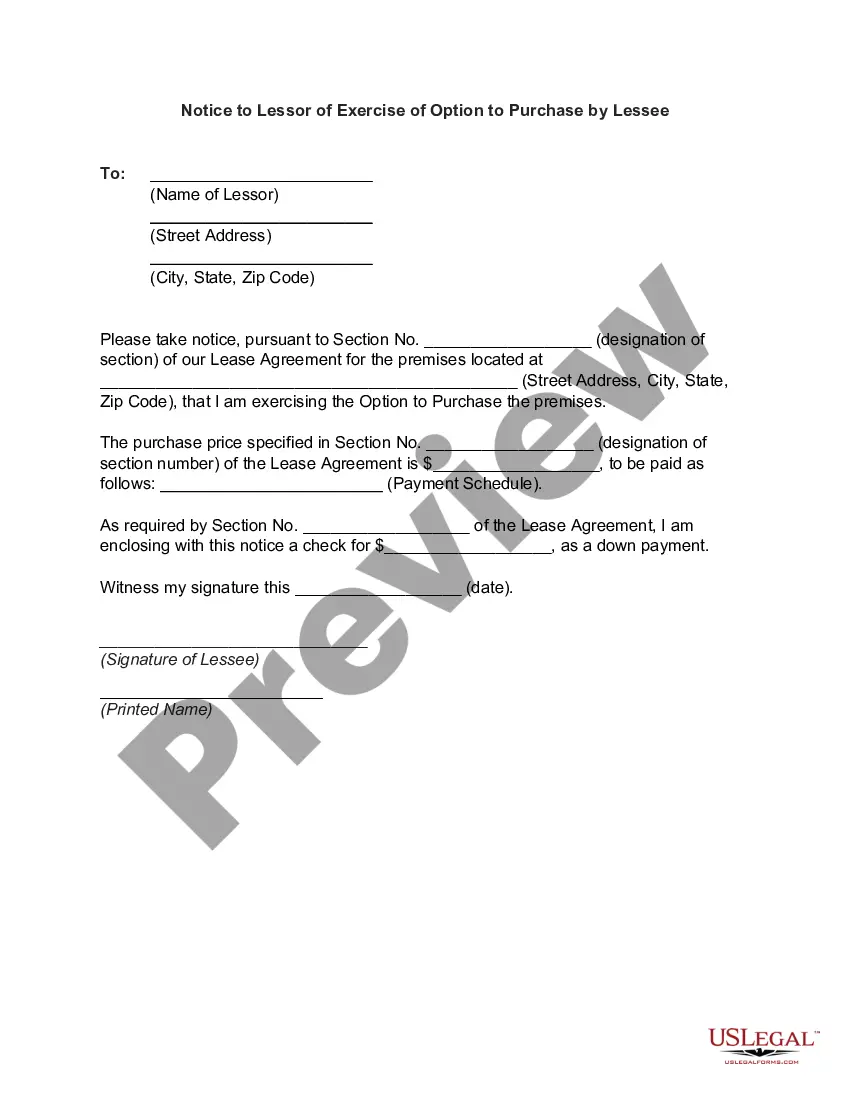
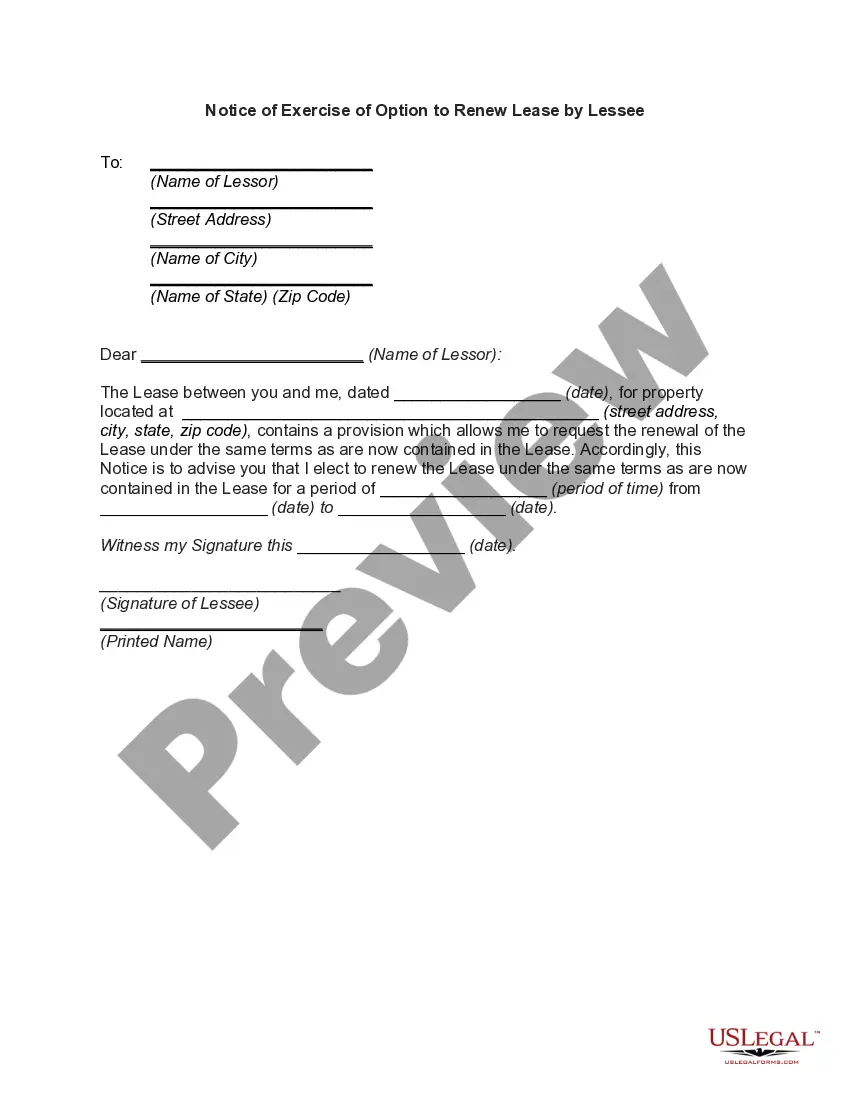
The Notice to Lessor Exercising Option to Purchase is a legal document that allows a tenant to formally inform their landlord of their intent to exercise a purchase option included in their lease agreement. This form serves as a vital notification to the lessor regarding the tenant's right to buy the property as stipulated in their initial contract. Unlike rental agreements or lease renewals, this notice specifically pertains to the tenant's right to purchase the property under agreed terms.
Key parts of this document
- Identification of the tenant and landlord, including their contact information.
- Statement of intent to exercise the purchase option for the specified premises.
- Purchase price as defined within the lease or option agreement.
- Details regarding the method of payment for the property.
- Signature lines for the tenant to affirm the notice.

When this form is needed
This form should be used when a tenant wishes to officially communicate their decision to purchase the property they are renting, as allowed by the lease agreement. Scenarios include tenants who have been granted an option to purchase in their lease and are ready to take action before the option expires, thereby securing the property they wish to buy.
Who this form is for
This notice is intended for:
- Tenants who have a purchase option included in their lease agreement.
- Landlords who need to be informed of the tenant's intent to exercise their purchase right.
- Individuals seeking to confirm their eligibility before executing a purchase option.
How to complete this form
To complete this form, follow these steps:
- Identify the parties involved, including the tenant (lessee) and landlord (lessor).
- Specify the property address for which the purchase option is being exercised.
- Fill in the purchase price as stated in the lease agreement.
- Describe the payment method for purchasing the property.
- Sign and date the notice to provide a legal affirmation of your intent.
Does this document require notarization?
This form does not typically require notarization unless specified by local law. It is important to review any state-specific regulations that may apply.
Get your form ready online
Our built-in tools help you complete, sign, share, and store your documents in one place.
Make edits, fill in missing information, and update formatting in US Legal Forms—just like you would in MS Word.
Download a copy, print it, send it by email, or mail it via USPS—whatever works best for your next step.
Sign and collect signatures with our SignNow integration. Send to multiple recipients, set reminders, and more. Go Premium to unlock E-Sign.
If this form requires notarization, complete it online through a secure video call—no need to meet a notary in person or wait for an appointment.
We protect your documents and personal data by following strict security and privacy standards.

Make edits, fill in missing information, and update formatting in US Legal Forms—just like you would in MS Word.

Download a copy, print it, send it by email, or mail it via USPS—whatever works best for your next step.

Sign and collect signatures with our SignNow integration. Send to multiple recipients, set reminders, and more. Go Premium to unlock E-Sign.

If this form requires notarization, complete it online through a secure video call—no need to meet a notary in person or wait for an appointment.

We protect your documents and personal data by following strict security and privacy standards.
Mistakes to watch out for
- Failing to provide a proper purchase price, which is crucial for the transaction.
- Not including the necessary signatures, which can invalidate the notice.
- Missing the deadline for exercising the option to purchase can lead to loss of the right.
Benefits of using this form online
- Convenient access to the legal form online allows for immediate download and use.
- Editability enables tenants to customize the form to their specific circumstances.
- Reliability is ensured as the forms are drafted by licensed attorneys to comply with legal standards.
Legal use & context
This form serves as an official notice, which can be crucial in any potential legal dispute regarding the exercise of the purchase option. It provides evidence that the tenant communicated their intent to the landlord, adhering to the terms of the lease agreement.
Main things to remember
- The Notice to Lessor Exercising Option to Purchase is essential for tenants looking to buy the rental property.
- Ensure you fill out the form accurately and completely to avoid common mistakes.
- Understand your state-specific requirements to ensure the legality of the purchase notice.
Looking for another form?


Form popularity
FAQ
The primary difference is that an option contract entitles the buyer to the option to purchase the items at a later time, whereas a firm offer gives the buyer the right to buy the items outright at any time.
The difference between a lease option and lease purchase agreement is that the lease option only obligates the seller to sell. A lease purchase agreement commits both parties to the sale barring breach of contract or the buyer's inability to secure a mortgage.
The Basic Structure of a Lease Purchase In a lease purchase contract, the buyer and seller agree to a lease period followed by sale of the property when the lease ends. This type of agreement combines both a lease and a purchase with the tenant/purchaser securing the option to purchase the house.
A lease-option-to-buy arrangement can be a solution for some potential homebuyers, but it's not right for everyone. If you're not certain that you're going to be able to purchase the rental home at the end of the lease period, you might be better served with a standard rental agreement.
An option- to-purchase agreement is an arrangement in which, for a fee, a tenant or investor acquires the right to purchase real property sometime in the future.In the residential context, an option to purchase is usually a part of a rent-to-own agreement, also called a lease-option.
Lease-option contracts give you the right to buy the home when the lease expires, while lease-purchase contracts require you to buy it. You pay rent throughout the lease, and in some cases, a percentage of the payment is applied to the purchase price.
A lease-option is a contract in which a landlord and tenant agree that, at the end of a specified period, the renter can buy the property. The tenant pays an up-front option fee and an additional amount each month that goes toward the eventual down payment.
Officially record the lease agreement and purchase option. The easiest way to do this is have the paperwork notarized and then recorded in your local public real estate records. Escrow the deed. Record a mortgage.