Michigan Warning of Default on Residential Lease
Understanding this form
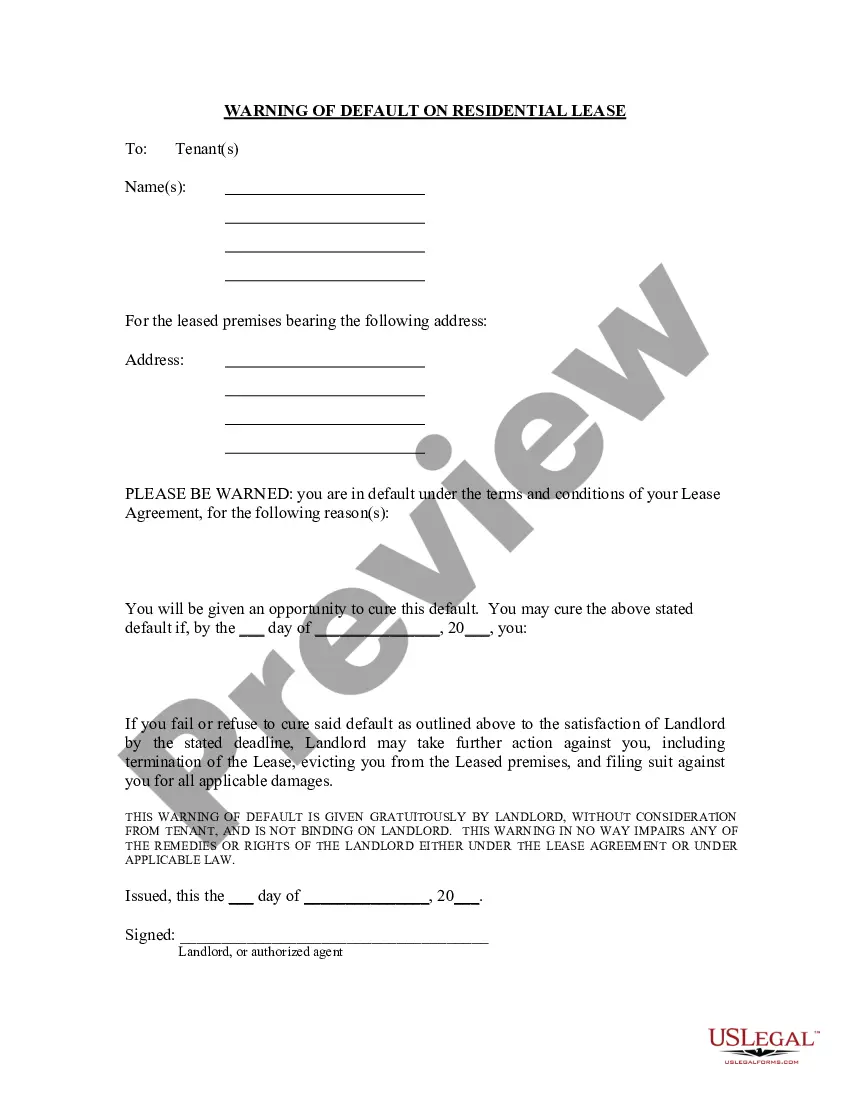
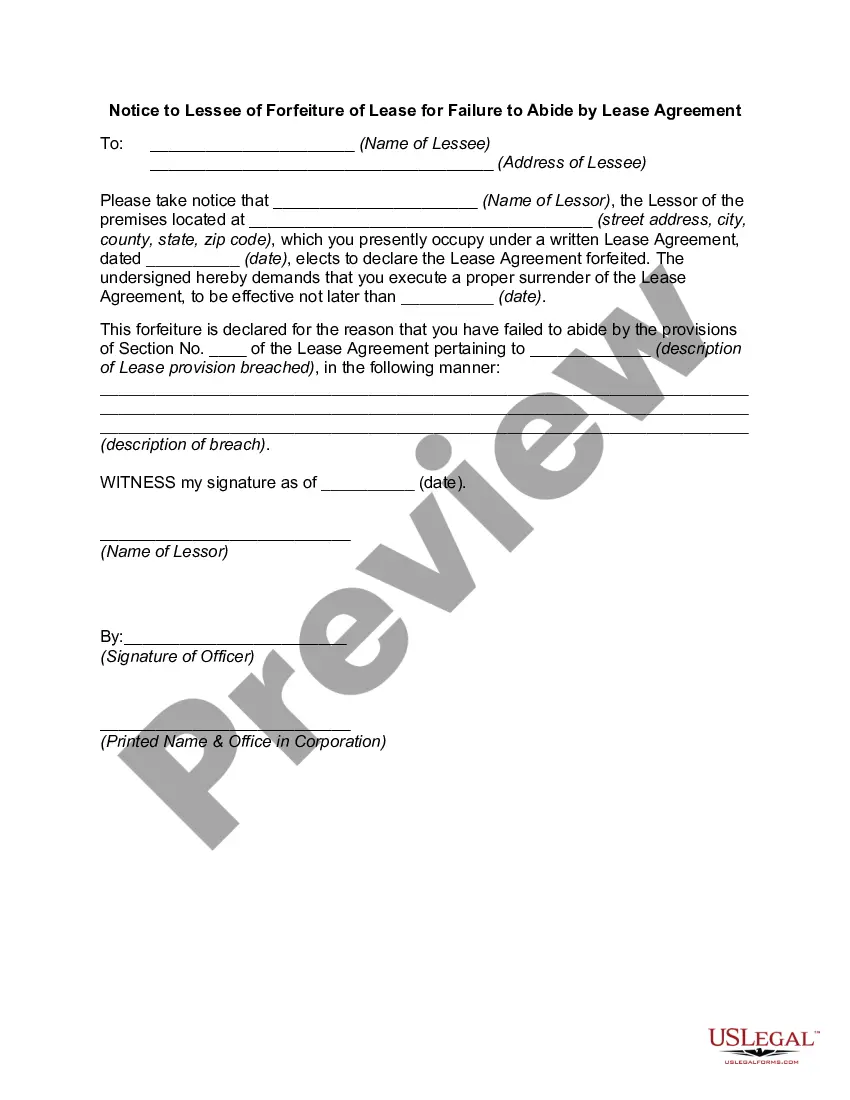
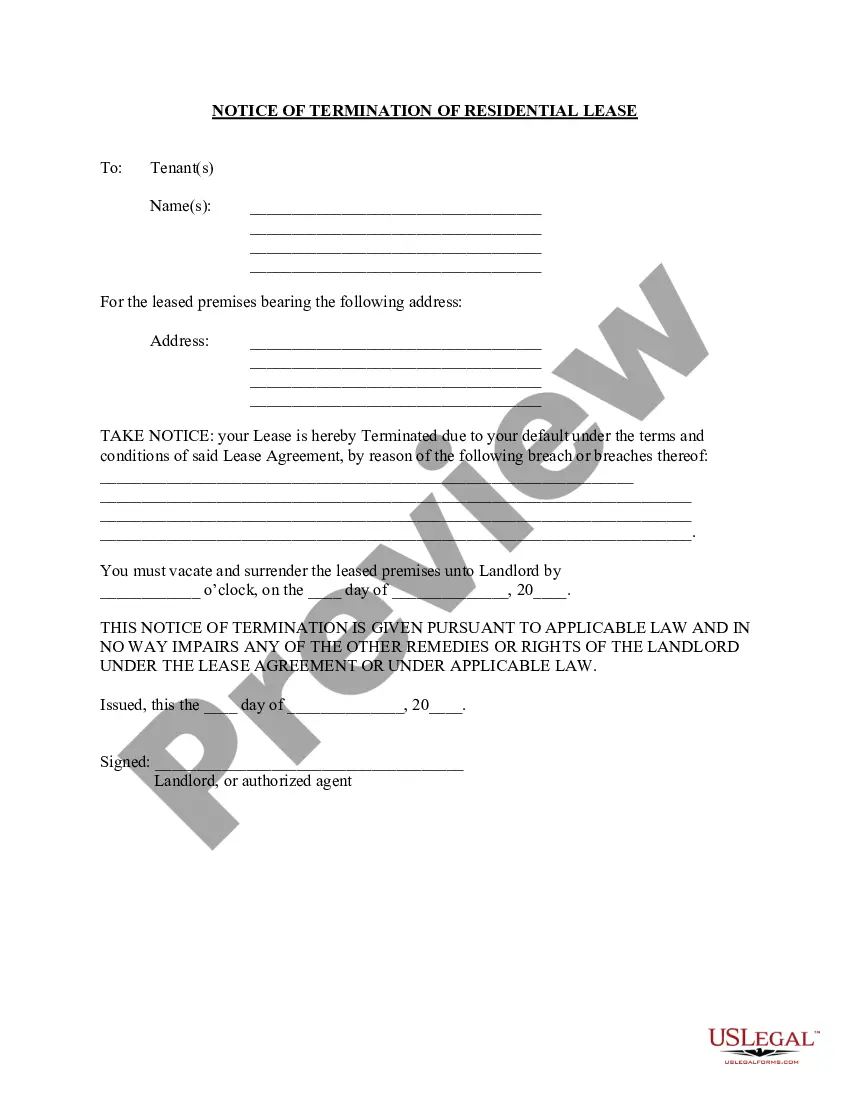
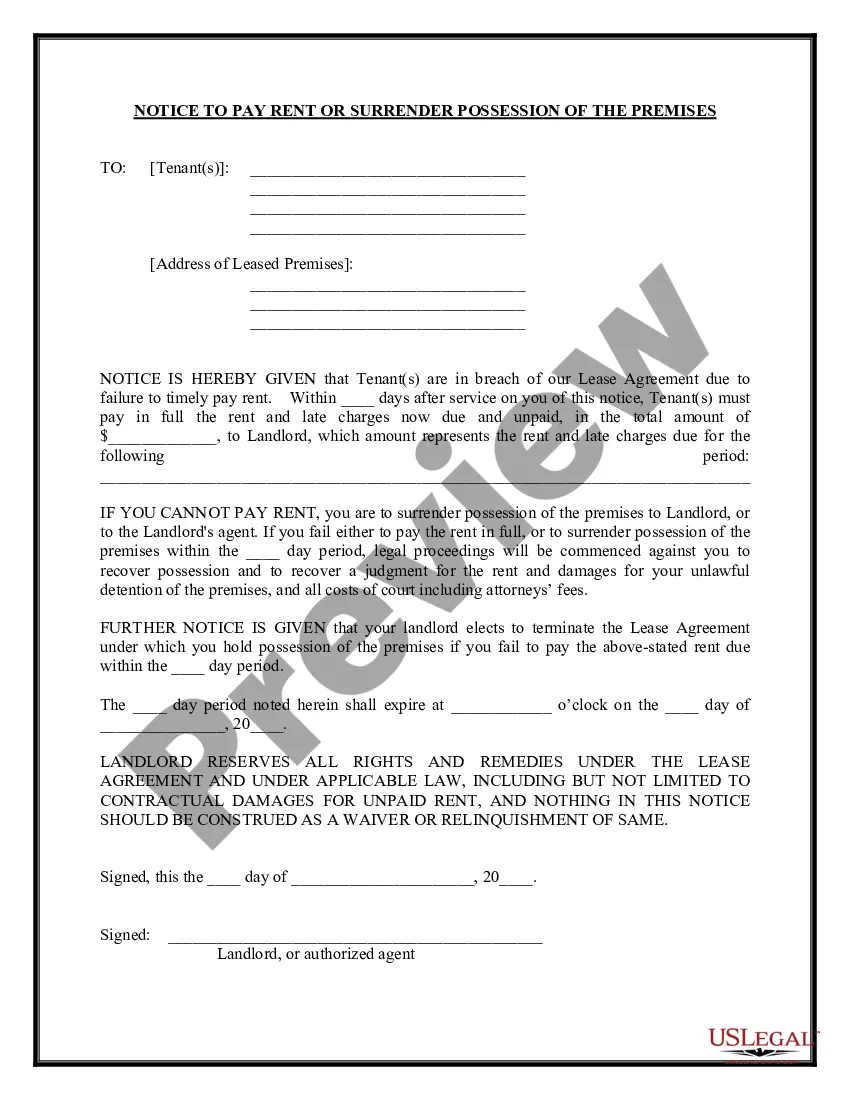
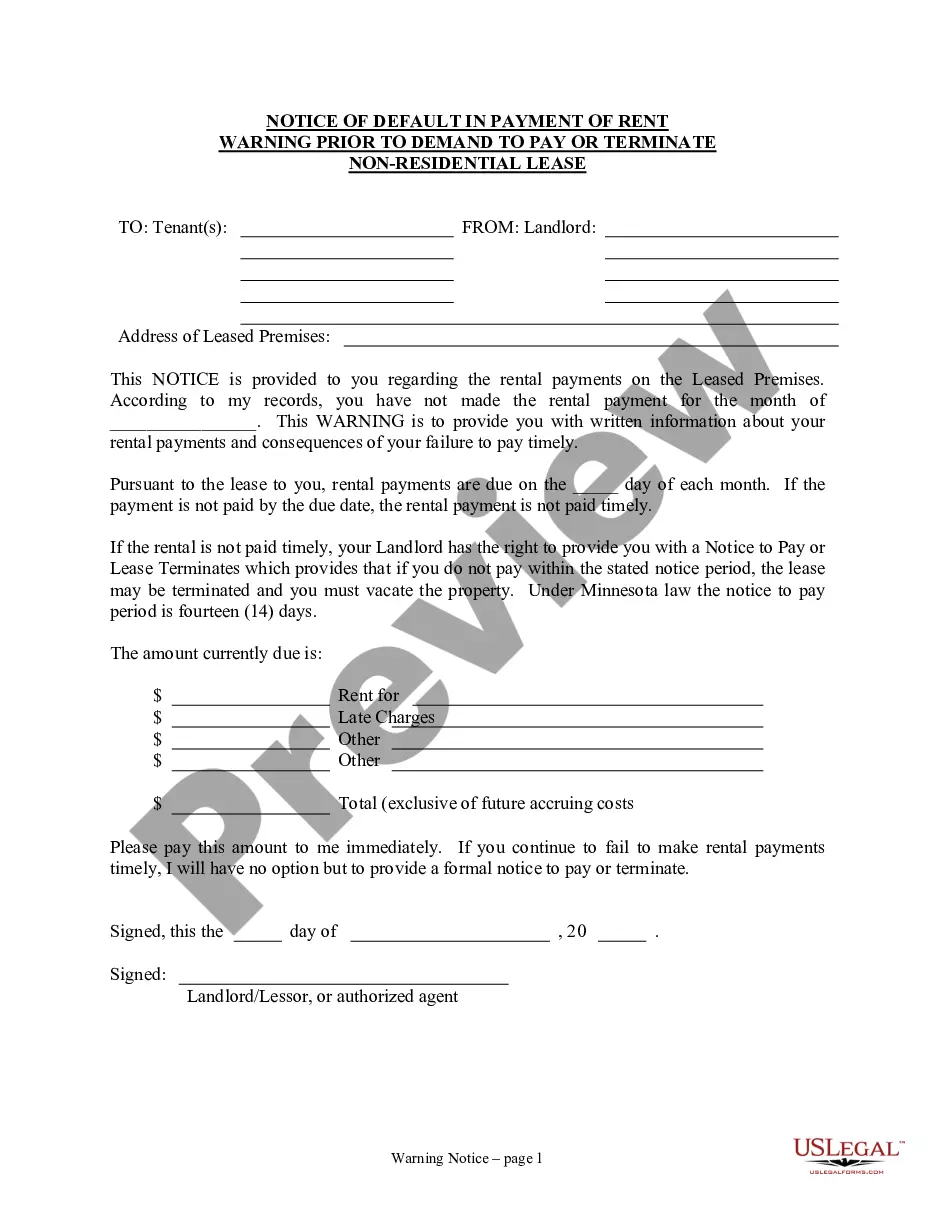
The Warning of Default on Residential Lease is a formal notice from a landlord to a tenant, indicating that the tenant may be in default of their lease agreement. This document serves to express the landlord's concerns and outline specific conditions that need to be remedied. It differs from other legal notices, such as eviction notices, as it is not a final step but rather a warning to prompt compliance with the lease terms.
Key components of this form
- Date of issuance to track when the warning was given.
- Landlord's signature or authorized agent to validate the notice.
- Explicit statement that the warning is given gratuitously and is not binding.
- Language asserting that the landlord's rights and remedies remain intact.
When to use this form
This form should be used when a landlord identifies potential lease violations by a tenant, such as late rent payments or unauthorized alterations to the rental property. It's an essential step to notify the tenant before taking more severe actions, like pursuing eviction, allowing them the opportunity to correct the issue.
Intended users of this form
- Landlords seeking to formally address issues with tenants regarding lease compliance.
- Property managers responsible for overseeing rental agreements and tenant relations.
- Real estate professionals involved in managing rental properties.
How to complete this form
- Enter the date of issuance in the designated fillable space.
- Specify the tenant's name and any relevant rental property details.
- Fill in specific conditions that the tenant needs to remedy.
- Have the landlord or an authorized agent sign the document.
- Ensure a copy is provided to the tenant to confirm receipt.
Notarization guidance
This form usually doesn’t need to be notarized. However, local laws or specific transactions may require it. Our online notarization service, powered by Notarize, lets you complete it remotely through a secure video session, available 24/7.
Get your form ready online
Our built-in tools help you complete, sign, share, and store your documents in one place.
Make edits, fill in missing information, and update formatting in US Legal Forms—just like you would in MS Word.
Download a copy, print it, send it by email, or mail it via USPS—whatever works best for your next step.
Sign and collect signatures with our SignNow integration. Send to multiple recipients, set reminders, and more. Go Premium to unlock E-Sign.
If this form requires notarization, complete it online through a secure video call—no need to meet a notary in person or wait for an appointment.
We protect your documents and personal data by following strict security and privacy standards.

Make edits, fill in missing information, and update formatting in US Legal Forms—just like you would in MS Word.

Download a copy, print it, send it by email, or mail it via USPS—whatever works best for your next step.

Sign and collect signatures with our SignNow integration. Send to multiple recipients, set reminders, and more. Go Premium to unlock E-Sign.

If this form requires notarization, complete it online through a secure video call—no need to meet a notary in person or wait for an appointment.

We protect your documents and personal data by following strict security and privacy standards.
Common mistakes to avoid
- Failing to provide specific details about the lease violations can lead to confusion.
- Not signing the form can invalidate the warning.
- Misstating the remedies available under the lease may cause issues in enforcement.
Benefits of completing this form online
- Convenient access to legal forms that can be downloaded instantly.
- Editable fields allow landlords to customize the warning based on specific situations.
- Templates drafted by licensed attorneys ensure legal compliance.
Legal use & context
- The warning does not substitute for formal eviction notices.
- It provides the tenant a chance to rectify issues before legal action.
- Failure to comply after the warning may lead to further legal steps.
Main things to remember
- The form is an essential tool for landlords managing tenant defaults.
- It allows tenants to correct issues before facing eviction.
- Completion of this form can help maintain a professional relationship between landlords and tenants.
Looking for another form?






Form popularity
FAQ
The 554.134 law in Michigan specifically addresses the notice requirements related to lease agreements. This law mandates that landlords provide adequate notice before taking eviction action or terminating a lease. Familiarity with this law, along with the Michigan Warning of Default on Residential Lease, is vital for tenants and landlords alike. Accessing resources from US Legal Forms can help you navigate these legalities effectively.
If you default on an apartment lease, the landlord typically issues a Michigan Warning of Default on Residential Lease, alerting you to the breach of contract. This warning gives you a chance to remedy the situation, often by paying overdue rent or resolving lease violations. If you fail to take action, the landlord may proceed with further legal steps, which could include eviction. Being proactive right after a default can help protect your tenancy.
In Michigan, a landlord cannot evict you immediately without following the proper legal process. The landlord must provide a Michigan Warning of Default on Residential Lease and give you an opportunity to rectify any issues, such as unpaid rent. Failure to comply can lead to a formal eviction notice, which must adhere to specific timelines and protocols. Knowing your rights can empower you to take appropriate action and possibly avoid eviction.
The 554.613 law in Michigan pertains to the obligations of landlords regarding residential leases. This law outlines the process required for issuing a Michigan Warning of Default on Residential Lease, informing tenants of their lease violations. Understanding this law can help tenants recognize their rights and responsibilities. Comprehensive knowledge of this law is essential for both landlords and tenants to maintain a harmonious rental relationship.
In landlord-tenant law, default refers to the failure of a tenant to timely pay rent due.In general, the landlord is required to give the tenant notice of the default before bringing eviction proceedings or applying security deposit proceeds to the payment in default.
Unless your lease says otherwise simply breaking it is not an option. This is known as "unilateral breach" and typical penalties can include: Paying the rent - One way or another, if you walk away from your lease and no one else rents the apartment then you will owe the landlord this money.
Tenant default occurs when a Tenant breaches one of the tenant's covenants in its lease. Tenant default can arise in a number of different ways but will typically be for one of the following: Non-payment of rent or other sums reserved under the lease.
Your lease agreement will state what constitutes a default of the lease as well as if there is any grace period in making lease payments. Not making a contractually required monthly payment will normally be a breach of the lease and the lessor can then repossess the vehicle from you.
You can still break the lease by paying all the rent due for the remaining lease term. Under Michigan law, you only need to pay the amount the landlord loses, in the event of breaking the lease. No matter what your reason for leaving is, landlords must make reasonable efforts to re-rent the unit.