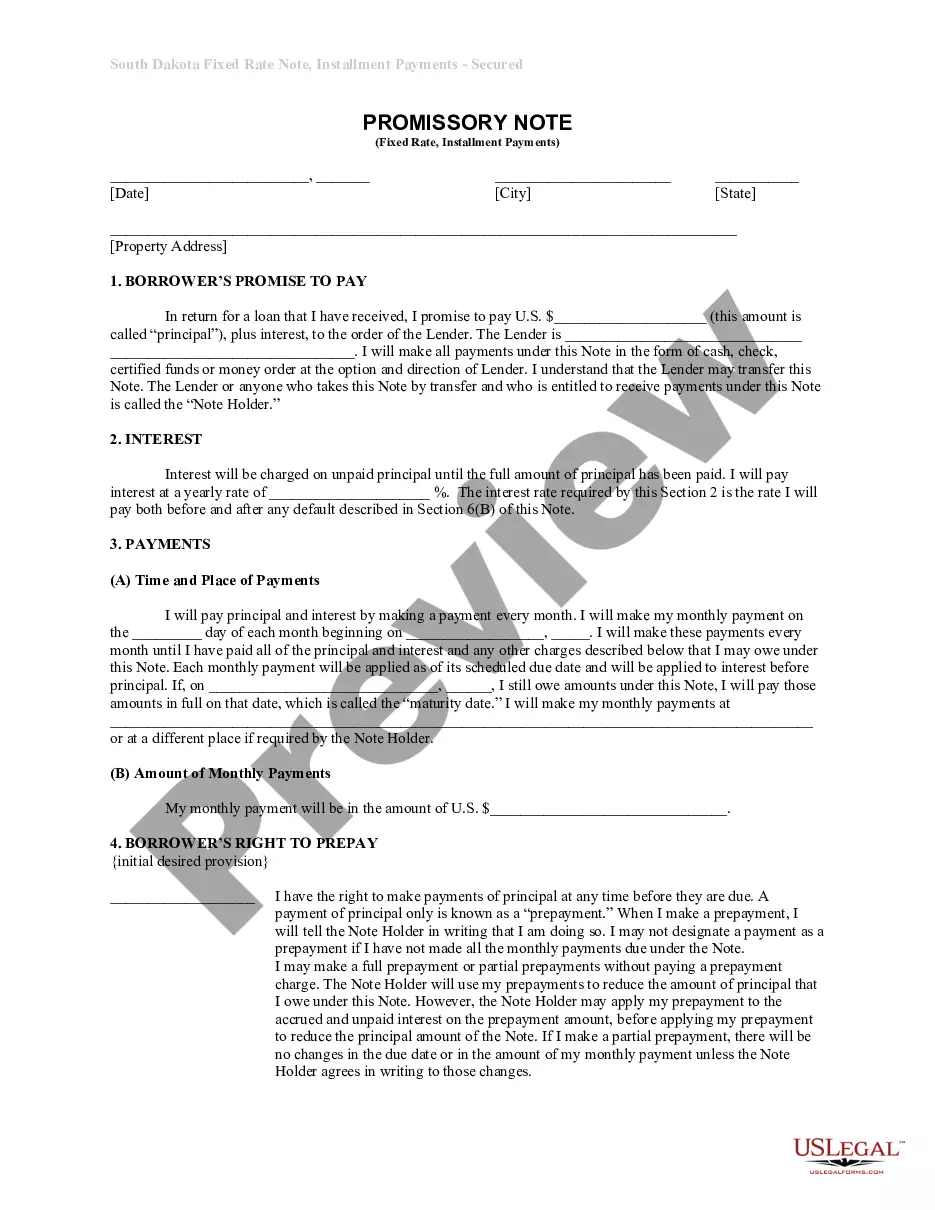
Michigan Warranty Deed from two Individuals to LLC
About this form
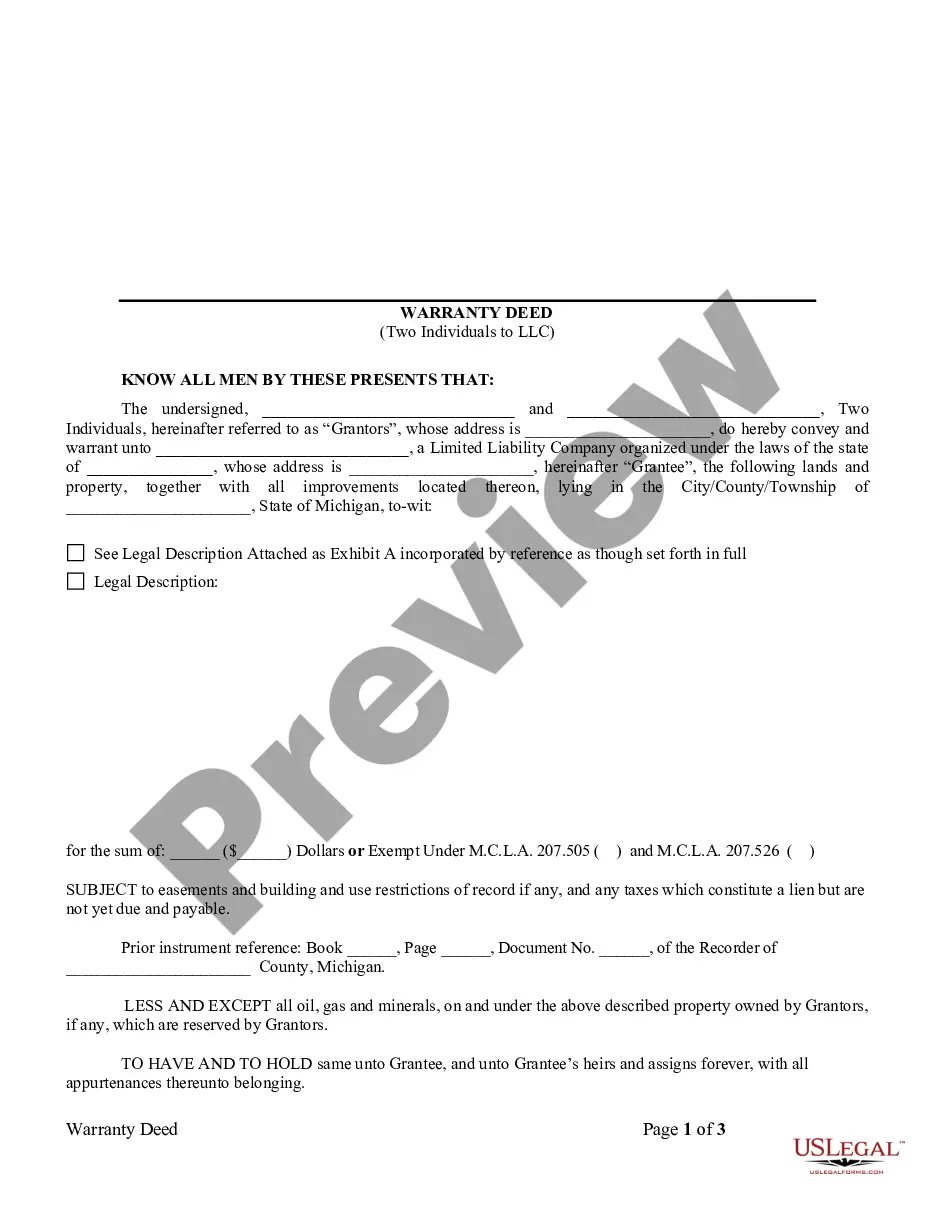
This Warranty Deed from two Individuals to LLC is a legal document that facilitates the transfer of property ownership from two individuals (the Grantors) to a limited liability company (the Grantee). This form grants a warranty of title, assuring that the Grantors hold clear title to the property and will defend against any claims. It is an essential tool for those looking to formalize property transactions involving LLCs, distinct from other types of deeds like quitclaim deeds, which do not provide such warranties.
Main sections of this form
- Grantors: The two individuals conveying the property.
- Grantee: The limited liability company receiving the property.
- Description of the property: Specific details and legal description of the property being transferred.
- Reserved rights: Stipulation that the Grantors retain rights to oil, gas, and minerals under the property.
- Covenant of title: Grantors warrant that they hold the title free of encumbrances.
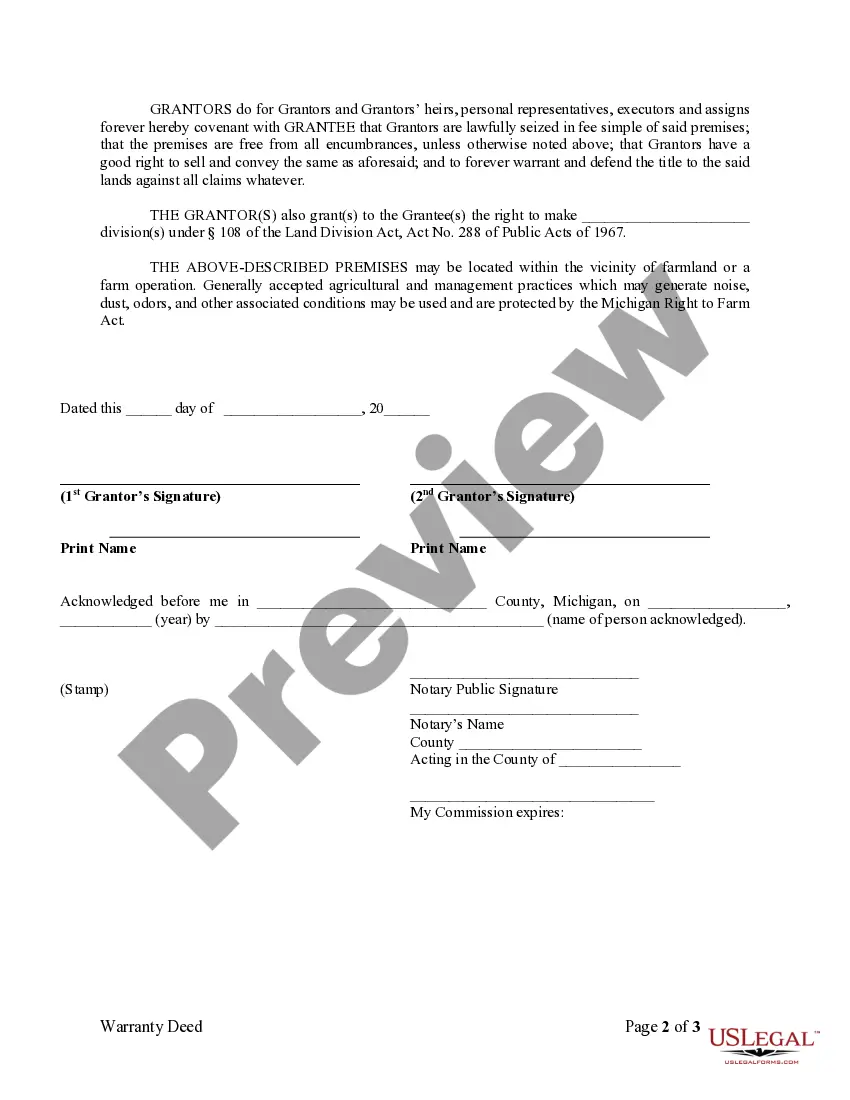
- Notary acknowledgment: Ensures the validity of the signatures on the document.





When to use this document
This form should be used when two individuals wish to transfer ownership of real property to a limited liability company for reasons such as business structuring, asset protection, or estate planning. It is particularly useful when the individuals want to ensure the Grantee (the LLC) receives full rights to the property along with warranties against future claims.
Who should use this form
- Individuals who own property and want to transfer it to their LLC.
- Business owners looking to protect their personal assets by holding property in an LLC.
- Real estate professionals involved in transactions where property is being conveyed to an LLC.
- Estate planners needing to formalize property transfers to business entities.
How to prepare this document
- Identify the parties: Clearly fill in the names and addresses of the Grantors and the Grantee.
- Specify the property: Provide a detailed description of the property being conveyed.
- Complete the legal description: Attach or reference the legal description as Exhibit A.
- Note any reservations: Indicate any rights retained by the Grantors, such as oil, gas, and minerals.
- Obtain signatures: Ensure all Grantors sign the document and complete the notary acknowledgment section.
Does this document require notarization?
This document requires notarization to meet legal standards. US Legal Forms provides secure online notarization powered by Notarize, allowing you to complete the process through a verified video call, available 24/7.
Get your form ready online
Our built-in tools help you complete, sign, share, and store your documents in one place.
Make edits, fill in missing information, and update formatting in US Legal Forms—just like you would in MS Word.
Download a copy, print it, send it by email, or mail it via USPS—whatever works best for your next step.
Sign and collect signatures with our SignNow integration. Send to multiple recipients, set reminders, and more. Go Premium to unlock E-Sign.
If this form requires notarization, complete it online through a secure video call—no need to meet a notary in person or wait for an appointment.
We protect your documents and personal data by following strict security and privacy standards.

Make edits, fill in missing information, and update formatting in US Legal Forms—just like you would in MS Word.

Download a copy, print it, send it by email, or mail it via USPS—whatever works best for your next step.

Sign and collect signatures with our SignNow integration. Send to multiple recipients, set reminders, and more. Go Premium to unlock E-Sign.

If this form requires notarization, complete it online through a secure video call—no need to meet a notary in person or wait for an appointment.

We protect your documents and personal data by following strict security and privacy standards.
Typical mistakes to avoid
- Failing to provide a complete legal description of the property.
- Not properly notarizing the document, which may lead to issues with enforceability.
- Leaving out any reservations, which may result in unintended loss of rights.
- Using outdated forms that do not comply with current laws.
Why complete this form online
- Convenience of downloading the form instantly without the need for travel.
- Editability to customize the form according to specific needs before printing.
- Access to legal guidance that ensures the form is drafted in compliance with current laws.
- Ability to complete the form at your own pace, with no pressure or time constraints.
Looking for another form?







Form popularity
FAQ
Find the most recent deed to the property. Create the new deed. Sign and notarize the deed. File the deed in the county land records.
Retrieve your original deed. Get the appropriate deed form. Draft the deed. Sign the deed before a notary. Record the deed with the county recorder. Obtain the new original deed.
A Michigan quitclaim deed form provides no warranty of title. That means that the new owner has no legal right to sue the prior owner if there is a problem with the title to the property. The new owner simply takes whatever title that the prior owner has.
The Michigan covenant deed form provides a limited warranty of title. With a covenant deed, the person transferring the property guarantees that he or she has done nothing that would cause title problems, but makes no guarantees about what might have happened before he or she acquired the property.
There will be a $30 recording fee. If you prepare a quitclaim deed using the Do-It-Yourself Quitclaim Deed (after Divorce) tool, detailed instructions on what to do next will print out along with the deed.
The Tax ID No of both buyer and seller. Notarized Deed of Absolute Sale (DAS)-1 Original copy + 2 photocopies. If you are transferring a house or lot Transfer Certificate of Title (TCT)-duplicate copy.
The mortgage company usually prepares this deed as part of the loan package and delivers it to the title company for you to sign at closing. The title company is commonly the trustee to the deed and holds legal title to the property until the loan gets fully repaid.
Laws § 565.151. Recording (A§ 565.201) Must be filed with the Registry of Deeds. Signing (A§ 565.8) Must be signed with the Grantor(s) in front of a Notary Public or Officer of the court. Step 1 Insert the name of the grantor in the first line. Step 2 Next, fill in the grantor's address.
In Michigan, a quit claim deed must be signed by a witness, in addition to the notary, to make it legal.After all required signatures are collected and notarized, file the document with your local register of deeds to complete the transaction.