Maine Last Will and Testament for Married person with Minor Children
About this form
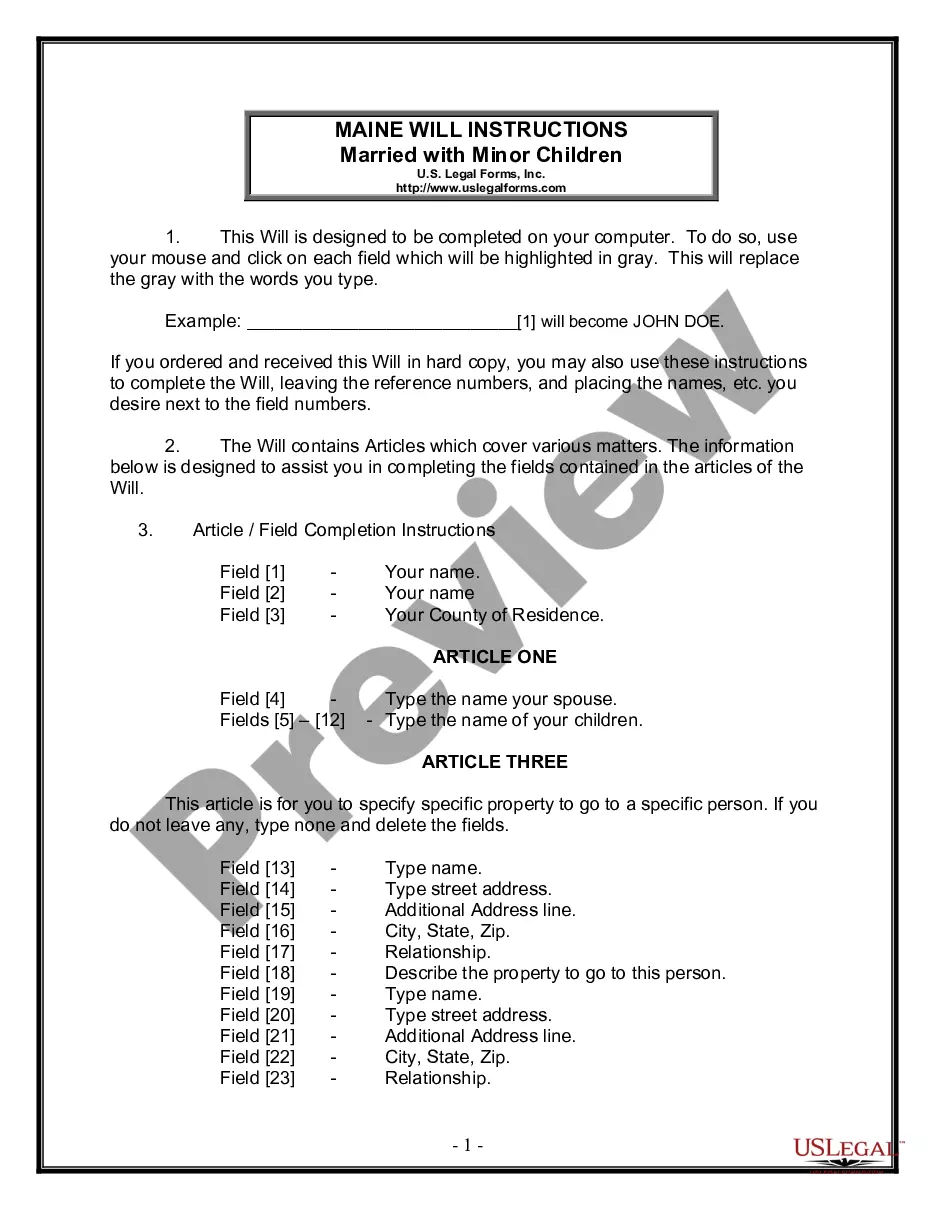
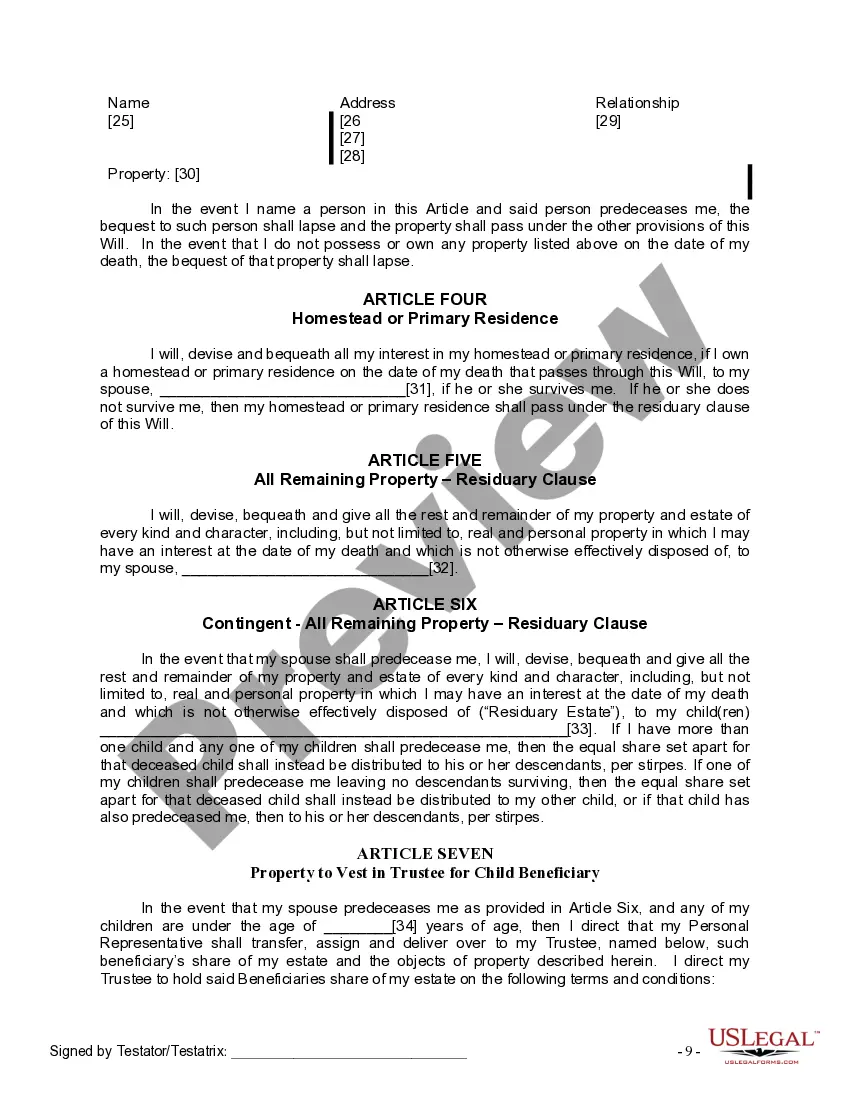
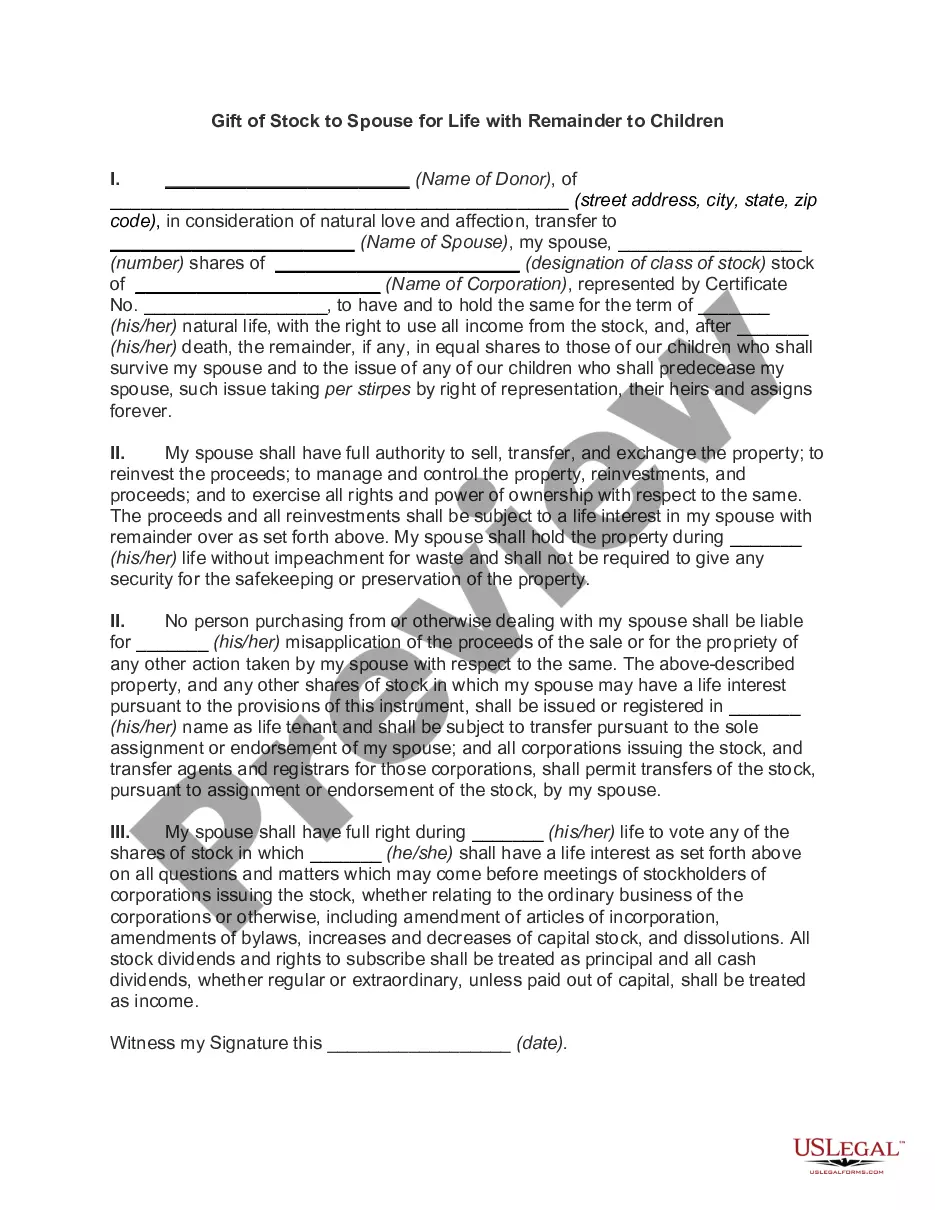
The Last Will and Testament for a married person with minor children is a legal document that outlines your wishes regarding the distribution of your estate after your death. This form is specifically designed for married individuals who have dependents, ensuring that your spouse and children are adequately provided for. It differs from other wills by including provisions specific to the needs of a family, such as guardianship for minor children and specific bequests tailored to family members.
Form components explained
- Appointment of a personal representative (executor) to manage the estate.
- Designations of beneficiaries, including spouse and children.
- Provisions for the distribution of property, both specific bequests and residuary estate.
- Guardianship provisions for minor children in case both parents pass away.
- Instructions for debt payments and estate expenses.
- Contingency plans for beneficiary survivorship.







When to use this document
This form should be used when a married individual with minor children wants to create a will that clearly outlines their wishes regarding asset distribution and guardianship in case of their death. It is especially important for individuals who want to ensure that their family is provided for and protected legally, detailing specific assets and relationships within the family structure.
Intended users of this form
- Married individuals with minor children.
- Parents who wish to designate guardianship for their children in the event of untimely death.
- Anyone looking to create a legally binding will to ensure their spouse and children are provided for after their passing.
How to prepare this document
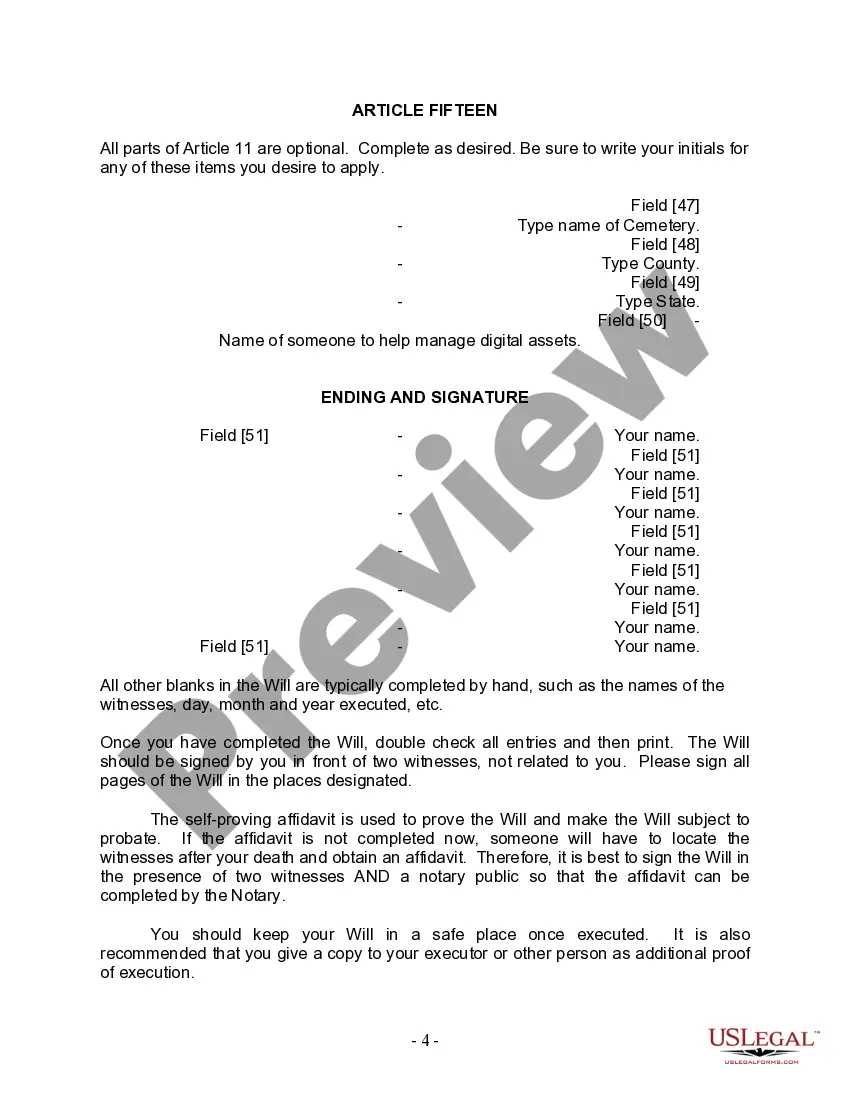
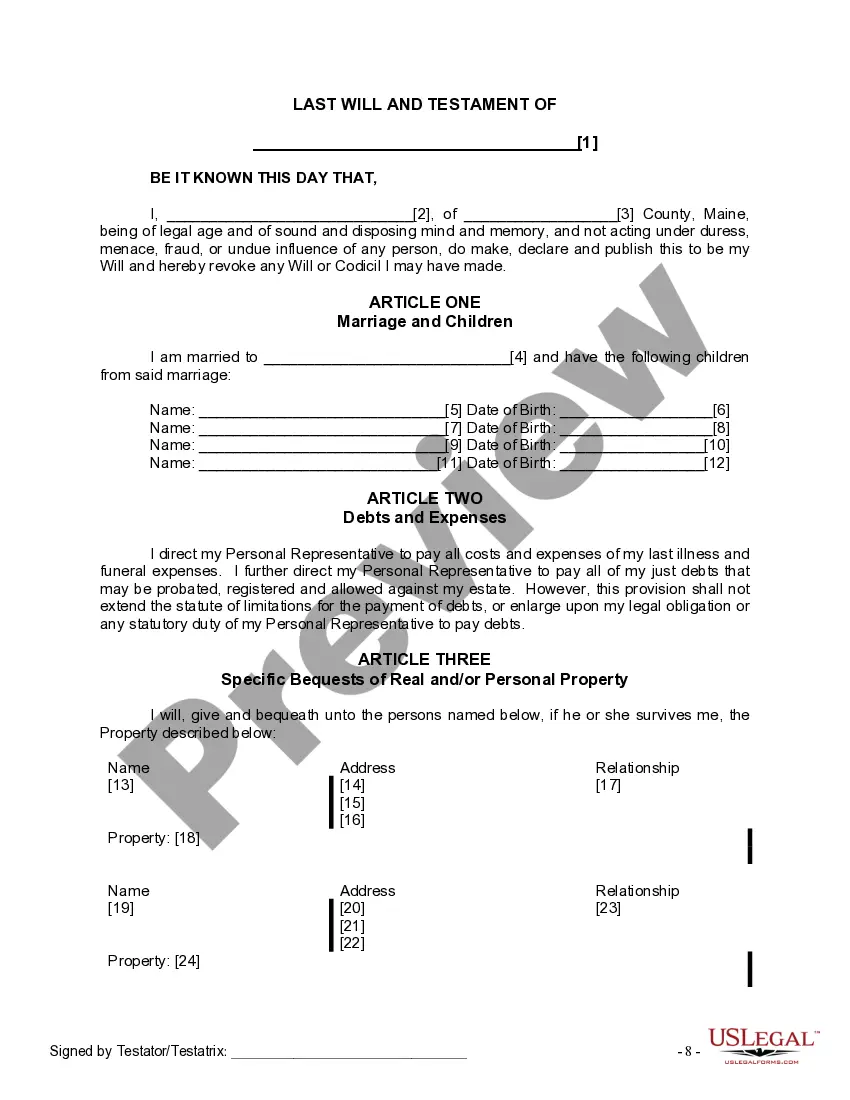
- Identify yourself as the testator, providing your name and county of residence.
- List your spouse's name and the names and birthdates of your children.
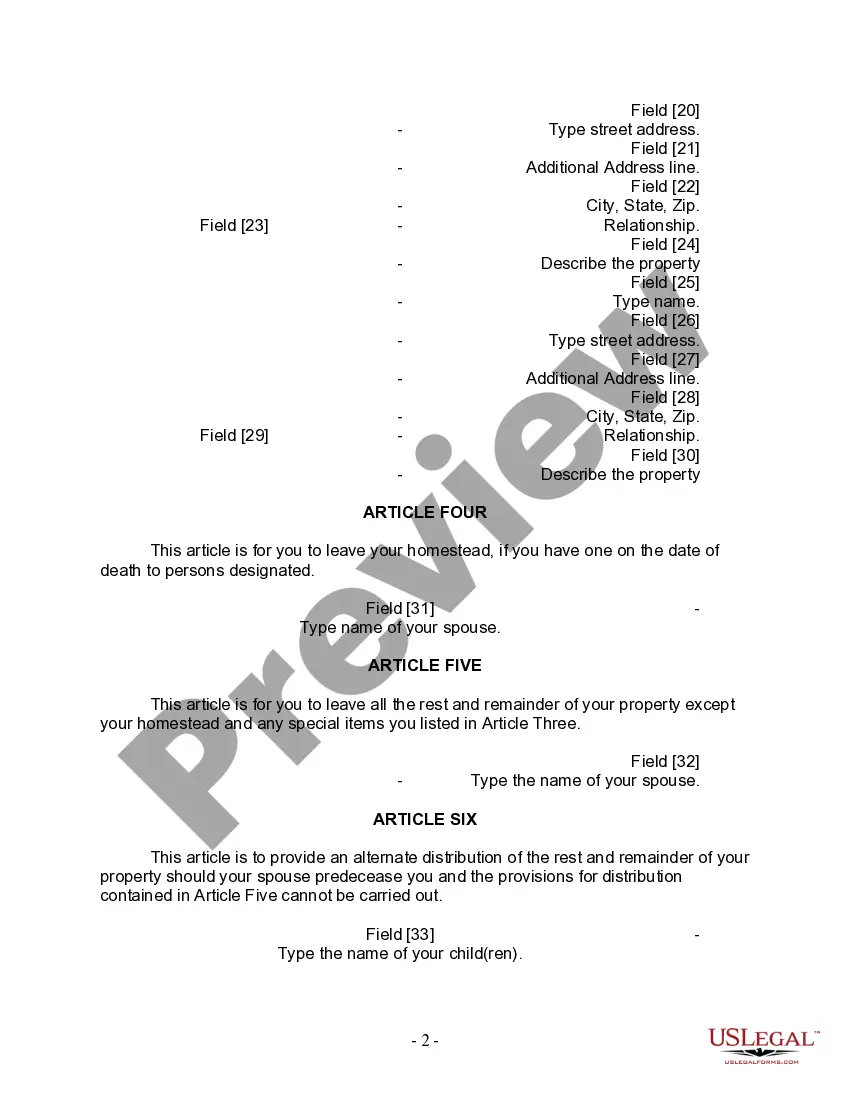
- Designate your beneficiaries and specify what property each will receive.
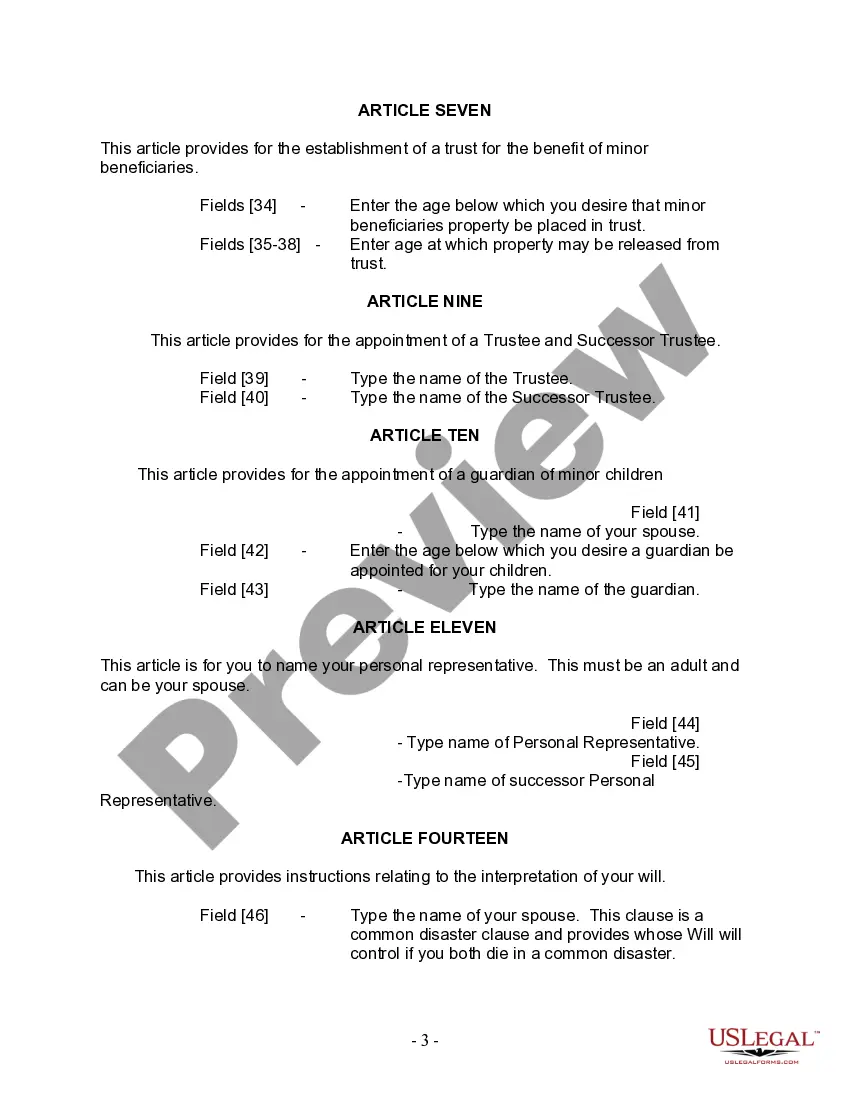
- Appoint a personal representative to oversee your estate and a guardian for your minor children if needed.
- Have the document signed in front of two witnesses and a notary public if required in your jurisdiction.
Is notarization required?
Yes, this form must be notarized to be legally valid in the State of Maine. The will requires the signature of a notary public along with two witnesses, ensuring its authenticity and adherence to legal standards.
Get your form ready online
Our built-in tools help you complete, sign, share, and store your documents in one place.
Make edits, fill in missing information, and update formatting in US Legal Forms—just like you would in MS Word.
Download a copy, print it, send it by email, or mail it via USPS—whatever works best for your next step.
Sign and collect signatures with our SignNow integration. Send to multiple recipients, set reminders, and more. Go Premium to unlock E-Sign.
If this form requires notarization, complete it online through a secure video call—no need to meet a notary in person or wait for an appointment.
We protect your documents and personal data by following strict security and privacy standards.

Make edits, fill in missing information, and update formatting in US Legal Forms—just like you would in MS Word.

Download a copy, print it, send it by email, or mail it via USPS—whatever works best for your next step.

Sign and collect signatures with our SignNow integration. Send to multiple recipients, set reminders, and more. Go Premium to unlock E-Sign.

If this form requires notarization, complete it online through a secure video call—no need to meet a notary in person or wait for an appointment.

We protect your documents and personal data by following strict security and privacy standards.
Avoid these common issues
- Failing to have the will witnessed properly, which can invalidate it.
- Not updating the will after significant life events such as births or marriages.
- Overlooking the need for a guardian for minor children.
- Failing to specify the executor or personal representative clearly.
Advantages of online completion
- Convenience of filling out the form at your own pace.
- Editability allows for modifications before finalizing the document.
- Access legal wording drafted by licensed attorneys to ensure compliance with state laws.
Main things to remember
- The Last Will and Testament is essential for married individuals with minor children.
- Properly completing the form ensures that your wishes regarding asset distribution and guardianship are respected.
- Witnessing and notarization are critical steps in the validity of the will.
Looking for another form?








Form popularity
FAQ
In addition to the last will and testament as described above, Maine also recognizes a handwritten will (holographic will) so long as the signature and material portions of the document are in the testator's handwriting; such a handwritten will does not need to be witnessed.
Contrary to popular belief, you do not need to have an attorney draft a will for you. Anyone can write this document on their own, and as long as it meets all of the legal requirements of the state, courts will recognize one you wrote yourself.
To make a will self-proved in Maine, the testator and witnesses must sign a self proving affidavit before a notary public. An affidavit is a sworn statement, and a notary public is an officer of the court. Therefore, an affidavit before a notary public is like making a statement in court.
A. You don't have to have a lawyer to create a basic will you can prepare one yourself. It must meet your state's legal requirements and should be notarized.A do-it-yourself will that's poorly drafted can save you money but create a mess for your heirs when you're gone.
To start the probate process, you need to file an Application for Probate in the probate court in the county where the decedent lived. In Maine, each county has its own probate court. If there is a Will, it needs to be submitted to the probate court. The probate judge will decide whether or not the Will is valid.
No, in Maine, you do not need to notarize your will to make it legal. However, Maine allows you to make your will "self-proving" and you'll need to go to a notary if you want to do that. A self-proving will speeds up probate because the court can accept the will without contacting the witnesses who signed it.
Create the initial document. Start by titling the document Last Will and Testament" and including your full legal name and address. Designate an executor. Appoint a guardian. Name the beneficiaries. Designate the assets. Ask witnesses to sign your will. Store your will in a safe place.
As a general rule a minor cannot make a will.A minor who is married may make, alter or revoke a will. A minor who has been married may revoke the whole or part of the will made while the minor was married or in contemplation of marriage.
Include personal identifying information. Include a statement about your age and mental status. Designate an executor. Decide who will take care of your children. Choose your beneficiaries. List your funeral details. Sign and date your Last Will and Testament.