Maine Last Will and Testament for a Married Person with No Children
What this document covers
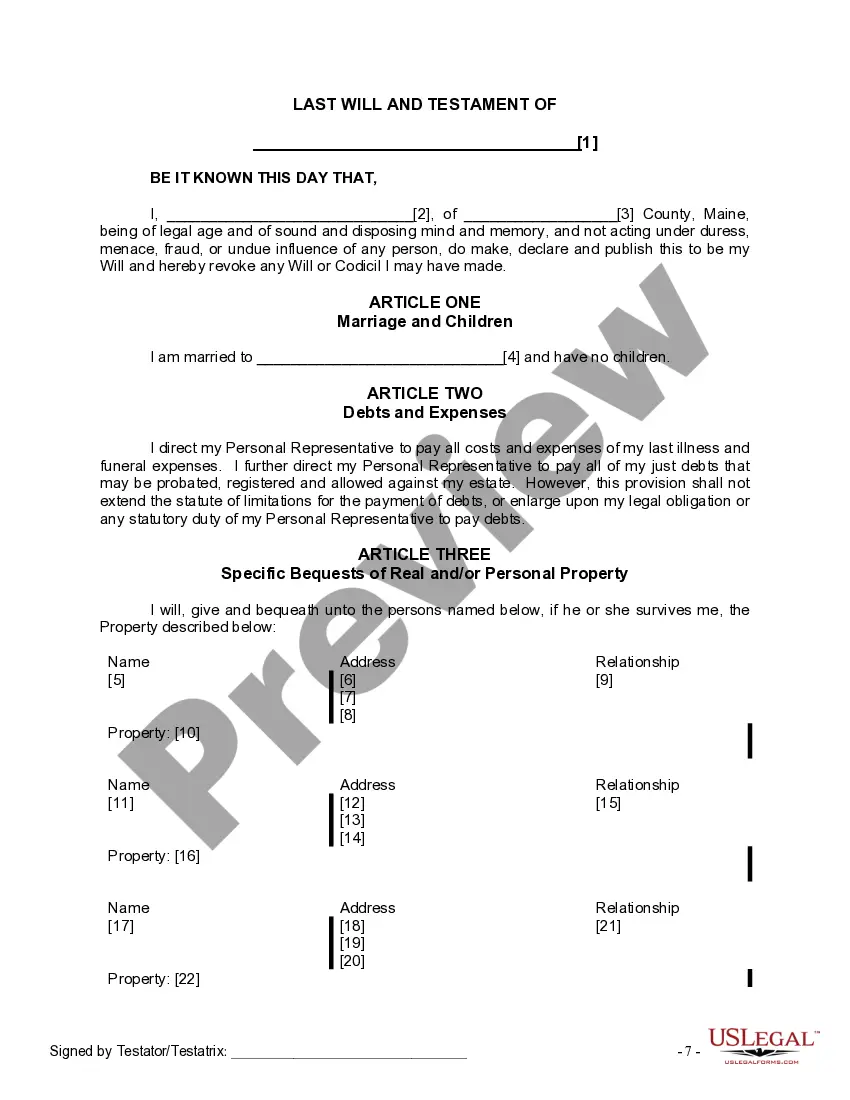
The Last Will and Testament for a Married Person with No Children is a legal document that outlines how a married person wishes to distribute their assets upon their death when there are no children involved. Unlike other wills, this document specifically addresses the unique needs of a spouse without children, ensuring that property and assets are appropriately bequeathed to designated individuals. It contains critical provisions for appointing a personal representative and includes necessary instructions for handling debts, expenses, and specific bequests.
Form components explained
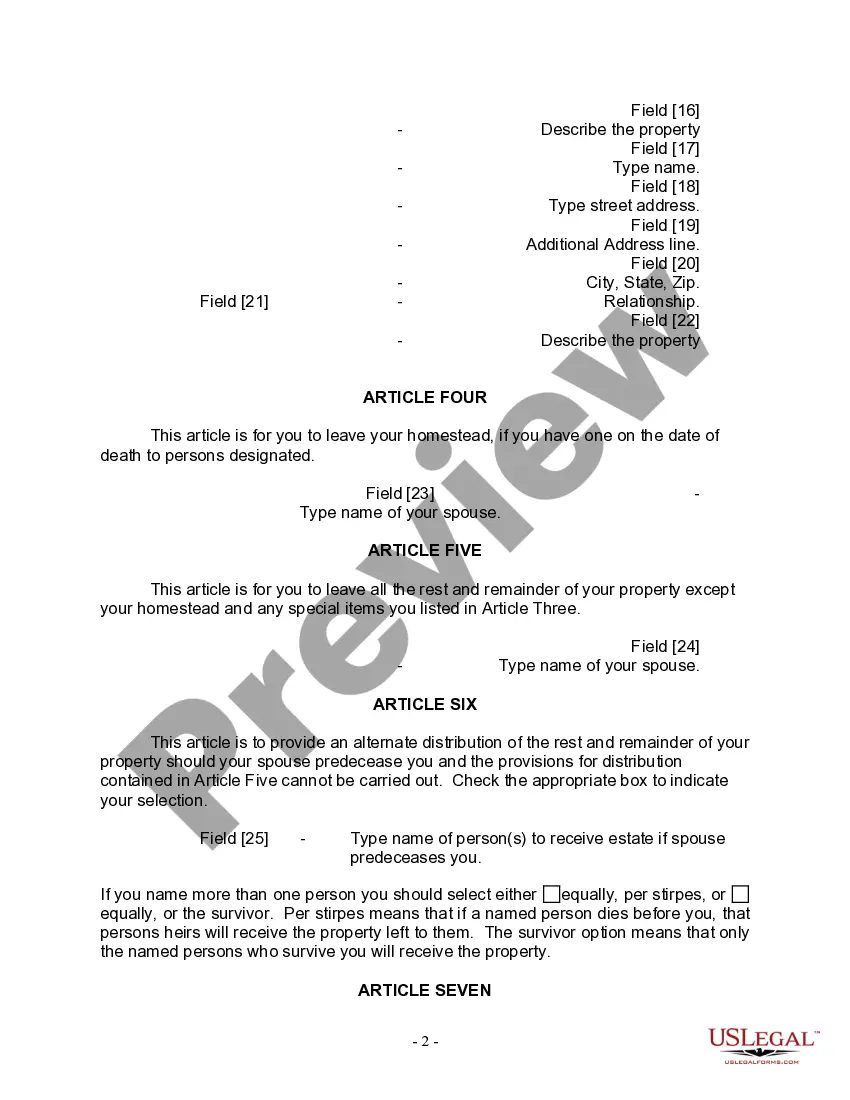
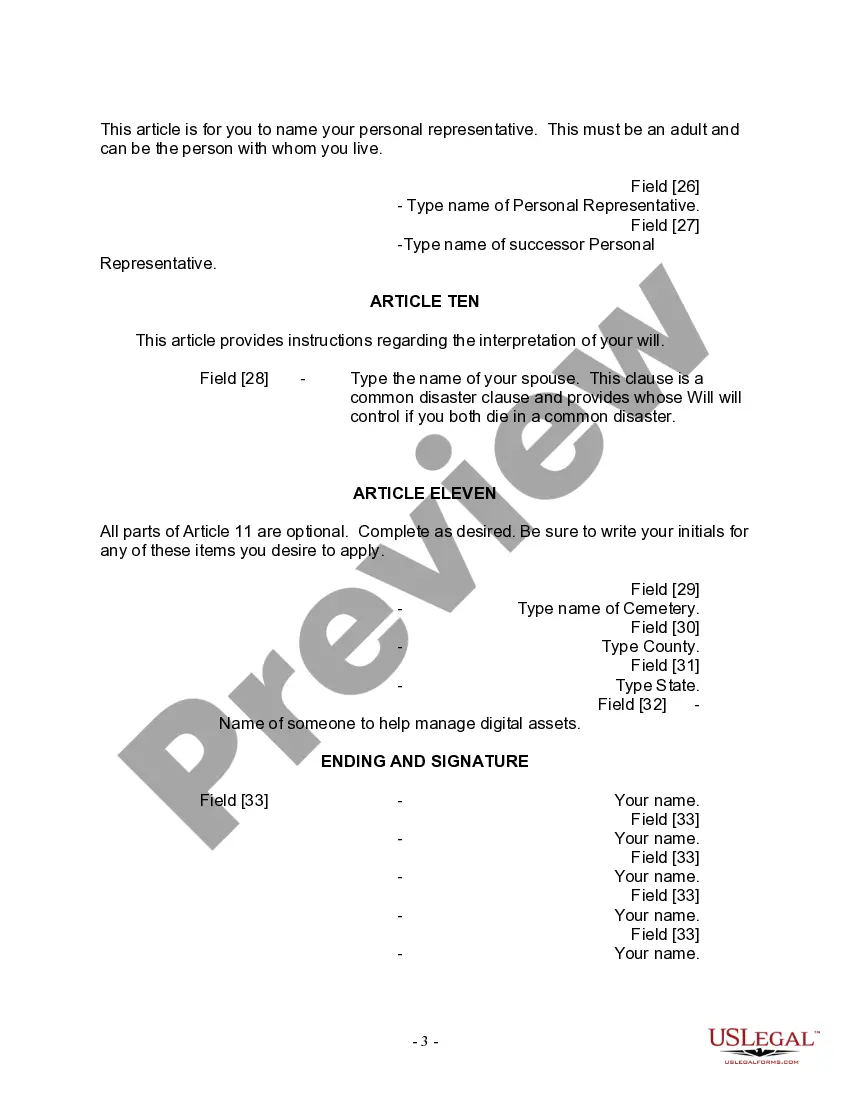
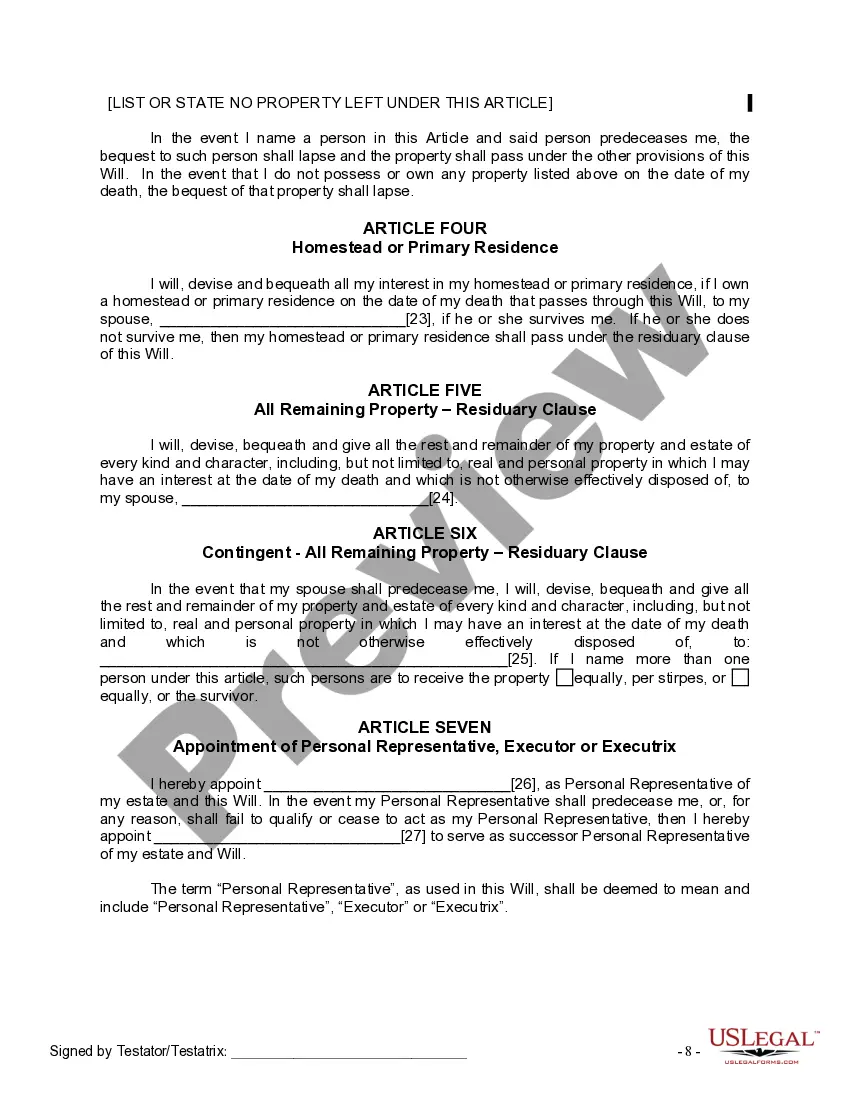
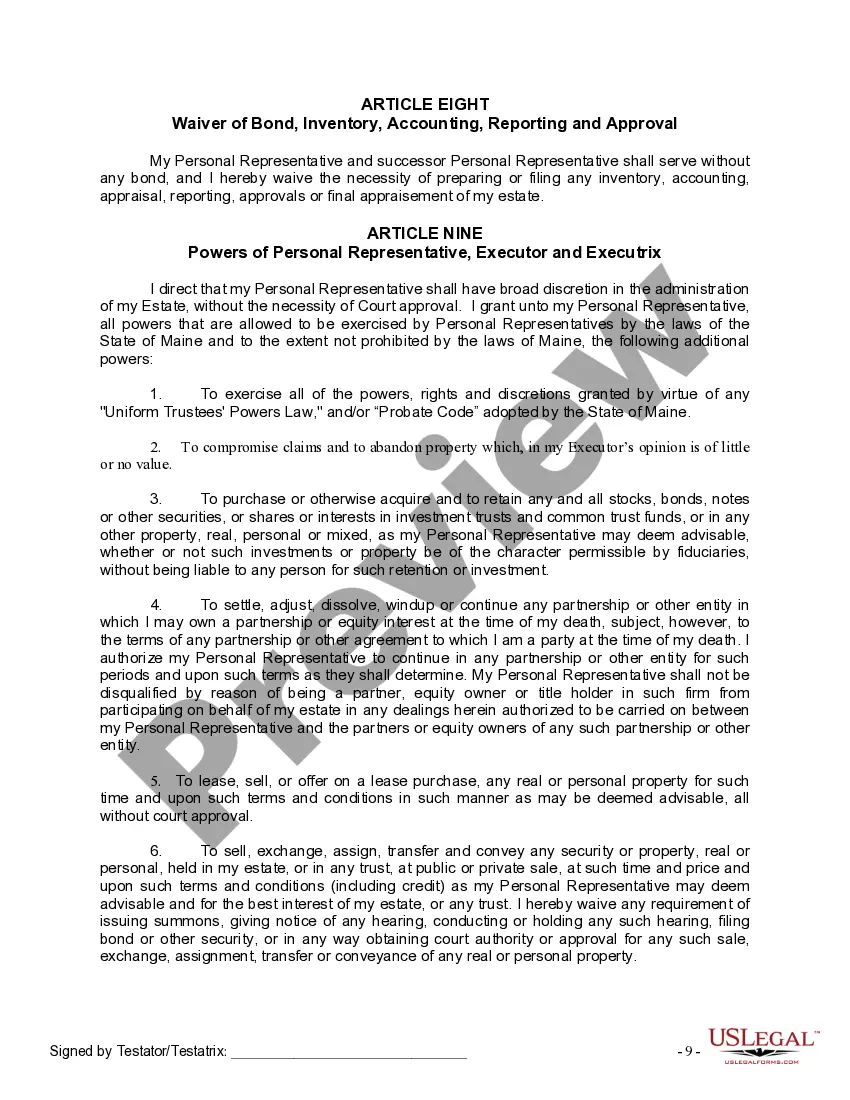
- Appointment of Personal Representative: Designates an executor responsible for managing the estate.
- Debts and Expenses: Provides instructions on settling debts and funeral costs.
- Specific Bequests: Names individuals who will receive specific assets.
- Homestead or Primary Residence: Specifies how the primary residence will be distributed.
- Residuary Clause: Allocates all remaining property after specific bequests are made.
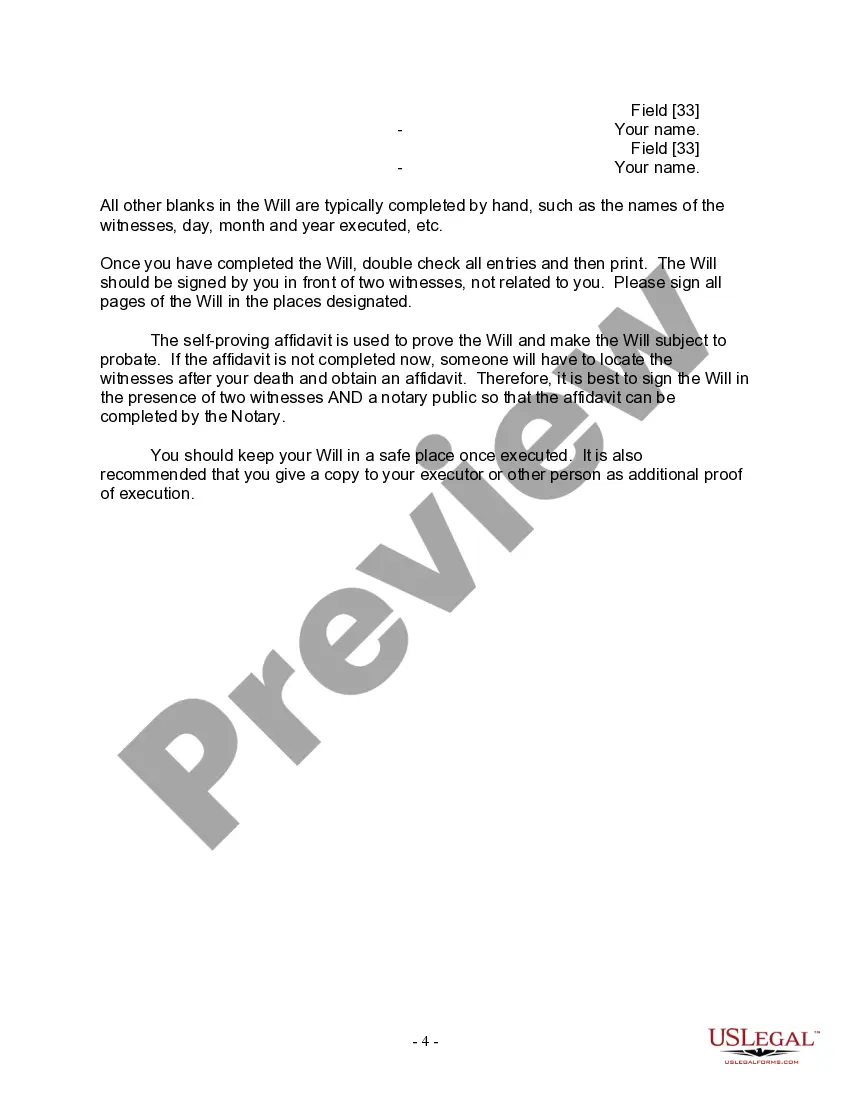
- Witness Requirements: Outlines the need for two witnesses and a notary for validity.





Situations where this form applies
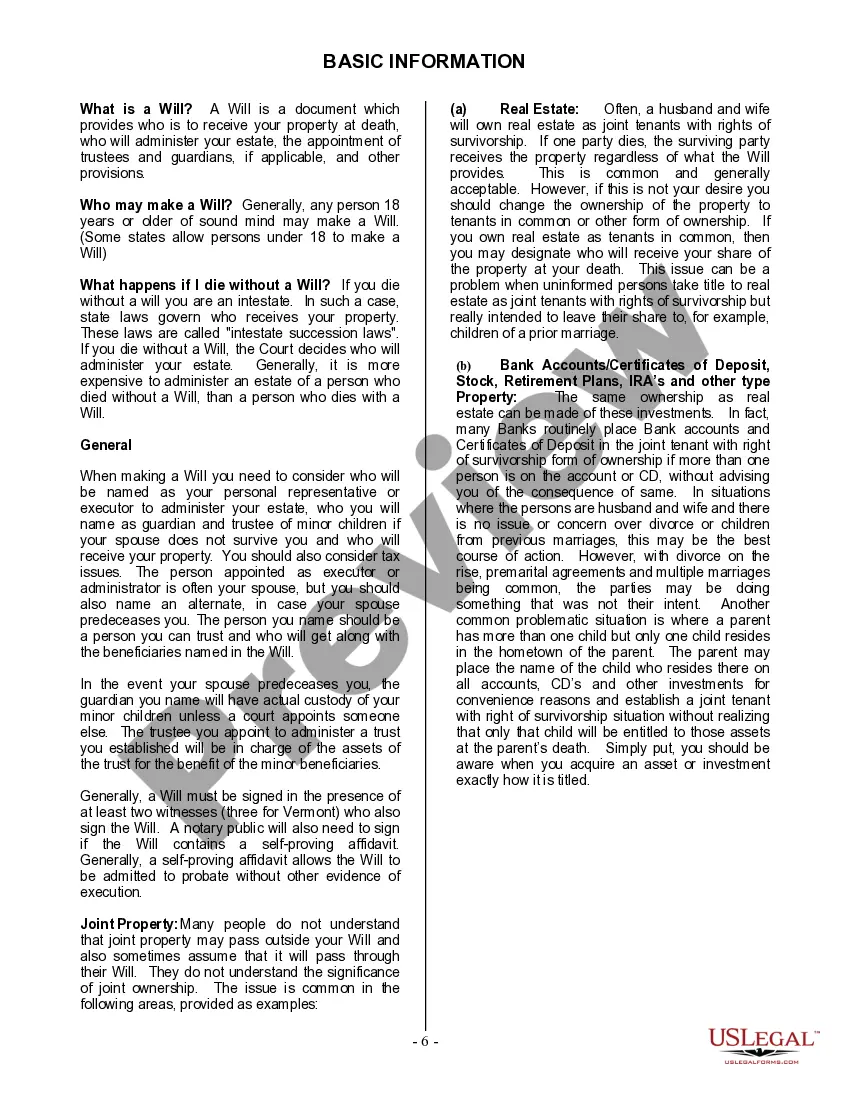
This form is essential when a married individual without children wants to ensure their estate is handled according to their wishes after their death. It is particularly useful in situations where one spouse is responsible for the entirety of their shared assets, and clear instructions are needed for asset distribution and management upon death. Utilizing this form can prevent potential disputes among surviving family members regarding the decedent's estate.
Intended users of this form
This form is intended for:
- Married individuals without children who want to establish clear estate distribution plans.
- Spouses who want to ensure their partner is adequately provided for after their passing.
- Individuals looking for a straightforward method to document their final wishes and financial obligations.
How to complete this form
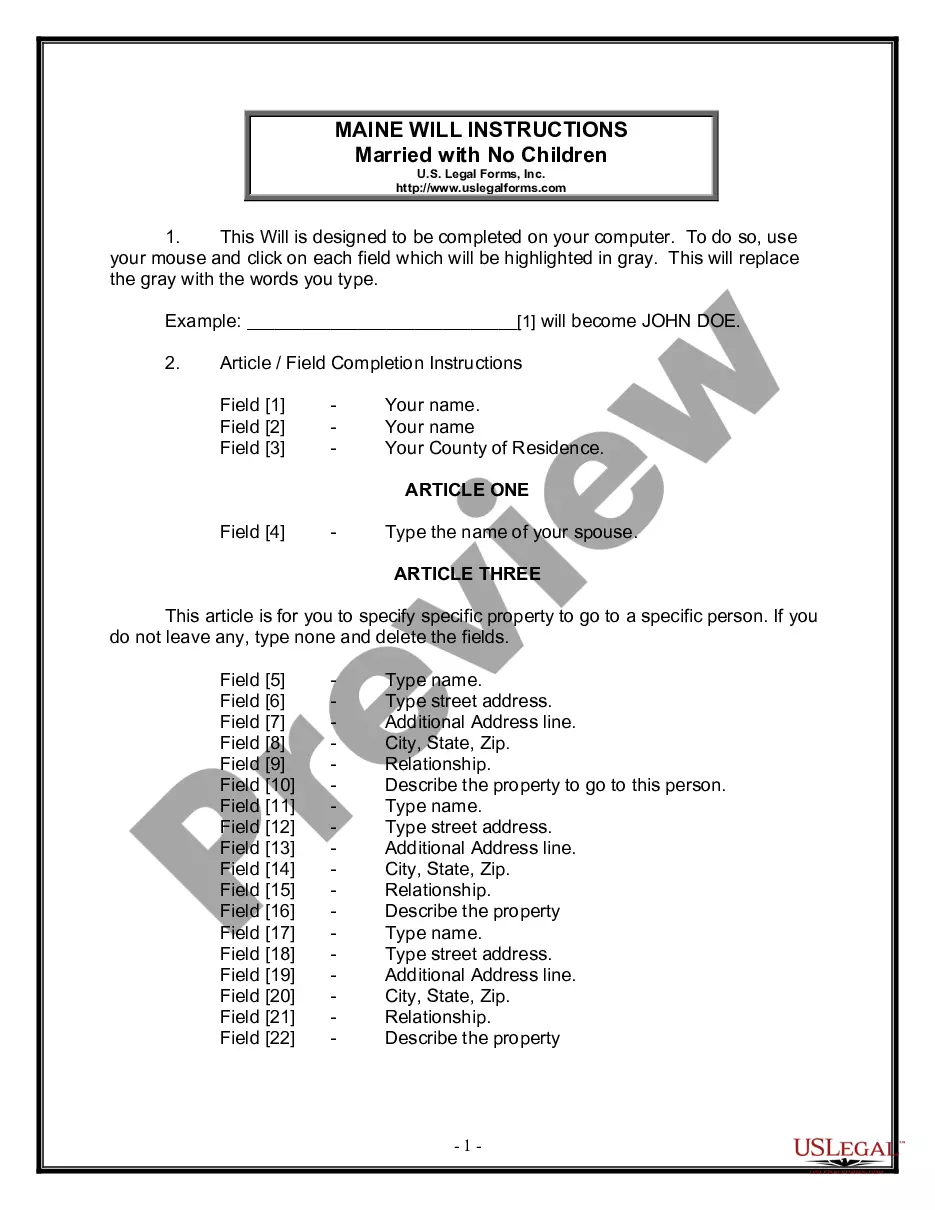
- Identify yourself as the testator, entering your full name and address.
- Clearly state your marital status and confirm that you have no children.
- Appoint a personal representative to manage your estate.
- List specific bequests of property, including addresses and relationships of beneficiaries.
- Ensure signatures from at least two witnesses who are not beneficiaries.
Does this form need to be notarized?
Yes, this form must be notarized to be legally valid. Users can utilize US Legal Formsâ integrated online notarization services, which provide secure, accessible notarization through video calls, ensuring compliance without the need to travel.
Get your form ready online
Our built-in tools help you complete, sign, share, and store your documents in one place.
Make edits, fill in missing information, and update formatting in US Legal Forms—just like you would in MS Word.
Download a copy, print it, send it by email, or mail it via USPS—whatever works best for your next step.
Sign and collect signatures with our SignNow integration. Send to multiple recipients, set reminders, and more. Go Premium to unlock E-Sign.
If this form requires notarization, complete it online through a secure video call—no need to meet a notary in person or wait for an appointment.
We protect your documents and personal data by following strict security and privacy standards.

Make edits, fill in missing information, and update formatting in US Legal Forms—just like you would in MS Word.

Download a copy, print it, send it by email, or mail it via USPS—whatever works best for your next step.

Sign and collect signatures with our SignNow integration. Send to multiple recipients, set reminders, and more. Go Premium to unlock E-Sign.

If this form requires notarization, complete it online through a secure video call—no need to meet a notary in person or wait for an appointment.

We protect your documents and personal data by following strict security and privacy standards.
Typical mistakes to avoid
- Failing to have the necessary witnesses, which can invalidate the document.
- Not specifying debts and expenses clearly, leading to confusion about how these should be handled.
- Omitting important bequests or assuming all property will automatically transfer to the spouse without documentation.
Benefits of using this form online
- Convenience of completing the document from home without the need for an attorney.
- Immediate access to downloadable formats, allowing for quick edits and revisions.
- Reliable templates created by licensed attorneys, ensuring legal compliance.
What to keep in mind
- This will is tailored for married individuals without children.
- Proper execution requires signatures from witnesses and potentially a notary.
- Clearly outlines asset distribution and appoints a personal representative.
- Helps avoid legal complications after your passing.
Definitions you should know
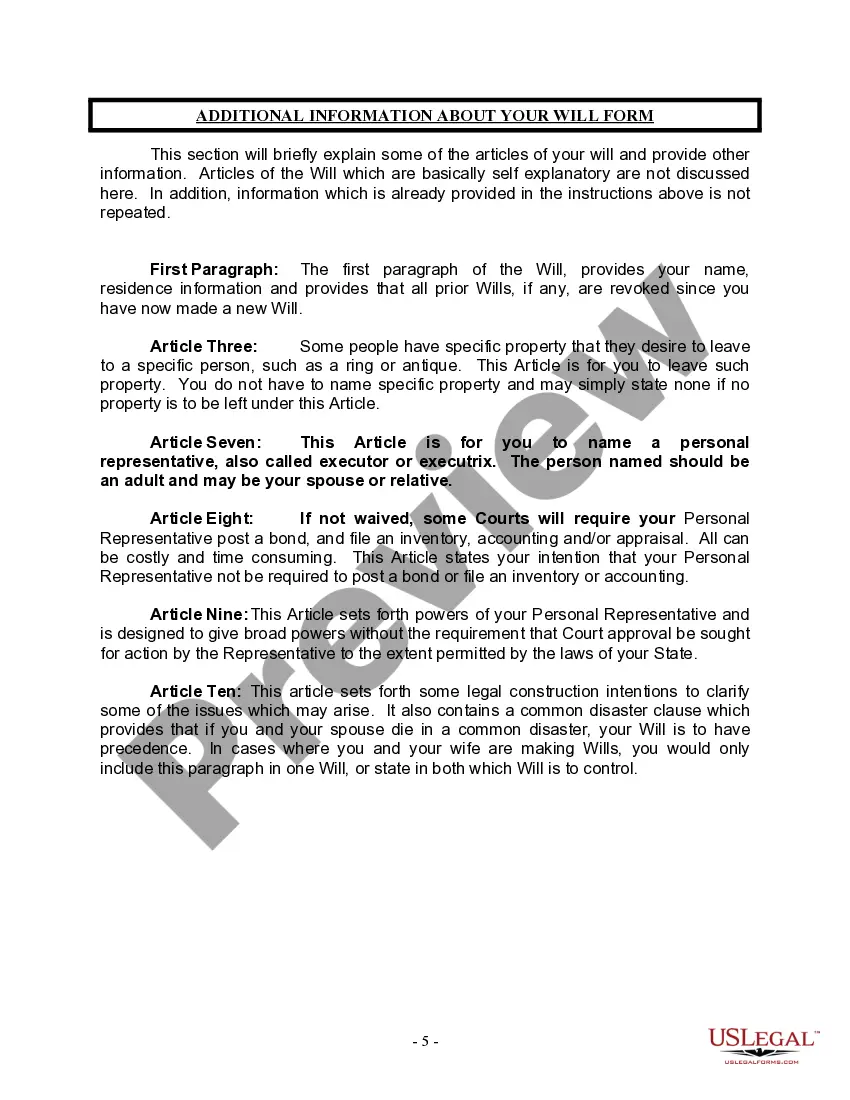
- Personal Representative: The individual appointed to manage and distribute your estate according to your will.
- Bequest: A gift of personal property or real estate specified in a will.
- Residue: The remaining assets of your estate after specific bequests have been distributed.
Looking for another form?








Form popularity
FAQ
It must be in writing. Generally, of course, wills are composed on a computer and printed out. (Older ones might have been typed on a typewriter.) It's possible, however, to have a valid will that is entirely handwritten.
A. You don't have to have a lawyer to create a basic will you can prepare one yourself. It must meet your state's legal requirements and should be notarized.A do-it-yourself will that's poorly drafted can save you money but create a mess for your heirs when you're gone.
No, in Maine, you do not need to notarize your will to make it legal. However, Maine allows you to make your will "self-proving" and you'll need to go to a notary if you want to do that. A self-proving will speeds up probate because the court can accept the will without contacting the witnesses who signed it.
Create the initial document. Start by titling the document Last Will and Testament" and including your full legal name and address. Designate an executor. Appoint a guardian. Name the beneficiaries. Designate the assets. Ask witnesses to sign your will. Store your will in a safe place.
To start the probate process, you need to file an Application for Probate in the probate court in the county where the decedent lived. In Maine, each county has its own probate court. If there is a Will, it needs to be submitted to the probate court. The probate judge will decide whether or not the Will is valid.
A. You don't have to have a lawyer to create a basic will you can prepare one yourself. It must meet your state's legal requirements and should be notarized.But be careful: For anything complex or unusual, like distributing a lot of money or cutting someone out, you'd do best to hire a lawyer.
Contrary to popular belief, you do not need to have an attorney draft a will for you. Anyone can write this document on their own, and as long as it meets all of the legal requirements of the state, courts will recognize one you wrote yourself.
A. You don't have to have a lawyer to create a basic will you can prepare one yourself. It must meet your state's legal requirements and should be notarized.A do-it-yourself will that's poorly drafted can save you money but create a mess for your heirs when you're gone.
To make a will self-proved in Maine, the testator and witnesses must sign a self proving affidavit before a notary public. An affidavit is a sworn statement, and a notary public is an officer of the court. Therefore, an affidavit before a notary public is like making a statement in court.