Maine Last Will and Testament for Single Person with Adult Children
About this form
The Last Will and Testament for a Single Person with Adult Children is a legal document that outlines how you wish to distribute your assets after your death. This form is specifically designed for individuals who are not married and have adult children. It allows you to appoint a personal representative to manage your estate, specify beneficiaries, and clarify your wishes regarding debts and property. Unlike other wills, this form focuses on the unique situation of a single individual, providing a structured way to ensure your assets are distributed according to your wishes.
Form components explained
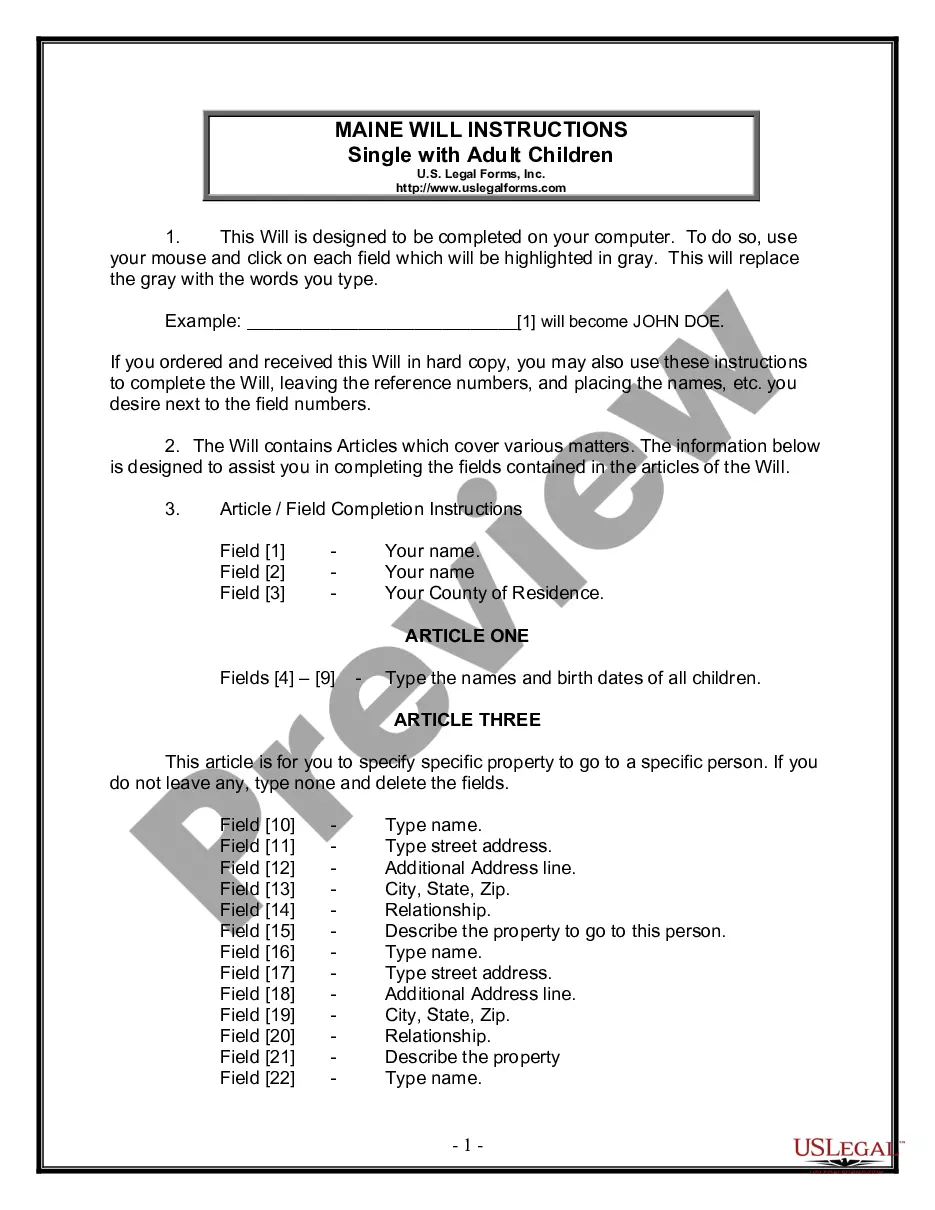
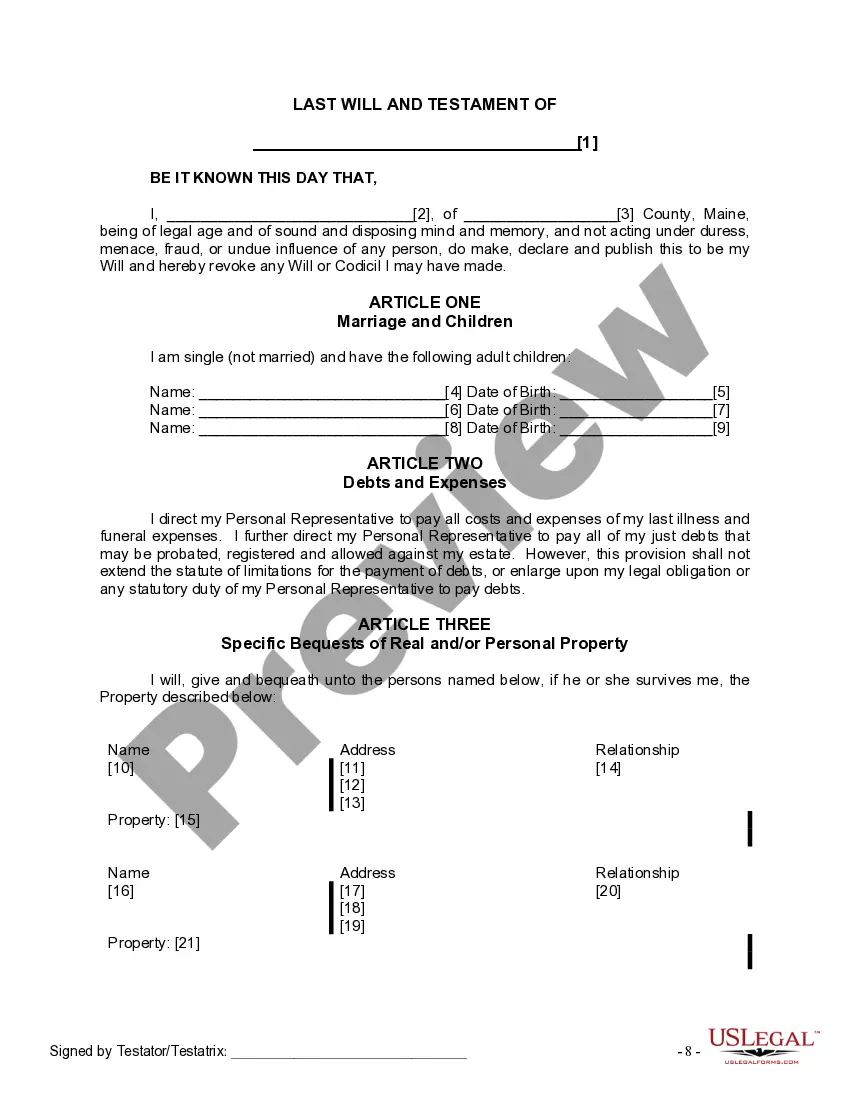
- Personal Information: Includes details about the testator, such as name and county of residence.
- Declaration of Intent: Statement revoking any previous wills and establishing the current document as the valid will.
- Family Details: Space to list adult children and their dates of birth.
- Debt Payment Instructions: Instructions for settling debts and funeral expenses.
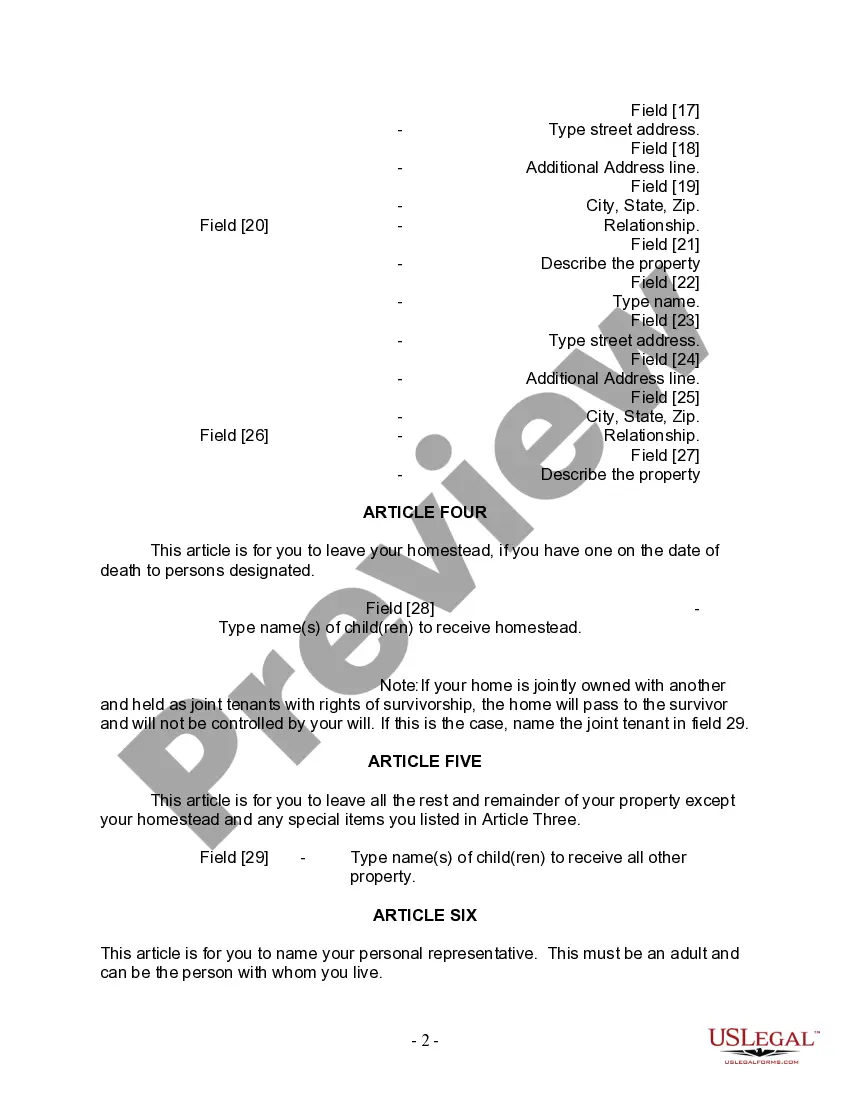
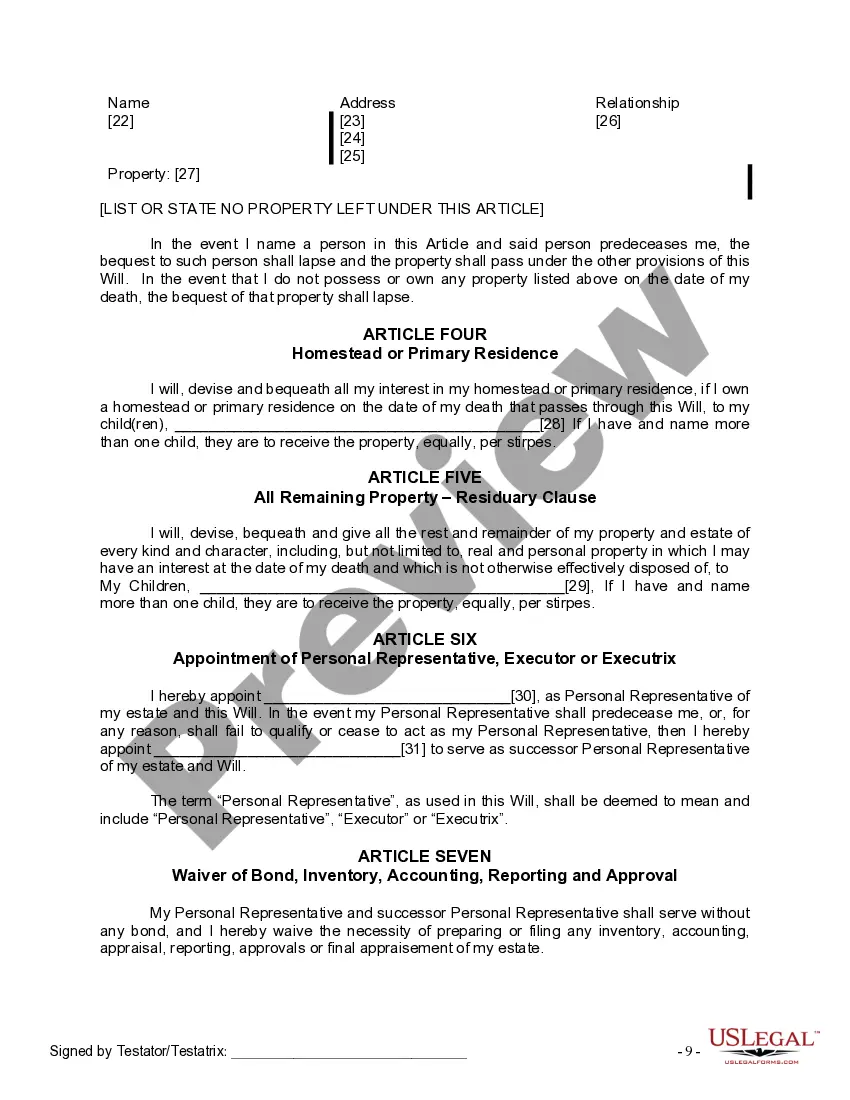
- Specific Bequests: Designation of specific property to be given to named beneficiaries.
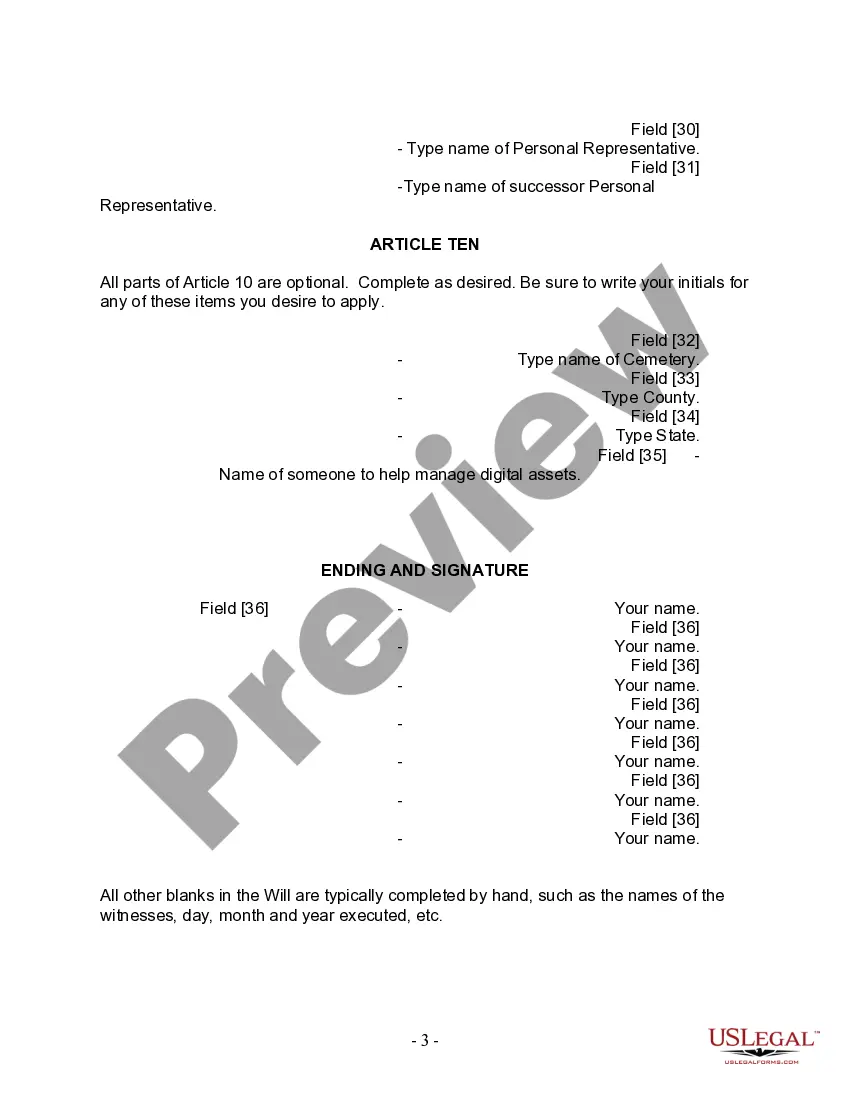
- Appointment of Personal Representative: Selection of an individual to oversee the execution of the will.
- Residuary Clause: Instructions for distributing any remaining assets not specifically bequeathed.
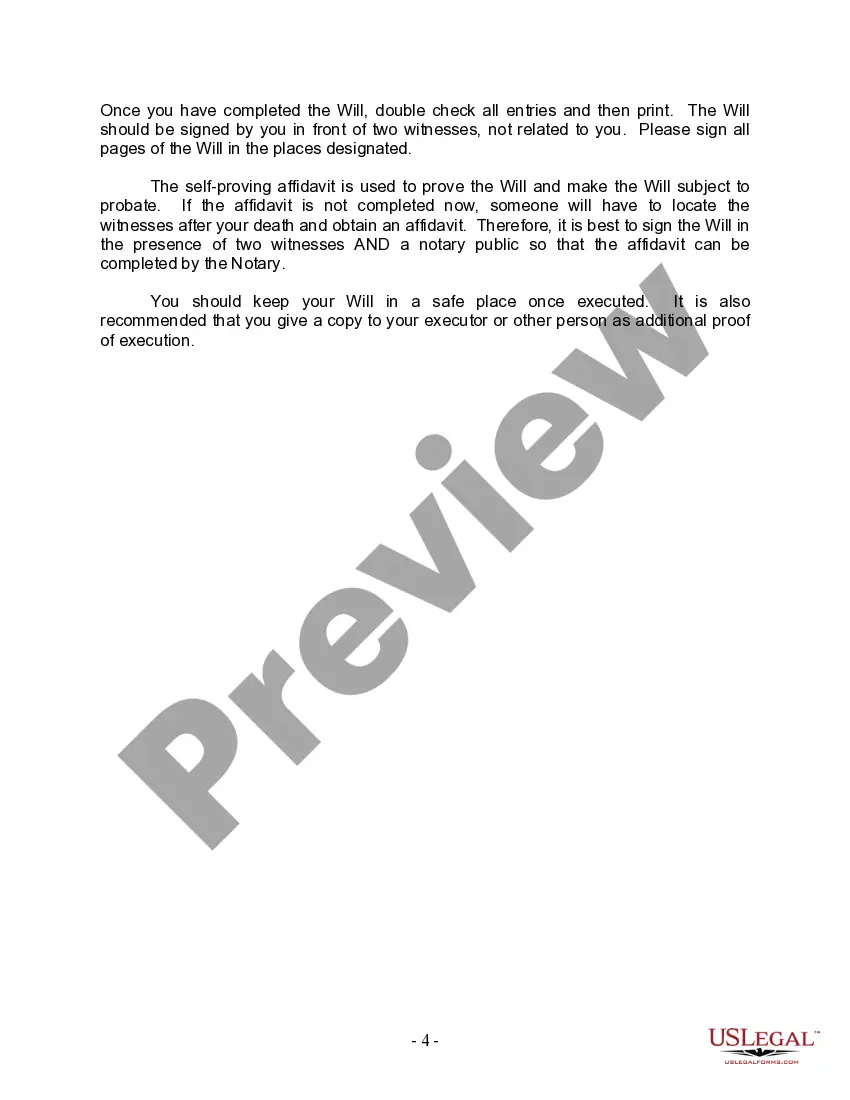
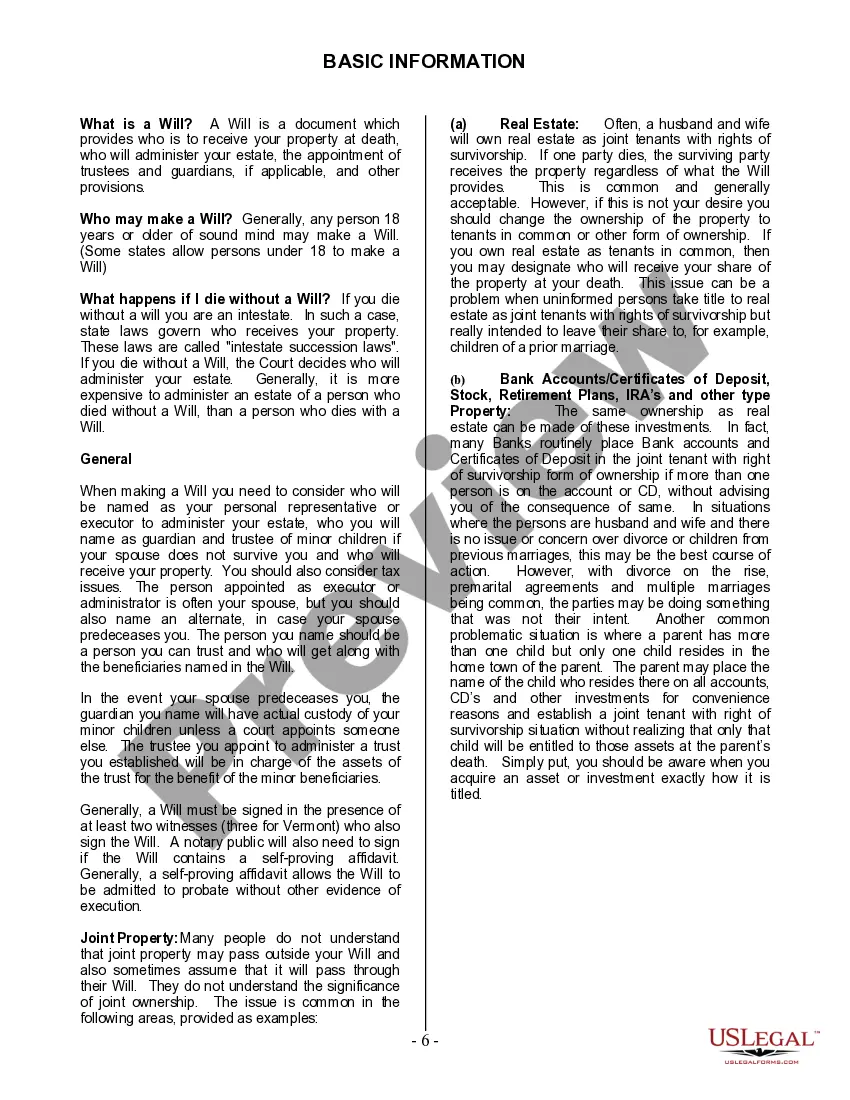
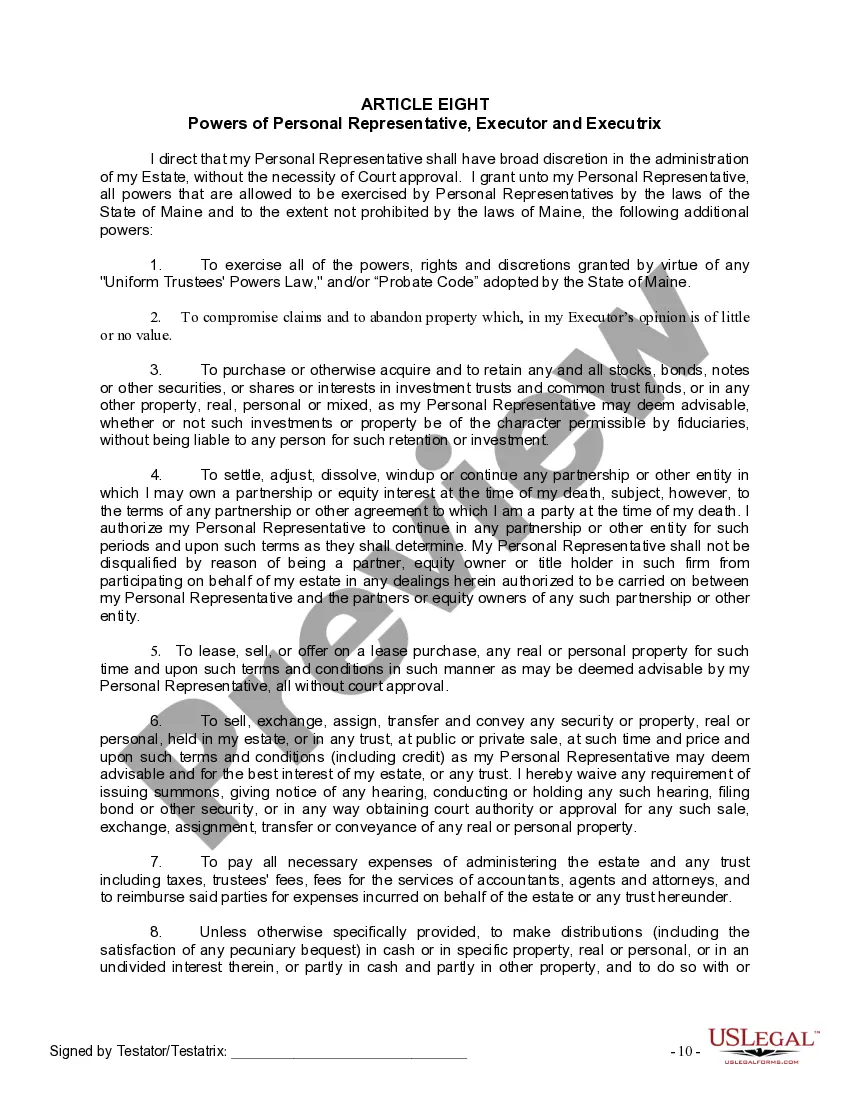
- Witnesses: Requirement for signing in the presence of two non-related witnesses.






When this form is needed
This form should be used when you are a single individual with adult children who wants to ensure that your assets are distributed according to your wishes after your death. It is particularly useful if you have specific items or amounts you want to leave to your children. Additionally, if you wish to assign a personal representative to manage your estate, this form provides the necessary legal framework to do so.
Who should use this form
- Single individuals who have never been married.
- People with adult children who wish to allocate their assets.
- Anyone looking to appoint a personal representative to manage their estate.
- Individuals wanting to ensure their final wishes regarding property and debts are clearly documented.
How to prepare this document
- Identify yourself: Fill in your full name and county of residence at the beginning of the document.
- List your children: Provide the names and dates of birth of your adult children in the specified section.
- Specify your bequests: Clearly list any specific property you wish to bequeath to named individuals.
- Appoint a personal representative: Choose someone trustworthy to manage your estate and fill in their details.
- Sign the document: Ensure you sign the will in the presence of two witnesses who are not beneficiaries.
Does this document require notarization?
Yes, this form must be notarized to be legally valid in the State of Maine. Notary services can often be integrated into the online form completion, allowing for a secure video call with a notary public to finalize your will.
Get your form ready online
Our built-in tools help you complete, sign, share, and store your documents in one place.
Make edits, fill in missing information, and update formatting in US Legal Forms—just like you would in MS Word.
Download a copy, print it, send it by email, or mail it via USPS—whatever works best for your next step.
Sign and collect signatures with our SignNow integration. Send to multiple recipients, set reminders, and more. Go Premium to unlock E-Sign.
If this form requires notarization, complete it online through a secure video call—no need to meet a notary in person or wait for an appointment.
We protect your documents and personal data by following strict security and privacy standards.

Make edits, fill in missing information, and update formatting in US Legal Forms—just like you would in MS Word.

Download a copy, print it, send it by email, or mail it via USPS—whatever works best for your next step.

Sign and collect signatures with our SignNow integration. Send to multiple recipients, set reminders, and more. Go Premium to unlock E-Sign.

If this form requires notarization, complete it online through a secure video call—no need to meet a notary in person or wait for an appointment.

We protect your documents and personal data by following strict security and privacy standards.
Common mistakes
- Not having the will signed in the presence of the required number of witnesses.
- Failing to revoke previous wills, which can cause confusion about your intentions.
- Omitting important details about debts or specific bequests, leading to disagreements among heirs.
- Not updating the will after major life events (e.g., births, deaths, changes in financial status).
Why use this form online
- Convenience: Download and complete the form from the comfort of your home at any time.
- Editability: Make changes easily to tailor the will to your specific needs.
- Reliability: Use professionally drafted templates ensuring legal compliance in your state.
- Guidance: Access instructions and tips integrated within the form to help you through the process.
Key takeaways
- The Last Will and Testament for Single Person with Adult Children outlines asset distribution for single individuals with adult children.
- Key components include the appointment of a personal representative, specific bequests, and signature requirements.
- Completing this form ensures your wishes are documented and legally recognized, preventing disputes among heirs.
- It is vital to follow your state's legal requirements for signatures and notarization, as these can vary.
Looking for another form?








Form popularity
FAQ
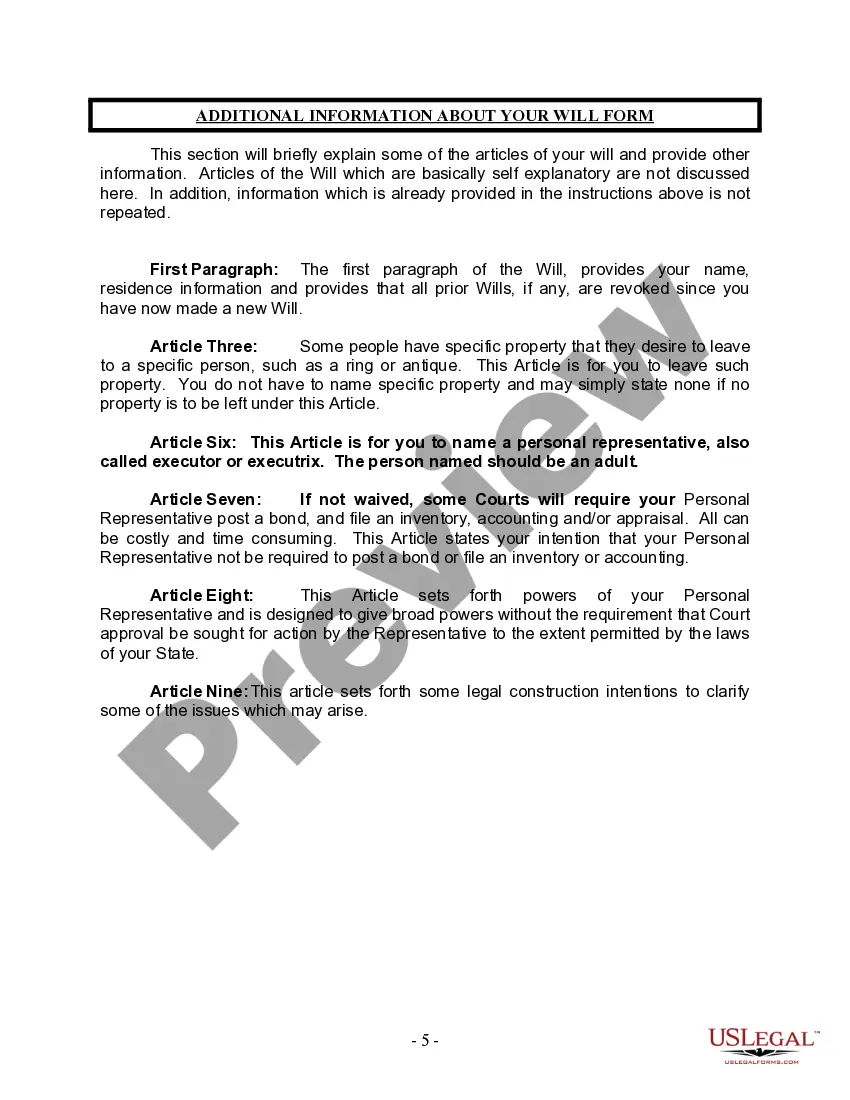
Notarizing a will is not necessary as long as your will has been properly constructed and witnessed; the court will view it as a legally binding document. However, you may still want to include a self-proving affidavit and get your will notarized, since it can help the probate process move faster.
To start the probate process, you need to file an Application for Probate in the probate court in the county where the decedent lived. In Maine, each county has its own probate court. If there is a Will, it needs to be submitted to the probate court. The probate judge will decide whether or not the Will is valid.
In addition, Maine allows a will to be made without witnesses if it is written by hand by the testator and signed at the end. 18-A M.R.S.A. § 2-503. This is called a holographic will.
You don't need a lawyer to create a will if you have a straightforward financial situation.You can use online templates or software to write a will yourself. In order to legalize the will, it needs to be signed and dated by you and at least two other witnesses.
No, in Maine, you do not need to notarize your will to make it legal. However, Maine allows you to make your will "self-proving" and you'll need to go to a notary if you want to do that. A self-proving will speeds up probate because the court can accept the will without contacting the witnesses who signed it.
Contrary to popular belief, you do not need to have an attorney draft a will for you. Anyone can write this document on their own, and as long as it meets all of the legal requirements of the state, courts will recognize one you wrote yourself.
A notarized will does not need to be probated.When a person dies leaving behind a will that is not notarized, the law requires that its validity be ascertained by a notary or by a court. Similarly, any non-notarized modification made to a will must be probated, whether the will is notarized or not.