Maine Inventory and Condition of Leased Premises for Pre Lease and Post Lease
Understanding this form
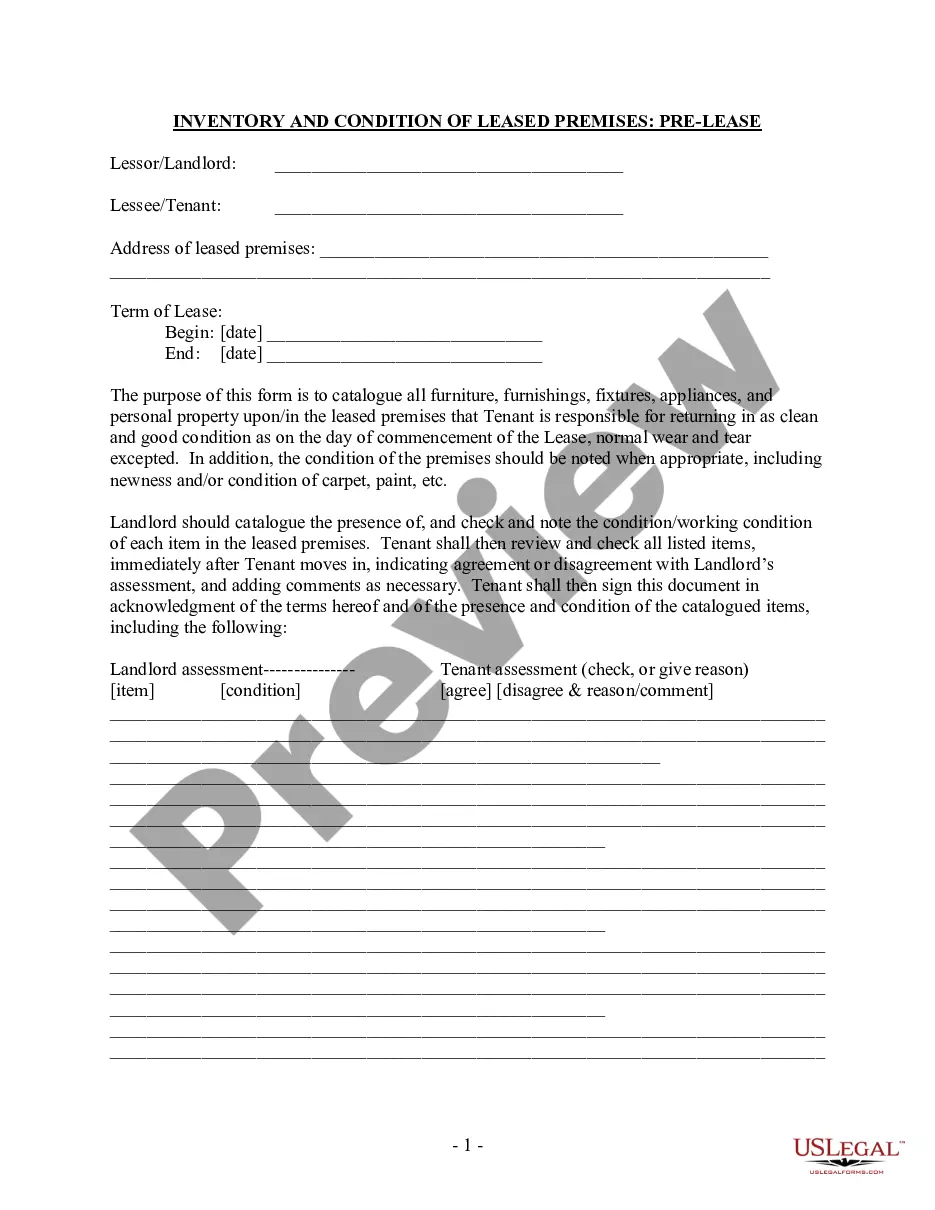
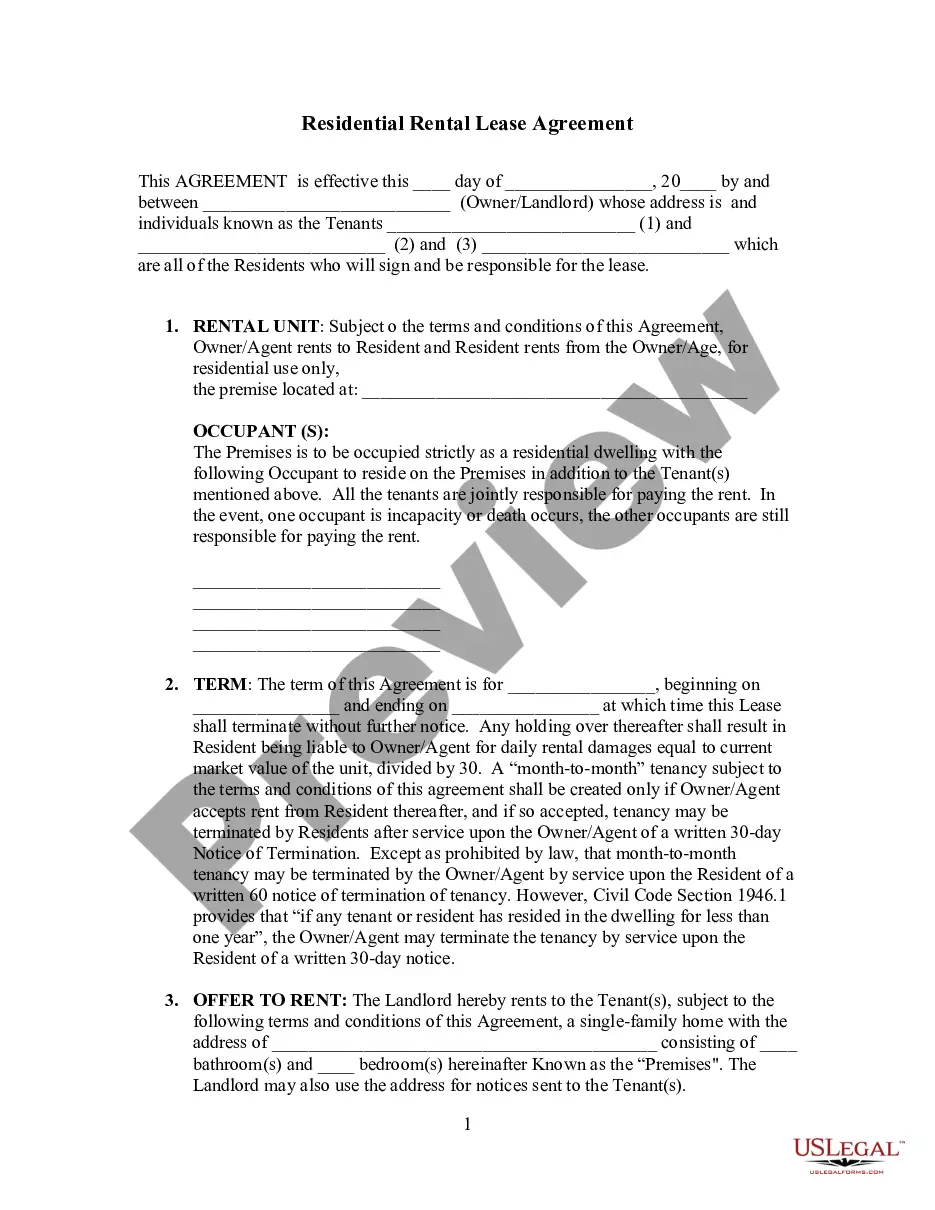
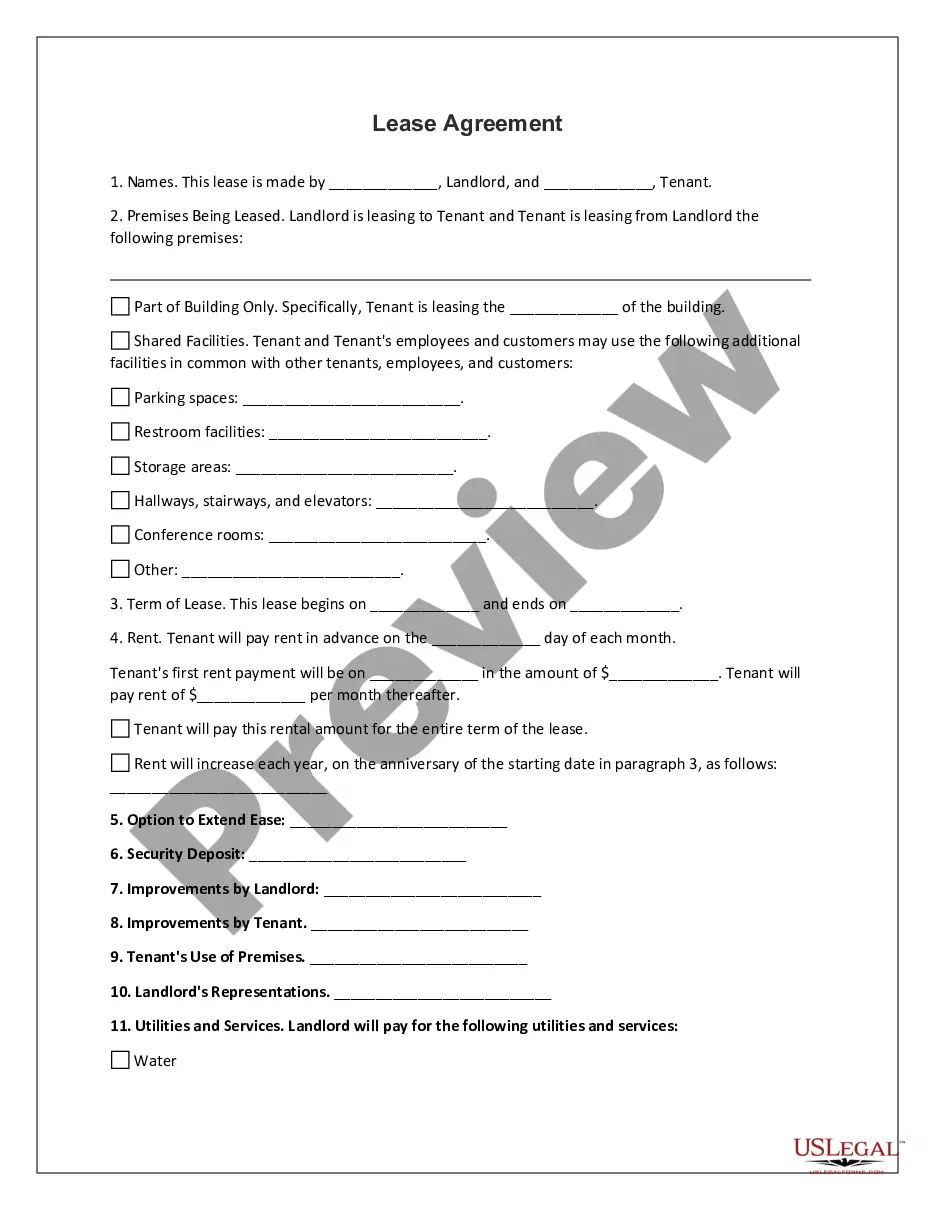
The Inventory and Condition of Leased Premises for Pre Lease and Post Lease is a legal document crucial for both landlords and tenants. This form serves as an official record of the condition of rental property and its contents before and after the lease period. It ensures that both parties agree on the property's state, helping to prevent disputes regarding damages or missing items at the end of the lease. Unlike simple rental agreements, this form specifically catalogs the condition and presence of all furniture, fixtures, and appliances within the leased space.
Form components explained
- Identification of lessor (landlord) and lessee (tenant).
- Address of the leased premises.
- Term of lease, including start and end dates.
- Detailed inventory of all items included in the lease, with space for condition notes.
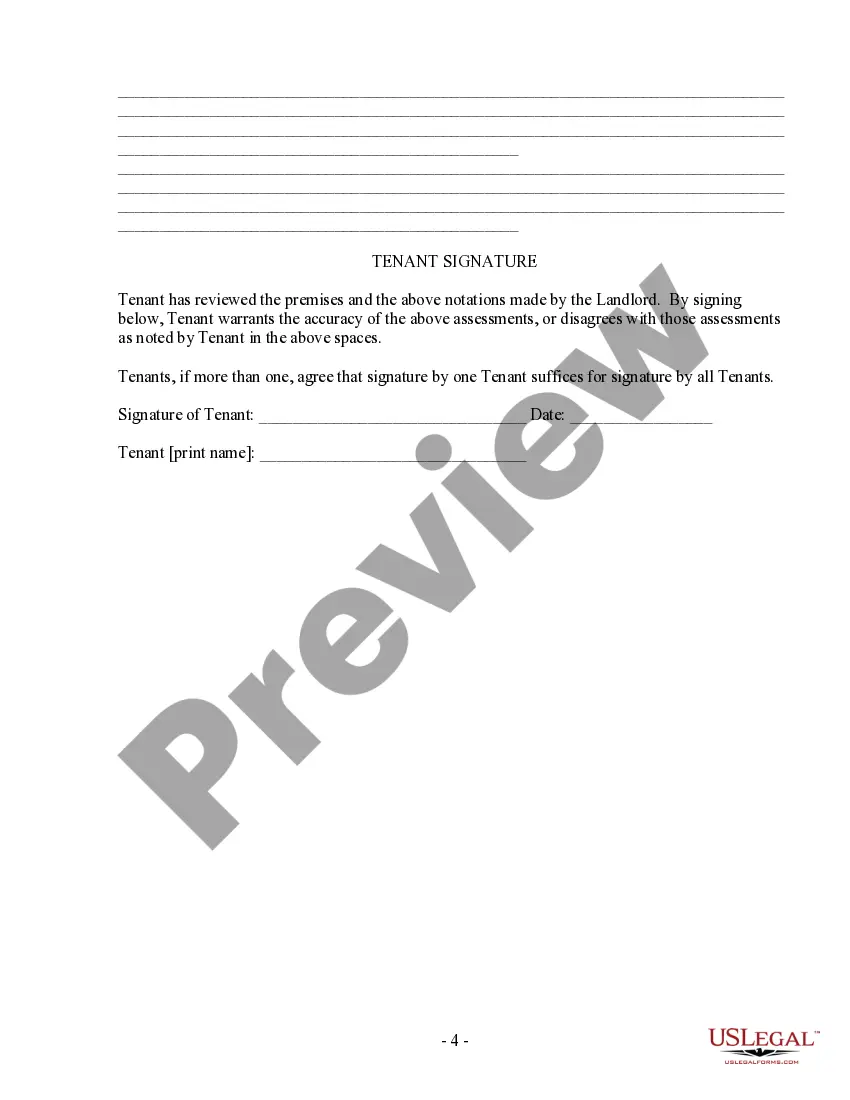
- Sections for tenant agreement or disagreement with the landlord's assessment of item conditions.
- Signatures of both tenant(s) acknowledging the condition of the items at the time of leasing.


When to use this document
This form should be used when a tenant first occupies a rental property as well as upon moving out. It is essential to complete the Inventory and Condition of Leased Premises at both the beginning and end of the lease term. This documentation can prevent misunderstandings regarding property damages or the state of furnishings, ensuring that all parties are informed of their responsibilities regarding the items listed in the inventory.
Who can use this document
This form is designed for:
- Landlords or property managers who need a comprehensive record of the leased premises.
- Tenants who want to protect themselves from unjust claims regarding the condition of the property and its contents.
- Anyone entering into a lease agreement for residential or commercial properties.
Instructions for completing this form
- Identify the parties involved by filling in the names of the landlord and tenant.
- Specify the address of the leased premises and the dates for the beginning and end of the lease.
- Catalog all items included in the lease, detailing their condition as observed by the landlord.
- Allow the tenant to review each listed item and indicate their agreement or disagreement with the landlord's assessment.
- Both parties should sign the document, confirming their acknowledgment of the inventory and condition of the leased premises.
Notarization requirements for this form
This form does not typically require notarization unless specified by local law. However, some jurisdictions may have unique regulations that necessitate notarization. It is advisable to confirm whether local requirements apply to this form in your lease agreement.
Get your form ready online
Our built-in tools help you complete, sign, share, and store your documents in one place.
Make edits, fill in missing information, and update formatting in US Legal Forms—just like you would in MS Word.
Download a copy, print it, send it by email, or mail it via USPS—whatever works best for your next step.
Sign and collect signatures with our SignNow integration. Send to multiple recipients, set reminders, and more. Go Premium to unlock E-Sign.
If this form requires notarization, complete it online through a secure video call—no need to meet a notary in person or wait for an appointment.
We protect your documents and personal data by following strict security and privacy standards.

Make edits, fill in missing information, and update formatting in US Legal Forms—just like you would in MS Word.

Download a copy, print it, send it by email, or mail it via USPS—whatever works best for your next step.

Sign and collect signatures with our SignNow integration. Send to multiple recipients, set reminders, and more. Go Premium to unlock E-Sign.

If this form requires notarization, complete it online through a secure video call—no need to meet a notary in person or wait for an appointment.

We protect your documents and personal data by following strict security and privacy standards.
Typical mistakes to avoid
- Not documenting all items in the inventory, leading to potential misunderstandings.
- Failing to allow adequate time for tenants to inspect and respond to the condition assessments.
- Not signing the form by both parties, which could result in unenforceability.
- Overlooking the need for the tenant to document any discrepancies in the condition of items.
Benefits of using this form online
- Convenience of instant downloads and easy access to legal forms from anywhere.
- Editability of the form allows customization to fit specific lease agreements.
- Reliability of templates drafted by licensed attorneys ensures compliance with legal standards.
Legal use & context
- This form serves as evidence in case of disputes regarding the condition of the rental property.
- Both the landlord and tenant are protected by clearly defined expectations regarding the property's state.
- This documentation can prevent misunderstandings and potential legal action at the end of the lease.
Key takeaways
- The form documents the condition of leased premises before and after tenancy.
- It serves to protect both landlords and tenants from disputes over property condition.
- The process of completion is straightforward and involves listing items and their conditions.
- Using this form online provides convenience and legal security.
Looking for another form?
Form popularity
FAQ
If you leave your apartment without notice, you could be sued in small claims or housing court for the unpaid rent and any other damages. If you want to leave right away and don't want to pay a breakage fee, you can forfeit your security deposit and leave without notice. The legal term for this is abandonment.
No. He should not be charging for the normal wear and tear. As mentioned in TAR Residential Lease contract Paragraph 10. D 1-a " Landlord may deduct reasonable charges from the security deposit for :damages to the property, excluding normal wear and tear, and all reasonable cost associated to repair the property.
Typical definition of ordinary wear and tear is: "That deterioration which occurs based upon the use of which the rental unit is intended and without negligence, carelessness, accident, or misuse, or abuse of the premises or contents by the Tenant or members of his/her household, or their invitees or guests."
Generally, ordinary or normal wear and tear is the unavoidable deterioration of a unit resulting from normal use by the tenant. A repair issue warranting a deduction is typically damage that was avoidable and negligent, and not due to simply living in or using the property.
A rental inspection checklist is a tool used by landlords or property managers to ensure that rental properties are in good condition before, during, and after the tenant's occupation. Conducting a rental inspection involves a thorough visual check of the property's rooms and exterior.
Tenant's name & address. Move-in date. Date of move-in inspection. Move-out date. Date of move-out inspection. Tenant signature. Landlord name & address. Landlord contact information.
(a) Before returning a security deposit, the landlord may deduct from the deposit damages and charges for which tenant is legally liable under the lease or as a result of breaching the lease. (b) The landlord may not retain any portion of a security deposit to cover normal wear and tear.
"Normal wear and tear" means deterioration that results from the intended use of a dwelling, including, for the purposes of Subchapters B and D, breakage or malfunction due to age or deteriorated condition, but the term does not include deterioration that results from negligence, carelessness, accident, or abuse of the
This list must be given to the tenant within 30 days of the tenant moving out, which must include paid receipts stating the cost of repairs. Subsequently, the landlord is required to fix any such repairs within 30 days.