Maryland Mutual Wills Package with Last Wills and Testaments for Married Couple with Adult and Minor Children
About this form
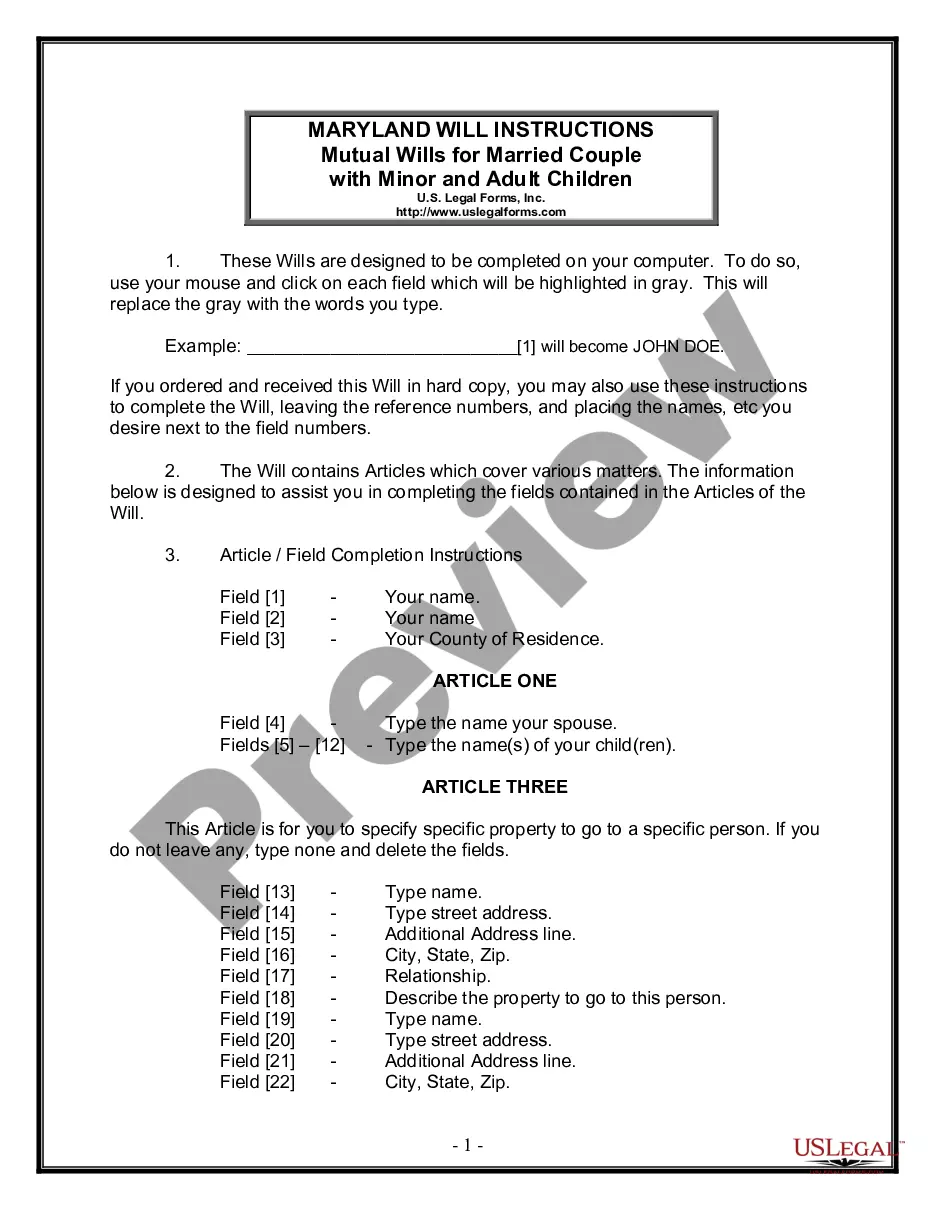
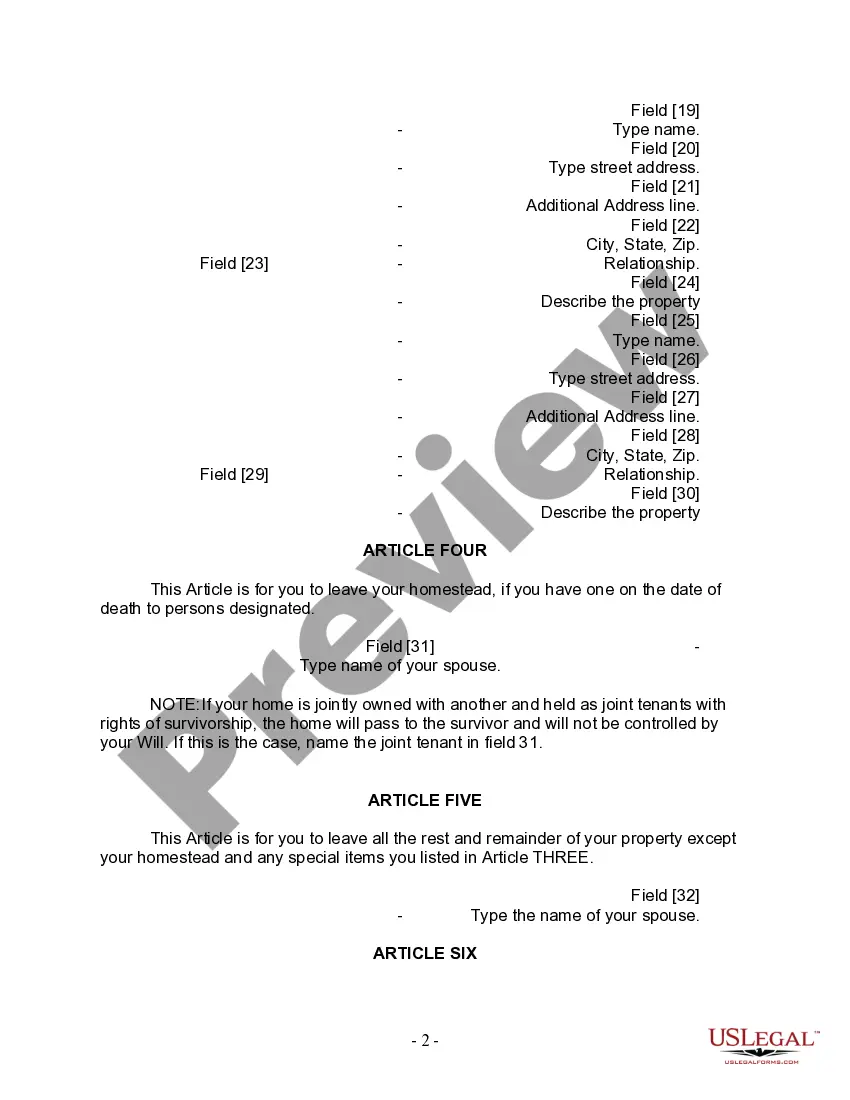
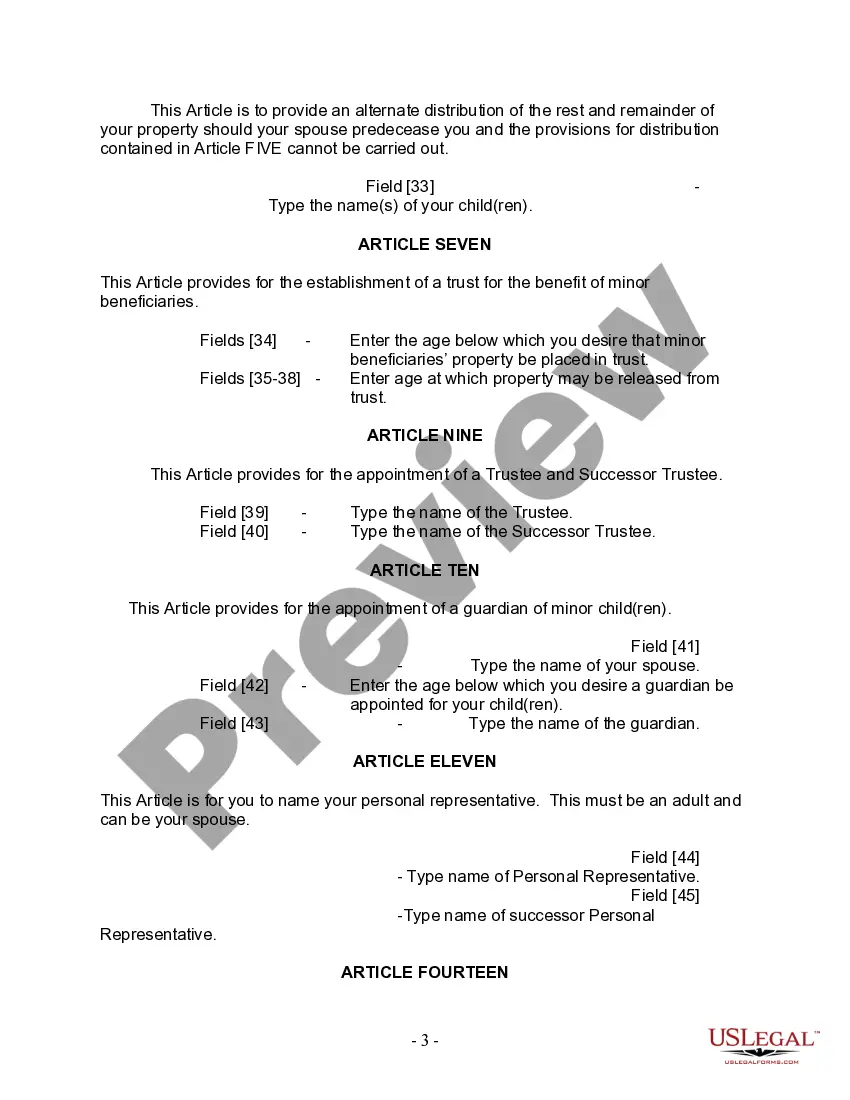
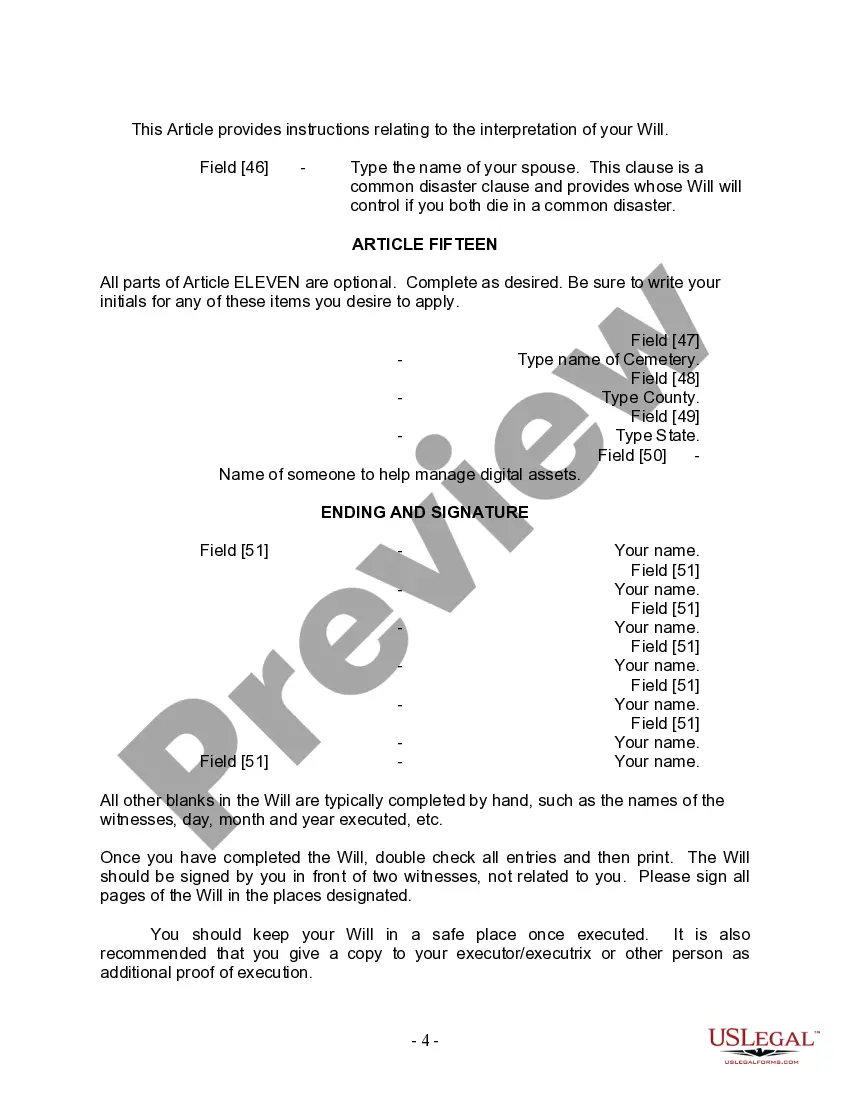
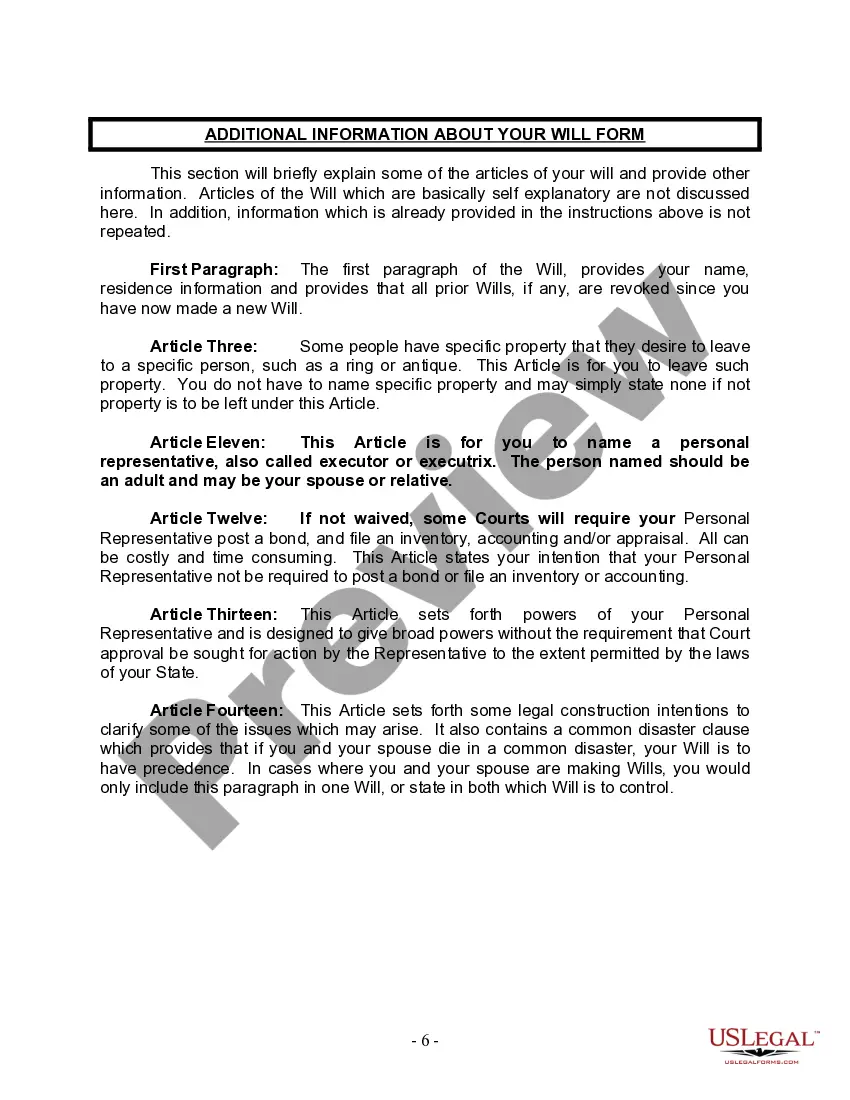
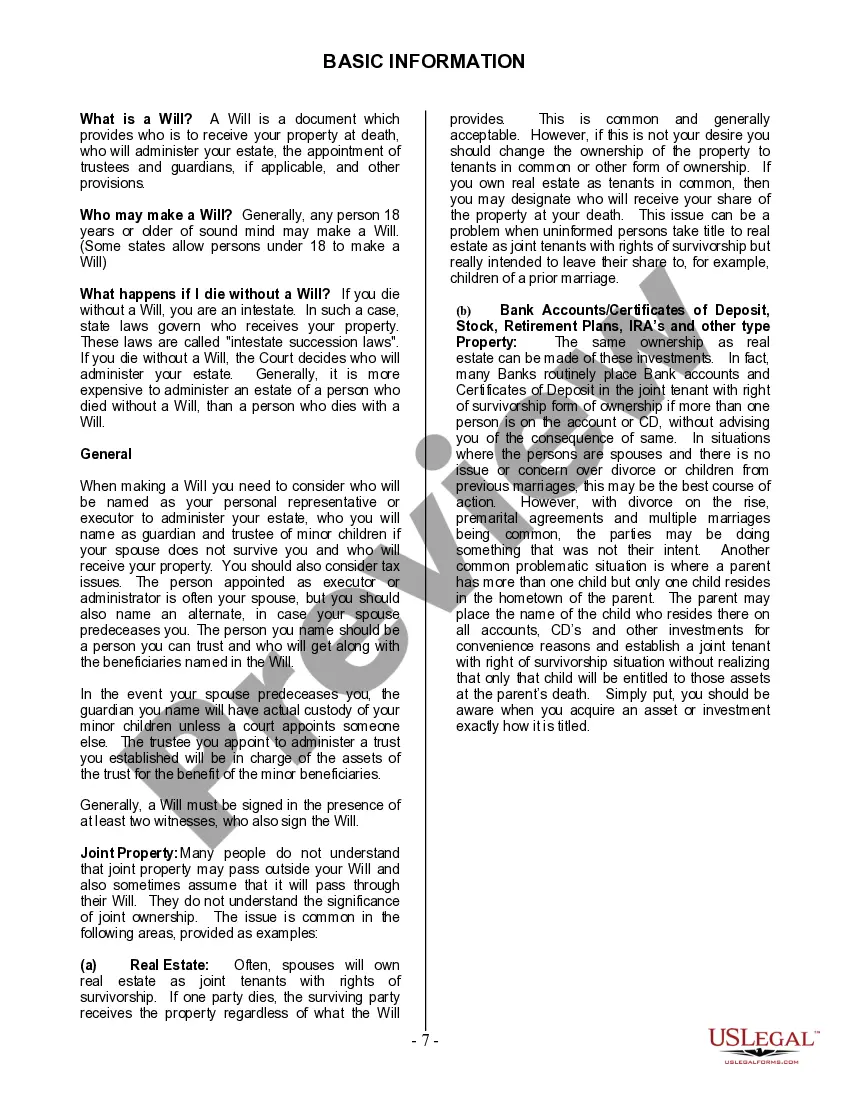
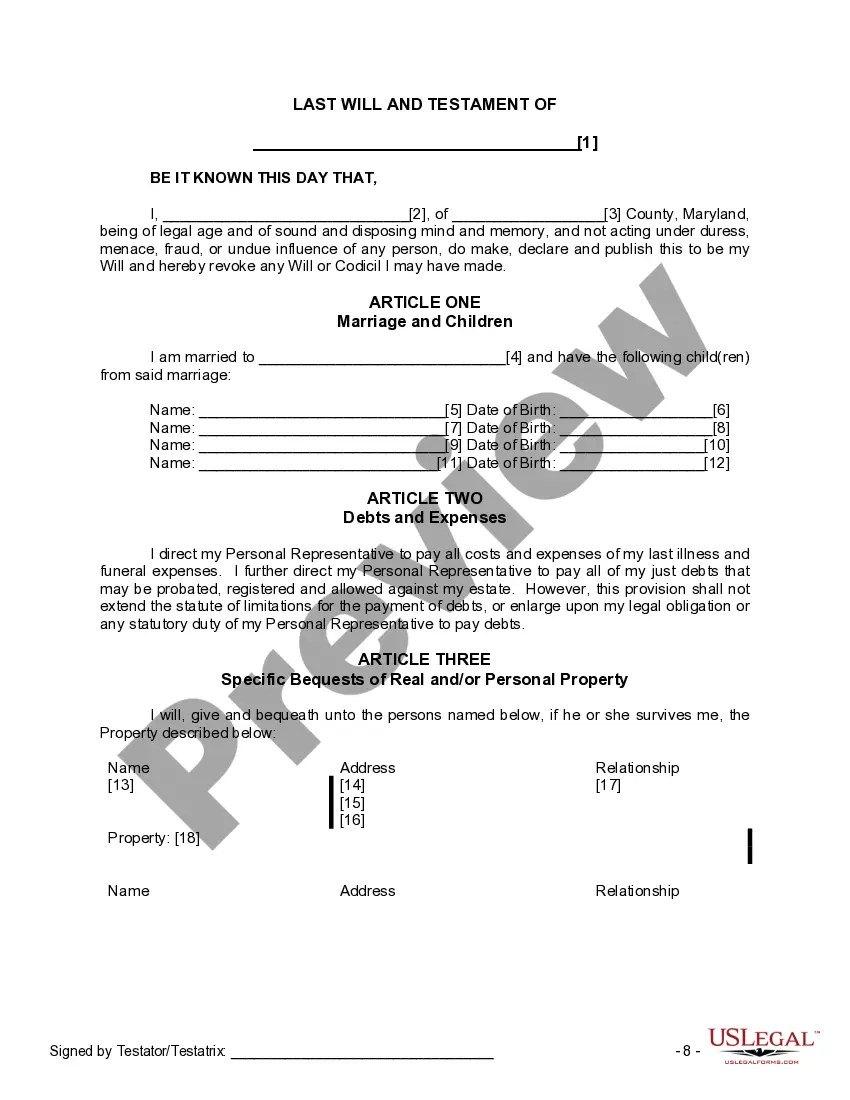
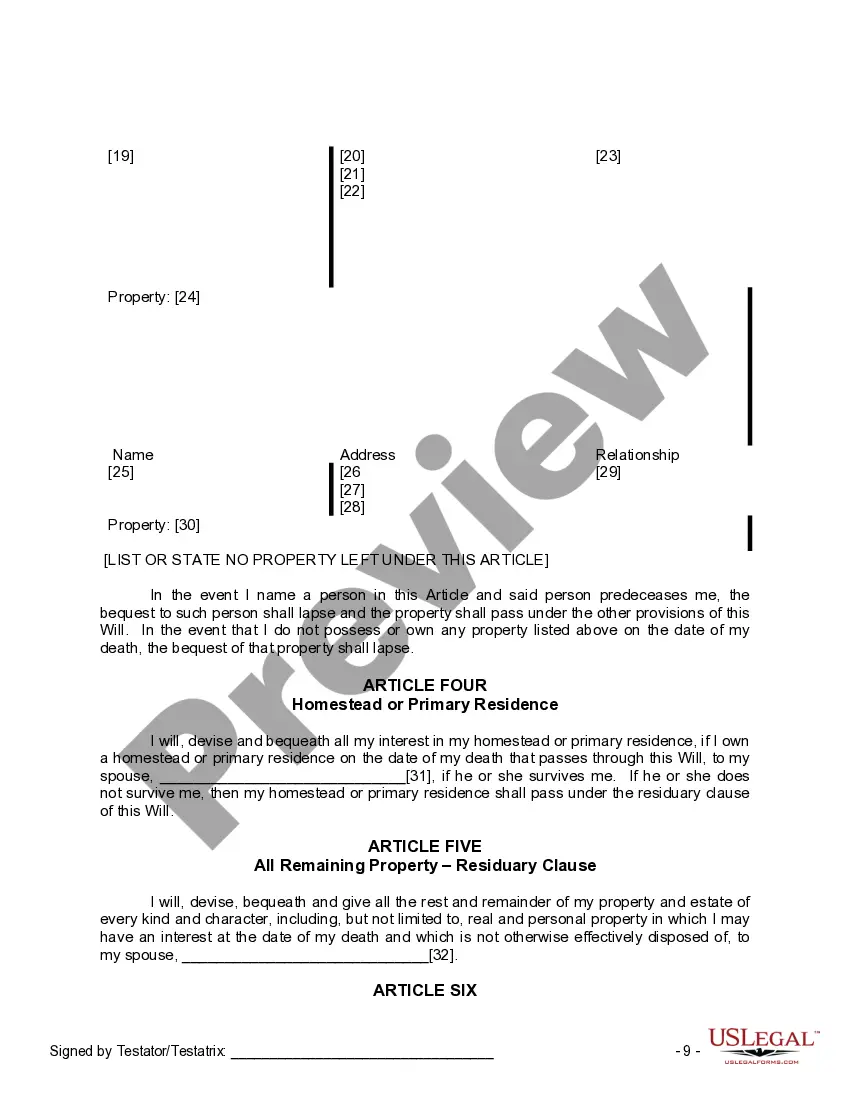
The Mutual Wills Package with Last Wills and Testaments for a Married Couple with Adult and Minor Children is a legal document designed to specify how both spouses wish to distribute their assets upon death. This package distinguishes itself from a standard will by establishing mutual agreements between spouses for property distribution and includes provisions for the care of minor children. It contains two wills, one for each spouse, along with detailed instructions for completion, ensuring that each partner's wishes are comprehensively addressed.
Form components explained
- Appointment of personal representative or executor to handle the estate.
- Specification of asset distribution among adult and minor children.
- Establishment of a trust for minor childrenâs inheritance.
- Specification of a guardian for minor children, if necessary.
- Provisions for alternate distribution if one spouse passes before the other.
- Legal declarations regarding prior wills and provisions for their revocation.





Situations where this form applies
This form is ideal for married couples who wish to establish a clear plan for their assets upon their passing, particularly if they have minor children. It is useful when both partners desire to include specific wishes regarding property and guardianship, ensuring that both spouses are in agreement about how their estate will be managed and distributed after death.
Who needs this form
- Married couples with both minor and adult children.
- Couples seeking to create a comprehensive estate plan.
- Individuals wanting to ensure mutual consent regarding property distribution.
- Parents wanting to designate a guardian for their minor children.
Steps to complete this form
- Identify and enter the names of both spouses in their respective sections.
- List the full names and ages of all children, indicating which are minors.
- Designate specific property and beneficiaries for distribution, including provisions for joint property.
- Complete the guardian designation for minor children as needed.
- Ensure the wills are signed in the presence of two qualified witnesses.
Does this form need to be notarized?
Yes, this form must be notarized to be legally valid in states that require notarization for wills. U.S. Legal Forms offers integrated online notarization, allowing you to notarize your completed document securely through a video call without needing to travel.
Get your form ready online
Our built-in tools help you complete, sign, share, and store your documents in one place.
Make edits, fill in missing information, and update formatting in US Legal Forms—just like you would in MS Word.
Download a copy, print it, send it by email, or mail it via USPS—whatever works best for your next step.
Sign and collect signatures with our SignNow integration. Send to multiple recipients, set reminders, and more. Go Premium to unlock E-Sign.
If this form requires notarization, complete it online through a secure video call—no need to meet a notary in person or wait for an appointment.
We protect your documents and personal data by following strict security and privacy standards.

Make edits, fill in missing information, and update formatting in US Legal Forms—just like you would in MS Word.

Download a copy, print it, send it by email, or mail it via USPS—whatever works best for your next step.

Sign and collect signatures with our SignNow integration. Send to multiple recipients, set reminders, and more. Go Premium to unlock E-Sign.

If this form requires notarization, complete it online through a secure video call—no need to meet a notary in person or wait for an appointment.

We protect your documents and personal data by following strict security and privacy standards.
Typical mistakes to avoid
- Failing to specify alternate beneficiaries, which can lead to disputes.
- Not signing the will in the presence of required witnesses.
- Overlooking the need for notarization in jurisdictions that require it.
- Neglecting to update the wills after significant life events (e.g., births, deaths).
Benefits of using this form online
- Convenience of completing the form from home at your own pace.
- Editability allows for easy updates before finalizing the wills.
- Access to professionally drafted templates ensures legal compliance and accuracy.
- Instant download feature allows for immediate use.
Looking for another form?
Form popularity
FAQ
According to Maryland state law, any official of a religious order or body authorized by the rules and customs of that order or body to perform a marriage ceremony can legally officiate a wedding.
Maryland is not a "community property" state. Instead, Maryland has an "equitable distribution" statutemeaning, the court is not necessarily obligated to divide the property equally between the spouses, but will divide property in a way the court finds is fair.
Alimony in Maryland is authorized in limited situations and is not the broad remedy that it is in other states. Alimony in Maryland is either rehabilitative or indefinite . Rehabilitative alimony is intended to be a short-term measure which enables a spouse to get back on his or her feet.
If you know the county of marriage, you can request a search for a fee from the county circuit court, Maryland State Archives, or the Maryland Department of Health. If you don't know the date or county of marriage, you can also try searching for marriage information in other records.
Ceremonies can be performed by an official of a religious order (such as an ordained minister), the Clerk of the Circuit Court, a deputy clerk designated by the county administrative circuit court judge, a judge. See Family Law 2-406 for further detail. Maryland does not require celebrants to register with the state.
Maryland is not a Community Property state.For divorcing couples in Community Property states, any property that either spouse owned prior to their marriage or property acquired after the separation would not be considered marital. Additionally, all Community Property is split evenly, 50/50, between the spouses.
The duration of payments is determined by a judge in Maryland family court. Alimony length is usually based on length of marriage - one commonly used standard for alimony duration is that 1 year of alimony is paid every three years of marriage (however, this is not always the case in every state or with every judge).
With a few important exceptions, all the property acquired during a marriage is considered marital property. Marital property normally includes such things as houses, cars, furniture, appliances, stocks, bonds, jewelry, bank accounts, pensions, retirement plans, and IRA's.