Maryland Last Will and Testament for Married person with Adult Children
What this document covers
The Last Will and Testament for a married person with adult children is a legal document that outlines how your assets will be distributed upon your death. This will allows you to designate a personal representative or executor to manage your estate, specify beneficiaries, and include provisions for your spouse and children. It is specifically tailored for individuals who are married and have adult children, distinguishing it from wills designed for singles or those with minor children.
Form components explained
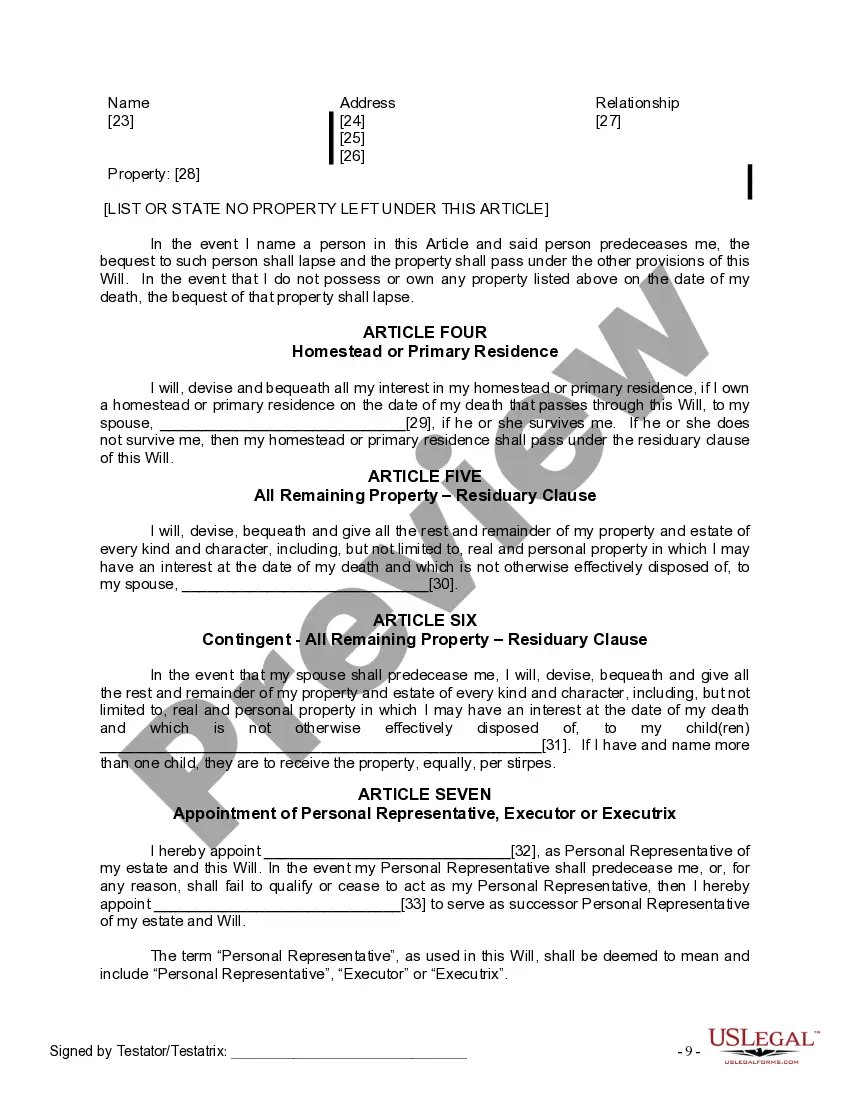
- Appointment of a personal representative to handle the estate
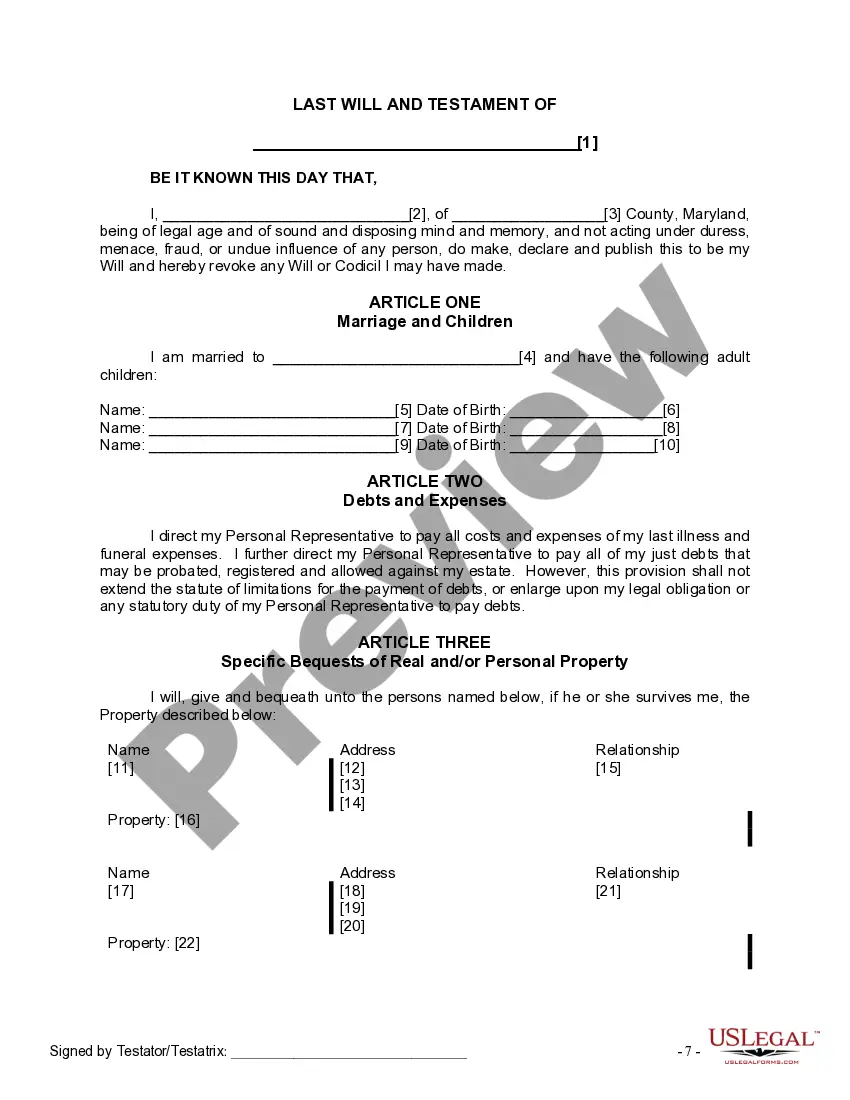
- Specification of beneficiaries, including spouse and adult children
- Provisions for specific bequests of property
- Instructions regarding debts and funeral expenses
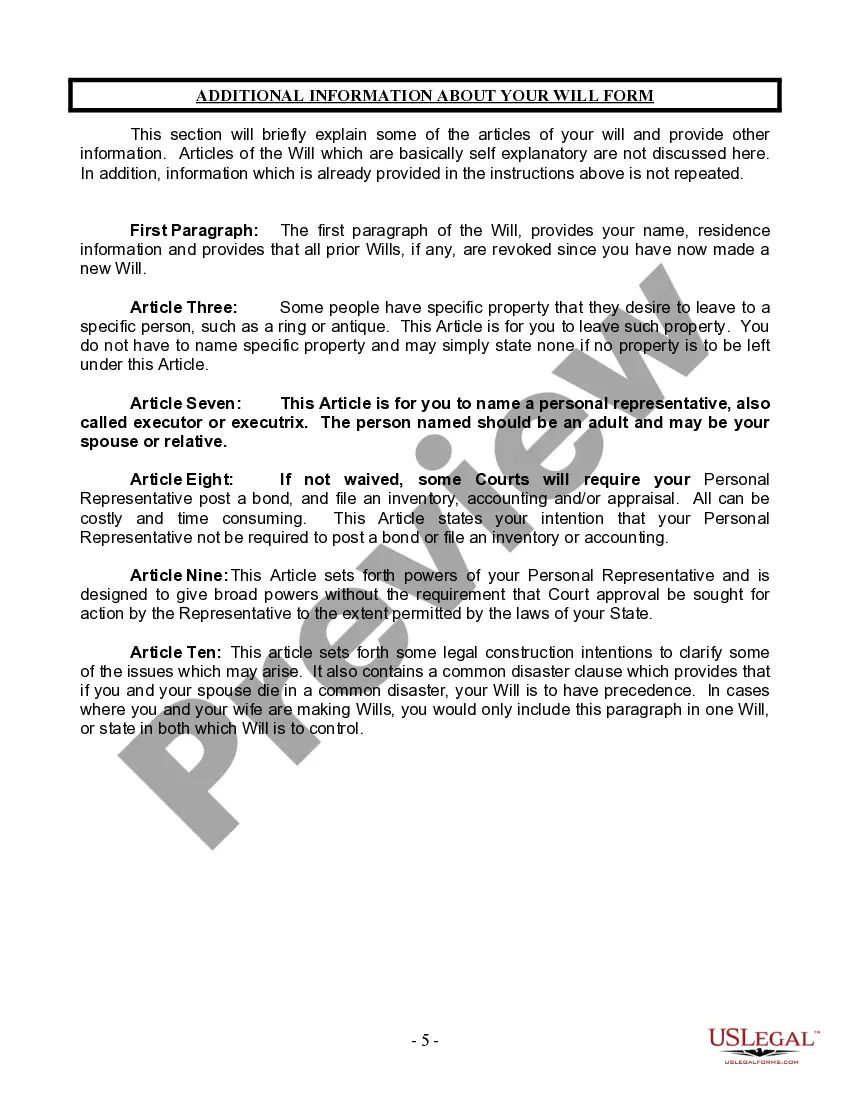
- Definitions of rights and powers of the personal representative
- Optional clauses for additional wishes, such as burial instructions







When this form is needed
This form is necessary in situations where a married individual intends to establish how their assets should be distributed after their death. It is particularly important if you wish to ensure your spouse and adult children are provided for, and if you have specific items or wishes regarding your estate that you want to formalize. It should be used when creating a comprehensive estate plan to avoid conflicts and to simplify the legal process for your loved ones.
Intended users of this form
- Married individuals with adult children
- Individuals looking to clarify their wishes regarding asset distribution
- Those wanting to appoint a trusted personal representative for their estate
- Persons who wish to leave specific bequests or instructions regarding their estate
How to complete this form
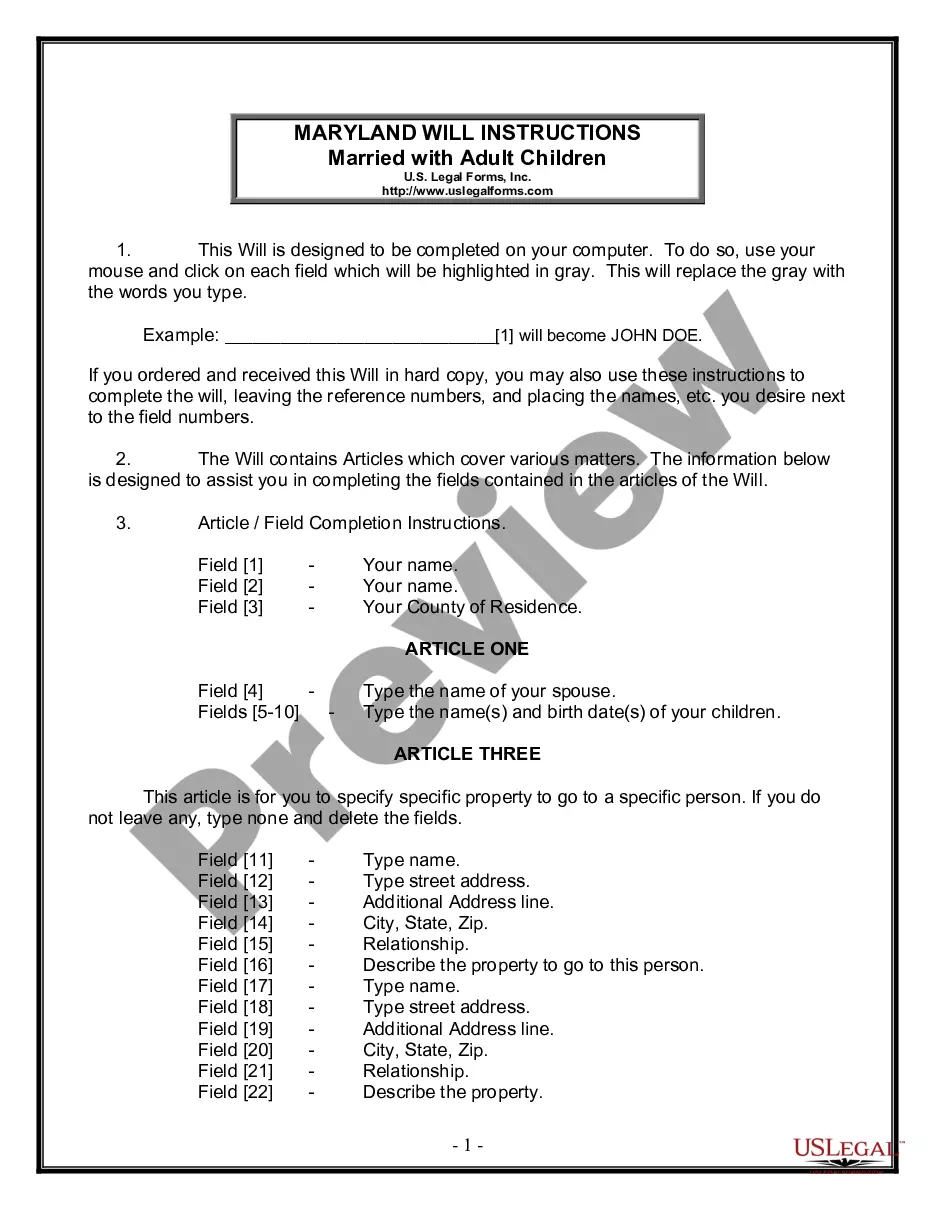
- Start by entering your name and county of residence at the beginning of the document.
- Specify the name of your spouse and provide the names and birth dates of your adult children.
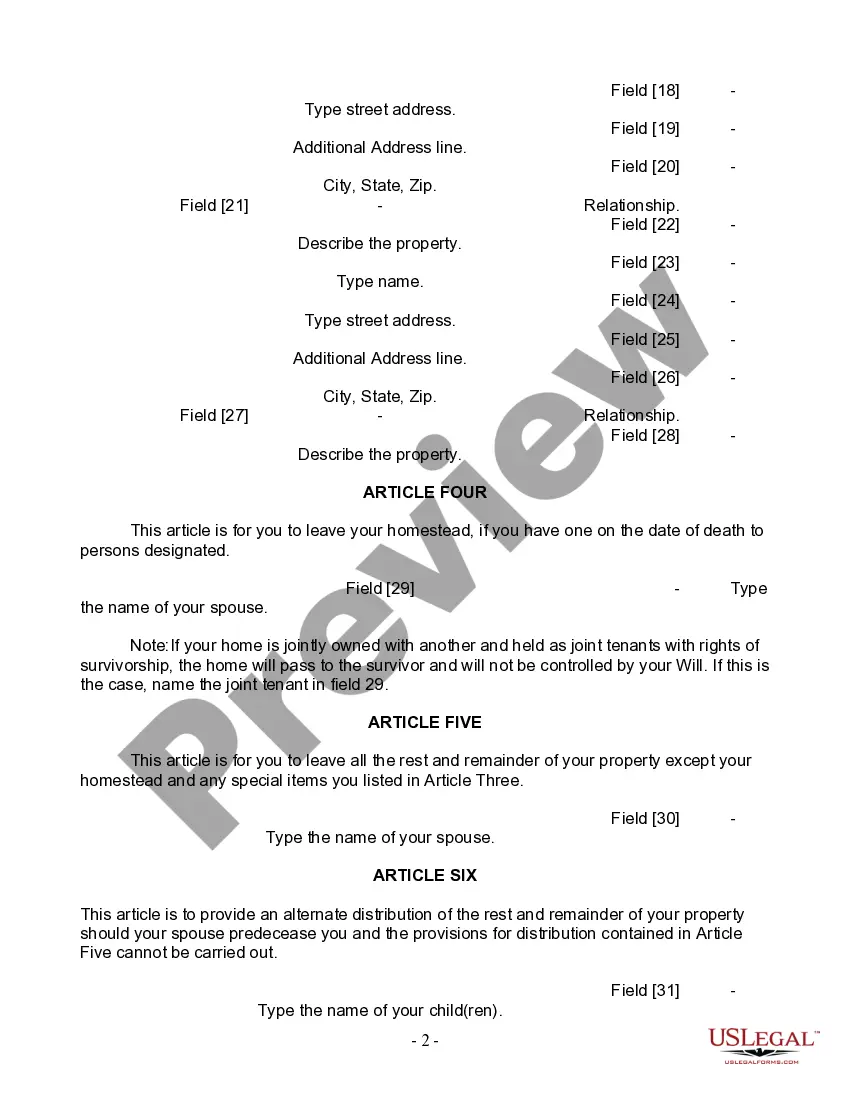
- Outline specific properties or assets you wish to bequeath to particular individuals.
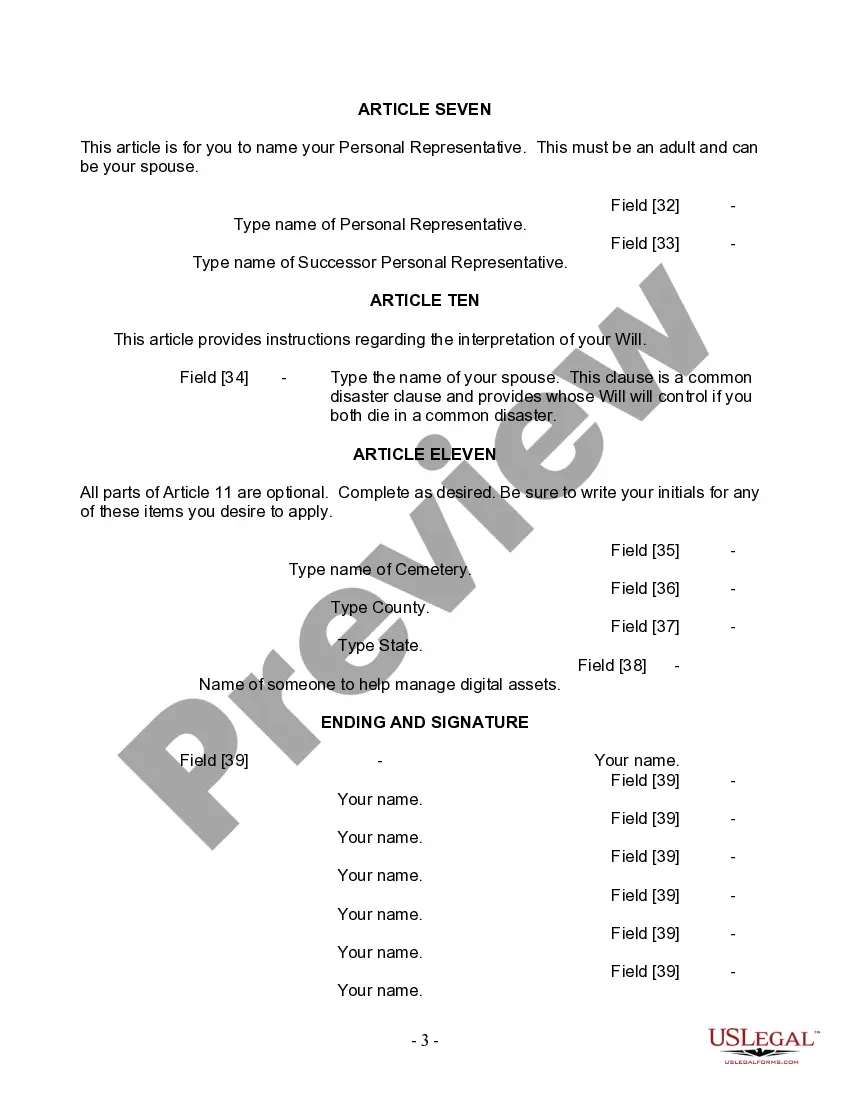
- Designate your personal representative and a successor to manage your estate.
- Review your entries for completeness and accuracy before printing.
- Sign the will in the presence of two witnesses, ensuring they also sign.
Does this document require notarization?
In most cases, this form does not require notarization. However, some jurisdictions or signing circumstances might. US Legal Forms offers online notarization powered by Notarize, accessible 24/7 for a quick, remote process.
Get your form ready online
Our built-in tools help you complete, sign, share, and store your documents in one place.
Make edits, fill in missing information, and update formatting in US Legal Forms—just like you would in MS Word.
Download a copy, print it, send it by email, or mail it via USPS—whatever works best for your next step.
Sign and collect signatures with our SignNow integration. Send to multiple recipients, set reminders, and more. Go Premium to unlock E-Sign.
If this form requires notarization, complete it online through a secure video call—no need to meet a notary in person or wait for an appointment.
We protect your documents and personal data by following strict security and privacy standards.

Make edits, fill in missing information, and update formatting in US Legal Forms—just like you would in MS Word.

Download a copy, print it, send it by email, or mail it via USPS—whatever works best for your next step.

Sign and collect signatures with our SignNow integration. Send to multiple recipients, set reminders, and more. Go Premium to unlock E-Sign.

If this form requires notarization, complete it online through a secure video call—no need to meet a notary in person or wait for an appointment.

We protect your documents and personal data by following strict security and privacy standards.
Avoid these common issues
- Failing to have the will signed in front of the required witnesses.
- Not updating the will after major life events, such as a divorce or the birth of a child.
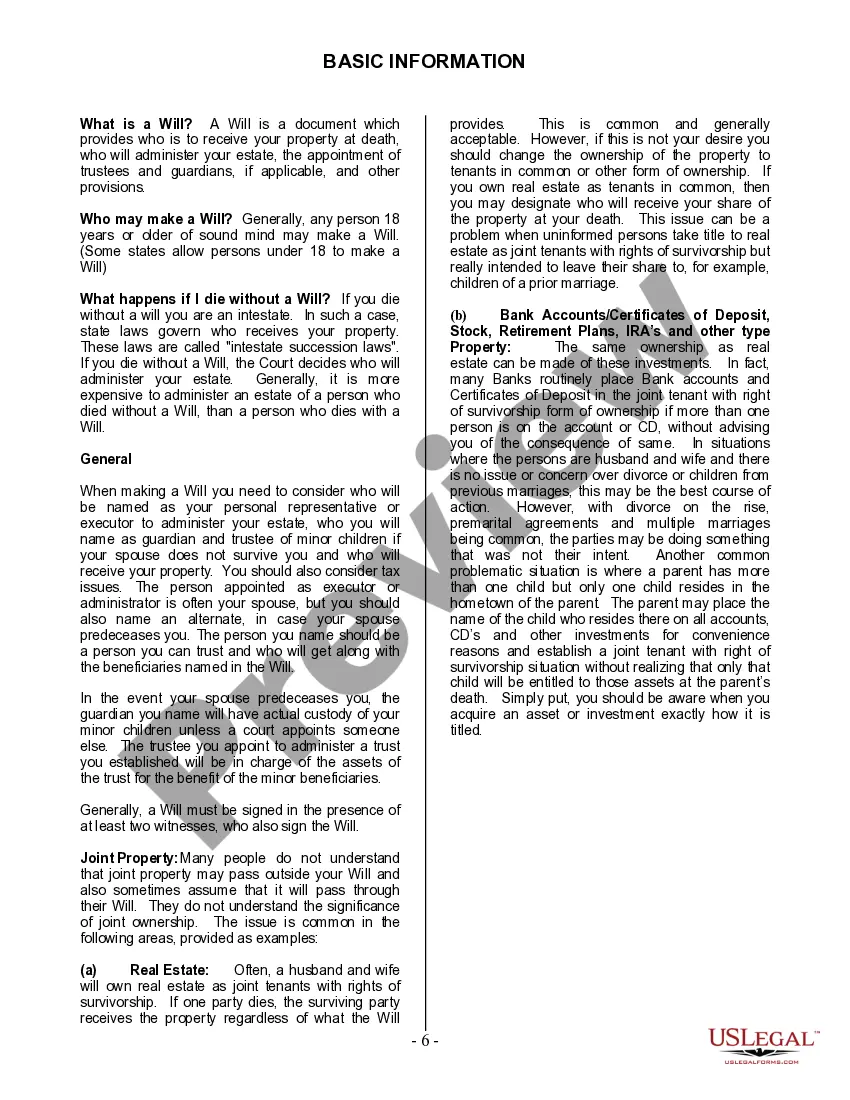
- Assuming joint property will automatically pass as intended without being explicitly stated in the will.
- Neglecting to communicate your wishes to your beneficiaries or the personal representative.
Why use this form online
- Conveniently complete the form at your own pace, making it easy to review and modify.
- Access to attorney-drafted templates ensures legal completeness and compliance.
- Download and print your completed will instantly for signing.
- Elimination of the need to navigate complex legal terminology, thanks to guidance provided.
Legal use & context
- This form provides a clear legal framework for how your estate will be handled.
- It can help ensure that your wishes are respected and enforceable after your death.
- Using a well-structured will can help avoid disputes and legal complications among heirs.
Quick recap
- A Last Will and Testament is essential for distributing your assets according to your wishes.
- Married individuals with adult children should use this specific form to address their unique family dynamics.
- Proper execution and understanding of state-specific requirements are crucial for legal validity.
Looking for another form?
Form popularity
FAQ
No. You can make your own will in Maryland, using Nolo's do-it-yourself will software or online will programs. However, you may want to consult a lawyer in some situations. For example, if you think that your will might be contested or if you want to disinherit your spouse, you should talk with an attorney.
A joint will is a legal document executed by two (or more) people, which merges their individual wills into a single, combined last will and testament. Like most wills, a joint will lets the will-makers name who will get their property and assets after they die. Joint wills are usually created by married couples.
Include personal identifying information. Include a statement about your age and mental status. Designate an executor. Decide who will take care of your children. Choose your beneficiaries. List your funeral details. Sign and date your Last Will and Testament.
Find an online template or service. Make a list of your assets. Be specific about who gets what. If you have minor children, choose a guardian. Give instructions for your pet. Choose an executor. Name a 'residuary beneficiary' List your funeral preferences.
Is a holographic (handwritten) Will legal in Maryland ? Yes, if it complies with Maryland Law.
Contrary to popular belief, you do not need to have an attorney draft a will for you. Anyone can write this document on their own, and as long as it meets all of the legal requirements of the state, courts will recognize one you wrote yourself.
Maryland law requires that your will be in writing, signed by the testator (you) and witnessed by two individuals in the testator's presence. This is called "executing a will." When you are ready to execute your will, you should have at least two witnesses, although three is better.
Create the initial document. Start by titling the document Last Will and Testament" and including your full legal name and address. Designate an executor. Appoint a guardian. Name the beneficiaries. Designate the assets. Ask witnesses to sign your will. Store your will in a safe place.
Create the initial document. Start by titling the document Last Will and Testament" and including your full legal name and address. Designate an executor. Appoint a guardian. Name the beneficiaries. Designate the assets. Ask witnesses to sign your will. Store your will in a safe place.