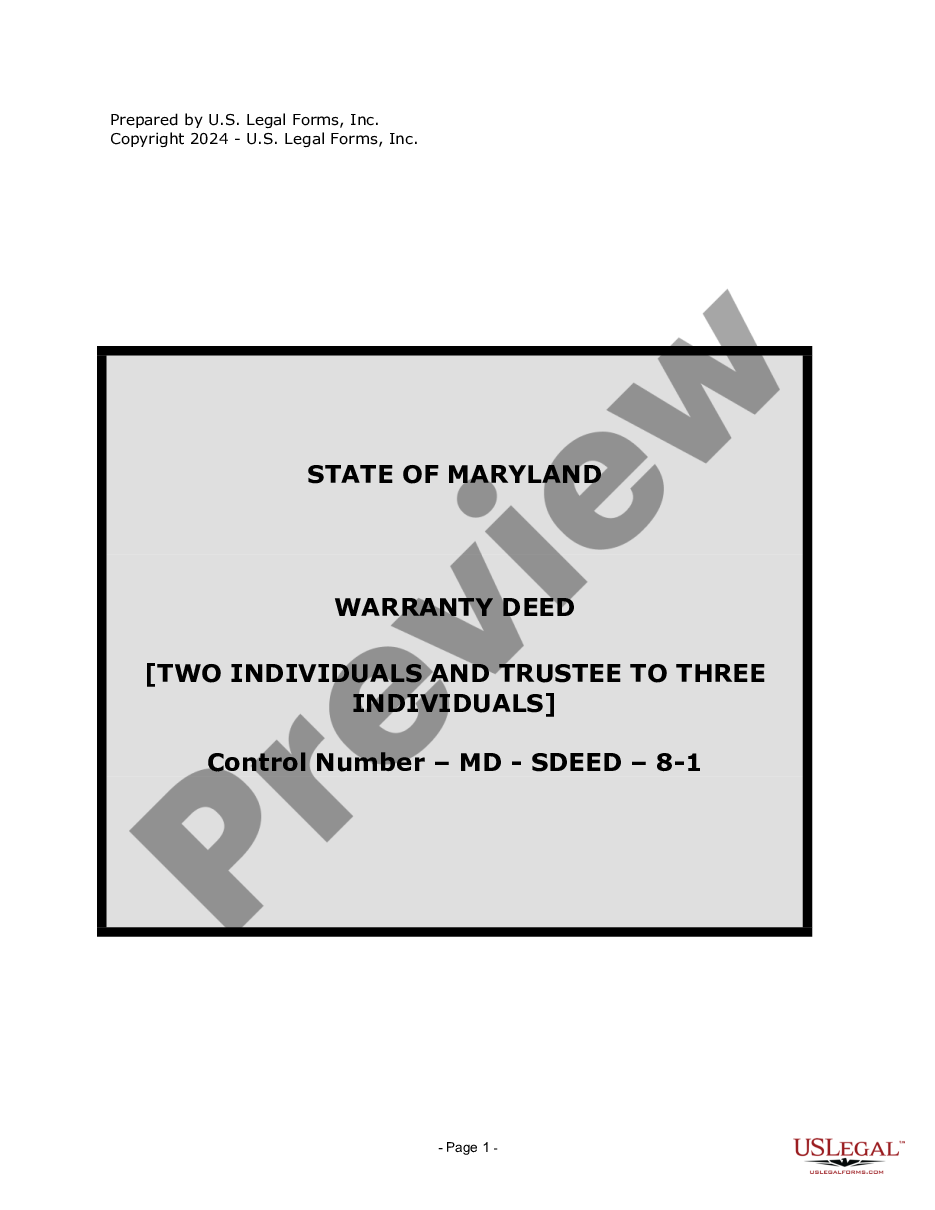
Maryland Warranty Deed from two Individuals and Trustee to Three Individuals
What this document covers
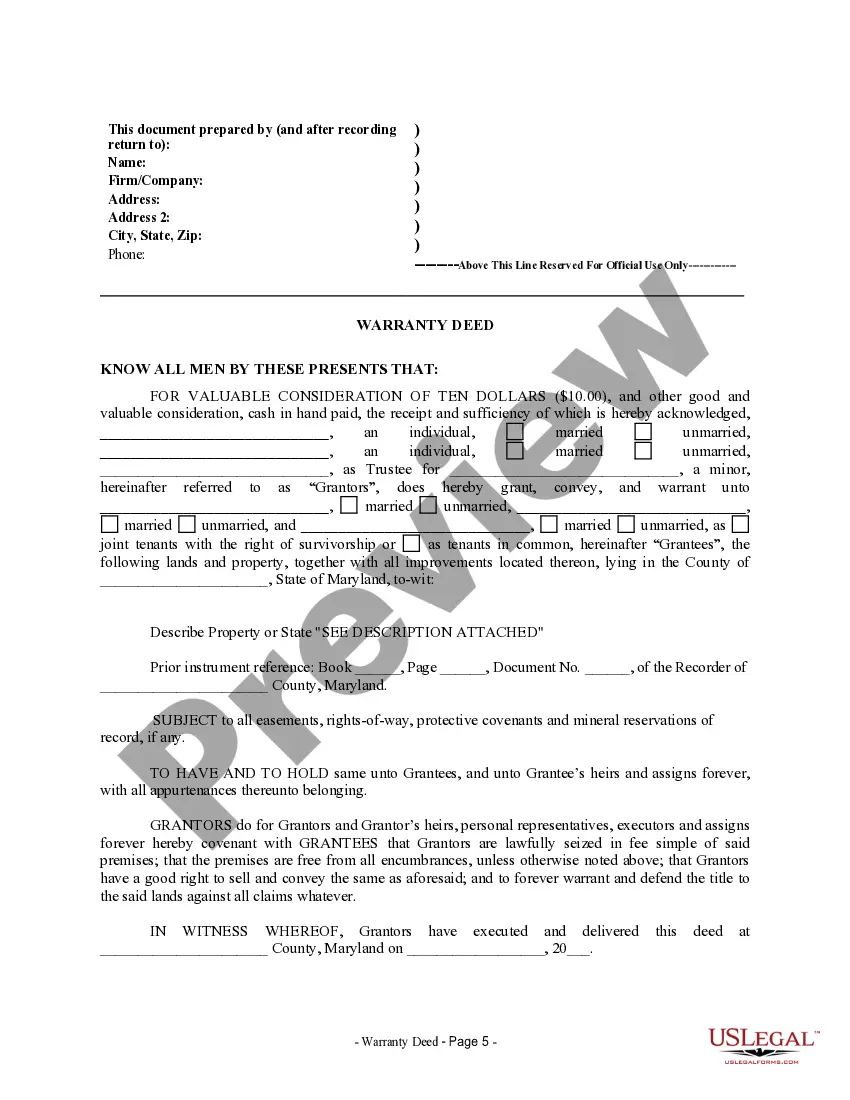
This form is a Warranty Deed that transfers property ownership from two individuals and a trustee to three individuals. It allows the grantees to own the property either jointly or as tenants in common. The Warranty Deed ensures that the title is conveyed free from any encumbrances unless otherwise specified, distinguishing it from quitclaim deeds which offer no warranties regarding the property title.
What’s included in this form
- Identification of grantors: Includes names of two individuals and a trustee.
- Identification of grantees: Lists names of the three individuals receiving the property.
- Property description: Details the property being conveyed, including its legal description.
- Covenant clause: Affirms that grantors hold clear title and guarantees against future claims.
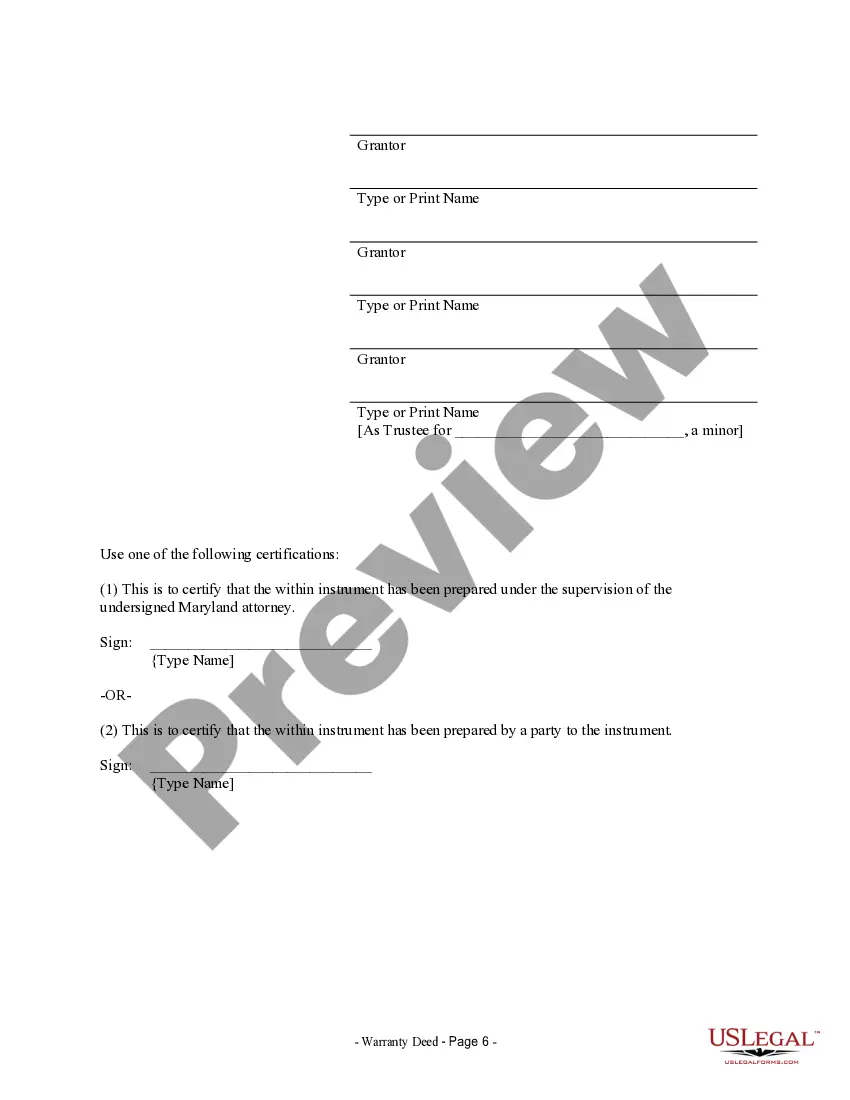
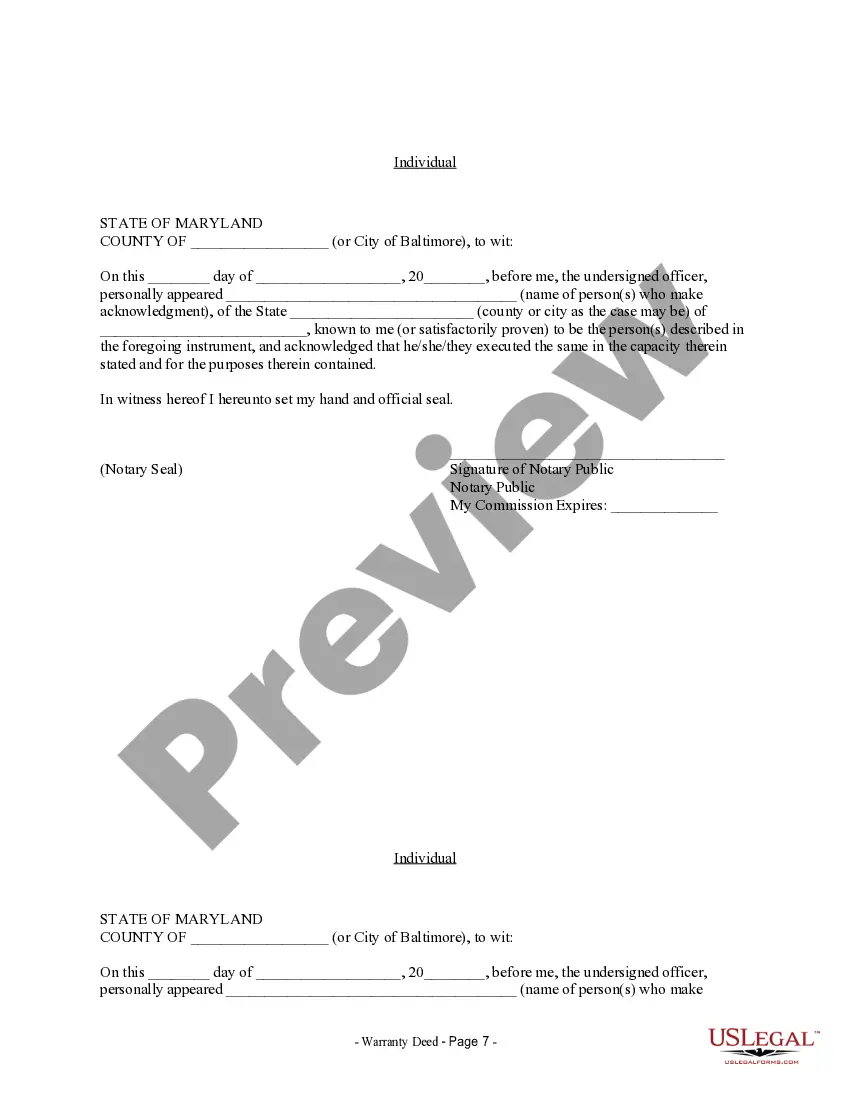
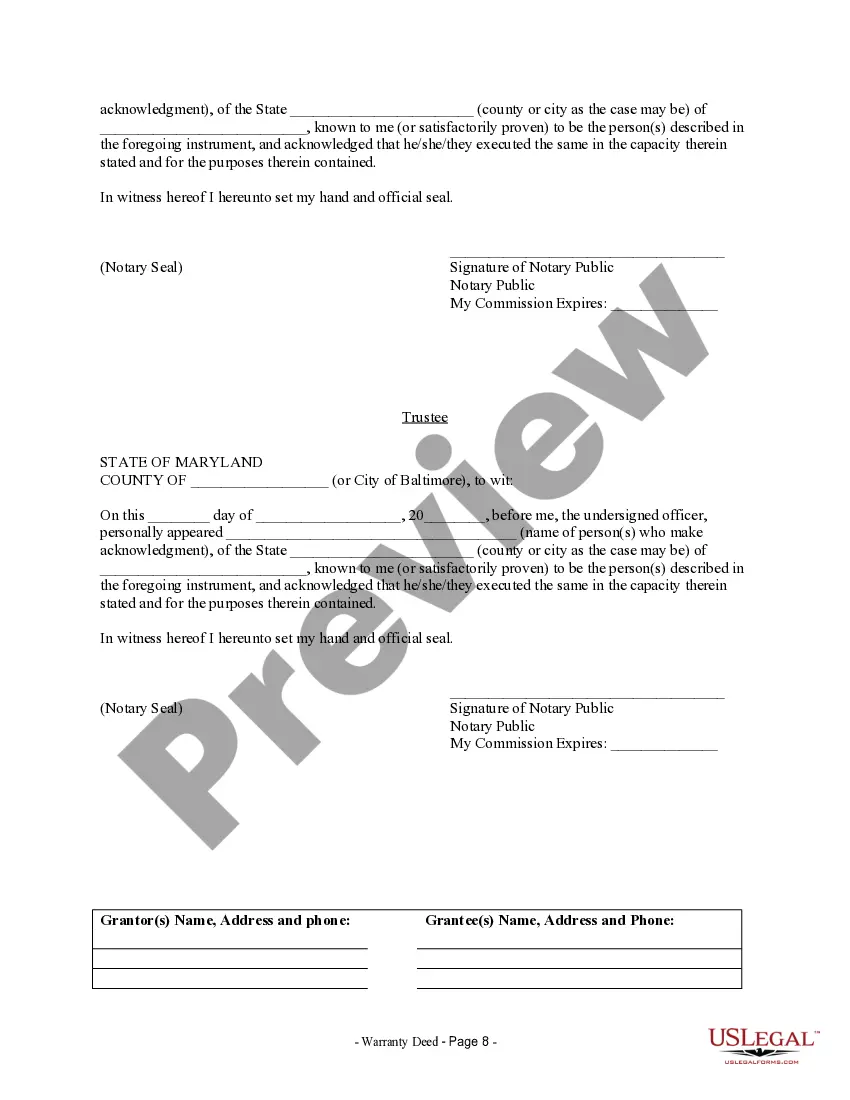
- Notarization section: Provides a space for acknowledgment by a notary public.






When to use this form
This Warranty Deed should be used when two individuals and a trustee are transferring property to three individuals. It is particularly relevant in situations where multiple parties wish to share ownership of real estate and want to ensure legal protections against claims to the title.
Who should use this form
- Individuals transferring property to others.
- Trustees acting on behalf of a trust for property disposition.
- Individuals seeking to formalize joint ownership situations.
How to complete this form
- Identify the grantors: Fill in the names of the two individuals and the trustee.
- Specify the grantees: Enter the names of the three individuals receiving the property.
- Describe the property: Provide a detailed legal description of the property being transferred.
- Fill in dates: Enter the dates relevant to the transaction.
- Obtain notarization: Ensure the form is signed in the presence of a notary public.
Is notarization required?
This document requires notarization to meet legal standards. US Legal Forms provides secure online notarization powered by Notarize, allowing you to complete the process through a verified video call, available 24/7.
Get your form ready online
Our built-in tools help you complete, sign, share, and store your documents in one place.
Make edits, fill in missing information, and update formatting in US Legal Forms—just like you would in MS Word.
Download a copy, print it, send it by email, or mail it via USPS—whatever works best for your next step.
Sign and collect signatures with our SignNow integration. Send to multiple recipients, set reminders, and more. Go Premium to unlock E-Sign.
If this form requires notarization, complete it online through a secure video call—no need to meet a notary in person or wait for an appointment.
We protect your documents and personal data by following strict security and privacy standards.

Make edits, fill in missing information, and update formatting in US Legal Forms—just like you would in MS Word.

Download a copy, print it, send it by email, or mail it via USPS—whatever works best for your next step.

Sign and collect signatures with our SignNow integration. Send to multiple recipients, set reminders, and more. Go Premium to unlock E-Sign.

If this form requires notarization, complete it online through a secure video call—no need to meet a notary in person or wait for an appointment.

We protect your documents and personal data by following strict security and privacy standards.
Common mistakes
- Forgetting to include a complete property description.
- Not obtaining notarization, which may invalidate the deed.
- Failing to specify the manner in which the grantees hold the title (joint tenants vs. tenants in common).
Benefits of completing this form online
- Convenient downloading allows for immediate access and completion.
- Editability: You can fill in the form fields directly on your computer.
- Reliable templates designed by licensed attorneys ensure legal compliance.
Looking for another form?

Form popularity
FAQ
Your executor and successor trustee can usually be the same person, and it's actually a quite common arrangement.It helps to understand the roles of the executor and the successor trustee in your estate plan as you make a decision because some of the factors can be personal.
Trustee: a person or persons designated by a trust document to hold and manage the property in the trust. Beneficiary: a person or entity for whom the trust was established, most often the trustor, a child or other relative of the trustor, or a charitable organization.
When you are creating a will and a trust as part of your estate planning, you need to name an executor as well as a trustee, which can both be the same person, if you wish.
Generally, the individual that develops the trust appoints the trustees. You can have up to four trustees. Many grantors appoint their executors to also act as trustees. Similar to an executor, you can request professionals to act as trustees, such as an accountant or lawyer.
Executor v. If you have a trust and funded it with most of your assets during your lifetime, your successor Trustee will have comparatively more power than your Executor.
The role of a trustee is different than the role of an estate executor. An executor manages a deceased person's estate to distribute his or her assets according to the will. A trustee, on the other hand, is responsible for administering a trust.The beneficiaries are the recipients of the trust's assets.
An all-in fee will start between 1% and 2%, and usually covers the trust's investment manager, fiduciary and trust administration, and record-keeping and disbursements, but typically not asset-management fees. So, you might pay $30,000 to $50,000 a year on a $3 million trust.
The role of Executor is to administer the deceased's Estate, but the Trustees are there to manage any ongoing Trusts which arise from the Will.
Most corporate Trustees will receive between 1% to 2%of the Trust assets. For example, a Trust that is valued at $10 million, will pay $100,000 to $200,000 annually as Trustee fees. This is routine in the industry and accepted practice in the view of most California courts.