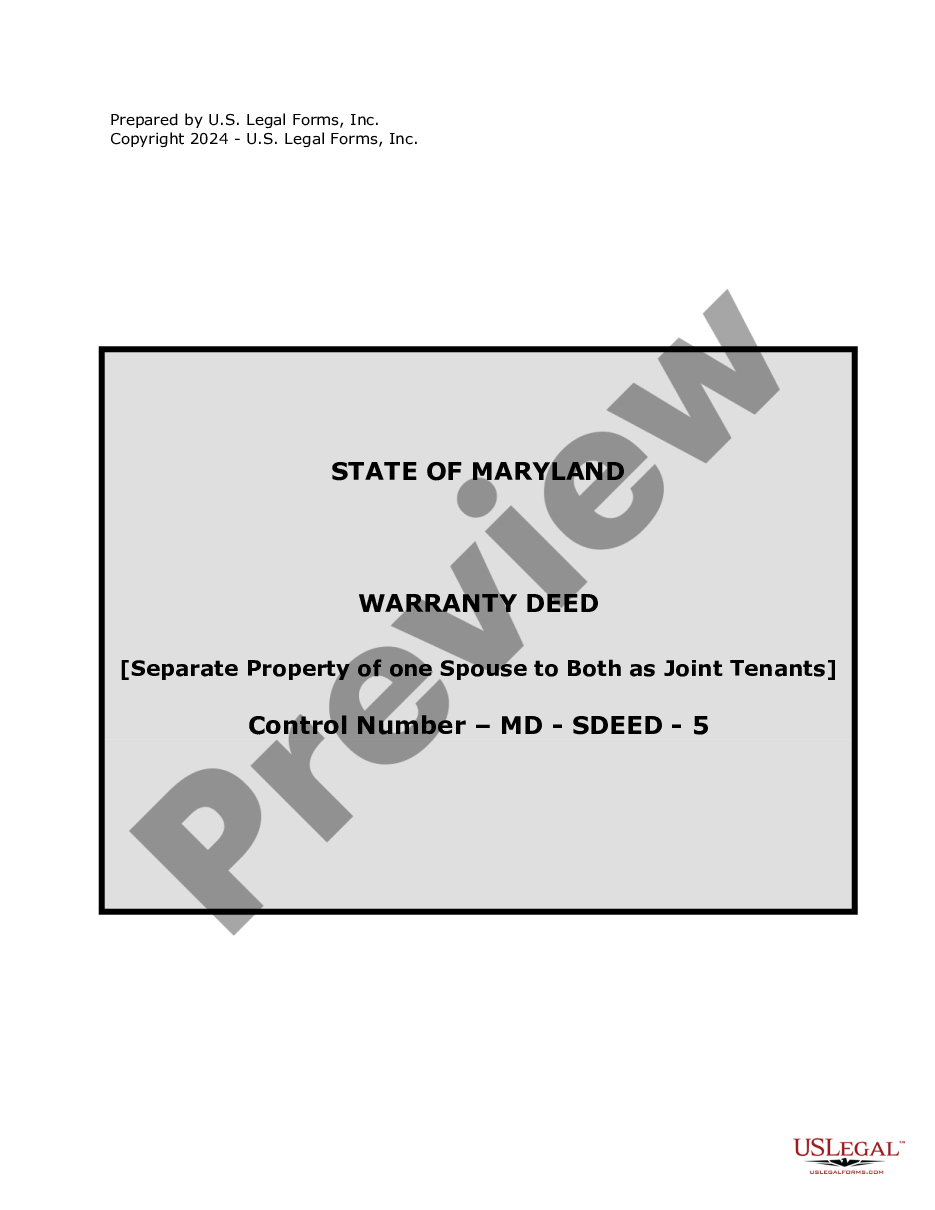
Maryland Warranty Deed to Separate Property of One Spouse to Both Spouses as Joint Tenants
Overview of this form
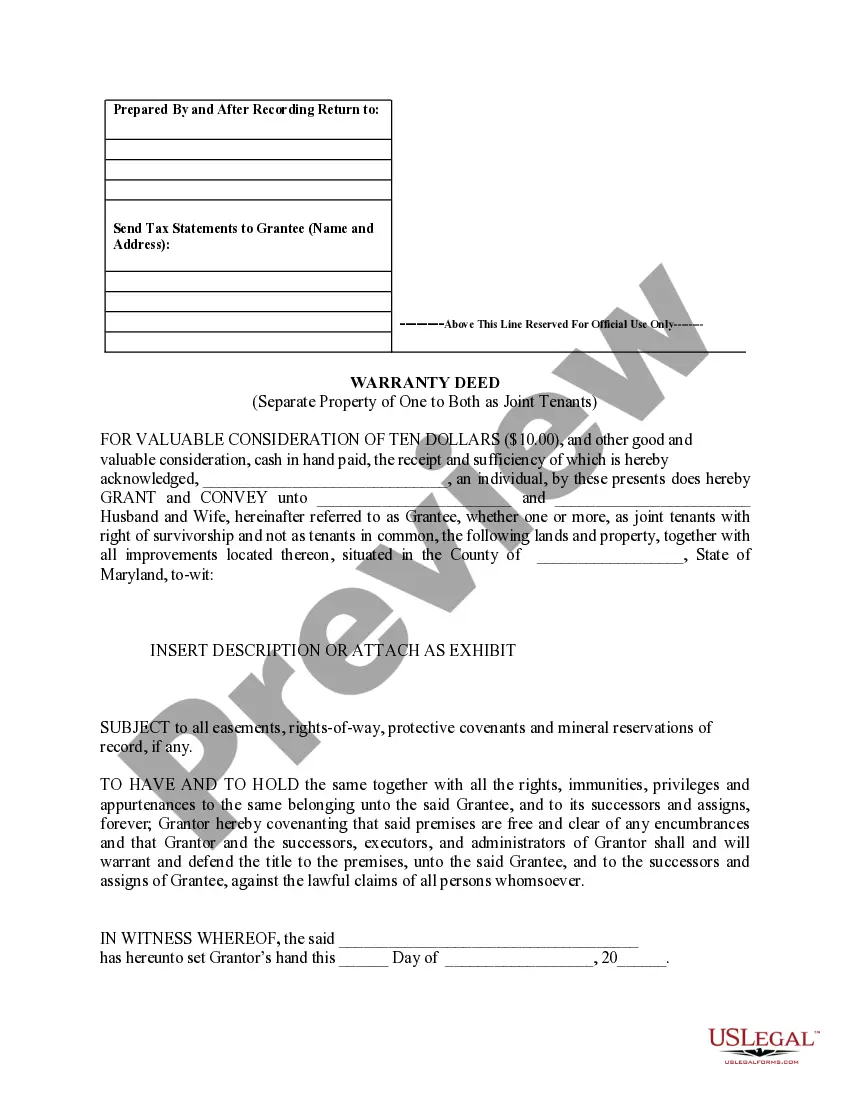
The Warranty Deed to Separate Property of One Spouse to Both Spouses as Joint Tenants is a legal document that facilitates the transfer of property from one spouse to both spouses, establishing joint tenancy. This means that both spouses will own the property together, with rights of survivorship, ensuring that if one spouse passes away, the other will inherit the property automatically. Unlike other forms of property transfer, this warranty deed specifically addresses transfers involving spousal relationships and joint tenancy ownership, distinguishing it from other types of deeds.
Key parts of this document
- Identification of the Grantor (the transferring spouse) and Grantees (both spouses receiving property).
- Detailed description of the property being transferred, including location and improvements.
- Declaration of the intent to transfer the property as joint tenants with rights of survivorship.
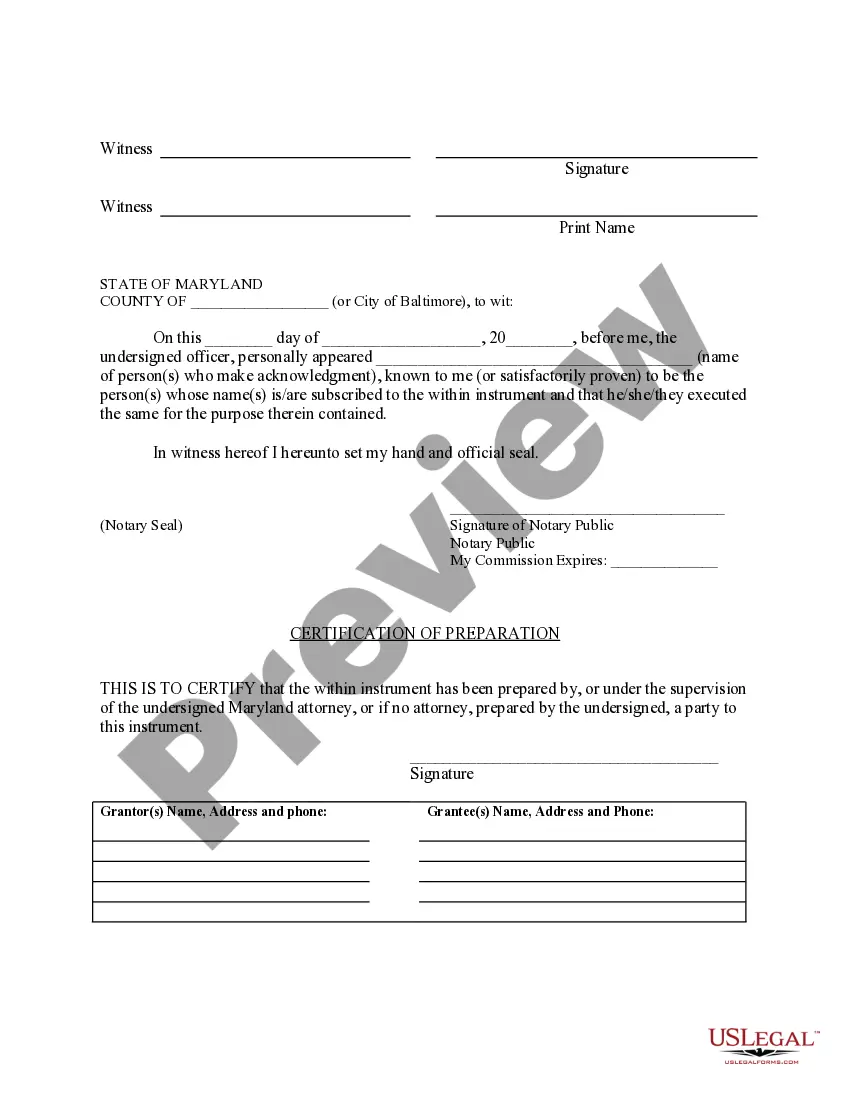
- Notarization section for legal validation of the document.
- Certification of preparation, confirming the form was completed by a legitimate party.




When to use this form
This form is needed when one spouse wishes to legally transfer their separate property to themselves and their spouse as joint tenants. This can occur in various situations such as marriage, consolidating assets, or estate planning, to ensure that property ownership is unified and rights are preserved for the surviving spouse in the event of death.
Intended users of this form
- Married couples looking to combine ownership of a property previously owned by one spouse.
- Individuals wanting to ensure survivorship rights are established for their spouse.
- Couples engaged in estate planning to clarify ownerships and future inheritance flows.
- Spouses of properties that need to be officially transferred for legal clarity and protection.
Steps to complete this form
- Identify and enter the names of the Grantor and Grantees at the top of the document.
- Provide a full legal description of the property being transferred.
- Indicate the date of transfer and ensure all parties sign and date the document.
- Submit the form to a Notary Public for the notarization of the signatures.
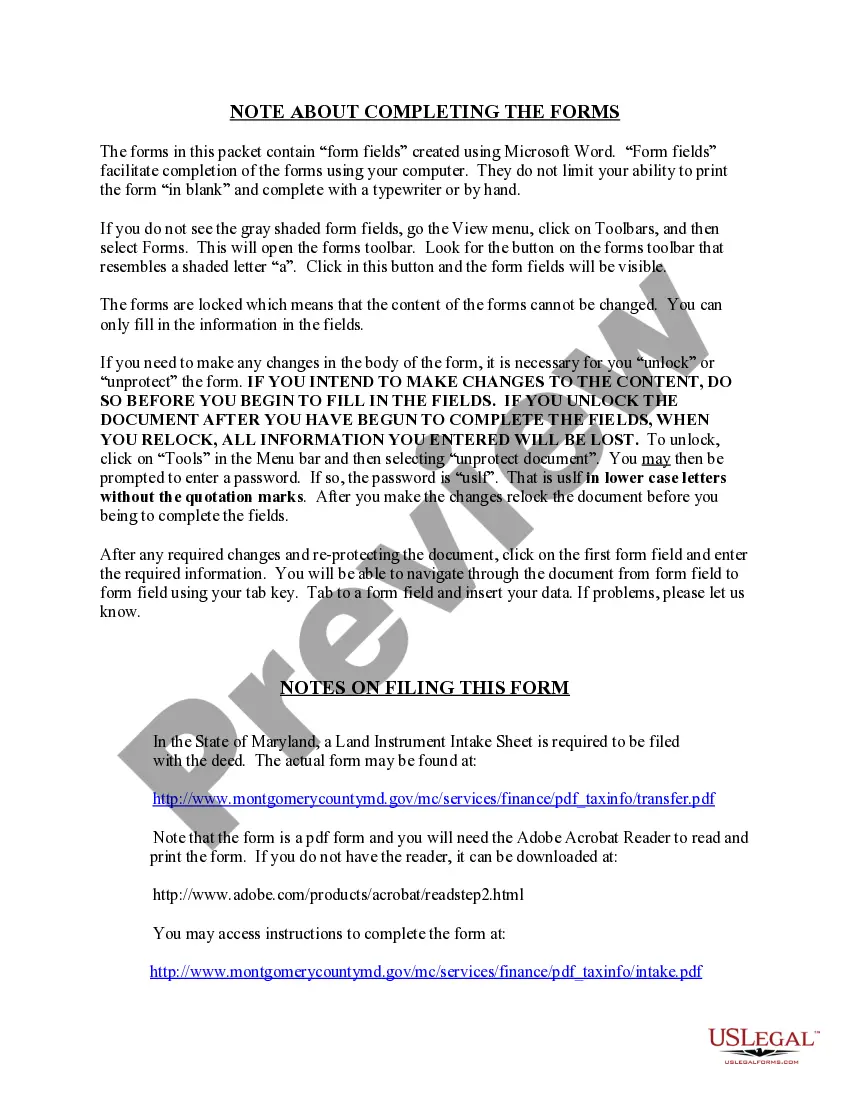
- File the completed form along with the required intake sheet with the appropriate county office.
Notarization requirements for this form
This form must be notarized to be legally valid. US Legal Forms provides secure online notarization powered by Notarize, allowing you to complete the process through a verified video call.
Get your form ready online
Our built-in tools help you complete, sign, share, and store your documents in one place.
Make edits, fill in missing information, and update formatting in US Legal Forms—just like you would in MS Word.
Download a copy, print it, send it by email, or mail it via USPS—whatever works best for your next step.
Sign and collect signatures with our SignNow integration. Send to multiple recipients, set reminders, and more. Go Premium to unlock E-Sign.
If this form requires notarization, complete it online through a secure video call—no need to meet a notary in person or wait for an appointment.
We protect your documents and personal data by following strict security and privacy standards.

Make edits, fill in missing information, and update formatting in US Legal Forms—just like you would in MS Word.

Download a copy, print it, send it by email, or mail it via USPS—whatever works best for your next step.

Sign and collect signatures with our SignNow integration. Send to multiple recipients, set reminders, and more. Go Premium to unlock E-Sign.

If this form requires notarization, complete it online through a secure video call—no need to meet a notary in person or wait for an appointment.

We protect your documents and personal data by following strict security and privacy standards.
Mistakes to watch out for
- Failing to provide a complete and accurate property description.
- Not having the form notarized, if required.
- Leaving sections incomplete or unsigned.
- Overlooking local filing requirements and intake sheets.
- Failing to clarify the nature of the joint tenancy in the deed.
Benefits of using this form online
- Immediate access to a legally vetted document that saves time and effort.
- Edit and customize the form as needed directly from your computer.
- Clear instructions integrated within the form fields for ease of use.
- Secure storage of documents once completed, minimizing loss risks.
Looking for another form?








Form popularity
FAQ
In Maryland, each owner, called a joint tenant, must own an equal share. Tenancy by the entirety. This form of joint ownership is like joint tenancy, but it is allowed only for married couples in Maryland.
In estate law, joint tenancy is a special form of ownership by two or more persons of the same property. The individuals, who are called joint tenants, share equal ownership of the property and have the equal, undivided right to keep or dispose of the property. Joint tenancy creates a Right of Survivorship.
For example, joint tenants must all take title simultaneously from the same deed while tenants in common can come into ownership at different times. Another difference is that joint tenants all own equal shares of the property, proportionate to the number of joint tenants involved.
If you're joint tenants and you both want to leave, either you or your ex-partner can end the tenancy by giving notice. You'll both need to move out.If your landlord doesn't update the tenancy agreement, you'll both still be responsible for rent and the person who leaves can still give notice to end the tenancy.
' Spouses typically acquire title as tenants by the entireties, which only applies to spouses. Sometimes you will see a couple who acquired the property before marriage. In some states, a premarital joint tenancy automatically becomes tenants by the entireties upon marriage.
One of the main differences between the two types of shared ownership is what happens to the property when one of the owners dies. When a property is owned by joint tenants with survivorship, the interest of a deceased owner automatically gets transferred to the remaining surviving owners.
One of the main differences between the two types of shared ownership is what happens to the property when one of the owners dies. When a property is owned by joint tenants with survivorship, the interest of a deceased owner automatically gets transferred to the remaining surviving owners.
If you look at the registered title to your own jointly owned property and the text isn't shown on it, you own it as joint tenants. If it is there, you own it as tenants-in-common.