Massachusetts Last Will and Testament for Divorced Person Not Remarried with No Children
About this form
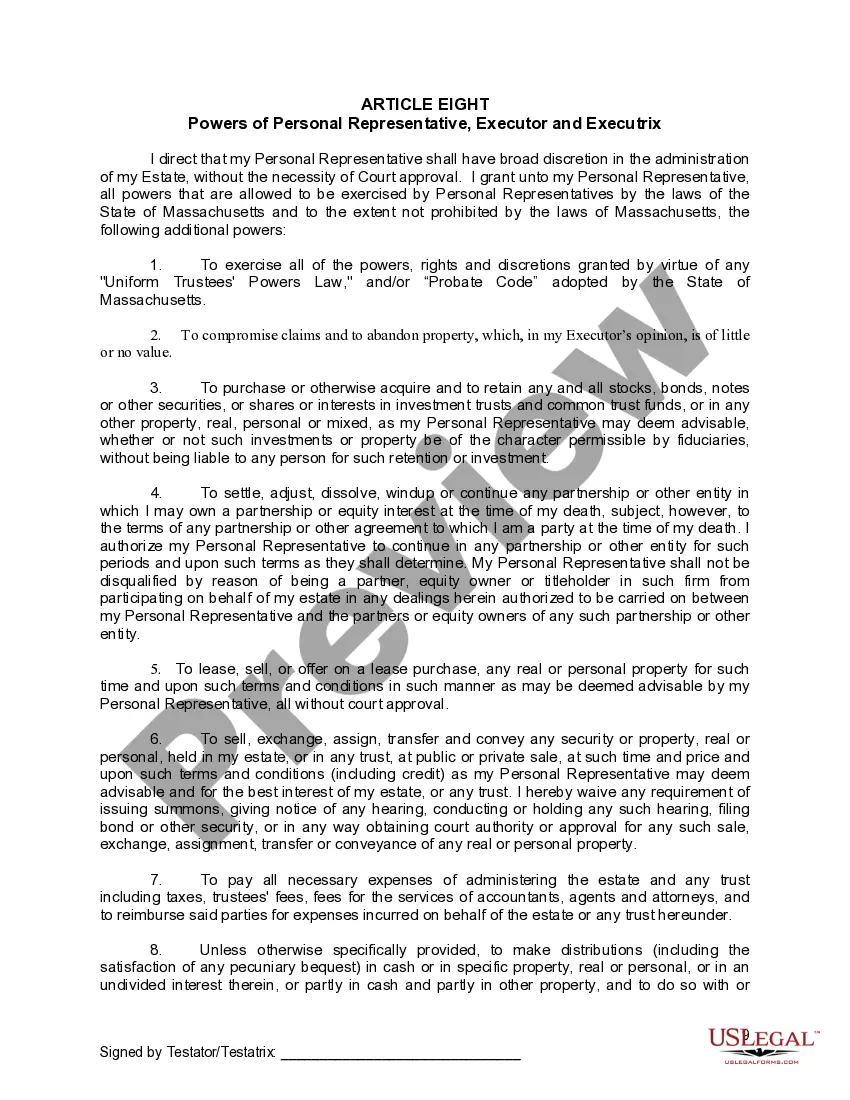
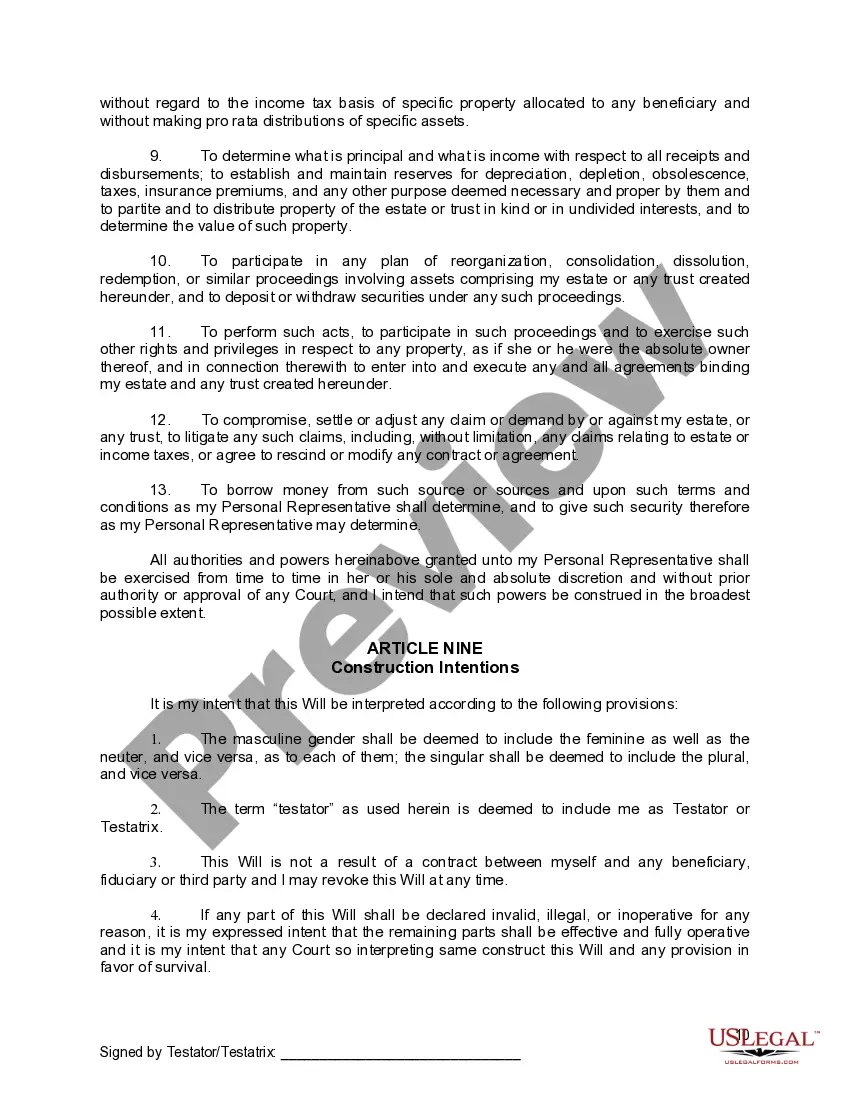
This form is a Last Will and Testament specifically designed for divorced individuals who are not remarried and have no children. It allows you to dictate how your estate will be handled upon your death, including appointing a personal representative and specifying beneficiaries for your property. This will is tailored to meet the unique situations of individuals without descendants, contrasting with typical wills that may include guardianship provisions for children or considerations for a current spouse.
Key parts of this document
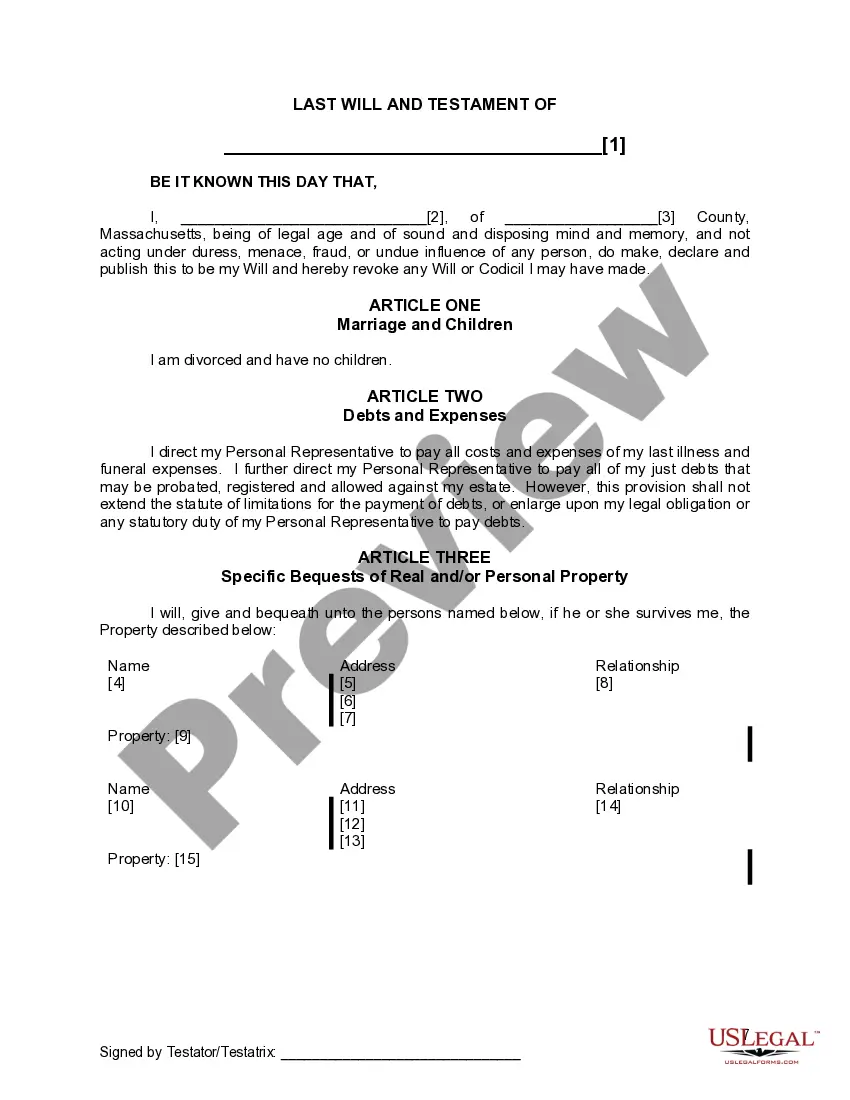
- Personal Representative: Appoints an executor to manage your estate.
- Specific Bequests: Allows you to assign specific property to designated individuals.
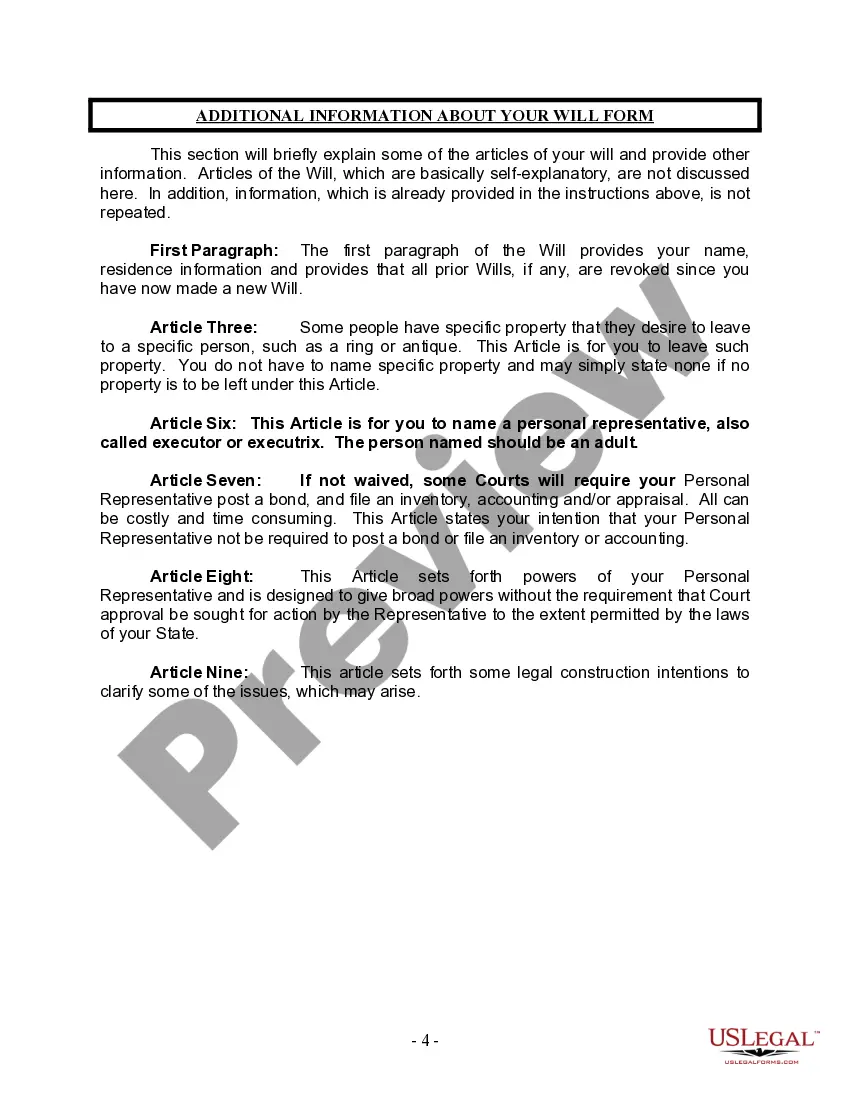
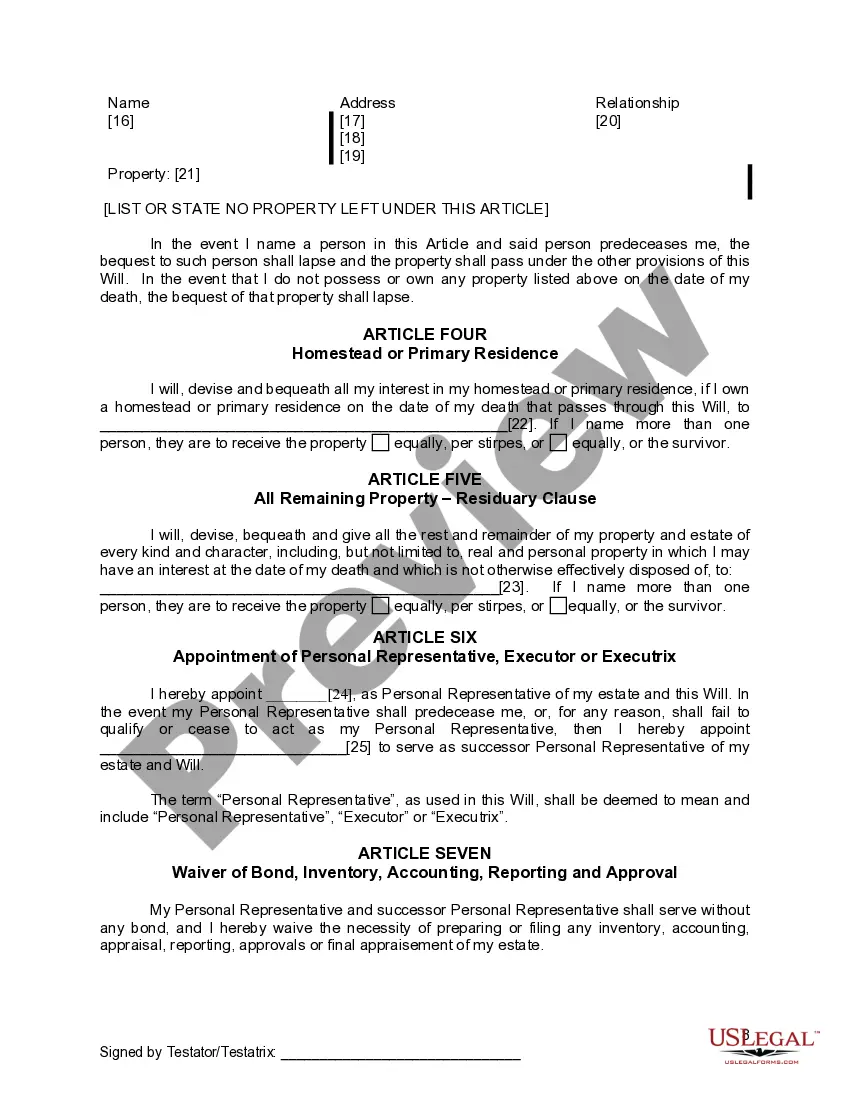
- Homestead Provision: Designates who will inherit your primary residence, if applicable.
- Residue Clause: Distributes any remaining property not specifically addressed in the will.
- Notarization and Witnessing: Specifies requirements for signing the will and may include a self-proving affidavit.


Common use cases
Use this Last Will and Testament if you are divorced, not remarried, and have no children. It's an important legal document for ensuring your property is distributed according to your wishes in the event of your passing. This form is suitable for individuals who wish to be clear about their intentions regarding their assets and who will manage their estate after death.
Intended users of this form
This form is intended for:
- Divorced individuals who are not remarried.
- Persons without children looking to define how their estate should be distributed.
- Individuals seeking to simplify the transfer of their assets and minimize potential disputes among heirs.
How to complete this form
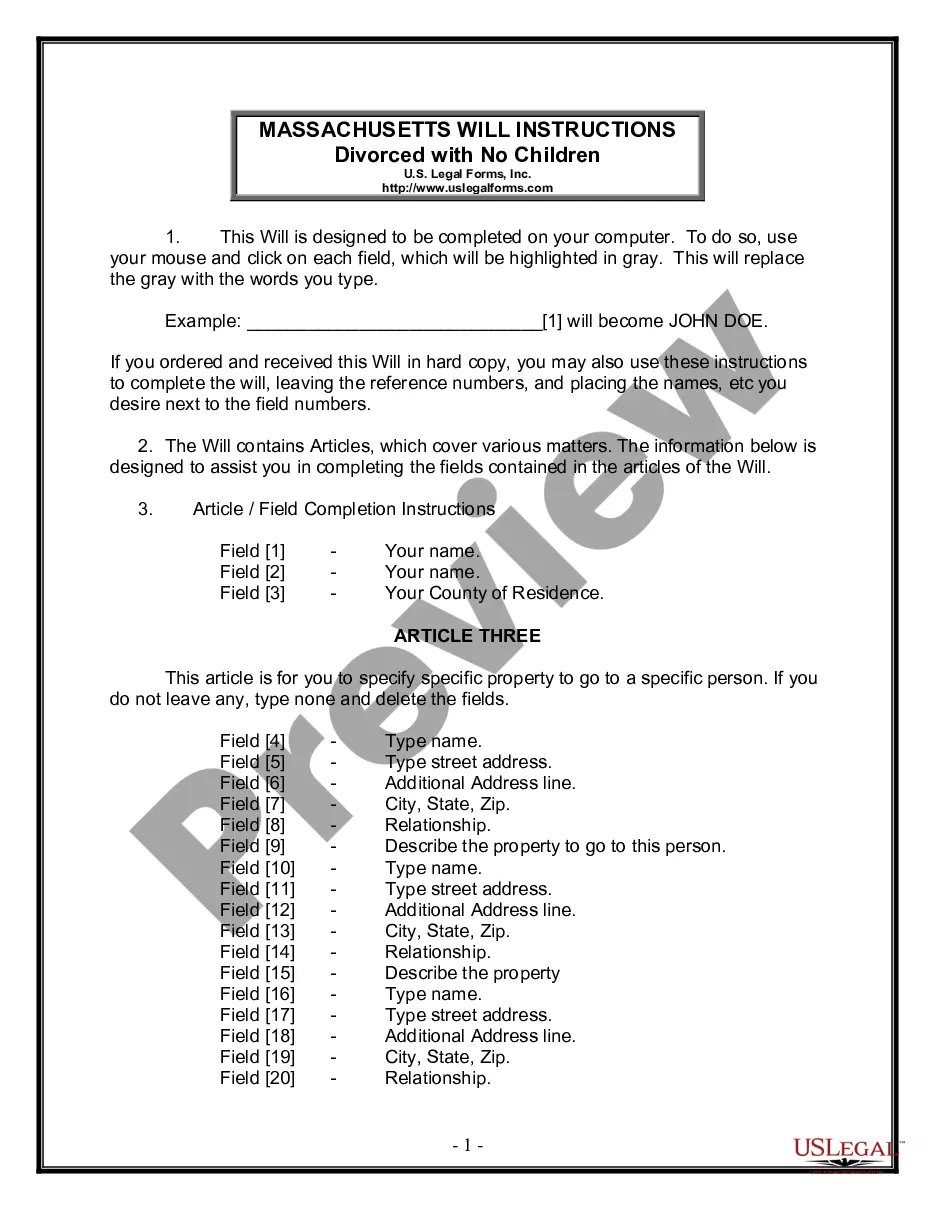
- Enter your name and county of residence in the designated fields.
- Identify specific individuals who will receive particular assets in Article Three.
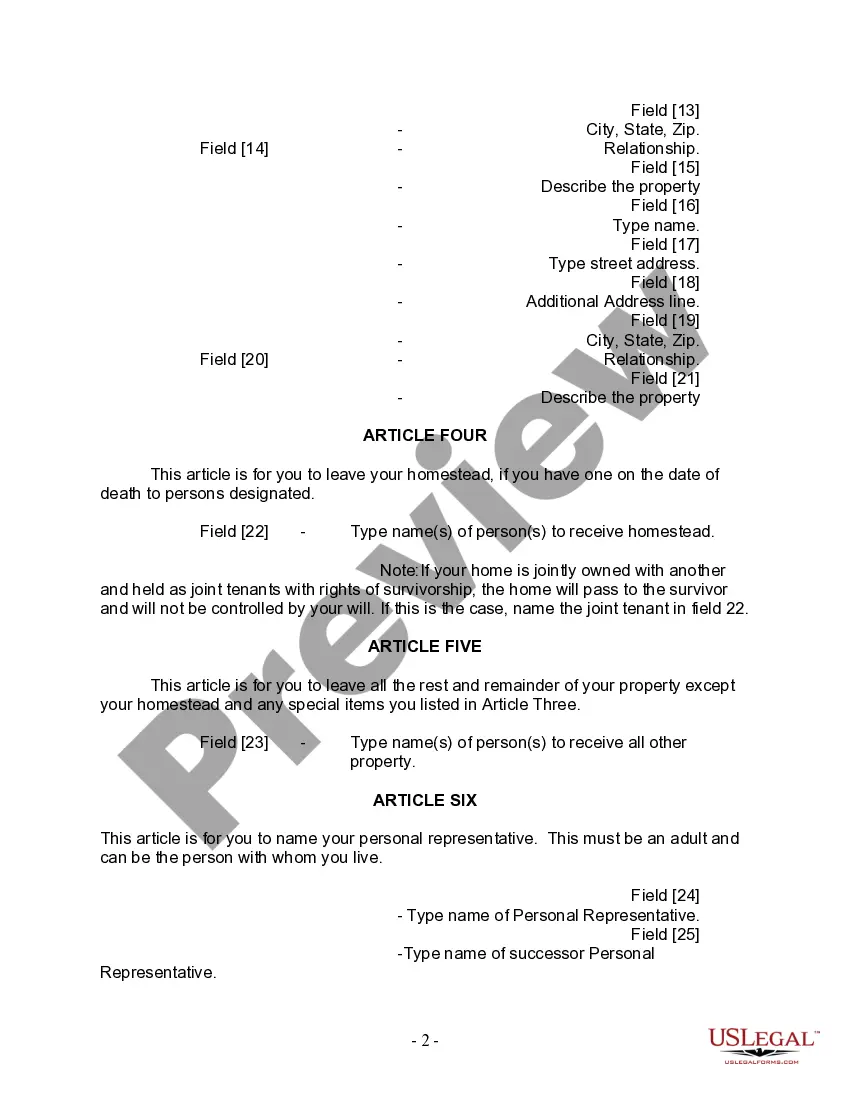
- Designate who will receive your homestead, if applicable, in Article Four.
- Choose a personal representative and a successor in Article Six.
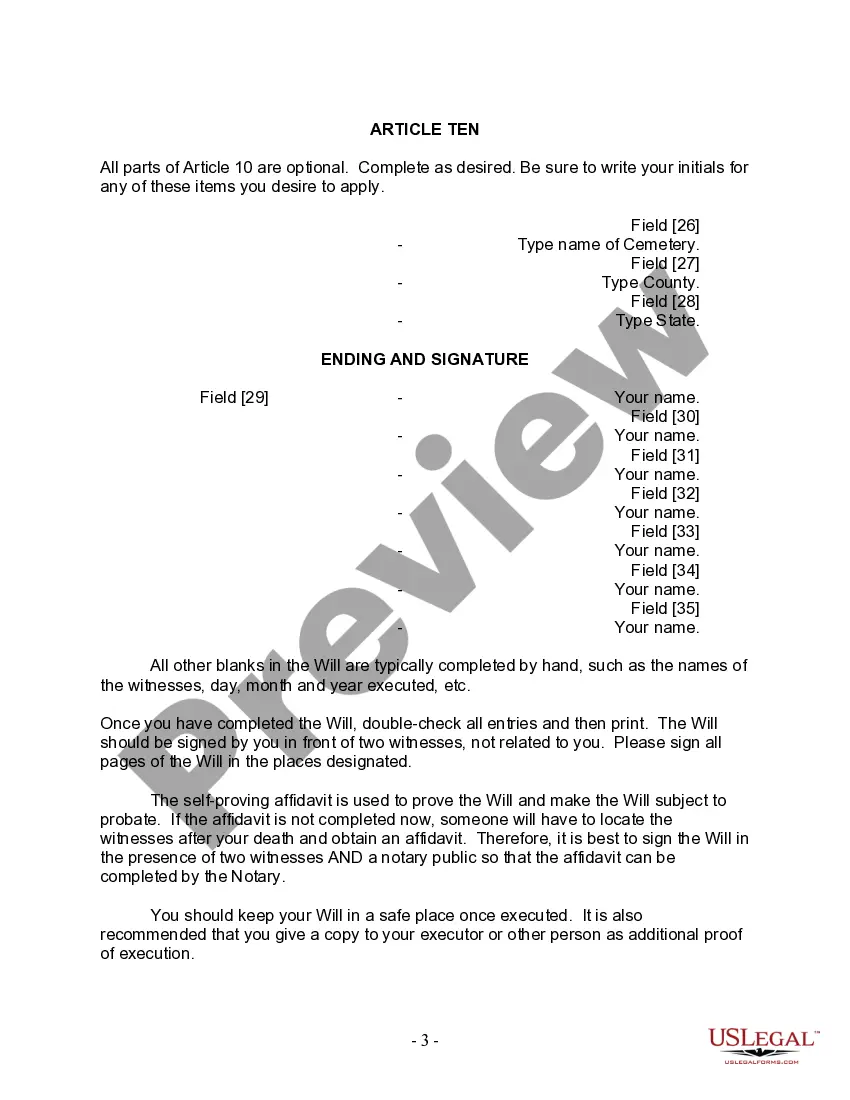
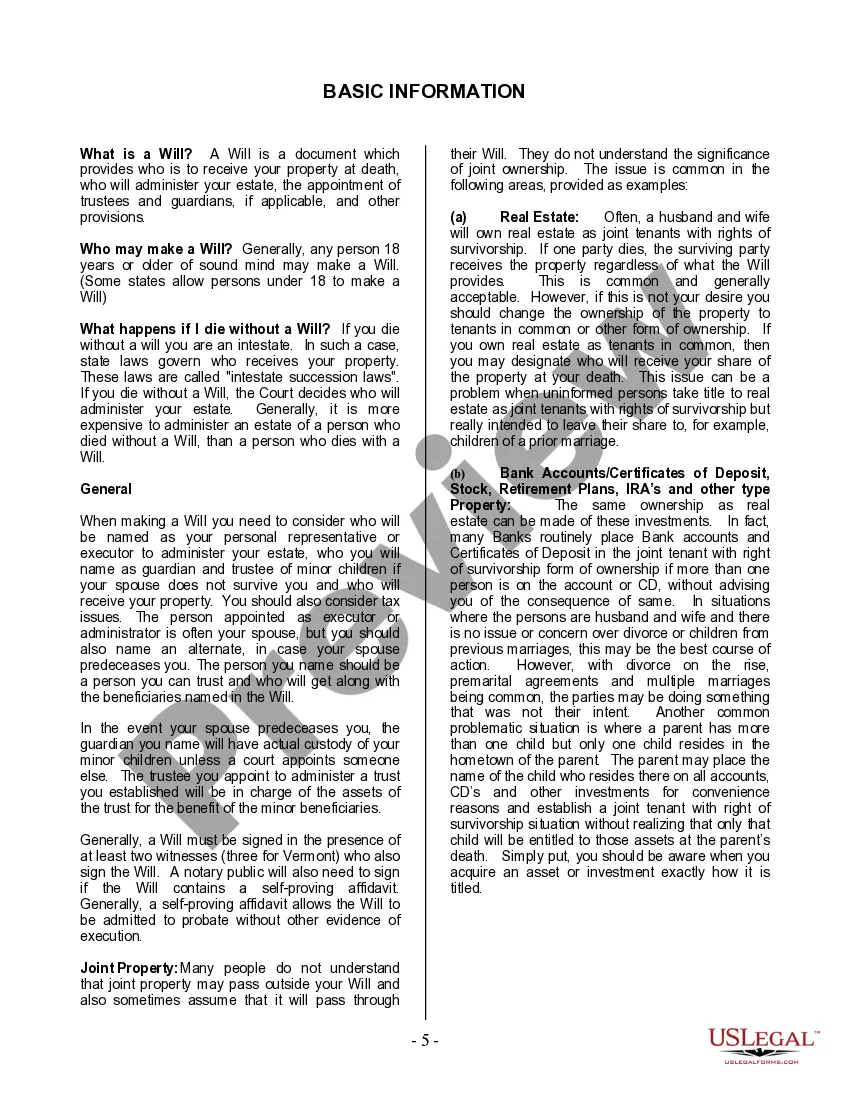
- Ensure you have at least two witnesses present when you sign the will, and consider having a notary public sign the self-proving affidavit if desired.
Is notarization required?
Notarization is required for this form to take effect. Our online notarization service, powered by Notarize, lets you verify and sign documents remotely through an encrypted video session, available 24/7.
Get your form ready online
Our built-in tools help you complete, sign, share, and store your documents in one place.
Make edits, fill in missing information, and update formatting in US Legal Forms—just like you would in MS Word.
Download a copy, print it, send it by email, or mail it via USPS—whatever works best for your next step.
Sign and collect signatures with our SignNow integration. Send to multiple recipients, set reminders, and more. Go Premium to unlock E-Sign.
If this form requires notarization, complete it online through a secure video call—no need to meet a notary in person or wait for an appointment.
We protect your documents and personal data by following strict security and privacy standards.

Make edits, fill in missing information, and update formatting in US Legal Forms—just like you would in MS Word.

Download a copy, print it, send it by email, or mail it via USPS—whatever works best for your next step.

Sign and collect signatures with our SignNow integration. Send to multiple recipients, set reminders, and more. Go Premium to unlock E-Sign.

If this form requires notarization, complete it online through a secure video call—no need to meet a notary in person or wait for an appointment.

We protect your documents and personal data by following strict security and privacy standards.
Avoid these common issues
- Not signing the will in front of two witnesses, which can invalidate the document.
- Failing to include a self-proving affidavit, which can complicate the probate process.
- Omitting details about specific property or beneficiaries, leading to potential disputes.
- Not updating the will after significant life changes, such as a divorce.
Benefits of using this form online
- Convenience of completing the form at your own pace from home.
- Ability to edit the document before finalizing to ensure accuracy.
- Access to templates created by licensed attorneys for legal reliability.
- Fast and easy retrieval and storage of your legal documents.
Key takeaways
- This Last Will and Testament is specifically designed for divorced individuals without children.
- Proper execution with witnesses and notarization is essential for legal validity.
- Carefully designate all beneficiaries and your personal representative to avoid complications.
Looking for another form?
Form popularity
FAQ
No, in Massachusetts, it is not necessary to notarize your will to make it legal. Massachusetts does, however, allow you to make your will "self-proving." A self-proving will speeds up probate because the court can accept the will without contacting the witnesses who signed it.
In most states, if someone gets divorced after making a will, any gifts that the will makes to the former spouse are automatically revoked. For example, California law (Probate Code § 6122) states that:Later, they divorce.
The will takes precedence, but he should make a new one after marriage.
Age: The testator must be at least 18 years old. Capacity: The testator must be of sound mind. Signature: The will must be signed by the testator or by someone else in the testator's name in his presence, by his direction.
Technically, you can create your own will in Massachusetts. The only legal requirement is that you sign it in front of at least 2 witnesses and that those witnesses also sign the will.
In most states, if you have a will while you are married and then end the marriage, the will is automatically revoked. It's possible to leave an inheritance to your ex, but you have to write a new will that specifically states you are doing so. Disinheriting your spouse.
Dying with a will made during marriage and before divorce It exists and is still valid. However, the effect of the divorce does change the way the former spouse is treated in law. These changes affect any gifts to the surviving spouse or the appointment of them as executors under the existing will.
The basic requirements for a Massachusetts last will and testament include the following:Witnesses: A Massachusetts will must be signed by at least two witnesses, who should not also be beneficiaries in the will. Writing: A Massachusetts will must be in writing. Beneficiaries: A testator can leave property to anyone.
Although a will of either spouse is not revoked upon divorce, there is an important effect of divorce on the instructions contained in the will. Once the decree absolute has been issued, the former spouse of the testator (person making the will) will be treated as if they have died for purposes of the will.