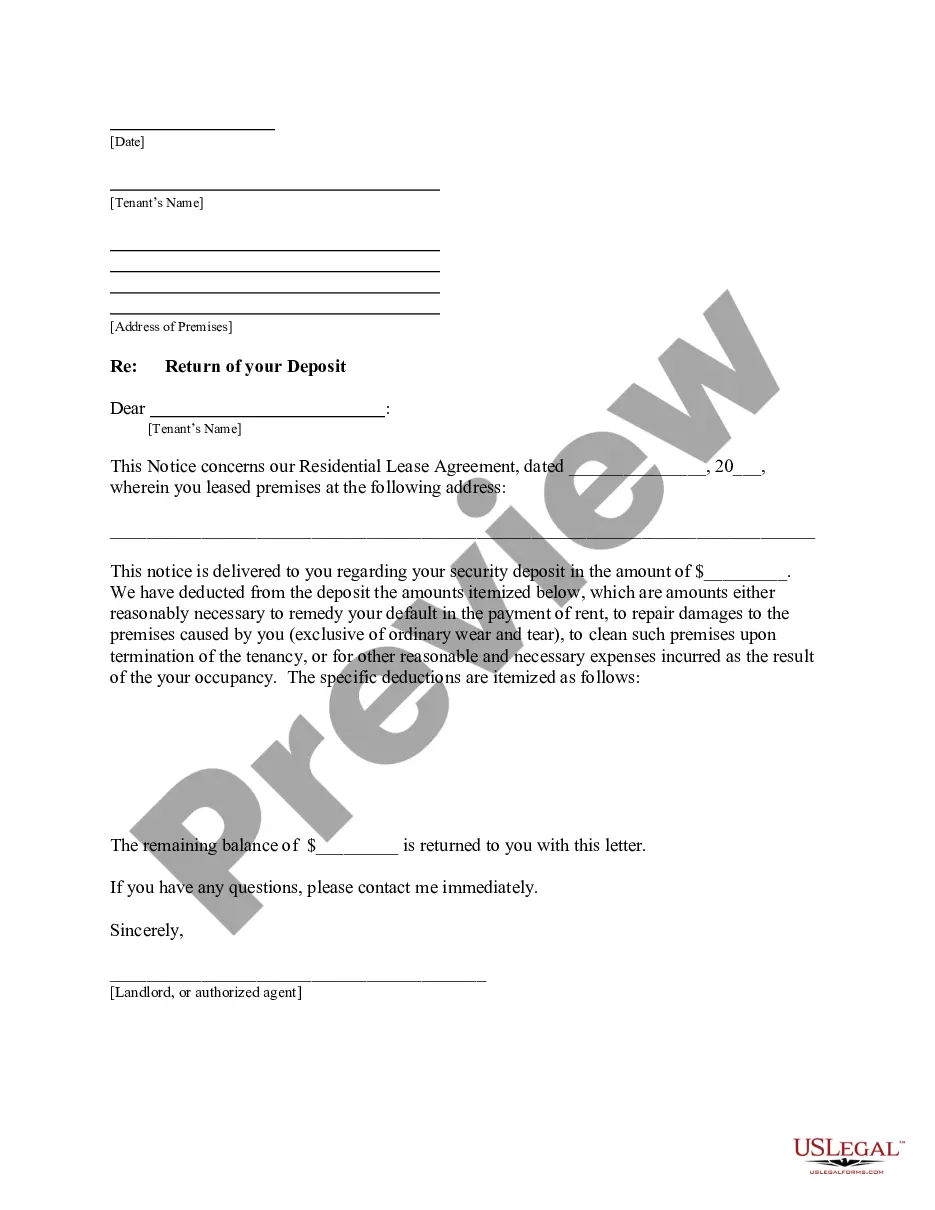
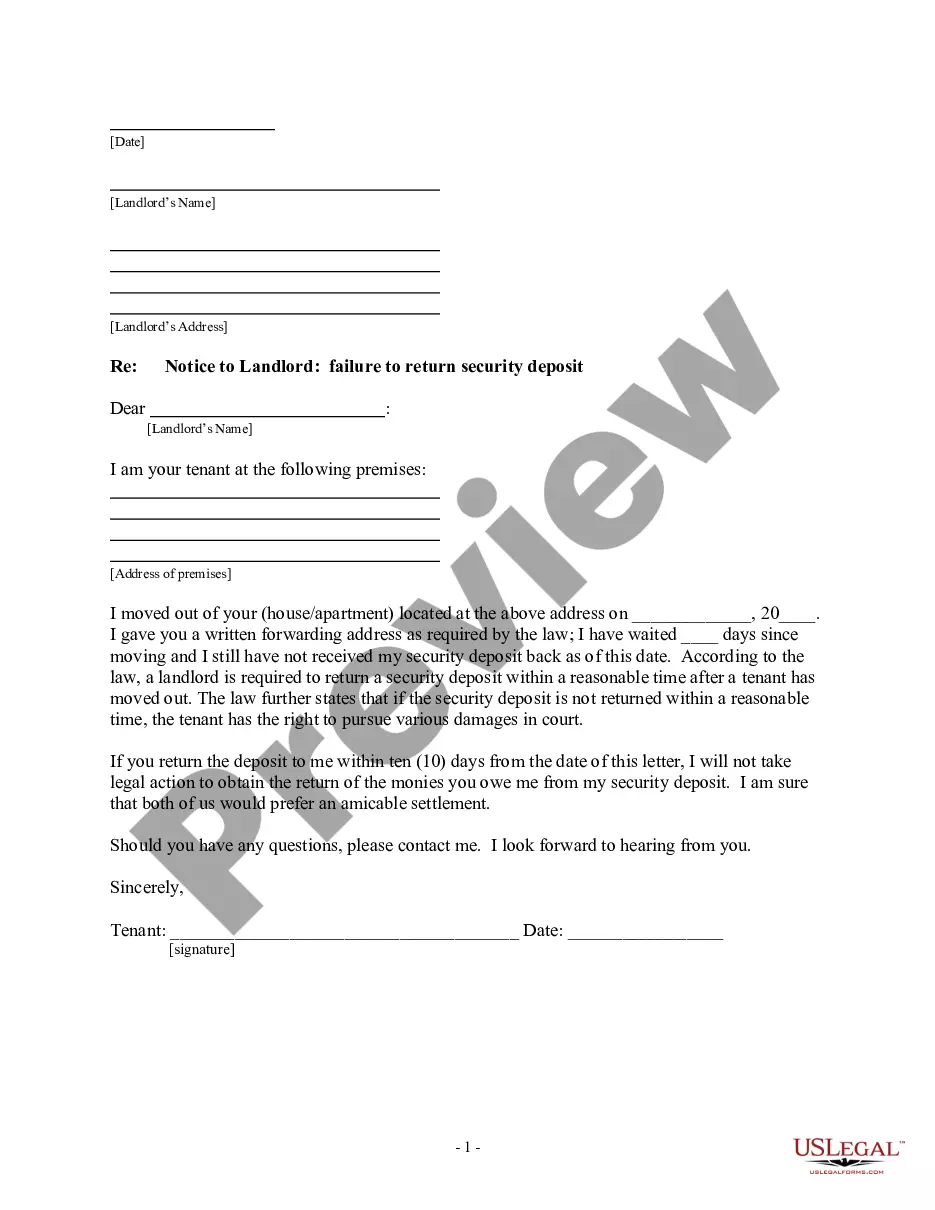
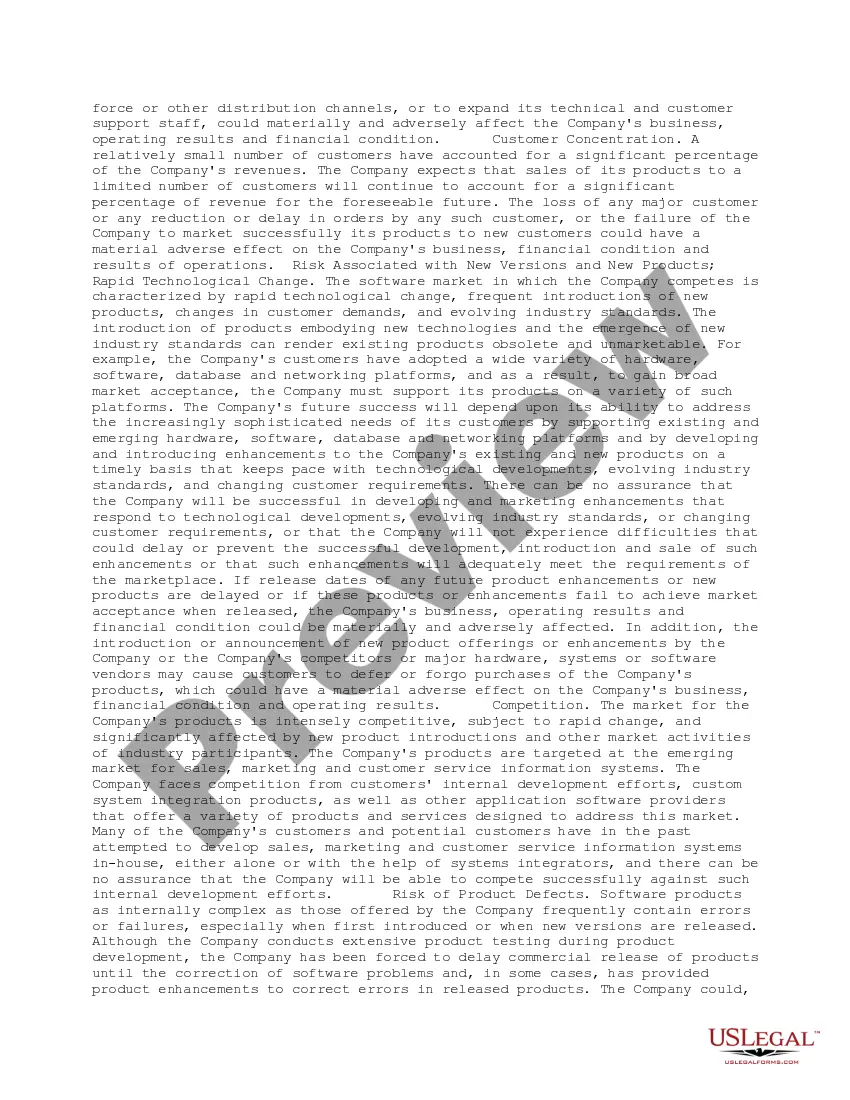
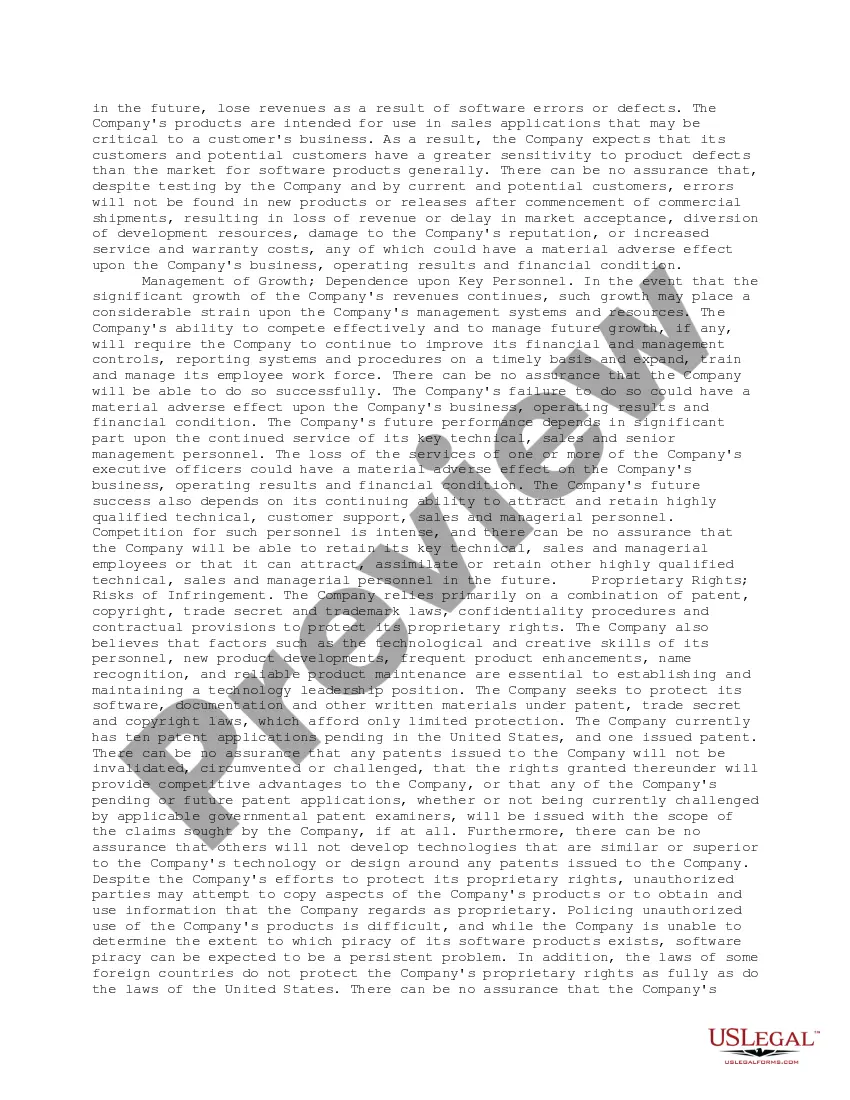
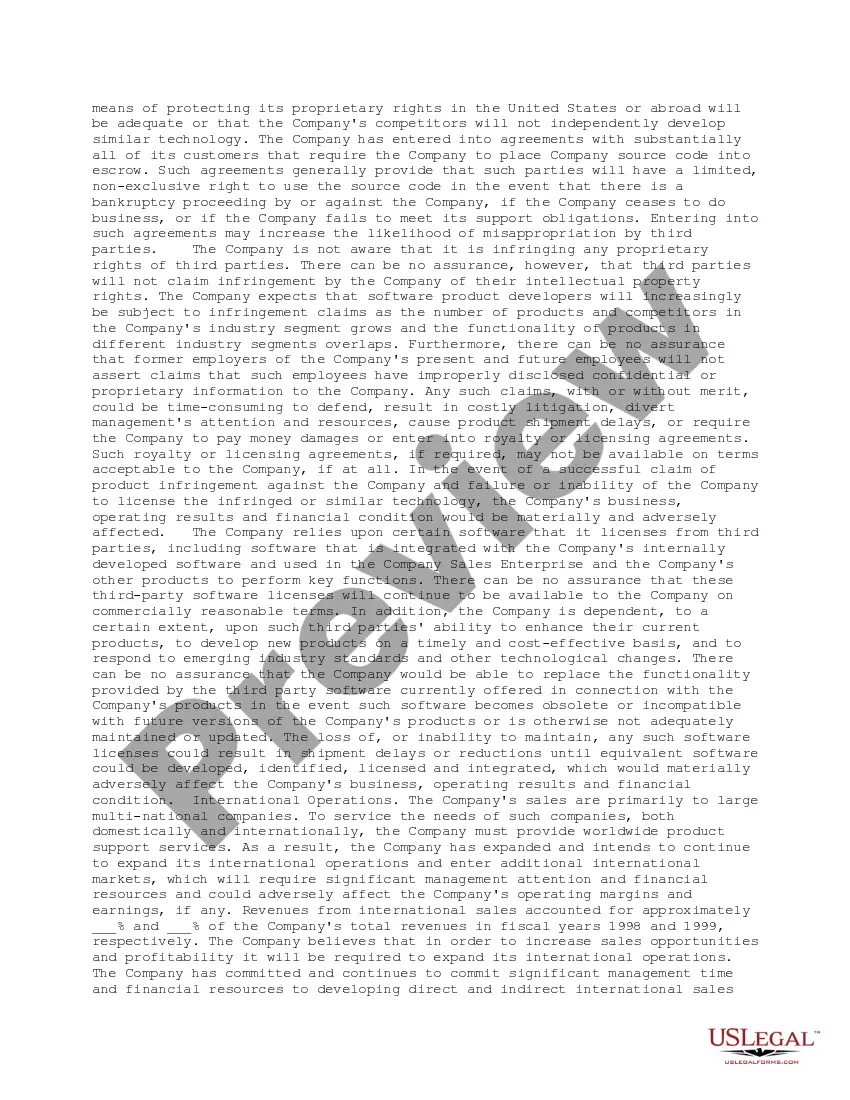
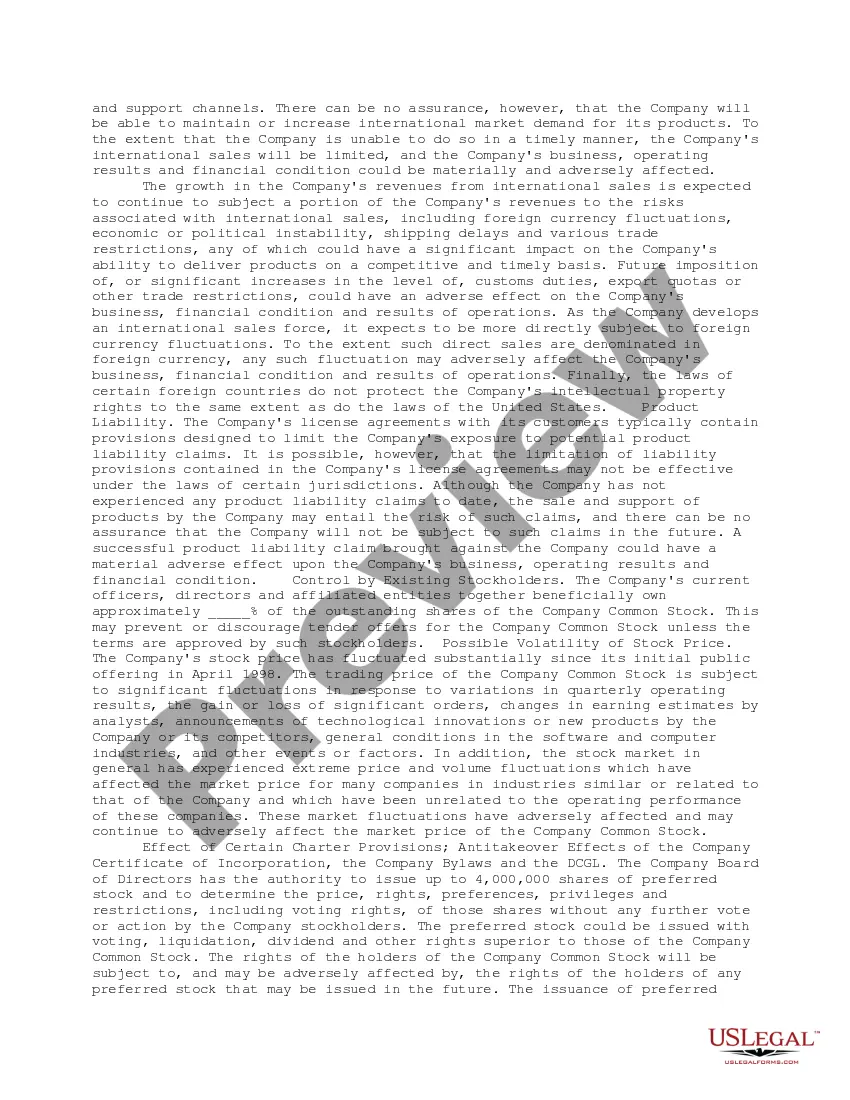
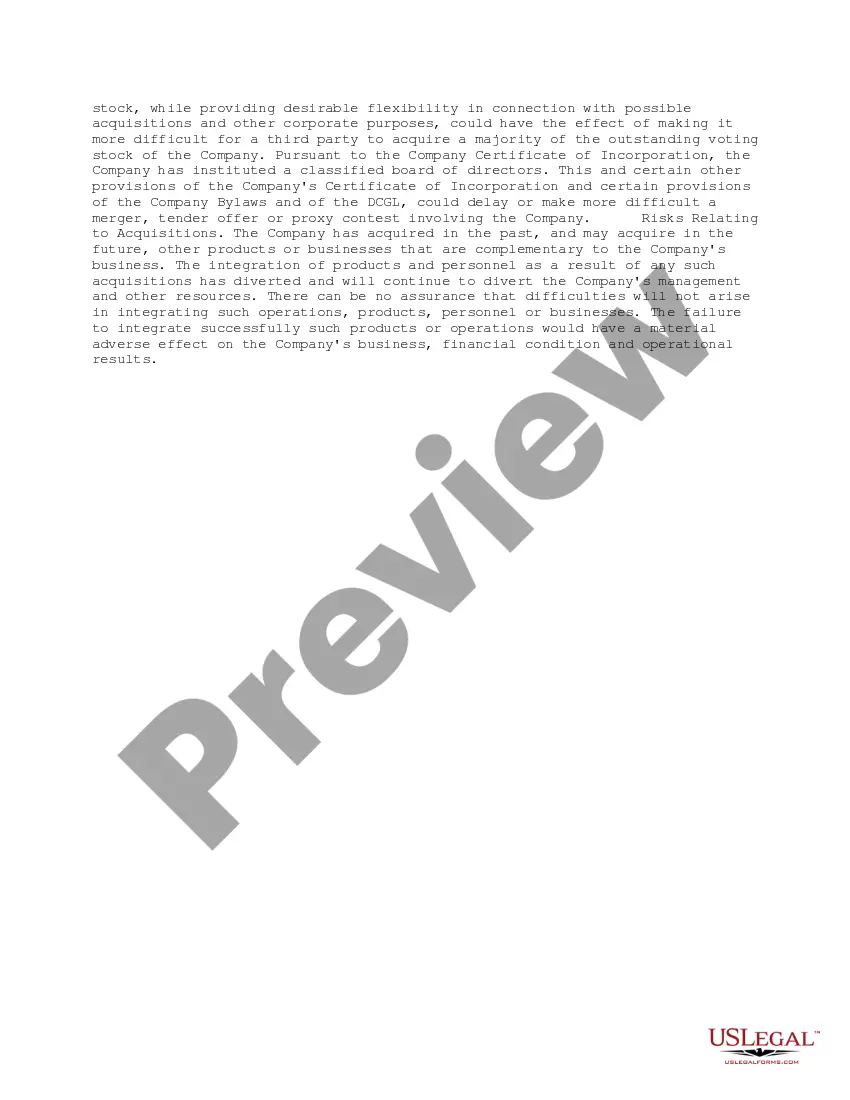
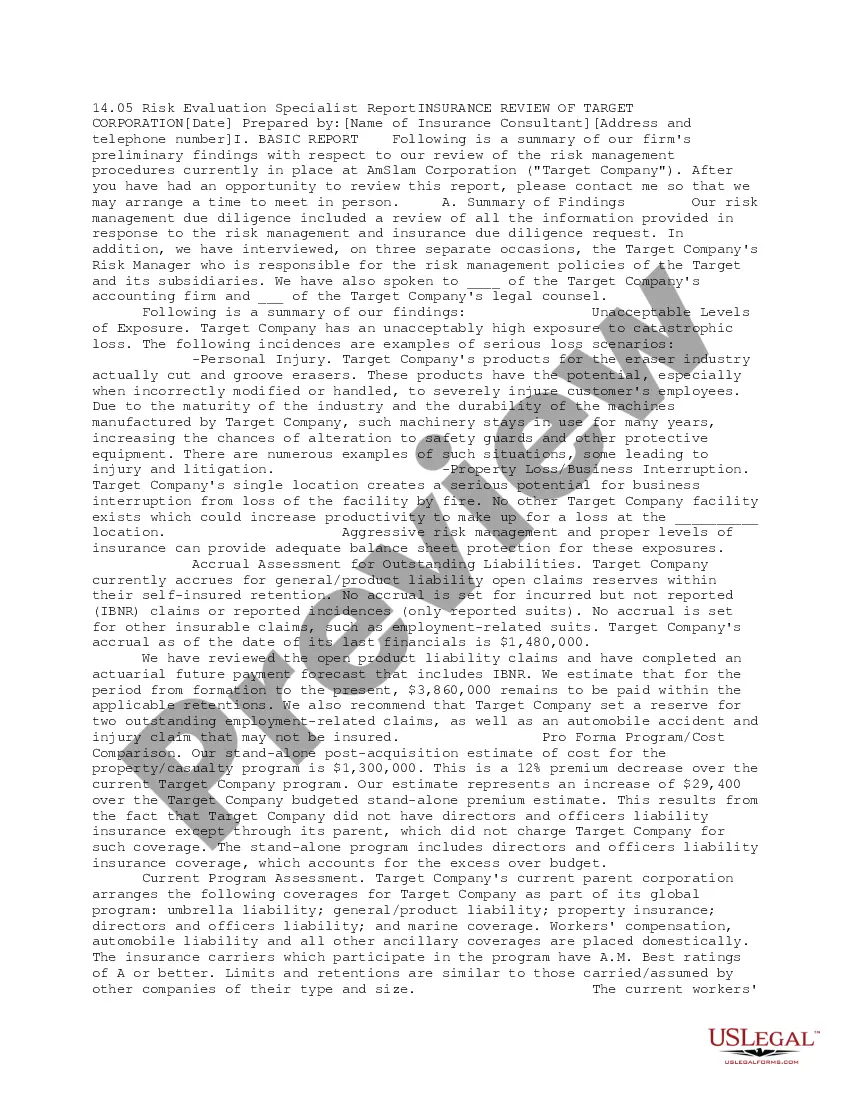
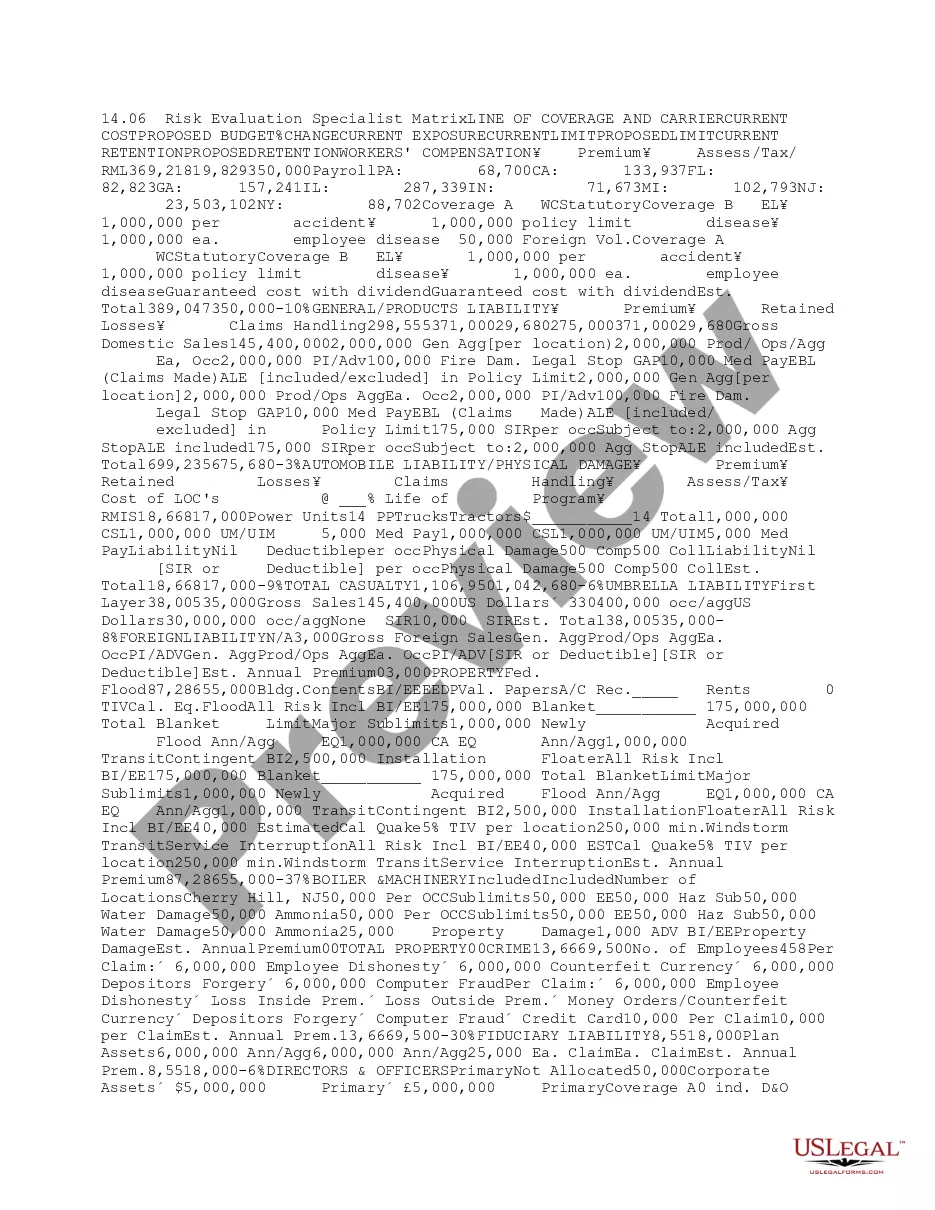
This Prospectus is a document with forward-looking statements that are meant as a means of informing prospective investors of the risks associated with investing in a software company. It addresses the limited operating history of the company, the uncertainty of future operating results, and other risk factors that should be considered carefully.
Suffolk New York Selected Risk Factors - Software Company
Category:
State:
Multi-State
County:
Suffolk
Control #:
US-TC1009
Format:
Word;
PDF;
Rich Text
Instant download
Description
Free preview
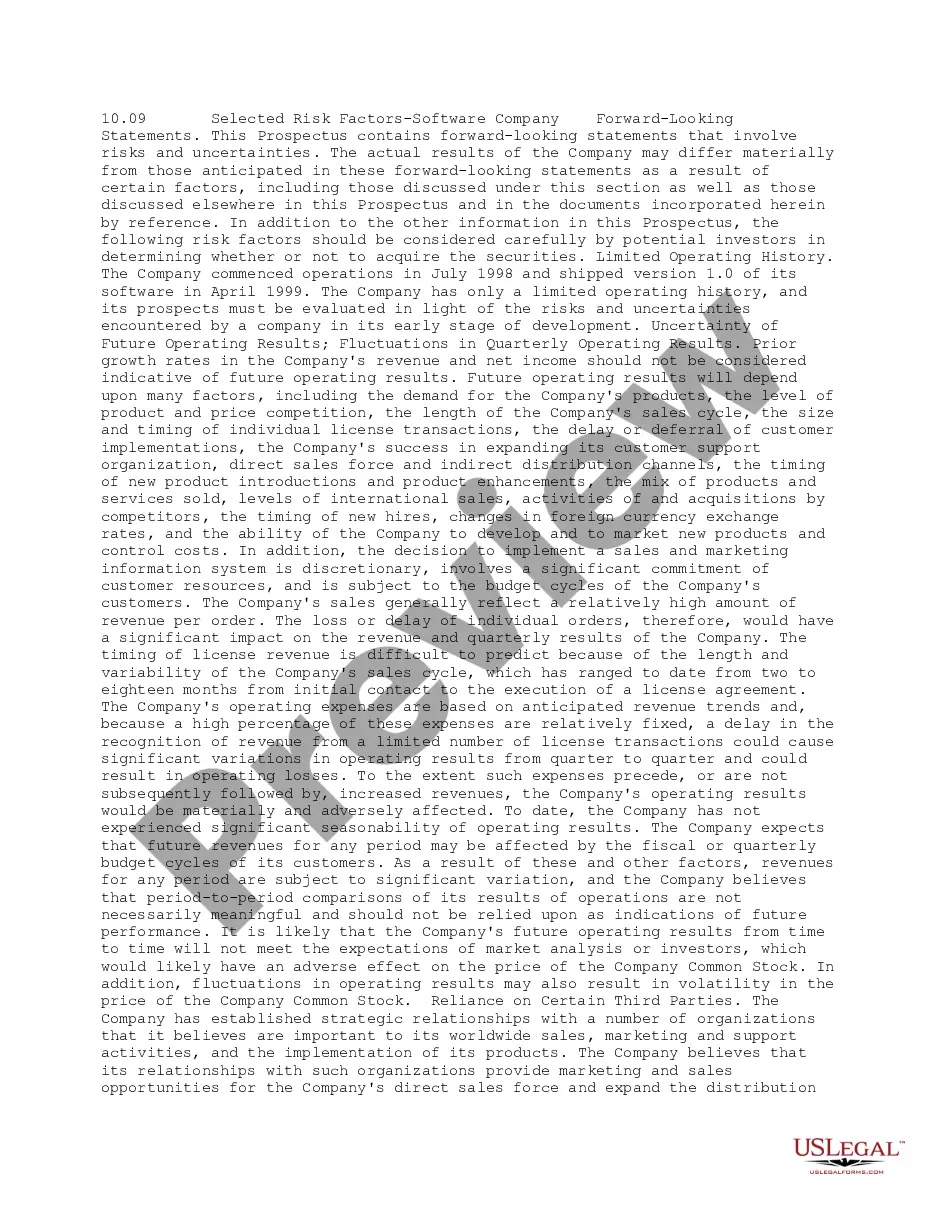
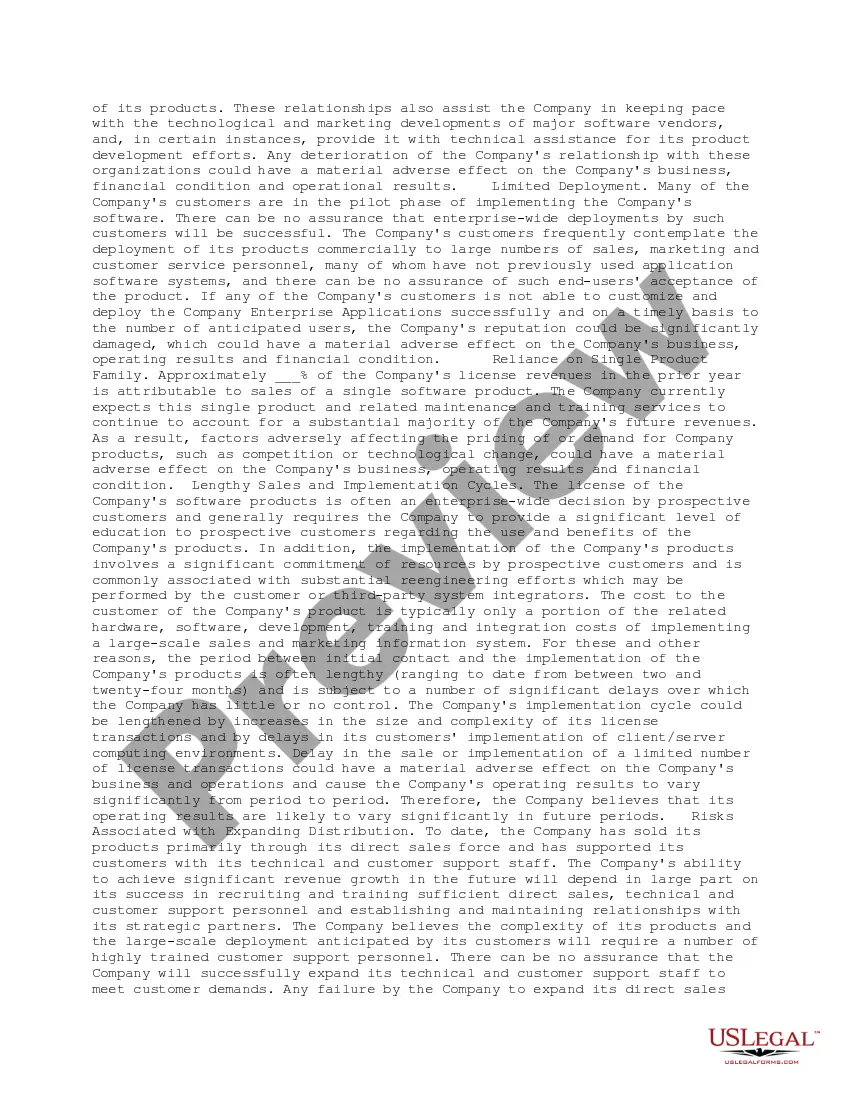
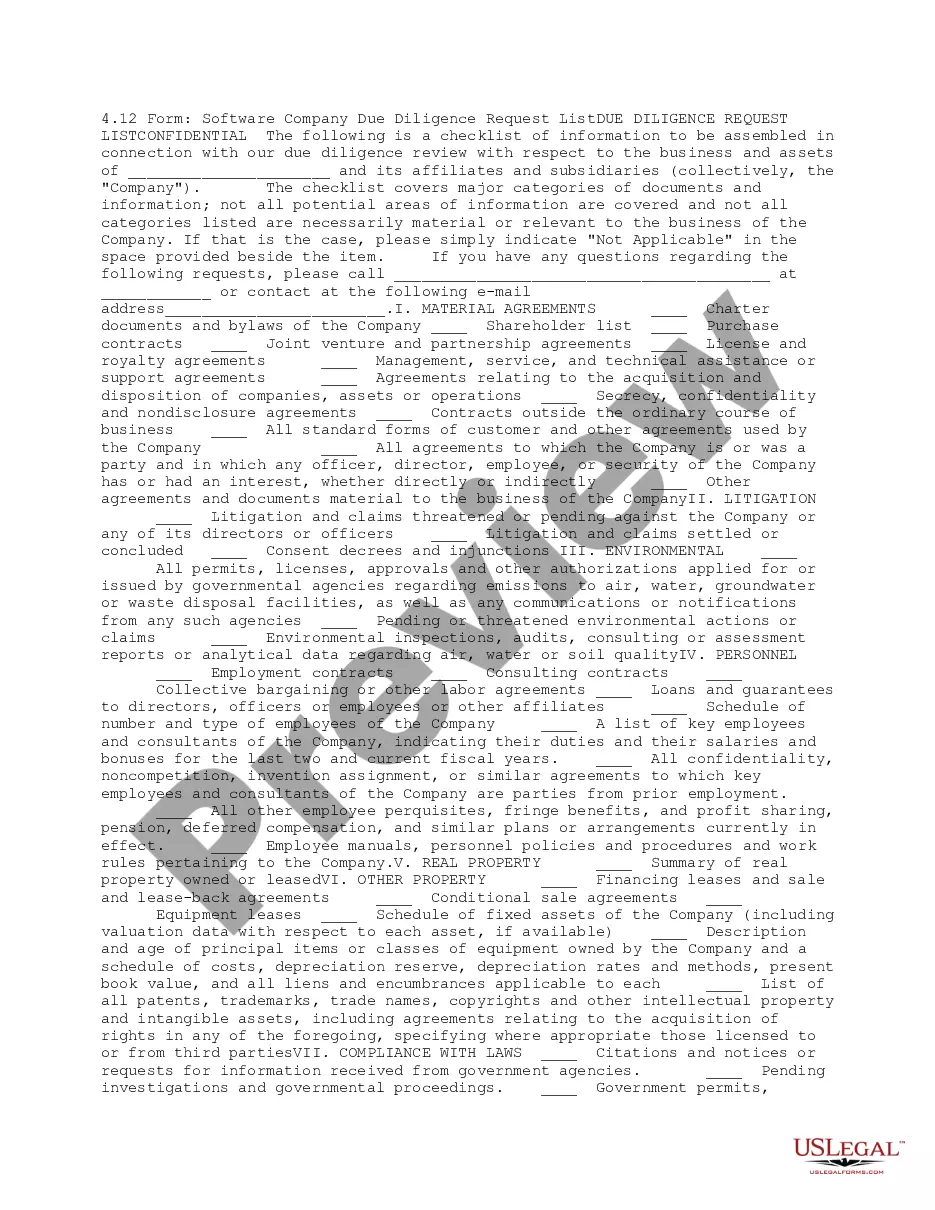
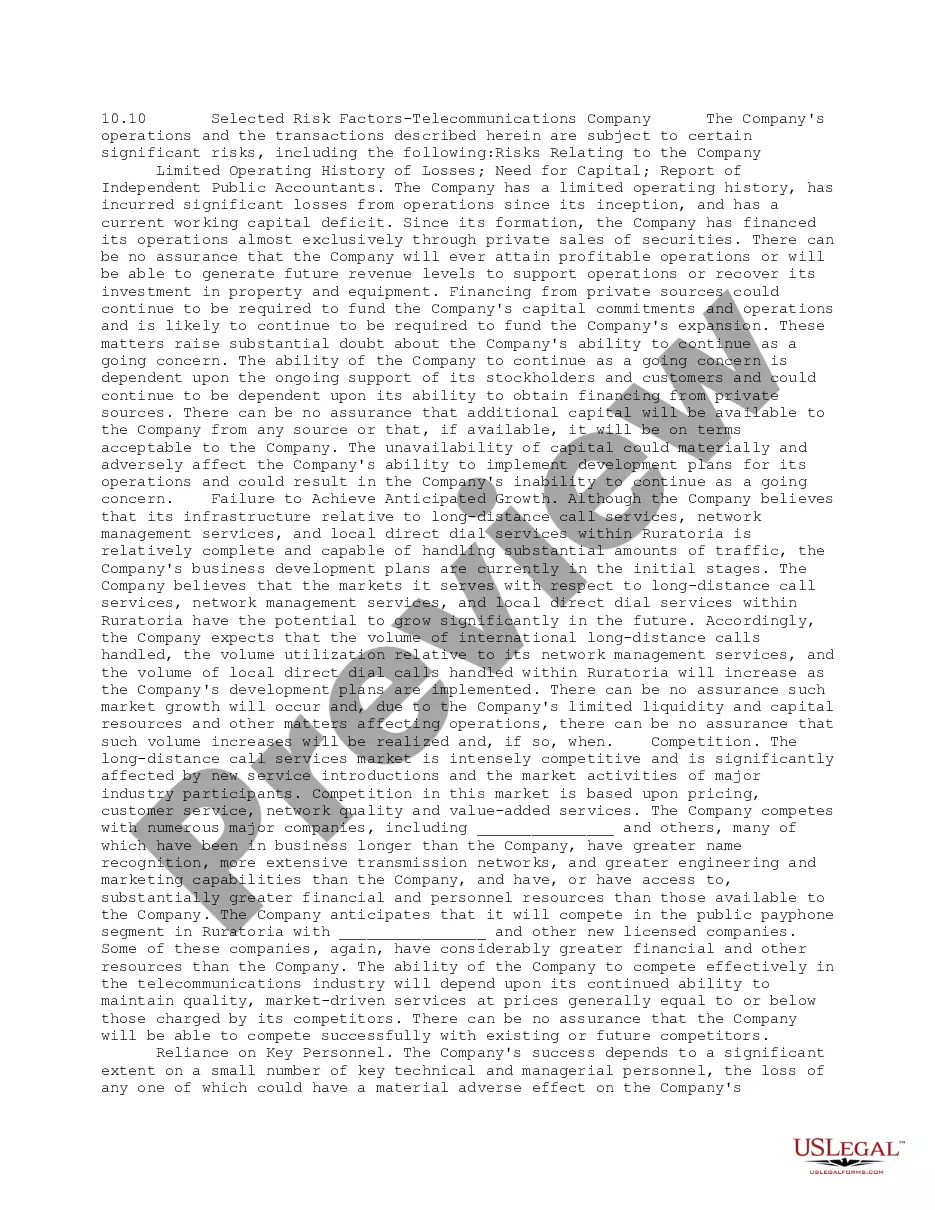


How to fill out Selected Risk Factors - Software Company?
Navigating legal documents is essential in the modern era. However, you don't always have to pursue professional help to craft certain forms from scratch, such as Suffolk Selected Risk Factors - Software Company, utilizing a service like US Legal Forms.
US Legal Forms offers more than 85,000 documents to choose from in various categories, ranging from estate planning to property contracts to dissolution of marriage papers. All documents are categorized by their applicable state, making the search process less daunting.
You can also access comprehensive resources and guides on the site to simplify any tasks related to document handling.
If you are already a subscriber of US Legal Forms, you can search for the appropriate Suffolk Selected Risk Factors - Software Company, Log In to your account, and download it. Naturally, our platform cannot entirely replace legal counsel. For particularly complex cases, we recommend enlisting the assistance of a lawyer to review your document prior to signing and submitting it.
With over 25 years in the industry, US Legal Forms has become a trusted resource for legal documents for millions of clients. Join them today and effortlessly obtain your legally compliant paperwork!
- Review the form’s preview and description (if available) to gain a general understanding of what you’ll receive after acquiring the document.
- Verify that the template you select is suited to your region since local regulations can impact the legitimacy of certain documents.
- Investigate the corresponding forms or restart your search to find the right document.
- Click Buy now and set up your account. If you already possess an account, choose to Log In.
- Select the preferred payment option and complete the purchase of Suffolk Selected Risk Factors - Software Company.
- Opt to save the form template in any provided format.
- Go to the My documents section to download the document again.
Form popularity
FAQ
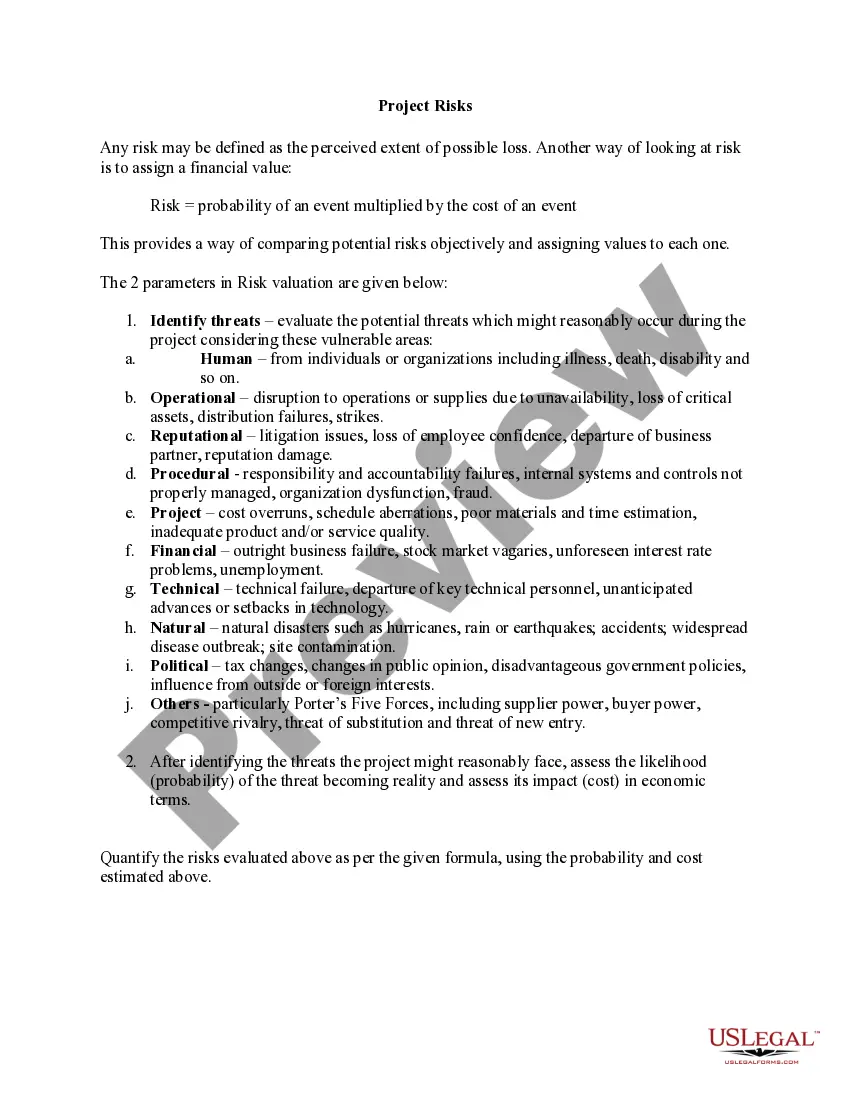
Step 1: Identify the hazards. In order to identify hazards you need to understand the difference between a 'hazard' and 'risk'.Step 2: Decide who might be harmed and how.Step 3: Evaluate the risks and decide on control measures.Step 4: Record your findings.Step 5: Review your assessment and update as and when necessary.
Yes, you should end up with a risk assessment document. This written document is a record of the risk assessment process. If you have 5 or more employees, it's a legal requirement to write down your risk assessment. Even if you don't have 5 or more employees, writing down your risk assessment is good practice.
Let's look at the 5 types of risk assessment and when you might want to use them. Qualitative Risk Assessment. The qualitative risk assessment is the most common form of risk assessment.Quantitative Risk Assessment.Generic Risk Assessment.Site-Specific Risk Assessment.Dynamic Risk Assessment.
The five steps to risk assessment Step 1: identify the hazards.Step 2: decide who may be harmed and how.Step 3: evaluate the risks and decide on control measures.Step 4: record your findings.Step 5: review the risk assessment.
The Health and Safety Executive's Five steps to risk assessment. Step 1: Identify the hazards. Step 2: Decide who might be harmed and how. Step 3: Evaluate the risks and decide on precautions. Step 4: Record your findings and implement them. Step 5: Review your risk assessment and update if. necessary.
The five steps to risk assessment Step 1: identify the hazards.Step 2: decide who may be harmed and how.Step 3: evaluate the risks and decide on control measures.Step 4: record your findings.Step 5: review the risk assessment.
Identify the hazards. Decide who might be harmed and how. Evaluate the risks and decide on control measures. Record your findings and implement them.
How do I write a risk assessment? Step 1: Identify the hazards. The easiest way to get started with identifying hazards in your workplace2026is to walk around and look for them!Step 2: Consider who might be harmed.Step 3: Evaluating the risks.Step 4: Control Measures.Step 5: Write the risk assessment.Step 6: Regular review.
A risk assessment is a thorough look at your workplace to identify those things, situations, processes, etc. that may cause harm, particularly to people. After identification is made, you analyze and evaluate how likely and severe the risk is.
Completed risk register with 20 project risks you need to manage IDRisk descriptionImpact if the risk occurs1Project purpose and need is not well-defined.High2Project design and deliverable definition is incomplete.High3Project schedule is not clearly defined or understoodMedium4No control over staff prioritiesMedium2 more rows