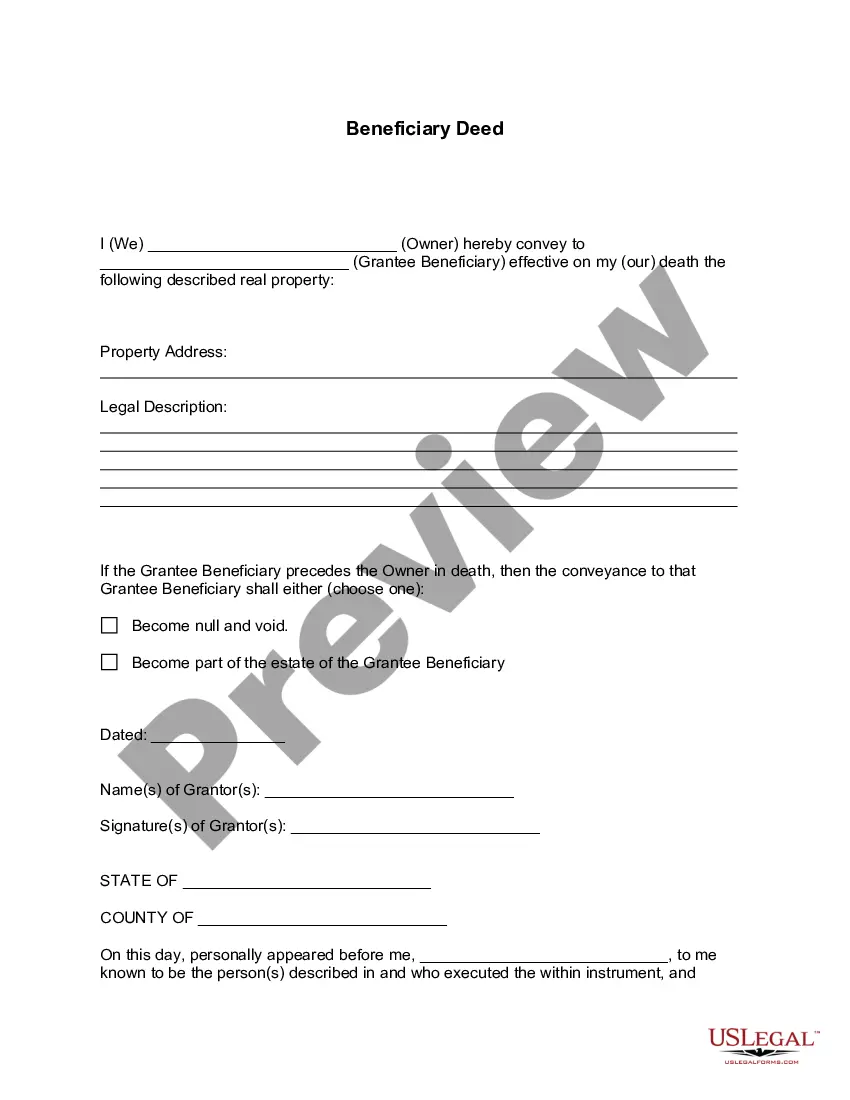
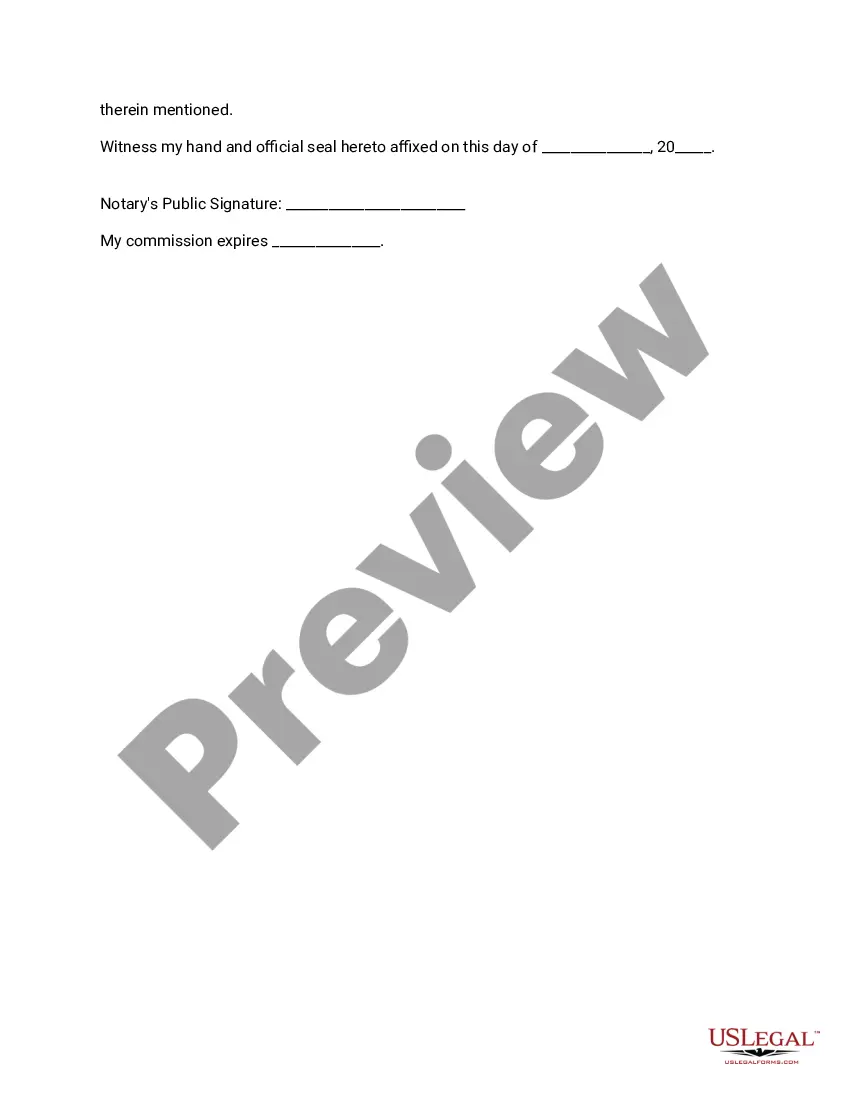
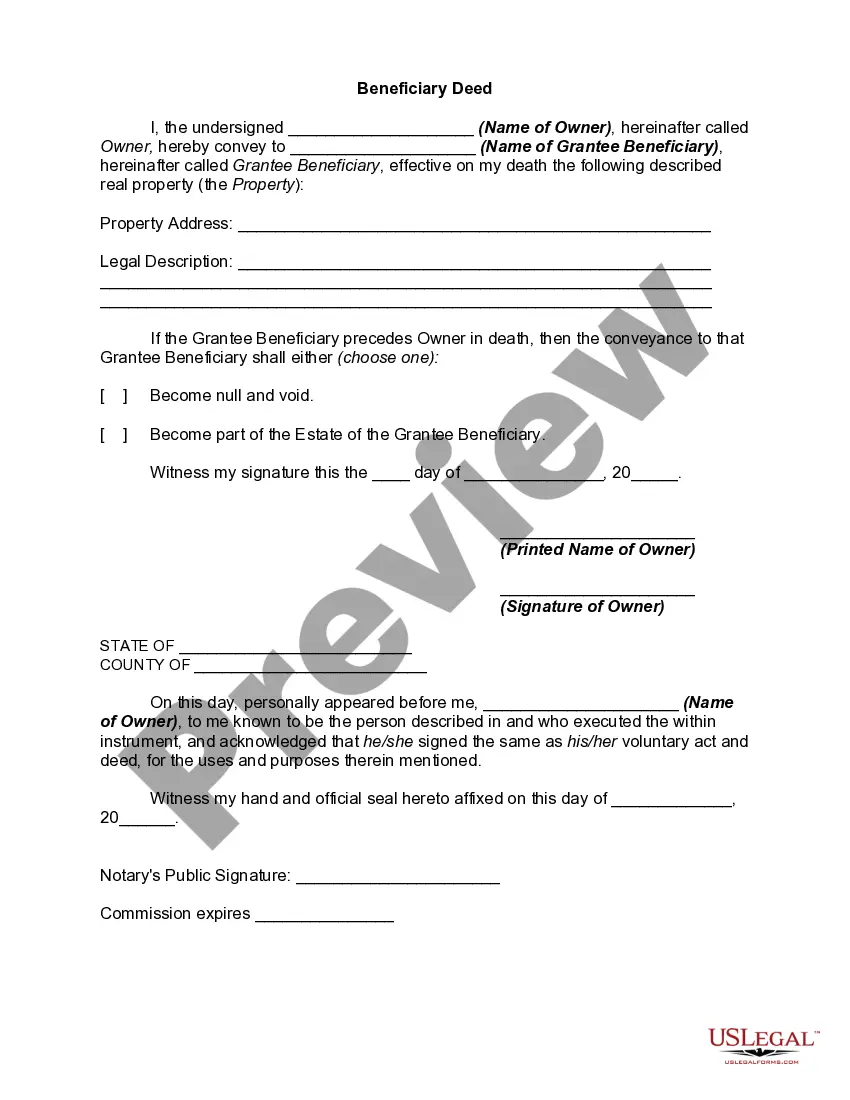
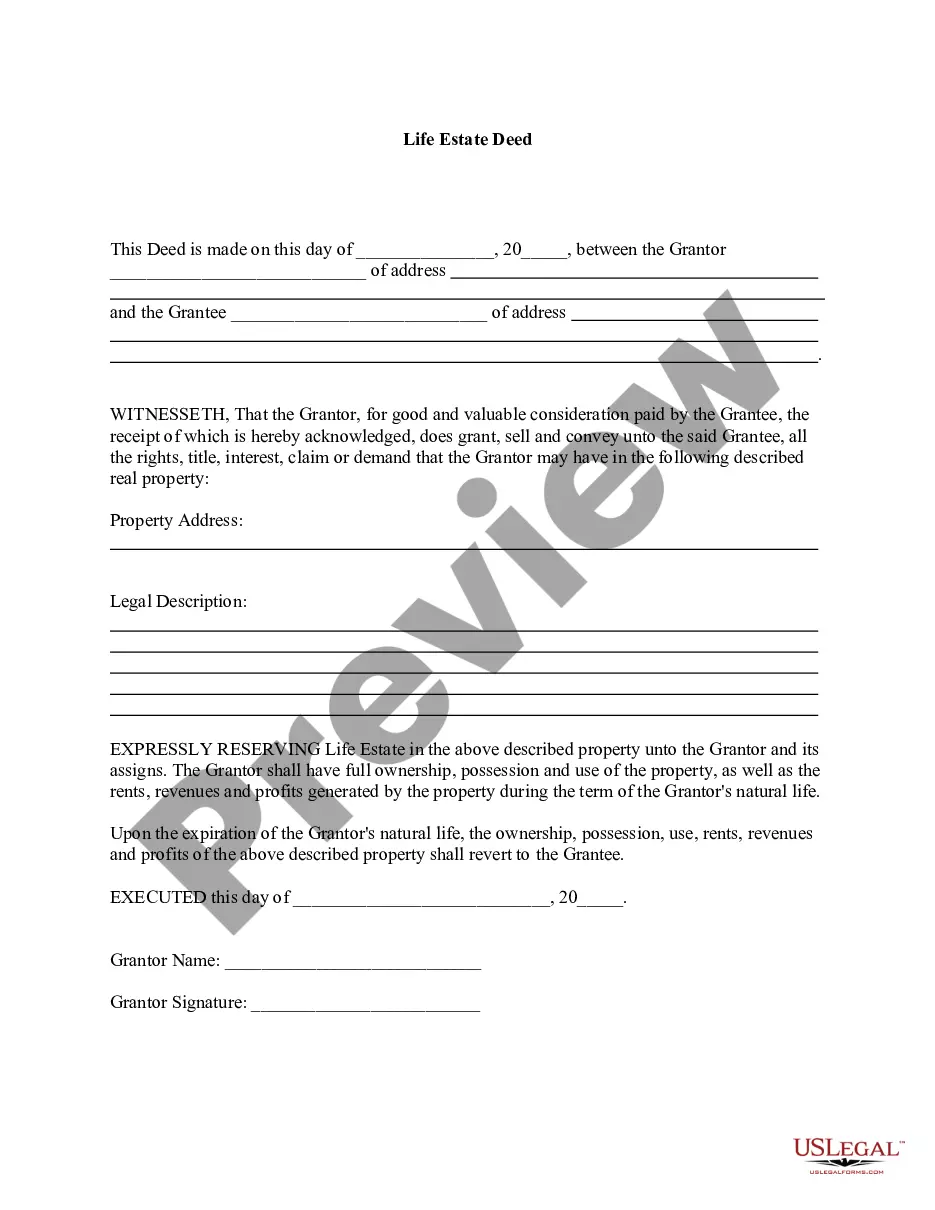
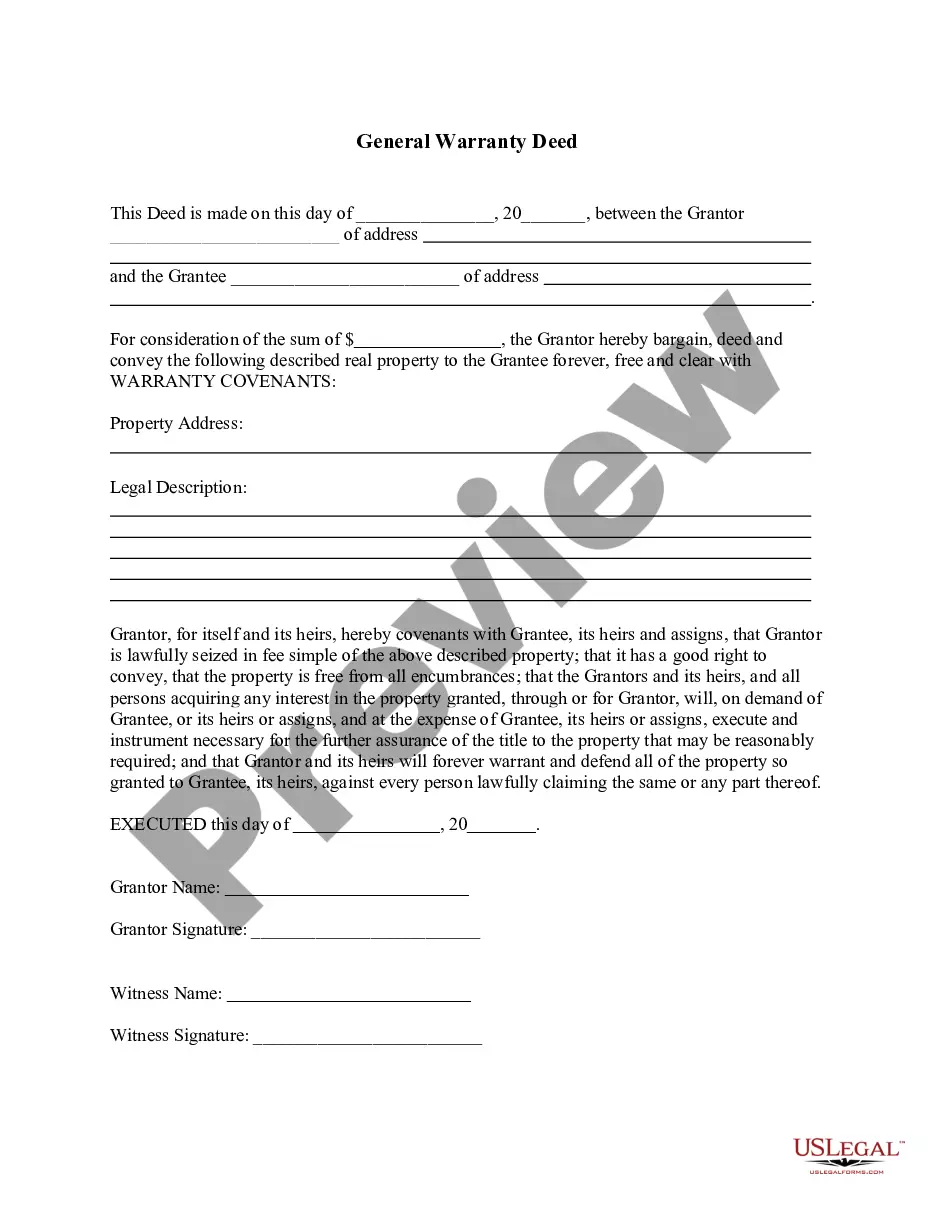
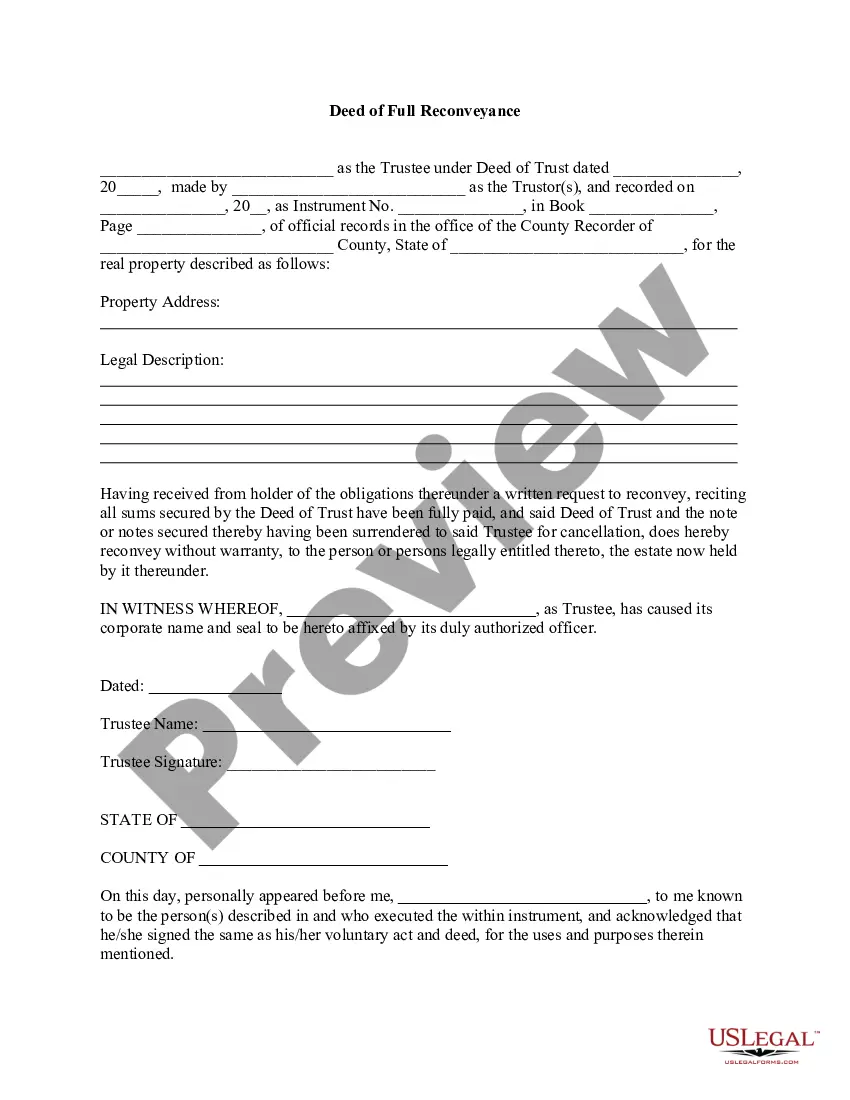
A beneficiary deed is a another type of real property deed used to transfer property. By signing and recording a beneficiary deed, an owner of an interest in real property may cause the owner's interest in the real property to be conveyed to people or entities upon the owner's death. The interest in real property conveyed by a beneficiary deed does not take effect until the death of the owner, at which time that interest transfers automatically by law to the designated grantee named in the beneficiary deed.
This form is a generic example that may be referred to when preparing such a form for your particular state. It is for illustrative purposes only. Local laws should be consulted to determine any specific requirements for such a form in a particular jurisdiction.
Long Beach California Basic Beneficiary Deed
Category:
State:
Multi-State
City:
Long Beach
Control #:
US-RE-D-03279-1
Format:
Word;
Rich Text
Instant download
Description
Free preview